 Brands
Maserati in Talks With Huawei and JAC on Turnaround Deal

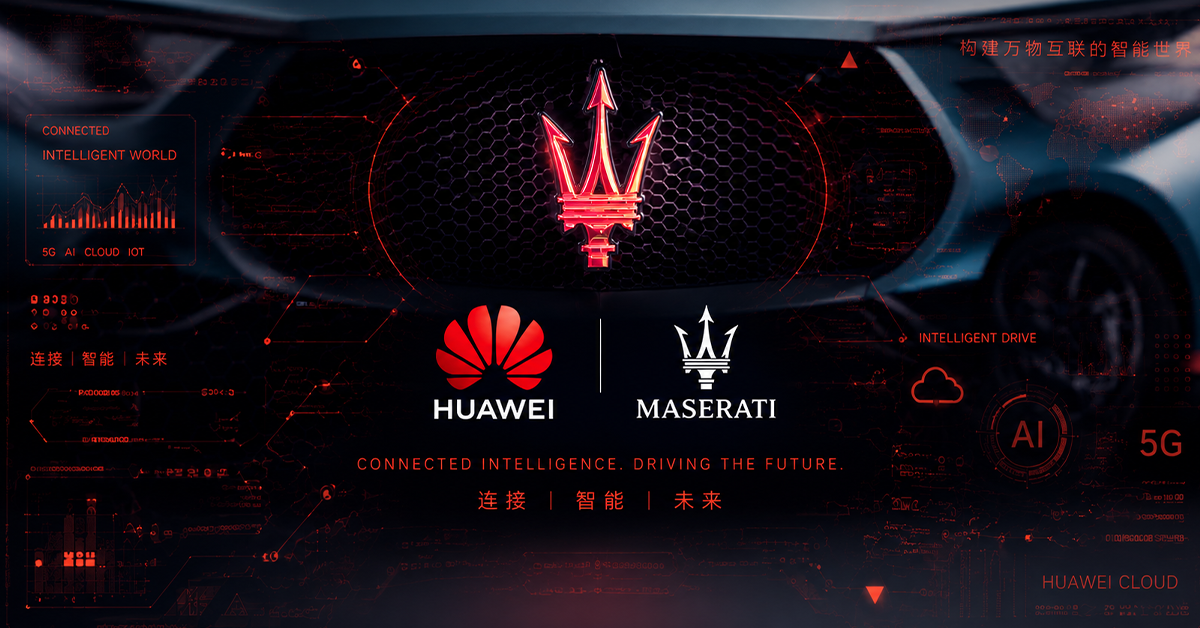
AI-generated concept illustration — Maserati Trident alongside Chinese technology partnership themes. | Rev N Rise
Stellantis is officially in talks with two outside partners to help rescue Maserati, and according to multiple reports out of China, the two names on the table are technology giant Huawei and state-owned automaker JAC Motors.
This isn't speculation dreamed up by anonymous insiders alone — Stellantis CEO Antonio Filosa has publicly confirmed the automaker is in strategic talks with two interested partners to secure Maserati's future. Filosa has been careful with his language, describing what he wants from a partner as someone who can bring technology, development and excellent ideas, while stressing that Maserati remains a pure luxury brand with a special customer and a unique legacy. He has also made clear that Maserati itself is not for sale — this is being framed strictly as a partnership, not a divestment. A final decision is expected by December.
While Stellantis hasn't officially named the two parties, Chinese outlet Yunjian Insight and a wave of follow-up reporting point firmly toward Huawei and JAC Motors — Anhui Jianghuai Automobile Group, a state-owned Chinese manufacturer.
The urgency here is hard to overstate. Maserati's global deliveries have collapsed from roughly 27,000 units in 2023 to an expected 7,900 in 2025 — a fall of more than 70 percent in just two years. China, once the brand's largest single market, has been hit hardest: sales there dropped from nearly 14,500 vehicles in 2017 to just over 1,000 last year. Stellantis as a whole posted a net loss of €22.3 billion in 2025, and Maserati's Cassino and Modena plants are reportedly running short of work.
Much of the damage traces back to strategic missteps under the old Fiat Chrysler Automobiles structure, which pushed Maserati from a niche performance brand into higher-volume territory with products that, by most accounts, lacked the depth and breadth of German rivals. Porsche, for comparison, delivered close to 280,000 vehicles in 2025 alone.
The proposed structure mirrors Huawei's existing Harmony Intelligent Mobility Alliance (HIMA) model, which already underpins five separate Chinese auto brands. Under the reported arrangement, Huawei would lead core technology, software and product planning; JAC would handle engineering, manufacturing and R&D; and Maserati's role would be narrowed to vehicle design and brand endorsement.
The plan reportedly calls for two versions of the same underlying vehicle. A domestic Chinese version would be sold under Maextro — the existing luxury joint venture between Huawei and JAC, whose S800 sedan has already become a serious player in China's premium segment, reportedly outselling the Mercedes-Benz S-Class, BMW 7 Series and Audi A8 in its category this year. The international version of the same vehicle would carry Maserati badging instead.
| Talks Reportedly Began | Early 2025 |
| Formal Agreement | Not Yet Signed |
| Domestic China Badge | Maextro |
| International Badge | Maserati |
| Target Production Start | H2 2027 |
Does leaning this heavily on a Chinese technology and manufacturing partner risk hollowing out the brand's Italian identity?
— The question Maserati loyalists are askingSkeptics point to Lotus's Eletre and Emeya — both built under heavy Chinese-led engineering and ownership influence via Geely — as a cautionary tale of what can happen when one entire side of a heritage brand's development sits outside its traditional home base. This also isn't the first time Chinese companies have circled Maserati. Reports suggest Xiaomi, BYD and XPeng all explored some form of involvement with the Trident in years past, underlining just how attractive the brand's prestige remains to ambitious Chinese players even as its sales numbers struggle.
Regardless of how the Huawei-JAC talks resolve, Maserati's existing product roadmap continues. Facelifted versions of the GranTurismo, GranCabrio and Grecale are already on sale, and two new "e-segment" models are confirmed for launch by 2030 — a large crossover expected to replace the Levante, and a sleek new sports car or grand tourer. Notably, Maserati already pulled back from one electrification bet earlier this year, cancelling the battery-electric MC20 Folgore after market research pointed to limited demand for an all-electric version of the supercar.
This story fits a pattern that's becoming impossible to ignore across the luxury car world: European heritage brands turning to Chinese partners for the electric and software capability they can't build fast enough alone. Whatever happens with Maserati specifically, it could become one of the most closely watched test cases yet for whether a century-old Italian name can survive a genuine handover of core engineering control to Chinese partners. Nothing here is confirmed beyond Filosa's own remarks — treat the Huawei/JAC specifics as informed speculation until Stellantis's December decision.