 Brands
Ford Focus — From the 1998 Debut to the Final Build
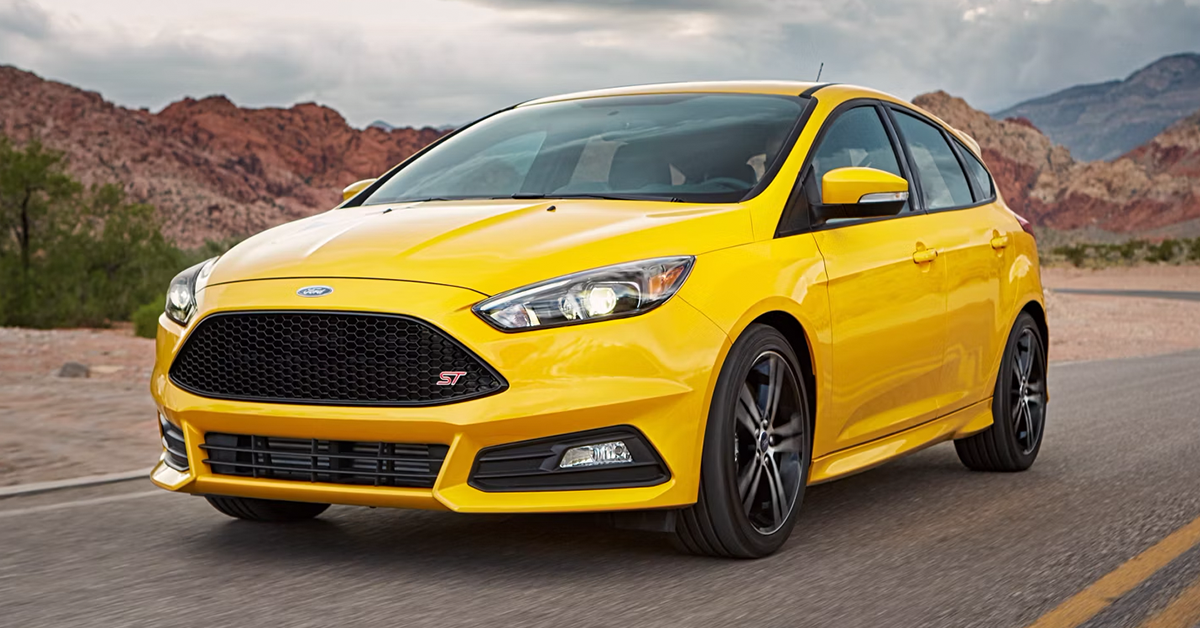
Official press image of the Ford Focus. | © Ford Motor Company
The Ford Focus from the 1998 Geneva debut through four generations, the Focus RS and ST, the Focus Electric and the C2-based fourth generation to the end of US production in 2018 and European production in 2025: engines, trims, sales and what is known.
The Ford Focus was a compact car sold from 1998 to 2025 in four generations. Ford says it first unveiled the Focus at the Geneva Motor Show, that it won European Car of the Year for 1999, and that it arrived in North America the same year and repeated the award there in 2000 (Ford). Ford described that as the first car to hold Car of the Year titles on both sides of the Atlantic at its first attempt (Ford). A cars guide lists the generations as 1998 to 2004, 2004 to 2010, 2010 to 2018 and 2018 to 2025 (reported).
| First unveiled | Geneva Motor Show, 1998 (Ford) |
| European Car of the Year | 1999 (Ford) |
| North American Car of the Year | 2000 (Ford) |
| Generations | Four, 1998 to 2025 (reported) |
| Sales, as of 2014 | More than 12 million (Ford) |
| Sales, as of 2018 | More than 16 million worldwide (Ford) |
| European sales, as of 2018 | Almost 7 million (Ford) |
| Main plant | Saarlouis, Germany (Ford) |
| US production ended | 2018 (Ford) |
| European production ended | November 2025 (reported) |
Ford has given sales totals at several points. In 2014 it said more than 12 million Focus cars had been sold since 1998 (Ford). In April 2018 it said almost seven million had been sold in Europe and more than 16 million around the world since the first generation was introduced in 1998 (Ford). We found no Ford total for the whole production run, so we do not give one. The Focus had a long performance side, with ST and RS versions covered in section five, and a rally side covered in section two.
Where it was built changed by market. Ford’s corporate plant page lists Saarlouis in Germany, which opened in 1970, with the Focus as a current product (Ford). That page is out of date, since Ford’s own Focus pages now say it is no longer manufacturing the car (Ford). An automotive magazine says Saarlouis had earlier built the Capri, Fiesta and Escort (reported). Ford’s plant page also lists a Taiwan joint venture, Ford Lio Ho, as building the Focus and Kuga (Ford).
The end came in two steps. Ford’s US page says that as of 2018 the Focus is no longer in production in North America (Ford). A news report says Ford pulled the Focus from the American market in 2018 and had said electrification would end the nameplate in Europe (reported). Ford’s UK site says it has discontinued the Focus as a new model and points to pre-owned cars (Ford). Reports give the end of production as November 2025, and section seven covers the conflict over how Ford announced it.
This article keeps the Focus separate from the Kuga. Ford calls the Focus the first vehicle built on its C2 platform in 2018, and the 2019 Kuga was the first SUV on it (Ford). The two cars therefore share an architecture, but they are different models with different histories. We also do not include the Escort, which came before the Focus, because Ford’s pages we read do not give its history in enough detail.
Some limits apply. Ford’s own pages that we could read are strongest for the 2015 to 2016 Focus RS, the 2018 launch and the 2024 ST Edition. They are thin for the 1998 launch, the second generation and the third-generation base cars, so those parts rely on reference histories and magazines and are tagged (reported). Our wider Ford history article gives the company context.
The first Focus broke from the Escort. A magazine retrospective says it was launched at the 1998 Geneva Motor Show and was a shock to the system for people used to safe Escort styling (reported). Another says it was Ford’s attempt to right the wrongs of the limp, underpowered final Escorts (reported). Ford’s own 2014 social post says it was first unveiled to a stunned Geneva Motor Show and won European Car of the Year in 1999 (Ford). The design is often described as New Edge, according to a German magazine (reported).
| Unveiled | Geneva Motor Show, 1998 (Ford) |
| Years | 1998 to 2004 (reported) |
| Car of the Year, Europe | 1999 (Ford) |
| Car of the Year, North America | 2000 (Ford) |
| ST 170 | 173 PS (reported) |
| RS, 2002 | 215 PS, Imperial Blue only (reported) |
| SVT Focus | 170 horsepower (Ford) |
| Rally car | Focus RS WRC, 1999 to 2004 (Ford) |
| Rally titles | 2006 and 2007 (Ford) |
| Plant | Saarlouis, Germany (reported) |
The car was offered in several body styles. A used-car guide says the first Focus was great as a hatchback or an estate, which launched at the same time (reported). Ford’s 2014 social post says the Focus arrived in North America the same year and won the North American Car of the Year title in 2000 (Ford). A Ford parts page lists SVT Focus suspension parts for 2000 to 2005 cars except wagons, which fits an American performance version (Ford). Ford does not give first-generation specifications in the pages we read.
Performance versions came quickly. A German magazine says the Focus ST 170 made 173 PS (127 kW) and the RS made 215 PS (158 kW) (reported). A British motoring site says the 2002 RS was a limited production model and came in a sole paint colour, Imperial Blue (reported). Ford’s engine history page mentions a 170 horsepower SVT Focus and Focus racing series such as the USAC Midget and SCCA F2000 (Ford). The ST 170 and the SVT were separate regional cars, according to a magazine (reported).
Rally gave the Focus its reputation. Ford’s 2026 heritage article says the company introduced the Focus RS WRC in 1999, based on the first-generation road car, and ran it from 1999 to 2004 (Ford). A magazine says Ford took two World Rally Championship titles with the second WRC car in 2006 and 2007 (reported). Ford’s own article says the second-generation-based RS WRC took eight victories in 2006 and secured Ford’s first manufacturers’ championship since 1979, defended the next year (Ford).
Ford has also linked the Focus to its next rally effort. The same 2026 article says Ford announced a return to the World Rally Championship in 2028 with a factory team for the first time since 2012 (Ford). It says that return is set to inspire five rally-bred models in Europe by 2029 (Ford). Our Ford Europe article covers the wider plan for those new models. Ford does not say that any of them will be called Focus, and we do not claim that one will.
The first generation ran until 2004. A used-car guide lists it as 1998 to 2004 (reported). Ford’s own pages we read give no production figures for those years, and the 2014 total of more than 12 million covers every generation up to that date (Ford). Readers who want exact first-generation specifications should use a period road test or an owner’s manual, because we found no primary source we could cite. The next section covers the second generation.
The second Focus arrived in 2004. Cars guides list it as 2004 to 2010, and a motoring site says it followed the more conservative look first seen on the C-Max, with a trapezoidal grille taken from the contemporary Mondeo (reported). It grew wider, longer and taller than the first, according to the same site (reported). A cars guide says Ford in Melbourne designed the Mk2 Focus sedan, unveiled in 2004 (reported). Ford’s own pages we read do not describe the 2004 launch.
| Years | 2004 to 2010 (reported) |
| Sedan design | Ford Australia, Melbourne (reported) |
| Styling cue | Mondeo-style trapezoidal grille (reported) |
| ST arrived | 2005 (reported) |
| ST engine | Five-cylinder turbo, Volvo-sourced (reported) |
| RS power | 305 PS, 2.5L five-cylinder (reported) |
| RS volume production | 2009 (reported) |
| Rally car | Focus RS WRC 06, from 2005 (Ford) |
| Rally wins, 2006 | Eight (Ford) |
| Replaced by | Third generation, 2010 or 2011 (reported) |
Technology moved forward. A used-car guide says Ford added tech such as a KeyFree system, a solar-reflect windscreen and adaptive front lights to the second generation (reported). It does not say when each arrived, so we do not date them. Ford’s later 2014 update says the redesigned car had a lower, wider stance and was the first vehicle in Europe to offer SYNC 2 with an eight-inch touchscreen (Ford). That update applied to the third generation and is covered in the next section.
The performance versions changed engines. A cars guide says the second-generation ST, called the XR5 in Australia, used a five-cylinder turbo petrol engine from Volvo (reported). A British motoring site says the ST arrived in 2005, soon after the second generation (reported). A German magazine says the RS made 305 PS (224 kW) from a 2.5-litre turbocharged five-cylinder engine (reported). A cars guide says that RS entered volume production in 2009 with a hotter Volvo turbo (reported).
The ST and RS brought sound and emotion, according to a German magazine, which says the five-cylinder engines were urgently needed for that (reported). Ford’s own pages that we read do not give outputs for the second-generation ST, so we give none. A used-car guide may list them, but we did not find a figure that we could check against Ford. Buyers should confirm any ST or RS figure against the car’s own documents, because markets such as Australia used different names.
Rally continued. Ford’s 2026 heritage article says the Focus RS WRC 06 arrived in 2005, using the then-new second-generation Focus as its base, with better aerodynamics and a stronger body (Ford). It says that car took eight victories in 2006 and secured Ford’s first manufacturers’ championship since 1979, then defended it in 2007 (Ford). A magazine counts two World Rally Cars for the Focus overall (reported). The road car itself was a mainstream family hatchback, sedan and estate.
Sales detail is thin. Ford’s pages give only worldwide totals, such as more than 12 million by 2014 and more than 16 million by 2018 (Ford). We found no Ford figure for the second generation alone. The second generation ended in 2010, according to cars guides, though a Spanish report gives the third generation’s arrival as 2011, which is a conflict we carry (reported). The next section covers the third generation and the Focus Electric. Because Ford’s own pages are thin for 2004 to 2010, readers should treat the details above as reported background and not as Ford-confirmed specifications for any particular car, and should check an individual car’s documents.
The third Focus is dated 2010 to 2018 by cars guides, although a Spanish report says Ford launched it in 2011, so we show both (reported). A motoring opinion piece says the third generation arrived as the trend towards small SUVs was in full swing, though that is commentary and not a Ford statement (reported). Ford’s own pages that we read give little on the 2010 launch, so this section relies mainly on Ford’s later releases for the refresh, the Electric and the RS.
| Years | 2010 or 2011 to 2018 (reported) |
| Refresh release | Around 2014, One Ford design (Ford) |
| New colour | Deep Impact Blue (Ford) |
| Body styles | Four-door, five-door, wagon (Ford) |
| Infotainment | SYNC 2, eight-inch screen (Ford) |
| Focus Electric motor | 145 PS (Ford) |
| Focus Electric top speed | 135 km/h (Ford) |
| Electric, North America | Built since December 2011 (Ford) |
| Electric, Europe | Built at Saarlouis (Ford) |
| ST and RS | Four-cylinder turbos (reported) |
Ford refreshed the car around 2014. Its overview release says the redesigned Focus reflected the One Ford global design language, with a lower, wider stance, a new bonnet, front fascia and grille, and a new exterior colour called Deep Impact Blue (Ford). It was available as a four-door, five-door and wagon, and the new Focus was the first vehicle in Europe to offer SYNC 2 with a high-resolution eight-inch colour touchscreen and advanced voice control (Ford). The release also says more than 12 million Focus cars had been sold since 1998 (Ford).
Ford also built an electric Focus. Its release on European production says the first all-new Focus Electric rolled off the line in Saarlouis, Germany, and was Ford’s first fully electric vehicle built in Europe (Ford). It says the car had an electric motor and lithium-ion battery producing 145 PS and a top speed of 135 km/h (Ford). It also says the Focus Electric had been manufactured in North America since December 2011 and that the Saarlouis cars would reach European customers from July (Ford). The release calls it a One Ford global vehicle (Ford).
The same release gives context for Ford’s plans. It says the Focus Electric led Ford’s electrified line-up in Europe, with the C-MAX Energi plug-in hybrid and the all-new Mondeo Hybrid coming the next year (Ford). It also says the Focus Electric was the first full-electric vehicle made in Germany directly from a volume production line (Ford). The release does not give range, price or sales for the car, and we found no Ford figure for them, so we give none. The year of the release is not stated in the excerpt we read.
The third-generation range was wide. Cars guides list the Mk3 as the generation before the 2018 car and note a Mustang-based four-cylinder turbo in the RS (reported). A magazine says the Mk3 and Mk4 STs switched to in-house high-output four-cylinder turbos, after the second generation’s five-cylinder (reported). The next section covers the Mk3 RS in detail, using Ford’s own releases, since that is the best-documented performance Focus. Our Mustang article covers the car whose 2.3-litre EcoBoost the RS borrowed from.
Dynamics were a selling point throughout. A cars guide says the Focus took handling and ride to new heights, to the point that it sent Volkswagen back to the drawing board for the Mk5 Golf (reported). We treat that as opinion and not as a measured fact. Ford’s 2018 release about the Mk4 says the new car enhances the legacy of the first generation and adds a new isolated subframe for the independent rear suspension (Ford). Ford does not publish a third-generation ride test, and we do not rank it against rivals.
The Focus RS and ST are the best-documented Focus models. Ford’s June 2015 release announced that the all-new Focus RS would deliver 350 PS from a specially engineered 2.3-litre EcoBoost engine (Ford). It says that engine was a unique version of the 2.3-litre EcoBoost that debuted with the all-new Mustang (Ford). It made its global dynamic debut driven by Ken Block at the Goodwood Festival of Speed (Ford).
| RS announced | June 2015, Goodwood (Ford) |
| RS engine | 2.3L EcoBoost, 2,261 cc (Ford) |
| RS power, Europe | 350 PS at 6,000 rpm (Ford) |
| RS power, China | More than 320 PS (Ford) |
| RS torque | 440 Nm; 470 Nm overboost (Ford) |
| RS firsts | Drift Mode, Drive Modes (Ford) |
| RS drivetrain | Ford Performance AWD (Ford) |
| RS production start | January 15, 2016 (Ford) |
| Mountune upgrade | Up to 375 PS, 510 Nm (Ford) |
| ST Edition | April 10, 2024 (Ford) |
Ford says the RS was the first Ford RS with selectable Drive Modes, including an industry-first Drift Mode for controlled oversteer drifts, and with Launch Control (Ford). It also had Ford Performance All-Wheel Drive with Dynamic Torque Vectoring (Ford). A cars guide says this was the first all-wheel-drive fast Focus (reported). Ford’s Chinese release in April 2015 said the car there made more than 320 PS, which differs from the 350 PS European figure, so we show both (Ford).
Ford’s technical sheet lists the RS engine in detail. It gives a displacement of 2,261 cc, 350 PS (257 kW) at 6,000 rpm and 440 Nm, with 470 Nm on transient overboost, using a six-speed manual and Ford Performance All-Wheel Drive (Ford). The same sheet appears to list a top speed of 266 km/h and a 0 to 100 km/h time of 4.7 seconds (Ford). We treat those two as the sheet’s own figures, and we read them from a table extract. The kerb weight is listed as 1,599 kg (Ford).
Ford ramped up production in 2016. Its January 15, 2016 release says the first all-new Focus RS rolled off the line, and that Ford expected to produce about 41,000 performance cars for European customers in 2016, up from 29,000 in 2015 (Ford). The performance cars named were the Fiesta ST, Focus ST, Focus RS, Mustang and Ford GT (Ford). In August 2016 Ford announced a Ford Performance by Mountune upgrade for up to 375 PS and 510 Nm, with a quoted 4.5 seconds to 100 km/h (Ford).
Ford added options later. A May 2017 release introduced a Focus RS Option Pack and a September 2017 release a Focus RS Edition, both using a Quaife limited-slip differential on the front axle (Ford). The Edition was quoted at 0 to 62 mph in 4.7 seconds (Ford). A news report says the RS was discontinued in 2020 (reported). A cars guide says there was no fourth-generation RS, so the 2015 car was the last RS Focus (reported). Ford’s own pages that we read do not state why, and we offer no reason. Ford does not give a total RS production figure in the pages we read, so we give none.
The ST lasted longest. Ford announced the Focus ST Edition on April 10, 2024, calling it the most complete Ford Performance-developed Focus yet and road and track ready (Ford). It had Ford Performance-tuned adjustable coilover suspension and a unique Azura Blue paint with High Gloss Black details (Ford). A news report says Ford kept the ST on until September 2025 (reported). A motoring site says the ST ended a month before the last Focus (reported).
Ford unveiled the fourth-generation Focus on April 10, 2018. Its release called it the most innovative, dynamic and exciting Ford ever, 20 years on from the original, and said it was designed from a clean sheet of paper (Ford). The release said it was the first vehicle built on Ford’s all-new C2 platform, which with a new body structure improved stiffness (Ford). Ford said the platform also gave more interior space without negatively affecting exterior dimensions and supported better aerodynamics (Ford). Our Kuga article covers the SUV that followed on the same platform.
| Unveiled | April 10, 2018 (Ford) |
| Platform | C2, first vehicle on it (Ford) |
| Plant | Saarlouis, Germany (Ford) |
| Body styles | Hatchback, wagon, four-door in some markets (Ford) |
| Orders opened | June 2018 (Ford) |
| 1.0L EcoBoost outputs | 85, 100 and 125 PS (Ford) |
| Transmission | New eight-speed automatic (Ford) |
| Trims, 2018 | Trend, Titanium, ST-Line, Vignale, Active (Ford) |
| First six months | 42,100 sales, 12 awards (Ford) |
| Active X Vignale | Introduced December 2019 (Ford) |
The range was wide. Ford said the new line-up included the first Focus Active crossover and an upscale Focus Vignale, with Trend, Titanium and the sporty ST-Line also offered (Ford). The car was built at Saarlouis in five-door hatchback and wagon body styles, with a four-door in selected markets (Ford). Orders opened in June 2018 for the Titanium, ST-Line and Vignale (Ford). A 2019 Ford release introduced an Active X Vignale model and said an EcoBoost Hybrid was on the way (Ford).
Engines were EcoBoost petrol and EcoBlue diesel. Ford said the 1.0-litre EcoBoost was offered with 85, 100 and 125 PS, and a new eight-speed automatic transmission offered a 10 per cent fuel-efficiency improvement across the range (Ford). A Ford UK brochure later listed a 1.0-litre EcoBoost at 125 PS, a 1.0-litre EcoBoost Hybrid mild hybrid at 125 PS and 155 PS, and a 1.5-litre EcoBlue diesel at 115 PS (Ford). The 2018 release does not list every output in the excerpt we read, so we limit ourselves to those.
Technology and safety were highlighted. Ford said the Focus introduced a FordPass Connect embedded modem, a wireless charging pad, SYNC 3 with an eight-inch touchscreen and a B&O PLAY audio system (Ford). In October 2018 Ford said Euro NCAP had commended the Focus for its advanced driver assistance technologies (Ford). A 2019 release said class-leading rear knee-room was improved by 5 centimetres compared with the outgoing model (Ford). These are Ford’s own claims, and we did not verify the “class-leading” wording.
The Mk4 sold well at first. Ford said in December 2018 that the new Focus had won 12 awards, including two outright Car of the Year titles, and achieved 42,100 sales in its first six months on sale (Ford). It was also shortlisted for European Car of the Year (Ford). A December 2019 release said Focus popularity had reached a four-year high (Ford). We found no Ford sales total for the whole Mk4 run, and no independent figures that we could check.
The Mk4 stayed in the line-up until the end. A cars guide lists it as 2018 to 2025 (reported). A magazine says the car was praised in the media and popular with buyers, forming part of the big three in the European compact segment with the Volkswagen Golf and Vauxhall Astra (reported). A cars guide says a young Australian also styled the outgoing Mk4 shape (reported). We found no Ford source showing the Mk4 on sale in North America, where Ford’s US page says the Focus ended in 2018 (Ford). The next section covers that story.
The Focus ended in North America first. Ford’s US support page says that as of 2018 the Ford Focus is no longer in production (Ford). A news report says Ford pulled the Focus from the American market in 2018 and later said electrification would eventually end the nameplate in Europe, with a target of 2025 (reported). The reasons are not given in Ford’s pages we read, and we do not offer one.
| US production ended | 2018 (Ford) |
| US page wording | No longer in production as of 2018 (Ford) |
| European end | November 2025 (reported) |
| Ford UK wording | Discontinued as a new model (Ford) |
| Years in Europe | Over 25, per Ford statement (Ford) |
| Last ST | September 2025 (reported) |
| RS ended | 2020 (reported) |
| Final plant | Saarlouis, Germany (reported) |
| Corporate plant page | Still lists Focus (Ford) |
| Successor | None announced (reported) |
Ford’s European end was quieter. A motoring site says production of the Focus would end in November 2025 and that Ford had confirmed it (reported). Another site says Ford had not officially announced the end of production and that workers described the loss as painful and sad (reported). We carry both. Ford’s UK site says it has discontinued the Focus as a new model and that pre-owned cars remain available (Ford). Ford’s UK media statement says the Focus has been an important part of the Ford family in Europe for over 25 years (Ford).
The final cars are reported. A British motoring site says news that the final example had rolled off the line at Saarlouis broke on social media over a weekend, shortly after the ST ended (reported). A news report says Ford ended global production of the Focus in late 2025, closing a 27-year chapter (reported). Ford’s own pages that we read give no date for the last car and no count of the final cars. Ford has not given a final date in the pages we read. We therefore state the end as November 2025 and tag it as reported, and we flag the conflict for readers.
Ford’s plant pages lag behind. Ford’s corporate plant page still lists the Focus as the current product at Saarlouis, which conflicts with Ford’s UK and US Focus pages saying production has ended (Ford). That is likely a page that has not been updated, but Ford does not say so. A news report says the future of the Saarlouis plant looks bleak (reported). We do not make a claim about the plant, because the pages we read do not give Ford’s plans for it.
Ford’s European plan is moving away from conventional compact cars. Its 2025 European strategy article says the company will expand its passenger range with distinctive new vehicles and introduce new multi-energy, affordable cars and commercial vehicles (Ford). That plan includes seven new models for the region. A magazine commentary says the trend towards small SUVs and government support for electric vehicles weighed on small cars, as Ford let the Fiesta go and then the Focus (reported). That is opinion and not a Ford statement.
No successor has been announced. A magazine says the fourth-generation car ended with no successor on the horizon (reported). Ford’s own pages we read do not name a new Focus, and they do not say that the name will return. We therefore make no claim about a future Focus. For owners, Ford says it remains available to help with maintenance and to answer questions about vehicles already on the road (Ford).
Buyers today are looking at used cars, so the first question is the generation. The fourth generation, 2018 to 2025, is the newest, with Ford’s own 2018 release listing 85, 100 and 125 PS from the 1.0-litre EcoBoost (Ford). A Ford UK brochure also lists 1.0-litre mild hybrids at 125 and 155 PS and a 1.5-litre EcoBlue diesel at 115 PS (Ford). A used Focus from the third generation or earlier may have very different engines, so each car’s documents matter more than the model name.
| Mk4 petrol, 2018 | 1.0L EcoBoost, 85, 100, 125 PS (Ford) |
| Mk4 mild hybrid | 1.0L EcoBoost Hybrid, 125 and 155 PS (Ford) |
| Mk4 diesel | 1.5L EcoBlue, 115 PS (Ford) |
| Mk4 trims | Trend, Titanium, ST-Line, Vignale, Active (Ford) |
| RS power | 350 PS, 2.3L EcoBoost (Ford) |
| RS upgrade | Mountune, up to 375 PS (Ford) |
| ST Edition suspension | Adjustable coilover (Ford) |
| Mk4 rear knee-room | 5 cm more than outgoing car (Ford) |
| Mk4 plant | Saarlouis, Germany (Ford) |
| Support | Ford still supports vehicles on the road (Ford) |
Trims vary by generation. The 2018 line-up listed Trend, Titanium, ST-Line, Vignale and the Active crossover, with Active X and Active X Vignale following (Ford). A Ford UK brochure shows Active X with 18-inch alloys and Active Vignale styling (Ford). The older Focus used other trim names, and North American cars used names such as SVT for the performance version (Ford). We do not give a universal trim ladder because the names changed across markets and years, and Ford’s pages do not map them.
Performance buyers should check carefully. The Mk3 RS is the best documented, with Ford quoting 350 PS, 440 Nm and Ford Performance All-Wheel Drive (Ford). The Mountune upgrade was an official Ford Performance by Mountune package for up to 375 PS (Ford), so a car with it should have the paperwork. A used RS or ST should have a full service history, and any modified car should be checked for the changes the owner has made. Ford’s pages we read do not give reliability data for either model.
Practicality figures are not in the Ford pages we read. Ford’s 2019 release gives an improvement in rear knee-room of 5 centimetres over the outgoing car (Ford). It does not give boot capacities in the excerpt we read, and we did not find a Ford boot figure that we could verify. We therefore give none. The hatchback, wagon and four-door shapes, and the Active crossover, were Ford’s way of covering the family and lifestyle uses (Ford). Buyers should measure their own luggage needs, and should compare the hatchback and wagon in person before choosing, since Ford’s pages do not give a verified capacity.
Costs and values are not covered. Ford’s pages do not list used prices, and we did not find a Ford figure for any generation. A used-car retailer lists the Focus by generation, and Ford’s UK site points buyers to its pre-owned network (reported, Ford). Prices vary a great deal by year, mileage and engine, so we do not quote any. A pre-purchase inspection and a vehicle history check are sensible for any used Focus, as for any used car.
The Focus remains part of Ford’s story. Our Ford models page covers what Ford sells today, and the Kuga shares the C2 platform. Ford’s own US page uses the title Goodbye, Focus, Hello New Adventures, and says it is still there to answer questions about vehicles on the road (Ford). The Focus was among Ford’s best-known compact cars, and its end ends a 27-year line that began in Geneva in 1998 (reported).