 Brands
Hyundai Bayon — New Generation, India, Prices and Specs
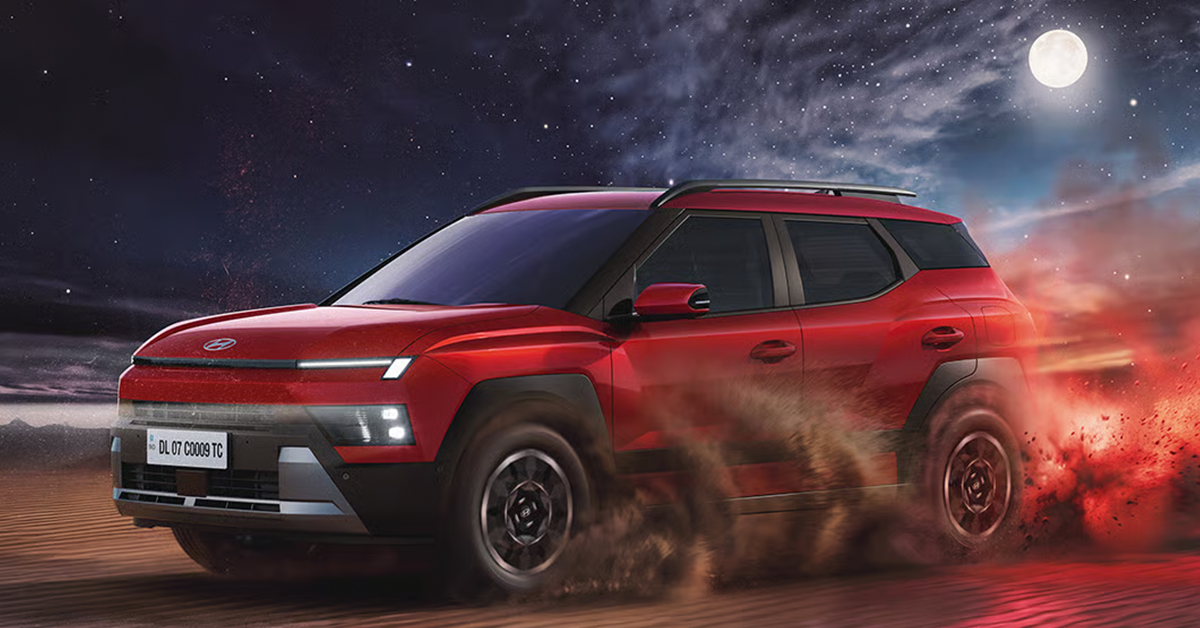
Official image of the Hyundai Bayon. | © Hyundai Motor Company
The Hyundai Bayon is a small SUV that Hyundai first revealed for Europe in March 2021 and rebuilt as an all-new car in October 2026. The European car offers 1.0-liter turbo engines of 90 PS and 115 PS with a hybrid due in 2027, while the India-spec car launched on October 26, 2026 with a 1.5-liter petrol of 115 PS. This guide covers both cars, their sizes, equipment, N Line, prices in India and the United Kingdom, safety and what we could not confirm.
The Bayon is a small Hyundai SUV with two different stories. Hyundai Motor revealed the first Bayon on March 2, 2021 as a B-segment SUV designed specifically for Europe, named after Bayonne in the French Basque Country (Hyundai). On October 12, 2026 Hyundai Motor Europe introduced an all-new Bayon at the Paris Motor Show, and Hyundai Motor India launched an India-spec Bayon on October 26, 2026 (Hyundai). The gap between 2021 and 2026 is 5 calendar years (Hyundai, our calculation).
| Class | Small SUV, B-segment (Hyundai) |
| First Bayon revealed | March 2, 2021 (Hyundai) |
| All-new Bayon, Europe | October 12, 2026, Paris Motor Show (Hyundai) |
| India launch | October 26, 2026 (Hyundai) |
| India starting price | 9,99,900 rupees ex-showroom (Hyundai) |
| India engine | 1.5 MPi petrol, 115 PS (Hyundai) |
| Europe engines | 1.0 turbo 90 PS and 115 PS, hybrid later (Hyundai) |
| All-new length, width, wheelbase | 4,245, 1,810, 2,600 mm (Hyundai) |
| India boot | 505 litres (Hyundai) |
| First Bayon Euro NCAP | 4 stars (Hyundai) |
We read Hyundai’s own pages first. They were the Hyundai Motor Europe Paris Motor Show release, the Hyundai Motor UK press kit and price release of 2021, the Hyundai UK technical and pricing PDF effective October 1, 2026, the Hyundai Motor India releases of September 23, October 12, October 21 and October 26, 2026 and the Hyundai Europe Euro NCAP release of October 27, 2021. Reports supply Indian variant prices, safety commentary and the 2025 update, and carry the reported tag. Prices and availability may have changed since publication, and exchange rates are not applied.
Hyundai Motor India launched the Bayon at a starting price of 9,99,900 rupees ex-showroom, and says the car is built in India and will be exported to more than 50 markets (Hyundai). It uses a 1.5-liter MPi petrol of 84.4 kW (115 PS) with a 6-speed manual or an iVT transmission (Hyundai). Hyundai Motor Europe lists 1.0-liter turbo engines of 90 PS and 115 PS, with a 1.6-liter hybrid of 138 PS joining in 2027 (Hyundai). We do not convert PS to horsepower.
Both new cars share a length of 4,245 mm, a width of 1,810 mm and a wheelbase of 2,600 mm in Hyundai’s figures (Hyundai). The India car is 1,605 mm tall with roof rails and has a 505 liter boot, while the European car is 1,565 mm tall in the ICE version with a 440 liter boot (Hyundai). The first Bayon was 4,180 mm long, 1,775 mm wide and 2,580 mm between the axles (Hyundai).
Hyundai Motor Europe describes the all-new Bayon as a compact SUV with a more confident SUV identity, and says it is produced at the Hyundai Motor Türkiye plant for European markets (Hyundai). Hyundai Motor India calls its car an Intelligent Utility Vehicle (Hyundai). The first Bayon earned four stars from Euro NCAP in 2021, Hyundai said (Hyundai). Hyundai Motor India opened bookings at 11,000 rupees and said deliveries would begin in the festive season (Hyundai). Hyundai Motor Europe gave no on-sale date or price for its car (Hyundai).
This guide covers the Bayon’s history, the first generation, the all-new European car, the India-spec car, prices in India and the United Kingdom, safety, production and the items we could not confirm. Our Hyundai Venue article covers the smaller SUV below it in India, our Hyundai Creta article covers the larger SUV above it, our Hyundai Models article lists the range and our Hyundai history article covers the company. No currency conversion is given. Hyundai Motor India quotes prices in rupees and Hyundai Motor UK in pounds.
Hyundai’s press kit dated March 2, 2021 says Hyundai Motor revealed the Bayon, the latest and smallest member of Hyundai’s expanding SUV family (Hyundai). It describes the car as designed specifically for Europe and as a B-segment SUV, named after Bayonne, the capital of the French Basque Country, in line with Hyundai’s SUV naming (Hyundai). The kit calls 2020 a record year for Hyundai fleet expansion, with seven new models in 12 months (Hyundai). It calls the Bayon the smallest member of Hyundai’s SUV family (Hyundai). The India unveil release of October 12, 2026 quotes Tarun Garg, Managing Director and CEO of Hyundai Motor India (Hyundai).
| First Bayon revealed | March 2, 2021 (Hyundai) |
| UK prices announced | June 2, 2021 (Hyundai) |
| 2021 UK starting price | 20,295 pounds (Hyundai) |
| Euro NCAP result | 4 stars, October 27, 2021 (Hyundai) |
| Update with new design | 2025 (reported) |
| India bookings open | September 23, 2026 (Hyundai) |
| All-new Bayon, Europe | October 12, 2026 (Hyundai) |
| India launch | October 26, 2026 (Hyundai) |
| Hybrid in Europe | 2027 (Hyundai) |
| India booking amount | 11,000 rupees (Hyundai) |
Hyundai Motor UK announced prices and specifications on June 2, 2021, with the SE Connect from 20,295 pounds, the Premium from 22,495 pounds and the Ultimate from 23,795 pounds for the 100 PS manual (Hyundai). The Euro NCAP release of October 27, 2021 said the Bayon achieved four stars, while the Tucson and IONIQ 5 earned five (Hyundai). A report says the first Bayon was built in Turkey and is related to the i20 (reported).
Euro NCAP states that the Hyundai i20 is very closely related to the Bayon tested in 2021 and shares the same safety equipment, so the Bayon’s rating can be applied to the i20 (reported). Our Hyundai i20 article covers that car. A report says the Bayon was updated for 2025 with a new design, a horizontal daytime running lamp bar and new driver assistance features, and says Hyundai had no plans then to sell it in India (reported).
That India position changed in 2026. Hyundai Motor India announced bookings on September 23, 2026 for its upcoming Intelligent Utility Vehicle, the Bayon, at a booking amount of 11,000 rupees according to Hyundai’s October 12 release (Hyundai). The October 12 release said the India-spec Bayon would launch on October 26, 2026, and that deliveries would begin in the festive season (Hyundai). The interval from the booking announcement to the launch is 33 days, since September 23 to October 26 is 33 days (Hyundai, our calculation).
Hyundai Motor Europe introduced the all-new Bayon on October 12, 2026 at the Paris Motor Show, and said it is much more than an update (Hyundai). Its CEO said that with a hybrid powertrain joining the lineup in 2027, the Bayon will build on its momentum in one of Europe’s most important segments (Hyundai). The Hyundai UK technical sheet of October 2026 still gives the first-generation car’s dimensions of 4,180 mm by 1,775 mm (Hyundai).
Hyundai UK’s news list shows a December 2025 release that reports a revised two-trim structure and a 1.0-liter T-GDI 90 PS engine (Hyundai). That fits the Black Line and Tech Line trims and the 90 PS engine in the October 2026 sheet (Hyundai). The Bayon’s main milestones are therefore the 2021 reveal, the 2025 update, the 2026 all-new European car and the 2026 India car. Our Hyundai Models article lists the rest of the range, and our Hyundai Venue article covers the smaller SUV that sits below the Bayon in India.
Hyundai’s 2021 press kit gives the first Bayon as 4,180 mm long, 1,775 mm wide and 1,490 mm tall, or 1,500 mm with 17-inch wheels, with a 2,580 mm wheelbase and a 411 liter boot (Hyundai). It lists front legroom of 1,072 mm, rear legroom of 882 mm and ground clearance of up to 183 mm with 17-inch wheels (Hyundai). The kit says an intelligent trunk cover slides along the rear seat (Hyundai).
| First Bayon length | 4,180 mm (Hyundai) |
| First Bayon width | 1,775 mm (Hyundai) |
| First Bayon wheelbase | 2,580 mm (Hyundai) |
| Boot, seats up | 411 litres (Hyundai) |
| Boot, seats down | 1,205 litres (Hyundai) |
| Engine, October 2026 sheet | 1.0 turbo, 90 PS, 172 Nm (Hyundai) |
| 0 to 62 mph | 11.9 or 13.3 seconds (Hyundai) |
| WLTP combined | 47.9 or 48.7 mpg (Hyundai) |
| CO2 | 131 to 134 g/km (Hyundai) |
| Fuel tank | 40 litres (Hyundai) |
The kit gave a 1.0-liter T-GDi engine of 100 PS or 120 PS with a 48V mild hybrid system, a 6-speed intelligent manual or a 7-speed dual clutch, and drive modes called Eco, Normal and Sport (Hyundai). It also described Rev Matching with the manual in Sport mode as a first on a Hyundai SUV (Hyundai). The kit says the turbo engine comes from the updated Kappa family and uses Continuously Variable Valve Duration technology (Hyundai).
The October 2026 Hyundai UK sheet lists a 1.0-liter turbo of 998 cc with three cylinders making 90 PS (66 kW) at 5,000 to 5,500 rpm and 172 Nm from 1,500 to 3,000 rpm (Hyundai). The 6-speed manual takes 11.9 seconds to 62 mph and the 7-speed dual clutch takes 13.3 seconds, with top speeds of 108 mph and 107 mph (Hyundai). The dual clutch is 1.4 seconds slower to 62 mph, since 13.3 minus 11.9 is 1.4 (Hyundai, our calculation).
The same sheet gives a kerb weight of 1,100 to 1,210 kg for the manual and 1,125 to 1,235 kg for the dual clutch, a 40 liter fuel tank, a 411 liter boot with the seats up and 1,205 liters with them down (Hyundai). WLTP combined economy is 47.9 mpg for the manual (5.9 liters per 100 km) and 48.7 mpg for the dual clutch (5.8 liters per 100 km), with CO2 of 131 to 134 g/km (Hyundai).
The UK sheet lists two trims, the Black Line and the Tech Line (Hyundai). Both have a 10.25-inch touchscreen and a 10.25-inch digital cluster, and both list 15 standard safety items (Hyundai). The 2021 press kit offered nine colours, including the Mangrove Green launch colour, an optional Phantom Black two-tone roof, 15-inch steel wheels or 16-inch and 17-inch alloys (Hyundai). It also offered a Bose sound system, three USB ports and a wireless charging pad (Hyundai).
The Tech Pack costs 1,000 pounds on the Tech Line and adds a sunroof and a Bose sound system among other items (Hyundai). Special solid paint costs 370 pounds and metallic or pearl paint 695 pounds (Hyundai). Hyundai’s sheet footnotes Bluelink with 10 years of Lite, 3 years of Plus and a 6-month Pro trial (Hyundai). Our Hyundai Venue article covers a smaller SUV from the same family. The 2021 kit lists Bluelink services such as Connected Routing, calendar integration, remote lock and unlock and Find My Car (Hyundai). It offered a 10.25-inch AVN or an 8-inch Display Audio, with wireless Apple CarPlay and Android Auto on the 8-inch screen only (Hyundai). Its SmartSense list included Lane Keeping Assist, Lane Following Assist, Intelligent Speed Limit Assist, High Beam Assist, Driver Attention Warning and Rear Occupant Alert (Hyundai).
Hyundai Motor Europe gives the all-new Bayon as 4,245 mm long, 1,810 mm wide and 2,600 mm between the axles, with a height of 1,565 mm for the ICE car on 16-inch or 17-inch wheels and 1,570 mm on 18-inch wheels, both with roof rails (Hyundai). The hybrid is 1,555 mm or 1,560 mm tall (Hyundai). Against the first car it is 65 mm longer, 35 mm wider and has a wheelbase 20 mm longer (Hyundai, our calculation).
| Length, width, wheelbase | 4,245, 1,810, 2,600 mm (Hyundai) |
| Height, ICE | 1,565 or 1,570 mm (Hyundai) |
| Height, hybrid | 1,555 or 1,560 mm (Hyundai) |
| Luggage, ICE | 440 litres (Hyundai) |
| Luggage, hybrid | 397 litres (Hyundai) |
| Engines | 1.0 turbo 90 PS and 115 PS, 1.6 hybrid 138 PS (Hyundai) |
| Transmissions | 6-speed manual, 7-speed dual clutch, 6-speed dual clutch hybrid (Hyundai) |
| Hybrid timing | 2027 (Hyundai) |
| Drag coefficient | 0.31 to 0.34 (Hyundai) |
| N Line wheels | 18 inch (Hyundai) |
Luggage space is 440 liters for the ICE car and 397 liters for the hybrid in the specification table, though the text describes the ICE figure as projected (Hyundai). The ICE figure is 29 liters above the first car’s 411 liters, which is 7.1 percent (Hyundai, our calculation). The hybrid’s 397 liters is 43 liters below the ICE figure, since 440 minus 397 is 43 (Hyundai, our calculation).
The engines are front-wheel drive. They are a 1.0-liter T-GDI of 90 PS (66 kW) and another of 115 PS, each with a 6-speed manual or a 7-speed dual clutch, and a 1.6-liter hybrid of 138 PS (101 kW) with a 6-speed dual clutch (Hyundai). Torque runs from 172 to 264.8 Nm across the range (Hyundai). The 115 PS engine has 25 PS more than the 90 PS, which is 27.8 percent (Hyundai, our calculation). The hybrid is planned to follow the initial ICE versions in 2027 (Hyundai).
Performance and efficiency figures are provisional. Hyundai gives a top speed of 167 to 180 km/h, 0 to 100 km/h in 10.8 to 14.1 seconds, a kerb weight of 1,228 to 1,378 kg, a braked towing capacity of 910 to 1,110 kg and a drag coefficient of 0.31 to 0.34 (Hyundai). WLTP combined CO2 targets are 139 to 149 g/km for the 90 PS, 134 to 144 g/km for the 115 PS and 102 to 113 g/km for the hybrid (Hyundai). Hyundai says final figures remain subject to homologation (Hyundai).
The N Line adds technical mesh details, lower-bumper winglets, 18-inch N Line wheels, high-gloss black cladding and a rear diffuser with integrated twin exhaust outlets, with N Line cloth and textile suede seats and black and red accents (Hyundai). Tyre sizes are 205/60 R16, 205/55 R17 and 225/45 R18 (Hyundai). Hyundai lists launch colours including three matte finishes, with Ecotronic Gray Pearl and Ethereal Mint Green Pearl to follow later, and says the Bayon is the only model in its segment with matte colours (Hyundai).
Hyundai lists a 12.3-inch infotainment display and a 12.3-inch digital cluster in a curved panoramic layout, Digital Key 2, wireless Apple CarPlay and Android Auto, wireless charging, two front and one rear USB-C ports and a Bose system with eight speakers (Hyundai). The driver assistance list includes Highway Driving Assist 2, a surround view monitor, Forward Collision-Avoidance Assist 2 and Parking Collision-Avoidance Assist-Reverse (Hyundai). Hyundai gave no on-sale date or European price (Hyundai). Hyundai also lists heated and ventilated front seats, a panoramic sunroof and dual-zone climate control, and claims best-in-class rear legroom (Hyundai).
Hyundai Motor India lists a 1.5-liter MPi petrol of 1,497 cc, making 84.4 kW (115 PS) at 6,300 rpm and 143.8 Nm (14.7 kgm) at 4,500 rpm (Hyundai). The October 12 release gives the torque as 144 Nm, a rounding of the same figure (Hyundai). The transmission is a 6-speed manual or an iVT with Dash Boost Mode, with Eco, Normal and Sport drive modes, paddle shifters and Idle Stop and Go (Hyundai).
| Engine | 1.5 MPi petrol, 1,497 cc (Hyundai) |
| Power and torque | 84.4 kW, 115 PS, 143.8 Nm (Hyundai) |
| Transmissions | 6-speed manual, iVT (Hyundai) |
| Length, width, height | 4,245, 1,810, 1,605 mm (Hyundai) |
| Wheelbase | 2,600 mm (Hyundai) |
| Ground clearance | 205 mm (Hyundai) |
| Fuel tank | 43 litres (Hyundai) |
| Boot | 505 litres (Hyundai) |
| Variants | 7 manual and 4 iVT (Hyundai) |
| Colours | 10 (Hyundai) |
The India car is 4,245 mm long, 1,810 mm wide and 1,605 mm tall with roof rails, with a 2,600 mm wheelbase, 205 mm of ground clearance, a 5.16 m turning radius, a 43 liter fuel tank and a 505 liter boot (Hyundai). It is 40 mm taller than the 1,565 mm European ICE car and its boot is 65 liters larger than the 440 liter European figure (Hyundai, our calculation). The boot is 94 liters above the first car’s 411 liters, which is 22.9 percent (Hyundai, our calculation).
Hyundai lists seven manual variants, the HX2, HX3, HX3+, HX5, HX6, HX8 and HX10, and four iVT variants, the HX5, HX6, HX8 and HX10, which makes 11 variants (Hyundai, our calculation). Wheels are 205/65 R16 steel, 215/55 R17 styled steel and 215/55 R17 diamond-cut alloy, with a 195/65 R15 steel spare, except the base HX2, which has a tyre mobility kit (Hyundai). Hyundai lists ten colours, including six monotone, two dual-tone and two matte (Hyundai). Hyundai says the car is built in India for the Indian market and for export (Hyundai).
The cabin has dual 12.3-inch curved displays, a ccNC computing platform accelerated by NVIDIA, a generative AI voice assistant using Perplexity and SoundHound AI, more than 500 embedded voice commands, wireless Android Auto and Apple CarPlay, and Bose premium sound (Hyundai). Hyundai says the voice commands cover 10 regional and 2 international languages, and that Bluelink has more than 70 features with a 3-year complimentary subscription (Hyundai). Over-the-air updates cover up to 19 controllers (Hyundai). Hyundai Motor India launched the car in Gurugram and called 9,99,900 rupees an introductory price (Hyundai). Its October 12 release says the voice commands work offline in English, Hindi, Tamil, Bengali, Telugu and Hinglish (Hyundai). The launch release lists the colours Titanium Black, Classy Blue, Atlas White, Fiery Red, Golden Bronze and Ecotronic Grey, with Atlas White and Fiery Red also offered with a black roof and Titanium Black and Classy Blue in matte (Hyundai).
Comfort features include front ventilated seats, an electric 8-way driver seat, two-step rear reclining seats, fully automatic temperature control, rear air vents, a panoramic sunroof, a smart key with push-button start and a 60:40 split rear seat (Hyundai). We did not find a Hyundai feature list by variant.
Reports say a CNG version will follow next year and that the Bayon sits between the Venue and the Creta, which Hyundai’s own pages do not state in those words (reported). Our Hyundai Venue article covers the car below it in price and our Hyundai Creta article covers the car above it. A report says the Bayon rivals the Maruti Victoris (reported).
Hyundai Motor India gave a starting price of 9,99,900 rupees ex-showroom for the Bayon on October 26, 2026 (Hyundai). That is 2,00,000 rupees above the Venue’s 7,99,900 rupee start and 90,800 rupees below the Creta’s 10,90,700 rupee start on Hyundai’s own price pages (Hyundai, our calculation). Hyundai’s launch release gave no variant prices (Hyundai), so the variant prices below come from reports (reported). Prices and availability may have changed since publication.
| India start, Hyundai | 9,99,900 rupees (Hyundai) |
| Venue start, Hyundai | 7,99,900 rupees (Hyundai) |
| Creta start, Hyundai | 10,90,700 rupees (Hyundai) |
| HX3 manual | 10,89,900 rupees (reported) |
| HX8 iVT | 16,53,900 rupees (reported) |
| HX10 manual | 16,64,900 rupees (reported) |
| Top price, report | 18.14 or 18.15 lakh rupees (reported) |
| UK Black Line manual | 22,725 pounds (Hyundai) |
| UK Tech Line dual clutch | 25,475 pounds (Hyundai) |
| 2021 UK starting price | 20,295 pounds (Hyundai) |
A report lists the HX2 manual at 9,99,900 rupees and the HX3 manual at 10,89,900 rupees, which is 90,000 rupees more (reported, our calculation). It lists the HX6 iVT dual-tone at 15,11,800, the HX8 manual dual-tone at 15,24,900, the HX8 iVT at 16,53,900, the HX10 manual at 16,64,900, the HX8 iVT dual-tone at 16,68,900 and the HX10 manual dual-tone at 16,79,900 rupees (reported). The dual-tone finish adds 15,000 rupees on the HX8 iVT and the HX10 manual (reported, our calculation).
The report gives the top HX10 iVT dual-tone at 18.14 lakh rupees, while others give 18.15 lakh and another gives 17.99 lakh for the top automatic (reported). Taking 18.14 lakh, the top is 8.14 lakh rupees above the base and 1.81 times it, since 18.14 divided by 9.999 is 1.814 (reported, our calculation). The iVT dual-tone HX8 is 1,44,000 rupees above the manual dual-tone HX8, since 16,68,900 minus 15,24,900 is 1,44,000 (reported, our calculation).
Reports give on-road prices that depend on the city. One report lists the HX2 manual at 11.55 lakh rupees in Mumbai, 11.45 lakh in Kolkata and 11.85 lakh in Bengaluru, and says the on-road range in Delhi runs from 11.15 lakh to 21.06 lakh rupees (reported). The Delhi on-road top is 9.91 lakh above the on-road base, since 21.06 minus 11.15 is 9.91 (reported, our calculation). We use ex-showroom prices for comparison. The 11,000 rupee booking amount is 1.1 percent of the 9,99,900 rupee start (Hyundai, our calculation). The Bayon’s start is 25.0 percent above the Venue’s, since 2,00,000 divided by 7,99,900 is about 0.25, and the Creta’s start is 9.1 percent above the Bayon’s (Hyundai, our calculation).
In the United Kingdom, Hyundai’s October 1, 2026 sheet lists the first-generation Bayon at 22,725 pounds retail for the Black Line manual, 23,975 pounds for the Black Line dual clutch, 24,225 pounds for the Tech Line manual and 25,475 pounds for the Tech Line dual clutch (Hyundai). The on-the-road prices add 1,340 pounds each, since 24,065 minus 22,725 is 1,340 (Hyundai, our calculation). Hyundai’s sheet also lists options of 370 pounds for solid paint and 695 pounds for metallic or pearl paint (Hyundai).
Against the 2021 start of 20,295 pounds, the Black Line manual is 2,430 pounds higher, which is 12.0 percent (Hyundai, our calculation). The dual clutch adds 1,250 pounds on both trims, and the Tech Line adds 1,500 pounds over the Black Line on the manual (Hyundai, our calculation). The top trim is 2,750 pounds above the base, which is 12.1 percent (Hyundai, our calculation). We found no Hyundai price for the all-new European Bayon, and exchange rates are not applied. Hyundai UK lists retail and on-the-road prices separately in its sheet (Hyundai).
Hyundai Motor Europe announced on October 27, 2021 that the Bayon achieved a four-star rating in Euro NCAP testing, while the Tucson and IONIQ 5 earned five stars (Hyundai). Euro NCAP’s own text for the Bayon says protection of pedestrians’ legs and pelvis was good with maximum points in those areas, and that the car’s emergency braking detects vulnerable road users as well as vehicles (reported). Euro NCAP’s child protection text says neck protection of the 10 year dummy was weak in the frontal offset test (reported).
| First Bayon Euro NCAP | 4 stars, 2021 (Hyundai) |
| First Bayon airbags | Six (Hyundai) |
| UK standard safety items, 2026 | 15 (Hyundai) |
| India airbags | Six, standard (Hyundai) |
| India ADAS | Level 2 Pro, 23 features (Hyundai) |
| India radars and parking sensors | 3 and 12 (Hyundai) |
| India safety features | Over 80, over 35 standard (Hyundai) |
| India body steel | 69 percent high-strength (Hyundai) |
| Bharat NCAP or Global NCAP | Not found (reported) |
| Production, Europe and India | Türkiye and India (Hyundai) |
Hyundai’s 2021 UK release lists six airbags, eCall, lane keep assist with lane departure warning, driver attention alert, autonomous emergency braking, forward collision assist with pedestrian and cyclist detection, automatic headlamps with high beam assist, tyre pressure monitoring, vehicle stability management and hill-start assist as standard (Hyundai). The release is internally inconsistent about lane follow assist and blind spot warning on the top trim, since it lists them as both optional and included (Hyundai). The October 2026 UK sheet lists 15 standard safety items (Hyundai).
For India, Hyundai says the Bayon is built on the Global K Enhanced platform, engineered for 5-star Indian safety standards, with a body that uses 69 percent advanced multi-grade high-strength steel (Hyundai). It lists six airbags as standard, electronic stability control, hill-start assist, a roll over sensor, high-line tyre pressure monitoring, all-wheel disc brakes, more than 80 safety features and more than 35 standard (Hyundai). It lists Hyundai SmartSense Level 2 Pro with 23 features, 3 radars and 12 parking sensors (Hyundai). Hyundai Motor India published these safety details on October 21, 2026, five days before the launch (Hyundai, our calculation). A report notes that Hyundai’s five-star statement comes from its own testing (reported).
Hyundai’s engineering claim is not a test result. A report says the Bayon has not yet had an independent crash result from Bharat NCAP or Global NCAP, and that the 5-star target is Hyundai’s own statement (reported). The Hyundai Europe release for the all-new car does not mention crash-test ratings (Hyundai). The first car’s four stars therefore should not be carried over to the all-new car or to the India car, which are different vehicles.
Production differs by market. Hyundai Motor Europe says the all-new Bayon for European markets is produced at the Hyundai Motor Türkiye plant (Hyundai). Hyundai Motor India says its car is built in India and will be exported to more than 50 markets (Hyundai). A report says the first Bayon was assembled in Izmit in Turkey (reported). The India and Europe cars share their key external dimensions, but they have different engines and different boot figures (Hyundai).
We found no Hyundai sales figure for the Bayon in Europe or India. The India car launched on October 26, 2026, and by November 28, 2026 it had been on sale for 33 days, since 5 days remain in October after the 26th and November adds 28 (our calculation). We did not find any Indian sales total for the car. Our Hyundai Venue and Creta articles show the sales of the cars on either side of it in India.
Several figures conflict. Hyundai Motor India gives the Bayon’s torque as 143.8 Nm in its launch release and 144 Nm in its unveil release (Hyundai). Reports give the starting price as 9,99,900 rupees, 10 lakh and 9,99,000 rupees, and the top price as 17.99, 18.14 or 18.15 lakh (reported). Reports describe seven trims and 11 variants, which matches Hyundai’s variant list (reported).
| India torque | 143.8 or 144 Nm (Hyundai) |
| India starting price | 9,99,900, 10 lakh or 9,99,000 rupees (Hyundai, reported) |
| India top price | 17.99, 18.14 or 18.15 lakh rupees (reported) |
| Europe ICE luggage | 440 litres, projected (Hyundai) |
| India boot | 505 litres (Hyundai) |
| 2021 and 2026 UK engine | 120 or 100 PS, then 90 PS (Hyundai) |
| Euro price, all-new Bayon | Not found (Hyundai) |
| India variant prices, Hyundai | Not found (Hyundai) |
| Crash test, all-new Bayon | Not found (Hyundai) |
| CNG Bayon | Not confirmed (Hyundai) |
Hyundai’s European figures are provisional. The all-new Bayon’s ICE luggage figure of 440 liters is described in the text as projected, and its performance and consumption figures are subject to homologation (Hyundai). The India car’s boot is 505 liters, and the European car’s is 440 liters, though both have the same length, width and wheelbase (Hyundai). We do not know why the figures differ, and Hyundai does not say. The European ICE car is 1,565 mm tall and the India car is 1,605 mm, a 40 mm gap (Hyundai, our calculation). Hyundai lists a 43 liter fuel tank for India and the UK sheet lists 40 liters for the first car (Hyundai).
Older Hyundai documents conflict. The 2021 press kit gave a 120 PS or 100 PS engine, while the October 2026 UK sheet lists a 90 PS engine (Hyundai). The press kit gives a height of 1,490 mm or 1,500 mm with 17-inch wheels, while the UK sheet gives 1,500 mm (Hyundai). The 2021 UK release lists lane follow assist and blind spot warning as both optional and included (Hyundai).
Positioning is reported, not stated by Hyundai. Reports say the Indian Bayon sits between the Venue and the Creta and competes with the Maruti Victoris, while Hyundai India calls it an Intelligent Utility Vehicle and Hyundai Europe calls it a compact SUV (Hyundai). Reports call it a mid-size SUV or a compact SUV (reported). The Hyundai launch page does not say which segment it belongs to in so many words. We use the price comparison on Hyundai’s own pages instead.
Several items are not confirmed. We found no Hyundai price for the European Bayon, no on-sale date for it, no Hyundai variant price list for India, no independent crash result for the all-new car or the India car, no Hyundai confirmation of a CNG version and no Bayon sales totals. Hyundai gave 2027 for the European hybrid, but not a month. We did not read Hyundai pages for other markets such as the Middle East or Southeast Asia.
To check this guide, begin with Hyundai Motor Europe’s Paris Motor Show release, Hyundai Motor India’s October 26, 2026 launch release and the Hyundai UK sheet effective October 1, 2026, then compare dates before comparing numbers. The Hyundai UK sheet is effective October 1, 2026, the European release is dated October 12, 2026 and the India launch is dated October 26, 2026 (Hyundai). Our Hyundai Venue article covers the smaller SUV, our Hyundai Creta article covers the larger one, our Hyundai Models article lists the range and our Hyundai history article covers the company. We will update this guide when Hyundai publishes new prices.