 Brands
Hyundai IONIQ — Hybrid, Plug-in, Electric, Specs and Prices
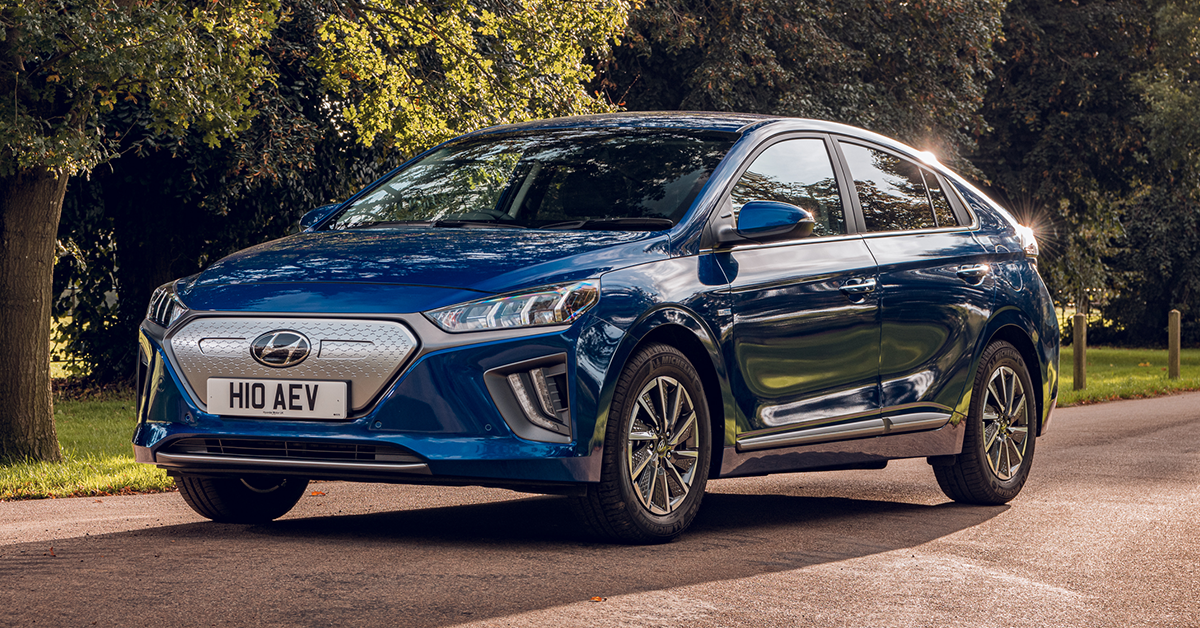
Official image of the Hyundai IONIQ. | © Hyundai Motor Company
The Hyundai IONIQ is the five-door liftback that Hyundai sold from 2016 to 2022 as a hybrid, a plug-in hybrid and an electric car on one platform. Hyundai’s own pages give the Geneva premiere, the engines and batteries, the 2019 update and the prices in the United States and the United Kingdom. This guide reads those pages first and uses reports only to fill gaps in them. It also covers safety, sales, the July 2022 end of production and the figures we could not confirm.
The Hyundai IONIQ is a five-door liftback that Hyundai sold from 2016 to 2022 in three forms: hybrid, plug-in hybrid and electric. Hyundai’s Australian page describes it as the world’s first vehicle platform with three electrified powertrains (Hyundai). Its Geneva page calls the drag coefficient of 0.24 class-leading (Hyundai). Hyundai’s European press release says production of the original IONIQ ended in July 2022 at the Ulsan plant in South Korea (Hyundai). This guide covers that original car only. The electric models sold later under the IONIQ name are covered separately.
| Years sold | 2016 to 2022 (Hyundai) |
| Body | Five-door liftback (Hyundai) |
| Versions | Hybrid, plug-in, electric (Hyundai) |
| Geneva premiere | March 1, 2016 (Hyundai) |
| End of production | July 2022, Ulsan (Hyundai) |
| Hybrid engine | 1.6 Kappa GDi (Hyundai) |
| Electric battery, 2016 | 28 kWh (Hyundai) |
| Electric battery, 2019 | 38.3 kWh (Hyundai) |
| Euro NCAP | Five stars (Hyundai) |
| U.K. start price, 2016 | 19,995 pounds (Hyundai) |
We read Hyundai’s own pages first: the European, U.K., U.S., Australian, Korean and worldwide pages, and the press sites on hyundai.news and hyundainews.com. Reference sites fill the gaps and carry the reported tag. Prices and availability may have changed since publication, and exchange rates are not applied. U.S. prices are in dollars, U.K. prices are in pounds and the Korean price is in won. Where Hyundai gives a figure we use it, and where only reports give it we say so.
The three versions share one body. Hyundai’s Geneva 2016 page gives the hybrid and plug-in a 1.6-liter Kappa petrol engine with 77 kW and 147 Nm and a six-speed double-clutch gearbox (Hyundai). Hyundai’s plug-in brochure gives a combined 141 PS (Hyundai). The electric first used an 88 kW motor and a 28 kWh battery, and from 2019 a 100 kW motor and a 38.3 kWh battery (Hyundai).
Efficiency was the selling point. Hyundai’s U.S. release of April 2017 says the IONIQ Hybrid had an EPA-estimated 58 mpg combined, the most efficient vehicle in the U.S. market without a plug (Hyundai). Its February 2017 release says the IONIQ Electric had an EPA-estimated 136 MPGe (Hyundai). Hyundai’s Geneva page gives all three versions a drag coefficient of 0.24, though a German technical sheet gives the hybrid 0.25 (Hyundai). Hyundai’s June 2022 release says 135,692 were sold in Europe from late 2016 to December 2021 and that the IONIQ kept five Euro NCAP stars throughout its life (Hyundai).
Hyundai’s U.K. announcement said prices started from 19,995 pounds when the hybrid and electric went on sale on 13 October 2016 (Hyundai). Hyundai’s U.S. 2017 hybrid price sheet lists the Blue at 22,200 dollars, the SEL at 23,950 dollars and the Limited at 27,500 dollars, before an 835 dollar freight charge (Hyundai). Hyundai’s U.S. April 2017 release calls the IONIQ Hybrid Blue’s 58 mpg the highest rating of any non-plug-in vehicle sold in the U.S. market, and its 2017 release gives the IONIQ Electric the highest efficiency rating of any electric vehicle sold there (Hyundai). Prices and availability may have changed since publication.
Later sections cover the 2016 launch, the powertrains, the dimensions and efficiency, the 2019 update, prices, safety, sales and the end of production, and the points where figures conflict. Our Hyundai Models article lists the range, our Hyundai history article covers the company, our Hyundai Kona article covers the Kona Electric that Hyundai lists from 2018 and our Hyundai Sonata article covers the Sonata Electric that Hyundai lists in 1991.
Hyundai’s Australian press page says the IONIQ line-up had its world premiere at the Geneva Motor Show on 1 March 2016, made up of the IONIQ Hybrid, IONIQ Electric and IONIQ Plug-in (Hyundai). It says all technical specifications were preliminary and subject to homologation (Hyundai). Hyundai’s European press release says the i-oniq concept debuted at the 2012 Geneva Motor Show (Hyundai).
| Concept | i-oniq, Geneva 2012 (Hyundai) |
| World premiere | Geneva, March 1, 2016 (Hyundai) |
| U.S. debut | New York, March 23, 2016 (Hyundai) |
| Hybrid production | January 2016 (Hyundai) |
| Electric production | July 2016 (Hyundai) |
| Plug-in production | February 2017 (Hyundai) |
| U.K. on sale | October 13, 2016 (Hyundai) |
| U.K. start price | 19,995 pounds (Hyundai) |
| First U.S. media drives | February 14, 2017 (Hyundai) |
| Launch safety kit | AEB, lane keep, blind spot (Hyundai) |
Hyundai Motor America unveiled the IONIQ Hybrid, Plug-in Hybrid and Electric for the U.S. market at the New York International Auto Show on March 23, 2016 (Hyundai). The U.S. release calls it the first car in the world to offer three distinct electrified powertrains on a single dedicated vehicle platform (Hyundai). Hyundai’s U.S. release says the first U.S. media drives began in Santa Barbara, California, on February 14, 2017 (Hyundai).
The rollout was staged by powertrain. Hyundai’s worldwide electrification page gives the production dates as hybrid in January 2016, electric in July 2016 and plug-in hybrid in February 2017 (Hyundai). Hyundai’s Geneva 2017 release says the plug-in was the last model launched in Europe, after the hybrid and electric in the second half of 2016 (Hyundai). A reference site gives the hybrid’s Korean release as February 2016 (reported).
In the U.K., Hyundai said the IONIQ Hybrid and IONIQ Electric would be on sale from 13 October 2016 with prices from 19,995 pounds, and the plug-in from mid 2017 (Hyundai). Hyundai’s later U.K. release says the plug-in went on sale priced from 24,995 pounds including the 2,500 pound Plug-in Car Grant, and calls it the third and final variant of the line-up (Hyundai). Hyundai’s U.K. release also says Hyundai was recognized at a 2016 awards event as the first manufacturer to offer a complete range of eco-technologies to U.K. customers, including the IONIQ and a hydrogen fuel cell car (Hyundai). Our figure is the launch price including that grant.
Hyundai’s later U.K. press kit for the IONIQ 6 says Hyundai first introduced the term IONIQ, which fuses ion and unique, when it announced Project IONIQ in 2016, a long-term research and development project focused on eco-friendly mobility, and introduced a vehicle named IONIQ later that year (Hyundai).
The Geneva page lists safety and comfort equipment at launch: autonomous emergency braking, lane keep assist, blind spot detection, rear cross traffic alert and smart cruise control, a 7-inch TFT instrument cluster, Android Auto, Apple CarPlay and TomTom live services (Hyundai). It also says smartphone wireless charging was offered (Hyundai). It gives no charging times or port types for the electric, so we take those from later pages. Hyundai’s New York release says the IONIQ offered the latest connectivity and active safety features (Hyundai). Its Geneva 2017 release says the plug-in combined award-winning aerodynamic design with a maximum five-star Euro NCAP rating (Hyundai). The New York release gives the plug-in an estimated electric range of more than 25 miles from an 8.9 kWh battery (Hyundai). Hyundai’s April 2017 U.S. release adds that the interior used renewable materials such as bio-fabrics and recycled plastics (Hyundai).
Hyundai’s Geneva page gives the hybrid and plug-in the 1.6-liter Kappa direct-injection petrol engine with 40 percent thermal efficiency, 77 kW and 147 Nm, paired with a six-speed double-clutch transmission (Hyundai). Hyundai’s U.S. release calls it an Atkinson-cycle four-cylinder (Hyundai). Hyundai’s later Australian specification lists the engine at 1,580 cc with a bore and stroke of 72 by 97 mm, a compression ratio of 13.0 and 105 PS at 5,700 rpm and 147 Nm at 4,000 rpm (Hyundai).
| Petrol engine | 1.6 Kappa GDi, 1,580 cc (Hyundai) |
| Engine output | 105 PS, 147 Nm (Hyundai) |
| Hybrid motor | 32 kW, 170 Nm (Hyundai) |
| Hybrid battery | 1.56 kWh (Hyundai) |
| Hybrid system output | 103.6 kW, 265 Nm (Hyundai) |
| Hybrid 0 to 100 km/h | 10.8 seconds (Hyundai) |
| Plug-in battery | 8.9 kWh (Hyundai) |
| Plug-in on-board charger | 3.3 kW (Hyundai) |
| Electric 2016 | 88 kW, 295 Nm, 28 kWh (Hyundai) |
| Electric top speed | 165 km/h (Hyundai) |
The IONIQ Hybrid’s motor is 32 kW, 43.5 PS and 170 Nm, and its battery is a 1.56 kWh lithium-ion polymer pack under the rear seats (Hyundai). The page gives a system output of 103.6 kW and up to 265 Nm, a top speed of 185 km/h and CO2 as low as 79 g/km (Hyundai). Hyundai’s Pacific page gives 0 to 100 km/h in 10.8 seconds and a 43.1 meter braking distance from 100 km/h (Hyundai).
The IONIQ Plug-in has a 45 kW motor and an 8.9 kWh battery, with an estimated pure electric range of over 50 km and CO2 as low as 32 g/km at Geneva (Hyundai). Hyundai’s Australian brochure lists a 44.5 kW motor, a 360 V battery, a 3.3 kW on-board charger and about 2 hours 15 minutes of charging on a 240 V supply (Hyundai). Hyundai’s later U.K. release gives the plug-in a 105 PS engine and a 61 PS motor (Hyundai).
The IONIQ Electric has an 88 kW motor with 295 Nm, a single-speed reduction gear, a 28 kWh battery, an estimated range of over 250 km and a top speed of 165 km/h at Geneva (Hyundai). Hyundai’s U.S. 2017 specifications give 88 kW, 118 hp, a 360 V battery, 28.0 kWh, 124 miles of range, 136 MPGe and 4 hours 25 minutes on a 240 V Level 2 charger (Hyundai).
The U.S. figures for the hybrid differ slightly. Hyundai’s U.S. pages give the hybrid 139 horsepower combined, and a U.S. 2019 release gives the plug-in’s engine 104 horsepower and 109 lb-ft of torque with a 44.5 kW (60 horsepower) motor (Hyundai). Hyundai’s U.S. 2018 release says the plug-in’s motor can operate at speeds up to 75 mph (Hyundai). Hyundai’s Korean page gives 105 PS and 15.0 kgm for the engine, 32 kW and 170 Nm for the motor and a 45 liter fuel tank (Hyundai). Its U.S. 2017 release gives the hybrid’s motor 125 lb-ft of torque, about 170 Nm by our conversion, which matches the 170 Nm in Hyundai’s other pages (Hyundai, our calculation).
Gearbox and drive are consistent across Hyundai’s pages. The hybrid and plug-in use a six-speed dual-clutch transmission and the electric uses a single-speed reduction gear, all front-wheel drive (Hyundai). Hyundai’s U.S. 2017 specifications give the electric a gross vehicle weight rating of 4,189 lb (Hyundai). A Hyundai brochure for Morocco gives combined torque of 265 Nm in first gear and 235 Nm in second to sixth for the hybrid (Hyundai). A reference site adds model code AE and a 78 kW, 150 Nm petrol engine rating (reported).
Hyundai’s Pacific specification page gives the IONIQ Hybrid a length of 4,470 mm, a width of 1,820 mm without mirrors and 2,045 mm with them, a height of 1,460 mm and a wheelbase of 2,700 mm (Hyundai). Hyundai’s Korean page gives the height as 1,450 mm (Hyundai). Hyundai’s U.K. technical data gives the same length, width and wheelbase for the hybrid, plug-in and electric and a turning circle of 10.6 meters (Hyundai). Hyundai’s Pacific page gives front and rear overhangs of 880 mm and 890 mm and front and rear tread of 1,563 mm and 1,577 mm (Hyundai).
| Length | 4,470 mm (Hyundai) |
| Width, without mirrors | 1,820 mm (Hyundai) |
| Height | 1,450 or 1,460 mm (Hyundai) |
| Wheelbase | 2,700 mm (Hyundai) |
| Turning circle | 10.6 meters (Hyundai) |
| Kerb weight, hybrid | 1,361 to 1,469 kg (Hyundai) |
| Kerb weight, electric | 1,420 to 1,475 kg (Hyundai) |
| Boot, hybrid | 443 or 456 liters (Hyundai) |
| Hybrid EPA | 58 mpg combined (Hyundai) |
| Plug-in EPA | 119 MPGe (Hyundai) |
The U.K. technical data gives kerb weights of 1,361 to 1,469 kg for the hybrid, 1,495 to 1,551 kg for the plug-in and 1,420 to 1,475 kg for the electric (Hyundai). The heaviest plug-in is 190 kg above the lightest hybrid, by our subtraction (Hyundai, our calculation). It gives a braked tow weight of 750 kg for the hybrid and plug-in and says the electric is not homologated for towing (Hyundai). It gives gross vehicle weights of 1,870 kg, 1,970 kg and 1,880 kg for the hybrid, plug-in and electric, and 15-inch front discs with 14-inch rear discs on the hybrid (Hyundai).
Luggage space depends on the source and the version. A Hyundai brochure for Morocco gives the hybrid a 443 liter boot and a 45 liter tank (Hyundai). A German technical sheet gives 456 liters by the VDA method, 563 liters and 1,518 liters with the seats folded (Hyundai). Hyundai’s plug-in brochure gives 341 liters up to the window line, 446 liters up to the roof and 1,401 liters with the rear seats down (Hyundai).
Hyundai’s brochure gives front head room of 1,024 mm and rear head room of 950 mm, front and rear leg room of 1,136 mm and 800 mm and shoulder room of 1,425 mm and 1,396 mm for the plug-in (Hyundai). Its hybrid brochure gives head room of 994 mm and 950 mm without a sunroof (Hyundai). The German sheet gives a frontal area of 2.22 square meters and a drag coefficient of 0.25 for the hybrid and 0.24 for the plug-in (Hyundai). It lists 205/55 R16 tires on 6.5J wheels for the plug-in (Hyundai).
On efficiency, Hyundai’s worldwide page says the IONIQ Hybrid was EPA-certified at 22.4 km/l (58 mpg) and was the most fuel-efficient hybrid in 2016 until 2018 (Hyundai). Hyundai’s Korean page gives the hybrid 22.4 km/l combined and 69 g/km of CO2 with 15-inch tires and an empty weight of 1,380 kg (Hyundai). Hyundai’s U.S. 2021 page lists up to 60 mpg on the highway for the hybrid (Hyundai).
The plug-in’s U.S. figures are 119 MPGe, 52 mpg in gas mode and about 29 miles of electric range (Hyundai). Hyundai’s Geneva 2017 release gives the plug-in up to 63 km of electric range, 26 g/km and 1.1 liters per 100 km on the NEDC cycle (Hyundai). Hyundai’s later WLTP figures put it at 1.1 liters per 100 km, 11.7 kWh per 100 km and 26 g/km (Hyundai).
Hyundai’s European release of 1 July 2019 says the new IONIQ gained Bluelink connectivity, SmartSense active safety and driving assistance, new infotainment and design updates inside and out (Hyundai). It says the IONIQ Electric’s battery grew to 38.3 kWh, which it describes as 36 percent more energy capacity (Hyundai). The battery grew from 28 kWh, an increase of about 37 percent by our calculation (Hyundai, our calculation).
| European update date | July 1, 2019 (Hyundai) |
| New connectivity | Bluelink (Hyundai) |
| Battery change | 28 kWh to 38.3 kWh (Hyundai) |
| Motor change | 88 kW to 100 kW (Hyundai) |
| Range, July 2019 target | 294 km WLTP (Hyundai) |
| Range, later | 311 km WLTP (Hyundai) |
| U.S. range, 2020 | 170 miles (Hyundai) |
| On-board charger | 7.2 kW (Hyundai) |
| DC charge to 80 percent | About 54 minutes (Hyundai) |
| U.K. start price, 2019 | 22,795 pounds (Hyundai) |
The first range figure was a target. Hyundai’s July 2019 release gave the new electric 294 km under an internal WLTP target, and its later release gave a real-world 311 km WLTP range (Hyundai). Hyundai’s European page says the 100 kW motor is powered by the 38.3 kWh lithium-ion polymer battery and that the on-board charger was upgraded to 7.2 kW, giving about 54 minutes to 80 percent on a 100 kW DC charger (Hyundai). Hyundai’s U.K. release says the hybrid and plug-in received a mesh radiator grille with three-dimensional cells (Hyundai).
Hyundai’s technical data sheet gives the 2019 electric a maximum power of 136 PS, 295 Nm, a top speed of 165 km/h, a battery power output of 113 kW, a voltage of 319.4 V and an energy density of 112.4 Wh/kg without the battery heater (Hyundai). Its motor is a permanent magnet synchronous type with a single-speed reduction gear (Hyundai). Hyundai’s Australian brochure gives about 6 hours 5 minutes on a 240 V supply (Hyundai).
Hyundai Motor UK announced the new IONIQ with prices from 22,795 pounds, a 10.25-inch navigation screen with Bluelink and a limited IONIQ Hybrid 1st Edition, in showrooms from 5 September 2019 (Hyundai). The release gives the electric a target range of 193 miles WLTP, and 311 km is about 193 miles by our conversion (Hyundai, our calculation). The U.K. start price was 2,800 pounds above the 2016 launch price (Hyundai, our calculation).
Hyundai’s U.S. release of November 20, 2019 introduced the 2020 IONIQ at the Los Angeles Auto Show with refreshed exterior and interior designs, added infotainment and new SmartSense features (Hyundai). The release says the hybrid, plug-in and electric were available to customers at that time (Hyundai). Hyundai’s Australian page of May 2019 carries the same announcement and the 294 km target (Hyundai). Hyundai’s U.S. 2019 page says the IONIQ Hybrid Blue had an estimated 58 mpg combined, the highest rating of any non-plug-in vehicle sold in the U.S. market (Hyundai). It says the electric’s range rose from 124 miles to 170 miles and its battery from 28 kWh to 38.3 kWh (Hyundai). The gain is 46 miles, about 37 percent, by our calculation (Hyundai, our calculation). The release says the 170-mile range exceeds that of a Nissan Leaf (Hyundai).
Hyundai’s U.S. 2020 page gives the IONIQ Electric 134 hp or 100 kW, 170 miles, 133 MPGe, a 319.4 V battery, a 7.2 kW on-board charger and DC fast charging with an SAE combo port (Hyundai). The U.K. release also says over 60,000 IONIQs had been sold since the 2016 launch (Hyundai). The release does not say whether that count is for Europe or worldwide.
Hyundai’s U.S. 2017 price sheet, effective February 13, 2017, lists the IONIQ Hybrid Blue at 22,200 dollars, the SEL at 23,950 dollars and the Limited at 27,500 dollars, with an 835 dollar freight charge (Hyundai). The Limited is 5,300 dollars above the Blue, by our subtraction (Hyundai, our calculation). The SEL is 1,750 dollars above the Blue (Hyundai, our calculation). The price sheet lists a Tech Package at 1,000 dollars and an Ultimate Package at 3,000 dollars (Hyundai). Hyundai’s February 2017 release lists the IONIQ Electric at 29,500 dollars and the Electric Limited at 32,500 dollars (Hyundai).
| U.S. 2017 hybrid Blue | 22,200 dollars (Hyundai) |
| U.S. 2017 hybrid Limited | 27,500 dollars (Hyundai) |
| U.S. 2017 electric | 29,500 dollars (Hyundai) |
| U.S. 2021 hybrid Blue | 23,400 dollars (Hyundai) |
| U.S. 2021 plug-in SE | 26,700 dollars (Hyundai) |
| U.S. 2021 electric SE | 33,245 dollars (Hyundai) |
| U.S. 2022 hybrid | 23,600 dollars (Hyundai) |
| U.K. 2016 start | 19,995 pounds (Hyundai) |
| U.K. 2019 start | 22,795 pounds (Hyundai) |
| Korea hybrid | 24,680,000 won (Hyundai) |
Hyundai’s U.S. 2021 page lists the IONIQ Hybrid at 23,400 dollars for the Blue, 25,350 dollars for the SE, 28,600 dollars for the SEL and 31,400 dollars for the Limited (Hyundai). The span is 8,000 dollars, and the 2021 Blue is 1,200 dollars above the 2017 Blue (Hyundai, our calculation). Hyundai’s 2022 page lists the hybrid at 23,600 dollars, 25,550 dollars, 28,800 dollars and 31,600 dollars (Hyundai).
For the plug-in, Hyundai’s U.S. 2021 page lists 26,700 dollars for the SE and 29,700 dollars for the SEL, and notes a federal tax credit of up to 4,543 dollars (Hyundai). Its 2022 page lists 26,800 dollars, 29,800 dollars and 33,250 dollars for the SE, SEL and Limited (Hyundai). The 2022 Limited is 6,450 dollars above the SE (Hyundai, our calculation). The tax credit was a government program that may have changed, so we do not apply it. Hyundai’s U.S. 2022 page lists the hybrid at 59 mpg combined for the base trim and 55 mpg combined for the SE (Hyundai).
For the electric, Hyundai’s U.S. 2021 page lists 33,245 dollars for the SE and 38,815 dollars for the Limited (Hyundai). The SE is 3,745 dollars above the 2017 base price of 29,500 dollars, and the Limited is 5,570 dollars above the SE (Hyundai, our calculation). The page compares it with a rival priced at 36,500 dollars (Hyundai). That is 3,255 dollars below the rival, by our subtraction (Hyundai, our calculation). Prices and availability may have changed since publication.
In the U.K., Hyundai’s announcements give 19,995 pounds from October 2016, 22,795 pounds for the new IONIQ range in 2019 and a later page that says the IONIQ was available from 24,045 pounds (Hyundai). The plug-in started at 24,995 pounds including the plug-in car grant, with the Premium SE from 26,795 pounds (Hyundai). The Premium SE is 1,800 pounds above that, and the 24,045 pound start price is 4,050 pounds above the 2016 launch price (Hyundai, our calculation). The later release says the IONIQ was named the highest rated car for owner satisfaction in a U.K. survey for the second year in a row (Hyundai).
Hyundai’s Korean page lists the IONIQ Hybrid at 24,680,000 won after tax benefits, which we do not convert (Hyundai). Hyundai’s European runout page says used IONIQs remain available with a warranty and roadside assistance (Hyundai). Used prices vary by market and we found no Hyundai page that gives them, so we give none.
Hyundai’s U.K. release says Euro NCAP tested the IONIQ and gave it the maximum five stars, with top marks in the adult occupant, child occupant, pedestrian and safety assist categories (Hyundai). Hyundai’s European release of 20 December 2016 says Euro NCAP named the IONIQ its Best in Class Car of 2016 in the small family car category, out of 18 new cars tested that year (Hyundai). The release says the IONIQ achieved top marks in all four categories (Hyundai).
| Euro NCAP, 2016 | Five stars (Hyundai) |
| Euro NCAP class award | Small family car, 2016 (Hyundai) |
| Rating kept in 2019 | Five stars (Hyundai) |
| Europe sales, 2016 to 2021 | 135,692 units (Hyundai) |
| Germany sales | Over 24,500 units (Hyundai) |
| Germany electric share | 38 percent (Hyundai) |
| Sold by mid 2019 | Over 60,000 units (Hyundai) |
| End of production | July 2022, Ulsan (Hyundai) |
| Direct successor | None planned (Hyundai) |
| Electric WLTP use | 13.8 kWh per 100 km (Hyundai) |
Hyundai’s release of 13 August 2019 says the new IONIQ maintained its five-star Euro NCAP rating for the hybrid, plug-in and electric (Hyundai). Hyundai’s June 2022 release says the IONIQ kept five stars throughout its lifetime (Hyundai). Hyundai’s U.K. release says autonomous emergency braking, lane departure warning, lane keeping assist and smart cruise control were standard (Hyundai). Hyundai’s U.S. 2022 pages list forward collision-avoidance assist with pedestrian detection and lane following assist on the plug-in SE, and blind-spot and rear cross-traffic collision warning on the SEL (Hyundai). We did not read the Euro NCAP datasheet. The 2019 release says the rating applied to adult, child and pedestrian protection and to the standard and optional safety systems (Hyundai).
Hyundai’s June 2022 release says 135,692 IONIQ models were sold in Europe from late 2016 to December 2021 (Hyundai). A German release says over 24,500 were sold in Germany, of which 36 percent were hybrid, 26 percent plug-in and 38 percent electric, which is about 8,820, 6,370 and 9,310 by our calculation (Hyundai, our calculation). The 2019 U.K. release gave over 60,000 sold since 2016 (Hyundai). The U.K. owner survey release says the IONIQ scored an average of 95.7 percent for satisfaction and 9.93 out of 10 for reliability (Hyundai).
The same release says the original IONIQ was the world’s first car designed from the ground up for hybrid, plug-in hybrid and battery-electric powertrains, and lists the Red Dot Design Award, two Good Design awards, a Green NCAP score and the Women’s World Car of the Year Supreme Award in 2017 and 2018 (Hyundai). It adds Car of the Year in Norway, Sweden and France (Hyundai). It lists eco test rankings in 2017 and 2019 (Hyundai).
The release says production ended in July 2022 at Ulsan and that the last IONIQ marked the end of a significant chapter in Hyundai’s recent history (Hyundai). It says no direct successor was planned and that the IONIQ spirit continues through the IONIQ electric line-up brand (Hyundai). Hyundai’s European runout page calls the worldwide discontinuation a long-planned decision to meet changing consumer demands (Hyundai).
In Amsterdam, Hyundai says a car-sharing service ran with 100 IONIQ electric cars and 2,200 charging stations, and special editions were made for the Van Gogh Museum (Hyundai). A reference site says the hybrid was also assembled in Kulim, Malaysia, and the electric in Addis Ababa, Ethiopia (reported). Hyundai’s European page gives the WLTP figures of 13.8 kWh per 100 km for the electric and 5.2 to 4.4 liters per 100 km for the hybrid (Hyundai).
Several figures conflict. The hybrid’s petrol engine is 77 kW and 147 Nm on Hyundai’s Geneva page and 78 kW and 150 Nm on a reference site (Hyundai, reported). The electric’s motor is 88 kW on Hyundai’s pages and 89 kW on the reference site (Hyundai, reported). The hybrid’s height is 1,460 mm on Hyundai’s Pacific page and 1,450 mm on its Korean and German pages (Hyundai). The Geneva page gives the plug-in a 45 kW motor and Hyundai’s brochure gives 44.5 kW (Hyundai).
| Hybrid engine, sources | 77 kW or 78 kW (Hyundai, reported) |
| Electric motor, sources | 88 kW or 89 kW (Hyundai, reported) |
| Hybrid height | 1,450 or 1,460 mm (Hyundai) |
| Electric range, 2019 | 294 km or 311 km (Hyundai) |
| Electric range, U.S. | 124 or 170 miles (Hyundai) |
| Plug-in electric range | 25 miles to 63 km (Hyundai) |
| Hybrid CO2 | 79 or 100 to 119 g/km (Hyundai) |
| Boot | 443, 446 or 456 liters (Hyundai) |
| Global sales total | Not found |
| Ulsan build total | Not found |
Range and CO2 figures differ by cycle and year. The 2019 electric is 294 km in July 2019 and 311 km later, and the U.S. rating rose from 124 to 170 miles (Hyundai). The plug-in’s electric range is more than 25 miles in 2016, about 29 miles in the U.S., up to 63 km on the NEDC and up to 39 miles in the U.K. (Hyundai). The hybrid’s CO2 is 79 g/km at Geneva and 100 to 119 g/km on later WLTP figures (Hyundai). The Geneva page gives a plug-in electric range of over 50 km and the Geneva 2017 release up to 63 km (Hyundai). The hybrid’s 0 to 100 km/h time of 10.8 seconds appears on one Hyundai page we read (Hyundai).
The plug-in’s total range differs too: Hyundai’s 2018 U.S. release gives more than 650 miles, its 2021 U.S. page gives 620 and 630 miles on the same page and its U.K. release gives 680 miles (Hyundai). Boot volume is 443, 446 or 456 liters depending on the page and method (Hyundai). We show each value with its source instead of choosing one.
Not confirmed: we found no global sales total for the IONIQ on a Hyundai page, no Euro NCAP datasheet we could read, no Hyundai page that says how many were built at Ulsan and no Hyundai page for the Malaysian and Ethiopian assembly. The Korean page’s empty weight of 1,380 kg sits inside the U.K. hybrid range of 1,361 to 1,469 kg, so we treat it as consistent (Hyundai). Hyundai’s U.S. 2021 page lists up to 60 mpg on the highway for the hybrid while its 2022 page lists 59 mpg combined, so we compare each figure only within its own model year and metric (Hyundai). We also found no Hyundai page that says whether the 60,000 figure of 2019 was for Europe or worldwide.
Dates also differ. Hyundai’s worldwide page gives the hybrid’s production start as January 2016 while the Geneva premiere was March 1, 2016 (Hyundai). The U.S. release for the media drives is February 14, 2017, and the U.S. pricing sheet is effective February 13, 2017 (Hyundai). We use each date for the event it describes and do not treat them as conflicts.
Things to watch are any Hyundai page that publishes the final production total, any Hyundai statement on used IONIQ support, and updates to the pages we cite, which Hyundai may retire as the model ages. To check this guide, begin with Hyundai’s press sites and compare dates before comparing numbers. Our Hyundai Models article lists the range and our Hyundai history article covers the company.
