 Brands
Toyota Just Confirmed Its Busiest Product Roadmap in Years
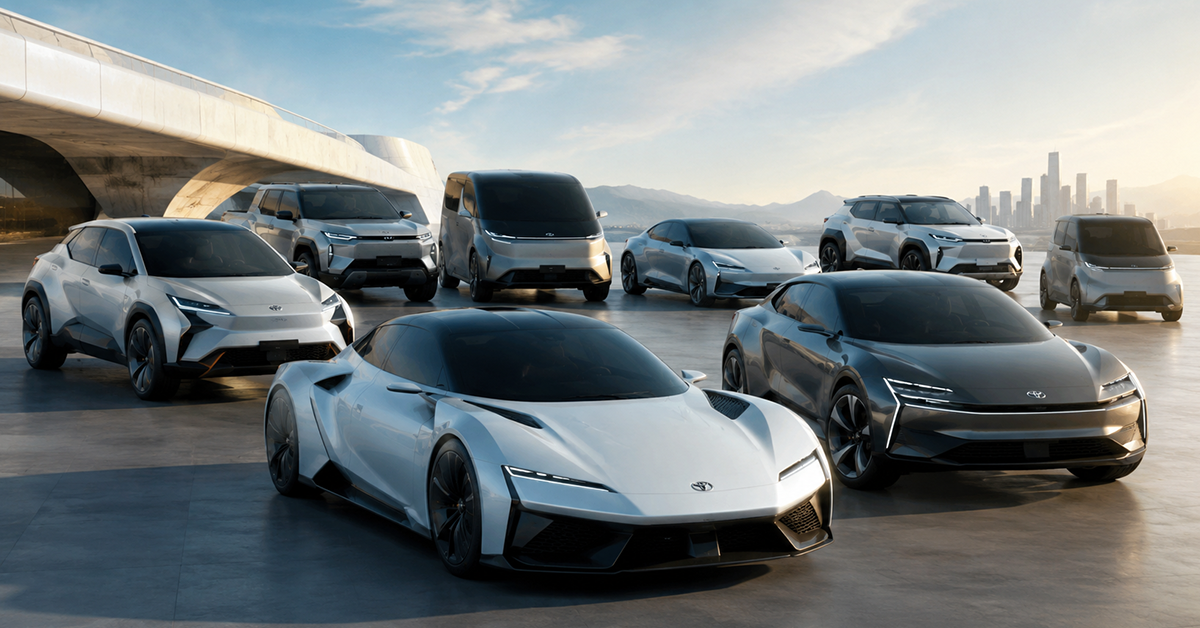
AI-generated concept illustration — Toyota's upcoming vehicle roadmap. | Rev N Rise
Unlike the speculative concepts Toyota shows at motor shows without commitment, everything in this guide has an official press release behind it. Toyota confirmed its first American-built EV, a retro-styled compact off-roader, a second three-row electric SUV, and a genuinely restyled Corolla — all within the same rolling announcement window. Here's exactly what's coming, and when.
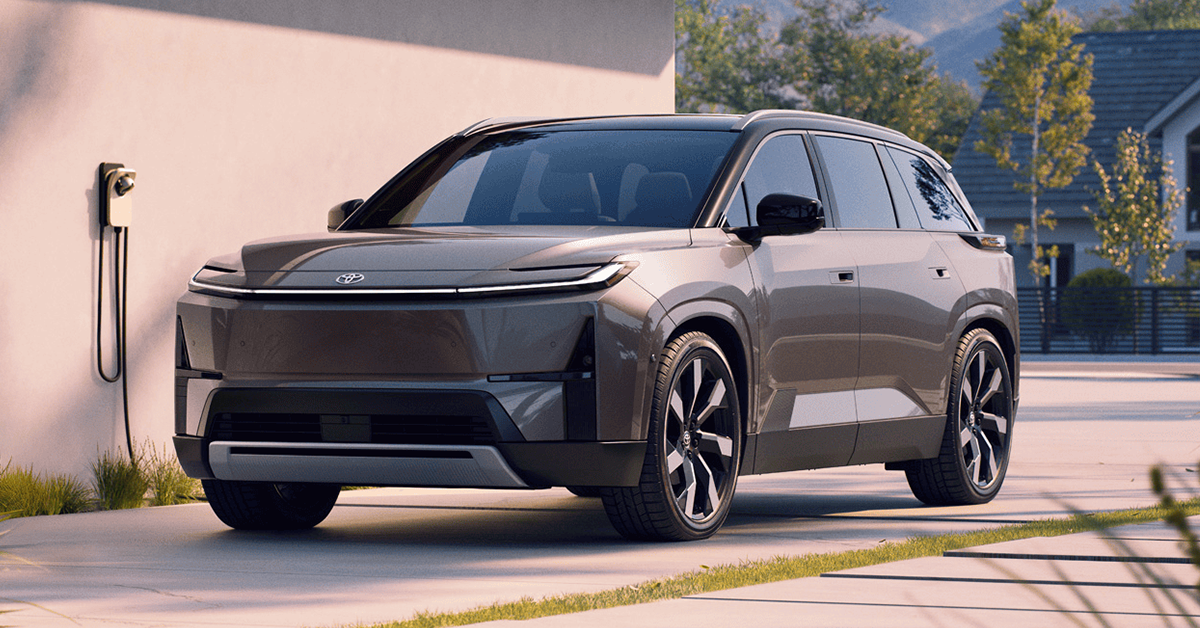
Official press image of the Toyota Highlander BEV. | © Toyota Motor Corporation
Officially unveiled by Toyota in February 2026, the 2027 Highlander BEV represents a genuinely significant milestone: it's the company's first battery-electric vehicle assembled on American soil, built at Toyota Motor Manufacturing Kentucky. AWD models produce 338 net combined horsepower with 198/125 lb-ft of front and rear motor torque respectively, while FWD models deliver 221 horsepower and 198 lb-ft of torque. Toyota's own chief engineer, Yoshinori Futonagane, described the goal as building a genuinely fun-to-drive BEV that “fits customers' lives and brings a smile to their faces with sharp acceleration feel and a quiet ride” — language considerably more enthusiast-focused than Toyota's typically conservative product messaging.
Seating up to seven across three rows, the new Highlander BEV joins the bZ, bZ Woodland and C-HR as Toyota's fourth dedicated battery-electric model sold in America, and the company has confirmed its total electrified lineup, spanning hybrids, plug-in hybrids and full EVs together, will soon reach 22 different models. Inside, the cabin gets a genuinely substantial technology upgrade over the outgoing gas and hybrid Highlander, with a 14-inch touchscreen, a 12.3-inch digital driver display, customisable ambient lighting and charging ports available in every row. The exterior styling moves decisively away from the conventional Highlander's familiar proportions, featuring full-length LED daytime running lights, flush door handles for improved aerodynamics, and an available fixed glass roof.
Genuinely useful beyond pure specifications, the new Highlander BEV also gains Vehicle-to-Load (V2L) capability, letting owners draw power directly from the car's battery to run campsite equipment, electric grills, or home appliances during a power outage — transforming the SUV from pure transportation into a genuine emergency power source. Worth noting: while Toyota's February 2026 reveal confirmed full specifications and Kentucky assembly, the company subsequently announced in July 2026 that production would be delayed for “additional adjustments” prior to launch, with no revised date given beyond a possible arrival in early or summer 2027. Toyota has confirmed it will continue building the current gas and hybrid Highlander in the meantime, so the specifications above describe a genuinely confirmed vehicle whose exact on-sale date remains somewhat less certain than its engineering.
Toyota's group vice president and general manager for the Toyota division, David Christ, described the new Highlander BEV as designed to be “a stylish, high-tech leader in the midsize SUV segment,” with a sleek new look, spacious interior and cutting-edge technology positioning it as a genuine centrepiece of the company's growing electric lineup rather than a cautious afterthought. The decision to build it domestically at the Kentucky plant carries genuine strategic weight beyond simple manufacturing logistics — it signals real, long-term commitment to American EV production capacity at a moment when several rivals have scaled back their own domestic electric vehicle investment plans.
Reviewer anticipation ahead of the Highlander BEV's eventual on-sale date has remained genuinely high, with automotive press consistently noting Toyota's decision to lean into instant electric torque and a low centre of gravity for genuine driving enjoyment, rather than treating electrification purely as an efficiency exercise. That framing matters considerably given Toyota's historically cautious public messaging around its earlier EV efforts, suggesting the company has grown genuinely more confident in positioning battery-electric vehicles as desirable on their own driving merits rather than purely as a compliance-driven product category.
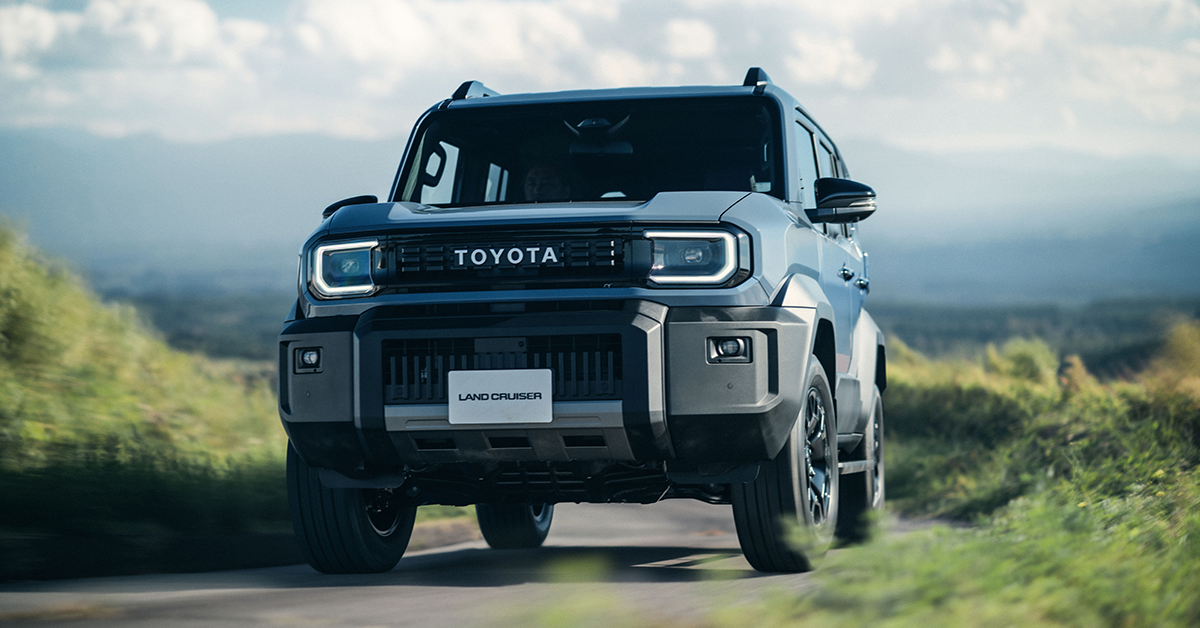
Official press image of the Toyota Land Cruiser FJ. | © Toyota Motor Corporation
Confirmed at its world premiere in October 2025, with a Japan launch planned for around mid-2026, the Land Cruiser FJ answers a question longtime enthusiasts have been asking for years: whether Toyota would ever genuinely revive the boxy, retro character of the beloved, long-discontinued FJ Cruiser. Built on the same IMV ladder-frame platform shared with the Hilux and Fortuner, the FJ measures a compact 4,575mm long with a 2,580mm wheelbase, a 5.5-metre turning radius and 215mm of ground clearance — genuinely small and manoeuvrable dimensions compared with the full-size Land Cruiser, prioritising trail agility over outright interior space.
Toyota has confirmed a 2.7-litre petrol engine producing 163 horsepower and 246Nm of torque, paired with a six-speed automatic transmission and part-time four-wheel drive, alongside expectations for strong-hybrid and plug-in hybrid variants aimed at maximising low-end trail torque in later configurations. Styling draws direct, deliberate inspiration from the classic FJ Cruiser and earlier Land Cruiser generations, featuring distinctive C-shaped LED daytime running lights and a genuinely nostalgic tailgate-mounted spare wheel, while the interior brings the model firmly into the present with a 12.5-inch touchscreen and fully digital gauges.
The Land Cruiser FJ represents a genuine expansion of what industry commentary has started calling Toyota's Land Cruiser “brand within a brand” strategy — rather than a single nameplate, Land Cruiser increasingly functions as an entire sub-family spanning the full-size flagship, the mid-size Prado sold internationally, the smaller American-market Land Cruiser, and now this genuinely compact, trail-focused FJ, each targeting meaningfully different buyers under one shared badge of off-road credibility.
The FJ's design philosophy centres on what Toyota has internally described as “Freedom & Joy” — a genuinely different priority from the full-size Land Cruiser's emphasis on maximum capability and passenger space, instead favouring a smaller, more agile footprint specifically suited to tight forest trails and dense urban environments alike. Reviewer reaction to the concept and subsequent production reveal has been consistently enthusiastic, with several outlets specifically praising Toyota's willingness to genuinely commit to retro styling cues rather than offering only a token nod to the FJ Cruiser's beloved design language.
Whether the Land Cruiser FJ eventually reaches American showrooms remains genuinely unconfirmed, since Toyota's initial launch plans focus specifically on the Japanese market for mid-2026, with international expansion timing left deliberately vague. Given the original FJ Cruiser's considerable American enthusiast following during its own production run, however, meaningful pressure exists within Toyota's dealer network for an eventual US introduction, even if official confirmation remains some way off from this current stage of the rollout.
Pricing for the Land Cruiser FJ remains officially unconfirmed, though its considerably more compact dimensions and simpler mechanical specification compared with the full-size Land Cruiser suggest genuine potential for a meaningfully more accessible entry point into the broader Land Cruiser family, should Toyota eventually decide to expand the nameplate's availability beyond its initial Japanese launch market and into other regions currently served by the Fortuner and Hilux.
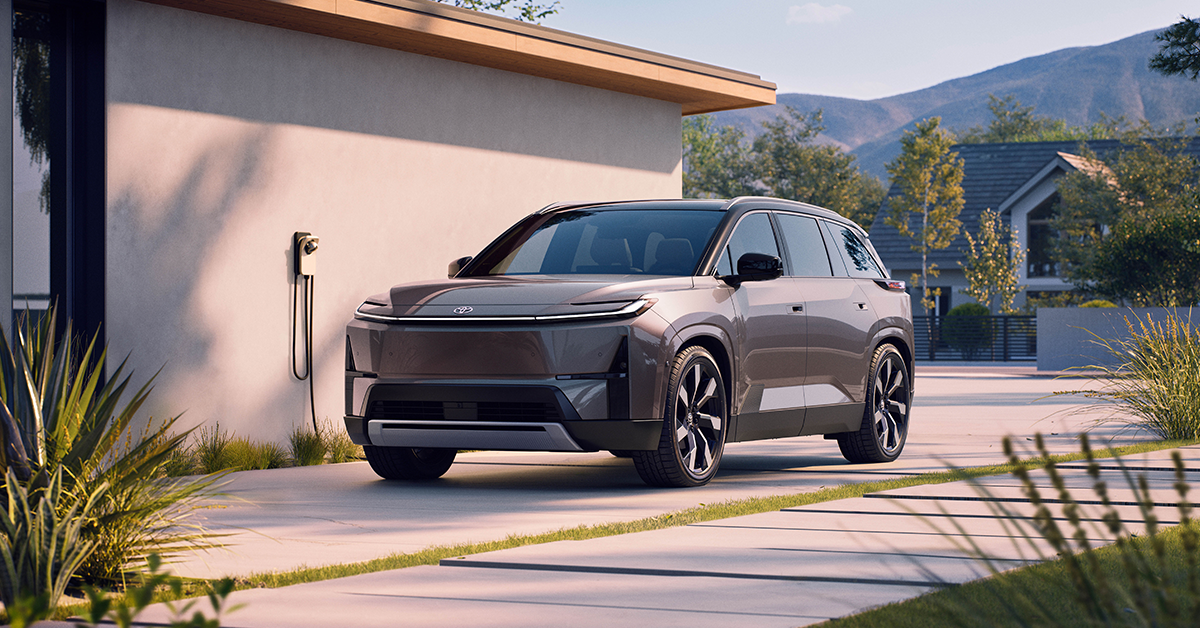
Official press image of Toyota's second three-row electric SUV. | © Toyota Motor Corporation
Beyond the Highlander BEV, Toyota has confirmed it's developing a genuinely separate second three-row battery-electric SUV, also built at the company's Kentucky manufacturing plant, positioned to slot above the Highlander BEV within the growing electric lineup. Details remain considerably less developed than the Highlander BEV's full specification reveal, but industry expectations point toward a genuinely larger, more premium three-row EV occupying territory closer to the gas-powered Grand Highlander's size and positioning, rather than simply a higher trim level of the same Highlander BEV platform.
The decision to build two genuinely distinct three-row electric SUVs, both assembled domestically, reflects real confidence within Toyota that American demand for family-sized EVs will continue growing meaningfully, rather than plateauing at a single model's capacity. Locating both models at the same Kentucky facility also gives Toyota genuine manufacturing flexibility, allowing production capacity to shift between the two nameplates depending on which one demonstrates stronger real-world sales momentum once both reach dealerships.
Toyota has not confirmed an exact launch date for this second three-row EV, though industry timelines consistently place it arriving after the Highlander BEV's own 2027 debut, likely as a 2028 model year vehicle. Whether it carries the Grand Highlander name directly, borrows from another existing nameplate, or launches under an entirely new badge remains genuinely unconfirmed this far ahead of any formal reveal, though its Kentucky production location alone confirms Toyota's continued, serious commitment to expanding domestic EV manufacturing capacity well beyond the Highlander BEV alone.
Industry analysts have pointed to this second three-row EV as genuine evidence that Toyota views its earlier, more cautious approach to full electrification as having shifted decisively toward real commitment, rather than remaining purely a hedge against regulatory pressure. Building two distinct three-row electric SUVs domestically, rather than importing a single global model or relying entirely on plug-in hybrid alternatives, represents a considerably larger financial and manufacturing bet than Toyota's public EV messaging suggested even just a few years earlier.
For American family buyers specifically, the eventual arrival of two genuinely differentiated three-row electric options gives Toyota a considerably stronger competitive position against rivals including the Kia EV9 and Hyundai Ioniq 9, both of which currently offer meaningfully fewer differentiated three-row EV choices within a single brand's own lineup. Toyota's willingness to split its three-row electric strategy across two distinct nameplates, rather than consolidating around one flagship model, suggests genuine confidence that different family buyers want meaningfully different combinations of price, size and equipment within the same broad category. Toyota has not ruled out eventually adding a third electric three-row option further down the line, though no such plans have been publicly confirmed at this stage of the company's broader electrification roadmap and product development cycle. Toyota's overall EV expansion strategy continues to prioritise domestic manufacturing wherever genuinely feasible, a pattern this second three-row SUV clearly follows, reinforcing the company's long-term American manufacturing investment and its confidence in continued domestic EV demand growth.
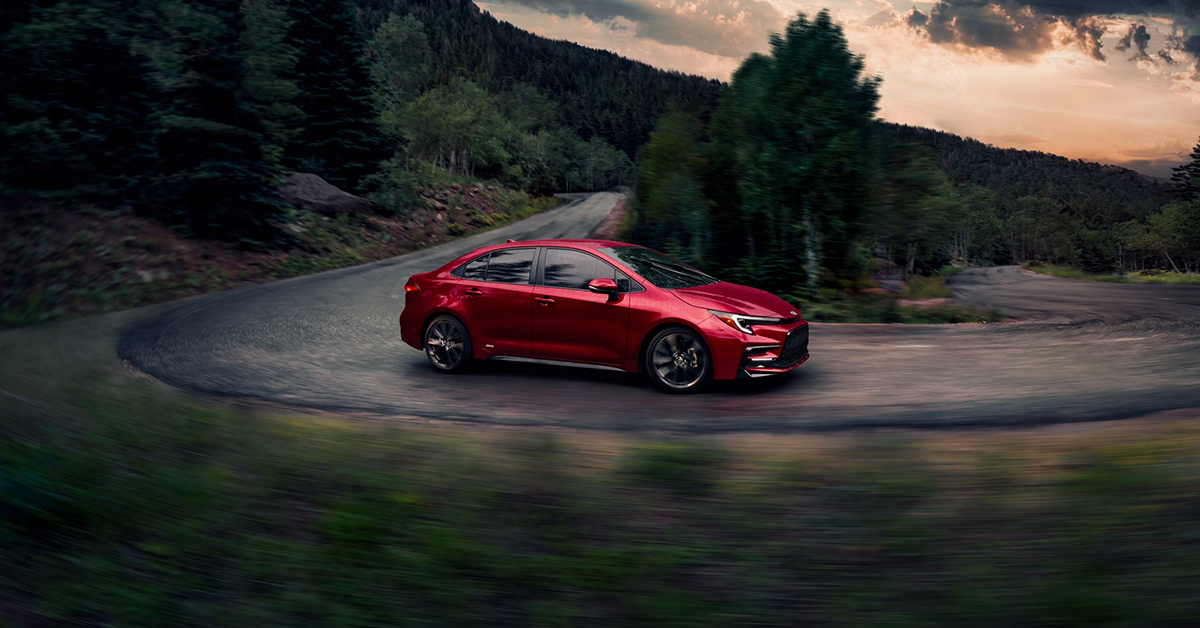
Official press image of the next-generation Toyota Corolla. | © Toyota Motor Corporation
Industry reporting points to a genuinely dramatic visual overhaul for the next-generation Corolla, expected around the 2028 model year, drawing meaningful design inspiration from the current Prius's considerably sleeker, more coupe-like silhouette and recent Toyota concept cars shown at the Japan Mobility Show. For a nameplate that has spent decades prioritising conservative, broadly inoffensive styling above nearly every other consideration, a genuinely bold redesign would represent a real departure — though Toyota has offered no official confirmation of specific styling details this far ahead of any formal unveiling.
Running in parallel, the Corolla Cross is expected to receive its own separate refresh, reportedly experimenting with an expanded interior layout aimed squarely at growing families who currently find the compact crossover's cargo and passenger space genuinely limiting compared with larger, pricier SUV alternatives in Toyota's own lineup. This dual-track approach, refreshing the sedan and crossover on separate timelines with genuinely distinct priorities, reflects how differently Toyota now treats the two body styles despite their shared underlying platform and nameplate heritage.
Toyota's broader strategy across both updates appears genuinely aimed at keeping the Corolla family competitive against a compact-car segment increasingly defined by considerably sportier styling from rivals like the Honda Civic and Mazda3, without abandoning the fundamental reliability and value proposition that has made Corolla the best-selling nameplate in automotive history. Whether the redesigned Corolla retains its current hybrid-first powertrain strategy or introduces genuinely new technology remains unconfirmed, though Toyota's consistent pattern across recent redesigns suggests continued, deepening hybrid investment is the far more likely direction.
The stakes for getting this redesign right are genuinely considerable given the Corolla's outsized importance to Toyota's global sales volume — any styling misstep risks alienating the nameplate's famously loyal, value-focused buyer base, while playing too conservatively risks ceding ground to increasingly stylish rivals actively courting younger compact-car shoppers. Toyota's own design studios have reportedly explored multiple styling directions internally before settling on the Prius-inspired approach industry reporting currently describes, reflecting genuine internal debate about how much visual risk the world's best-selling nameplate can reasonably absorb.
Toyota has offered no official confirmation of exact specifications, pricing or launch timing for either the redesigned Corolla or the refreshed Corolla Cross, and all current reporting should be treated as informed industry speculation rather than confirmed product planning. Given how far ahead of any formal unveiling these reports currently sit, meaningful details are likely to shift considerably before either vehicle reaches an actual dealer showroom. What does seem genuinely consistent across the various reports, however, is Toyota's clear intent to keep the Corolla nameplate visually and technologically competitive well into the next decade, rather than allowing it to gradually fade into pure legacy status the way some rival compact-car nameplates effectively have across recent model generations. Rev N Rise will continue tracking official confirmations as Toyota releases further details closer to any formal unveiling of either vehicle.