 Brands
Toyota Engines Explained: Types, Specs & Hybrids
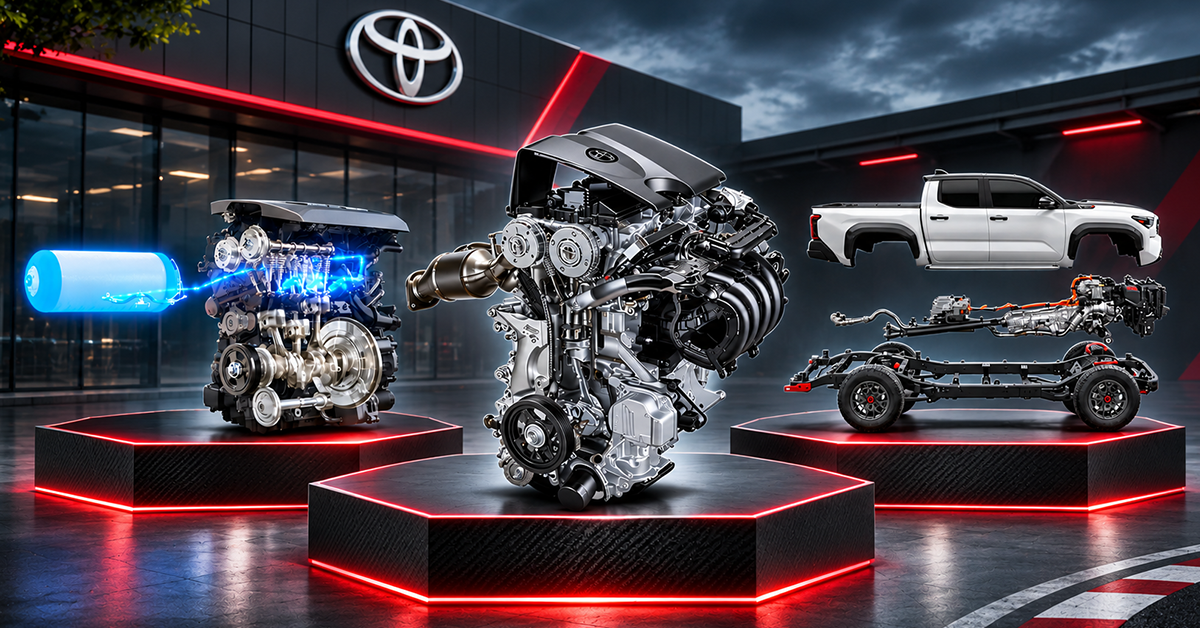
AI-generated concept illustration — Toyota's current engine lineup. | Rev N Rise
Everyone talks about Toyota's hybrids. Almost nobody talks about the engines actually doing the work underneath them — a genuinely remarkable family of combustion technology that quietly holds the thermal efficiency record for any mass-production gasoline engine, alongside a hydrogen-burning racing engine most people don't even know exists. Here's what's actually inside a modern Toyota, piece by piece.
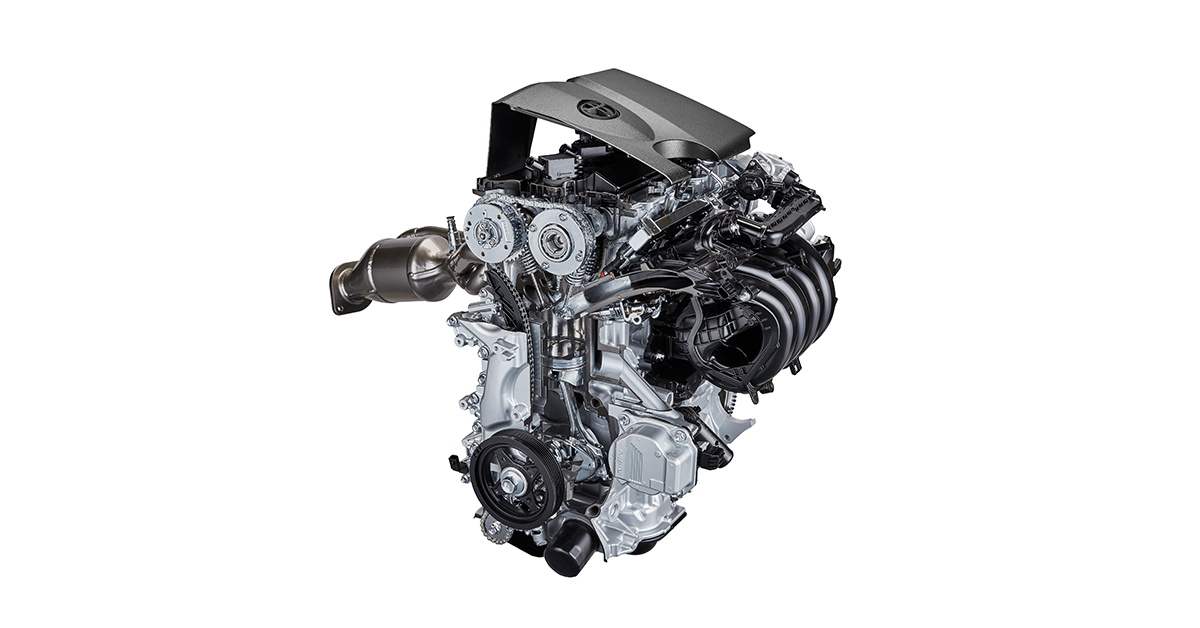
Official press image of the Toyota Dynamic Force engine. | © Toyota Motor Corporation
Toyota's core combustion platform, and the genuine technical foundation nearly every non-truck Toyota built since 2018 shares in some form. The flagship 2.5-litre A25A four-cylinder achieves 40 percent thermal efficiency in its conventional gasoline form, or a genuinely remarkable 41 percent in hybrid guise — figures that remain the benchmark for any mass-production gasoline engine anywhere in the world, seven years after their introduction. For comparison, a typical modern combustion engine manages roughly 35 percent efficiency, and it took the broader industry, by Nissan's own published research, nearly three decades to climb from 30 to 40 percent. Toyota got there specifically through high-speed combustion technology, a re-engineered stroke-to-bore ratio, and a widened intake-to-exhaust valve angle that straightens airflow through the combustion chamber.
The 2.5-litre Dynamic Force Hybrid variant, badged A25A-FXS, is genuinely the most widely deployed powertrain across Toyota's entire 2026 American lineup, powering seven separate models: the Camry, RAV4 Hybrid, Highlander Hybrid, Grand Highlander Hybrid, Sienna, Crown and Crown Signia. It pairs the Atkinson-cycle four-cylinder with one or two electric motor-generators, depending on application, routed through Toyota's planetary-gearset electronic CVT rather than a conventional stepped automatic — a genuinely different approach that lets the system hold the engine at its most efficient rpm continuously rather than shifting through discrete gear ratios the way a traditional transmission would.
Beyond the 2.5-litre, the family also includes a smaller 2.0-litre variant used internationally on the Corolla, Yaris and Yaris Cross, and a genuinely unique T24A-FTS twin-turbocharged V6 — the only turbocharged, and only V6, member of the Dynamic Force family, delivering between 349 and 416 horsepower depending on application, though with a somewhat lower 37 percent thermal efficiency reflecting the inherent trade-offs of adding forced induction. Toyota's underlying TNGA architecture strategy, which consolidated the company's engine portfolio from over 800 historical variations down to fewer than 20 active platforms, made this entire family possible by letting Toyota concentrate genuine engineering resources on perfecting a small number of core designs rather than spreading development thin across dozens of largely redundant engines.
Recent competitive pressure has emerged from an unexpected direction: Chinese manufacturers Geely and BYD both announced hybrid combustion engines in 2024 claiming thermal efficiency figures exceeding 45 percent, though these remain unverified and neither brand currently sells vehicles in the United States. Toyota's own engineers have acknowledged this growing competition publicly, framing it as genuine validation that thermal efficiency remains a meaningful battleground worth continued investment, even as the broader industry increasingly focuses development resources on full electrification instead.
Multiple variable systems work together across every Dynamic Force application to achieve these figures: a variable-flow cooling system, a variable-capacity engine oil pump, variable intake camshaft phasing, D-4S dual fuel delivery combining direct and port injection, and a cooled EGR assembly that recirculates exhaust gas to reduce combustion temperatures and emissions simultaneously. Toyota's own technical documentation describes this combination as collectively enhancing efficiency while reducing emissions, reflecting a genuinely holistic engineering approach rather than any single breakthrough technology alone explaining the family's benchmark performance.
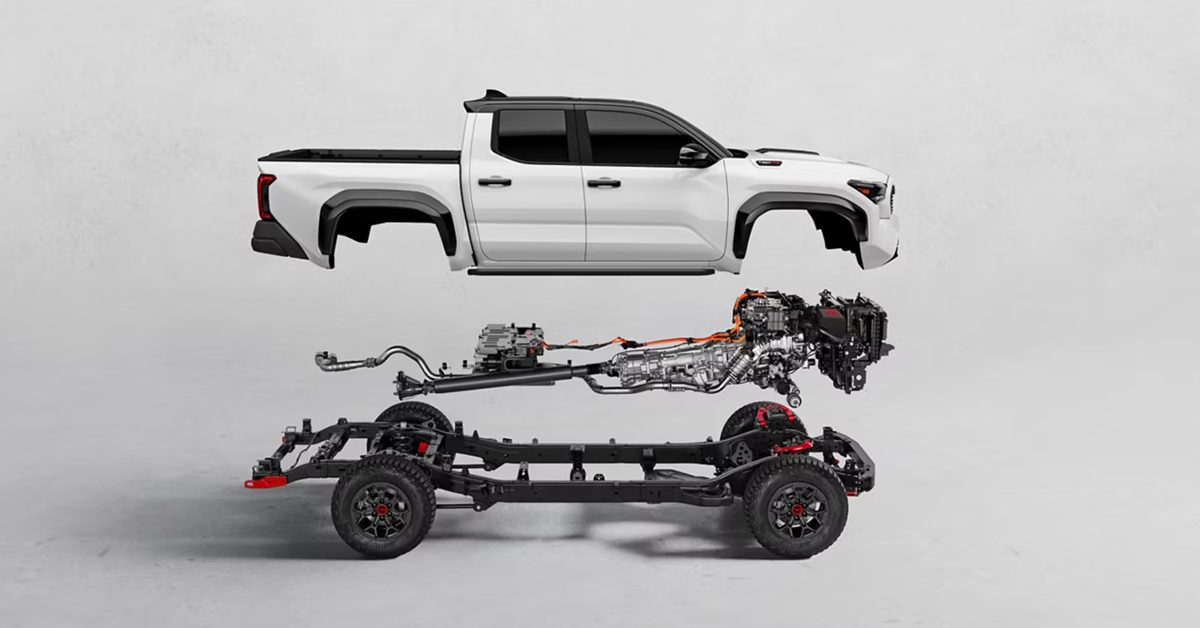
Official press image of the Toyota i-FORCE MAX hybrid powertrain. | © Toyota Motor Corporation
Toyota's dedicated hybrid system for trucks and body-on-frame SUVs, and a genuinely different engineering philosophy from the efficiency-first Dynamic Force Hybrid family. Rather than chasing maximum thermal efficiency above all else, i-FORCE MAX prioritises low-end torque and towing capability, pairing a turbocharged 2.4-litre four-cylinder with an electric motor for instant torque assistance during hauling and off-road situations where a conventional engine alone would need to work considerably harder. In the 4Runner specifically, the system combines the turbo engine with a 48-horsepower electric motor drawing from a 1.87kWh nickel-metal hydride battery, for a combined 326 horsepower and 465 lb-ft of torque — genuinely the most potent powertrain ever offered in that nameplate's history.
The same core i-FORCE MAX architecture scales across Toyota's truck and SUV lineup with application-specific tuning: the Tundra reaches up to 437 horsepower, the same peak output as the mechanically related Sequoia, while the Tacoma's application produces up to 326 horsepower, a genuine step up over that truck's standard turbo four-cylinder alone. Every i-FORCE MAX application routes through an eight-speed transmission, and Toyota specifically engineered the battery pack placement across every application to avoid compromising ground clearance, approach angle or departure angle compared with non-hybrid configurations — a genuine engineering priority given how central off-road capability remains to the core buyer identity of nearly every vehicle this system powers.
Standard equipment across every i-FORCE MAX application includes a 12.3-inch digital, customisable gauge cluster and wireless smartphone charging, and Toyota backs the system with the same extended hybrid battery warranty applied across its broader electrified lineup. Reviewer reception has grown increasingly positive as the technology has matured across multiple model years, with several outlets specifically noting the instant torque delivery genuinely transforms low-speed off-road crawling and towing situations compared with the conventional, non-hybrid engines these trucks and SUVs previously relied on exclusively.
Payload and towing figures across every i-FORCE MAX application remain genuinely class-competitive, and the system's engineering priorities reflect a fundamentally different philosophy from the Dynamic Force family covered above: rather than chasing maximum fuel economy above all else, i-FORCE MAX exists specifically to deliver genuine capability improvements truck and SUV buyers can immediately feel, particularly during towing, hauling and low-speed off-road manoeuvring where instant electric torque assistance matters considerably more than headline efficiency figures alone.
Toyota's decision to apply the same core i-FORCE MAX architecture across such a genuinely broad range of vehicles, from the mid-size Tacoma through the full-size Tundra and Sequoia, reflects the same underlying TNGA platform-sharing philosophy that made the Dynamic Force family possible, allowing Toyota to concentrate genuine engineering resources on perfecting one core hybrid truck powertrain rather than developing multiple bespoke systems for each individual nameplate. Toyota Safety Sense comes standard across every i-FORCE MAX application regardless of specific vehicle or trim, ensuring genuine capability upgrades never come at the expense of the active safety technology buyers rightfully expect from every modern Toyota. Owner satisfaction surveys consistently rank i-FORCE MAX among Toyota's most well-regarded recent powertrain introductions.
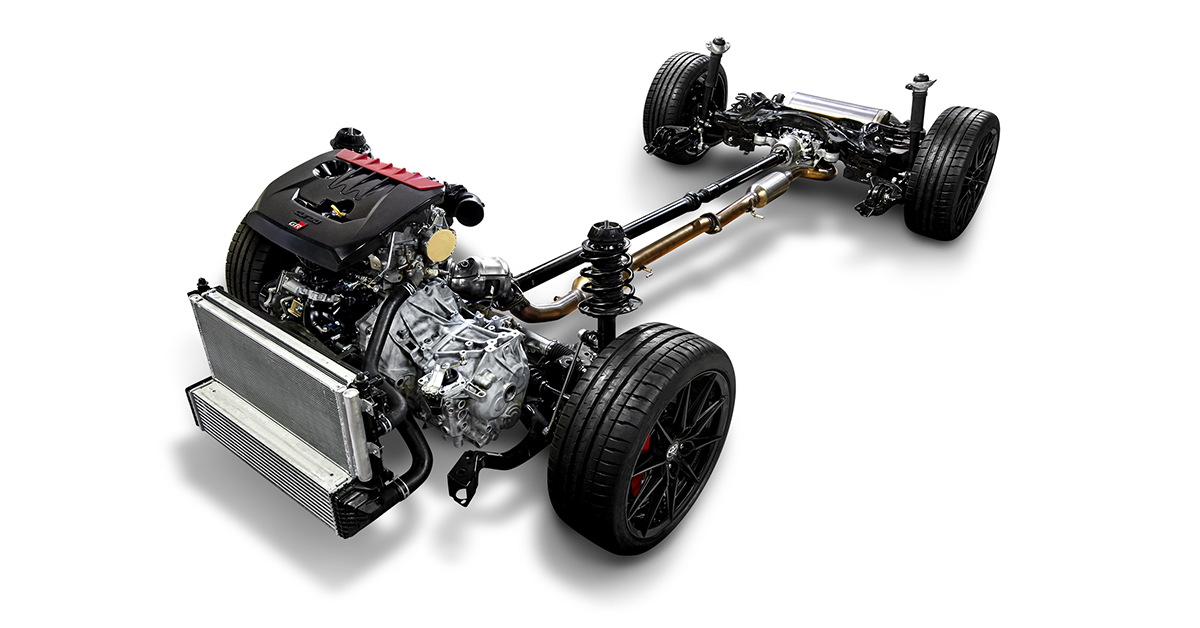
Official press image of the Toyota GR three-cylinder turbo engine. | © Toyota Motor Corporation
Toyota's most motorsport-derived production engine, and the genuine mechanical heart of both the GR Yaris and GR Corolla. Designated G16E-GTS, this turbocharged 1.6-litre three-cylinder unit produces up to 300 horsepower and 295 lb-ft of torque in North American GR Corolla applications, an output figure that remains genuinely exceptional for such small displacement, and among the highest specific outputs of any production three-cylinder engine ever built by any manufacturer. Output varies meaningfully by market and application, ranging as low as 257 horsepower in earlier European GR Yaris configurations, reflecting Toyota's willingness to tune the same fundamental architecture differently depending on regional regulations and specific vehicle requirements.
The engineering behind the G16E-GTS draws directly from Toyota's motorsport programmes rather than conventional passenger-car development, employing D-4S fuel injection that combines direct and port injection to optimise combustion across varying loads, alongside multi-oil-jet piston cooling specifically designed to manage the thermal stresses that come with sustained high-output operation. A 10.5:1 compression ratio balances genuine efficiency against meaningful boost potential, and the engine's lightweight, structurally rigid construction supports revs up to 6,500 rpm, a genuinely motorsport-appropriate ceiling for an engine this compact.
What makes the G16E-GTS genuinely significant beyond its own impressive output figures is how directly it connects showroom cars to actual competition: the same fundamental architecture has powered Toyota's factory rally programme through five seasons of World Rally Championship competition, meaning GR Corolla and GR Yaris owners are genuinely driving a close mechanical relative of Toyota's actual rally weapon rather than a purely marketing-driven “motorsport-inspired” badge exercise the way many rival performance models settle for instead.
Toyota Gazoo Racing has continued refining the G16E-GTS across successive production years based directly on accumulated competition data, including recalibrated electric power steering and retuned suspension changes for the 2026 model year specifically drawn from five seasons of World Rally Championship and Japanese Rally Championship experience. That continued refinement cycle illustrates how Toyota intends the engine's motorsport connection to function on an ongoing basis, rather than as a one-time marketing claim made purely at launch and left unchanged thereafter.
Owner satisfaction and reliability data for the G16E-GTS has remained genuinely strong despite its aggressive performance tuning, a combination that isn't always easy to achieve given how much added mechanical stress high specific output typically places on an engine's internal components. Toyota's extended hybrid and powertrain warranty coverage extends to GR-badged models as well, giving performance-focused buyers genuine long-term confidence that the same reliability reputation underpinning the rest of Toyota's lineup carries through to its most motorsport-derived production engine. Five-year cost-to-own figures for both GR-badged applications remain genuinely competitive within the broader hot-hatch segment, reinforcing that message with real ownership data rather than marketing claims alone. For buyers specifically weighing either GR model against rivals like the Honda Civic Type R, the G16E-GTS's genuinely distinctive character and soundtrack remain the deciding factor time and again, rather than raw specification-sheet comparisons alone.
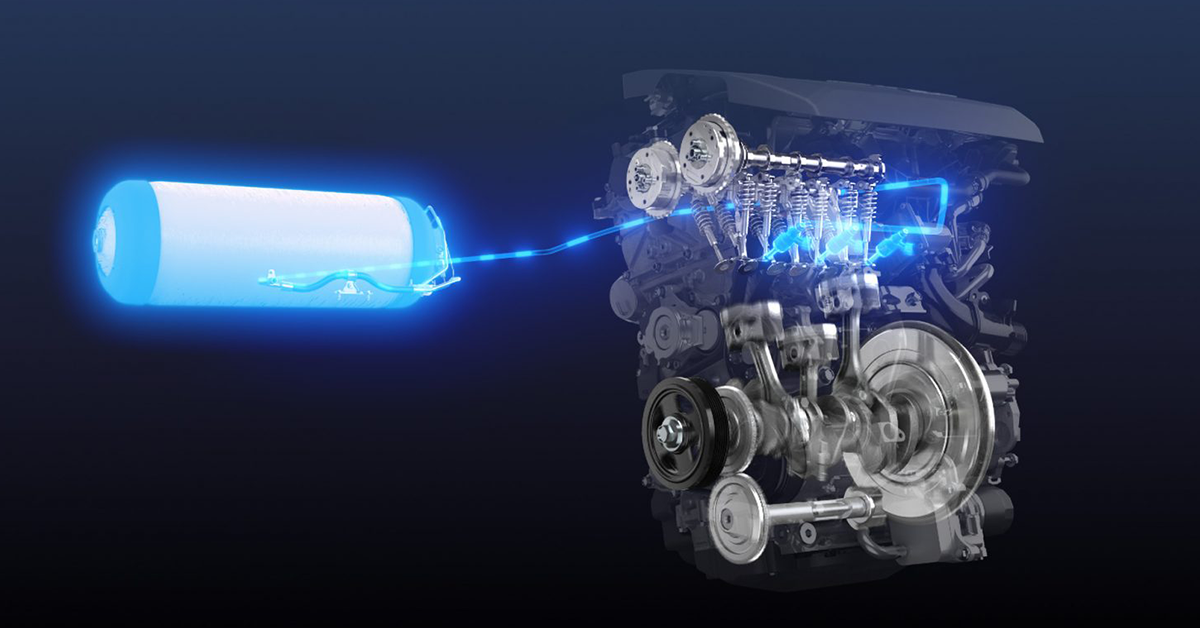
Official press image of the Toyota hydrogen combustion engine. | © Toyota Motor Corporation
Genuinely distinct from the Mirai's hydrogen fuel cell technology, and considerably less well-known: Toyota has spent years developing an actual hydrogen-burning combustion engine, built on a modified version of the same G16E-GTS three-cylinder architecture that powers the GR Yaris and GR Corolla. Rather than using hydrogen to generate electricity through a fuel cell stack, this engine burns gaseous or liquid hydrogen directly inside conventional combustion chambers, much like a normal gasoline engine burns fuel — a genuinely different technical approach that preserves the visceral engine note, gear-shifting and overall driving character enthusiasts associate with combustion engines, while still emitting essentially zero carbon dioxide from the tailpipe.
Toyota first raced a hydrogen combustion GR Yaris prototype in Japan's Super Taikyu endurance series back in 2021, and has continued refining the technology across successive racing seasons since, treating the programme explicitly as real-world development rather than a one-off publicity exercise. The engineering challenges involved are genuinely significant: hydrogen burns considerably faster than gasoline, requiring completely reworked fuel injection and ignition timing, and its low energy density by volume means storing enough hydrogen on board to complete a race, or eventually a road trip, demands genuinely innovative tank and fuel-delivery engineering compared with a conventional liquid-fuel setup.
Toyota has been candid that a genuine production hydrogen combustion vehicle remains uncertain and likely some years away, with the technology still firmly in active development rather than approaching any confirmed commercial launch. Even so, the programme matters considerably beyond its own uncertain production prospects — it represents Toyota's clearest possible statement that the company views hydrogen as a genuinely flexible energy carrier worth pursuing across multiple technical approaches simultaneously, rather than betting its entire hydrogen strategy on fuel cell technology alone.
The genuine appeal of hydrogen combustion technology, compared with fuel cell power, lies specifically in preserving elements of the traditional driving experience that battery-electric and fuel-cell powertrains alike fundamentally cannot replicate — genuine engine vibration, exhaust note, and the visceral sensation of revving toward redline that enthusiast drivers have specifically valued for well over a century of combustion-engine development. Toyota's continued public racing programme suggests the company views preserving that experience as genuinely worth pursuing, even as the broader industry increasingly treats combustion engines as a technology in managed decline rather than one worth continued innovation.
Toyota has also confirmed parallel exploration of liquid hydrogen storage specifically, rather than gaseous hydrogen alone, since liquid storage offers considerably better energy density for a given tank volume — a genuinely significant engineering advantage for any eventual road-going application, even though the cryogenic temperatures liquid hydrogen storage requires introduce their own substantial technical challenges around insulation, boil-off management and refuelling infrastructure that remain genuinely unresolved at this stage of the technology's development. Whatever form any eventual production hydrogen combustion vehicle ultimately takes, Toyota's willingness to keep racing and refining the technology year after year signals real institutional confidence that the underlying engineering genuinely deserves continued investment.