 Brands
Volkswagen ID.3 — History, Range, GTX, Neo and Specs

Official press image of the Volkswagen ID.3 shown at the IAA 2019. | © Volkswagen AG
The Volkswagen ID.3 is the compact electric hatchback that Volkswagen previewed as the I.D. concept in Paris in 2016, premiered in Frankfurt in 2019 and has built in Zwickau since November 2019. Here is the full ID.3 story, from the concept and the MEB platform to the batteries, the GTX versions, the 2026 ID.3 Neo and the end of ID.3 production in Dresden.
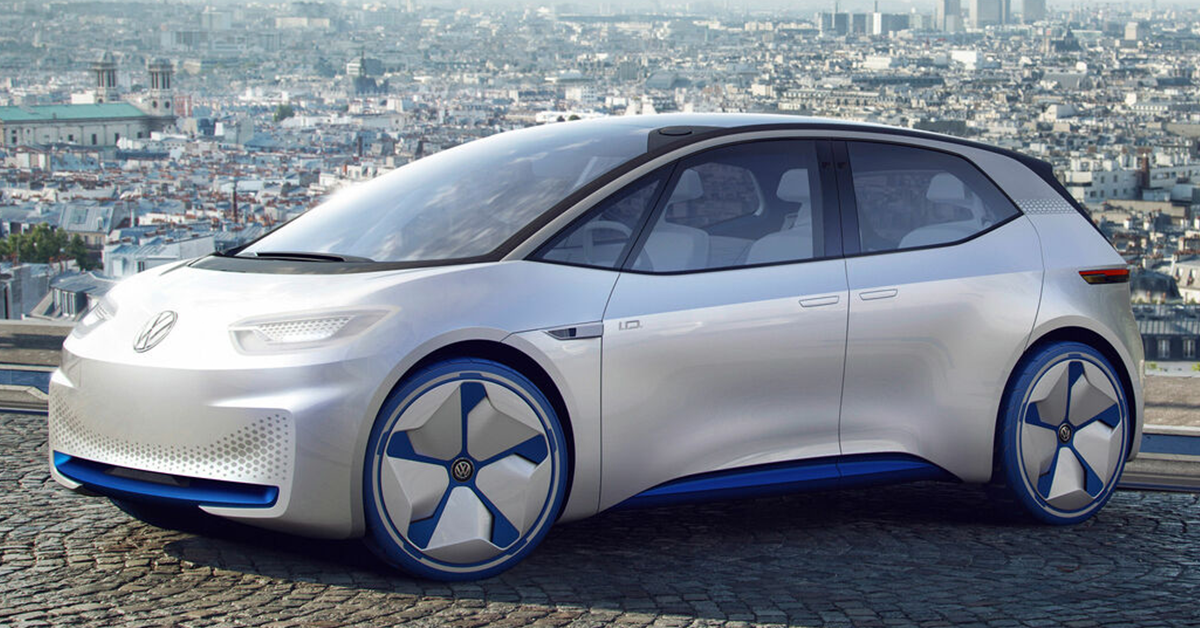
Official press image of the Volkswagen I.D. concept (Paris 2016). | © Volkswagen AG
The Volkswagen ID.3 is a compact electric hatchback built on the Modular Electric Drive Matrix, known by its German abbreviation MEB. Volkswagen presents it as the first model of its ID. family, and its premiere in September 2019 was staged as the start of a new era for the brand. Series production began in Zwickau on 4 November 2019, the first customer deliveries followed in September 2020, and in April 2026 Volkswagen unveiled an extensively updated successor called the ID.3 Neo. This article follows the car from its 2016 concept to the present day, and it covers the design, the batteries and motors, the plants that built it, the 2023 update, the GTX versions and the Neo.
| Concept shown | Paris Motor Show, 2016 (Volkswagen) |
| Production car shown | 9 September 2019, Frankfurt (Volkswagen) |
| Production start | 4 November 2019, Zwickau (Volkswagen) |
| First customer delivery | 11 September 2020, Dresden (reported) |
| Second plant | Dresden, January 2021 (Volkswagen) |
| Platform | MEB (Volkswagen) |
| Second generation | March 2023 (Volkswagen) |
| GTX range | 2024 (Volkswagen) |
| Dresden production ended | 16 December 2025 (Volkswagen) |
| Successor | ID.3 Neo, premiere 15 April 2026 (Volkswagen) |
The story starts with a concept. Volkswagen’s press release for the 2016 Paris Motor Show says the I.D. was the first compact Volkswagen based on the MEB, that it would be launched as a compact electric car in 2020 parallel to the Golf, and that it had a range of 400 to 600 kilometres. The same release says Volkswagen had set itself the goal of selling a million electric cars a year by 2025. At the show, Herbert Diess said the I.D. was still a concept vehicle but that Volkswagen would launch it on the market in a few years. Volkswagen’s later captions for the concept call it the first Volkswagen on the all-new electric-vehicle platform and the first prepared for automated driving.
The production car arrived three years later. Volkswagen’s press release of 9 September 2019 says the ID.3 was presented on the evening before the International Motor Show (IAA) in Frankfurt, and it calls the car the symbol of a new era for the brand. A reference source says Volkswagen confirmed the production name in May 2019. Pre-booking for the limited launch edition, the ID.3 1st, began in mid-May 2019 with a non-binding reservation of 1,000 euros. A Volkswagen newsroom item dated 4 September 2019 is titled “More than 30,000 reservations for the ID.3 1ST edition”, and a trade report later put the figure above 37,000 (reported).
Production started on 4 November 2019 at the Zwickau plant in Saxony. Volkswagen’s release for that day says the start was marked with a ceremony in the presence of Federal Chancellor Angela Merkel, and the company’s production-start page says Volkswagen was investing about 1.2 billion euros to convert the plant. Customer deliveries took longer than the factory start. Reports during 2020 described software problems that threatened to delay the car, and Volkswagen then fixed an early-September delivery date for the ID.3 1st. Trade reports say the first customer, Oliver Nicolai, received a white ID.3 1st in Dresden on 11 September 2020 (reported). A reference source says almost 57,000 cars were delivered in 2020 (reported).
From there the range kept growing. The Transparent Factory in Dresden began series production on 29 January 2021 as the second ID.3 site. In March 2023 Volkswagen presented what it called the second generation of the ID.3, a mid-cycle update with a sharper front end and a much improved interior. In 2024 the line widened with the Pro S upgrade, the ID.3 GTX, the GTX Performance and the entry-level Pure, and in September 2025 a limited ID.3 GTX FIRE+ICE went into production. Dresden built its last ID.3 on 16 December 2025. On 12 March 2026 Volkswagen announced that the successor would be called the ID.3 Neo, with a world premiere on 15 April 2026.
The ID.3 also has a place in the wider Volkswagen family tree. Volkswagen’s 2016 release positioned the I.D. alongside the Golf, and a US trade report of the 2019 premiere quoted the marketing chief as saying the car would be as large as a Golf on the outside and as spacious as a Passat on the inside (reported). That is a deliberate comparison with the model that has defined the compact class for the brand. Readers who want the story of that car can read our guide to the Volkswagen Golf, and the sections below cover the ID.3 itself in order: the concept and platform, the design and specifications, the battery and charging figures, the factories, the 2023 update, the GTX range and the Neo.
A note on sources before the detail. Specifications and dates in this article come from Volkswagen’s own press releases and newsroom pages wherever possible. Figures that come from a reference source or a trade report are labelled “reported”. Battery sizes are given as net energy content unless stated, because Volkswagen quotes net figures and gross figures can be several kilowatt-hours higher. Prices are German market prices and change over time, so they are given as dated snapshots, not current offers.
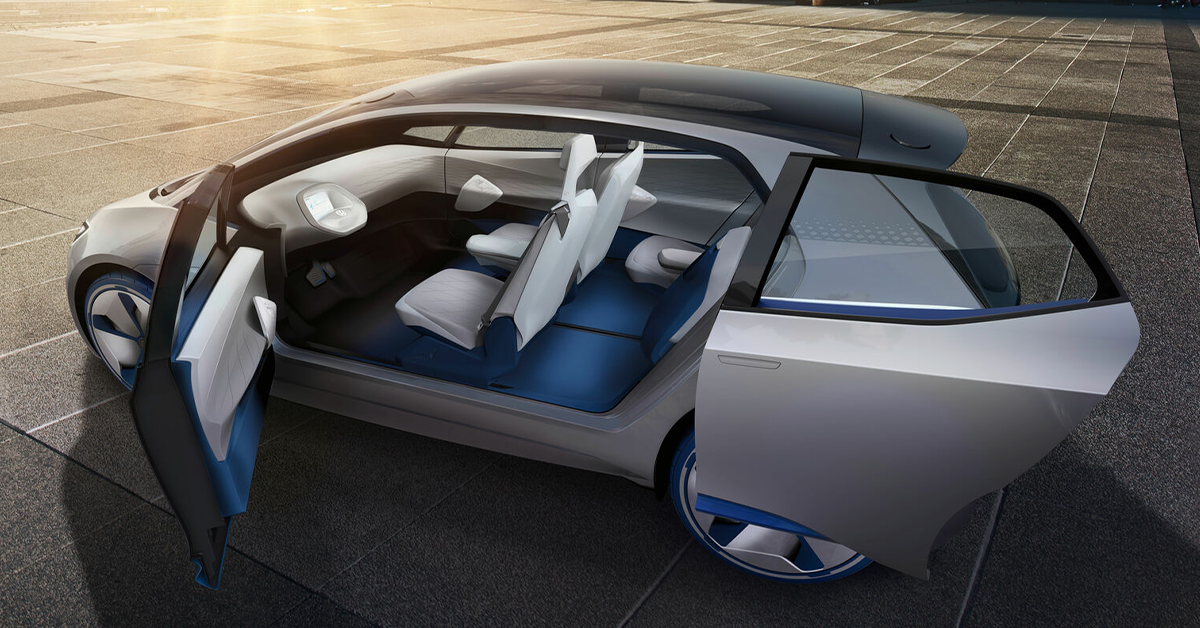
Official press image of the Volkswagen I.D. concept, showing its door layout. | © Volkswagen AG
To understand the ID.3 you have to start with the platform. MEB stands for Modularer E-Antriebs-Baukasten, which Volkswagen translates as the Modular Electric Drive Matrix, or toolkit in some of its releases. Volkswagen’s 2016 press release says the newly defined vehicle architecture of the I.D. was considered a milestone in car development at Volkswagen, and that the I.D. was the first compact Volkswagen based on it. A US news site wrote at the time that the platform had been previewed by the Budd-e concept at the January 2016 Consumer Electronics Show (reported). The idea behind the MEB was to give Volkswagen a dedicated electric layout, not a converted petrol car.
| Concept name | I.D. |
| World premiere | Paris Motor Show, 2016 (Volkswagen) |
| Platform | MEB (Volkswagen) |
| Planned launch | 2020, parallel to the Golf (Volkswagen, 2016 plan) |
| Range claim | 400 to 600 km (Volkswagen forecast, 2016) |
| Automated mode | I.D. Pilot, from 2025 (Volkswagen plan) |
| Door layout | No rigid B-pillars, swivelling rear doors (Volkswagen) |
| EV sales goal | One million a year by 2025 (Volkswagen, 2016 goal) |
| Group plan, 2019 | Almost 70 electric models by 2028 (Volkswagen) |
| First MEB plant | Zwickau (Volkswagen) |
The concept itself, shown at the Paris Motor Show in 2016, carried a good deal of technology that the production ID.3 never received. Volkswagen’s release says the I.D. offered a range of 400 to 600 kilometres, and that it demonstrated a fully automated driving mode, called I.D. Pilot, which the company planned to offer from 2025 onwards. The release also described a parcel delivery service in which the I.D. could receive packages when its owner was not at home. A trade report at the time quoted a 168 bhp electric motor for the concept (reported). Those ideas show how far the 2016 vision went beyond the car that eventually reached customers.
The design of the concept was just as unconventional. Volkswagen’s image description for the 2016 car says it had no rigid B-pillars, with the front and rear doors combining to provide protection when closed, and that the rear doors opened to the rear through a swivel mechanism. The production ID.3 has ordinary doors and conventional pillars. What it kept from the concept was the proportion: a short bonnet, a long wheelbase and a tall, rounded cabin that Volkswagen links to the packaging freedom of an electric platform with no engine at the front.
The MEB was shown to be flexible within months. A Volkswagen press release for the 2017 Detroit show described another I.D. family show car that was also based on the MEB, with two electric motors and all-wheel drive, and said it showed the potential and bandwidth of the toolkit. A reference source says the I.D. concept was displayed again at the 2017 Frankfurt show and at the 2018 Geneva show (reported). Together those appearances prepared the public for a family of electric models, and the ID.3 was always intended to be the first of them to reach customers.
Volkswagen’s plans for the platform were large. The company’s November 2019 production-start page says that Volkswagen was launching the world’s largest electric offensive, with almost 70 electric models across the Group by 2028 and up to 22 million electric cars produced and sold by the Group by 2028, most of them based on the MEB. The same page says Volkswagen planned more than 20 all-electric models from the brand itself by 2025. Those were targets set in 2019, and readers should treat them as the plan of that date and not as results. Volkswagen’s 2026 software release names the ID.4, ID.5 and ID.7 as the larger ID. models alongside the ID.3.
Design credit for the ID.3 is a point on which sources differ. Volkswagen’s own launch release quotes Klaus Bischoff, then Head of Design of the Volkswagen brand, saying that with the ID.3 Volkswagen was heading towards the future. One reference entry lists Marc Lichte for the concept and Klaus Zyciora, while another lists Klaus Bischoff, Marco Antonio Pavone, Felipe Montoya Bueloni and Ákos Száz (reported). Because Volkswagen does not publish a single design credit in the material reviewed, this article attributes only the quote to Bischoff and treats the names in the reference entries as reported. The same reference source says the Cupra Born is a related model on the same platform (reported).

Official press image of the Volkswagen ID.3 shortly before its 2019 premiere. | © Volkswagen AG
The ID.3 is a five-door, five-seat compact hatchback with a rear-mounted electric motor and rear-wheel drive. Volkswagen’s March 2023 press release gives the dimensions of the updated car: a length of 4,261 millimetres, a width of 1,809 millimetres (2,070 millimetres including the exterior mirrors), a height of 1,562 millimetres and a wheelbase of 2,770 millimetres. The boot holds 385 litres in its base form and 1,267 litres with the rear seatbacks folded and the load area filled to the roof. The 2019 launch material that this article reviewed did not publish exact dimensions, so the 2023 figures are the best official numbers available.
| Length | 4,261 mm (Volkswagen, 2023) |
| Width | 1,809 mm, 2,070 mm with mirrors (Volkswagen, 2023) |
| Height | 1,562 mm (Volkswagen, 2023) |
| Wheelbase | 2,770 mm (Volkswagen, 2023) |
| Boot | 385 litres, 1,267 litres with seats folded (Volkswagen, 2023) |
| Drag coefficient | 0.263, forecast (Volkswagen, 2023) |
| Seats | Five (Volkswagen) |
| Layout | Rear motor, rear-wheel drive (Volkswagen) |
| Drive unit weight | About 90 kg (Volkswagen, 2023) |
| Kerb weight | 1,787 to 2,000 kg, 2023 range (reported) |
Volkswagen’s 2019 premiere release explains the thinking behind the shape. It describes a long wheelbase with very short overhangs, which Volkswagen calls the Open Space interior, and it says the batteries are integrated into the underbody, which lowers the centre of gravity. The release also mentions an optimum weight distribution between the front and rear axles, which follows from a heavy battery in the middle of the car and a motor at the back. A US trade report of the premiere quoted the marketing chief as saying the car was as large as a Golf outside and as spacious as a Passat inside (reported).
The launch editions showed how Volkswagen planned to equip the car. According to the 2019 release, the basic ID.3 1st had navigation, DAB+ radio, heated seats, a heated steering wheel and 18-inch wheels. The 1st Plus added a rear camera, adaptive cruise control, keyless access and 19-inch wheels, and the 1st Max added an augmented-reality head-up display, a Beats sound system, a panoramic roof and 20-inch wheels. Volkswagen said the basic ID.3 would cost under 30,000 euros and the ID.3 1st under 40,000 euros. A trade report on the first delivery quoted German prices of 39,995, 45,995 and 49,995 euros for the three 1st versions before the environmental bonus (reported).
Performance in the original car was modest but adequate. The 2019 release gives 150 kilowatts and 310 newton metres of torque for the ID.3 1st, a top speed of 160 kilometres per hour, and a rear-mounted motor. Volkswagen’s 2023 release gives a time of 7.3 seconds from rest to 100 kilometres per hour for the ID.3 Pro and 7.9 seconds for the Pro S, which is heavier because of its larger battery. The same release gives a drag coefficient of 0.263, described as a forecast. Volkswagen does not state a kerb weight in that release, and gives only about 90 kilograms for the drive unit; a data site lists kerb weights from 1,787 to 2,000 kilograms across the 2023 range (reported).
Sustainability was part of the sales pitch from the start. The 2019 release describes the ID.3 as the first model to be carbon-neutral on delivery to customers, covering the battery, the supply chain and production. A footnote to Volkswagen’s December 2022 release explains the method: carbon emissions are avoided and reduced directly at Volkswagen where possible, and the remainder is offset by certified climate projects. The 2023 update went further on materials, with an interior that Volkswagen says contains no animal-derived materials, and an Artvelours Eco upholstery that it says is made from 71 per cent recyclate.
The interior changed more than the exterior over the car’s life. The 2023 release lists a 12-inch central touch display and a 5.3-inch driver display, an augmented-reality head-up display, ambient lighting in 10 colours as standard and 30 as an option, and USB-C power delivery connections in the centre console. It also lists the “Hello ID.” voice control, Travel Assist with swarm data and Park Assist Plus with a memory function. Later sections cover how the 2024 and 2026 updates changed the screens and software again.
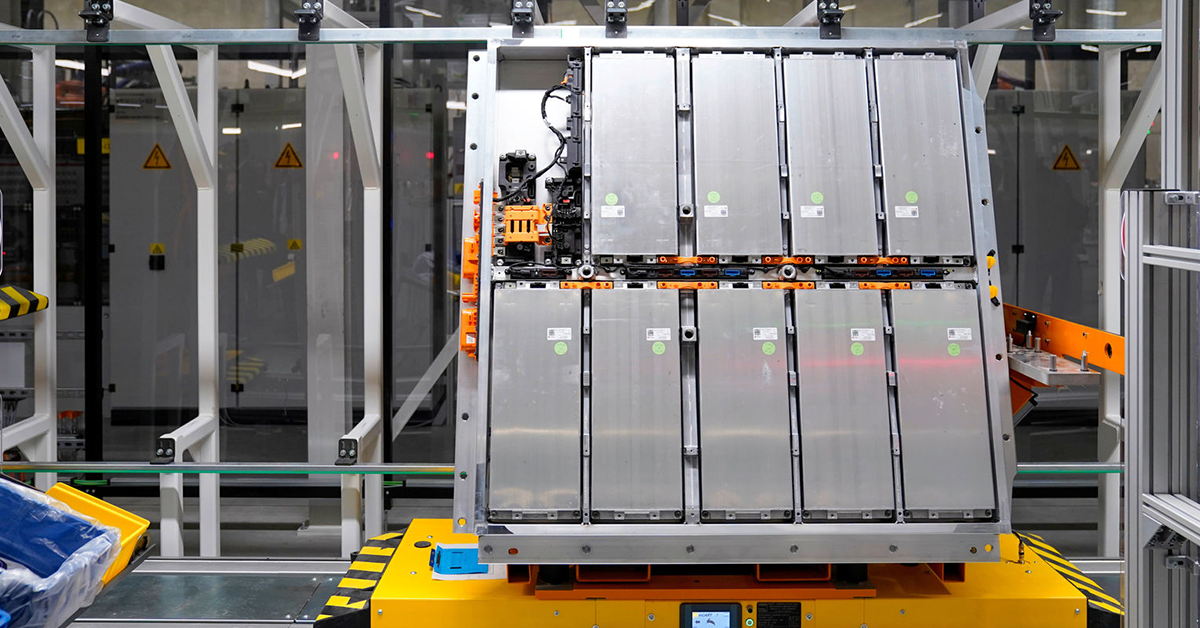
Official press image of the MEB battery system in production at the Volkswagen Group Components plant in Brunswick. | © Volkswagen AG
The ID.3 has been sold with a changing menu of batteries, and the numbers can be confusing because Volkswagen quotes net energy content and some sources quote gross. At the 2019 premiere Volkswagen announced three battery sizes: 45 kilowatt-hours usable, 58 kilowatt-hours and 77 kilowatt-hours, with WLTP ranges of up to 330, 420 and 550 kilometres respectively. The batteries sit in the underbody, and Volkswagen’s November 2019 page says the battery systems are produced in Brunswick, with capacity being expanded to up to half a million systems a year.
| 2019 batteries | 45, 58 and 77 kWh (Volkswagen) |
| 2019 WLTP range | Up to 330, 420 and 550 km (Volkswagen) |
| 2019 motor | 150 kW, 310 Nm, rear axle (Volkswagen) |
| Motor name | APP310 (reported) |
| 2023 Pro | 58 kWh, up to 426 km, 120 kW DC (Volkswagen) |
| 2023 Pro S | 77 kWh, up to 546 km, 170 kW DC (Volkswagen) |
| 2024 GTX | 79 kWh net, up to 604 km, 185 kW DC (Volkswagen) |
| 2024 Pure | 52 kWh net, up to 388 km, 145 kW DC (Volkswagen) |
| 2026 Neo batteries | 50, 58 and 79 kWh net (Volkswagen) |
| 2026 Neo range | Up to 630 km WLTP (Volkswagen) |
The motor in the launch car is a permanent-magnet unit on the rear axle producing 150 kilowatts and 310 newton metres. A reference source names it the APP 310 (reported), and a business news site later said that the ID.3 Neo uses a new rear motor called the APP350 that replaces the older APP310 (reported). Volkswagen’s own March 2023 release gives 150 kilowatts, which it converts to 204 PS, and 310 newton metres for both the Pro and the Pro S. In 2024 Volkswagen raised the Pro S to up to 170 kilowatts, and the Pro could be upgraded to 170 kilowatts later by a software upgrade, which a trade site called a first for Volkswagen over the air (reported).
Charging speed has improved over the years. In 2019 Volkswagen said that fast charging at 100 kilowatts would add about 290 kilometres of WLTP range in 30 minutes, and that the basic ID.3 1st included a Mode 2 charging cable. The 2023 release gives a DC charging time of 30 minutes at up to 170 kilowatts for the Pro S and 35 minutes at up to 120 kilowatts for the Pro, measured from 5 to 80 per cent. The Pro S range was quoted at up to 546 kilometres and the Pro at up to 426 kilometres, and a trade report said the Pro S improved to 559 kilometres in 2024 (reported).
The May 2024 expansion brought new battery sizes. Volkswagen’s press release for the GTX, Pro and Pure models gives 79 kilowatt-hours net in the ID.3 GTX, 59 kilowatt-hours net in the ID.3 Pro and 52 kilowatt-hours net in the new ID.3 Pure. The GTX can charge at up to 185 kilowatts and recharge from 10 to 80 per cent in about 26 minutes, with up to 604 kilometres of WLTP range. The Pro gets up to 434 kilometres and up to 165 kilowatts, up from 120 kilowatts, and the Pure up to 388 kilometres and up to 145 kilowatts. A trade report said the 79 kilowatt-hour battery is 84 kilowatt-hours gross (reported). The release adds that all new ID.3 models pre-condition the battery before the next DC charging stop.
The ID.3 Neo changes the menu again. Volkswagen’s April 2026 release lists net battery sizes of 50 kilowatt-hours as standard on the Trend, and 58 and 79 kilowatt-hours as options on the Life and Style. DC charging is up to 105 kilowatts for the 50 and 58 kilowatt-hour batteries and up to 183 kilowatts for the 79 kilowatt-hour battery. Outputs are 125 kilowatts (170 PS) with the 50 kilowatt-hour battery, 140 kilowatts (190 PS) with the 58 kilowatt-hour battery and 170 kilowatts (231 PS) with the 79 kilowatt-hour battery. The longest WLTP range is up to 630 kilometres, and combined consumption is 13.9 to 15.7 kilowatt-hours per 100 kilometres depending on the version.
Two further Neo details are worth noting. Volkswagen says the car gains vehicle-to-load capability, which lets it power external devices from the high-voltage battery at up to 3.6 kilowatts, and it offers one-pedal driving in which the car recuperates energy until it stops. The release describes a new, more efficient electric drive system with three motor options and higher torque with lower consumption than the previous motors. All figures above are WLTP values for the German market, and Volkswagen warns that actual values depend on equipment, driving style and conditions.

Official press image of the ID.3 production start at the Zwickau plant, November 2019. | © Volkswagen AG
The ID.3 has been built mainly in Saxony. Zwickau was the first plant to be converted for the MEB, and Volkswagen’s November 2019 production-start page says the ID.3 began production there on 4 November 2019. The page says the plant had a maximum output of 1,350 vehicles a day at that time, rising to 1,500 a day in the final expansion stage from 2021, and an annual capacity of up to 330,000 electric vehicles. It gives about 8,000 employees, and an investment of about 1.2 billion euros for the conversion. Volkswagen’s September 2019 release adds that 400 pre-series ID.3 had already been built before the start of production.
| Zwickau start | 4 November 2019 (Volkswagen) |
| Zwickau investment | About 1.2 billion euros (Volkswagen) |
| Zwickau capacity | Up to 330,000 electric vehicles a year (Volkswagen) |
| Dresden start | 29 January 2021, 35 cars a day (Volkswagen) |
| Dresden before the ID.3 | Phaeton 84,235; e-Golf 50,401 (Volkswagen) |
| Dresden ID.3 output | 22,460, 2021 to 2025 (Volkswagen) |
| Dresden 2024 and 2025 | 5,500 and 6,200 (Volkswagen) |
| Anting, South China | Named as an ID.3 plant in 2023 (Volkswagen) |
| Wolfsburg | Planned from 2023 (Volkswagen) |
| Built in Saxony by September 2025 | More than 350,000 (Volkswagen) |
Dresden is the second site, and it has the most unusual history. Volkswagen’s Transparent Factory opened in 2001 and, according to Volkswagen, built 84,235 Phaetons between 2001 and 2016, plus 2,186 Bentley Flying Spurs. It then built the e-Golf from March 2017, and Volkswagen says 50,401 e-Golfs were made there before production ended in December 2020. Our Volkswagen Phaeton guide covers the car that the factory was originally built for. The ID.3 started in Dresden on 29 January 2021 with one shift and 35 vehicles a day from Monday to Friday, and Volkswagen called it the fourth site in the world producing MEB-based Volkswagen models, with Zwickau the first.
Volkswagen’s own newsroom shows that the Dresden timeline slipped. An image title dated November 2019 says the ID.3 would be assembled in the Gläserne Manufaktur from fall 2020, but the plant was converted for the MEB in 2020 and early 2021, and series production began in January 2021. The January 2021 release gave deliveries from Dresden as 3,296 in 2020, an expected figure of more than 5,000 in 2021 and a goal of about 9,700 a year by 2022. It also described the plan to deliver cars made in Dresden primarily in Dresden, which gives the site its role as a delivery centre as well as a factory.
A third and fourth production location were announced. Volkswagen’s March 2023 release says that the ID.3 was currently produced in Zwickau, Dresden and Anting in South China, and that the main plant in Wolfsburg would join them in 2023, from autumn according to the premiere release. A trade report said Volkswagen would invest about 460 million euros in the Wolfsburg plant, with partial production in 2023 and full production in 2024 (reported). This article uses Volkswagen’s stated plan for Wolfsburg, because a later confirmation of its actual ID.3 output was not found in the sources reviewed.
Volkswagen has published several milestones for the Saxon plants. A September 2025 release says that since the official start of production in November 2019, more than 350,000 ID.3 had rolled off the lines in Zwickau and Dresden in different variants and with different battery sizes. A separate Volkswagen release says that the one-millionth electric vehicle built at the multi-brand Zwickau site was an ID.3 GTX Performance in Kings Red Metallic, and that almost every second registered electric car of the Volkswagen Group worldwide comes from Zwickau. The September 2025 release also notes that the ID.3 from Saxony is available in South America.
The Dresden output figures show how small the second site was. Volkswagen’s Transparent Factory page gives 22,460 ID.3 built between 2021 and 2025, with 5,500 in 2024 and 6,200 in 2025. That is a fraction of the Zwickau output, which also builds electric models for Audi and Cupra. Dresden’s role was therefore as much about showing visitors how an electric Volkswagen is made, with tours and test drives, as about volume. The last chapter of that story, the closure of ID.3 production in December 2025, is covered in the final section.

Official press image of the second-generation Volkswagen ID.3, March 2023. | © Volkswagen AG
Volkswagen revealed the updated ID.3 on 1 March 2023 in a release titled “Enhanced quality, likeable, digital”. The company called it the second generation of the ID.3, although the car is a mid-cycle update of the 2019 design on the same platform. Volkswagen had previewed it in December 2022 with a sketch and the news that the new ID.3 would arrive in spring 2023, with customers who ordered at that point expected to receive their cars from the fourth quarter of 2023 because of a high order backlog. The release said the update implemented customer feedback, and it concentrated on quality, design and operation.
| Premiere | 1 March 2023 (Volkswagen) |
| Called | Second generation (Volkswagen) |
| Pro | 58 kWh, 150 kW (204 PS), 310 Nm (Volkswagen) |
| Pro S | 77 kWh, 150 kW (204 PS), 310 Nm (Volkswagen) |
| 0 to 100 km/h | 7.3 s Pro, 7.9 s Pro S (Volkswagen) |
| Top speed | 160 km/h (Volkswagen) |
| Screens | 12-inch central, 5.3-inch driver (Volkswagen) |
| New colour | Dark Olivine Green with black roof (Volkswagen) |
| Deliveries | From the fourth quarter of 2023 (Volkswagen) |
| Pro S price, Germany | From 47,595 euros (reported) |
The exterior changes were deliberate but modest. Volkswagen’s long press release says the front bumper and bonnet were redesigned and the black strip under the windscreen was removed. It lists larger, optimised air intakes with an electrically actuated radiator blind, two-part tail light clusters that are fully red when illuminated, and optional IQ.LIGHT LED matrix headlights. A new colour, Dark Olivine Green, was paired with a black roof. A trade site called the update a mid-cycle facelift more than an all-new model, with only mild design tweaks (reported), which matches how Volkswagen describes the exterior work.
Inside, the changes were more visible. The 2023 release lists a 12-inch central display, a 5.3-inch driver display, an augmented-reality head-up display, and a centre console with USB-C power delivery connections. Volkswagen stressed the materials: the interior contains no animal-derived materials, and the Artvelours Eco upholstery is described as 71 per cent recyclate. Ambient lighting offers 10 colours as standard and 30 as an option. A UK car-buying site noted that British customers would at first get a 10-inch screen, with the larger 12.9-inch unit due the following year (reported).
The technology list shows Volkswagen trying to answer complaints about the first car. The 2023 release lists the latest software with over-the-air updates and features on demand, Travel Assist with swarm data, Park Assist Plus with memory, an Electric Vehicle Route Planner, Plug and Charge, and the “Hello ID.” voice control. It gives the charging times covered earlier and keeps the 150 kilowatt motor, with 0 to 100 kilometres per hour in 7.3 seconds for the Pro and 7.9 seconds for the Pro S. A UK trade site said the battery and motor options were unchanged by the facelift (reported).
The range was then simplified and reshaped. A German car magazine reported that the 2023 Pro S with the 77 kilowatt-hour battery started from 47,595 euros in Germany (reported), and a later report in 2024 gave 47,595 euros for the Pro S and 39,995 euros for the Pro (reported). Volkswagen’s own 2024 release, number 49/2024, says that the Pro S output rose to up to 170 kilowatts and that pre-sales for the Pro S with the 77 kilowatt-hour battery had opened, with further variants to follow shortly. The Pro S therefore went from 150 to 170 kilowatts within the car’s second generation.
The 2023 update is also where Volkswagen widened its production plan. The same March 2023 release says the production network was being extended, with Wolfsburg joining Zwickau, Dresden and Anting. Taken together, the update shows the ID.3 changing from a showcase of the MEB into a volume product that Volkswagen was improving in steps: new materials and screens first, then a stronger Pro S, then the sporty GTX range in 2024. The next section follows that last step.

Official press image of the Volkswagen ID.3 GTX (2024). | © Volkswagen AG
In 2024 the ID.3 range gained a sporty flagship. Volkswagen’s press release of 30 May 2024 says the ID.3 GTX has the new Performance drive with 210 kilowatts (285 PS) and a maximum torque of 545 newton metres, accelerating to 100 kilometres per hour in 5.9 seconds with an electronically limited top speed of 180 kilometres per hour. It uses the 79 kilowatt-hour net battery covered earlier. The release also introduced the ID.3 Pro at 150 kilowatts, with 170 kilowatts optional through a later software upgrade and 0 to 100 in 6.6 seconds with that upgrade, and the ID.3 Pure at 125 kilowatts as the new entry-level version.
| GTX output | 210 kW, 285 PS or 286 PS (Volkswagen) |
| GTX torque | 545 Nm (Volkswagen) |
| GTX 0 to 100 km/h | 5.9 s (Volkswagen) |
| GTX top speed | 180 km/h, limited (Volkswagen) |
| GTX battery | 79 kWh net (Volkswagen) |
| GTX Performance | 240 kW, 326 PS (Volkswagen fact sheet) |
| Pro | 59 kWh, 150 kW, up to 434 km (Volkswagen) |
| Pure | 52 kWh, 125 kW, up to 388 km (Volkswagen) |
| FIRE+ICE | 1,990 units, from 56,020 euros (Volkswagen) |
| FIRE+ICE production start | 1 September 2025 (Volkswagen) |
In September 2024 Volkswagen presented the ID.3 GTX Performance. Volkswagen’s press kit says the 240 kilowatt Performance version comes with the most powerful Volkswagen electric drive motor to date, and quotes Kai Grünitz, the member of the brand board responsible for development, on carrying the fascination of the compact GT models into electric mobility. A trade site listed a top speed of 200 kilometres per hour for the GTX Performance and 180 for the GTX (reported). A data site gives 326 PS for the 240 kilowatt version (reported), and Volkswagen’s own fact sheet for the special model also lists 240 kilowatts as 326 PS.
The GTX is dressed to look different. Volkswagen’s exterior page describes a diamond-style grille, with the upper end continuing into a horizontal strip framed by new daytime running lights, and says the air inlet grille, strips and front spoiler are finished in high-gloss black. The mirror caps, roof trim strips and new side sill panels are also in high-gloss black, the rear windows are tinted and the standard wheels are new 20-inch Skagen wheels with black inner surfaces and diamond-cut outer surfaces. Inside, premium sport seats with red decorative stitching and GTX lettering in the backrests are standard, and the red is described as a mix of the early Golf GTI colours Tornado red and Flash red.
The software story arrived in the same update. Volkswagen’s 2024 release says the range received a 12.9-inch display, an improved operating concept, illuminated touch sliders and the IDA voice assistant, which can answer questions using online databases such as Wikipedia, and that ChatGPT integration is included. Optional features include the enhanced augmented-reality head-up display, a redesigned Wellness app that controls background lighting, sound and air conditioning, and a 480-watt, 12-channel Harman Kardon sound system with four presets and an equaliser. Volkswagen says the pre-conditioning of the battery before DC charging applies to every new ID.3.
A limited edition followed in 2025. Volkswagen’s release of 1 September 2025 says series production of the ID.3 GTX FIRE+ICE started that day, limited to 1,990 units, built at Zwickau and in Dresden. It was developed with the performance sportswear brand BOGNER FIRE+ICE, as a tribute to the Golf II Fire and Ice, and the 1,990 figure nods to the debut year of that original. Volkswagen’s later newsroom page gives German prices from 56,020 euros, and the fact sheet lists two motor options, 210 kilowatts (286 PS) and 240 kilowatts (326 PS). Volkswagen rounds the 210 kilowatt output to 285 PS in its May 2024 release and 286 PS here, so both values appear in its own material.
The GTX range matters for another reason. The last ID.3 built in Dresden, on 16 December 2025, was a red ID.3 GTX FIRE+ICE, so the sporty special edition became the final ID.3 from the Transparent Factory. For buyers, the 2024 range offered a clear ladder: Pure with 52 kilowatt-hours, Pro with 59, Pro S with 77 and the two GTX versions with 79. Volkswagen describes it as a product line that is becoming more diverse, and the press material is the best source for what each version includes in a given market.

Official press image of the Volkswagen ID.3 Neo (2026). | © Volkswagen AG
The newest chapter is the ID.3 Neo. Volkswagen announced on 12 March 2026, in release number 23/2026, that the successor to the ID.3 would be called the ID.3 Neo and would celebrate its world premiere in mid-April. The premiere followed on 15 April 2026, in release number 34/2026, titled “World premiere of the ID.3 Neo: new name, new design, new interior and new technologies”. Pre-sales started on 16 April 2026 in Germany and many European markets. The release opens with the words that everything is new in the ID.3 Neo, and Volkswagen describes it as a major update of the compact electric model.
| Name announced | 12 March 2026 (Volkswagen) |
| World premiere | 15 April 2026 (Volkswagen) |
| Pre-sales | From 16 April 2026, Germany and Europe (Volkswagen) |
| Trims | Trend, Life, Style (Volkswagen) |
| Outputs | 125, 140 and 170 kW (Volkswagen) |
| Batteries | 50, 58 and 79 kWh net (Volkswagen) |
| Range | Up to 630 km WLTP (Volkswagen) |
| Screens | 10.25-inch cockpit, 12.9-inch central (Volkswagen) |
| Vehicle-to-load | Up to 3.6 kW (Volkswagen) |
| Dresden production ended | 16 December 2025 (Volkswagen) |
The design leans on Volkswagen’s current language. The release says the new front end has a continuous light strip and an illuminated logo, and links the car to the “True Volkswagen” philosophy. Martin Sander, the board member for sales, marketing and after sales, said the new vehicle generation was developed on that motto. The roof, rear spoiler and boot lid are painted in the body colour. A German car site noted that the cargo volume stays at 385 to 1,267 litres, the same as before (reported), and Volkswagen’s release states no dimensions or boot figures for the Neo.
The interior moves again. Volkswagen lists a redesigned cockpit with a 10.25-inch Digital Cockpit and a 12.9-inch central display running the Innovision infotainment, and a redesigned multifunction steering wheel with a flattened top and bottom rim. A trade site reported that future ID. models reintroduce steering-wheel push buttons (reported). An In-Car Shop lets owners activate functions and services digitally, and standard assist systems include Lane Assist, Front Assist and a turning brake function. Connected Travel Assist with traffic-light recognition is optional, along with an augmented-reality head-up display, a large panoramic sunroof, 360-degree Area View, front-seat massage and memory, Harman Kardon sound and a removable tow-bar bicycle carrier bracket with a 75 kilogram tow-bar load.
Three trim levels carry the range: Trend, Life and Style. The batteries, outputs and charging figures are listed in the battery section above, with up to 630 kilometres of WLTP range. A business news site reported that Volkswagen’s chief executive called the Neo, the ID. Polo and the ID. Cross the first electric product lines to reflect the new Volkswagen philosophy, and that the Neo uses an updated MEB+ platform and a VW Connect package that is free for 10 years from first delivery (reported). Volkswagen’s March 2026 release said the new software generation would reach the ID.4, ID.5 and ID.7 first, with the ID. Polo, ID. Polo GTI and ID. Cross to follow.
Production of the Neo is tied to Zwickau. A Volkswagen newsroom image from February 2026 is captioned “Production of the ID.3 Neo in Zwickau”, although the premiere release does not name a production site. That fits the end of ID.3 production in Dresden. Volkswagen’s Transparent Factory page says that, after 24 years, the last vehicle rolled off the Dresden line on 16 December 2025, a red ID.3 GTX FIRE+ICE signed by all employees, and that from 2026 an innovation campus will be built on part of the site in collaboration with TU Dresden. Series production of the ID.3 there ran from January 2021 to December 2025.
Where does this leave the ID.3 story? The original car ran from November 2019, with an update in 2023, a wider range in 2024 and a limited sporty edition in 2025, before the Neo took over in 2026. Volkswagen’s stated goal for the new generation is a return to what it calls “True Volkswagen”, which a trade site summarised as long-term design appeal, high-quality craftsmanship and intuitive usability (reported). Whether the Neo carries that through is for owners and reviewers to judge once it reaches customers. Readers who want to compare the ID.3 with the wider range can use our list of Volkswagen models.
