 Brands
Volkswagen Multivan — History, T7, eHybrid and Caravelle
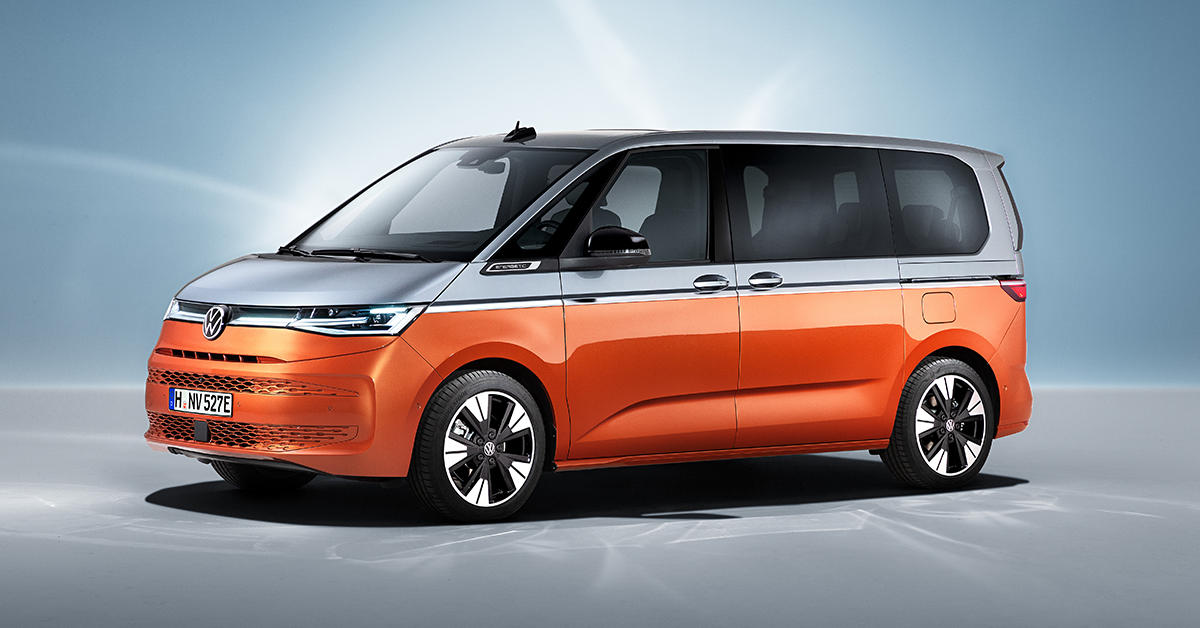
Official press image of the Volkswagen Multivan. | © Volkswagen AG
The Volkswagen Multivan is the Bulli built for people, from the first one at the 1985 IAA to the MQB-based T7 and its 2026 update. Here is the full Multivan story, with its generations, engines, eHybrid 4MOTION, seats, cargo space, prices and the Caravelle name that returns in the UK.
The Volkswagen Multivan is the passenger and family version of the Bulli, built by Volkswagen Commercial Vehicles in Hannover. It started in 1985 as a special version of the T3 Transporter, and it has grown over several generations into a large, car-like people carrier with seven or eight seats. Volkswagen’s own history says the Multivan was unveiled in 1985 and developed over four generations into an icon of its genre (Volkswagen). This guide follows the Multivan from that first van to the 2026 update and the Caravelle name that returns in some markets.
| First Multivan unveiled | September 1985, IAA Frankfurt (Volkswagen) |
| Based on | T3 Transporter (Volkswagen) |
| Generations to 2019 | T3, T4, T5, T6, T6.1 update (Volkswagen) |
| T6.1 update | 2019 (Volkswagen) |
| Seventh generation announced | April 2021 (Volkswagen) |
| T7 production start | November 2021 (reported) |
| T7 plant | Hannover (Volkswagen) |
| 2025 global deliveries | 38,700, up 31 percent (reported) |
| 2026 update shown | Spring and June 2026 (reported) |
| UK name from 2026 | Caravelle (reported) |
The key date is September 1985. A Volkswagen Commercial Vehicles release from April 2021 says that at the IAA International Motor Show in Frankfurt in September 1985, Volkswagen unveiled a new version of the T3, the first Multivan (Volkswagen). The release adds that the Multivan was refined generation by generation over the following 35 years, with new seat track systems, swivel and individual seats, variable tables, more advanced infotainment and driver assistance, and added efficiency and safety features (Volkswagen).
The release names the next three generations as the T4, T5 and T6, and says that all four generations were based on the Transporter (Volkswagen). A fleet-news site says that they are all based on the Transporter, the T3, T4, T5 and T6, and that in 2019 there was an update of the current generation, the Multivan 6.1 (reported). The seventh generation, announced in April 2021 as the best Multivan ever, broke with that tradition because it moved to a passenger-car platform, as the later sections explain (Volkswagen).
The Multivan also gave Volkswagen a name for its design. Albert Kirzinger, Head of Design at Volkswagen Commercial Vehicles, said in the 2021 release that the core DNA of the Bulli is, of course, space, and that flexibility is what sets the Bulli apart, including the seventh one (Volkswagen). The release says that the core layout, with the front seating position, the variability and the access to the rear between the front seats, stayed the same over the generations (Volkswagen). That continuity is a large part of the Multivan’s identity.
Sales are healthy today. A UK motoring report says that in 2025 global Multivan deliveries reached 38,700, up 31 percent from the year before, and that the Multivan is a direct successor to the Caravelle (reported). The T7 went into production in Hannover in November 2021, according to a reference source (reported), and a Volkswagen newsroom page confirms that the new Multivan introduced in 2021, internally called the T7 and optionally available as a plug-in hybrid, is built in Hannover (Volkswagen).
The latest chapter is the 2026 update, which brings a new front end, a 12.9-inch screen and an eHybrid 4MOTION plug-in hybrid with a 19.7 kWh battery, according to trade reports (reported). It also brings a name change, because the Caravelle name returns in the UK. We cover all of this in later sections. For the wider family of Volkswagen vehicles, see our Volkswagen models list, for the work van that shares the Bulli name, read our Transporter guide, and for the electric Bulli, see our ID. Buzz guide.
The first Multivan was not a separate model line. Volkswagen’s 2021 history says that it was a new version of the T3 that was unveiled at the IAA in Frankfurt in September 1985 (Volkswagen). The T3 itself had been presented in 1979, and a Volkswagen anniversary release calls it the most angular VW bus, adding that it brought the first California in 1988 and the first in-house Multivan (Volkswagen). The Multivan was therefore the family-friendly face of a van that was mainly sold as a transporter.
| T3 presented | 1979 (Volkswagen) |
| First Multivan | September 1985 (Volkswagen) |
| Show | IAA International Motor Show, Frankfurt (Volkswagen) |
| Distinct features | Rear bench converts to bed, fold-out table (Volkswagen) |
| T3 engines at launch | Air-cooled, 37 to 51 kW (Volkswagen) |
| T3 diesel | Introduced 1981 (Volkswagen) |
| T3 water-cooled engines | From 1982, 44 to 82 kW (Volkswagen) |
| T3 all-wheel drive | Syncro, viscous coupling (Volkswagen) |
| Multivan Limited Last Edition | 2,500 units, Graz (Volkswagen) |
| T3 Multivan years | 1979 to 1992, one report (reported) |
What made it a Multivan? The 2021 release says that the first Multivan had a rear bench seat that could be converted into a bed, and a fold-out table (Volkswagen). Those two items define the formula. A passenger van that is also a bed and a table is a camper, a meeting room and a family car in one, and the idea has returned in every later generation. The release says that the layout stayed the same over the years, with the front seating position, variability and access to the rear between the front seats (Volkswagen).
The T3 was a rear-engine design. A Volkswagen anniversary release says that the T3 had air-cooled flat engines of 37 to 51 kW at launch, that a diesel arrived in 1981, that water-cooled flat engines came in 1982 with 44 to 57 kW and later up to 82 kW, and that catalytic converters and turbocharged diesels followed in 1985 (Volkswagen). The Syncro all-wheel-drive version used a viscous coupling (Volkswagen). The Multivan of 1985 therefore arrived in the same year as the catalytic converters and turbodiesels.
The T3 was built in several places. The same release says Hannover built the T3, Graz in Austria built the Syncro and the Multivan Limited Last Edition of 2,500 units until 1992, and South Africa built it until 2002 (Volkswagen). A Russian news site gives the years of the Multivan T3 as 1979 to 1992 (reported). For the Multivan, the years that matter are the ones after 1985, because the name did not exist before then, and the Austrian special edition marks the end of the T3 in Europe.
The T3 also made the Multivan a design reference. The 2021 T7 was explained as a tribute to it. A trade report says that the new exterior pays homage to the DNA of its predecessors, dating back to the 1985 T3, with a horizontal design line and a full-width grille and headlights (reported), and an Australian site says that the character line across the flanks of the T7 was inspired by the T3 that went on sale in 1979 (reported). The T3 is therefore the Multivan that Volkswagen looks back to.
Today a T3 Multivan is a classic. It shows how the van moved from the Beetle-era layout to a family vehicle with a bed, a table and variable seating. For the origin of the Bulli itself, the T1 of 1950, read our Transporter guide, which covers all generations of the van that the Multivan is based on, and for the full list of Volkswagen vehicles, see our Volkswagen models list. We do not give prices for the T3 because the sources we found do not list any.
The T4 Multivan followed the T4 Transporter, which was presented in August 1990 with a front-mounted engine and front-wheel drive, according to Volkswagen’s anniversary release (Volkswagen). A Russian news site gives the dates of the T4 as 1990 to 2003 (reported). The T4 Multivan therefore took the passenger-van idea of 1985 and put it on the new front-engine layout that every later Transporter has followed. The release says Syncro all-wheel drive was available from 1993 (Volkswagen).
| T4 presented | August 1990 (Volkswagen) |
| T4 layout | Front engine, front-wheel drive (Volkswagen) |
| T4 Syncro | From 1993 (Volkswagen) |
| T4 top petrol | VR6 2.8 litre (Volkswagen) |
| T4 years | 1990 to 2003 (reported) |
| T5 launched | 2003 (Volkswagen) |
| T5 Multivan specials | Business, PanAmericana (Volkswagen) |
| T5 built in Hannover | About 1.65 million (reported) |
| T6 launched | 2015 (Volkswagen) |
| T6.1 unveiled | Autumn 2019 (Volkswagen) |
The T4 had strong engines for its time. The release lists diesels of 49 to 81 kW at launch, a five-cylinder 2.5 TDI in 1996, a VR6 2.8-litre petrol engine and a top TDI of 111 kW (151 PS), with a six-cylinder up to 150 kW (204 PS) from 1998 (Volkswagen). That makes the T4 Multivan one of the more powerful family vans of the 1990s. The release says the T5 offered diesels of 63 to 128 kW at launch and later common-rail diesels up to 132 kW (180 PS), petrol engines from 85 kW up to a 173 kW (235 PS) V6, and then TSI engines of 110 kW and 150 kW (Volkswagen). A heritage parts site says the T1 to T6 labels, though well known today, were only applied retrospectively when the T4 was introduced in 1990 (reported).
The T5 arrived in 2003. The release says it was launched as the roomiest VW bus yet, that California production moved to Hannover, and that Syncro was renamed 4MOTION (Volkswagen). It lists special editions including the Multivan Business and the Multivan PanAmericana (Volkswagen). A German press document says around 1.65 million T5 vehicles were produced in Hannover until 2015 (reported).
The T6 launched in 2015 with a redesigned front, according to the release, and the T6.1 was unveiled in autumn 2019 with fully digital instruments, e-SIM connectivity and voice control (Volkswagen). The Multivan 6.1 was the 2019 update of the then-current generation, according to Volkswagen’s Multivan history (Volkswagen). The T6 and T6.1 had four new TDI and two new TSI engines, all 2.0-litre, with 62 to 150 kW (84 to 204 PS) (Volkswagen). These were the last Multivans based on the Transporter chassis.
The T6.1 Multivan was the standard family bus in Europe for several years. A British van site says the T7 Multivan was designed to replace the Caravelle, with the same seven-seat capacity (reported). In the UK the Caravelle name was used for the same van, according to a German motoring site, which says that in many European markets Volkswagen called the comfortable passenger version of the Transporter the Multivan, while in Great Britain the same range was mostly called the Caravelle (reported). That explains the 2026 name change that we describe later.
A short summary of these years: the Multivan went from T3 to T6.1 on rear-engine and then front-engine Transporter platforms, and it added engines, comfort and safety systems each time. A Volkswagen history says the seating and table layout became more advanced, with swivel seats, individual seats and variable tables (Volkswagen). For the commercial version, see our Transporter guide, and for the family of vehicles built over the decades, see our Volkswagen models list.
The seventh-generation Multivan was revealed in June 2021, according to a UK van site, with a new exterior design that pays homage to its predecessors back to the 1985 T3 (reported). A French motoring site says that for the first time the Multivan is based on the MQB platform, and calls it a quantum leap in technical terms (reported). A reference source lists the platform as MQB Evo and the body as a five-door MPV with front-wheel drive (reported). The T7 Multivan is a front-drive car-like van, and not a Transporter derivative.
| T7 revealed | June 2021 (reported) |
| Platform | MQB Evo, front-wheel drive (reported) |
| Market launch | Week 46 of 2021, from 15 November (reported) |
| Trims at launch | Multivan, Life, Style (reported) |
| PHEV action trim | Energetic (reported) |
| Wheels | Up to 19 inches (reported) |
| Second-row seats | Rotate up to 180 degrees (reported) |
| Optional roof | Panoramic glass, a first (reported) |
| Driver assist systems | 29 (reported) |
| Body | Five-door MPV only (reported) |
The Australian press confirmed the platform in May 2021. A trade site said that Volkswagen had finally confirmed the rumour that the new 2021 Multivan would be based on MQB, the same platform that underpins the Mk8 Golf and other models (reported). It added that the wheelbase had been stretched to maximise space (reported). An Austrian review says that thanks to the use of MQB, the Multivan could also get a plug-in hybrid powertrain, and that the market launch was in calendar week 46 of 2021, from 15 November (reported).
The T7 was unveiled with three trims. A UK van site says the model was available in three specifications: Multivan, Life and Style, with wheels up to 19 inches (reported), and a Belgian Volkswagen press document says it could be ordered in the three equipment versions Multivan, Life and Style, as well as the action model Energetic (reported). The Energetic applies only to the plug-in hybrid, according to an Italian review (reported). The old Trendline, Comfortline and Highline names were replaced by Multivan, Life and Style, according to a Hungarian site (reported).
The cabin is the point of the T7. A UK van site says the Multivan has a completely flat floor so the table can be moved all the way forward between the front seats, and that an optional panoramic glass roof is available for the first time (reported). The second-row seats can rotate up to 180 degrees so that passengers in the back can face one another (reported). Digital Cockpit dials of 10.25 inches, a touchscreen and USB-C connectivity are on board, and an optional head-up display was a first for a Volkswagen commercial vehicle (reported).
Safety and comfort technology were also a headline. A British van site says the new Multivan had 29 driver assist systems, and that one of them tells you, when you open a door, whether bicycles or vehicles are approaching (reported). The rear hatch and sliding doors can be electrically operated, and options include a panoramic glass roof and a 14-speaker Harman Kardon sound system, according to a Malaysian motoring site (reported). Both sides have sliding doors, which on all but the base model operate electrically, according to a UK review (reported).
The T7 Multivan is only built as a passenger car, according to a reference source, which adds that the commercial Transporter went to a different platform later (reported). A Volkswagen newsroom page confirms the Multivan is built in Hannover (Volkswagen). In the end, the 2021 reboot made the Multivan a different vehicle from the Transporter, a car-like MPV with the Bulli look. For the Transporter that took the commercial role, read our Transporter guide, and for the electric Bulli, see our ID. Buzz guide.
The T7 Multivan is a large vehicle but not a huge one. A Malaysian motoring site gives its length as 4,973 mm, its width as 1,941 mm, its height as up to 1,903 mm and its wheelbase as 3,124 mm (reported). A reference source gives a height range of 1,887 to 1,907 mm and a long-body length of 5,173 mm (reported), and a data site gives the 2026 facelift height as 1,909 mm (reported). The height varies by version and source, so we show the range, and the long body adds about 200 mm of length.
| Length, standard body | 4,973 mm (reported) |
| Length, long body | 5,173 mm (reported) |
| Width | 1,941 mm (reported) |
| Height | 1,887 to 1,907 mm, by source (reported) |
| Wheelbase | 3,124 mm (reported) |
| Seats | Up to seven, eight in 2026 update (reported) |
| Cargo, all seats up | 469 litres (reported) |
| Cargo, second row only | 1,844 litres (reported) |
| Cargo, rear rows removed | 3,672 litres, 4,053 litres long (reported) |
| Towing at launch | Up to 2,000 kg (reported) |
A UK review says the T7 can seat up to seven people, with two in front and up to five behind (reported). A UK electric-car site says sliding doors on both sides are standard, as is a seven-seat set-up, with two seats in the second row and three in the third (reported). The second-row seats can rotate by 180 degrees (reported). The seat layouts are flexible, and an Australian site says that there is a bewildering number of seating configurations for the back (reported).
Cargo space depends on the seats. The UK electric-car site gives up to 3,672 litres with both rows of rear seats removed, or 4,053 litres with the longer body, 1,844 litres with just the second row fitted and 469 litres with all seats in place (reported). A van site says the new seat track system also lets the third-row middle seat be pushed forward to almost the front row, creating space for a bicycle or a surfboard (reported). These figures are for the first-generation T7, and the 2026 update may change them.
Weights and towing also matter. A Malaysian motoring site reported at the 2021 premiere that the T7 Multivan can tow up to 2,000 kg (reported). A UK review says that the Multivan carpet runs the length of a 2,300 mm load space with three pairs of rails, with five seats in the rear in the test car (reported). A data site gives the permitted trailer load without brakes as 750 kg for the 245 hp eHybrid version (reported). Towing figures vary with engine, so check the exact version.
A British van site says the T7 is not quite as tall as the old Caravelle, which was done deliberately so that it is slightly easier to squeeze into multistorey car parks (reported). That is an important point for family buyers, since the height of the van is a limit in many cities. The Multivan is positioned above the Caddy and the ID. Buzz and below the Crafter in Volkswagen’s van lineup, according to a reference source (reported). For the smaller Volkswagen van, read our Caddy guide.
A new seating option arrived with the 2026 update. A British van site says that the eight-seat version can now be specified with a vis-a-vis arrangement, a first for the model, and that Life and Style models gain twin armrests on the second-row seats, with two body lengths remaining available (reported). A trade site says the update also adds new dark ArtVelours and leather interiors with matching headliners and door pillar trim (reported). We cover the 2026 update in the later section on the Caravelle name.
At launch the T7 Multivan had four powertrain options, according to a Malaysian motoring site, led by the eHybrid plug-in hybrid that pairs a 150 PS 1.4-litre TSI petrol engine with an 85 kW (115 PS) electric motor for a total system output of 218 PS (reported). The pure petrol engines were a 1.5-litre TSI of 136 PS and a 2.0-litre TSI of 204 PS (reported). A UK trade site says these are a 100 kW and a 150 kW petrol unit and that there was also a diesel of 110 kW (150 PS) and 360 N·m (reported).
| Original eHybrid | 1.4 TSI plus motor, 218 PS (reported) |
| Original eHybrid battery | 13 kWh (reported) |
| Original eHybrid range | 46 to 50 km WLTP (reported) |
| Launch petrols | 1.5 TSI 136 PS, 2.0 TSI 204 PS (reported) |
| Diesel | 2.0 TDI, 110 kW (150 PS) (reported) |
| Gearboxes | Seven-speed DSG, six-speed for eHybrid (reported) |
| eHybrid 4MOTION introduced | Late 2024 (reported) |
| eHybrid 4MOTION output | 245 PS, about 180 kW (reported) |
| eHybrid 4MOTION battery | 19.7 kWh (reported) |
| 2026 combustion engines | 110 and 150 kW (reported) |
An Australian site says the eHybrid uses a 1.4 TSI and an electric motor to make a combined 160 kW, with a 13 kWh lithium-ion battery that delivers electric-only running for short journeys, and that two petrol engines of 100 kW and 150 kW were available at launch (reported). A reference source says the eHybrid has a WLTP-rated range of 46 to 50 km and charges on a 3.6 kW AC charger in under 3 hours and 40 minutes, with no fast charging (reported). The eHybrid uses a six-speed DSG and the other engines a seven-speed DSG (reported).
The diesel was added later. An Australian site said that in 2022 Volkswagen would add a 110 kW diesel to the European engine range (reported), and a UK review says a TDI diesel model would be added later in 2022 (reported). A reference source gives the 2.0 TDI as 204 hp (152 kW) and 320 N·m, which differs from the 110 kW diesel (reported). The two figures refer to different tunes or different sources, so we do not choose one, and we advise you to check the exact engine code for your market.
The biggest powertrain change came in late 2024. A trade site says the MQB-based van maintains the all-wheel-drive-capable plug-in hybrid option, the 1.5 TSI eHybrid 4MOTION introduced in late 2024 (reported). A data site gives it as 245 hp with production starting in September 2024 (reported), and a UK motoring headline says that it gets a 59-mile range (reported). A UK van site says the 2026 range pairs it with a 19.7 kWh battery pack (reported), which is larger than the 13 kWh of the original eHybrid.
The 2026 range is described in detail by two trade reports. The British report says that customers can choose between a 150 PS diesel, a 204 PS petrol and a 245 PS eHybrid 4MOTION plug-in hybrid that combines all-wheel drive with a 19.7 kWh battery pack (reported). The other report says the four-cylinder turbo diesel and petrol engines develop 110 and 150 kW, which is 148 and 201 hp, with front-wheel drive as standard, and that the eHybrid 4MOTION has an estimated maximum system output of 180 kW or 242 hp (reported). 245 PS and 180 kW are the same output.
Neither report gives an electric range for the new eHybrid 4MOTION, and one describes it only as plenty for urban use (reported). The report says that the electric stationary air conditioning runs for up to eight hours, and that the California Ocean with this powertrain has a standard conventional auxiliary heater (reported). We therefore do not give a range figure for the 2026 version. For other plug-in and electric Volkswagen vans, see our ID. Buzz guide, and for the Transporter eHybrid, see our Transporter guide.
Volkswagen previewed the update in March 2026. A British van site says the previews were shown at the Volkswagen Group brand update to the media, where Volkswagen Commercial Vehicles CEO Stefan Mecha outlined product plans for the year (reported), and a trade site says the company released official sketches of facelifted versions of the Caddy and the Multivan T7 with styling revisions and cabin upgrades (reported). The sketch showed a two-tone paint scheme reminiscent of the ID. Buzz, and a front end that keeps the LED strip across the grille (reported).
| Update previewed | March 2026 (reported) |
| Full details | June 2026 (reported) |
| Display | 12.9-inch touchscreen (reported) |
| Travel Assist | Traffic-light recognition, assisted lane changes (reported) |
| Wireless charging | 25 W, up from 5 W (reported) |
| USB-C outputs | Up to 60 W (reported) |
| Special edition | Generation, two-tone paint (reported) |
| UK name | Caravelle (reported) |
| German name | Multivan stays (reported) |
| Production of 2027 model year | Hannover, from September 2026 (reported) |
The full details came in June 2026. A UK van site says Volkswagen Commercial Vehicles unveiled a comprehensive update for its passenger van with a redesigned exterior, upgraded interior technology and many new comfort and safety features (reported). The exterior has larger LED headlights with a new light signature, eyebrow-style daytime running lights, an illuminated front strip on higher-spec models and a redesigned front bumper with integrated air intakes and vertical air curtains (reported). The new dashboard has upgraded materials and contrast stitching (reported).
The technology is the main change. The update brings a 12.9-inch touchscreen infotainment system and an updated Digital Cockpit with customisable layouts (reported), plus Travel Assist with traffic-light recognition and assisted motorway lane changes, Integrated Emergency Assist that can bring the van to a controlled stop if the driver is incapacitated, a steering-column-mounted gear selector, wireless smartphone charging increased from 5 W to 25 W and USB-C outputs of up to 60 W (reported). The Generation special edition has Candy White and Sunset Red two-tone paint (reported).
The name is the surprise. A British van site says Volkswagen has revealed that the Multivan name will be dropped on future models and replaced by the Caravelle name (reported), while another trade site says that in some markets, such as the UK, Volkswagen is reviving the historic Caravelle badge, and that Germany sticks with the Multivan name (reported). A German magazine says that in Great Britain the MQB-based Multivan will again be sold as the Caravelle, and that Volkswagen justifies the step with the high recognition of the name on the island (reported).
Because of this, sources contradict one another about how far the rename goes. One says the Multivan name will be dropped on future models, and two others say the change is for the UK and some markets only. We therefore describe it as a UK change and tell readers to check their own market. The German magazine adds that the renaming does not change the technology, and that the model sold as the Caravelle receives identical revisions for the 2026 model year (reported). The 2026 trims in the UK are Trend, Life and Style plus Generation (reported).
Production has begun. A trade site published on 11 September 2026 says the 2027 model year Multivan, known as the Caravelle in the UK, is rolling off the assembly line in Hannover, and that the California is also built there (reported). The California is based on the same body and gets the same update, according to trade reports in March 2026 (reported). For other updated Bulli models, see our Transporter guide, which covers the Ford-based van, and our Caddy guide, which covers the 2026 Caddy update.
Prices vary by market. A UK trade site said that at the launch of the eHybrid in the UK, the plug-in hybrid started at 48,835 pounds in Life trim, with prices rising to 60,865 pounds for the Energetic in long-wheelbase form (reported). Later, a UK motoring report said that the current model started at 50,633 pounds in Life trim and rose to 62,293 pounds for the better-equipped Style, and that it did not expect the 2026 refresh to change the prices much (reported). These two sets of prices are from different dates, so they do not conflict.
| UK eHybrid launch price | From 48,835 pounds, Life (reported) |
| UK launch top price | 60,865 pounds, Energetic long (reported) |
| UK later price, Life | 50,633 pounds (reported) |
| UK later price, Style | 62,293 pounds (reported) |
| 2026 prices | Not stated in sources (reported) |
| 2026 UK trims | Trend, Life, Style, Generation (reported) |
| Plant | Hannover (Volkswagen) |
| Hannover decision | Expected by June 2027 (reported) |
| Worst-case closure cost | About 2 billion euros (reported) |
| Eighth generation | Not announced (reported) |
Prices for the 2026 update were not stated in the sources we found. The British report on the June 2026 update gave no prices (reported), and the production report gave none either (reported). We therefore do not give 2026 prices. The Multivan is sold in different trims in different countries, so the cheapest version depends on the market. The range for Europe included Multivan, Life, Style and Energetic at launch, and the 2026 UK range has Trend, Life and Style plus the Generation special edition (reported).
The Multivan is built in Hannover, according to Volkswagen’s newsroom, together with the ID. Buzz Cargo and the T6.1 models of the time (Volkswagen). The plant is under pressure. A trade site says Volkswagen is evaluating options for Hannover and three other plants, with a decision expected by June 2027, and that in the worst case closing Hannover would cost about 2 billion euros, within a group restructuring that may cost 16 billion euros (reported). These are reports about options and not decisions.
The Hannover plant story links to the Transporter. A reference source says the commercial Transporter introduced in 2024 is built as a sibling of the Ford Transit Custom, without any relation to the T7 Multivan (reported). The Multivan and the California are built in Hannover, according to the production report (reported), which makes them important for the plant. For the details of the Ford-built Transporter, read our Transporter guide. The Multivan, in contrast, remains a Volkswagen-engineered van on the MQB platform.
What comes next? Volkswagen has not announced an eighth generation in the sources we found. The 2026 update is a mid-life refresh of the seventh generation, and the plug-in hybrid with all-wheel drive is the technical highlight. A gas-only or diesel-only buyer has the 150 PS diesel and the 204 PS petrol, according to the British report (reported). We do not speculate about an electric Multivan, because Volkswagen sells the electric ID. Buzz for that purpose, as our ID. Buzz guide explains.
In short, the Multivan is the Bulli for people, with a 1985 origin, a flexible cabin, a platform change in 2021 and a 2026 update with a new name in the UK. If new details are published, we will update this guide. Meanwhile, the Volkswagen models list shows every car Volkswagen has built, and our Transporter guide covers the commercial Bulli. Always check the exact version, name and price in your own market before you order, because they differ.
