 Brands
Toyota's Best Hatchback Doesn't Exist in America
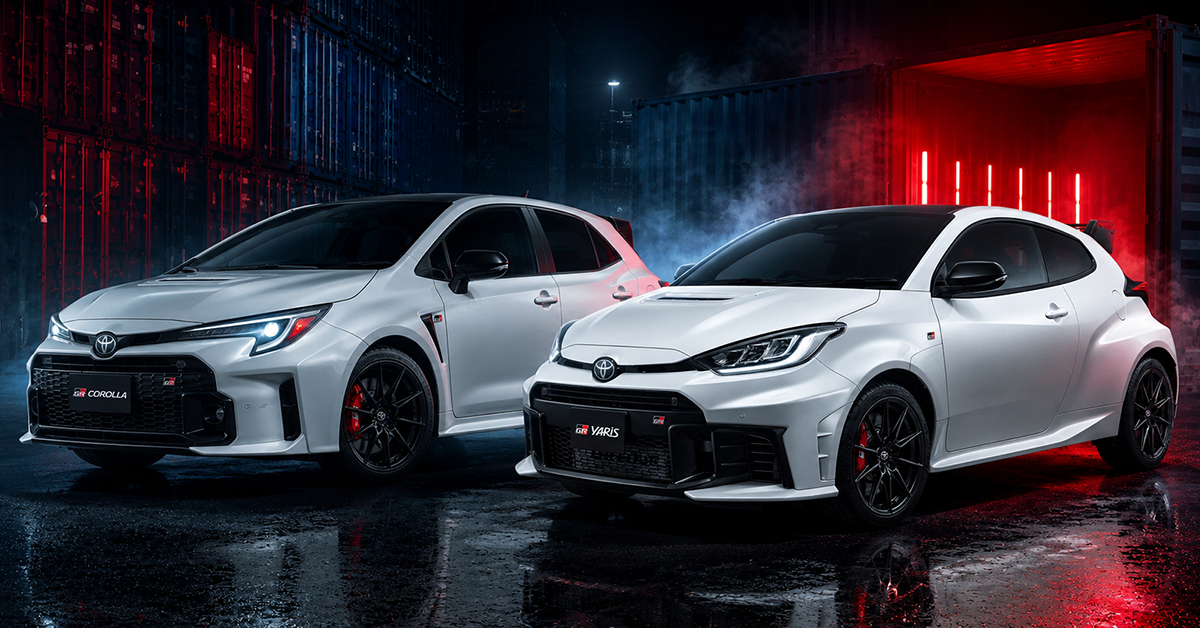
AI-generated concept illustration — Toyota's global hatchback lineup. | Rev N Rise
American Toyota buyers get a genuinely solid hatchback lineup — a practical Corolla, a 300-horsepower GR Corolla, and the ever-efficient Prius. What they don't get is the car most enthusiasts consider Toyota's actual best hatchback: the rally-bred GR Yaris, sold everywhere except the United States. Here's the full global picture, model by model.
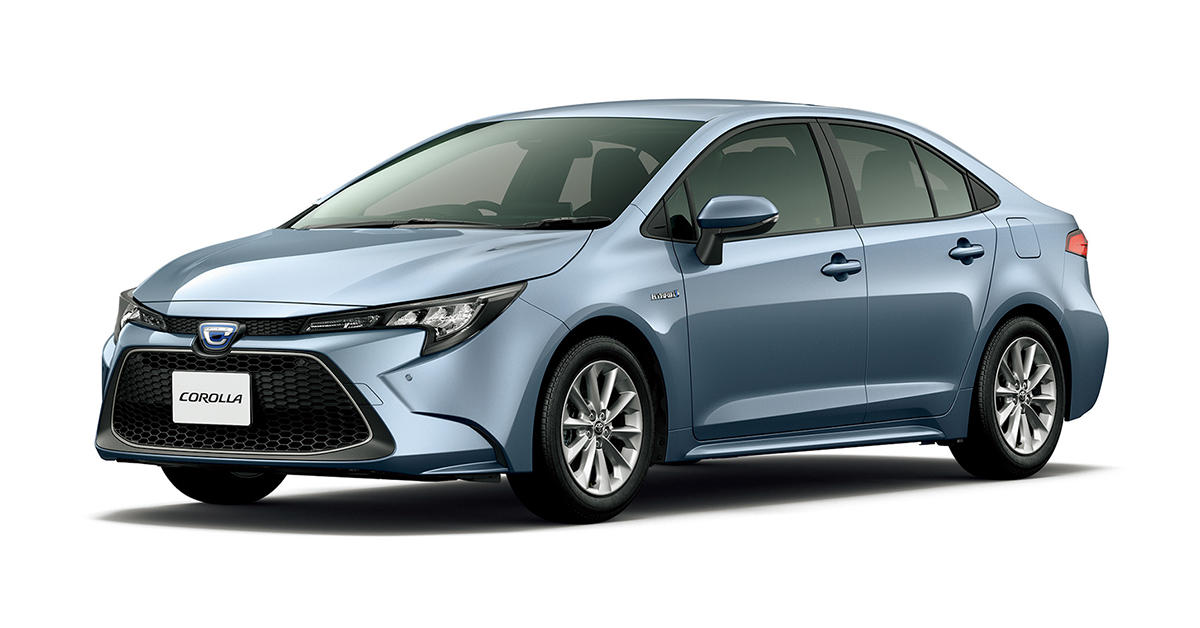
Official press image of the Toyota Corolla. | © Toyota Motor Corporation
The everyday, practical hatchback that anchors Toyota's compact lineup in the US, sharing its underlying TNGA platform and powertrains with the Corolla sedan but offering genuinely more usable cargo flexibility thanks to the fold-flat rear seats and wide-opening rear hatch. Available in SE and XSE trims, the hatchback is offered exclusively with a 2.0-litre engine producing 169 horsepower — genuinely more than the sedan's base engine — paired with either a six-speed manual or continuously variable transmission, giving the hatchback a distinctly different character from its four-door sibling despite sharing so much underlying mechanical DNA.
The hatchback body style has always represented a genuinely smaller slice of Corolla sales compared with the sedan in the American market specifically, reflecting broader US buyer preferences that have historically favoured three-box sedans and, increasingly, crossovers over hatchbacks — a genuinely different pattern from Europe and Japan, where hatchbacks remain the default compact-car body style rather than a niche alternative. Toyota has continued offering the hatchback regardless, both because it serves a genuine practical niche among buyers who specifically want a manual transmission option no longer available on the sedan, and because it forms the essential mechanical foundation the GR Corolla is built upon.
Standard equipment mirrors the sedan closely, including Toyota Safety Sense 3.0 across every trim, and reviewers have consistently praised the hatchback's genuinely sharper, more communicative handling compared with the sedan, a byproduct of its shorter wheelbase and lower overall weight. For buyers cross-shopping within Toyota's own showroom, the hatchback represents a genuinely compelling choice for anyone prioritising manual-transmission availability and everyday cargo practicality over outright rear-seat space, the sedan's clearer remaining advantage.
Cargo capacity genuinely favours the hatchback body style in practical terms: with the rear seats folded, the Corolla Hatchback offers considerably more usable space than the sedan's fixed trunk, a genuine advantage for buyers regularly hauling bikes, luggage or larger purchases that simply wouldn't fit through a conventional trunk opening. The hatchback's shorter overall length also translates into genuinely easier parking in tight urban environments, a meaningful consideration for city-dwelling buyers who prioritise manoeuvrability over outright interior volume.
Reliability data for the Corolla Hatchback tracks closely with the sedan's own strong reputation, reflecting how much of the underlying mechanical architecture the two body styles genuinely share. Resale value has also held up considerably well, with the hatchback's more distinctive silhouette and enthusiast-friendly manual-transmission availability giving it a genuinely loyal following among buyers who specifically seek out the driving engagement increasingly rare in modern compact cars, even before considering the considerably more powerful GR Corolla built on the same fundamental platform.
Toyota Safety Sense's full driver-assistance suite comes standard across every Corolla Hatchback trim, including pre-collision warning with pedestrian detection and full-speed adaptive cruise control, ensuring buyers choosing the hatchback body style for its practicality or manual-transmission availability lose nothing on the active safety front compared with the more popular sedan variant.
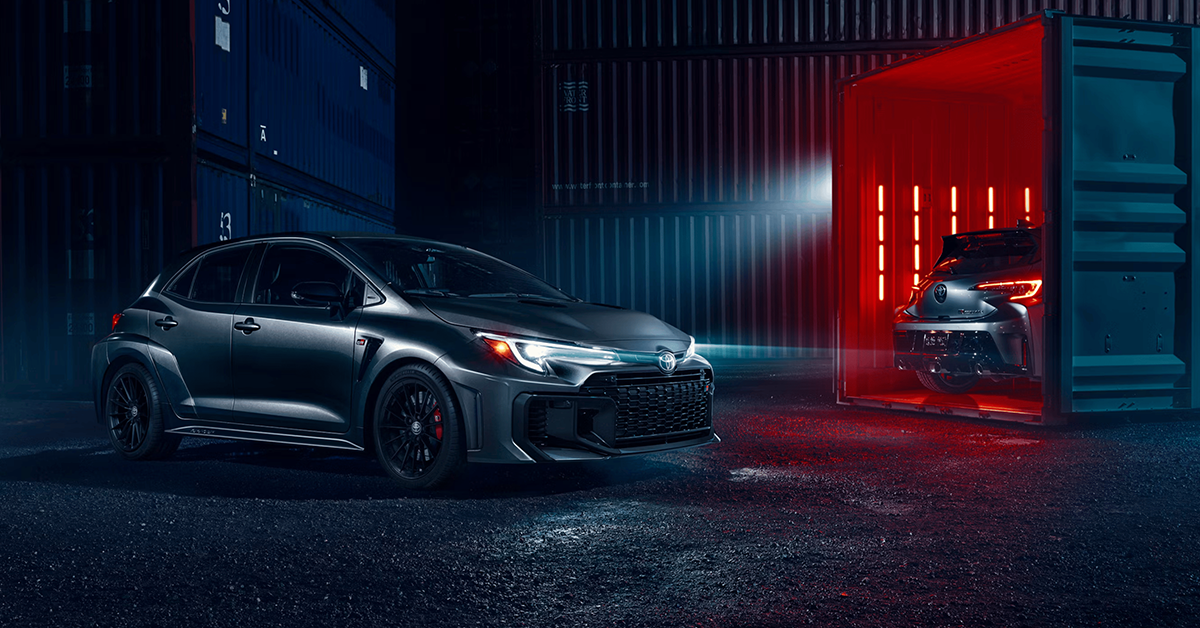
Official press image of the Toyota GR Corolla. | © Toyota Motor Corporation
Genuinely one of the last true hot hatches still on sale, and one of just three remaining in the entire American market. The 2026 GR Corolla produces 300 horsepower and 295 lb-ft of torque from a turbocharged 1.6-litre three-cylinder engine — a genuinely remarkable output for such a small displacement unit, and among the highest specific outputs of any production three-cylinder engine ever built. Power routes through standard GR-FOUR all-wheel drive with a driver-adjustable torque split (60:40 for daily driving, 50:50 for gravel, or 30:70 for a rear-biased track setting), paired with either a six-speed manual or eight-speed automatic transmission. Pricing starts at $41,115, with the range-topping Premium Plus adding a secondary radiator genuinely useful for sustained track driving.
The GR Corolla's origin story carries genuine emotional weight for American enthusiasts specifically: Toyota built it explicitly as a consolation for never selling the considerably more famous GR Yaris in the US, taking that car's rally-derived G16E-GTS engine and GR-FOUR drivetrain and transplanting them into a mainstream Corolla hatchback body Toyota already sold domestically. The approach worked. Reviewers have consistently praised the GR Corolla as a genuinely engaging, communicative performance car, with the archrival Honda Civic Type R offering more outright passenger and cargo space but arguably less outright driving drama.
Cargo capacity sits at 17.8 cubic feet, genuinely competitive for the segment despite the performance-focused engineering underneath, and the interior carries genuine sporty touches including a grippy steering wheel, dedicated sports seats, push-button start and aluminium pedals. The Premium Plus trim adds red contrast stitching and the aforementioned secondary radiator, while both trims share the same 8-inch touchscreen mounted high on the dashboard for easy visibility during spirited driving. Standard Toyota Safety Sense coverage ensures the GR Corolla doesn't sacrifice modern active safety technology purely in pursuit of outright performance credentials.
The GR Corolla's five-year cost-to-own figures remain genuinely competitive within the performance hatchback segment, reflecting Toyota's broader reputation for reliability extending even to its most performance-focused current model. For buyers specifically weighing the GR Corolla against rivals including the Honda Civic Type R and Volkswagen Golf R, the deciding factor often comes down to character: the GR Corolla's three-cylinder engine delivers a genuinely distinctive soundtrack and power delivery unlike anything else in the segment, a direct byproduct of its rally-derived engineering lineage rather than a conventional four-cylinder turbo setup.
Toyota's own product planners have described the GR Corolla as central to the company's broader Gazoo Racing strategy of keeping genuine driving enjoyment alive within an increasingly efficiency-focused mainstream lineup, positioning it alongside the GR86 and GR Supra as proof that Toyota's enthusiast credentials extend well beyond its Le Mans and WRC motorsport programmes into genuinely attainable, everyday-usable performance cars buyers can actually purchase new.
A genuinely limited-run GRMN Corolla variant, developed with direct input from Gazoo Racing test drivers at the Nürburgring, pushes torque even higher to 302 lb-ft, paired with a race-inspired interior featuring semi-bucket seats and a rear-seat delete for genuine weight reduction. Owner satisfaction data consistently rates the GR Corolla among Toyota's most beloved current models, with a 4.5-out-of-5 consumer rating and genuinely strong predicted reliability — a rare combination for a car this focused on outright performance.
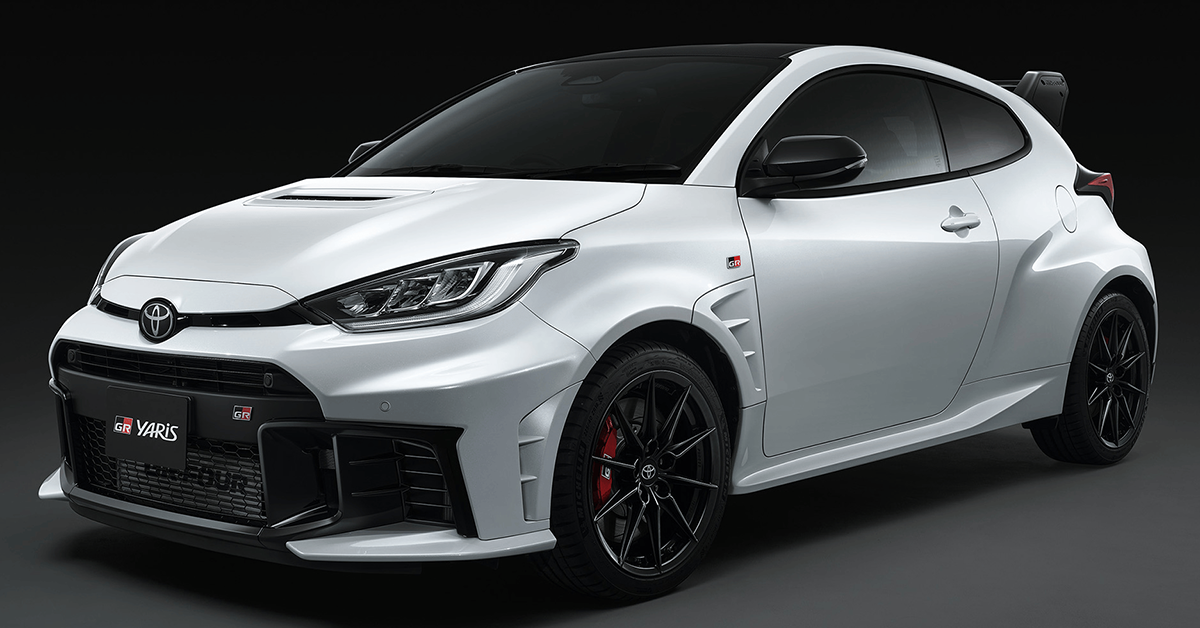
Official press image of the Toyota GR Yaris. | © Toyota Motor Corporation
The car the GR Corolla exists to apologise for. Launched in 2020, the GR Yaris is a genuine homologation special built specifically to satisfy World Rally Championship regulations, wearing Yaris sheet metal but sharing essentially nothing structurally with the mainstream hatchback it's named after. The updated 2026 “Type 26” version retains its 280-horsepower turbocharged 1.6-litre three-cylinder engine untouched, instead focusing refinements on a smaller-diameter steering wheel, recalibrated electric power steering and retuned suspension — genuine improvements drawn directly from five seasons of World Rally Championship and Japanese Rally Championship competition data.
Toyota has never officially explained why the GR Yaris has never been sold in the United States, but industry analysts consistently point to the same underlying commercial logic: American buyers simply don't purchase enough small manual-transmission hatchbacks to justify the cost of federalising a genuinely bespoke, low-volume model built on a platform Toyota doesn't otherwise sell domestically. The GR Corolla effectively solved this problem by reusing the GR Yaris's engine and drivetrain inside a Corolla body Toyota already builds and sells in America, delivering comparable performance without the prohibitive cost of homologating an entirely separate model.
For American enthusiasts specifically, the GR Yaris has become genuine forbidden fruit, with grey-market interest building steadily as the car edges toward US import eligibility under the 25-year rule in the mid-2040s. In the meantime, secondhand examples occasionally surface through specialist collector channels at genuinely striking prices — a 2024 Ogier Edition reportedly sold for $82,000 at auction, reflecting just how much premium American buyers are willing to pay for a car Toyota has never let them purchase through official channels.
Toyota Gazoo Racing has used the GR Yaris as a genuine testbed for technology later applied more broadly, and the road car's connection to actual World Rally Championship competition remains considerably more direct than most homologation specials manage today. The current GR Yaris Rally1 competition car shares meaningful engineering lineage with the road-going version, built using experience gained across five seasons of WRC competition, giving the production GR Yaris a genuinely rare authenticity increasingly uncommon in an era where most manufacturers' rally programmes bear little resemblance to their showroom products.
European pricing for the updated 2026 GR Yaris spans four trims starting from €53,000 for the Circuit model, extending to the genuinely limited-run Morizo RR variant developed with direct input from Toyota's own chairman and namesake test driver, Akio Toyoda. That range gives international buyers considerably more configuration choice than American enthusiasts get from the single-spec GR Corolla, a genuine reflection of how much more mature the GR Yaris's market position has become across the five-plus years it's been on sale outside the US.
Toyota Gazoo Racing has confirmed four consecutive WRC constructors' titles won with cars directly descended from the GR Yaris's road-going platform, a genuinely rare marketing asset few rival hot hatches can claim with equal authenticity. For international buyers, that motorsport pedigree translates into real showroom demand, with waiting lists persisting in several markets even years after the car's original 2020 launch, a genuinely unusual pattern for a compact hatchback rather than a genuine supercar or limited-edition halo model.
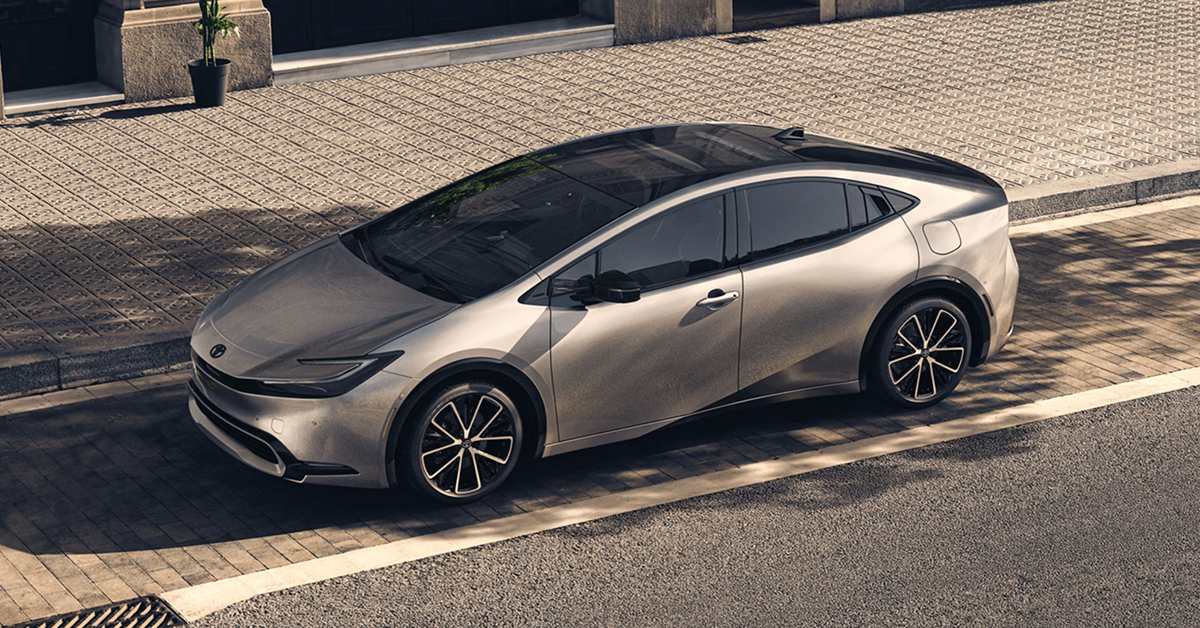
Official press image of the Toyota Prius. | © Toyota Motor Corporation
Technically a liftback rather than a conventional hatchback, the Prius nonetheless shares the same rear-hatch cargo access and genuinely deserves a place in any honest conversation about Toyota's hatchback-adjacent lineup. Up to 57 mpg combined on front-wheel-drive trims makes it among the most fuel-efficient vehicles sold in America, and the current, fifth-generation redesign abandoned the nameplate's long-standing reputation for awkward styling in favour of a considerably sleeker, more coupe-like body that draws genuine visual inspiration from proper liftback sports cars rather than purely utilitarian hatchback design.
Launched in Japan in 1997 as the world's first mass-produced hybrid passenger car, the Prius name has since become genuine shorthand for hybrid technology itself, and Toyota has sold well over 5 million units globally since launch. The current generation's redesigned styling has been credited with meaningfully broadening the car's appeal beyond its traditionally eco-conscious core buyer base toward genuinely style-conscious shoppers who previously dismissed the Prius purely on looks, a genuine repositioning within a body style — the liftback — that has historically struggled for mainstream American acceptance outside this one genuinely successful exception.
Ownership costs remain a genuine strength across the board. Toyota's hybrid battery warranty on the Prius extends considerably longer than the standard new-vehicle warranty, and real-world reliability data collected across two decades of Prius ownership consistently shows hybrid battery packs lasting well beyond 150,000 miles with minimal degradation under normal use. Trim levels span LE, XLE, Nightshade and Limited, with the top Limited trim adding a digital rearview mirror, a head-up display and a premium JBL sound system alongside the shared hybrid powertrain every trim uses, and AWD trims returning a still-strong 54 mpg combined despite the added mechanical complexity.
Reviewer reception of the current Prius generation has been consistently strong, with automotive press repeatedly noting that Toyota managed something genuinely difficult: making the Prius desirable on its own merits, rather than purely as a badge of environmental virtue. Where earlier generations were sometimes purchased specifically because their distinctive silhouette signalled hybrid ownership to onlookers, the current car's considerably more conventional styling means buyers increasingly choose it for the same reasons they'd choose any other compact car.
Toyota's own internal data suggests the redesigned Prius has attracted a meaningfully younger buyer demographic than previous generations managed, a genuine shift in a nameplate that had, for years, carried an image skewing considerably older and more overtly eco-conscious than the broader compact car market. Maintenance costs also run meaningfully lower than a comparable gasoline-only compact car over a typical ownership period, since regenerative braking genuinely extends brake pad life and the smaller gasoline engine experiences less wear thanks to the electric motors handling daily driving duty. Toyota has sold well over 5 million Prius units globally across five generations, a genuinely remarkable figure for a single nameplate that fundamentally redefined an entire vehicle category rather than simply competing within an existing one.
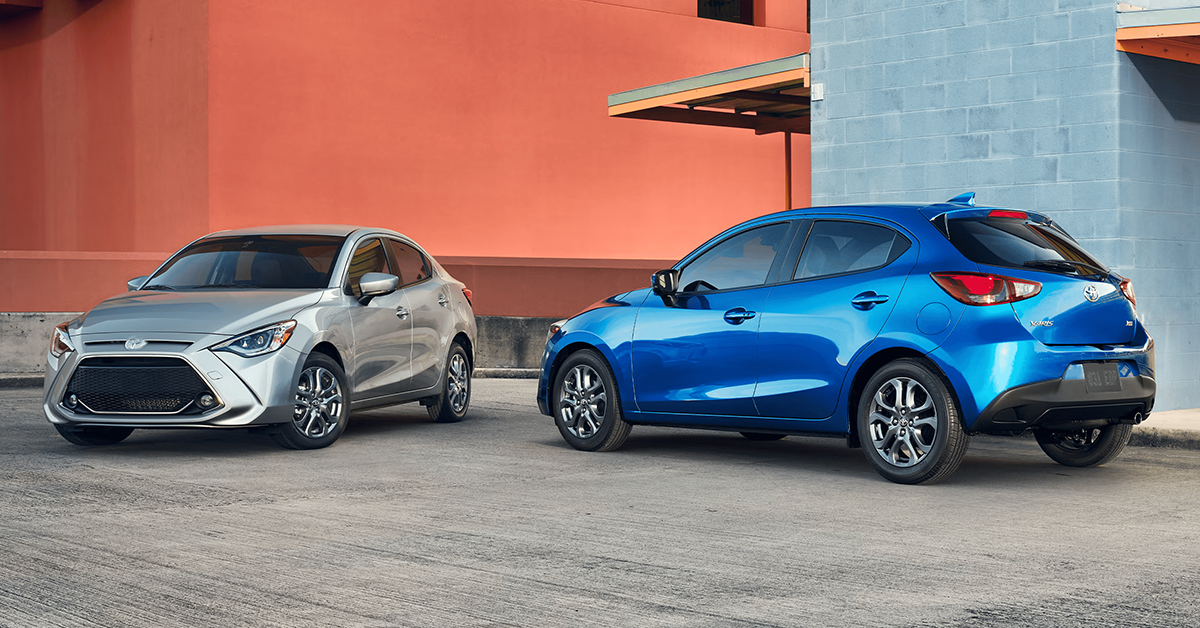
Official press image of the Toyota Yaris. | © Toyota Motor Corporation
The standard hatchback the GR Yaris is loosely based on, discontinued in the United States after the 2020 model year but remaining genuinely important internationally, particularly across Europe, Japan and parts of Asia, where subcompact hatchbacks retain considerably stronger demand than in America's ongoing shift toward larger vehicles. The current generation, built on Toyota's GA-B platform shared with several other compact global models, brought genuinely sharper handling and improved fuel economy over its predecessor, and Toyota continues actively developing it for markets where a small, efficient hatchback remains a genuinely practical default rather than a compromise.
The standard Yaris and the homologation-special GR Yaris share considerably less mechanically than their common name suggests — the GR version uses a genuinely bespoke platform reinforced specifically for rally-derived performance, meaning the regular Yaris hatchback that urban commuters actually drive bears only a styling resemblance to the 280-horsepower monster wearing the same badge. For markets that still receive both, this creates a genuinely interesting halo effect, where the standard Yaris benefits from association with its considerably more famous, more powerful sibling without needing to share any of its actual engineering.
Toyota's continued global commitment to the standard Yaris nameplate, even as it disappeared entirely from American showrooms, illustrates a genuinely important pattern across the company's broader product strategy: rather than forcing a single global lineup onto every market simultaneously, Toyota consistently tailors its offerings to match genuinely different regional buyer priorities, discontinuing nameplates domestically where demand has shifted while continuing meaningful investment wherever a real market still exists. Toyota Safety Sense comes standard across international Yaris trims as well, ensuring buyers in every market get access to broadly comparable active safety technology regardless of the car's considerably smaller footprint and price point.
American enthusiasts specifically following the Yaris family from a distance have built a genuine online community around tracking Japanese and European market updates, effectively treating the nameplate's continued international development as a preview of technology and design language that occasionally does eventually filter into models Toyota does sell domestically, even without the standard Yaris itself ever returning to US showrooms.
Toyota has given no public indication of reviving the standard Yaris for America, even as the GR Yaris's cult reputation among enthusiasts has grown considerably in its absence from official domestic sale. The current international Yaris also serves as a genuine technology testbed for smaller-scale hybrid systems Toyota later scales up for larger models, given how much more sensitive a subcompact car's overall efficiency and packaging are to any added powertrain weight or complexity than a larger sedan or SUV would be.
For markets that still receive the standard Yaris, Toyota continues offering both hatchback and, in select regions, sedan body styles, giving international buyers genuinely more configuration flexibility than the current single-body American Corolla Hatchback provides, reflecting how differently Toyota approaches compact-car segmentation once outside the specific constraints of the US market's own buyer preferences and regulatory requirements.