 Brands
Three Trucks, Zero Overlap — Toyota's Global Pickup Strategy
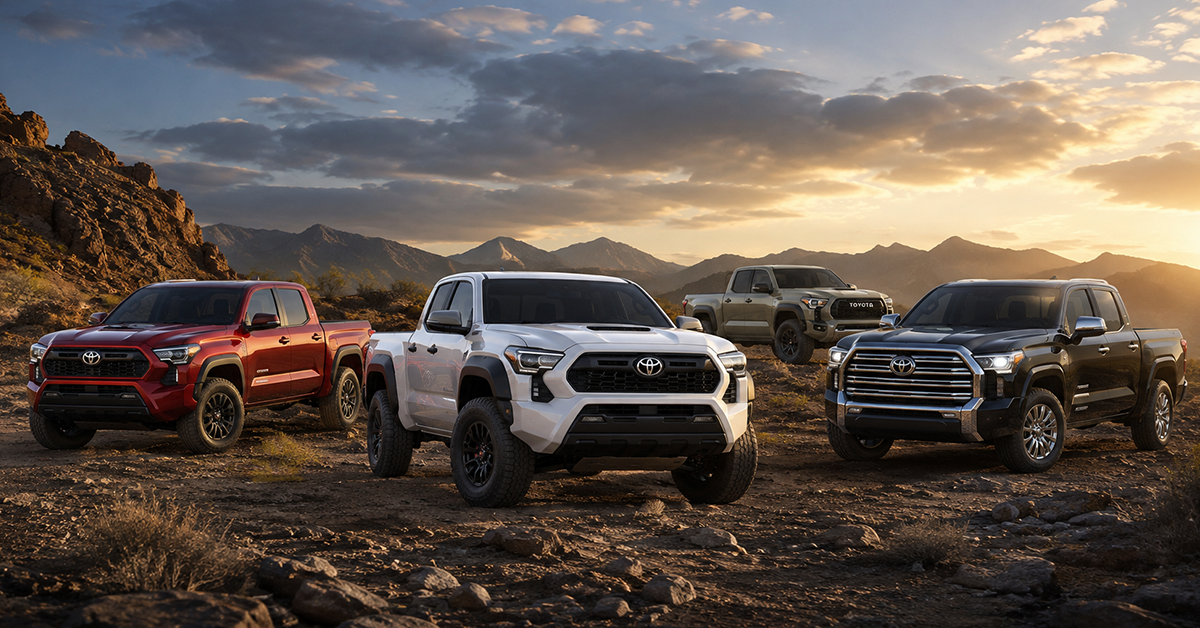
AI-generated concept illustration — Toyota's global pickup truck lineup. | Rev N Rise
Toyota builds three genuinely distinct pickup trucks worldwide, and deliberately keeps them from ever competing with each other. America gets the Tacoma and Tundra. The rest of the world gets the Hilux — a truck so famously indestructible that a television show once tried and failed to kill one on purpose. Here's how all three fit together.
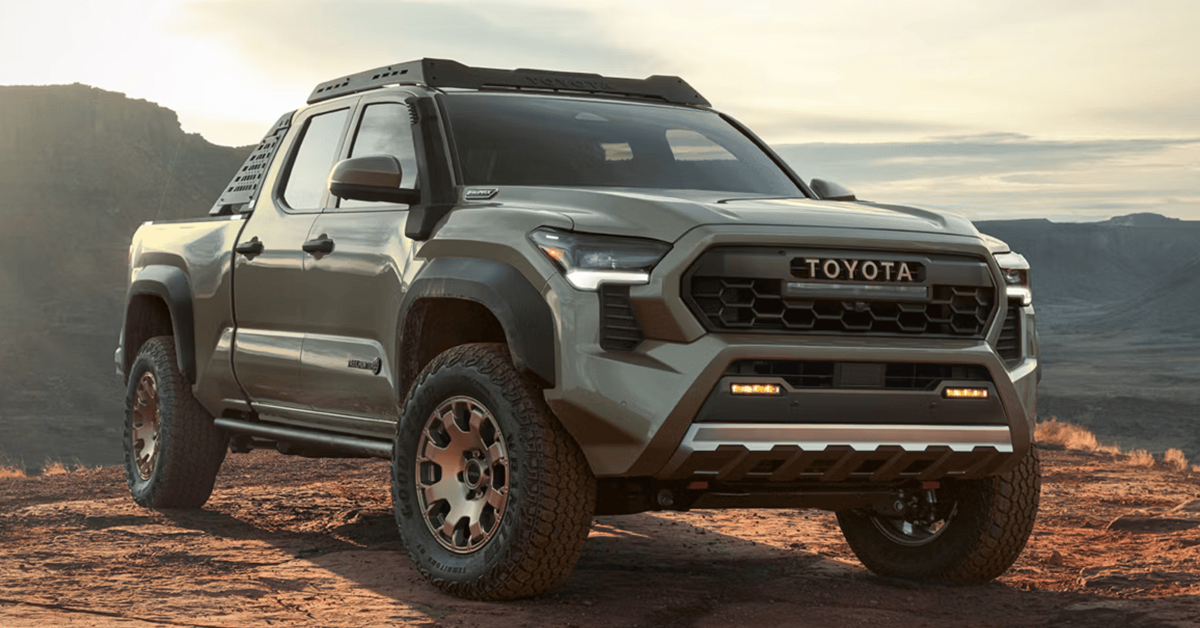
Official press image of the Toyota Tacoma. | © Toyota Motor Corporation
America's best-selling mid-size pickup, launched in 1995 specifically to replace the Hilux in the US market with a truck engineered around American safety, emissions and buyer preferences the global model was never designed for. The current, fourth generation moved onto Toyota's modern TNGA-F platform, shared with the 4Runner and full-size Land Cruiser, delivering considerably sharper on-road handling and improved structural rigidity compared with the outgoing model. The fourth generation also abandoned its previous V6 entirely in favour of a turbocharged four-cylinder base engine, with the i-FORCE MAX hybrid system available on TRD Pro and Trailhunter trims specifically, producing up to 326 horsepower.
Trim levels span a genuinely wide range, from the value-focused SR up through TRD Sport, TRD Off-Road, Limited, TRD Pro and Trailhunter, with the latter two representing Toyota's most serious factory-built off-road offerings, carrying upgraded suspension components and genuine expedition-ready equipment as standard. The Tacoma retains standard 4x4 availability across most trims, and Toyota engineered the hybrid battery pack placement specifically to avoid compromising ground clearance, approach angle or departure angle compared with non-hybrid configurations, a genuine engineering priority given how central off-road capability remains to the Tacoma's core buyer identity.
Reviewer reception of the hybrid powertrain specifically has been positive, with several outlets noting the instant torque delivery genuinely transforms low-speed off-road crawling and technical trail driving compared with the outgoing V6, addressing one of the more common criticisms levelled at the previous generation's turbocharged four-cylinder base engine when driven without electric assistance. Toyota Safety Sense comes standard across every trim regardless of powertrain, and the Tacoma carries the same extended hybrid battery warranty applied across the rest of Toyota's electrified lineup.
The Tacoma's competitive position within the mid-size truck segment remains genuinely dominant, consistently outselling rivals including the Ford Ranger, Chevrolet Colorado and Nissan Frontier by a considerable margin, a reputation built on decades of accumulated reliability data rather than any single generation's specification sheet alone. Toyota's own internal sales figures confirm the Tacoma has held the best-selling mid-size truck position in America for well over a decade, with buyers consistently citing predicted long-term durability and strong resale value as the deciding factors over rivals offering comparable or even superior specifications on paper.
Both the standard turbocharged four-cylinder and i-FORCE MAX hybrid variants offer genuine towing capability that meets or exceeds most rivals in the segment, and Toyota's extensive TRD aftermarket accessory catalogue gives Tacoma owners considerably more factory-backed customisation options than most competing trucks provide, reinforcing the nameplate's decades-long reputation as the default choice for buyers who plan to genuinely modify their truck for specific off-road or overland use rather than simply driving it stock. Resale value data consistently ranks the Tacoma among the strongest-holding vehicles in its entire class, a genuine reflection of sustained buyer demand outpacing available used supply across nearly every region of the country, from major metro areas to rural markets alike.
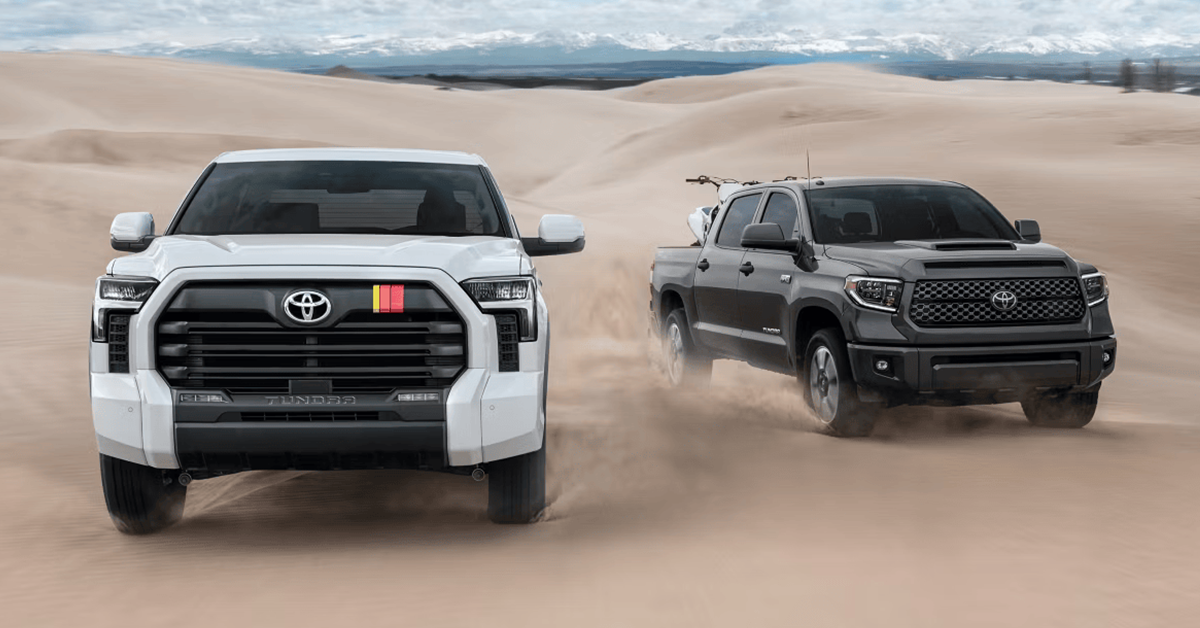
Official press image of the Toyota Tundra. | © Toyota Motor Corporation
Toyota's full-size truck, reaching up to 437 horsepower with the i-FORCE MAX hybrid system — the most powerful engine option in the Tundra's entire lineup, and the same peak output as the Sequoia SUV it shares underpinnings with. The current generation dropped its previous naturally aspirated V8 entirely in favour of a twin-turbo V6, with the i-FORCE MAX hybrid variant sitting as the range-topping powertrain option above the standard turbo V6, delivering genuinely class-competitive torque figures that translate directly into stronger towing capacity and quicker acceleration when hauling heavy loads.
Toyota's i-FORCE MAX application in the Tundra specifically addresses a genuine, well-founded scepticism among full-size truck buyers toward hybrid technology — the concern that electrification might simply add weight and complexity for marginal efficiency gains rather than genuinely improving capability. By positioning the hybrid system primarily as a performance and towing upgrade rather than purely a fuel-economy play, Toyota has made a genuinely persuasive case to a buyer demographic that has historically been among the most resistant to hybrid adoption across the entire industry.
Trim levels span SR, SR5, Limited, Platinum, 1794 Edition, TRD Pro and Capstone, with i-FORCE MAX offered as either standard or optional equipment depending specifically on which trim a buyer selects. The 1794 Edition carries genuine premium touches including unique leather upholstery and badging honouring the Texas land grant that became Toyota's San Antonio manufacturing site, while the TRD Pro adds serious off-road hardware including Fox internal-bypass shocks for buyers who want genuine desert-running capability alongside the hybrid powertrain's added torque. Reviewers have praised the Tundra's genuinely composed ride quality even fully loaded, crediting the hybrid battery's placement low in the chassis for a noticeably lower centre of gravity than the outgoing V8-powered generation managed.
Toyota Safety Sense comes standard across the entire Tundra range, ensuring every buyer, regardless of trim or powertrain choice, receives the same comprehensive active safety coverage. The i-FORCE MAX Tundra remains the range's clear performance flagship, giving Toyota's full-size truck lineup a genuine answer to rivals' own turbocharged and hybrid offerings from Ford, Chevrolet and Ram, all of which have pursued broadly similar electrification strategies in recent years as the full-size truck segment has gradually moved away from naturally aspirated V8 power as the default assumption.
Payload and bed configuration options remain genuinely flexible across the Tundra range, with both short and long bed configurations available paired with the hybrid powertrain, ensuring buyers don't need to sacrifice cargo-carrying flexibility purely to access the added torque and efficiency i-FORCE MAX provides. The Tundra's continued sales strength, even against genuinely well-regarded rivals, reflects Toyota's broader reputation for long-term reliability translating directly into real purchasing decisions among full-size truck buyers who plan to keep their vehicle for a decade or more. Independent reliability surveys have consistently rated the Tundra among the most dependable full-size trucks currently sold on the American market.
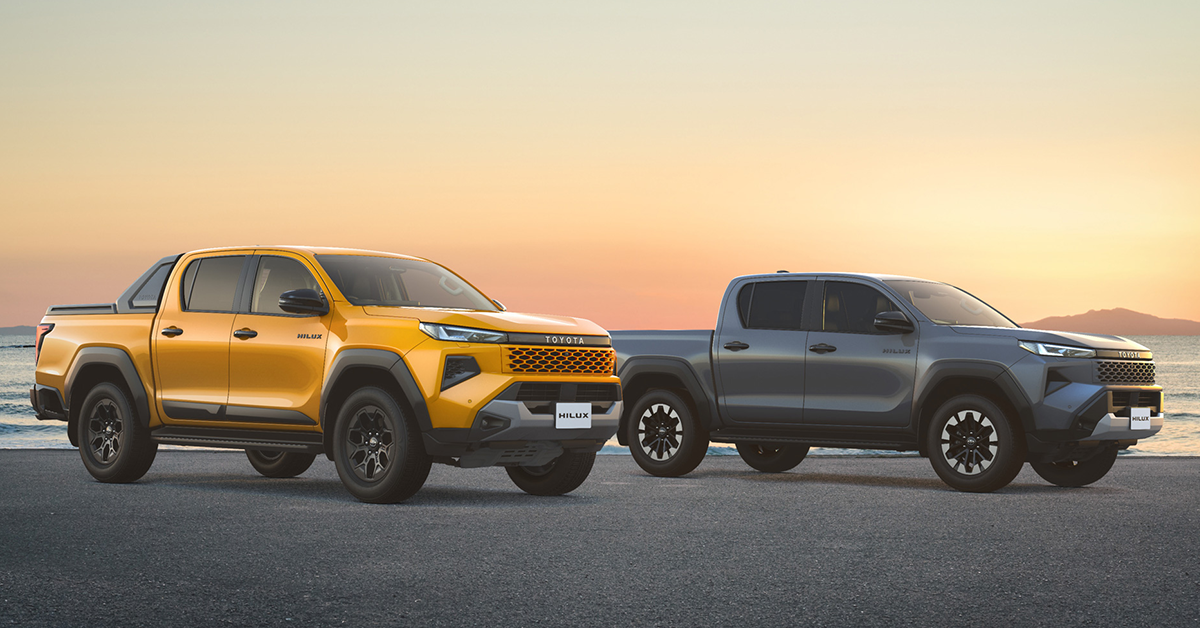
Official press image of the Toyota Hilux. | © Toyota Motor Corporation
Toyota's globally dominant pickup, sold in well over 180 countries with over 20 million units built since its 1968 launch, yet never officially sold in the United States since the Tacoma replaced it domestically back in 1995. The Hilux carries arguably the strongest durability reputation of any vehicle in automotive history, most famously demonstrated in a 2003 Top Gear test where presenters repeatedly failed to destroy a used example — submerging it in the sea, setting it on fire, dropping a caravan on it, and driving it into a tree, with the truck still starting afterward each time. That single television segment did more for the Hilux's global reputation than any advertising campaign Toyota could have produced.
The current, ninth generation launched in December 2025, built on the IMV platform shared with the Fortuner SUV, and offered across a genuinely wide range spanning basic work-truck configurations through the performance-oriented GR Sport variant, carrying a 221-horsepower diesel engine and genuine Gazoo Racing suspension tuning. Pricing in markets like Australia spans AU$33,990 to AU$74,310, reflecting how thoroughly the Hilux serves as both a basic commercial workhorse and a genuinely capable lifestyle vehicle depending on configuration and market.
The name itself combines “High” and “Luxury,” a genuinely aspirational choice for what was originally conceived as a straightforward commercial truck, and the Hilux has since become a default recommendation across markets including Africa, the Middle East, Southeast Asia and Australia specifically because of its reputation for surviving conditions and abuse that would destroy most rival trucks. For American readers, the Hilux represents a genuine reminder that Toyota's largest-volume, most battle-tested pickup nameplate isn't the one sold domestically at all — it's the one most Americans have only ever seen on television.
The Hilux's global sales dominance stems directly from a combination few rivals manage simultaneously: genuine mechanical simplicity that keeps repair costs low even in remote regions with limited access to specialist parts or diagnostic equipment, and a body-on-frame construction philosophy that has remained fundamentally consistent across every generation since 1968, prioritising proven durability over chasing every emerging technology trend. This consistency has made the Hilux a genuine default choice for aid organisations, mining operations, farming cooperatives and government fleets across dozens of countries specifically because its reliability record under extreme conditions is measured in decades of real-world data rather than marketing claims.
Toyota continues actively developing the Hilux specifically for these international markets, and the current ninth generation brought genuinely meaningful safety and technology upgrades without abandoning the fundamental mechanical simplicity that built the nameplate's reputation in the first place. For enthusiasts specifically tracking Toyota's global truck strategy, the Hilux represents the clearest possible illustration of how differently the company approaches product development once outside the specific safety, emissions and market-preference constraints that shape the considerably more electrified, technology-focused Tacoma and Tundra sold domestically in America. That divergence, more than any single specification, is what genuinely defines Toyota's global pickup truck strategy: three trucks, three distinct engineering philosophies, and deliberately zero market overlap between any of them.