 Brands
Volkswagen ID.4 — History, Range, GTX and ID. Tiguan

Official press image of the Volkswagen ID.4 from its September 2020 premiere. | © Volkswagen AG
The Volkswagen ID.4 is the compact electric SUV that Volkswagen previewed as the I.D. Crozz concept in 2017, premiered on 23 September 2020 and has built in Zwickau, Emden, China and Chattanooga. Here is the full ID.4 story, from the concept and the MEB platform to the batteries, the GTX, the 2023 upgrade and the ID. Tiguan that succeeds it.
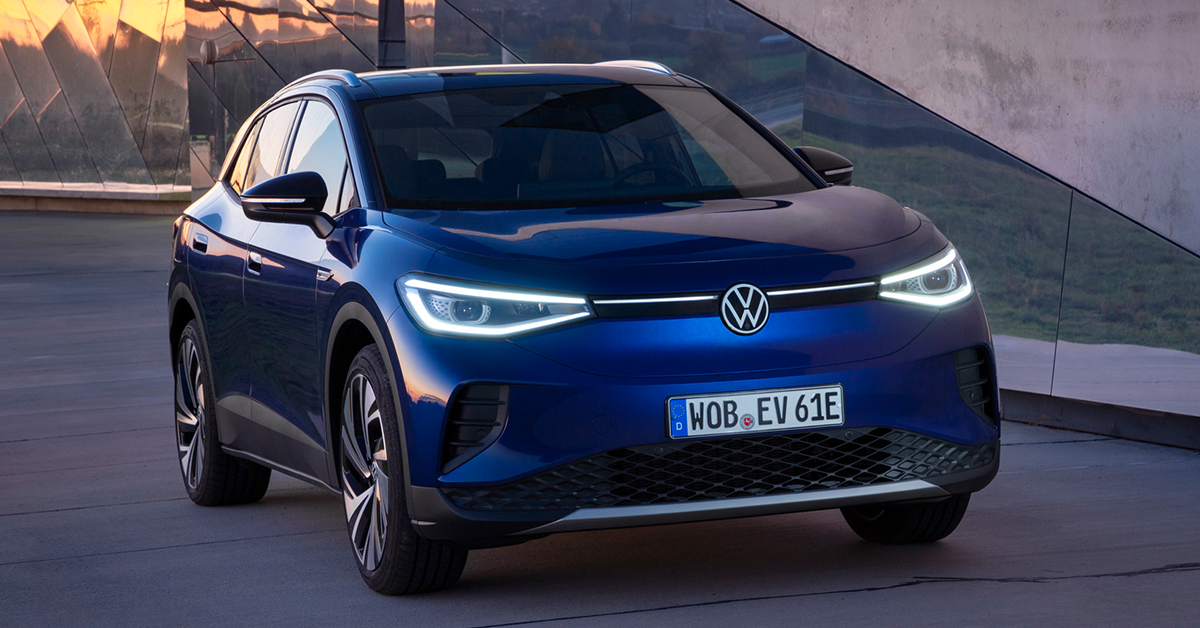
Official press image of the Volkswagen ID.4, previewed at the 2020 Geneva Motor Show. | © Volkswagen AG
The Volkswagen ID.4 is a compact electric SUV built on the Modular Electric Drive Matrix, known as the MEB. Volkswagen calls it its first fully electric SUV and its first global electric car, and its premiere on 23 September 2020 launched it into what the company describes as the world’s largest market segment, the compact SUV class. Series production started in Zwickau on 20 August 2020, and the car was later built in Emden, in two Chinese plants and in Chattanooga in the United States. In September 2026 Volkswagen confirmed that a new model called the ID. Tiguan would succeed the ID.4 and the related ID.5. This article follows the ID.4 from its concepts to that succession.
| Series production start | 20 August 2020, Zwickau (Volkswagen) |
| World premiere | 23 September 2020, digital event (Volkswagen) |
| Pre-sales | 24 September 2020 (Volkswagen) |
| Launch editions | ID.4 1ST and 1ST Max (Volkswagen) |
| GTX premiere | 28 April 2021 (Volkswagen) |
| Emden production | 20 May 2022 (Volkswagen) |
| Chattanooga production | 26 July 2022 (Volkswagen) |
| Major upgrade | 10 October 2023 (Volkswagen) |
| Deliveries, ID.4 and ID.5 | More than 950,000 since 2021 (Volkswagen) |
| Successor | ID. Tiguan, premiere 9 October 2026 (Volkswagen) |
The ID.4 was previewed years before it appeared. Volkswagen presented the I.D. Crozz at Auto Shanghai in 2017 as the third member of its ID. family, and a reworked I.D. Crozz II followed at the Frankfurt show in September 2017, with Volkswagen saying the production version was to be launched in 2020. Volkswagen’s own pages disagree on the month of the Shanghai debut, giving March 2017 in one image text and April 2017 in a press kit, so this article says only 2017. A reference source says a camouflaged prototype of the ID.4 appeared at the 2019 Frankfurt show (reported), and a Volkswagen image caption says the company offered a glimpse of the ID.4 at the 2020 Geneva Motor Show.
Production came first and the unveiling second. Volkswagen’s press release of 20 August 2020 says series production of the ID.4 was getting under way in Zwickau, following the ID.3, and that the world premiere would follow at the end of September. It describes the production as carbon-neutral in its balance. The premiere itself took place on 23 September 2020 as a digital event, and Volkswagen’s release called the ID.4 its first fully electrically driven SUV with zero local emissions, produced with a carbon-neutral balance. Ralf Brandstätter, then chief executive of the Volkswagen brand, called it an emotional all-rounder that would impress many customers.
Pre-sales began a day later. Volkswagen’s release of 24 September 2020 says the ID.4 1ST and ID.4 1ST Max launch editions were available to order in Germany and further European countries only one day after the premiere. Both had 150 kilowatts, a 77 kilowatt-hour battery and generous equipment, and an ID.4 Pro Performance was also available with the same key data, a WLTP range of 522 kilometres and a German price from 44,450 euros. A trade report on the premiere gave 49,950 euros for the launch edition and said Volkswagen had so far quoted only a price of under 37,000 euros for the car in general (reported). A European business-news report also gave a United States price of 39,995 dollars for the ID.4 Pro with deliveries from mid-2021 (reported).
The car grew into Volkswagen’s best-selling electric model. A Volkswagen release of February 2021 called it the world car, now on its way to the world markets, and the company later said that 190,000 ID.4 had been delivered worldwide by July 2022, which it described as the best-selling all-electric model of the Group at the time. In its September 2026 release on the ID. Tiguan, Volkswagen said the ID.4 and ID.5 together had delivered more than 950,000 units since 2021 and described them as among the most successful battery-electric model series of Volkswagen AG. Our guide to the Volkswagen ID.3 covers the hatchback that came before it.
The ID.4 also changed over the years. The GTX arrived in 2021 as the first MEB model with dual-motor all-wheel drive, and a major upgrade in October 2023 brought new motors and software. Production moved around the world, with Zwickau, Emden, Anting, Foshan and Chattanooga all building it at some point. In April 2026 Volkswagen ended ID.4 assembly in Chattanooga, and in September 2026 it announced the ID. Tiguan as the successor. The sections below cover the concept and platform, the design and specifications, the batteries and charging, the factories, the GTX, the 2023 upgrade and the ID. Tiguan.
A note on sources. Specifications and dates come from Volkswagen’s own press releases and newsroom pages wherever possible. Figures from a reference source or a trade report are labelled “reported”. Battery sizes are net energy content unless stated, and prices are German or United States snapshots that change over time.

Official press image of the Volkswagen ID. CROZZ show car. | © Volkswagen AG
The ID.4 is the second production model on the MEB, after the ID.3, and Volkswagen presents it as the platform’s first SUV. MEB stands for Modularer E-Antriebs-Baukasten, which Volkswagen translates as the Modular Electric Drive Matrix. Volkswagen’s production-start release of August 2020 says that, following the ID.3, the second model in the ID. family had gone into series production, and that Zwickau was scaling the MEB platform globally. A reference source says the I.D. Crozz concept, shown in 2017, is the car on which the production ID.4 is based (reported).
| Concept | I.D. Crozz, 2017 (Volkswagen) |
| Revised concept | I.D. Crozz II, Frankfurt, September 2017 (Volkswagen) |
| Planned launch then | 2020 (Volkswagen, 2017 plan) |
| Platform | MEB (Volkswagen) |
| Preceding MEB model | ID.3 (Volkswagen) |
| Segment | Compact SUV (Volkswagen) |
| Length | 4.58 m (Volkswagen) |
| Ground clearance | 21 cm (Volkswagen) |
| Drag coefficient | 0.28 at premiere (Volkswagen) |
| Plants planned | Five on three continents (Volkswagen) |
The concept story begins with the 2016 I.D. hatchback, which Volkswagen showed in Paris as the first compact car on the MEB. The I.D. Crozz followed in 2017. Volkswagen’s image text calls it the third member of the ID. family, shown at Auto Shanghai, and the I.D. Crozz II shown in Frankfurt in September 2017 had a modified design and a newly configured interior that, in Volkswagen’s words, underlined the SUV character of the study car even more strongly. Volkswagen said at the time that the production version of the I.D. Crozz would be launched in 2020, which is the same year the ID.4 appeared.
A trade report on the Frankfurt concept said it had a coupe-like SUV shape and that it was one of five new models planned under the ID. banner by 2022 (reported). Another report said the Frankfurt car carried 100 kilowatts more system power than the I.D. hatchback but 50 kilowatts less than the I.D. Buzz van (reported). Volkswagen’s press kit for the I.D. Crozz II covers an I.D. Pilot mode for automated driving, an idea that the company repeated across several concepts. The production ID.4 does not offer fully automated driving, but it does carry the assist systems that Volkswagen groups under IQ.Drive, including Travel Assist.
The production car shows how the concept was trimmed. Volkswagen’s premiere release gives a length of 4.58 metres and a ground clearance of 21 centimetres, which it says lets the SUV perform well in gentle off-road terrain, and a drag coefficient of 0.28. It describes a design with a long wheelbase, short overhangs and a cabin that is spacious for its class. The same release lists wheels of up to 21 inches, IQ.Light LED matrix headlights and 3D LED tail lights on the top version, an electrically operated boot lid and a roof railing.
The ID.4 was also planned from the beginning as a world car. Volkswagen’s premiere release says it is planned for production and sale in Europe and later in China and the United States, and its pre-sales release says five plants on three continents would build it. Zwickau started first, followed by two Chinese plants, then Emden in Germany and Chattanooga in the United States. That scale is the reason Volkswagen set the ID.4 against the compact SUV segment, which it calls the world’s largest.
Volkswagen’s strategy around the MEB has also shifted since 2020. In 2026 the company introduced a new naming approach, with the ID. Polo, ID. Cross and ID. Tiguan carrying established names into the electric range, and its press pack for the ID. Tiguan lists the drive as MEB+, which is a development of the same platform. A reference source calls the first car in the family, the ID.3, a related model to the Cupra Born (reported). The ID.4 itself sits between that compact hatchback and the larger ID.7 saloon that Volkswagen also launched.

Official press image of the Volkswagen ID.4 1ST Max launch edition. | © Volkswagen AG
The ID.4 is a five-door, five-seat compact SUV with a rear-mounted motor and rear-wheel drive as standard, and an all-wheel-drive version added later. Volkswagen’s press kit for the ID.4 GTX gives the dimensions of the car: a length of 4,582 millimetres, a width of 1,852 millimetres, a height of 1,616 millimetres and a wheelbase of 2,765 millimetres. The boot holds 543 litres, rising to 1,575 litres with the rear seats folded, figures that match the 2020 premiere release. The 4,582 millimetre length matches the 4.58 metres given at the premiere.
| Length | 4,582 mm (Volkswagen) |
| Width | 1,852 mm (Volkswagen) |
| Height | 1,616 mm (Volkswagen) |
| Wheelbase | 2,765 mm (Volkswagen) |
| Boot | 543 litres, 1,575 litres seats folded (Volkswagen) |
| Launch 0 to 100 km/h | 8.5 s (Volkswagen) |
| Launch top speed | 160 km/h (Volkswagen) |
| Battery weight, 77 kWh | 486 kg (Volkswagen) |
| Gross vehicle weight | 2,750 kg, GTX (Volkswagen) |
| Braked towing | 1,400 kg at 8 per cent, GTX (Volkswagen) |
Volkswagen’s premiere release lists the interior and technology of the launch car. There are two displays, one of up to 12 inches with touch functions, and the “Hello ID.” natural voice control, and Volkswagen says the main operating concept has no physical buttons or switches. A light strip under the windscreen, called ID.Light, communicates with the driver. An augmented-reality head-up display is optional, and the standard features include Discover Pro navigation with We Connect Start online services and IQ.Drive assist systems including Travel Assist. A UK news site wrote that the cabin was free of physical buttons and relied on two displays (reported).
The launch car was not especially fast. Volkswagen’s release gives a time of 8.5 seconds from 0 to 100 kilometres per hour and a top speed of 160 kilometres per hour for the 150 kilowatt version, with a rear motor and a 77 kilowatt-hour battery. The efficiency class was A+ with NEDC consumption of 16.9 to 16.2 kilowatt-hours per 100 kilometres in the release’s footnote. Weights are not given in the premiere release, but the GTX press kit says the 77 kilowatt-hour battery alone weighs 486 kilograms and that the gross vehicle weight rating is 2,750 kilograms with a maximum load of 601 kilograms.
Towing is part of the SUV pitch. The GTX press kit gives a maximum braked trailer weight of 1,400 kilograms on an 8 per cent gradient or 1,200 kilograms on a 12 per cent gradient, and an unbraked limit of 750 kilograms. The premiere release says a towing bracket is included in the equipment range, but gives no towing figure for the launch car. In the 2026 ID. Tiguan press material Volkswagen quotes a towing capacity of up to 2.0 tonnes, which is a useful point of comparison for the successor.
The standard equipment of the launch editions was generous. Volkswagen’s pre-sales release says the 1ST and 1ST Max both had 150 kilowatts and 77 kilowatt-hours, with the Max adding extra features such as the interior pictured in the release. The GTX brought 20-inch Ystad alloy wheels as standard with 21 inches optional, GTX badges on the wings, doors and rear, and Metallic Kings Red as one paint option, according to the GTX press kit. Standard IQ.Light LED matrix headlights and 3D LED tail light clusters came with the GTX.
Sustainability was again part of the pitch. Volkswagen’s premiere release says the ID.4 is produced with a carbon-neutral balance and stays carbon-neutral on the road if charged with sustainably produced electricity such as Volkswagen Naturstrom. For the Zwickau-built car the pre-sales release says the ID.4 is carbon-neutral along the entire value chain. Readers should treat those as Volkswagen’s claims for the launch period, which depend on the accounting method the company describes.
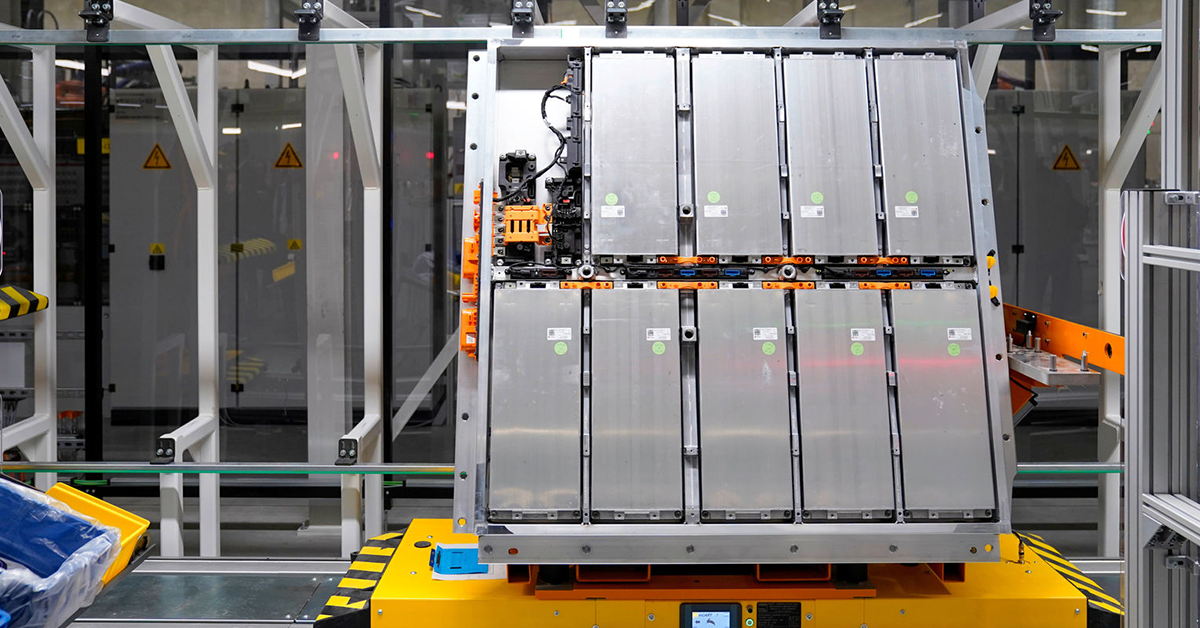
Official press image of the MEB battery system in production at the Volkswagen Group Components plant in Brunswick. | © Volkswagen AG
The ID.4 launched with one battery and one motor. Volkswagen’s premiere release gives a net battery capacity of 77 kilowatt-hours, a rear-mounted motor of 150 kilowatts (204 PS) and a WLTP range of up to 520 kilometres. DC fast charging at up to 125 kilowatts adds about 320 kilometres of WLTP range in around 30 minutes. The pre-sales release says the 1ST and 1ST Max editions would cover around 490 kilometres on the WLTP cycle, while the ID.4 Pro Performance had a range of 522 kilometres, which shows how equipment changes the figure.
| Launch battery | 77 kWh net (Volkswagen) |
| Launch motor | 150 kW (204 PS), rear (Volkswagen) |
| Launch range | Up to 520 km WLTP (Volkswagen) |
| Launch DC charging | Up to 125 kW (Volkswagen) |
| Pure | 52 kWh, 125 kW, 115 kW DC in 2023 (Volkswagen) |
| GTX 2021 | 220 kW (299 PS), 77 kWh (Volkswagen) |
| 2023 Pro | 210 kW (286 PS), 545 Nm, up to 550 km (Volkswagen) |
| 2023 Pro 4MOTION | 210 kW system, 175 kW DC (Volkswagen) |
| 2023 GTX | 250 kW (340 PS), 0 to 100 in 5.4 s (Volkswagen) |
| Warranty | 70 per cent after 8 years or 160,000 km (Volkswagen) |
Smaller batteries followed. A trade report at the launch said the ID.4 Pure would come in 2021 with a 52 kilowatt-hour battery and 109 kilowatts, and a Pure Performance version with 125 kilowatts (reported). Volkswagen Group’s own battery page says the ID.4 offers two battery sizes, 52 and 77 kilowatt-hours,. Volkswagen’s October 2023 release shows the Pure still at 125 kilowatts (170 PS), with a 52 kilowatt-hour battery, a top speed of 160 kilometres per hour and DC charging of up to 115 kilowatts, up from 110.
The GTX raised the numbers. Volkswagen’s May 2021 release gives the ID.4 GTX a 77 kilowatt-hour net battery, a maximum charging capacity of 125 kilowatts and a customer-oriented range of 340 to 480 kilometres, with the press kit giving up to 480 kilometres. Charging from 5 to 80 per cent takes about 38 minutes according to the press kit. The battery warranty is at least 70 per cent of original capacity after eight years or 160,000 kilometres. Volkswagen’s release explains that two electric motors, one on each axle, together deliver a maximum output of 220 kilowatts (299 PS).
The 2023 upgrade changed the drive. Volkswagen’s release number 150/2023 says the rear-wheel-drive ID.4 Pro now has 210 kilowatts (286 PS), which is 60 kilowatts more than before, and that the torque of that motor rose from 310 to 545 newton metres, about 75 per cent more. The ID.4 Pro 4MOTION gains 15 kilowatts to a system power of 210 kilowatts, and the GTX rises by 30 kilowatts to 250 kilowatts (340 PS). A trade report says the new rear motor is called the APP550 and comes from the ID.7 (reported). The same release gives the ID.4 Pro a WLTP range of up to 550 kilometres, 17 more than before.
Charging figures from the 2023 upgrade are reported differently. Volkswagen’s release says the all-wheel-drive models increase DC charging from 135 to 175 kilowatts and that the rear-wheel-drive models continue with the familiar 135 kilowatts, while the newsroom summary says the same for rear-wheel drive. Other reports say the long-range rear-wheel-drive versions charge at 175 kilowatts (reported), and one report says all models rose from 135 to 175 (reported). Volkswagen says the best versions can add about 178 kilometres in roughly 10 minutes, so the Volkswagen figures are used in the table below.
Performance figures also moved. The October 2023 release gives the GTX a time of 5.4 seconds from 0 to 100 kilometres per hour with the specified maximum power and an electronically limited top speed of 180 kilometres per hour, and says the Pro models’ top speed rose from 160 to 180 kilometres per hour. The original GTX in 2021 took 6.2 seconds, with 3.2 seconds for 0 to 60 kilometres per hour. Volkswagen notes that its footnote for 220 kilowatts says that output can be called up for a maximum of 30 seconds, so peak figures are not sustained.
Taken together, the ID.4 went from a single 150 kilowatt version to a range that spans 125 to 250 kilowatts. For a United States buyer the story was different, because the American-built car initially came with an 82 kilowatt-hour battery in rear-wheel or all-wheel drive, with a 62 kilowatt-hour rear-wheel-drive version following later in 2022 at a lower price. Those figures use the United States rating of the packs, which is not directly comparable with the net figures Volkswagen quotes for European cars, so readers should check the model-year specification for their market.

Official press image of the start of ID.4 series production in Zwickau, with Volkswagen brand CEO Ralf Brandstätter at door assembly. | © Volkswagen AG
The ID.4 has been built on three continents. Volkswagen’s production-start release of 20 August 2020 puts the first series car in Zwickau, which had already built the ID.3. Volkswagen’s pre-sales release says the ID.4 was to be built at five plants on three continents, with production launching at the Chinese plants in Anting and Foshan before the end of 2020. A trade report says pre-series production began in Anting in November 2019 (reported). Zwickau was the model’s European home and remained the source of the GTX, which Volkswagen says is built there.
| Zwickau start | 20 August 2020 (Volkswagen) |
| Anting and Foshan | Before the end of 2020 (Volkswagen plan) |
| Emden start | 20 May 2022 (Volkswagen) |
| Emden capacity, end 2022 | 800 units per working day (Volkswagen) |
| Chattanooga start | 26 July 2022 (Volkswagen) |
| Chattanooga investment | 800 million dollars (Volkswagen) |
| Chattanooga ramp-up goal | 7,000 a month, Q4 2022 (Volkswagen) |
| Delivered by July 2022 | 190,000 ID.4 worldwide (Volkswagen) |
| Chattanooga ID.4 ended | Mid-April 2026 (Volkswagen, reported) |
| Delivered by 2026 | More than 950,000 ID.4 and ID.5 (Volkswagen) |
Emden was the second German site. Volkswagen’s release of 20 May 2022 says the ID.4 was now made at Emden, Zwickau and the Anting and Foshan plants in China, and that it would be produced in Chattanooga from the fall of 2022. The release says that Emden’s maximum production capacity at the end of 2022 would be 800 units per working day, and that the plant would build the Aero B saloon and the Variant in later years. A trade site reported that Volkswagen invested about 1 billion euros in the conversion, with six new production halls (reported). Volkswagen had earlier said the Passat and Arteon were produced at Emden, and our Volkswagen Arteon guide tells that story.
Chattanooga was the American site. Volkswagen’s release of 26 July 2022 marked the start of ID.4 production in Chattanooga, Tennessee, its first US-assembled electric vehicle. The release says Volkswagen invested 800 million dollars to electrify the plant, with new facilities for vehicle and battery pack assembly, and that production would ramp up to 7,000 vehicles a month in the fourth quarter of 2022. It gave first customer deliveries as early as October 2022. The Chattanooga plant employed more than 4,000 people and was hiring more than 1,000 production team members through 2022, according to the release.
The ID.4 reached other markets by sea. A Volkswagen release of February 2021 headlined the ID.4 as the world car now on its way to the world markets, with the first cars described as ecologically transported in an LNG cargo ship. In the United States, the early cars were shipped from Germany before local production started, a US report said (reported). By July 2022 Volkswagen said it had delivered 190,000 ID.4 worldwide since the 2021 launch. By September 2026 Volkswagen said ID.4 and ID.5 deliveries together had passed 950,000.
The ID.4 story in America changed in 2026. A trade report quoted Volkswagen as saying that, as part of a focus on higher-volume products, it would no longer assemble the ID.4 in Chattanooga, with assembly concluding before the end of April 2026. Volkswagen said the plant would pivot to the next-generation Atlas for the 2027 model year, with production in summer 2026 and an autumn launch. A second report says existing model-year 2026 ID.4 inventory should support demand into 2027, and that a future ID.4 for the North American market remains planned, with details to follow (reported).
Sales explain the decision. A trade report gave United States sales of about 37,000 in 2023, a fall of 55 per cent the following year and a 31 per cent recovery to 22,373 in 2025 (reported), and another said the 2025 rise was driven by demand as federal tax credits ran out (reported). A different US review said Volkswagen moved 37,789 ID.4 in 2023, up 84 per cent on 2022 (reported). Because these are reported figures from different outlets, they are close but not identical, and Volkswagen’s own sales tables remain the reference for exact numbers.

Official press image of the Volkswagen ID.4 GTX. | © Volkswagen AG
The ID.4 GTX is the sporty flagship of the range. Volkswagen’s press release of 28 April 2021 says the GTX expanded the ID. family with the sporty GTX product brand and brought dual-motor all-wheel drive to the family, the first model on the MEB to feature it. The world premiere was held in an aircraft hangar at the former Tempelhof Airport in Berlin, where the car climbed a ramp with a gradient of 37.5 per cent. Volkswagen’s second release that day describes a 525 square metre ramp used as a stage for a mixed-reality installation.
| Premiere | 28 April 2021, Berlin Tempelhof (Volkswagen) |
| First on the MEB | Dual-motor all-wheel drive (Volkswagen) |
| Output 2021 | 220 kW (299 PS), 30 s maximum (Volkswagen) |
| 0 to 100 km/h, 2021 | 6.2 s (Volkswagen) |
| Top speed | 180 km/h, limited (Volkswagen) |
| Battery | 77 kWh net (Volkswagen) |
| DC charging, 2021 | Up to 125 kW (Volkswagen) |
| German price, 2021 | 50,415 euros (Volkswagen) |
| Output 2023 | 250 kW (340 PS) (Volkswagen) |
| Drag coefficient | 0.29 (Volkswagen) |
The numbers were headline-friendly. The GTX has one electric motor on the front axle and one on the rear, together delivering a maximum electrical output of 220 kilowatts (299 PS), and Volkswagen gives 0 to 100 kilometres per hour in 6.2 seconds and 0 to 60 in 3.2 seconds, with a top speed electronically limited to 180 kilometres per hour. A footnote says the 220 kilowatts can be accessed for a maximum of 30 seconds. The battery is 77 kilowatt-hours net, charging is up to 125 kilowatts, and the German entry price was 50,415 euros with a net grant of 7,500 euros available to the customer, which was the incentive at the time.
Volkswagen says the GTX is mainly rear-wheel drive in normal driving and brings the front motor in when traction is needed. A US news site wrote that the car engages all-wheel drive automatically and uses the rear motor during hard acceleration (reported). The press kit gives a drag coefficient of 0.29 for the GTX, 20-inch Ystad wheels with 21 inches optional, larger front brakes of 358 millimetres according to a trade report (reported), and a trailer rating of 1,400 kilograms. Pre-sales opened on 19 May 2021 in the first European countries, and the car launched in Europe in summer 2021.
The ID.4 Pro 4MOTION arrived as a more affordable all-wheel-drive version. Volkswagen’s October 2023 release shows the Pro 4MOTION gaining a new rear electric motor and keeping an additional motor on the front axle, for a system power of 210 kilowatts (286 PS), up 15 kilowatts. That implies the earlier Pro 4MOTION made 195 kilowatts, a figure that follows from the release’s arithmetic. The GTX rose to 250 kilowatts (340 PS), which is 30 kilowatts more, and the release says it reaches 100 kilometres per hour in 5.4 seconds with the specified maximum power.
The GTX look is distinctive. Volkswagen’s press kit says the car carries GTX badges on the wings, doors and rear, a body colour that is more dominant than on the rear-wheel-drive models, and standard IQ.Light LED matrix headlights with 3D LED tail light clusters. A trade report listed new bumpers, 3D LED tail lights and new colours (reported). Volkswagen’s release also notes that GTX models carry a new running-gear set-up in 2023, aimed at more driving pleasure. In 2025 the newsroom listed ID.4 GTX images with combined consumption of 18.0 to 16.6 kilowatt-hours per 100 kilometres.
The GTX was also the first car in the ID. family to carry the GTX brand, which Volkswagen later extended to the ID.3 and ID.7. Volkswagen’s April 2021 release ties it to the electrification campaign, with a goal of increasing the sale of purely electric vehicles in Europe to 70 per cent by 2030. Readers should treat that target as the plan of 2021. It sits alongside the GTI story of the Golf, which Volkswagen says the GTX name is meant to carry into electric mobility.

Official press image of the upgraded Volkswagen ID.4 Pro in Costa Azul. | © Volkswagen AG
On 10 October 2023 Volkswagen announced what it called a major upgrade for the ID.4 and ID.5, in release number 150/2023, titled “Upgrade for the ID.4 and ID.5: new infotainment system with intuitive operation, new electric drive with more power and efficiency”. Pre-sales opened for the upgraded cars. The release says both models get a new standard infotainment system with a 12.9-inch screen, and Volkswagen quotes Imelda Labbé, board member for sales, marketing and aftersales, saying that software and infotainment are state-of-the-art. Base prices started at 40,335 euros and remained the same as for the predecessors.
| Release | 10 October 2023, No. 150/2023 (Volkswagen) |
| Screen | 12.9 inches (Volkswagen) |
| Pro output | 210 kW (286 PS), +60 kW (Volkswagen) |
| Pro torque | 310 to 545 Nm (Volkswagen) |
| Pro 4MOTION | 210 kW system, +15 kW (Volkswagen) |
| GTX output | 250 kW (340 PS), +30 kW (Volkswagen) |
| ID.4 Pro range | Up to 550 km WLTP (Volkswagen) |
| All-wheel-drive DC | 175 kW, from 135 kW (Volkswagen) |
| Pure DC | 115 kW, from 110 kW (Volkswagen) |
| Base price, Germany | From 40,335 euros (Volkswagen) |
The cockpit was the visible change. Volkswagen says it significantly enhanced the cockpit landscape with a focus on intuitive operation, and one detail from the release is that the driving mode selector was removed from the housing of the instrument cluster and separated. A trade report lists illuminated touch sliders for air conditioning and volume, and a multifunction steering wheel with new operating logic (reported). A Harman Kardon sound system with 10 speakers and 480 watts became available, according to a report (reported). The earlier 12-inch screen grew to 12.9 inches, as the release notes.
The drive changes were the main technical story. The release lists the high-efficiency drive from the ID.7, with a rear motor of 210 kilowatts in the Pro and a torque jump from 310 to 545 newton metres, an increase of 235 newton metres or about 75 per cent. Volkswagen says the Pro models are now significantly more powerful while their energy consumption has been reduced. The ID.4 Pro can cover up to 550 kilometres on the WLTP cycle and the ID.5 Pro up to 556 kilometres, increases of 17 and 11 kilometres. A new colour, Costa Azul, appears in the release’s picture of the ID.4.
The charging notes need care. Volkswagen’s release says the all-wheel-drive models gain a higher DC charging capacity of 175 kilowatts, up from 135, which it ties to adding about 178 kilometres of range in 10 minutes. It adds that the Pure with its 52 kilowatt-hour battery is now offered with up to 115 kilowatts instead of 110. Reports differ on whether rear-wheel-drive long-range versions also reached 175 kilowatts, so owners should check the specification of the exact car. New charging and thermal management on the upgraded models are said to keep the battery in the right temperature range.
In the United States the 2024 model year arrived with the same changes, according to a US trade report that said the updates were coming to the 2024 ID.4 on sale in early 2024 (reported). A US review of the 2024 car priced the range from 41,160 dollars for the unchanged 58 kilowatt-hour base model to 58,480 dollars for the all-wheel-drive Pro S Plus (reported), and said the new rear motor used a stator with more, larger square-section wires and an uprated oil and water cooling system (reported). Those details are from a market review and not from Volkswagen’s European press release.
The 2023 upgrade was a catch-up move as much as a step forward. Volkswagen had to answer criticism of the first software generation, and the release is candid that operation was the focus. The upgrade did not change the car’s shape, and it set up the ID.4 for its final phase before the ID. Tiguan was announced as its successor in September 2026.

Official press image of the Volkswagen ID. Tiguan, the successor to the ID.4. | © Volkswagen AG
The newest chapter is the ID. Tiguan. Volkswagen’s release of 28 September 2026 said the new ID. Tiguan would succeed the ID.4 and the ID.5 and would be offered alongside the Tiguan with combustion and hybrid powertrains, with the world premiere in early October and arrival on markets at the beginning of 2027. Volkswagen’s newsroom dates the premiere release 9 October 2026. The company presents it as the third big model name carried into the electric range, after the ID. Polo and ID. Cross, under what it calls “True Volkswagen”.
| Announced | 28 September 2026 (Volkswagen) |
| Premiere | 9 October 2026 (Volkswagen newsroom) |
| Role | Succeeds ID.4 and ID.5 (Volkswagen) |
| Market arrival | Beginning of 2027 (Volkswagen) |
| Platform | MEB+ (Volkswagen) |
| Batteries | 58 kWh LFP and 77 kWh net (Volkswagen) |
| Outputs | 140, 210 and 220 kW (Volkswagen) |
| Range | Up to 600 km WLTP (Volkswagen) |
| Towing | Up to 2.0 tonnes (Volkswagen) |
| German price | From 42,695 euros (reported) |
Thomas Schäfer, head of the Volkswagen brand, said that the Tiguan is Volkswagen’s best-selling model worldwide and that the ID.4 and ID.5 are among its most successful electric cars. Volkswagen’s release says more than 8.3 million Tiguan vehicles had been produced, that the Tiguan and its Tayron sibling exceeded one million deliveries in the past year, and that Volkswagen delivered about 382,000 all-electric vehicles worldwide last year out of about 4.7 million cars in 2025. It says the ID.4 and ID.5 have delivered more than 950,000 units since 2021.
The premiere gave the technical details. Volkswagen’s press pack lists a drive on the MEB+ platform, with rear-wheel drive and optional all-wheel drive, and net battery sizes of 58 and 77 kilowatt-hours, with the 58 kilowatt-hour battery of the LFP type. There are three performance levels: 140 kilowatts (190 PS) with the 58 kilowatt-hour battery, 210 kilowatts (286 PS) with the 77 kilowatt-hour battery, and a 220 kilowatt (299 PS) 4MOTION all-wheel-drive version, also with 77 kilowatt-hours. Volkswagen gives a WLTP range of up to 600 kilometres and a towing capacity of up to 2.0 tonnes, and says the car is the big brother of the ID. Cross.
Several practical points come from other sources. Volkswagen’s Group article quotes the company saying the ID. Tiguan from Emden is part of one of the strongest SUV duos in Europe alongside the Tiguan from Wolfsburg, which places its production in Emden. A trade report gave a German starting price of 42,695 euros and European pre-sales from 13 October (reported). A news report said towing capacity is rated at up to 1,800 kilograms for the 58 kilowatt-hour model and 2,000 kilograms for the larger battery (reported). A German report said an analyst view is that the car is an evolved ID.4 under new styling (reported).
What happens to the ID.4 itself? Volkswagen’s wording is that the ID. Tiguan succeeds it, and in North America a trade report says Volkswagen has confirmed the ID. Tiguan for that market later, without a date (reported). In the United States, Volkswagen said that a future version of the ID.4 remains planned and that existing 2026 inventory should support demand into 2027. The ID.4 name will therefore fade in Europe from 2027, while owners keep the car they have, and the ID.4 and ID.5 together will have passed 950,000 deliveries by the time of the changeover.
For readers deciding between used and new, the practical position is simple. A used ID.4 offers the 2020 to 2023 specification with a 12-inch screen or the upgraded 12.9-inch software from late 2023, and the 2023 upgrade matters most for torque and charging. The ID. Tiguan will bring a new design, a passenger display in its premium setup and different battery sizes. Our list of Volkswagen models shows where the ID.4 sits among all the cars that Volkswagen has built.
