 Brands
Volkswagen Arteon — From Passat CC to Fastback Flagship

Official press image of the Volkswagen Arteon. | © Volkswagen AG
The Volkswagen Arteon is the four-door fastback that replaced the Passat CC and the CC, launched at Geneva in 2017 and gone from production within a decade. Here is the full Arteon story, with the CC origins, engines, the US run, the Shooting Brake, the Arteon R, the eHybrid and the ID.7 that indirectly replaced it.

Official press image of the Volkswagen Passat CC. | © Volkswagen AG
The Volkswagen Arteon is a four-door fastback that Volkswagen unveiled on 6 March 2017 at the Geneva Motor Show, with a North American showing at the Chicago Auto Show soon after. It was positioned above the Passat in the range, it was built on the Modular Transverse Matrix, known as MQB, and it replaced the Volkswagen CC. A reference source adds that the production car was heavily based on a concept car the company had shown at Geneva in 2015. Volkswagen’s reveal material said the car would go on sale in Germany in mid-June 2017, with advance orders opening in early European markets after the show.
| Passat CC unveiled (reference) | January 2008, Detroit |
| Passat CC launch (Volkswagen) | 2008, first four-door coupé in the 30,000 euro class |
| Became the CC | 2012, as an independent model |
| China CC launch (reference) | 15 July 2010, FAW-Volkswagen |
| Arteon unveiled | 6 March 2017, Geneva |
| Arteon on sale in Germany | Mid-June 2017 |
| Platform | MQB |
| Predecessor | Volkswagen CC |
| Plant (Europe) | Emden, Germany |
| Successor | Volkswagen ID.7 (indirect) |
To understand the Arteon it helps to know the car it replaced. Volkswagen’s own newsroom says the company launched its first four-door coupé in the 30,000 euro class, the Passat CC, in 2008, and a reference source says it was unveiled in January 2008 at the North American International Auto Show in Detroit. The car took the mechanical basis of the Passat and wrapped it in a low, sloping roofline. According to the same reference, it was 27 millimetres longer, 50 millimetres lower and 36 millimetres wider than the Passat it was based on, and its wheelbase was 2,710 millimetres.
The Passat CC found a real audience. Volkswagen says almost 320,000 customers chose it before its first replacement, and that in 2011 alone it won three of the most prestigious design prizes. The company also says the niche it created grew into a segment of its own, which is a fair summary of what happened when other brands copied the idea of a stylish four-door coupé that cost little more than a normal saloon. The newsroom does not break the figure down by market or by year, so the 320,000 total is best read as a lifetime figure for the first generation.
In 2011 Volkswagen showed a new version of the car at the Los Angeles show, and in 2012 it launched as an independent model called simply the CC, with the Passat name dropped. The reference source says the letters stand for Comfort Coupé, and that production of the revised car started in January 2012. This is why searches for the Arteon often turn up pages about the CC, and why many owners and dealers describe the two cars as the same family. The CC was discontinued after the 2017 model year in most markets, and the Arteon was presented in 2017 as its successor.
China followed its own path. The reference source says FAW-Volkswagen launched the CC there on 15 July 2010 with 1.8 TSI and 2.0 TSI versions, and that the CC name continues in China from August 2018, for the 2019 model year. That detail matters later in this guide, because the Chinese car that is built on the same platform as the Arteon is sold under the CC name and not the Arteon name. For a reader comparing markets, the simple rule is that Europe and North America got the Arteon, while China kept the older badge.
The Arteon was a deliberate step up in ambition. A first-drive report describes it as Volkswagen’s bid to move upmarket against BMW, Mercedes-Benz and Audi, names the Audi A5 Sportback and the BMW 4 Series Gran Coupe as its main rivals, and quotes Volkswagen design director Klaus Bischoff saying there had never been a sexier Volkswagen. It also notes that the Arteon was slightly larger than the CC, with a longer wheelbase, shorter overhangs and a wider body. This guide follows the car from that reveal through its engines, its US run, its facelift and Shooting Brake, the Arteon R, its markets and its end. The table lists the key dates.

Official press image of the Volkswagen Arteon. | © Volkswagen AG
The Arteon is a five-door fastback with frameless door windows, and Volkswagen was careful to call it a gran turismo and not a hatchback. The most distinctive feature is the front. Volkswagen’s reveal material describes a long bonnet that extends forward over the wings, a full-width radiator grille and LED headlights that merge with the chrome crossbars of the grille. A hands-on look at the car adds that this front end introduced a new design language for the brand, and that the shape recalls the Passat CC while being larger and sitting above the Passat in the range.
| Length | 4,862 mm (both sources) |
| Width | 1,871 mm (both sources) |
| Height (Volkswagen) | 1,427 mm |
| Height (reference source) | 1,450 mm |
| Wheelbase (Volkswagen) | 2,841 mm |
| Wheelbase (reference source) | 2,837 mm |
| Boot capacity | 563 to 1,557 litres |
| Drag coefficient (US 2022) | 0.30 FWD, 0.29 AWD |
| Shooting Brake length (reference) | 4,866 mm |
| Shooting Brake height (reference) | 1,462 mm |
Dimensions are slightly different depending on the source, so this guide shows both. Volkswagen’s Geneva release gives a length of 4,862 millimetres, a width of 1,871 millimetres, a height of 1,427 millimetres and a wheelbase of 2,841 millimetres. A reference source lists the same length and width, a height of 1,450 millimetres and a wheelbase of 2,837 millimetres, which is 111.7 inches. A US-focused report gives the wheelbase as 111.9 inches, the length as 191.4 inches, the width as 73.7 inches and the height as 56.2 inches. The differences are small and probably reflect different measurement conditions and market specifications.
The long wheelbase was the point of the design. A first-drive report says the Arteon was slightly larger than the CC, with a longer wheelbase and shorter overhangs, and Volkswagen’s material says the length helps rear legroom. The same reviewer notes that rear head room is limited by the sloping roof and that the quality feel drops a little toward the back of the cabin, which is the usual price of a fastback roofline. Build quality and fit and finish at the front were described as strong, and the seats as comfortable on long journeys.
Boot space is generous for the shape. Volkswagen gives the capacity as 563 litres, expanding to 1,557 litres with the rear seats folded, and a first-drive report repeats those figures. A US report quotes the cargo area as 19.9 to 55.0 cubic feet, which converts to roughly 563 to 1,557 litres, so the two sources agree. The large tailgate that opens with the rear window is part of why the Arteon carries more than many saloons of similar length, and it is a reason some buyers saw it as a more practical alternative to a conventional premium four-door.
Equipment at launch included a fully digital instrument cluster, called the Active Info Display in Europe and the Digital Cockpit in the United States, a 9.2-inch Discover Pro infotainment screen with gesture control, a head-up display and a second generation of Emergency Assist that can bring the car to a stop, and steer it into the slow lane, if the driver becomes incapacitated. Trim levels in Europe were Elegance, which had a luxury focus, and R-Line, which added lowered sports suspension and sportier styling, with a base trim below them in some markets. The reviewer found the infotainment screen good looking but less intuitive than the separate rotary knobs it replaced.
Aerodynamics were part of the story in the United States. A report on the 2022 car gives the drag coefficient as 0.30 for front-wheel-drive models and 0.29 for all-wheel-drive models, and describes the car as low and wide with a light bar in the grille on higher trims. The table below collects the main figures and says which source each comes from. For the Shooting Brake estate that followed, the reference source gives a length of 4,866 millimetres and a height of 1,462 millimetres, with the same width and wheelbase as the fastback.
Official press image of the Volkswagen Arteon R-Line. | © Volkswagen AG
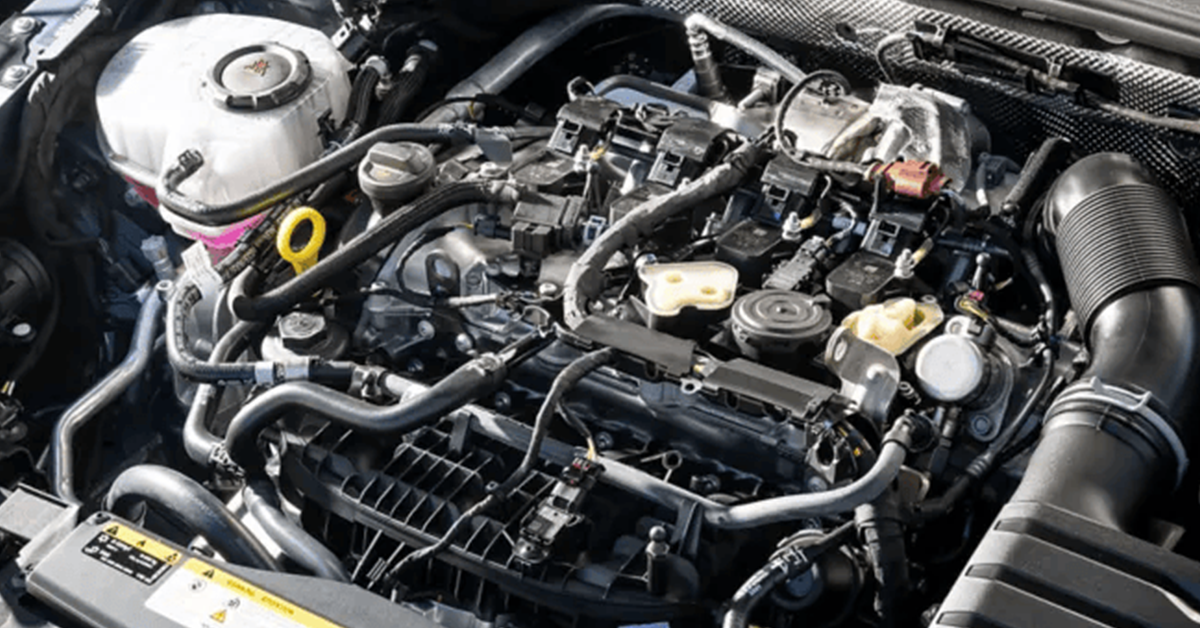
At the Geneva reveal Volkswagen announced six turbocharged four-cylinder engines. The petrol range was a 1.5 TSI Evo with 110 kilowatts, or 150 PS, a 2.0 TSI with 140 kilowatts, or 190 PS, and a 2.0 TSI with 206 kilowatts, or 280 PS. The diesel range was a 2.0 TDI with 110 kilowatts, or 150 PS, a 2.0 TDI with 140 kilowatts, or 190 PS, and a 2.0 biturbo TDI with 176 kilowatts, or 240 PS. The 280 PS petrol and the 240 PS diesel came with 4Motion all-wheel drive as standard, the seven-speed DSG dual-clutch gearbox was standard on the 190 PS petrol and above, and 4Motion was optional on the 190 PS diesel, so the remaining engines were front-wheel drive.
| 1.5 TSI | 110 kW (150 PS), 250 Nm |
| 2.0 TSI | 140 kW (190 PS), 320 Nm |
| 2.0 TSI 4Motion | 206 kW (280 PS), 350 Nm, 0–100 km/h in 5.6 s |
| 2.0 TDI | 110 kW (150 PS), 340 Nm |
| 2.0 TDI | 140 kW (190 PS), 400 Nm (to 2020) |
| 2.0 TDI 4Motion | 147 kW (200 PS), 400 Nm (from 2020) |
| 2.0 biturbo TDI 4Motion | 176 kW (240 PS), 500 Nm, 0–100 km/h in 6.5 s (to 2020) |
| Gearboxes | 6-speed manual, 7-speed DSG |
| All-wheel drive | 4Motion on the top engines |
| Source | Volkswagen and a reference source; torque and speed from the reference |
A reference source adds the performance figures for these engines. The 1.5 TSI took 9.0 seconds to reach 100 km/h with the manual gearbox and 8.9 seconds with the DSG, and had a top speed of 222 or 220 km/h. The 190 PS petrol took 7.7 seconds and reached 239 km/h. The 280 PS 2.0 TSI 4Motion took 5.6 seconds and reached 250 km/h, with 350 newton metres of torque. The biturbo diesel took 6.5 seconds, reached 245 km/h and had 500 newton metres of torque. Those torque and speed numbers are reported by the reference source and not by Volkswagen, so they are best used for comparison and not as a specification sheet.
A first drive tested two of these cars. The 2.0 biturbo TDI was quoted at 237 bhp, with 0 to 62 mph in 6.5 seconds, a top speed of 152 mph and a combined figure of 47.9 mpg, and the reviewer recorded 45.6 mpg on a stop-start route. The 2.0 TSI was quoted at 276 bhp, with 0 to 62 mph in 5.6 seconds, a top speed of 155 mph and 38.7 mpg. Both used the seven-speed DSG and four-wheel drive. The review describes the ride as comfortable on long journeys, with the optional 20-inch wheels making it harsher over bumps and joints, and it says the steering gave little feedback and the car understeered when pushed hard.
Over the following years the range was reshuffled. The reference source shows the 2.0 TDI with 190 PS and the 2.0 biturbo TDI with 240 PS ending in 2020, and a 2.0 TDI 4Motion with 200 PS arriving in the same year. It also lists a 2.0 TDI with 150 PS across the life of the car, available with a manual or DSG gearbox, and a 1.4 e-Hybrid TSI from 2020, which is covered in a later section. The 6-speed manual gearbox was therefore limited to the 150 PS and 190 PS front-wheel-drive engines, while the higher-powered cars used the DSG, and in the United States an eight-speed automatic and later the DSG were used instead.
Understanding the lineup is useful when buying a used car in Europe, because the same body can carry very different drivetrains. A 150 PS front-wheel-drive car is a relaxed cruiser with fuel economy as its main attraction, while a 280 PS 4Motion car is quick enough to take on the sportier rivals the Arteon was aimed at. The all-wheel-drive system on the strongest engines is why the Arteon could keep its composure in poor weather, and it is the same 4Motion approach Volkswagen used on the Golf R and the Passat. Owners should check the engine code and gearbox on the V5 or registration document, because the badges on the boot do not always make the difference clear.

Official press image of the Volkswagen Arteon (US). | © Volkswagen AG
The Arteon reached North America later than Europe. Volkswagen attributed the delay to new European emissions certification testing, and the car that was expected in 2018 slipped to the 2019 model year, with dealer arrivals in April 2019. Pricing before the 995 dollar destination fee started at 35,845 dollars for the front-wheel-drive base trim and 37,645 dollars with all-wheel drive. The SEL started at 39,995 dollars with front-wheel drive and 41,795 dollars with all-wheel drive, and the SEL Premium started at 44,945 dollars with all-wheel drive as standard. An R-Line package cost 1,265 dollars with 19-inch wheels or 1,765 dollars with 20-inch wheels.
| US on-sale date | April 2019 (2019 model year) |
| 2019 base price | $35,845 FWD, $37,645 AWD, before $995 destination |
| 2019 SEL Premium | From $44,945, AWD standard |
| 2019 to 2021 engine | 2.0T, 268 hp and 258 lb-ft, 8-speed automatic |
| 2022 engine | 2.0T, 300 hp and 295 lb-ft, 7-speed DSG |
| 2022 base price | $39,995 SE R-Line, plus $1,195 destination |
| Canada | Spring 2019 to the 2021 model year |
| US deliveries 2023 | 2,347 |
| US deliveries 2024 | 1,256 (down 46.5 percent) |
| Last model year | 2023 (no 2024 model) |
Unlike Europe, the United States received one engine. It was a 2.0-litre turbocharged four-cylinder rated at 268 horsepower and 258 pound-feet of torque, paired with an eight-speed automatic gearbox, and sold with front-wheel drive or all-wheel drive depending on the trim. A reference source lists the same figures. The single-engine approach made the US range simple, but it also meant buyers who wanted the diesels or the 280 PS petrol of Europe had no equivalent, which may have limited the car’s appeal against rivals that offered a V6 or a wider choice.
The 2022 model year brought the biggest US update. A report on the car says the 2.0-litre TSI, the EA888 evo4 engine shared with the Golf R, made 300 horsepower and 295 pound-feet of torque, up from 268 and 258, and that the 300 horsepower figure requires premium fuel. A seven-speed DSG with Tiptronic replaced the eight-speed automatic. The SE R-Line stayed front-wheel drive, while the SEL R-Line and SEL Premium R-Line got 4Motion all-wheel drive as standard, able to send up to 50 percent of torque to the rear axle. R-Line styling became standard on every trim.
Pricing for 2022 started at 39,995 dollars for the SE R-Line, 44,615 dollars for the SEL R-Line and higher for the top SEL Premium R-Line, with a destination charge of 1,195 dollars. Standard equipment included a 10-inch Digital Cockpit Pro display, wireless Apple CarPlay and Android Auto, a three-zone climate system, eight airbags, and driver assistance on the SEL trims that added Travel Assist and adaptive cruise control. The same report says the 2022 Arteon earned an IIHS Top Safety Pick award, and that the warranty covered four years or 50,000 miles. A final-year US sticker price of 44,305 dollars, with the SEL Premium R-Line from 51,470 dollars, has been reported.
Canada ended first. The reference source says the Arteon arrived there in spring 2019 and was discontinued after the 2021 model year because of poor sales. In the United States the car stayed on sale a little longer, but it never found a large audience. A report on its end says the Arteon “failed to gain any real traction” and that annual sales averaged less than 3,000 units. Volkswagen of America reported 2,347 deliveries in 2023 and 1,256 in 2024, a drop of 46.5 percent in the final sell-down year, and the US model was discontinued after the 2023 model year.
Volkswagen had originally said the Arteon would stay on sale in the United States through the 2024 model year, but it stopped local sales at the end of 2023, one year earlier than planned, so there is no 2024 Arteon. The company said it planned to drop niche models to improve efficiency and profits. For used buyers the conclusion is useful: the 2019 to 2021 cars have the 268 horsepower engine and the eight-speed automatic, and the 2022 and 2023 cars have the 300 horsepower engine and the DSG. The table below compares the two US generations.

Official press image of the Volkswagen Arteon Shooting Brake. | © Volkswagen AG
Volkswagen revealed a revised Arteon in June 2020, with a full launch on 24 June. The update brought three headline changes, a new Shooting Brake estate body, a plug-in hybrid called the eHybrid and a pair of R models, and it also changed the look of the front and rear. A reference source dates the facelifted car’s launch to July 2021 in one place and to 2020 in another, so the safest reading is that it was shown in 2020 and reached many customers during 2021. The facelift was the Arteon’s attempt to widen its appeal after a modest start.
| Facelift reveal | June 2020 (full launch 24 June) |
| New bodies and powertrains | Shooting Brake, eHybrid, Arteon R |
| Shooting Brake length (reference) | 4,866 mm |
| Shooting Brake height (reference) | 1,462 mm |
| Fastback plant | Emden, Germany |
| Shooting Brake plant | Osnabrück, Germany |
| Shooting Brake run (reported) | About five years |
| Infotainment | MIB 3, 8.0-inch or 9.2-inch screen (reference) |
| US Shooting Brake | Not sold |
| Fastback run (reported) | About eight years |
The Shooting Brake was the most important addition. It is a five-door estate that keeps the long, low shape of the fastback but adds a roofline that carries on to the tailgate. The reference source gives its length as 4,866 millimetres, its width as 1,871 millimetres, its height as 1,462 millimetres and its wheelbase as 2,837 millimetres, which makes it four millimetres longer and twelve millimetres taller than the fastback. A report on the end of production says the Shooting Brake ran for about five years, compared with about eight for the fastback, and that it was built in Osnabrück while the fastback was built in Emden.
Design changes were modest but visible. A report on the 2020 car describes a new bumper on the R models with large air intakes and substantial gloss black sections, a light strip that connects the headlights and the badge, a chrome strip at the bottom of the bumper, new daytime running lights, new tail light graphics and an Arteon script on the tailgate. Inside, the car gained the MIB 3 infotainment system and a new steering wheel shared with the European Passat, and the reference source says the cabin gained a digital cockpit and a choice of an 8.0-inch or a 9.2-inch touchscreen.
The same update refreshed the engine range. The 2.0 TDI gained a 200 PS version with 4Motion, the 190 PS and biturbo diesels were retired and the 1.4 e-Hybrid TSI arrived, as covered in the next section. In the United States the 2021 car kept its 268 horsepower engine, which a report describes as the only choice, paired with an eight-speed automatic and available with all-wheel drive on the top trims. The Shooting Brake was not sold in the United States, which is why American readers often describe it as the Arteon they never got.
For Europeans the Shooting Brake gave the Arteon a place in a market that loves estates. Volkswagen priced the R version from 63,980 euros in Germany, which put it against the BMW M340i and the Audi S4 discussed in the next section. Because it was built at the former Karmann factory in Osnabrück, it also stayed in production after the fastback ended, which the section on the end of the car covers. A reviewer would call it the most coherent version of the car, because the extra length is hidden in the roofline and the boot gains practicality without losing the shape.
Buyers of a used Shooting Brake should still check the equipment. The 2020 and later cars carry the newer MIB 3 infotainment software, and the plug-in and R versions use their own powertrains and trim details, so two Shooting Brakes of the same year can differ a lot. The table lists the main facts about the update. Anyone who needs figures for a specific car should read the vehicle’s registration document and the dealer specification, because the equipment varied by market and by year.

Official press image of the Volkswagen Arteon R. | © Volkswagen AG
The Arteon R was the fastest Arteon Volkswagen sold. It used a 2.0-litre turbocharged petrol engine producing 235 kilowatts, or 320 PS, which a report converts to 315 horsepower, with 420 newton metres of torque at 2,100 rpm. Volkswagen’s own figures give a 0 to 100 km/h time of 4.9 seconds and a top speed of 270 km/h with the optional R Performance package, or 250 km/h without it. It was sold as a fastback and as a Shooting Brake, and the first cars were due at dealerships in April 2021.
| Arteon R engine | 2.0 TSI, 235 kW (320 PS), 420 Nm |
| Arteon R 0–100 km/h | 4.9 seconds (Volkswagen) |
| Arteon R top speed | 250 km/h, 270 km/h with R Performance package |
| Arteon R price, Germany | 63,095 euros; Shooting Brake 63,980 euros |
| Arteon R drive | 4Motion with R-Performance Torque Vectoring, 7-speed DSG |
| eHybrid engine | 1.4 TSI plug-in, 160 kW (215 PS), 400 Nm |
| eHybrid performance (reference) | 0–100 km/h in 7.9 s, 220 km/h |
| eHybrid battery (report) | 13 kWh |
| eHybrid electric range | About 56 to 61 km depending on source |
| eHybrid markets | Europe only |
The R was more than a faster engine. It used permanent all-wheel drive with R-Performance Torque Vectoring, which Volkswagen says distributes power individually between the rear wheels, a seven-speed DSG gearbox, high-performance brakes with blue calipers and an R logo, and sport suspension with adaptive dampers adjustable from the touchscreen. A reference source adds that the torque-splitting rear differential came from Magna. The same hardware idea had already appeared on the Golf R, and the Arteon R gave the family a larger and more relaxed car with similar performance.
Pricing put the R against some serious rivals. In Germany the fastback cost 63,095 euros and the Shooting Brake cost 63,980 euros. A comparison report listed the BMW M340i xDrive at 65,200 euros with 374 PS and the Audi S4 TDI at 63,750 euros with 341 PS, so the Volkswagen was cheaper than the BMW but gave away power to both. That is the honest summary of the R, a quick and well-equipped car that was strong value on paper but never claimed to be the most powerful in its class, and one that depended on the practicality of its body to win buyers.
The second new powertrain was the eHybrid, a plug-in hybrid sold in Europe only. It combined a 1.4-litre TSI petrol engine with an electric motor for a combined output of 160 kilowatts, or 215 PS, and 400 newton metres of torque, and the reference source lists a 0 to 100 km/h time of 7.9 seconds and a top speed of 220 km/h. A report on the 2020 reveal gives the battery as 13 kilowatt-hours. The reference source quotes an electric-only range of 61 kilometres, or 38 miles, while the 2020 report quotes 56 kilometres, or 35 miles, so the safest statement is a range of roughly 56 to 61 kilometres depending on the test cycle and source.
The eHybrid was aimed at company-car drivers and at buyers in cities with low-emission rules, who could drive electrically for short trips and use the petrol engine on long ones. It was offered on both the fastback and the Shooting Brake, and it sat beside the Passat GTE, which used the same family of hybrid hardware. Because it was never sold in the United States, the American range stayed petrol-only for its whole life, which is another reason the US and European Arteons are so different from each other. The table below sets the R and the eHybrid side by side.
For a used buyer the choice is clear. The R is for enthusiasts who want a fast, understated car and accept the higher running costs, while the eHybrid suits short commutes with home charging, and a standard TSI or TDI is the sensible choice for high mileage. All three share the same body, boot and interior, which makes the Arteon a flexible car that could be bought in very different forms. The reported performance and range numbers come from Volkswagen and from secondary sources, so a prospective owner should confirm the exact figures for a given car.

Official press image of the Volkswagen Emden plant. | © Volkswagen AG
The Arteon was a global product built in more than one country. The reference source lists Emden in Lower Saxony for the car sold in Europe and North America, Osnabrück for the Shooting Brake, Changchun in China, where FAW-Volkswagen built it as the CC, and Pekan in Malaysia, where HICOM assembled it. A report on the end of production says about 190,000 cars were built in Germany, China and Malaysia in total, which averages roughly 23,750 a year over the eight-year life of the fastback. That total is a reported figure and not a Volkswagen statement.
| Europe and North America plant | Emden, Germany |
| Shooting Brake plant | Osnabrück, Germany |
| China (as the CC) | Changchun, FAW-Volkswagen |
| Malaysia | Pekan, HICOM |
| Malaysia launch (reference) | August 2020 |
| China CC launch (reference) | 15 July 2010 |
| China uses the CC name from (reference) | August 2018 |
| UK launch price (expected) | 38,000 to 40,000 pounds (first-drive report) |
| Total built (reported) | About 190,000 in Germany, China and Malaysia |
| Average per year (reported) | Roughly 23,750 |
Europe was the core market. Deliveries in Germany began in mid-June 2017, after advance orders opened in early European markets once the Geneva show ended. A first-drive report expected UK pricing of between 38,000 and 40,000 pounds when the car went on sale at the end of 2017, with Elegance and R-Line trims, and judged that as a replacement for the CC it offered more space and refinement for about the same money. The same report concluded that, as a flagship for Volkswagen’s premium push, it did not seem desirable enough, a criticism that foreshadows the car’s sales story.
China kept the older name. The reference source says the CC name continued in China from August 2018 for the 2019 model year, which means customers there bought a car with the same platform and a related design under a different badge. The CC had been launched by FAW-Volkswagen on 15 July 2010 with 1.8 TSI and 2.0 TSI engines, and Changchun remained its home. For anyone researching the family, this explains why Chinese-market pages list a CC with specifications close to the Arteon, and why the two names sometimes appear in the same search results.
Malaysia was the other notable market. The reference source says the car was assembled at Pekan by HICOM and lists a Malaysian launch in August 2020, which is the same year as the facelift and the arrival of the R and eHybrid in Europe. Local assembly is a common way for car makers to serve Southeast Asian markets. The report on the end of production confirms Malaysia as one of the three production countries, though it does not name the plant, so the Pekan detail rests on the reference source.
North America was the weakest market. Canada received the car in spring 2019 and lost it after the 2021 model year, and the United States received a single-engine range that sold under 3,000 units a year on average. Europe was the volume market, but even there the Arteon was always a niche choice beside the Passat and the Tiguan, which were far more popular. The numbers explain why the fastback was one of the first models Volkswagen chose to cut when it wanted to focus on higher-volume cars.
The Arteon also shows how Volkswagen thinks about model families. A single platform, MQB, supported the Passat, the Arteon and the CC, with different bodies and different names in different markets. That flexibility helped the company move quickly but also created confusion, because the same car could be an Arteon in Munich, a CC in Changchun and a model with a different badge elsewhere. Readers who want the wider picture can use the Volkswagen models list, which sorts the range by type with specifications and prices.

Official press image of the Volkswagen ID.7. | © Volkswagen AG
The Arteon ended in stages. In June 2023 Volkswagen chief executive Thomas Schäfer announced plans to axe several lower-volume models to focus on more popular products, and he named the Arteon without giving a date. Volkswagen later confirmed that the last Arteon fastback was built in 2023 at Emden, and the Emden plant no longer makes the car. In the United States the car was dropped one year earlier than planned, with no 2024 model, and the company said it was removing niche models to improve efficiency.
| Executive announcement | June 2023, Thomas Schäfer on low-volume models |
| Last fastback built | 2023, Emden |
| US sales ended | After the 2023 model year, no 2024 model |
| Shooting Brake end (Feb 2024 statement) | End of 2026, Osnabrück |
| Series production ended (reported) | Confirmed by January 2025 |
| Total built (reported) | About 190,000 |
| US deliveries 2023 | 2,347 |
| US deliveries 2024 | 1,256 |
| Indirect successor | Volkswagen ID.7 and ID.7 Tourer |
| Platform of successor | MEB (electric) |
The Shooting Brake lasted longer. In February 2024 a Volkswagen spokesperson said the estate would be produced until the end of 2026, and that the schedule had not changed, with production continuing at the former Karmann factory in Osnabrück, which also builds the T-Roc Cabriolet. A later report from January 2025 says series production had in fact ended, that a Volkswagen communications manager confirmed it on social media, and that the Shooting Brake may have been cut early to free capacity at Osnabrück. The earlier 2026 date and the later report differ, so this guide treats the end as confirmed but its exact month as unreported.
The reason was simple. A report says the Arteon was a poor seller, with US deliveries falling 46.5 percent to 1,256 in 2024 from 2,347 in 2023, and that the sedan ran for about eight years and the Shooting Brake for about five. The car carried a premium price, yet Volkswagen’s buyers in most markets preferred the Passat, the Tiguan or the Golf. That mismatch between ambition and demand is common in the segment, where the style leader often sells in small numbers while the sensible alternative takes the volume.
Volkswagen did not build a direct replacement. A report says the company was indirectly replacing the Arteon and the Passat saloon with the fully electric ID.7 fastback, with a more practical ID.7 Tourer estate to follow. The ID.7 is a different kind of car, an electric fastback on the MEB platform, so it is a spiritual successor in shape and position and not a mechanical one. For North America the story ended differently. Volkswagen had planned to sell the ID.7 there as a 2025 model, but in January 2025 a company spokesperson said that, due to the ongoing challenging EV climate, Volkswagen had decided to no longer offer the ID.7 in the North American market. American and Canadian buyers who wanted the Arteon’s role therefore have no direct Volkswagen replacement at all.
For readers who loved the Arteon, the nearest Volkswagen options today are the ID.7 for an electric fastback and the Passat, covered in its own guide, for a practical mid-size car. The Arteon, in short, leaves no direct petrol-powered heir, and its end removes one of the few mainstream four-door fastbacks from the Volkswagen range. Collectors and used buyers can still find the R and the Shooting Brake, and these are the versions most likely to hold their appeal because they were the rarest.
Looking back, the CC and the Arteon form a clear chain. The Passat CC invented the idea in 2008, the CC refined it in 2012, the Arteon moved it upmarket in 2017 and the ID.7 reinterprets it for the electric era. About 190,000 Arteons were reportedly built in total. This guide has used Volkswagen’s own statements wherever possible and has marked every reported figure, so readers can see which numbers are firm and which depend on secondary sources.