 Brands
Hyundai IONIQ 3 — Prices, Range, Specs and Production
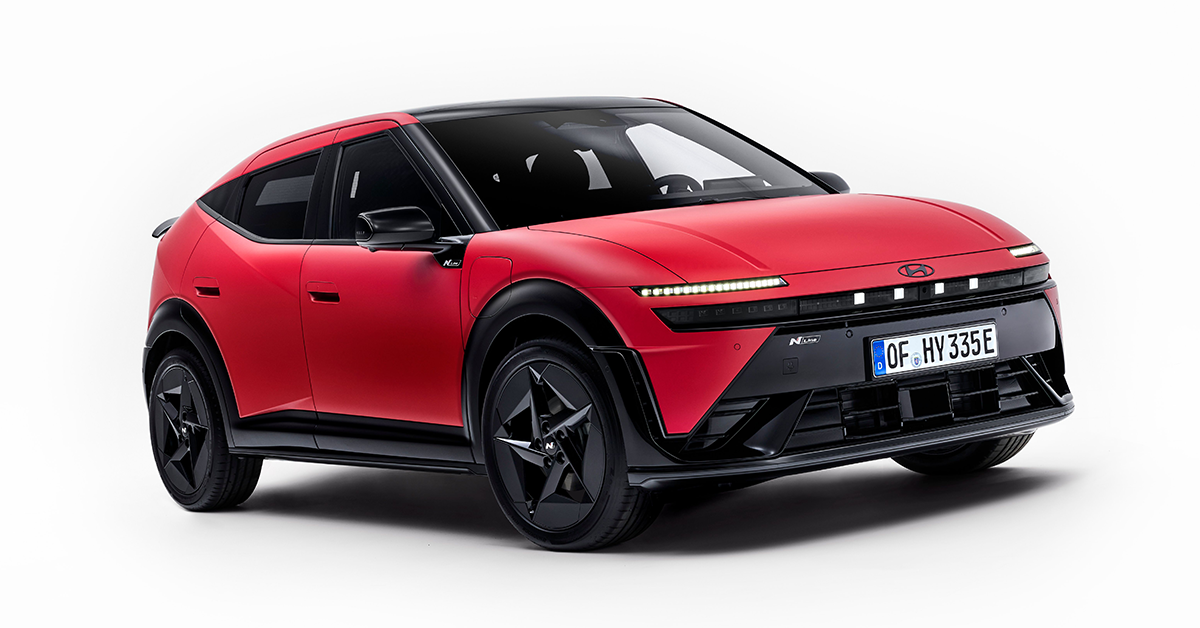
Official image of the Hyundai IONIQ 3. | © Hyundai Motor Company
The Hyundai IONIQ 3 is a fully electric compact hatchback that Hyundai introduced on April 20, 2026 and builds at its Izmit plant in Turkiye. Hyundai’s own pages give the two batteries, the projected range, the charging times and the prices in the United Kingdom, Germany and the Netherlands. This guide reads those pages first, shows where they differ and traces the path from Concept THREE to production. It also lists what we could not confirm, such as a crash rating.
The Hyundai IONIQ 3 is a fully electric compact hatchback. Hyundai’s worldwide newsroom release of April 20, 2026, issued from Offenbach am Main and Milan, says Hyundai introduced it as a car designed to make electric mobility intuitive, comfortable and relevant for everyday European needs (Hyundai). The release calls its body style an “Aero Hatch”, a typology that combines aerodynamic efficiency with generous interior space (Hyundai).
| Body | Compact hatchback, five seats (Hyundai) |
| Introduced | April 20, 2026 (Hyundai) |
| Batteries | 42.2 kWh and 61 kWh (Hyundai) |
| Drive | Front-wheel drive (Hyundai) |
| Motor output | 107.8 kW and 99.5 kW (Hyundai) |
| Torque | 250 Nm (Hyundai) |
| Length | 4,155 mm, N Line 4,170 mm (Hyundai) |
| Trunk | 441 liters (Hyundai) |
| U.K. start price | 18,495 pounds with grant (Hyundai) |
| German start price | 28,950 euros (Hyundai) |
We used Hyundai’s own pages for every figure in this guide: the worldwide newsroom, the European, U.K., German and Dutch pages, the press sites on hyundai.news and hyundainews.com and Hyundai’s technical data downloads. Where two Hyundai pages differ we show both values. Prices and availability may have changed since publication, and exchange rates are not applied. U.K. prices are in pounds and German and Dutch prices are in euros.
Hyundai’s April release gives two batteries, 42.2 kWh and 61 kWh, front-wheel drive, motor outputs of 107.8 kW (147 PS) and 99.5 kW (135 PS) and 250 Nm of torque (Hyundai). It gives a projected WLTP range of 344 km for the smaller battery and 496 km for the larger one (Hyundai). It lists a length of 4,155 mm for the base car and 4,170 mm for the N Line, and a trunk of 441 liters (Hyundai). The release calls it the newest member of the IONIQ lineup and says it is built on the E-GMP platform with a 400-volt architecture (Hyundai).
Hyundai Motor UK’s order release says grant-inclusive prices start at 18,495 pounds for the Advance 42 kWh and rise to 28,195 pounds for the N Line Evo (Hyundai). Hyundai’s German page gives a starting price of 28,950 euros (Hyundai). The U.K. figures include the 3,750 pound Electric Car Grant, which is a government program that may change. Hyundai Motor UK lists four trims, Advance, Premium, Ultimate and N Line Evo, and Hyundai’s German price list lists five, Select, Trend, N Line, Prime and N Line Evo (Hyundai).
Hyundai says the car is designed in Europe and built at Hyundai Motor Türkiye’s Izmit plant (Hyundai). Hyundai Motor Türkiye marked the start of production on August 14, 2026, according to the press release of that date (Hyundai). The release says the car is planned for sale in September 2026, depending on the market, with two battery and motor options (Hyundai). Hyundai’s German campaign release says the official retail launch was October 17 (Hyundai). Hyundai says Hyundai Motor Europe sells vehicles in 42 European countries and aims to electrify all its European models by 2027 (Hyundai).
Later sections cover the road from Concept THREE to production, the design and interior, the powertrain and charging, range and dimensions, prices in the U.K., Germany and the Netherlands, technology and safety, and the Izmit plant with the points where Hyundai’s pages conflict. Our Hyundai Models article lists the range, our Hyundai history article covers the company, our Hyundai Kona article covers the Kona Electric that Hyundai’s U.K. release places beside the IONIQ 3 and our Hyundai i20 article covers the i20 that Hyundai’s release lists for Izmit.
Hyundai’s European concept page says Concept THREE was revealed to the world at IAA Mobility 2025 in Munich and calls it the first compact EV concept in the IONIQ EV family (Hyundai). The page says it signals Hyundai’s entry into a new vehicle category alongside its existing midsize and large EVs (Hyundai). A German release says the show marked Hyundai’s return after four years (Hyundai). Hyundai’s worldwide brand journal of September 16, 2025 says Hyundai gave detailed European EV strategy information at the show alongside the debut of Concept THREE and a steel-exterior futuristic concept (Hyundai). A German release gives the premiere as September 9 at 9 a.m. (Hyundai). The same release calls Concept THREE the first compact all-electric concept of IONIQ and describes the Aero Hatch as a reinterpretation of the silhouette of a compact electric vehicle (Hyundai).
| Concept THREE | IAA Mobility, Munich, 2025 (Hyundai) |
| Concept role | First compact EV concept, IONIQ family (Hyundai) |
| Milan Design Week | 2026 (Hyundai) |
| World premiere | April 20, 2026 (Hyundai) |
| Production start, Izmit | August 14, 2026 (Hyundai) |
| Planned sale, per production release | September 2026 (Hyundai) |
| German order start | September (Hyundai) |
| German retail launch | October 17 (Hyundai) |
| U.K. order release | October 5, 2026 (Hyundai) |
| European electrification goal | All models by 2027 (Hyundai) |
The concept page describes an Art of Steel design with an Aero Hatch silhouette, a pushed-forward cowl, a smooth roofline and parametric pixel lighting at the front and rear (Hyundai). Inside it lists a furnished-space cabin, dual screens, a rectangular steering wheel and customizable widgets (Hyundai). The page does not say that Concept THREE previews a production IONIQ 3, so we make no claim about how closely they match (Hyundai). Hyundai’s brand journal says the concept’s Furnished Lounge, with a hard-shell structure and curved upholstery, reflects the inspiration behind its seat and console composition (Hyundai).
Hyundai’s European model page describes the IONIQ 3 as Hyundai’s first compact EV concept under the IONIQ sub-brand, which differs from how its production car pages describe it (Hyundai). Hyundai’s U.K. release announced Hyundai’s presence at the 2026 Milan Design Week and named the world premiere of the all-electric IONIQ 3 as its highlight (Hyundai). Hyundai’s exhibition release says the Unfold Stories installation presents the brand’s design philosophy and craftsmanship in materials, and that the world premiere of the IONIQ 3 was the final chapter of the showcase and the latest addition to the IONIQ family (Hyundai).
The premiere came on April 20, 2026. Hyundai’s worldwide release is datelined Offenbach am Main and Milan, and a Hyundai Europe press release of the same day carries the same announcement (Hyundai). The worldwide release says Hyundai planned a 2026 launch, aims to electrify all its European models by 2027 and sells vehicles in 42 European countries (Hyundai).
Hyundai’s U.K. Goodwood Festival of Speed release says the IONIQ 3 made its first public U.K. on-road appearance on the hill climb, with pricing expected to start below 25,000 pounds and the highest level of customer interest Hyundai Motor UK has recorded for a new Hyundai model (Hyundai). Its U.K. order release says reservation holders originally were offered a 1,500 pound Hyundai Reservation Saving (Hyundai).
Production began first. Hyundai Motor Türkiye’s release is dated August 14, 2026 (Hyundai). Hyundai’s German campaign release says orders opened in September and that retail launch followed on October 17 (Hyundai). Hyundai Motor UK’s release dated October 5, 2026 says orders were open and cars were arriving at retailers that month (Hyundai).
Hyundai’s release says the IONIQ 3 uses the Art of Steel philosophy, inspired by the raw tension and purity of steel production, with surfaces reduced to a few deliberate volumes (Hyundai). It describes the Aero Hatch shape as a low, sleek front end that flows into a roofline running over both front and rear occupants and then drops to the rear spoiler (Hyundai). Signature pixel lighting runs throughout, and four central dots reference the letter H in Morse code (Hyundai).
| Design theme | Art of Steel (Hyundai) |
| Body concept | Aero Hatch (Hyundai) |
| Lighting | Pixel lighting, projection LED (Hyundai) |
| Exterior colors, launch | Eight (Hyundai) |
| Wheels | 16 to 19 inches (Hyundai) |
| Interior theme | Furnished Space (Hyundai) |
| Rear seating | Three adults (Hyundai) |
| Trunk | 322 liters (Hyundai) |
| Megabox | 119 liters (Hyundai) |
| Total luggage space | 441 liters (Hyundai) |
Hyundai lists projection LED headlamps with an intelligent front-lighting system and dynamic welcome lighting (Hyundai). Its release says buyers can choose from eleven exterior colors and wheels from 16 to 19 inches, and its fact sheet lists eight launch colors: Atlas White Solid, Phantom Black Pearl, Lumen Gray Pearl, Aurora Gray Pearl, Vibrant Blue Pearl, Ice Blue Pearl, Fierce Red Solid and Fierce Red Matte (Hyundai). Hyundai’s German release also says eight exterior colors are available (Hyundai).
Inside, Hyundai says the cabin follows a furnished-space approach, with elements arranged like furniture to create a warm and intuitive environment (Hyundai). A long wheelbase and flat floor give generous leg and head room, and the rear seats comfortably fit three adults (Hyundai). Depending on specification, features include relaxation seats and heated and ventilated seating (Hyundai). Hyundai’s fact sheet lists heated front and rear seats and ventilated front seats (Hyundai).
Materials are part of the pitch. Hyundai says the textiles draw on natural landscapes and 1970s Italian furniture design, with recycled PET seat fabric, bio-based PU leather on the steering wheel and a carpet made from 100 percent recycled polyester (Hyundai). Its fact sheet lists cloth and suede materials and sustainable and recycled materials throughout (Hyundai). Interior colors are black, beige and gray, blue and gray, and black with red accents for the N Line (Hyundai). Hyundai’s design article says the N Line has 19-inch wheels and a driver-focused cabin theme while the wider range has 16 to 18-inch wheels and bright, airy interior colors (Hyundai). It says particular emphasis was put on European customer needs from the start of development (Hyundai).
Luggage space is 441 liters in total, made up of a 322 liter trunk and a 119 liter Megabox, which Hyundai describes as concealed storage beneath the trunk floor (Hyundai). The sum matches Hyundai’s figure, by our check (Hyundai, our calculation). Hyundai Motor UK’s release also gives a 441 liter boot and says the car seats five (Hyundai). Other features include a BOSE premium sound system, dual-zone climate control, ambient lighting and hidden details (Hyundai). The fact sheet says the N Line is tailored for customers who want a more dynamic and sporty visual expression (Hyundai).
Hyundai’s German configurator shows how trims differ. The Select has 16-inch wheels with 205/65 R16 tires, front and rear parking sensors, full LED headlights, a smart key and dual-zone climate control, the Trend adds 17-inch wheels, a 9.9-inch digital cockpit, a rain sensor and heated front seats, and the Prime has 18-inch wheels, cloth and velour seats, matrix LED headlights and a BOSE system (Hyundai). The N Line has faceted 19-inch dark wheels (Hyundai).
Hyundai’s European technical data page lists a permanent magnet synchronous motor and front-wheel drive for every version (Hyundai). The Standard Range 42.2 kWh version has 107.8 kW (146.5 PS), and the Long Range 61 kWh and N Line 61 kWh versions have 99.5 kW (135.2 PS), all with 250 Nm of torque (Hyundai). Hyundai’s U.K. technical guide gives the same two outputs as 147 PS and 135 PS (Hyundai).
| Drive | Front-wheel drive (Hyundai) |
| Standard Range motor | 107.8 kW, 146.5 PS (Hyundai) |
| Long Range motor | 99.5 kW, 135.2 PS (Hyundai) |
| Torque | 250 Nm (Hyundai) |
| Standard battery | 42.2 kWh, LFP (Hyundai) |
| Long Range battery | 61 kWh, lithium-ion (Hyundai) |
| Top speed | 170 km/h, or 165 km/h (Hyundai) |
| On-board charger | 11 kW, optional 22 kW (Hyundai) |
| DC 10 to 80, 350 kW | 29 minutes (Hyundai) |
| Architecture | 400 volt (Hyundai) |
The page lists the 42.2 kWh battery as LFP and the 61 kWh battery as lithium-ion (Hyundai). Hyundai’s fact sheet gives the capacities but does not state the chemistry (Hyundai). The larger pack holds about 44 percent more energy, by our calculation (Hyundai, our calculation). Hyundai’s U.K. guide lists battery power of 123.8 kW for the 42 kWh and 113.6 kW for the 61 kWh (Hyundai).
Hyundai’s European page gives a top speed of 170 km/h for all versions and 0 to 100 km/h in 8.7 seconds for the 42.2 kWh, 9.5 for the 61 kWh and 9.6 for the N Line (Hyundai). Hyundai’s fact sheet gives 9.0 and 9.6 seconds and 165 km/h (Hyundai). The U.K. guide gives 0 to 62 mph in 8.7 seconds, 9.5 seconds and 9.6 seconds for the N Line, and 170 km/h or 106 mph (Hyundai).
For AC charging the European page lists an 11 kW on-board charger with an optional 22 kW charger (Hyundai). It gives 10 to 100 percent in 4 hours 6 minutes on the 42.2 kWh and 5 hours 36 minutes on the 61 kWh with the 11 kW charger, and 2 hours 6 minutes and 2 hours 42 minutes with the 22 kW charger (Hyundai). The 22 kW charger saves about 2 hours on the smaller battery and 174 minutes on the larger one, by our subtraction (Hyundai, our calculation). Hyundai’s Dutch price list lists an interior 230 V vehicle-to-load socket and an EV Pack with a 22 kW on-board charger and V2X preparation as options (Hyundai). Hyundai’s fact sheet lists 11 kW V2X as standard and 22 kW V2X as optional (Hyundai).
For DC charging the page gives 10 to 80 percent in 42 minutes at a 50 kW station and 29 minutes at a 350 kW station for the 42.2 kWh, and 68 and 29 minutes for the 61 kWh (Hyundai). Hyundai’s April release gives about 29 and 30 minutes for the two batteries (Hyundai). The fact sheet says the car has a 400-volt architecture, Plug and Charge, and vehicle-to-load use inside and outside the car (Hyundai). The 350 kW station saves 39 minutes against the 50 kW station on the 61 kWh, by our subtraction (Hyundai, our calculation). The U.K. order release says the car supports DC rapid charging but gives no charging speeds or times (Hyundai).
The brakes are ventilated discs, 305 by 25 mm at the front and 284 by 10 mm at the rear (Hyundai). Curb weight is 1,550 to 1,645 kg for the Standard Range, 1,555 to 1,650 kg for the Long Range and 1,570 to 1,660 kg for the N Line (Hyundai). The U.K. order release says Hyundai SmartSense driver assistance is standard (Hyundai). Hyundai’s U.K. technical guide lists 225/45 R19 tires front and rear for the N Line Evo (Hyundai).
Hyundai’s April release gives a projected WLTP range of 344 km for the 42.2 kWh and 496 km for the 61 kWh (Hyundai). The longer range is 152 km above the shorter one, by our subtraction (Hyundai, our calculation). Hyundai’s fact sheet describes the figures as over 335 km and over 490 km projected, and gives WLTP energy consumption of 14.2 and 13.8 kWh per 100 km (Hyundai).
| WLTP range, April release | 344 km and 496 km (Hyundai) |
| Range, EU page, 42.2 kWh | 344 to 335 km (Hyundai) |
| Range, EU page, 61 kWh | 497 to 484 km (Hyundai) |
| Range, N Line | 456 and 428 km (Hyundai) |
| U.K. range claim | Up to 308 miles (Hyundai) |
| Consumption, 61 kWh | 13.7 to 14.1 kWh per 100 km (Hyundai) |
| Drag coefficient | 0.263, N Line 0.288 (Hyundai) |
| Length | 4,155 mm, N Line 4,170 mm (Hyundai) |
| Wheelbase | 2,680 mm (Hyundai) |
| Height | 1,505 mm, N Line 1,510 mm (Hyundai) |
Hyundai’s European technical page gives range by wheel size: 344, 341 and 335 km on 16, 17 and 18-inch wheels for the 42.2 kWh, 497, 488 and 484 km for the 61 kWh, and 456 and 428 km for the N Line on 18 and 19-inch wheels (Hyundai). The N Line figure is 28 km lower on 19-inch wheels than on 18-inch wheels (Hyundai, our calculation). It lists combined consumption of 14.1 to 14.8, 13.7 to 14.1 and 14.8 to 15.5 kWh per 100 km (Hyundai). The page does not name the test cycle in its table (Hyundai).
Hyundai’s German page gives the Trend 42 kWh a combined consumption of 14.3 kWh per 100 km and a WLTP range of 341 km (Hyundai). Hyundai Motor UK’s order release says the 61 kWh has a range of up to 308 miles and does not name a test standard (Hyundai). Its pricing release says the range depends on trim and is pending final homologation (Hyundai). The U.K. technical guide lists 300 miles or 484 km for the 61 kWh, and 308 miles is about 496 km by our conversion (Hyundai, our calculation).
Hyundai’s European page gives a drag coefficient of 0.263 for the standard model with 16-inch wheels and 0.288 for the N Line with 19-inch wheels (Hyundai). Hyundai’s fact sheet gives 0.263 in the specifications and an approximate target of 0.26 in the design section (Hyundai). The difference between the N Line and the standard car is 0.025 (Hyundai, our calculation).
Dimensions are a length of 4,155 mm for the base car and 4,170 mm for the N Line, a width of 1,800 mm, a height of 1,505 mm and a wheelbase of 2,680 mm (Hyundai). Hyundai’s European page gives the N Line a height of 1,510 mm (Hyundai). The N Line is 15 mm longer than the base car (Hyundai, our calculation). The release gives a weight of 1,550 to 1,580 kg (Hyundai). Hyundai’s U.K. guide lists the electric driving efficiency as to be confirmed (Hyundai). Hyundai’s Dutch price list gives ranges of 344 km for the 42 kWh Select, 456 km for the 61 kWh N Line and 428 km for the N Line Evo (Hyundai).
Hyundai’s German release says no other B-segment electric car offers more kilometers of WLTP range per euro, with up to 497 km, and it names two electric cars under 30,000 euros, the Inster and the IONIQ 3 (Hyundai). It gives 66.30 euros per kilometer of maximum range, and 32,950 euros divided by 497 km is 66.30, which suggests that figure is for the 61 kWh Select (Hyundai, our calculation).
Hyundai Motor UK’s order release dated October 5, 2026 gives five prices before and after the grant: the Advance 42 kWh at 22,245 pounds before and 18,495 after, the Advance 61 kWh at 25,745 and 21,995, the Premium 61 kWh at 27,445 and 23,695, the Ultimate 61 kWh at 29,945 and 26,195, and the N Line Evo 61 kWh at 31,945 and 28,195 (Hyundai). Each pair differs by 3,750 pounds (Hyundai, our calculation). The Premium is 1,700 pounds above the Advance 61 kWh, the Ultimate is 2,500 pounds above the Premium and the N Line Evo is 2,000 pounds above the Ultimate (Hyundai, our calculation).
| U.K. Advance 42 kWh | 18,495 pounds (Hyundai) |
| U.K. Advance 61 kWh | 21,995 pounds (Hyundai) |
| U.K. Premium 61 kWh | 23,695 pounds (Hyundai) |
| U.K. Ultimate 61 kWh | 26,195 pounds (Hyundai) |
| U.K. N Line Evo 61 kWh | 28,195 pounds (Hyundai) |
| U.K. grant | 3,750 pounds, Band 1 (Hyundai) |
| Germany Select 42 kWh | 28,950 euros (Hyundai) |
| Germany Select 61 kWh | 32,950 euros (Hyundai) |
| Germany N Line | 39,650 euros (Hyundai) |
| Germany N Line Evo | 42,450 euros (Hyundai) |
The release says every version qualifies for Band 1 of the U.K. government’s Electric Car Grant and that the IONIQ 3 joins the Kona Electric in being eligible for the full grant (Hyundai). The span between the cheapest and dearest grant-inclusive price is 9,700 pounds (Hyundai, our calculation). The Advance 61 kWh is 3,500 pounds above the Advance 42 kWh (Hyundai, our calculation). Prices and availability may have changed since publication.
Hyundai’s U.K. finance example is 355 pounds a month with a 355 pound deposit over 48 months at 8.9 percent APR representative for the Advance 61 kWh, including the grant (Hyundai). The earlier U.K. pricing release said the car would start from 18,495 pounds and described reservations as open (Hyundai). The Goodwood release had expected a start price below 25,000 pounds (Hyundai).
In Germany, Hyundai’s price list gives the Select from 28,950 euros with the 42 kWh and 32,950 euros with the 61 kWh, the Trend from 31,950 and 35,950 euros, the N Line at 39,650 euros, the Prime at 40,950 euros and the N Line Evo at 42,450 euros (Hyundai). The Select 61 kWh is 4,000 euros above the Select 42 kWh, and the N Line Evo is 13,500 euros above the cheapest Select (Hyundai, our calculation). The Trend 42 kWh is 3,000 euros above the Select 42 kWh, the N Line is 3,700 euros above the Trend 61 kWh, the Prime is 1,300 euros above the N Line and the N Line Evo is 1,500 euros above the Prime (Hyundai, our calculation).
Hyundai’s German page gives a lease example of 209 euros a month for the Trend 108 kW, 42 kWh, with a 4,000 euro one-off payment, 48 months and 40,000 km (Hyundai). The German release says five trim levels and eight colors are available (Hyundai). Hyundai’s Dutch price list lists the 42 kWh Select at 27,995 euros, the 61 kWh N Line at 40,995 euros and the N Line Evo at 41,995 euros in its final column, though we did not confirm the column labels (Hyundai).
Equipment steps explain part of the gaps. Hyundai Motor UK says the Ultimate adds matrix LED headlights, Highway Driving Assist 2, heated front seats and a heated steering wheel, and the N Line Evo adds N Line styling, 19-inch wheels, a 14.6-inch display, a surround view monitor, a blind view monitor and memory reverse assist (Hyundai). We found no Hyundai page that gives a U.S. price, so we give none.
Hyundai says the IONIQ 3 is the first European Hyundai model with the Pleos Connect infotainment system, which is based on Android Automotive OS (Hyundai). It is available with a 12.9-inch or a 14.6-inch display (Hyundai). Hyundai’s German release says Pleos Connect brings a smartphone-like, extendable interface to Europe for the first time (Hyundai). Hyundai’s April release says Pleos Connect makes its debut in a European Hyundai model and that the technology focuses on everyday usability (Hyundai). Hyundai’s design article calls it a more software-driven in-car experience (Hyundai).
| Infotainment | Pleos Connect, Android Automotive OS (Hyundai) |
| Display sizes | 12.9 and 14.6 inches (Hyundai) |
| Keyless access | Digital Key 2 (Hyundai) |
| Charging features | Plug and Charge, route planner (Hyundai) |
| Vehicle-to-load | Inside and outside (Hyundai) |
| Audio | BOSE premium sound (Hyundai) |
| Highway assist | Highway Driving Assist 2 (Hyundai) |
| Parking assist | Remote Smart Parking Assist (Hyundai) |
| Airbags | Seven, standard (Hyundai) |
| Crash rating | Not found |
Other connected features are Hyundai Digital Key 2, which allows keyless access through a smartphone or wearable and whose availability varies by market, Plug and Charge, and an integrated EV route planner (Hyundai). Vehicle-to-load works both inside and outside the car (Hyundai). Hyundai’s fact sheet lists a BOSE premium sound system (Hyundai). Hyundai Motor UK lists Pleos Connect, Plug and Charge, vehicle-to-load and Memory Reverse Assist as the key technology (Hyundai). Hyundai’s German price list mentions a 12.9-inch touchscreen infotainment system with Hyundai Bluelink, and the Trend has a 9.9-inch digital cockpit (Hyundai). The N Line Evo has a 14.6-inch display (Hyundai).
For driver assistance Hyundai lists Highway Driving Assist 2, Remote Smart Parking Assist, Memory Reverse Assist, a surround view monitor and a blind-spot view monitor, with seven standard airbags (Hyundai). Hyundai Motor UK says SmartSense is standard, and its technical guide lists a driver distraction warning on all four U.K. trims (Hyundai). Memory Reverse Assist is new, according to the U.K. release (Hyundai). Hyundai’s fact sheet lists projection LED headlamps with an intelligent front-lighting system (Hyundai).
Hyundai’s German price list names a blind-spot assistant, autonomous emergency braking 2.0 and adaptive cruise control with stop function among the equipment (Hyundai). Which of these is standard on which trim is set out in the price list, and we do not restate it. Hyundai Motor UK says the Ultimate adds Highway Driving Assist 2, and the N Line Evo adds the surround view and blind view monitors (Hyundai). Hyundai’s German price list also mentions a smart key and an automatically dimming interior mirror (Hyundai).
We found no crash test result. We did not find a Euro NCAP page for the IONIQ 3 on Hyundai’s pages, and Hyundai’s German release says the German version was still to be homologated just before launch (Hyundai). The earlier IONIQ was rated five stars by Euro NCAP, but that is a different car and we draw no conclusion from it (Hyundai). We therefore treat the lists above as equipment, not as a rating.
Hyundai’s release says the car is aimed at a broader range of customers across Europe and offers segment-leading range and aerodynamics alongside space, comfort and practicality, according to Xavier Martinet, President and CEO of Hyundai Motor Europe (Hyundai). The same release quotes him describing the car as built for people’s real everyday needs (Hyundai). Segment-leading is Hyundai’s claim and we did not test it. Hyundai Motor UK also calls the 61 kWh range class-leading (Hyundai).
Hyundai Motor Türkiye’s release says the IONIQ 3 is the first electric vehicle built at the Izmit plant, which it calls Hyundai’s first and longest-serving overseas production facility, with almost 30 years of vehicle manufacturing (Hyundai). It gives an investment of 250 million euros to accommodate EV production and 1.185 billion euros invested in total since the company was established in 1997 (Hyundai). It says the plant supports Türkiye’s role as a manufacturing hub for Hyundai’s European customers (Hyundai). It says about 2,400 people work across the plant and the Istanbul headquarters (Hyundai). Its headline cites new Bayon and i20 models in 2027, though the body gives no year (Hyundai). It quotes the Hyundai Motor Türkiye chief executive on the transformation and the Korean ambassador on the first electric vehicle built there (Hyundai).
| Plant | Izmit, Turkiye (Hyundai) |
| Production start | August 14, 2026 (Hyundai) |
| Investment for EV | 250 million euros (Hyundai) |
| Total invested since 1997 | 1.185 billion euros (Hyundai) |
| Initial output | 30,000 a year (Hyundai) |
| Employees | About 2,400 (Hyundai) |
| Platform, sources | E-GMP or K3 (Hyundai) |
| Top speed, sources | 170 or 165 km/h (Hyundai) |
| 0 to 100, 42.2 kWh | 8.7 or 9.0 seconds (Hyundai) |
| Crash rating | Not found |
The release quotes Minister Mehmet Fatih Kacir saying the plant will initially produce 30,000 IONIQ 3 vehicles a year, says more than 1,000 employees took on different roles during the transformation and says a battery system assembly plant developed with Hyundai Mobis will be located on site to assemble hybrid vehicle batteries in the near future (Hyundai). It also says preparations are under way for the next-generation Bayon and i20 (Hyundai). It gives no export volumes or destinations (Hyundai). Attendees included Hyundai Motor Europe’s president and chief executive (Hyundai).
Several Hyundai pages conflict. The worldwide release and fact sheet say the car is built on the E-GMP platform with a 400-volt architecture, while the German order release says it is based on a K3 platform of Hyundai Motor Group (Hyundai). Top speed is 170 km/h or 165 km/h, and 0 to 100 km/h is 8.7 or 9.0 seconds for the smaller battery (Hyundai). Range for the larger battery is 496 km, 497 km, over 490 km, 308 miles or 300 miles (Hyundai).
Other differences are small. Curb weight is 1,550 to 1,580 kg in the release and 1,550 to 1,660 kg on the European page, N Line height is 1,505 mm or 1,510 mm, and the 42 kWh pack’s DC time at 350 kW is about 29 minutes on both pages (Hyundai). Hyundai’s European model page calls the IONIQ 3 a concept under the IONIQ sub-brand while its other pages describe a production car (Hyundai).
Not confirmed: we found no Hyundai crash-test result, no U.S. or Korean price or launch plan, no sales or order total, no export figures for Izmit, and no page that states the 61 kWh battery chemistry beyond lithium-ion. We also did not confirm the column labels of the Dutch price list. Prices change often, so check the configurator for your market.
Things to watch are a Euro NCAP result, launches in further markets, any change to the U.K. Electric Car Grant, the next-generation Bayon and i20 at Izmit and any Hyundai statement on order volumes. To check this guide, start with Hyundai’s worldwide newsroom and the national press sites and compare dates before numbers. Our Hyundai Models article lists the range and our Hyundai history article covers the company.
