 Brands
Ford Model T — Price, Specs, Colors and the Assembly Line
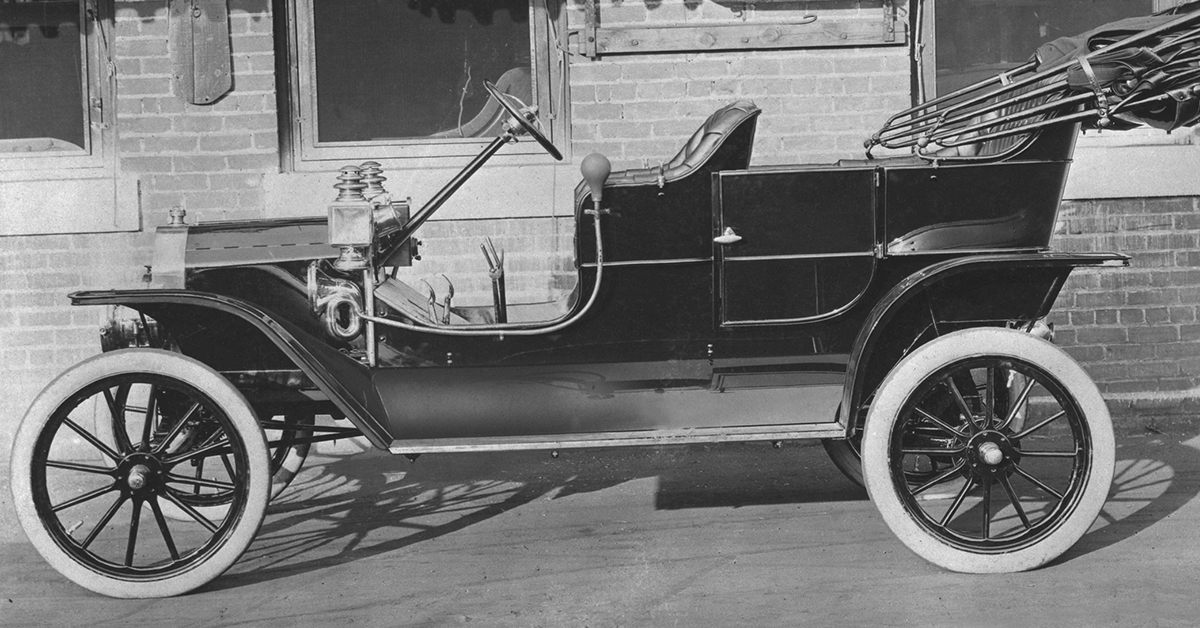
Official press image of the Ford Model T. | © Ford Motor Company
The Ford Model T from the 1908 launch and the 20-horsepower engine to the moving assembly line, the price cuts, the black-only years and the 1927 end that led to the Model A, with what Ford says and what is only reported.
The Ford Model T was an economy car built by Ford Motor Company from 1908 to 1927. Ford’s own pages say it was introduced in October 1908, and that production ended on May 26, 1927 (Ford). A Ford page says more than 15,000,000 Model Ts were built and sold (Ford). A reference history calls it generally regarded as the first mass-affordable automobile, and says that it made car travel available to middle-class Americans (reported).
| Production | October 1908 to May 1927 (Ford) |
| Introduced | October 1908 (Ford) |
| Production ended | May 26, 1927 (Ford) |
| Total built and sold | More than 15,000,000 (Ford) |
| Engine | 20 hp side-valve four-cylinder (Ford) |
| Transmission | Two-speed planetary (Ford) |
| Wheelbase | 100 in (Ford) |
| Share of world registrations | More than half by the early 1920s (Ford) |
| Honour named by Ford | Car of the Century (Ford) |
| Predecessor | Ford Model N (reported) |
The Model T was simple on purpose. Ford’s page says Henry Ford wanted the car to be affordable, simple to operate and durable (Ford). A Ford page lists a 20-horsepower side-valve four-cylinder engine, a two-speed planetary transmission and a 100-inch wheelbase (Ford). We use these Ford figures as the main specification, and we show other sources’ figures separately where they differ, so that you can see which numbers come from Ford and which do not.
Ford’s pages describe the car’s reach. A Ford page says that by the early 1920s more than half of the world’s registered automobiles were Fords (Ford). A Ford page says the car was built on the moving assembly line at the Highland Park Plant (Ford). A Ford page says an international jury of automotive journalists and experts named it the Car of the Century (Ford). We do not know the jury’s exact membership, because Ford’s page does not list it.
Not every record is flattering or exact. A trade-magazine article says the Model T did not quite become the best-selling vehicle in history, a title it says went to a later car (reported). A reference history says the Model T was surpassed by the Volkswagen Beetle in 1972 on total production (reported). A museum record says the car was cheap for its day at $850 in 1908, but still cost $30 more than the average worker’s annual wage (reported).
Some terms need care. Ford’s pages use the names Model T, Tin Lizzie and universal car for the same car (Ford). The Model TT truck, the Model A replacement and the Model N, R and S predecessors are separate cars, and we mention them only where they explain the Model T. We do not cover Ford’s later cars here, and our wider Ford history article gives the company context.
Some limits apply to this article. Several of the Ford pages we could read are archived copies of older Ford web pages, and we note that where it matters, because they may not match Ford’s current site. We give no current collector values, because prices vary widely with condition and originality, and we found no Ford figure for them. We also make no claim that Ford plans a new Model T. The sections below take the car in order, from development to the 1927 end. Where two sources disagree, we show both values and say what kind of source each is, and we never average them or choose the more convenient one. Ford’s own pages are the main source for the specification, but they give few figures for the early years, so please check any early number before you quote it.
Ford’s page says Henry Ford finally saw the fruits of about 20 years of experimentation in October 1908, with the introduction of the Model T (Ford). A history site says official development began in January 1907, when Henry Ford assembled a team of engineer Childe Harold Wills, machinist C.J. Smith and draftsman Joseph Galamb in a small Detroit factory on Piquette Avenue (reported). A reference history lists Wills, Galamb and Eugene Farkas as designers (reported).
| Development began | January 1907, per one history (reported) |
| Team named | Wills, Smith, Galamb (reported) |
| Designers credited | Wills, Galamb, Farkas (reported) |
| Predecessor | Model N, 1906 to 1908 (reported) |
| First car assembled | August 12, 1908 (reported) |
| Left factory | September 27, 1908 (reported) |
| First customer delivery | October 1, 1908 (Ford) |
| Years of experimentation | About 20 (Ford) |
| Material credited | Vanadium steel (Ford) |
| Henry Ford test trip | Wisconsin and northern Michigan (Ford) |
The car followed earlier Fords. A reference history lists the Ford Model N of 1906 to 1908 as the predecessor (reported). A collector site says that from 1906 through 1908 Ford created the Model N, R and S, which eventually evolved into the Model T (reported). A history site says the Model T was preceded by eight car models through which Ford developed various aspects of the design (reported). We found no Ford page that lists those earlier models, so we do not list them either.
Dates for the first car differ. A trade-magazine article says the first Model T was assembled on August 12, 1908 at Detroit’s Piquette Avenue Plant, and that it went on sale on October 1 (reported). A reference history says a car left the factory on September 27, 1908 (reported). Ford’s page gives October 1, 1908 as the first customer delivery (Ford). We carry all three dates, because they describe different events, and none contradicts another.
Ford’s page also describes testing. It says Henry Ford tested the Model T himself, on a hunting trip to Wisconsin and northern Michigan (Ford). A Ford page credits Childe Harold Wills’ experiments with vanadium steel for the car’s lightness and durability, calling the material an important trademark (Ford). A trade-magazine article says the same material was lightweight and high-strength (reported). We found no Ford page on how many prototypes were built, so we give no prototype count. We also found no Ford page that says how many Model Ts were built in 1908 or 1909, so we give no first-year total, and we do not repeat unsourced claims about early orders or dealer numbers.
The company behind the car was young. A trade-magazine article says that in 1908 Ford Motor Company was five years old and already profitable, and that it had so far followed its peers by catering to the well-to-do (reported). A history site says Henry Ford worked by day as chief engineer at Edison Illuminating Company of Detroit and at night on a gasoline engine in his earlier years (reported). Those are background claims from secondary sources, and Ford’s pages we read do not repeat them.
There are limits to what we can say about development. We found no Ford figure for the development cost or the number of engineers involved, and the sources we read give names without roles in some cases. A history site says the Model T was the first Ford with all its parts built by the company itself (reported), but we could not confirm that with a Ford page, so we treat it as a claim. We also give no quotes from Henry Ford beyond those on Ford’s own pages.
Ford’s page lists the core specification. It describes a 20-horsepower, side-valve four-cylinder engine and a two-speed planetary transmission on a 100-inch wheelbase (Ford). The same Ford page gives a possible top speed of 45 mph and about 25 miles per gallon (Ford). A reference history says the engine displaced 177 cubic inches, or 2.9 litres, and gives a top speed of 42 mph (reported). A museum record gives 176.7 cubic inches (reported).
| Engine | 20 hp side-valve four (Ford) |
| Displacement | 177 cu in or 176.7 cu in (reported) |
| Alternative power figure | 22 hp in one listing (reported) |
| Transmission | Two-speed planetary (Ford) |
| Wheelbase | 100 in (Ford) |
| Top speed, Ford page | 45 mph (Ford) |
| Top speed, other source | 42 mph (reported) |
| Fuel economy, Ford page | About 25 mpg (Ford) |
| Fuel economy, other source | 13 to 21 mpg (reported) |
| Steering | Left side (Ford) |
Figures for the engine vary a little. A collector site lists a 176.7-cubic-inch engine offering 22 horsepower (reported), while Ford’s page and most other sources say 20 horsepower (Ford). A reference history says that, according to Ford, fuel economy was 13 to 21 miles per gallon (reported), which differs from the roughly 25 mpg on a Ford page, so we carry both. We cannot say which is better, because the sources give no test conditions.
Ford’s page describes unusual features. It says the Model T was the first car with its engine block and crankcase cast as a single unit, and the first with a removable cylinder head for easier access (Ford). A museum record says the block was cast in one piece, which was unusual in 1908, because a typical four-cylinder engine had cylinders cast in pairs bolted to a separate crankcase (reported). It says the removable head made jobs such as grinding the valves far easier (reported).
Other features are on Ford’s page too. It says the steering wheel was on the left side, which made getting in and out easier (Ford). It says early models came with a toolkit, had the gas tank under the front passenger seat and had to be hand-cranked (Ford). It says a windshield was an option at first before it became standard (Ford). A Ford page says an electric starter became optional on closed cars in 1919, and electric lights came in 1915 (Ford).
The transmission and brakes were basic. A reference history says the planetary gearbox was known at the time as three-speed, though it is considered two-speed today because one of the three speeds is reverse (reported). A car-maintenance guide says the Model T relied on a single transmission brake, operated by the right-most pedal (reported). A museum record says the Model A, in contrast, used mechanical brakes on all four wheels (reported). We found no Ford page on the Model T’s braking performance.
The engine had a long life. A reference history says the Model T engine was produced for replacement needs and for stationary and marine uses until 1941, well after car production ended (reported). A museum record says a 1927 touring car had a 4-cylinder, in-line, water-cooled, 176.7-cubic-inch, 20 hp engine (reported). We give no horsepower figure for any later version, and we found no Ford statement about how many of these engines were built after 1927. We also found no Ford test of the car’s speed or economy, so the speed and mileage figures above are the company’s own claims or secondary figures, and we do not describe them as measured results.
Price is the best-known Model T fact, and sources differ on the start. Ford’s page says it was introduced at $825 for the Runabout (Ford), and another Ford page says it sold for between $260 and $850 (Ford). A museum record says it was $850 in 1908 (reported). A reference history gives $780 in 1910 and $290 later (reported). We carry $825 and $850, because the sources describe different body styles, and we cannot say which applies to which without a price list.
| Launch price, Ford page | $825 for the Runabout (Ford) |
| Launch price, museum record | $850 (reported) |
| Price range, Ford page | $260 to $850 (Ford) |
| Lowest price | $260, October 1924 (Ford) |
| Price at end of 1913 | $550 (reported) |
| 1925 touring car | Less than $300 (reported) |
| 1927 touring car | $380 (reported) |
| Black only | 1914 to 1925 (Ford) |
| Colours returned | 1926, New Beauty (reported) |
| Colours named by Ford | Blue, red, grey, green (Ford) |
Ford’s page gives the low point. It says the price dipped as low as $260 in October 1924 (Ford). A reference history says the savings from mass production lowered the price from $780 in 1910 to $290 (reported). An engineering-society record says the price fell to $550 by the end of 1913, and a touring car cost $380 in 1927 (reported). An encyclopedia says the touring car price fell from $850 to less than $300 in 1925 (reported).
A history essay gives a year-by-year series. It says that from 1909 to 1910 to 1916 to 1917 the price was lowered year by year as $950, $780, $690, $600, $490, $440 and $360 (reported). Those figures do not exactly match the other sources, which is likely because they refer to different body styles and fiscal years, but we cannot confirm that. We give them as reported and do not average them or convert them into present-day money.
Colors changed over time. Ford’s page says the car was offered only in black from 1914 to 1925, and that buyers could choose colours such as blue, red, grey and green before and after that period (Ford). A Ford page says that in 1914 the car was available in any color so long as it was black (Ford). A collector site says black was favoured because it dried the fastest (reported). A museum record says colours returned from 1926 under the name New Beauty (reported).
Two details conflict slightly. A museum exhibit says early cars came in a variety of colours, and that consumers were not offered a choice again until 1926, partly due to slumping sales (reported). A collector site says that between 1908 and 1913 the car was not available in black, which contradicts the colour history above for the very early cars (reported). We found no Ford page that settles the point, so we carry both and ask readers to treat the early colour claims with caution.
Body styles are reported only loosely. Ford’s page refers to the Runabout (Ford), a museum record to a touring car (reported), and a Ford page to closed cars with an optional starter (Ford). A trade site says most were built with four doors, with the cabin a single bathtub-like body bolted on after the engine was in place (reported), which we could not confirm. We give no body-style production totals, because the sources we read give none. We also found no Ford page that lists the standard colours by year, so we give no colour timeline, and a reader who needs one should check a period catalogue or an owners’ club.
Ford’s page says mass production of the Model T began in October 1913 at the Highland Park, Michigan, Assembly Plant (Ford). It says the moving assembly line quickly improved chassis assembly from 12 hours and 8 minutes to 1 hour and 33 minutes (Ford). A history site says the line used conveyors inspired by Chicago meatpacking plants (reported). A museum record says the line was in place by the end of 1913 (reported).
| Mass production began | October 1913, Highland Park (Ford) |
| Chassis assembly time | 12 h 8 min to 1 h 33 min (Ford) |
| Engine assembly time | Almost 10 hours to under 4 (reported) |
| 1914 output, Ford page | 308,162 (Ford) |
| 1914 output, other source | 202,667 (reported) |
| 1913 output | 170,211 (reported) |
| 1917 output | 735,020 (reported) |
| 1923 output | 2 million (reported) |
| Daily output by 1925 | More than 9,000 (reported) |
| $5 day announced | January 5, 1914 (reported) |
A trade-magazine article describes how the line developed. It says Ford’s move to moving lines began in April 1913 with the flywheel magneto, and that engine assembly time fell from almost 10 hours to less than four (reported). It says the magneto line was cut to 14 workers and five minutes of assembly (reported). The article credits Charles Sorensen with applying the moving-line principle to all aspects of Model T production (reported). We found no Ford page that confirms those details.
Output rose sharply. Ford’s page says the 1914 output was 308,162 cars, which it says was more than all other automakers combined (Ford). A trade-magazine article gives 170,211 for 1913 and 202,667 for 1914, and says the figure reached well over half a million in 1916 and 735,020 in 1917 (reported). The 1914 totals conflict, 308,162 against 202,667, and we cannot reconcile them, so we carry both and say which source gives which.
Production later reached enormous levels. An economics research summary says that at the height of the car’s popularity in 1923, Ford produced 2 million Model Ts in a single year (reported). A historical marker quoted by a radio report says that by 1925 the Highland Park plant churned out more than 9,000 Model Ts a day (reported). We found no Ford page that gives a peak-year total, so we give these as reported, and we do not add them together.
The $5 day belongs to the same story. A radio report says that in January 1914 Ford began paying auto workers $5 a day for an eight-hour shift, more than double the average factory wage of the time (reported). A public-television summary says the morning after the announcement, 10,000 men showed up at the factory (reported). A labour-history article says the wage doubled the going rate of $2.50 per day, and that Ford announced it by a press release on January 5, 1914 (reported).
Ford’s own pages we read do not mention the $5 day, so we treat all of the labour claims as reported. An engineering-society record says the pace and nature of the work on the assembly line led to labor turnover (reported). We found no Ford statement that links the wage to turnover or to sales, and we make no such link ourselves. We also found no reliable Ford figure for how many workers Highland Park employed, so we leave that out. Timings and outputs in this section are also from different years and different sources, so they should not be compared line by line, and we do not calculate a rate from them.
The Model T was built outside the United States early. A reference page says Ford’s first plant outside North America opened at Trafford Park, Manchester, in October 1911, to assemble the Model T (reported). A news summary says the Trafford Park plant was the first factory opened outside North America to build the car (reported). A fast-facts page citing Ford’s corporate website says that in 1904 Ford’s first international plant was built in Walkerville, Canada (reported).
| First plant outside North America | Trafford Park, October 1911 (reported) |
| First international Ford plant | Walkerville, Canada, 1904 (reported) |
| Trafford Park start | 60 people (reported) |
| British moving line | 1914, 21 cars an hour (reported) |
| Trafford Park Model Ts | About 150,000 (reported) |
| British parts by 1924 | 94 per cent (reported) |
| British registrations, 1919 | 41 per cent Fords (reported) |
| British price, 1912 | £150 (reported) |
| British price, 1924 | About £135 (reported) |
| Model TT truck | 1917 (reported) |
The Manchester plant grew. A reference page says the plant began with 60 people, and that in 1914 Britain’s first moving assembly line for car production started, building 21 cars an hour (reported). A British industrial-history guide says Trafford Park was on schedule to produce 10,000 Fords in 1914 when the war intervened, and that by 1924 its Model Ts were made from 94 per cent British parts (reported). The same guide says about 150,000 were built there (reported).
British market figures are also reported. The reference page says that in 1919, 41 per cent of British registered cars were Fords (reported). A British industrial-history guide says a 1912 advertisement priced the car at £150, and that by 1924 it sold for around £135 (reported). We found no Ford page for these claims, and we do not convert pounds to dollars, because we do not know the exchange rate used in the sources.
Other countries are listed more loosely. A motoring-history site says Model Ts came out of factories in countries such as Germany, Argentina, France, Denmark, Spain, Norway, Belgium, Brazil, Mexico, Japan and Canada (reported). A museum research guide lists worldwide assembly plants with dates, such as Copenhagen from 1919 and Bordeaux from 1912 to 1926, and warns that the list has gaps (reported). We give no per-country totals, because we found none we could trust.
The Model T also had a truck sibling. A fast-facts page says Ford introduced a truck, the Model TT, based on the Model T in 1917 (reported). We found no Ford page for the Model TT, and we give no specification or production figure for it. A separate article would be needed for the truck. We also do not cover the tractors, which were separate Ford products, even though a reference history says the Fordson tractor engine was very similar to, but larger than, the Model T engine (reported).
A broader claim should be treated with care. A reference history says the Model T made car travel available to middle-class Americans (reported), and a museum record says it altered living patterns, leisure activities and the landscape (reported). Those are summaries of historians’ views, not Ford figures. We found no Ford page that gives a count of Model T owners by country, and we make no claim about how many people drove the car in any one market. Ford’s own pages we read are about the United States, so the overseas details here come from secondary sources and should be checked before they are quoted. We also found no Ford figure for how many Model Ts were exported from the United States, so we give no export total.
Ford’s pages give the end date. One says production ended on May 26, 1927, after 19 years (Ford). Another says production ended with a ceremony in May 1927, which it calls the end of an era (Ford). An engineering-society record says the 15 millionth Model T marked the end of production, a touring car priced at $380, driven off the line by Henry Ford’s son Edsel (reported). Ford’s page says more than 15 million were built and sold (Ford).
| Production ended | May 26, 1927 (Ford) |
| End marked by | A ceremony in May 1927 (Ford) |
| 15 millionth car | 1927 touring car, $380 (reported) |
| Total built and sold | More than 15 million (Ford) |
| Retooling shutdown | About five to six months (reported) |
| First Model A built | October 27, 1927 (Ford) |
| Model A introduced | December 1927, per one source (reported) |
| Model A engine | 201 cu in, 40 hp (reported) |
| Model A discontinued | 1931 (reported) |
| Reason given by Ford | None found (Ford) |
The reason was a changing market. A biographical encyclopedia says Ford finally accepted that the marketplace demanded more than a purely utilitarian vehicle, including hydraulic brakes, six- and eight-cylinder engines and a choice of colour (reported). A research summary says flagging Model T sales convinced Henry Ford that change was necessary, and that the company had been overtaken by General Motors (reported). Ford’s own pages we read do not give a reason, so we describe these as historians’ views.
A finance newsletter adds that the car had become outdated as General Motors offered more models, colours and annual upgrades, and that Chevrolet captured customers Ford temporarily surrendered (reported). The same piece says a US recession began in November 1926, six months before the Model T stopped, which weakens the story that Ford’s shutdown caused it (reported). We cannot judge the economic claim, and we do not repeat it as fact. It shows how contested the end of the Model T is. Ford’s page gives only the end date and the later Model A date, so we do not give a single cause, and we leave the question of blame open.
The shutdown for retooling is reported. An encyclopedia says Ford shut down its plants for five months to retool (reported). A research summary says production was shut from May until November 1927 (reported), and a newsletter says about six months (reported). Ford’s page says the first Model A rolled off the line on October 27, 1927, at the Rouge Assembly Plant in Dearborn, Michigan (Ford). The encyclopedia says the Model A was introduced in December 1927 (reported). We carry both, as first car and public introduction.
The Model A was a very different car. A museum record says that for the 1928 model year Ford replaced the aged Model T with the up-to-date Model A, completely redesigned, with a larger 201-cubic-inch engine capable of 40 horsepower and a three-speed sliding-gear transmission (reported). It says the Model A also used mechanical brakes on each of its four wheels, unlike the Model T’s transmission brake (reported). A Ford page says the Model A had colours, unlike the monochromatic Model T (Ford).
The Model A’s fortunes are also reported. The encyclopedia says the Model A enjoyed solid but not spectacular success, was outsold by Chevrolet and Plymouth, and was discontinued in 1931 (reported). We found no Ford page that gives Model A sales, and we do not give a figure. Ford’s page says the Model A was named after the first car made by Ford back in 1903 (Ford). We cover the Model A here only as the Model T’s successor, and not as its own car.
Ford’s page says the car was nicknamed Tin Lizzie, and gives two possible origins: the popularity of the name Lizzie at the time, and a famous racecar called Old Liz (Ford). It says the Model T had dozens of nicknames (Ford). A Ford page says it became known for stunts, including climbing the stairs of the Tennessee State Capitol and reaching the top of Pikes Peak (Ford). A history site says a Model T was driven up Ben Nevis in 1911 (reported).
| Nickname | Tin Lizzie (Ford) |
| Nickname origins | Name Lizzie; racecar Old Liz (Ford) |
| Stunts named by Ford | Tennessee State Capitol stairs, Pikes Peak (Ford) |
| Share of registrations | More than half, early 1920s (Ford) |
| Honour | Car of the Century (Ford) |
| Universal car | Henry Ford’s term (Ford) |
| Centenary | 2008 (Ford) |
| Model T engine production | Until 1941 (reported) |
| Replaced by | Ford Model A (Ford) |
| Ford statement on a revival | None found (Ford) |
The car had a cultural reach. Ford’s page quotes Henry Ford as saying there was no use trying to pass a Ford, because there was always another one just ahead (Ford). A museum record says the Model T’s importance rested on Henry Ford’s wish to build a car for the great multitude, so low in price that no man making a good salary would be unable to own one (reported). A history site says it led to the numbered highway system, which we could not confirm (reported).
Ford marked the car’s centenary. A Ford press release says more than 15 million units were built and sold in the 19 years of production, and that Henry Ford called it the universal car (Ford). It quotes Ford executive chairman Bill Ford saying the Model T helped reshape the landscape of America by making the automobile accessible to the average person (Ford). Ford’s page says an international jury named it the Car of the Century (Ford). That release is an archived page.
Buying a Model T needs caution. We found no Ford price list or value guide, and prices vary widely with year, body style and originality. A collector should confirm the engine number and year, because the car changed over 19 years, and early cars differ from the 1926 and 1927 cars in colour and details. The sources we read disagree on early colours, so any claim of originality for a pre-1914 car should be backed by documents, not by a seller’s description alone.
Parts and support are not covered by the sources we read. We found no Ford statement on parts supply for the Model T, and we make no claim about how easy parts are to find. An owners’ club is the usual route for parts, advice and authenticity checks. A reader who wants to see an original car can look for a museum exhibit, and Ford’s pages we read do not list where cars are held, so we do not name any.
For the current Ford range, our Ford models page shows what the company sells today. We found no statement from Ford about reviving the Model T name, and we make no claim about one. Where this article gives two figures for the same fact, such as the 1914 output or the launch price, both are shown with their source type, so you can decide which to use. Several Ford pages we cite are archived copies, so check Ford’s current site before quoting them. We also give no restoration or insurance guide, because we found no Ford figure for either.