 Brands
Ford S-Max — Hybrid, Engines, Seats and End of Sales
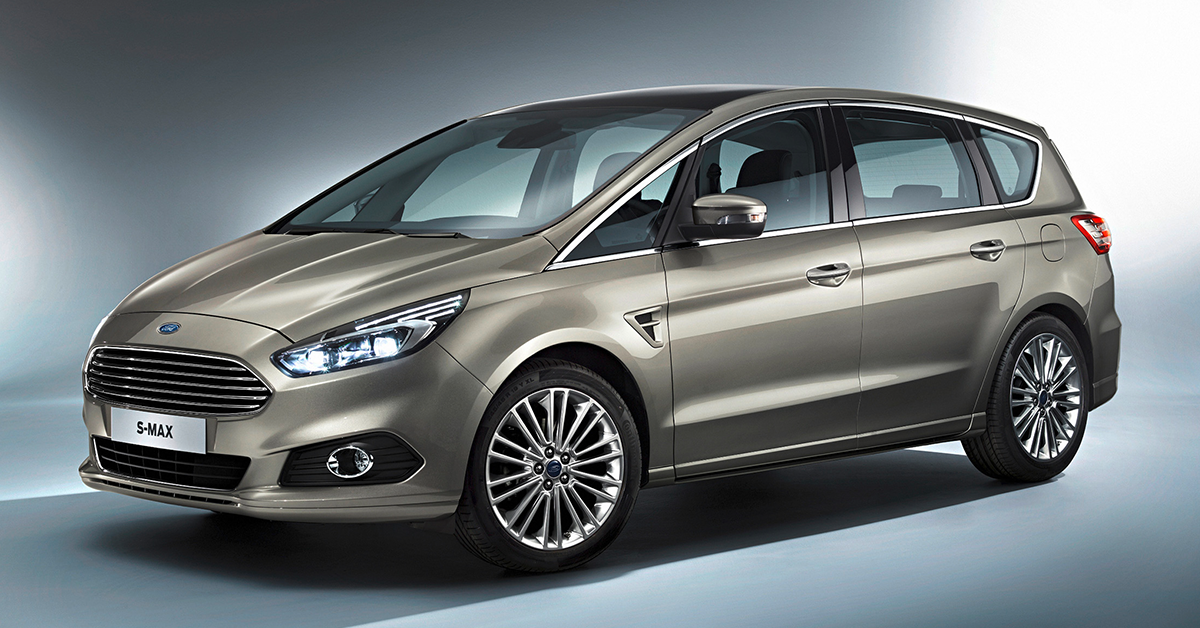
Official press image of the Ford S-Max. | © Ford Motor Company
The Ford S-Max from the 2006 launch at Genk and the 2015 Valencia generation to the 2021 full hybrid and the April 2023 end of production, covering engines, seats, boot and towing, showing what Ford says and what is only reported.
The S-Max is Ford’s large European people carrier, which Ford calls a sports activity vehicle. Ford’s January 2006 release says Ford of Europe named the production version of its SAV concept the S-MAX, positioned between the Mondeo Wagon and the seven-seat Galaxy and building on the Focus C-MAX (Ford). It was sold in Europe only. Our C-Max article covers the smaller compact MPV, and this article stays on the S-Max.
| Class | Sports activity vehicle, large MPV (Ford) |
| Position in range | Between Mondeo Wagon and Galaxy (Ford) |
| First generation | 2006, built at Genk (Ford) |
| Second generation | Premiered 2014; production 2015, Valencia (Ford) |
| Hybrid | 2021, 2.5-litre full hybrid (Ford) |
| Seats | Seven; hybrid also five (reported) |
| Sold in | Europe (Ford) |
| End of production | April 2023, Valencia (reported) |
| Reported total sales | About 570,000 (reported) |
| European sales, 2021 | 7,400 (reported) |
The S-Max had two generations and a hybrid. The first appeared in 2006, the second premiered at the 2014 Paris Motor Show and began volume production at Valencia in 2015, and a full hybrid version arrived in 2021 (Ford). Ford’s 2006 release says it was built at Genk, Belgium, alongside the Galaxy and Mondeo, and Ford’s 2015 release says the second generation was built in Valencia, Spain (Ford).
Ford ended it in 2023. A report quotes Ford saying it would discontinue S-MAX and Galaxy production in Valencia, Spain in April 2023, as Ford prepared for an electric future (reported). The same reports say about 570,000 S-Max cars had been sold across Europe since 2006, and that only 7,400 were sold in 2021 (reported). We found no Ford-owned page in the text we read that gives those two totals.
The sources disagree on several numbers, and we show both values with their sources. Ford’s 2006 release says the S-MAX launched in April 2006, while a reference history says it went on sale in June 2006 (Ford, reported). The 2015 engine outputs are given as 158 PS and 237 PS by one report and as 160 PS and 240 PS by another, and the diesels as 118, 148 and 178 PS versus 120, 150 and 180 PS (reported). Where two sources differ, we show both values and name the kind of source behind each, and we do not average them or pick the one that looks more likely.
Some Ford releases we used are hosted on a university mirror, a press portal or a Ford Belgium press site and not on Ford’s main media centre. We tag them (Ford) because they are Ford releases, and we flag the hosting so you can check the originals. Where we found only a report that quotes Ford, such as for the end of production, we tag it as reported and name no outlet in the text. Readers who need a figure for a purchase or a repair should use Ford’s brochure for the exact year, because the pages we read do not cover every model year.
We kept the scope tight. We found no Ford figure for total S-Max production, no Ford price list for the current used market and no Ford recall information in the text we read. We give no claim about reliability, resale values or running costs. We also give no claim about versions we did not research, such as the Vignale trim or the ST-Line trim, beyond the fact that reports list them in price tables. We give no claim about any figure that we did not find on a page we could read, and the tables show a plain note where Ford gave us nothing to quote.
Ford named the S-MAX on January 10, 2006. Ford’s release says Ford of Europe officially named the production version of its acclaimed SAV concept, and that it would be built alongside the new Galaxy and the Mondeo at Genk, Belgium, with prices announced when it went on sale in the middle of the year (Ford). The release says more than 12 million vehicles had been built at Genk since the plant opened in 1964 (Ford). The release is hosted on a trade press site.
| Named | January 10, 2006 (Ford) |
| Built at | Genk, Belgium (Ford) |
| Genk plant opened | 1964 (Ford) |
| Geneva debut | 2006 (reported) |
| Production start, report | March 6, 2006 (reported) |
| Launch month, Ford release | April 2006 (Ford) |
| On sale, reference history | June 2006 (reported) |
| Award announced | November 13, 2006 (Ford) |
| Jury | 58 journalists, 22 countries (Ford) |
| Ford's Car of the Year wins | Fifth (reported) |
The cars were shown at Geneva. A trade report says the S-Max made its debut at the 2006 Geneva Motor Show alongside the new Galaxy, and describes it as an all-new model for Ford of Europe that offered the Galaxy’s active suspension system as an option (reported). A Ford Galaxy release from the same show describes the Galaxy as an all-new version of Ford’s best-selling full-sized MPV (Ford). Our Ford history article covers the company around these years.
Production started in the spring. A trade report says S-Max production began at Genk on March 6, 2006 and Galaxy production on April 10, and a Belgian report dates the first S-Max to a Monday in early March (reported). Ford’s November 2006 release says the car launched in April 2006, while a reference history says it went on sale in June 2006, so the launch month differs by source (Ford, reported). We found no Ford page that settles it.
The S-MAX won European Car of the Year. Ford’s November 13, 2006 release says the all-new S-MAX was awarded the title of Car of the Year 2007, judged by a panel of 58 motoring journalists from 22 European countries (Ford). It says more than half of the S-MAX vehicles built had gone to customers who were new to Ford, according to market research (Ford). The release is hosted on a Ford Belgium press site, so we flag it.
Reports add the award context. A trade report says it was Ford of Europe’s fifth Car of the Year win, with the original Focus last collecting the award in 1999, and a French report lists the Escort in 1981, the Scorpio in 1985, the Mondeo in 1994 and the Focus in 1999 before the S-Max (reported). Ford’s release quotes Ford of Europe’s president saying the award illustrates the forward-looking nature of the car (Ford).
We found limits. Ford’s 2006 releases we read give no full specification table, so we give no first-generation dimensions, weights or boot volumes. A report lists the launch engines as petrol and diesel units, but we did not find a Ford page that gives them, so we give none. A reader who needs the original specification should use a 2006 Ford brochure, and should treat the dates above as dates for the announcements and not as dates for every market. We give no claim about any figure that we did not find on a page we could read, and the tables show a plain note where Ford gave us nothing to quote.
Ford updated the S-MAX and Galaxy for 2010. A December 15, 2009 Ford release says Ford of Europe would unveil new versions at the 2010 Brussels Show on January 13, and that the cars spearheaded Ford’s new EcoBoost four-cylinder petrol direct-injection turbo engines (Ford). The release says the models would continue to be built alongside the Mondeo at Genk (Ford). The release is hosted on a university mirror.
| Unveiled at | 2010 Brussels Show (Ford) |
| Announced | December 15, 2009 (Ford) |
| New engine family | EcoBoost four-cylinder (Ford) |
| New diesel | 2.0 TDCi, additional 163 PS (Ford) |
| Diesel outputs named | 140 PS and 163 PS (Ford) |
| Transmission | PowerShift, standard with 2.0 EcoBoost (Ford) |
| Gearbox options | PowerShift on 140 and 163 PS diesels (Ford) |
| Stage V rating | New 2.0 TDCi diesel (Ford) |
| Plant | Genk, Belgium (Ford) |
| S-MAX 2.0 EcoBoost output | Not in text read |
The engine range was changed. Ford says the S-MAX and Galaxy were the first European Ford models to benefit from the global EcoBoost family, and that they also received a 2.0-litre Duratorq TDCi diesel with a Stage V emission rating and an additional 163 PS version (Ford). Ford says the latest PowerShift transmission was standard with the 2.0-litre EcoBoost and optional with the 140 PS and 163 PS diesels (Ford). The 2.0-litre EcoBoost outputs are not in the text we read.
Ford’s release frames the change as a technology launch for the whole European range and not only the S-MAX. It says the new EcoBoost, diesel and PowerShift items would be introduced across the range as the year went on, with the S-MAX and Galaxy first (Ford). We use that as context and not as an S-MAX specification, and we found no Ford figure in the text we read for the output of the S-MAX 2.0-litre EcoBoost.
We found no Ford statement of the number of changes made in 2010 beyond the engine and gearbox, and we give no claim about styling, interior or equipment changes, because the pages we read do not list them. A trade report is the only other source in our notes for this period, and it adds nothing about the 2010 update, so we give no claim from it.
Efficiency claims are limited. Ford’s December 2009 release speaks of high-efficiency engines but the text we read gives no CO2 or fuel figure for the S-MAX versions (Ford). We therefore give no 2010 CO2 or fuel consumption numbers. A buyer of a used first-generation S-Max should read the engine badge and the registration document, because the 2.0-litre petrol and diesel versions differ in power and in equipment across model years. Readers who need a figure for a purchase or a repair should use Ford’s brochure for the exact year, because the pages we read do not cover every model year.
We also found no Ford statement of how many S-Max cars were sold in 2010, how many were produced at Genk or what the update cost. A reader should treat this section as a summary of Ford’s announced engine changes only. Ford’s own pages we read do not say whether the 2010 update included all-wheel drive, which came later with the second generation, so we give no claim that the first generation offered it. We give no claim about any figure that we did not find on a page we could read, and the tables show a plain note where Ford gave us nothing to quote.
The second generation premiered at the 2014 Paris Motor Show. Ford’s overview says the all-new S-MAX builds on the appeal of the original sports activity vehicle with space for seven and the agility of a smaller car (Ford). A report says it uses the platform of the new Mondeo, a digital instrument cluster, an electric parking brake and an 8-inch touchscreen running Ford’s second-generation SYNC, and that it was previewed by a concept at the 2013 Geneva Motor Show (reported).
| Premiere | 2014 Paris Motor Show (Ford) |
| Volume production start | May 20, 2015, Valencia (Ford) |
| Valencia 2015 output target | About 400,000 vehicles (Ford) |
| Valencia capacity | Up to 450,000 (Ford) |
| Platform | New Mondeo platform (reported) |
| 1.5 EcoBoost, two reports | 158 PS or 160 PS (reported) |
| 2.0 EcoBoost, two reports | 237 PS or 240 PS (reported) |
| Diesel range, Ford Galaxy release | 120, 150, 180, 210 PS (Ford) |
| Bi-turbo CO2 cut | Up to 24 per cent (Ford) |
| UK launch price, report | 24,545 pounds (reported) |
Production moved to Spain. Ford’s May 20, 2015 release says Ford announced volume production of the all-new S-MAX and Galaxy plus the Mondeo Vignale at its Valencia plant, adding to existing production of the Mondeo, Kuga, Transit Connect and Tourneo Connect (Ford). It says Valencia was expected to yield a 40 per cent production increase that year to about 400,000 vehicles, with capacity for up to 450,000 (Ford). A report says Ford committed about 2.6 billion dollars to prepare the plant (reported).
The engines are listed in several places. A report of the Paris reveal gives a 1.5-litre EcoBoost at 158 PS, a 2.0-litre EcoBoost at 237 PS and a 2.0-litre diesel at 118, 148 or 178 PS, while a German price report gives the 1.5 EcoBoost at 160 PS and the 2.0 EcoBoost at 240 PS (reported). Ford’s Galaxy release gives the 2.0 TDCi at 120 PS, 150 PS and 180 PS plus a new 210 PS Bi-turbo (Ford). The small differences come from rounding and units.
The 210 PS Bi-turbo was the diesel headline. Ford’s June 2015 release says the new 210 PS Bi-turbo 2.0-litre TDCi reduces CO2 emissions by up to 24 per cent compared with the 200 PS diesel it replaced with an automatic, and a German version of the release gives the output as 154 kW (Ford). Ford’s April 2015 release says the Galaxy was the latest Ford to offer Intelligent All-Wheel Drive, which was also available on the Mondeo and the S-MAX (Ford).
All-wheel drive details come from the Galaxy release. Ford says the Intelligent AWD is always on, aims to improve traction at low speeds and allows towing up to 2,000 kilograms on the Galaxy, with the 150 PS diesel on a six-speed manual and the 180 PS diesel on a six-speed PowerShift automatic (Ford). The S-MAX is named as also offering Intelligent AWD, but the release does not say which engines, so we give no claim about S-MAX AWD combinations (Ford).
Prices and ratings are reported. A UK trade report gave the S-MAX a launch price of 24,545 pounds, and a Russian report gave an estimated starting price of 24,000 pounds, while a German report gave 30,150 euros for the 1.5 EcoBoost Trend (reported). A trade report says the S-MAX and Galaxy received the highest Euro NCAP safety rating in September 2015 (reported). We found no Ford page in the text we read that gives the second-generation boot volume or weight. We give no claim about any figure that we did not find on a page we could read, and the tables show a plain note where Ford gave us nothing to quote.
Ford added a full hybrid in 2021. Ford’s February 9, 2021 release, hosted on a car-history site, says the new S-MAX Hybrid is a sports activity vehicle with seven-seat practicality and a full electric and petrol hybrid powertrain, and that Ford also launched a Galaxy Hybrid with the same powertrain (Ford). It says the S-MAX Hybrid reduces CO2 by more than 10 per cent compared with the diesel and is the UK’s most affordable seven-seat hybrid (Ford).
| Hybrid launch | February 9, 2021 (Ford) |
| Engine | 2.5-litre Atkinson-cycle petrol (Ford) |
| Battery | 1.1 kWh lithium-ion (Ford) |
| Total output | 190 PS (Ford) |
| 0 to 100 km/h | 9.8 seconds (Ford) |
| CO2 versus diesel | More than 10 per cent lower (Ford) |
| CO2, report | 147 g/km (reported) |
| Fuel, report | 43.5 mpg (reported) |
| Boot, seven seats, report | 285 litres (reported) |
| French price from | 45,750 euros (reported) |
The powertrain is a 2.5-litre Atkinson-cycle petrol engine, a 1.1 kWh lithium-ion battery, an electric motor and Ford’s latest power-split transmission, with total output of 190 PS and a 0 to 100 km/h time of 9.8 seconds (Ford). A trade report gives combined output of 140 kW and 200 Nm, and says the cars share running gear with the Kuga Hybrid (reported). A UK road test gives 187 bhp, a top speed of 115 mph and a 0 to 60 mph time of 9.6 seconds (reported).
Ford highlighted battery packaging. The release says the battery’s liquid cooling system eliminates the need for a cooling fan, which reduces noise inside the cabin, and a trade report says the water-cooled battery sits between the rear wheels so the S-Max keeps its seven-seat layout, with 285 litres of boot space with all seven seats in place (Ford, reported). Ford says the interior volume was preserved despite the hybridisation (Ford).
Efficiency claims differ. A report of Ford’s figures gives the S-Max Hybrid 43.5 mpg and 147 g/km of CO2, compared with 40.4 mpg and 169 g/km for the EcoBlue diesel, and the Galaxy Hybrid 1 g/km more than the S-Max (reported). A road test gives 44.1 mpg and 147 g/km for a tested ST-Line (reported). These are UK miles-per-gallon figures and are not converted. We found no Ford WLTP fuel figure for the hybrid in litres per 100 km in the text we read.
Ford’s Valencia plant release explains the supply chain. It says the 2.5-litre Duratec hybrid engine, which powers the Kuga PHEV and the Kuga, Galaxy and S-MAX full hybrid models, would be built at the Valencia Engine Plant from late 2022 and was then made at Chihuahua, Mexico (Ford). It says Ford was adding 5.2 million euros to battery pack assembly capacity at Valencia, following a 24 million euro investment announced in January 2020 (Ford). Readers who need a figure for a purchase or a repair should use Ford’s brochure for the exact year, because the pages we read do not cover every model year.
Ford’s March 2021 release also confirms the timeline. It says the Galaxy and S-MAX continued in production, with full hybrid versions recently launched, while Mondeo production ended in early 2022 (Ford). A French trade report gives French prices from 45,750 euros for the Titanium Business hybrid and 54,250 euros for the Vignale hybrid (reported). We found no Ford statement of how many hybrids were sold, and we give no claim about it. We give no claim about any figure that we did not find on a page we could read, and the tables show a plain note where Ford gave us nothing to quote.
The S-Max seats seven in a three-row layout. Ford’s second-generation overview says the car offers space for seven, and a trade report says the hybrid offers a choice of five or seven seats, whereas the Galaxy Hybrid is seven-seat as standard (Ford, reported). A French price report says the S-Max Hybrid has seven seats as standard in France, which conflicts with the choice reported for the UK (reported). We found no Ford page that settles the seat count by market.
| Seats | Seven (Ford) |
| Hybrid seat choice, UK report | Five or seven (reported) |
| Hybrid seats, French report | Seven as standard (reported) |
| Boot, seven seats | 285 litres (reported) |
| Boot, five seats, hybrid | 700 litres (reported) |
| Galaxy boot, seven seats | 300 litres (reported) |
| Galaxy towing with AWD | Up to 2,000 kg (Ford) |
| S-MAX towing | No Ford figure found |
| Euro NCAP, 2015 | Highest rating (reported) |
| S-MAX payload | No Ford figure found |
Boot figures come from reports. A road report gives 285 litres with all seven seats in place and 700 litres with five seats for the hybrid, and an Irish report gives 285 litres with seven seats (reported). A report of the Galaxy Hybrid gives 2,339 litres behind the first row and 300 litres with all seven seats, which is a Galaxy figure and not an S-Max figure (reported). We found no Ford S-Max boot figure in the pages we read.
Dimensions are not in Ford’s pages we read. A trade report gives two lengths, 4,853 mm and 4,804 mm, for the Galaxy and S-Max in one sentence, without making clear which belongs to which, so we give no S-Max length (reported). A UK price database lists no S-Max dimensions in the text we read. A buyer needing exact size should use Ford’s brochure or a dealer, and should note that Ford’s weight and boot figures vary with the seat layout.
Towing is given only for the Galaxy. Ford’s 2015 release says Galaxy drivers with Intelligent AWD can tow up to 2,000 kilograms (Ford). The S-MAX shares the platform and the AWD system, and Ford says the AWD is also available on the S-MAX, but we found no Ford towing figure for the S-MAX itself, so we give none (Ford). A hybrid buyer should check the towing limit on the vehicle documents, because the hybrid transmission may carry a different limit.
Safety is reported. A trade report says the second-generation S-MAX and Galaxy earned the highest Euro NCAP rating in 2015 (reported). Ford’s 2015 Galaxy release lists Pre-Collision Assist with Pedestrian Detection and a Front Split View Camera among the safety features of the sister car (Ford). Ford’s S-MAX overview describes the car as having technology to help drivers, but the text we read does not list S-MAX safety features in detail, so we give none beyond the report.
We found limits. Ford’s pages we read give no S-Max payload, no kerb weight and no fuel tank size, and we give no claim about them. We also found no Ford statement of how the hybrid affects the roof load or the number of ISOFIX points. A family buyer using all seven seats should check the third-row seat belts, the child-seat fittings and the boot space with a Ford dealer, because the third row leaves only a small boot and the figures depend on the version. We give no claim about any figure that we did not find on a page we could read, and the tables show a plain note where Ford gave us nothing to quote.
Ford confirmed the end in October 2022. A report quotes Ford’s statement that as it gets ready to transition to an electric future it will discontinue production of S-MAX and Galaxy in Valencia, Spain in April 2023 and discontinue Fiesta production in Cologne, Germany by the end of June 2023 (reported). Other reports say orders were no longer being taken at the time and that the move followed the end of the Mondeo (reported). We found no Ford-owned page for that statement.
| End announced | October 2022 (reported) |
| S-MAX and Galaxy end | April 2023, Valencia (reported) |
| Fiesta end | Late June 2023, Cologne (reported) |
| Reported S-Max total | About 570,000 (reported) |
| Reported Galaxy total | About 820,000 (reported) |
| S-Max sales, 2021 | 7,400 (reported) |
| Galaxy sales, 2021 | 4,700 (reported) |
| Valencia jobs cut, report | 1,100 (reported) |
| SUV share of 2020 sales | 39 per cent (Ford) |
| European zero-emissions target | Mid-2026 for passenger range (Ford) |
Reports give volume context. They say that about 820,000 Galaxy and about 570,000 S-Max cars had been sold across Europe since their launches, and that only 4,700 Galaxy and 7,400 S-Max cars were sold in 2021 (reported). They name Germany, the United Kingdom, Belgium and Austria as the main markets (reported). The Galaxy launch year is given as 1995 in one report and 1996 in another, which is a Galaxy detail and does not affect the S-Max (reported).
Job impact is also reported. A March 2023 report says Ford was set to cut 1,100 jobs at Valencia as it ended S-Max and Galaxy production, and that the plant would continue to build the Transit Connect and the Kuga (reported). The report cites a Ford spokesperson. Ford’s own pages we read do not give the job number, so we treat it as reported, and we found no Ford statement about the plan for the workforce beyond a general commitment reported by the same source.
The reasons are given as changing demand. Reports say that sales of MPVs and superminis were dwindling as car makers sought higher profit margins with SUVs and crossovers, and that Ford was moving to an electric future (reported). Ford’s March 2021 release had already said SUVs and crossovers made up 39 per cent of its European passenger vehicle sales in 2020, up eight percentage points from 2019 (Ford). That figure is Ford’s and covers the whole range.
Ford’s electrification targets frame the decision. Ford’s March 2021 release says that by mid-2026, 100 per cent of its European passenger vehicle range would be zero-emissions capable, meaning all-electric or plug-in hybrid, and that it would move to all-electric passenger vehicles in Europe by 2030 (Ford). A report says Ford planned to end Focus production in 2025 (reported). The S-Max did not have a successor, according to a Spanish report on the Galaxy (reported).
We found limits. We found no Ford page that gives the date of the last S-Max built, the final production total or the exact number of S-Max cars made at each plant. We give no claim about any collector value, and we advise buyers of a used S-Max to check the service history, the hybrid battery condition for 2021 cars and the engine type, because the diesel and hybrid versions differ in running costs and in the tax treatment of each market. We give no claim about any figure that we did not find on a page we could read, and the tables show a plain note where Ford gave us nothing to quote.
The article is a map of Ford’s published numbers and of what reports add. For the first generation we found Ford’s naming release, its award release and its 2009 engine release, all hosted on third-party sites. For the second generation we found Ford’s Valencia production release and its Galaxy releases, which describe the sister car. For the hybrid we found a Ford release hosted on a car-history site and Ford’s Valencia plant release.
| First-generation Ford releases | Naming, award, 2009 engines (Ford) |
| Second-generation Ford releases | Valencia, Galaxy AWD, Bi-turbo (Ford) |
| Hybrid Ford releases | 2021 launch, Valencia engines (Ford) |
| Ford S-MAX dimensions | No Ford figure found |
| Ford S-MAX boot volume | No Ford figure found |
| Ford S-MAX towing | No Ford figure found |
| Ford S-MAX payload | No Ford figure found |
| Ford S-MAX fuel figures | No Ford figure found |
| North American sales | No Ford plan found |
| Ford total production | No Ford figure found |
Ford’s S-MAX pages we could read are thin on core specifications. We found no Ford S-MAX dimensions, weights, boot volumes, towing limits or fuel figures in text we could read, and we say so in the tables. Figures that other sources supply, such as 285 litres of boot space or 43.5 mpg, are tagged as reported. A reader who needs a number for a purchase should use Ford’s brochure or a dealer and not this article.
The article covers the S-Max as a European model. Ford did not sell it in North America, and we found no Ford statement of plans to do so. Readers comparing it with Ford’s other family vehicles can use our Ford models article, which lists the current range, and our C-Max article, which covers the compact MPV that Ford says the S-MAX was built on in 2006.
Source quality varies. We used Ford releases found on Ford’s media centre, Ford releases hosted on a university mirror, a trade press site, a Ford Belgium press site and a car-history site, and we tagged those (Ford). We used trade, consumer and price-database reports only as cross-checks and tagged them as reported. Reports of Ford statements, such as the end of production, are tagged as reported because we did not find the original Ford page in text we could read.
Conflicts are shown, not resolved. The launch month, the second-generation engine outputs, the UK launch price, the seat count of the hybrid in different markets and the Galaxy launch year are all given as conflicting values with their sources. Where the difference looks like rounding or units, as with 158 PS and 160 PS, we say so, but we do not pick one value unless Ford’s own page does. We never convert PS to horsepower or kilowatts unless a source does. Readers who need a figure for a purchase or a repair should use Ford’s brochure for the exact year, because the pages we read do not cover every model year.
A buyer or reader should confirm the key facts directly. The most important open questions are the exact specification of a given S-Max year and engine, the boot volume of the version being bought, the towing limit on the vehicle documents and the condition of the hybrid battery on a 2021 car. We recommend a Ford dealer or the vehicle’s registration documents for those, and we give no claim about prices, discounts or values in the current used market. We give no claim about any figure that we did not find on a page we could read, and the tables show a plain note where Ford gave us nothing to quote.
