 Brands
Ford Transit — Cargo Van, E-Transit Range and Sales Record
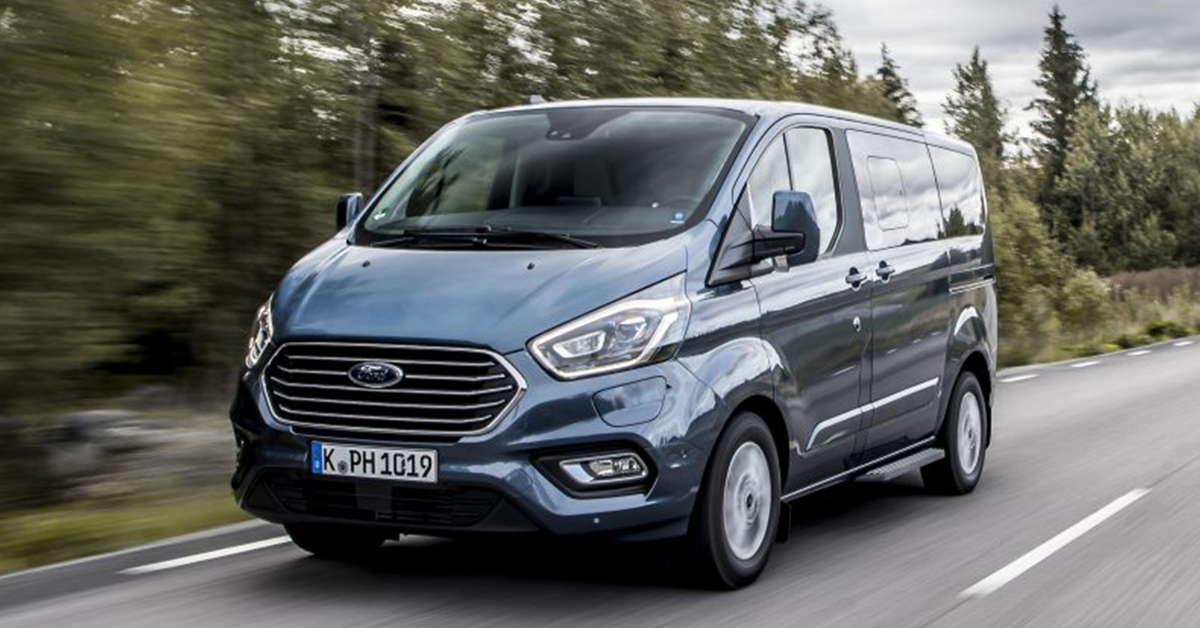
Official press image of the Ford Transit. | © Ford Motor Company
The Ford Transit from Project Redcap in 1965 to the 2026 and 2027 cargo, passenger, chassis cab and cutaway vans and the E-Transit, comparing engines, payload, towing, range, prices and sales, showing what Ford says and what is only reported.
Transit is Ford’s full-size van. Ford’s 2026 what’s-new article says it is sold as a cargo van, a passenger van, a chassis cab and a cutaway (Ford). The same article lists the T-150, T-250, T-350 single rear wheel, T-350 dual rear wheel and T-350HD, in low, medium and high roof heights (Ford). Ford says the Transit offers 37 different configurations and that no full-size van offers more (Ford). This article covers the U.S. Transit and the electric E-Transit first, then the European Transit family, and it keeps what Ford publishes apart from what third parties only report.
| Body styles | Cargo, Passenger, Chassis Cab, Cutaway (Ford) |
| Series | T-150, T-250, T-350 SRW/DRW, T-350HD (Ford) |
| Configurations | 37, Ford says none offers more (Ford) |
| Gas engine 1 | 3.5L PFDi V6, 275 hp, 260 lb-ft (Ford) |
| Gas engine 2 | 3.5L EcoBoost V6, 300 hp, 400 lb-ft (Ford) |
| Transmission | 10-speed TorqShift automatic (Ford) |
| Max payload, 2026 | 5,103 lb (Ford) |
| Max conventional tow | 6,900 lb (Ford) |
| U.S. sales, 2025 | 161,797 vans, up 5.9% (Ford) |
| Cargo Van start, 2026 | $48,400 before $2,095 destination (Ford) |
Two gas engines are listed for the 2026 Transit. The 3.5-litre PFDi V6 makes 275 horsepower and 260 lb-ft, and the 3.5-litre EcoBoost V6 makes 300 horsepower and 400 lb-ft (Ford). Ford says the gas models use a 10-speed TorqShift automatic, that rear-wheel drive is standard, and that all-wheel drive is available on the gas Transit only (Ford). Ford’s footnote says the horsepower and torque ratings use premium fuel under the SAE J1349 standard and that results may vary (Ford). The E-Transit uses a single rear electric motor and a battery of about 89 kWh (Ford).
Ford’s 2026 article gives the maximum Transit payload as 5,103 pounds and the maximum conventional tow rating as 6,900 pounds when properly equipped (Ford). Ford’s 2026 Transit page ties the 5,103-pound figure to the T-350HD high roof, extended length cargo van with rear-wheel drive and dual rear wheels (Ford). Ford’s 2027 page says the maximum payload runs from 3,342 to 5,103 pounds depending on configuration (Ford). Ford says the conventional tow rating is not available on the E-Transit (Ford). A Ford Pro comparison sheet for the 2024 van says horsepower, torque, payload and towing are independent and may not be achieved simultaneously (Ford).
The sales record is the headline. Ford’s January 2026 sales release says Transit sold 161,797 vans in the United States in 2025, up 5.9% and a new annual record (Ford). The same release says that was the best Transit year since the van’s U.S. market introduction in 2014 (Ford). It also says Ford commercial vans topped sales for the 47th consecutive year (Ford). Ford’s earlier fact sheet gave 46 straight years for 1979 to 2024, so the 47th year is one more year added to the same run (Ford).
Ford’s fact sheet lists 2026 starting prices before a $2,095 destination and delivery charge. The Cargo Van is $48,400, the Passenger Van $58,180, the Chassis Cab $45,490 and the Cutaway $44,890 (Ford). The E-Transit Cargo Van is $53,260, the E-Transit Chassis Cab $48,050 and the E-Transit Cutaway $48,150 (Ford). Reported 2027 prices differ in places, and the prices section shows both values where sources disagree (reported).
We found no Ford fuel-economy figure for the gas Transit and no Ford efficiency figure for the E-Transit in miles per kWh on the pages we read, so we give none. We also found no Ford statement of how many Transits Kansas City builds each year. Ford’s own pages mix model years, so each figure in this article carries its year. We give no claim about reliability scores, resale value or the cost of owning a Transit, because we did not read a Ford source for any of them.
Ford’s 2024 Transit Day article says the van was first known as Project Redcap, and that the first Transit rolled off the line at Ford’s Langley plant in the United Kingdom on August 9, 1965 (Ford). Ford’s 2025 facts article adds that the engineering team included Sir Alex Trotman, later Ford’s chairman and CEO, and that the van could have launched as the V-Series before a last-minute decision gave it the Transit name (Ford). It places the Langley plant in Berkshire, England (Ford). Our Ford history article covers the company around it.
| Project name | Project Redcap (Ford) |
| First Transit built | August 9, 1965, Langley, England (Ford) |
| Cheapest 1965 model | £542, 1,344-lb payload (Ford) |
| Priciest 1965 model | £997 plus £159 tax, 15-seat bus (Ford) |
| Supervan Mk1 | 1971, GT40 base, 5.0L V8, 149 mph (Ford) |
| One millionth Transit | 1976, built in Europe (Ford) |
| Built since 1965 | Over 13 million (Ford) |
| Built in Europe and Türkiye | 10.1 million (Ford) |
| Kansas City build since 2014 | Over 1.5 million (Ford) |
| Generation count | Four platforms: 1965, 1986, 2000, 2013 (reported) |
Ford’s facts article gives the launch prices. The cheapest model, a short-wheelbase gas van with a 1,344-pound payload, cost £542 (Ford). The priciest, a 15-seat Custom bus, cost £997 plus £159 purchase tax, which Ford puts at about $2,785 at the time (Ford). Ford’s European 60-year article says the first Transit carried up to about 1,700 kilograms and had a little over 43 PS, while the current panel van carries up to 2,400 kilograms (Ford). The two payload figures are not a conflict, because one is the cheapest short-wheelbase van and the other is a best case across the range (Ford).
Ford’s Transit Day article says a major update arrived in 1969, with a Custom cab fitting, a new grille, a car-like dashboard, an automatic option and more comfortable seats with seatbelts (Ford). Ford’s facts article says the Transit Supervan Mk1 debuted at Brands Hatch on Easter Monday 1971, was based on a Ford GT40 with a 5.0-litre V8, and reached 149 mph (Ford). Ford’s 2021 heritage article says the Supervan was modified and re-released as the Supervan 2 in 1984 and the Supervan 3 in 1994 (Ford).
The production numbers are large. Ford says the one millionth Transit was built in Europe in 1976 and that over 13 million Transits have been built worldwide since 1965 (Ford). Ford’s European article says 10.1 million of them were built in plants in Europe and Türkiye, and that about one is built every 2.5 minutes (Ford). It also says four times as many Transits were built in Europe and Türkiye in 2024 as in 1966, the first full year (Ford). Ford says the Kansas City Assembly Plant has built over 1.5 million Transits since 2014 (Ford).
Ford’s pages give a few stories that help explain the reputation. In October 1985 a driver from Seville, Spain, left a Transit Kombi in a snowstorm at over 9,800 feet, found it under 16 feet of snow six months later, and says it started on the first try (Ford). In 2005 Sabine Schmitz drove a Transit around the Nürburgring in just over 10 minutes for a television show (Ford). Ford’s 2021 heritage article lists honours for the Transit family in 2003, 2007, 2013, 2014 and 2020, but the part we read did not name the award, so we do not name it (Ford).
Generations are where sources differ. Ford’s European 60-year article gives no generation count, and Ford’s North American pages say the U.S. Transit began at Kansas City in 2014, in its eleventh U.S. sales year on the 2025 fact sheet (Ford). Reports say there have been four platform generations, debuting in 1965, 1986, 2000 and 2013, and one fleet guide calls the current U.S. van its fourth generation (reported). Reports also say North American model years began in 2015 and that the Transit replaced the E-Series van, while Ford’s sales totals still count the E-Series, Club Wagon and Transit Connect inside its van leadership figure (reported).
The Cargo Van is the core Transit. Ford’s 2026 article says cargo and passenger vans come on 130-inch (regular) and 148-inch (long) wheelbases, and Ford’s 2027 page lists overall lengths of 217.8 inches (regular), 235.5 inches (long) and 263.9 inches (extended) (Ford). Ford’s cargo van seats two (Ford). Roof heights are where Ford’s own pages disagree. One Ford U.S. page gives low 82.7, medium 99.8 and high 110 inches, Ford Canada gives 82.4, 99.2 and 108.6 inches, and another Ford U.S. page gives 83, 100.2 and 109.4 inches (Ford).
| Wheelbases, Cargo | 130 in and 148 in (Ford) |
| Lengths, 2027 | 217.8, 235.5, 263.9 in (Ford) |
| Roof height, low | 82.7 in, 82.4 in or 83 in by page (Ford) |
| Roof height, medium | 99.8, 99.2 or 100.2 in by page (Ford) |
| Roof height, high | 110, 108.6 or 109.4 in by page (Ford) |
| Max payload, 2027 FAQ | 3,342 to 5,103 lb (Ford) |
| Max payload, other 2027 tab | 5,047 lb (Ford) |
| Max towing, 2027 tab | 6,900 lb (Ford) |
| Fuel tank | 25 gal 2026/2027; 31 gal 2024 (Ford) |
| Seats, Cargo Van | 2 (Ford) |
Payload and towing also vary by tab. One Ford 2027 page lists a maximum payload of 5,047 pounds and a maximum towing capacity of 6,900 pounds (Ford). The Ford 2027 FAQ says payload ranges from 3,342 to 5,103 pounds (Ford). Other Ford 2027 sections show 3,402 pounds of payload with 4,500 pounds of towing, and Ford Canada lists 3,475 pounds of payload with 4,500 pounds of towing for the passenger van (Ford). A report on the 2026 Cargo Van gives the T-150 low roof a payload of up to 3,452 pounds and towing of 6,900 pounds (reported).
Fuel tank size shows a model-year difference. Ford’s 2026 and 2027 passenger van pages list a 25-gallon tank, while Ford’s 2024 capability page lists a 31-gallon tank (Ford). The Ford pages we read do not explain why, so we show both with their years. The 2024 page also describes an intelligent all-wheel-drive system that includes a Tow/Haul mode for trailers and heavy loads (Ford). Ford’s 2026 list of factory packages includes RV Prep, Electrician Trade, Builders Prep, General Contractor Trade, Upfitter, Wall Liner Kit and Heavy Duty Trailer Tow (Ford).
The 2025 model year added trade packages. Ford’s 2025 what’s-new article lists the Electrician Trade Package, the General Contractor Trade Package and the HVAC Trade Package (Ford). The HVAC package is on the 2025 list but not on the 2026 package list we read, and we do not say whether it carried over (Ford). Ford’s 2026 article calls the 2026 van a digital refresh. It adds an 8-inch dashboard display, SYNC 4 with a standard 12-inch center screen, a 5G modem with a Wi-Fi hotspot for up to 10 devices, and an electrical architecture with over-the-air updates (Ford).
Fleet-focused features are a large part of the 2026 update. Ford lists Ford Co-Pilot360 2.0, which is standard on the XLT Passenger Van and optional on the XL Cargo and Passenger vans (Ford). Remote Acceleration Limiter and Fleet Start Inhibit are Co-Pilot360 2.0 features, and a Vehicle Maintenance Monitor and keyless push-button start are now standard (Ford). Ford also lists Delivery Assist in the Parcel Delivery Package for the Cargo Van and Cutaway, plus Close Assist on medium and high roof models (Ford).
For 2027, Ford says the Ford Security Package is now available on Transit vans, with theft alerts, remote vehicle lockdown and recovery services (Ford). Reports say the 2027 van adds standard daytime running lamps and swaps Ingot Silver Metallic for Iconic Silver Metallic, although one report labels the new silver as new for 2026, so the date is unclear (reported). We found no Ford 0 to 60 time, no Ford fuel-economy rating and no Ford gross vehicle weight table for the Cargo Van on the pages we read, so we give none. We also give no claim about how the Transit compares with rival vans.
The Passenger Van comes in XL and XLT. Ford’s 2026 article says it can be configured with 2, 12 or 15 seats, and Ford’s 2026 and 2027 pages give a maximum seating capacity of 15 passengers (Ford). Both the 3.5-litre PFDi V6 and the 3.5-litre EcoBoost V6 are listed (Ford). Ford lists the 2026 Passenger Van at $58,180 before destination (Ford), and a report puts the 2027 Passenger Van XL at $59,680 before destination (reported). By our arithmetic that is $1,500 higher, but we found no Ford statement that explains the change.
| Passenger Van trims | XL and XLT (Ford) |
| Seating | 2, 12 or 15 (Ford) |
| Passenger Van start, 2026 | $58,180 (Ford) |
| Passenger Van XL start, 2027 | $59,680 (reported) |
| Chassis Cab wheelbases | 138, 156, 178 in (Ford) |
| Chassis Cab start, 2026 | $45,490 (Ford) |
| Cutaway start, 2026 | $44,890 (Ford) |
| Upfit control | Vehicle Integration System 2.0 (Ford) |
| Fleet-only paint | Wild Green Metallic (Ford) |
| Rear doors, high-roof passenger | Optional 253-degree hinge opening (Ford) |
Chassis Cab and Cutaway models are built for upfitters. Ford’s 2026 article lists wheelbases of 138 inches (regular), 156 inches (long) and 178 inches (extended) for them (Ford). Ford lists the 2026 Chassis Cab at $45,490 and the Cutaway at $44,890 before destination, the two lowest gas prices on its list (Ford). Ford’s 2026 order guide lists T-350 single-rear-wheel Chassis Cab models on 156-inch and 178-inch wheelbases in both rear-wheel drive and all-wheel drive (Ford).
Ford’s 2026 update added Vehicle Integration System 2.0 for the Chassis Cab and Cutaway. Ford says it lets customers control upfit equipment through the new 12-inch center display, and Ford calls the 2026 van the most upfit-friendly Transit (Ford). Ford also lists a factory Upfitter package and an RV Prep package among the 2026 options (Ford). Ford Pro publishes a Class B comparison sheet on its upfit pages, but the excerpt we saw had footnotes and no readable table, so we do not reproduce any of its numbers (Ford).
Safety and driver-assist equipment is also part of the 2026 list. Ford says a Forward Sensing System is standard on all models and that a Reverse Sensing System is standard on all Cargo and Passenger series (Ford). It lists new rear taillamps with integrated blind-spot sensors when equipped (Ford). Ford’s footnote says driver-assist features are supplemental and do not replace driver attention or make the vehicle autonomous (Ford). We give no crash-test rating, because we did not read a Ford or government source for the Transit.
Colors and body details are small but useful to fleet buyers. Ford’s 2026 article lists a fleet-only Wild Green Metallic paint (Ford), and a report on the 2027 palette also lists School Bus Yellow as fleet-only (reported). Ford says high-roof passenger vans can be ordered with an optional 253-degree rear door hinge opening (Ford). For the E-Transit, Ford says the Chassis Cab and Cutaway gained a 156-inch wheelbase for 2026, which suits aftermarket upfit equipment and service bodies (Ford).
We keep the limits plain. We found no Ford figure for Chassis Cab or Cutaway payload by wheelbase on the pages we read, so we give none, and Ford’s own pages say payload depends on configuration and point buyers to a Transit Body Decoder (Ford). We also found no Ford statement of how many Chassis Cabs and Cutaways are sold each year, because Ford’s sales totals combine the van family. For exact capacity, Ford’s footnote says to check the door-jamb label on a specific vehicle (Ford).
E-Transit is Ford’s electric Transit. Ford’s 2024 Transit Day article says Ford revealed it in 2020 (Ford). Ford’s facts article says that in 2022 Ford introduced it to the U.S. market as the company’s first all-electric full-size van, with production at the Kansas City Assembly Plant alongside the gas models (Ford). Ford’s 2021 heritage article had said production would begin there in late 2021 (Ford). Our F-150 Lightning article covers Ford’s electric pickup, and this section stays on the electric van.
| Revealed | 2020 (Ford) |
| U.S. introduction | 2022, Kansas City (Ford) |
| Motor | Single rear motor, 198 kW (Ford) |
| Output as written by Ford | 189 hp, conflicts with 198 kW (Ford) |
| Output reported | 266 hp (reported) |
| Battery | 89 kWh, or 89.9 kWh (Ford) |
| Range, 2027 Low Roof | 166 miles (Ford) |
| Range, 2027 High Roof extended | 148 miles (Ford) |
| Max payload, 2026 | 3,320 lb and 4,201 lb (Ford) |
| Cargo volume | Up to 487 cu ft (Ford) |
Ford’s 2026 article lists a single rear electric motor rated 198 kW and an 89 kWh lithium-ion battery (Ford). The same line writes the output as 189 horsepower, which does not match the kilowatt figure, because 198 kW converts to about 266 horsepower by standard arithmetic (our calculation). Reports list 266 horsepower for the 2026 and 2027 E-Transit (reported). Ford’s 2025 article says an 89.9 kWh battery is standard on the 148-inch Cargo Van and the 178-inch Chassis Cab and Cutaway (Ford). We show both battery figures and the two output values.
Ford’s 2027 E-Transit page gives estimated ranges by roof. The Low Roof is 166 miles, the Medium Roof is 155 miles, the High Roof long length is 149 miles, and the High Roof extended length is 148 miles (Ford). A report lists 143 to 159 miles for the 2027 E-Transit 350 Cargo Van (reported). An early pricing announcement targeted 126 miles for the low-roof van on a 67 kWh usable battery, so the range has risen since then (reported). A copy of the 2027 order guide hosted on a third-party site lists only a T-350 High Roof Extended Cargo Van among E-Transit vans, which conflicts with Ford’s page listing several roofs (reported).
Payload and space are listed next. Ford’s 2026 article gives E-Transit Cargo Van maximum payloads of 3,320 pounds and 4,201 pounds depending on configuration (Ford). Ford Canada’s 2027 page lists a maximum payload of 3,322 pounds for the E-Transit (Ford). Ford’s fact sheet says the E-Transit offers up to 487 cubic feet of cargo volume (Ford), and a report gives 277.7 to 487.3 cubic feet across its configurations (reported). Ford says E-Transit has no conventional tow rating (Ford).
Equipment changes for 2026 are listed by Ford. A vapor injection heat pump is standard, Close Assist is standard on medium and high roof models, and an optional 2.4 kW Pro Power Onboard supplies exportable power (Ford). A report lists a maximum charging power of 176 kW (reported). Ford’s fact sheet says E-Transit was America’s best-selling electric van in 2024 with record sales of 12,610, and that sales rose 30% to 3,756 in the first quarter of 2025 (Ford). Ford says that ranking uses S&P Global Mobility 2024 registrations for electric van segments (Ford).
Ford also cites government and telematics data. It says Ford is number one in electric vehicle registrations to state, local and federal governments, and that E-Transit is the best-selling electric commercial van for those customers, using 2023 registration data (Ford). Ford’s E-Telematics data says drivers have saved more than 3 million gallons of gas and over 25 million kilograms of CO2 against gas Transit vans since 2022, based on enrolled vehicles from July 2022 to February 2024 (Ford). Ford prices the 2026 E-Transit Cargo Van at $53,260 (Ford), while reports give $55,655 for 2026 and $56,655 for 2027 (reported).
Outside North America the Transit is a family of vans. Ford’s European 60-year article says Transit and Transit Custom sales in Europe grew 52% from 2014 to 2024, and that almost one in five one-tonne and two-tonne vans sold in Europe in 2024 was a Transit or Transit Custom (Ford). It says a new Transit was bought about every two minutes across Europe in 2024 (Ford). Ford says the Transit or Transit Custom has been the UK’s best-selling van for 59 years, and the Custom for 11 consecutive years (Ford). The figures come from S&P Global data for 20 listed markets (Ford).
| Europe sales growth, 2014 to 2024 | Up 52%, Transit and Custom (Ford) |
| Share of 1t and 2t vans, 2024 | Almost one in five (Ford) |
| UK best-seller | 59 years, Transit or Custom (Ford) |
| Custom UK best-seller | 11 consecutive years (Ford) |
| Ford Pro Europe lead | 11th consecutive year, over 17% share (Ford) |
| E-Transit Custom range | Up to 337 km (Ford); 380 km WLTP (reported) |
| E-Transit range, Europe | Up to 402 km WLTP (Ford) |
| Highest E-Transit output | 269 PS (Ford) |
| Variants of 2-tonne Transit | Over 1,300 (Ford) |
| SuperVan 4.2 output | 1,400 hp or 2,000 PS (Ford) |
Ford’s 2026 Ford Pro article says Ford Pro achieved its 11th consecutive year as Europe’s leading commercial vehicle brand in 2025, with record sales and a record share of over 17 per cent (Ford). The same article says it was the leading brand in 10 European markets (Ford). It says the electrification of the whole Transit family was completed by the production start of the all-new E-Transit Courier at Ford Otosan’s plant in Craiova, Romania (Ford).
The Transit Custom was rebuilt for the 2020s. Ford’s 2021 release says the next-generation Custom range would include an all-electric model alongside plug-in hybrid, mild hybrid and conventional engines, built by Ford Otosan in Turkey (Ford). Ford’s November 2023 release says production of the new generation was underway at the Yeniköy Assembly Plant, with the E-Transit Custom and E-Tourneo Custom reaching customers from summer 2024 (Ford). Reports instead place Custom production at Ford Otosan’s Kocaeli plant, with Yeniköy building the Courier, so the plant name conflicts between sources (reported).
E-Transit Custom range depends on the date. A footnote on Ford’s European 60-year page gives up to 337 kilometres on a full charge for the E-Transit Custom (Ford). Reports from the 2022 reveal and the 2023 show gave up to 380 kilometres on the WLTP cycle with a 74 kWh battery, 125 kW fast charging, payload of up to 1,100 kilograms and towing of up to 2,000 kilograms (reported). We show both range values, because the earlier figure may have been a target and we found no Ford text saying which applies.
The larger European E-Transit has its own figures. Ford says it can travel up to 402 kilometres on the WLTP cycle with the enhanced range option, some versions carry over 1,600 kilograms, the highest-powered version makes 269 PS, and it was Europe’s best-selling two-tonne electric van in the previous year (Ford). Ford says European E-Transit production began in 2023 (Ford). Ford says over 1,300 variations of the two-tonne Transit could be ordered in 2025, through 217 Ford Pro Converter Partners in 18 markets (Ford).
Smaller vans and the SuperVan finish the family. Reports say the Transit Connect left the U.S. after the 2023 model year, continues in Europe, and is built in Valencia, Spain, after sales of 52,221 in 2015 and 25,140 in 2022 (reported). Ford’s U.S. facts article says the SuperVan 4.2 makes 1,400 horsepower from three electric motors, while Ford’s European article gives 2,000 PS, and it is not for sale (Ford). 1,400 horsepower is about 1,420 PS, so the two Ford figures do not match, and we show both (our calculation).
Ford publishes a clean 2026 price list in its Ford Pro fact sheet, and it is the anchor for this section. All figures are starting prices before the $2,095 destination and delivery charge (Ford). The gas lineup is the Cargo Van at $48,400, the Passenger Van at $58,180, the Chassis Cab at $45,490 and the Cutaway at $44,890 (Ford). The electric lineup is the E-Transit Cargo Van at $53,260, the E-Transit Chassis Cab at $48,050 and the E-Transit Cutaway at $48,150 (Ford).
| Cargo Van, 2026 | $48,400 (Ford) |
| Passenger Van, 2026 | $58,180 (Ford) |
| Chassis Cab, 2026 | $45,490 (Ford) |
| Cutaway, 2026 | $44,890 (Ford) |
| E-Transit Cargo, 2026 | $53,260 (Ford) |
| E-Transit Chassis Cab, 2026 | $48,050 (Ford) |
| E-Transit Cutaway, 2026 | $48,150 (Ford) |
| Destination and delivery | $2,095 (Ford) |
| Passenger Van XL, 2027 | $59,680 (reported) |
| E-Transit 350 Cargo, 2027 | $56,655 (reported) |
The list lets you compare gas and electric by our arithmetic. The E-Transit Cargo Van is $4,860 above the gas Cargo Van, the electric Chassis Cab is $2,560 above the gas one, and the electric Cutaway is $3,260 above the gas one (our calculation). The Passenger Van is $9,780 above the Cargo Van (our calculation). With destination added, the Cargo Van comes to $50,495 and the E-Transit Cargo Van to $55,355 (our calculation). We found no Ford statement about incentives or discounts, so these are sticker figures only.
For 2027, Ford’s own Transit pages show an “as shown” price field without a figure in the text we could read (Ford). A report says the 2027 Cargo Van starts at $48,400, which matches the 2026 Ford price, and that the Passenger Van XL starts at $59,680 (reported). Another report gives a 2027 Transit base price range of $45,790 to $72,965 and an invoice range of $43,501 to $69,316 (reported). The $45,790 low end is below Ford’s 2026 Cargo Van price, so the two reports conflict, and we cannot say which model the low figure belongs to.
E-Transit prices differ by source. Ford’s fact sheet gives $53,260 for the 2026 Cargo Van (Ford). A report gives the 2026 E-Transit 350 Cargo Van at $55,655 and the Extended Length High Roof at $59,070 (reported). The same report gives $56,655 and $60,070 for 2027 (reported). The gaps may reflect different trim, roof or equipment definitions, but we found no source that says so, so we show all the values and give no explanation for the gap.
Older prices show how the starting point moved. A report on the 2024 Transit lists the 150 Low Roof on a 130-inch wheelbase at $47,165 and on a 148-inch wheelbase at $48,510 (reported). A report on the 2025 Transit Cargo Van 350 Medium Roof lists a starting price of $52,000 (reported). These come from third-party listings of different trims, not from Ford’s price list, so we do not draw a trend from them. The 1965 prices of £542 and £997 in Ford’s history article are a reminder of how long the range has existed (Ford).
Some prices sit outside the U.S. A report says Ford cut the Australian price of the Transit Custom plug-in hybrid by 3,900 Australian dollars, to 63,990 for the Trend long wheelbase before on-road costs, with showroom arrivals from May 2027 (reported). We found no Ford price for the Transit in Canada or Europe on the pages we read, so we give none. Dealer markups, financing and taxes change what a buyer pays, and we give no claim about them.
Ford’s January 2026 release is the main sales source. It says the Transit van, America’s best-selling van, set a new annual record with 161,797 vans sold in 2025, up 5.9% (Ford). Ford’s fact sheet says that in the third quarter of 2025 Transit sold 42,503, up 32.3%, the nameplate’s second-best third quarter ever (Ford). It says Transit is in its eleventh sales year in the U.S. and that it has been America’s best-selling commercial van (Ford).
| U.S. sales, 2025 | 161,797 vans, record (Ford) |
| Change vs 2024 | Up 5.9% (Ford) |
| Q3 2025 sales | 42,503, up 32.3% (Ford) |
| Commercial van leadership | 47th consecutive year (Ford) |
| E-Transit sales, 2024 | 12,610, record (Ford) |
| E-Transit sales, Q1 2025 | 3,756, up 30% (Ford) |
| Built at Kansas City since 2014 | Over 1.5 million (Ford) |
| Still on the road | 98% of 10 years of sales (Ford) |
| Ford Pro paid subscriptions | About 840,000 (Ford) |
| Plant | Kansas City Assembly Plant (Ford) |
Production is centered on one plant. Ford says Transit and E-Transit are built at the Kansas City Assembly Plant, the company’s first U.S. plant to assemble both batteries and all-electric vehicles in-house (Ford). It says 100% of Transit vans sold in America are assembled in America, and a footnote says this is of foreign and domestic parts (Ford). Ford says commercial demand for Transit vans outstrips production capacity (Ford). We found no Ford figure for annual Transit output, so we give none. We also found no Ford figure for how many Transits go to large fleets rather than small businesses, and we give no claim about it.
Ford cites durability data for the U.S. van. It says 98% of Transits sold in the past 10 years are still on the road, citing S&P Global Mobility TIPNet data through December 31, 2024 (Ford). It says more than 1.5 million Transits have been assembled in the U.S. since 2014 (Ford). We read this as a registration statistic, not a reliability rating, and we give no claim about how often these vans need repairs.
Ford puts Transit inside a wider commercial share story. It says Ford commercial vans, including Transit and E-Series, accounted for half of the full-size commercial van market in the first quarter of 2025 (Ford). Ford’s year-end release says Ford Pro paid software subscriptions grew by about 30% in the fourth quarter, to an estimated 840,000 (Ford). A report of Ford’s analysis says Ford’s Class 1 to 7 truck and van share rose to 42.9%, up 1.8 points, using registration data through October (reported).
The 2026 update is aimed at fleets. Ford says the 2026 Transit adds Ford Pro telematics and fleet management integration, a Connectivity Package included for one year, and a Vehicle Maintenance Monitor as standard (Ford). Ford’s footnotes say telematics requires a purchased subscription and an activated modem, and that connectivity plans auto-renew unless canceled (Ford). Ford’s European article says its FORDLiive uptime system gave businesses 822,000 additional days of vehicle availability in Europe in 2024 (Ford).
Buyers comparing the Transit with Ford’s pickups can use our Ford models page for the wider range. Ford’s own sales release counts Transit separately from F-Series, Maverick and Super Duty, so we do not combine them. We also note that Ford’s 2026 what’s-new page has footnote numbers that do not line up with some claims, for example the best-selling claim and the assembly claim, so we rely on the 2025 fact sheet and the January 2026 sales release for those two statements (Ford).
