 Brands
Hyundai i30 — Engines, Prices, Safety and Generations
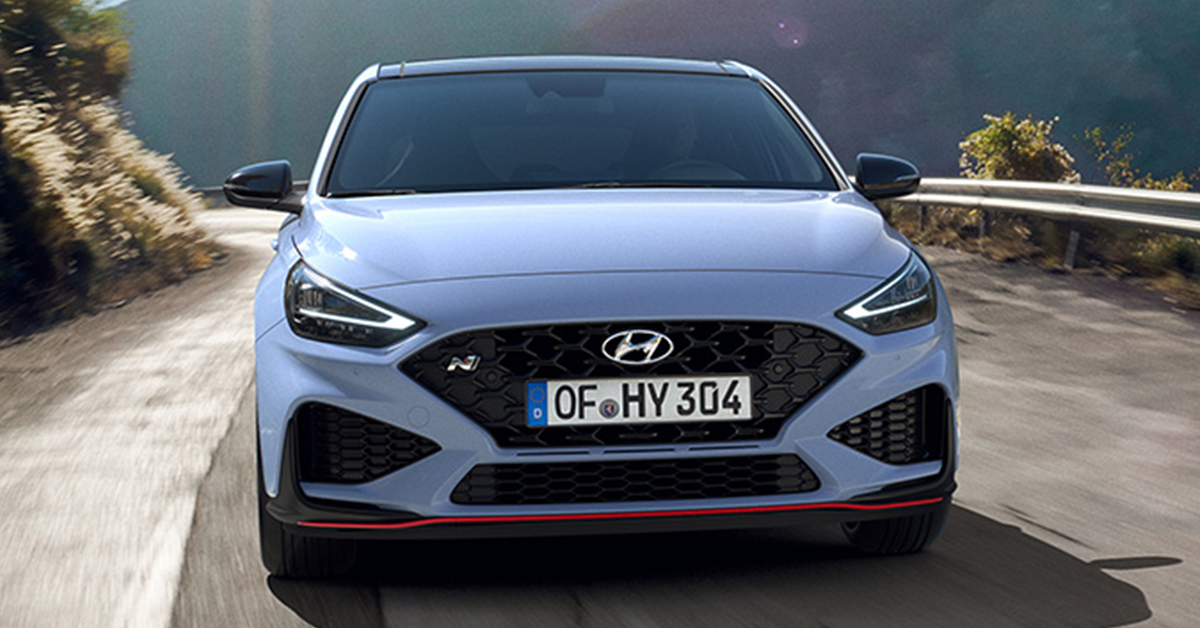
Official image of the Hyundai i30. | © Hyundai Motor Company
Hyundai i30. UK prices from 24,755 pounds, the 140 PS mild hybrid, German 115 and 150 PS engines, Tourer boot space, crash ratings and the story since 2007.
The i30 is Hyundai’s compact hatchback and estate for Europe. Hyundai Motor Deutschland says it was developed at the European Hyundai development center in Rüsselsheim and is built at Nosovice in the Czech Republic (Hyundai). Hyundai’s worldwide history page says the original i30 launched in 2007 and introduced the “i” naming to the range (Hyundai). Hyundai Germany says it is now in its third generation and is one of the brand’s most popular models in Germany (Hyundai). From 2007 to 2026 is 19 years (our calculation).
| Launch | 2007 (Hyundai) |
| Designed at | Russelsheim, Germany (Hyundai) |
| Built at | Nosovice, Czech Republic (Hyundai) |
| Generation, per Hyundai Germany | Third (Hyundai) |
| Germany engines, MY2026 | 1.0 T-GDI 115 PS, 1.6 T-GDI 150 PS (Hyundai) |
| UK engine, June 2025 sheet | 1.5 T-GDI 140 PS, 48V mild hybrid (Hyundai) |
| Germany 5-door from | 28,650 euros (Hyundai) |
| UK Advance hatchback from | 24,755 pounds (Hyundai) |
| Warranty, Hyundai Europe | 5 years, unlimited mileage (Hyundai) |
| Euro NCAP, July 2017 | 5 stars (reported) |
We read Hyundai’s own pages first. They were the Hyundai Motor Deutschland release of February 2, 2026, the Hyundai UK technical sheets dated April 2024 and June 2025, the Hyundai UK trims page and its November 28, 2024 release, Hyundai Europe model pages, and the Hyundai Motor Manufacturing Czech plant pages. Reports supply the Australian, North American and crash-rating facts and carry the reported tag, and we do not name them. Prices and availability may have changed since publication, and exchange rates are not applied.
In Germany the model-year 2026 i30 has two petrol engines. They are a 1.0 T-GDI with 85 kW (115 PS) and a 6-speed manual, and a 1.6 T-GDI with 110 kW (150 PS) and a 7-speed dual-clutch automatic (Hyundai). The trims are Trend, N Line and N Line X (Hyundai). The 5-door starts at 28,650 euros and the Kombi, which is the estate, at 29,650 euros (Hyundai). The Kombi costs 1,000 euros more, since 29,650 minus 28,650 is 1,000 (Hyundai, our calculation). The N Line 5-door costs 34,650 euros, which is 6,000 euros above the entry 5-door (Hyundai, our calculation).
In the United Kingdom the i30 is sold as a hatchback and a Tourer with one engine. Hyundai UK’s June 2025 sheet lists a 1.5 T-GDI of 140 PS with a 48-volt mild hybrid system, a 6-speed manual or a 7-speed dual-clutch automatic, and four trims called Advance, Premium, N Line and N Line S (Hyundai). The Advance hatchback starts at 24,755 pounds on that sheet, effective April 1, 2025, and the N Line S with the dual-clutch is the top price at 29,790 pounds (Hyundai). Another Hyundai UK release gives 24,575 pounds, so the two Hyundai figures conflict (Hyundai).
The name means different cars elsewhere. In Australia the i30 hatch was dropped in December 2025 and the i30 name now sits on a sedan that is the Elantra-based Avante, with the i30 N hot hatch still sold (reported). In North America the i30 hatch was sold as the Elantra Touring and then the Elantra GT (reported). Our Hyundai Elantra article covers the sedan, and our Hyundai i20 article covers the smaller hatchback that sits below the i30 in Europe.
This guide covers the engines and mild hybrid system, the German and British trims and prices, size and boot space, the generations from 2007 to 2026, sales and markets, and crash ratings. We mark every figure Hyundai, reported or our calculation, and we show both values where sources disagree. We found no Hyundai page for Australia or North America, so those markets are given as reported only. Check a Hyundai dealer for current prices, because they change by market and by date.
Hyundai UK’s June 2025 technical sheet lists one engine for the i30. It is a 1.5 T-GDI of 1,482 cc and Euro 6e with 140 PS, or 103 kW, at 5,500 rpm and 253 Nm from 1,500 to 3,500 rpm (Hyundai). The mild hybrid system adds a 16 PS, or 11.8 kW, electric motor and a 48-volt lithium-ion polymer battery of 0.46 kWh and 12 kW (Hyundai). The gearbox is a 6-speed intelligent manual or a 7-speed dual-clutch automatic (Hyundai).
| UK 1.5 T-GDI, June 2025 | 140 PS, 103 kW, 253 Nm (Hyundai) |
| UK 1.5 T-GDi, April 2024 | 159 PS, 117 kW, 253 Nm (Hyundai) |
| UK 1.0 T-GDi, April 2024 | 120 PS, 88 kW, 172 Nm (Hyundai) |
| Mild hybrid motor | 16 PS, 11.8 kW (Hyundai) |
| Battery, 2025 and 2024 sheets | 0.46 kWh and 0.44 kWh (Hyundai) |
| 0 to 62 mph, 2025 hatchback | 9.6 s manual, 9.7 s DCT (Hyundai) |
| 0 to 62 mph, 2024 N Line | 8.6 s manual (Hyundai) |
| Top speed | 130 mph (Hyundai) |
| Germany 1.0 T-GDI | 85 kW, 115 PS, 6-speed manual (Hyundai) |
| Germany 1.6 T-GDI | 110 kW, 150 PS, 7-DCT (Hyundai) |
The April 2024 sheet shows the line-up before that. It lists a 1.0 T-GDi of 998 cc with 120 PS, or 88 kW, and 172 Nm, and a 1.5 T-GDi with 159 PS, or 117 kW, and the same 253 Nm (Hyundai). The 1.5 therefore lost 19 PS, since 159 minus 140 is 19, while its torque did not change (Hyundai, our calculation). The same sheet gives the battery as 0.44 kWh, which is 0.02 kWh below the 0.46 kWh of the 2025 sheet, so Hyundai’s figures differ (Hyundai, our calculation).
Performance is modest. The 2025 sheet gives 9.6 seconds to 62 mph for the hatchback with the manual and 9.7 with the dual-clutch, and 9.8 and 9.9 for the Tourer, with a top speed of 130 mph (Hyundai). The 130 mph figure is about 209 km/h, since 130 times 1.609 is 209 (our calculation). The 159 PS car on the 2024 sheet took 8.6 seconds with the manual, so the 140 PS car is 1.0 second slower, since 9.6 minus 8.6 is 1.0 (Hyundai, our calculation).
Economy and emissions depend on the trim. The Advance hatchback with the manual has 5.9 l/100 km and 134 g/km in the specification table, and the N Line manual has 6.6 l/100 km and 150 g/km (Hyundai). The N Line emits 16 g/km more, since 150 minus 134 is 16 (Hyundai, our calculation). The same sheet’s pricing table gives 130 g/km for the Advance hatchback manual, which is 4 g/km below the specification table, so Hyundai’s own tables differ (Hyundai, our calculation).
Germany has different engines for model-year 2026. The 1.0 T-GDI has 85 kW, or 115 PS, which Hyundai says is 15 PS more than before, and it uses 5.9 l/100 km and emits 134 g/km (Hyundai). The 1.6 T-GDI has 110 kW, or 150 PS, comes only with the 7-speed dual-clutch and uses 6.6 to 6.3 l/100 km with 149 to 142 g/km (Hyundai). The 1.0 therefore made 100 PS before, since 115 minus 15 is 100, and the 1.6 has 10 PS more than the UK 1.5, since 150 minus 140 is 10 (Hyundai, our calculation).
Hyundai’s other pages list yet more outputs. Its worldwide performance page gives the 1.5 T-GDI as 160 ps with 25.8 kg.m, the 1.0 as 120 ps and a 1.6 diesel as 115 ps, while a Hyundai UK press kit lists a 136 PS 1.6 CRDi mild hybrid (Hyundai). The 25.8 kg.m is about 253 Nm, since 25.8 times 9.807 is 253 (Hyundai, our calculation). Hyundai Slovakia lists a 1.5 DPi at 141 to 143 g/km and a 1.5 T-GDi 48V at 128 to 156 g/km, a spread of 28 g/km (Hyundai, our calculation). Our crash and conflict section lists the power disagreements.
Hyundai Motor Deutschland announced the model-year 2026 i30 on February 2, 2026. The release says the Trend trim replaces the former Advantage and has an automatically dimming interior mirror and a camera-based attention assistant as standard (Hyundai). It introduces a two-step N Line structure with N Line and N Line X above the Trend, and both come only with the 1.6 T-GDI and the 7-speed dual-clutch (Hyundai). Hyundai Slovakia describes a similar change, with an N Line+ Pack replacing the separate N Line+ trim (Hyundai).
| Release date | February 2, 2026 (Hyundai) |
| Trims | Trend, N Line, N Line X (Hyundai) |
| 5-door from | 28,650 euros (Hyundai) |
| Kombi from | 29,650 euros (Hyundai) |
| N Line 5-door | 34,650 euros (Hyundai) |
| N Line Kombi | 35,650 euros (Hyundai) |
| Trend 1.6 T-GDI DCT | 33,150 euros (reported) |
| N Line X | 36,650 euros (reported) |
| Trend Plus package | 1,200 euros (Hyundai) |
| Panorama glass roof | 1,200 euros with 1.6 T-GDI (Hyundai) |
The N Line has 17-inch alloy wheels, and the N Line X has 18-inch wheels, a fabric and leather seat upholstery, a driver’s seat with a memory function and a knee airbag as standard (Hyundai). The Trend can have a Plus package for 1,200 euros with navigation-based cruise control, Highway Assistant 1.5, a cross-traffic assistant and a blind-spot warning (Hyundai). A panorama glass roof costs 1,200 euros with the 1.6 T-GDI (Hyundai). The package and the roof together cost 2,400 euros, since 1,200 plus 1,200 is 2,400 (Hyundai, our calculation).
The release gives four prices. The 5-door starts at 28,650 euros and the Kombi at 29,650 euros, and the N Line 5-door is 34,650 euros and the N Line Kombi 35,650 euros (Hyundai). The estate costs 1,000 euros more in both trims, since 29,650 minus 28,650 and 35,650 minus 34,650 are each 1,000 (Hyundai, our calculation). The N Line 5-door costs 6,000 euros more than the entry 5-door, since 34,650 minus 28,650 is 6,000 (Hyundai, our calculation). Prices and availability may have changed since publication, and exchange rates are not applied.
The release does not give prices for the Trend with the 1.6 or for the N Line X (Hyundai). A report lists the Trend with the 1.6 T-GDI and the dual-clutch at 33,150 euros and the N Line X at 36,650 euros (reported). The N Line X costs 2,000 euros more than the N Line, since 36,650 minus 34,650 is 2,000 (reported, our calculation). The 1.6 Trend costs 4,500 euros more than the entry 5-door, since 33,150 minus 28,650 is 4,500, if the entry car is the 1.0 manual, which the release does not say (Hyundai, reported, our calculation).
There are ten exterior colors in total. Sailing Blue is exclusive to the Trend, and Jupiter Orange is exclusive to the N Line and N Line X (Hyundai). The N Line 5-door uses 6.3 l/100 km with 143 to 142 g/km, and the N Line Kombi uses 6.4 to 6.3 l/100 km with 144 to 143 g/km, both in CO2 class E (Hyundai). The Kombi can use 0.1 l/100 km more, since 6.4 minus 6.3 is 0.1 (Hyundai, our calculation). The entry 1.0 is in class D, with 5.9 l/100 km and 134 g/km (Hyundai).
Other Hyundai markets describe the N Line differently. Hyundai Poland lists 18-inch alloy wheels and N Line bumpers on its N Line trim, and lists the i30 as a Wagon, a Fastback and an N Line hatchback with a 5-year warranty and no mileage limit (Hyundai). The 17-inch German wheels and the 18-inch Polish wheels are a difference between markets, and we found no Hyundai page that reconciles them (Hyundai). The release names no warranty, plant or safety equipment beyond the items above, so we do not state them for Germany (Hyundai).
Hyundai Motor UK confirmed pricing and specification for the updated i30 on November 28, 2024. The release says the hatchback comes in four trims, Advance, Premium, N Line and the new top N Line S, and that orders were open from 24,575 pounds (Hyundai). Hyundai UK’s trims page gives 24,755 pounds for the Advance, 27,805 for the Premium, 27,390 for the N Line and 29,410 for the N Line S (Hyundai). The Advance is 180 pounds higher on the page than in the release, since 24,755 minus 24,575 is 180 (Hyundai, our calculation).
| Release date | November 28, 2024 (Hyundai) |
| Trims | Advance, Premium, N Line, N Line S (Hyundai) |
| Advance hatchback manual | 24,755 pounds (Hyundai) |
| Advance hatchback DCT | 25,955 pounds (Hyundai) |
| Advance Tourer manual | 25,505 pounds (Hyundai) |
| Premium hatchback manual | 27,805 pounds (Hyundai) |
| N Line manual | 27,390 pounds (Hyundai) |
| N Line S DCT | 29,790 pounds (Hyundai) |
| Solid and metallic paint | 325 and 650 pounds (Hyundai) |
| Release entry price | 24,575 pounds (Hyundai) |
The trims page lists the equipment. The Advance has LED lights, USB-C ports, a 10.25-inch cluster, a 10.25-inch infotainment screen, a wireless phone charger and Lane Follow Assist (Hyundai). The Premium adds cloth and leather seats, a power driver’s seat, heated front seats, a heated steering wheel, FCA 1.5 forward collision avoidance and a smart key with push-button start (Hyundai). The N Line has N Line styling, 18-inch wheels and an N Line interior, and the N Line S adds a panoramic sunroof and a faux leather and suede interior (Hyundai).
The June 2025 sheet gives the full grid, effective April 1, 2025. The Advance hatchback is 24,755 pounds with the manual and 25,955 with the dual-clutch, and the Advance Tourer is 25,505 and 26,705 (Hyundai). The Premium hatchback is 27,805 and 29,005, and the Premium Tourer is 28,555 and 29,755 (Hyundai). The N Line is 27,390 and 28,590, and the N Line S is 29,410 and 29,790, which makes twelve prices in all (Hyundai, our calculation).
The gaps are regular. The dual-clutch adds 1,200 pounds on every pair except the N Line S, where the gap is 380, since 29,790 minus 29,410 is 380 (Hyundai, our calculation). The Tourer adds 750 pounds to the hatchback, since 25,505 minus 24,755 is 750 (Hyundai, our calculation). The Premium hatchback manual costs 3,050 pounds more than the Advance, since 27,805 minus 24,755 is 3,050, and the N Line manual costs 415 pounds less than the Premium, since 27,805 minus 27,390 is 415 (Hyundai, our calculation). The range spans 5,035 pounds, since 29,790 minus 24,755 is 5,035 (Hyundai, our calculation).
Safety equipment is listed by trim. The Advance has eCall, forward collision avoidance assist for cars, pedestrians and cyclists, Lane Follow Assist, Lane Keep Assist and intelligent speed limit assist (Hyundai). The Premium, N Line and N Line S add junction detection to the forward collision system (Hyundai). The April 2024 sheet priced the 159 PS N Line manual at 26,355 pounds, so the 140 PS N Line manual at 27,390 pounds costs 1,035 pounds more with 19 PS less, since 27,390 minus 26,355 is 1,035 (Hyundai, our calculation).
Paint and offers add to the cost. Solid paint costs 325 pounds and metallic paint 650 pounds, which is 325 pounds more, since 650 minus 325 is 325 (Hyundai, our calculation). Hyundai UK advertised 6.9 percent APR representative finance and a 1,750 pound deposit contribution on the hatchback and Tourer for orders between October 1, 2025 and January 4, 2026, and that offer has ended (Hyundai). A trade report lists the Advance Tourer at 25,275 and 26,475 pounds, which is 230 pounds below Hyundai’s 25,505 and 26,705, probably from an earlier date (reported, our calculation). Prices and availability may have changed since publication, and exchange rates are not applied.
Hyundai UK’s June 2025 sheet gives the hatchback a length of 4,340 mm, a width of 1,795 mm without mirrors and 2,039 mm with them, a height of 1,455 mm and a wheelbase of 2,650 mm (Hyundai). The mirrors add 244 mm to the width, since 2,039 minus 1,795 is 244 (Hyundai, our calculation). The boot holds 395 liters with the seats up and 1,301 liters with them folded, and the fuel tank holds 50 liters (Hyundai). The April 2024 sheet lists a turning circle of 5.3 m (Hyundai).
| Hatchback length | 4,340 mm (Hyundai) |
| Hatchback width, no mirrors | 1,795 mm (Hyundai) |
| Hatchback height | 1,455 mm (Hyundai) |
| Wheelbase | 2,650 mm (Hyundai) |
| Tourer length | 4,585 mm (Hyundai) |
| Hatchback boot | 395 to 1,301 liters (Hyundai) |
| Tourer boot | 602 to 1,650 liters (Hyundai) |
| Fuel tank | 50 liters (Hyundai) |
| Braked towing | 1,200 kg (Hyundai) |
| Tourer over hatchback | 245 mm longer (Hyundai, our calculation) |
The Tourer is longer and taller. It measures 4,585 mm in length and 1,465 mm in height, and its boot is 602 liters with the seats up and 1,650 liters folded (Hyundai). That is 245 mm longer and 10 mm taller than the hatchback, since 4,585 minus 4,340 is 245 and 1,465 minus 1,455 is 10 (Hyundai, our calculation). The Tourer boot is 207 liters larger with the seats up and 349 liters larger folded, since 602 minus 395 is 207 and 1,650 minus 1,301 is 349 (Hyundai, our calculation).
Weight and towing are listed. The hatchback has a kerb weight of 1,280 to 1,407 kg with the manual and 1,312 to 1,439 kg with the dual-clutch, and the Tourer has 1,307 to 1,444 kg and 1,337 to 1,474 kg (Hyundai). The dual-clutch adds 32 kg at both ends of the hatchback range, since 1,312 minus 1,280 and 1,439 minus 1,407 are each 32 (Hyundai, our calculation). Hyundai lists a gross weight of 1,840 or 1,870 kg for the hatchback, a braked tow limit of 1,200 kg, an unbraked limit of 600 kg and a roof load of 80 kg (Hyundai).
The chassis was listed on the April 2024 sheet. The i30 has MacPherson struts at the front and a multi-link rear suspension, motor-driven power steering with 2.57 turns lock to lock, and front and rear disc brakes (Hyundai). The SE Connect had 205/55 R16 tires, the Premium 225/45 R17 and the N Line 225/40 ZR18 (Hyundai). The 2025 sheet lists the same sizes for Advance, Premium and N Line, which means the sizes did not change (Hyundai). Hyundai Europe lists a 10.25-inch touchscreen, Bluelink connected services and Hyundai LIVE services (Hyundai).
The size has grown only a little since 2007. A report gives the first generation as 4,280 mm long, 1,775 mm wide and 1,480 mm high with a 2,650 mm wheelbase, and the second as 4,300 mm, 1,780 mm and 1,470 mm (reported). The current hatchback is 60 mm longer than the first, 20 mm wider and 25 mm lower, since 4,340 minus 4,280 is 60, 1,795 minus 1,775 is 20 and 1,480 minus 1,455 is 25 (Hyundai, reported, our calculation). The wheelbase is unchanged at 2,650 mm (Hyundai, reported).
There are other bodies in other markets. Hyundai Poland lists a Wagon, a Fastback and an N Line hatchback, and the Hyundai Europe Fastback page lists 6.5 to 5.5 l/100 km and 148 to 126 g/km for the 1.5 T-GDi 48V (Hyundai). The UK sheets we read cover only the hatchback and Tourer, so we cannot say the Fastback is sold in the United Kingdom now (Hyundai). The German release prices the 5-door and Kombi only (Hyundai). Check the Hyundai page for your market before you order a body style.
Hyundai’s worldwide history page says the original i30 launched in 2007 as the first “i” model, aimed at European buyers in the C-segment (Hyundai). Reports say production began in late 2006 and that the car was shown at the Geneva show in March 2007 and went on sale that summer (reported). Hyundai’s Czech plant says series production of the first-generation five-door ran at Nosovice from November 2008 to December 2011 (Hyundai). The plant opened in 2008, the same year (Hyundai).
| First generation launch | 2007 (Hyundai) |
| First generation, Nosovice | November 2008 to December 2011 (Hyundai) |
| Second generation premiere | Frankfurt, September 2011 (Hyundai) |
| Second generation hatchback end | November 30, 2016 (Hyundai) |
| Second generation built | More than 530,000 (Hyundai) |
| Third generation premiere | Paris show, 2016 (Hyundai) |
| Third generation mass production | December 15, 2016 (Hyundai) |
| Third generation dealers | January 2017 (Hyundai) |
| Plant capacity, 2016 | 350,000 a year (Hyundai) |
| Built since 2008, two generations | More than 800,000 (Hyundai) |
The second generation premiered at Frankfurt in September 2011 (Hyundai). Its five-door hatchback was built at Nosovice from January 2012 until the last one on the night of November 30, 2016, and the estate continued into April 2017 (Hyundai). Hyundai says more than 530,000 were built and delivered, that 88 percent went to European customers and that it was a finalist for European Car of the Year 2013, the first Hyundai to earn that finalist badge (Hyundai). The second generation came 4 years after the first and the third 5 years after the second, since 2011 minus 2007 is 4 and 2016 minus 2011 is 5 (Hyundai, our calculation).
The third generation had its world premiere at the 2016 Paris show (Hyundai). Mass production began on December 15, 2016, and Hyundai Germany’s release of December 22, 2016 says dealers would have it from January 2017 (Hyundai). It launched with a 1.4 T-GDI of 103 kW (140 PS) and a 1.0 T-GDI of 88 kW (120 PS), a consumption range of 5.4 to 3.6 l/100 km and 126 to 95 g/km (Hyundai). The plan was an estate in 2017, an N version in 2017 and a fastback at the end of 2017 (Hyundai).
The plant numbers are large. The December 2016 release says more than 800,000 i30s from the first two generations had been built at Nosovice since 2008 (Hyundai). The plant had a capacity of 350,000 vehicles a year, more than 3,300 employees and a flexible line that built the i30, Tucson and ix20 (Hyundai). The second-generation total was more than 530,000, which leaves about 270,000 first-generation cars, since 800,000 minus 530,000 is 270,000, though the counts end at different dates (Hyundai, our calculation).
The third generation has been refreshed twice. Reports date a facelift to 2020 with 48-volt mild hybrid engines, and the Hyundai UK press kit lists the 120 PS 1.0 T-GDi and the 136 PS 1.6 CRDi with that system (Hyundai, reported). A report says the car was lifted again in 2024 (reported). Hyundai UK calls the 2024 car the fourth-generation i30, while Hyundai Germany calls the current car the third generation, so Hyundai’s own pages disagree (Hyundai). The third generation has run from 2016 to 2026, which is 10 years (our calculation).
Hyundai has not announced a fourth generation on any page we read (Hyundai). A report from April 2026 says the i30 hatch will get a third facelift, and that an i30 N with a new hybrid powertrain could follow in 2027 (reported). Another report says the i30 hatch and the new IONIQ 3 could sell side by side in some markets (reported). We treat these as reports, since we found no Hyundai confirmation (Hyundai, reported). Our Hyundai history article covers the company and its other models.
Germany is the i30’s home market. Hyundai Germany’s December 2016 release says the i30 is Hyundai’s most important model line in Germany and that more than 130,000 units of the previous generation were newly registered there in five years (Hyundai). Hyundai Motor Manufacturing Czech lists the second-generation top ten customers as Germany with 112,500, the United Kingdom 68,500, Spain 48,000, the Czech Republic 33,000 and Turkey 26,000 (Hyundai). Russia, Poland, Austria, Israel and Sweden follow with 25,500, 21,000, 20,000, 19,500 and 14,000 (Hyundai). Germany took 8 times Sweden’s figure, since 112,500 divided by 14,000 is about 8 (Hyundai, our calculation).
| Germany, second generation | 112,500 (Hyundai) |
| United Kingdom, second generation | 68,500 (Hyundai) |
| Spain, second generation | 48,000 (Hyundai) |
| Top ten markets total | 388,000 (Hyundai, our calculation) |
| Share to Europe | 88 percent (Hyundai) |
| Countries shipped to | More than 50 (Hyundai) |
| Australia, second generation | About 8,000 (Hyundai) |
| Australia hatch ended | December 2025 (reported) |
| Australia i30 Sedan from | 30,250 Australian dollars (reported) |
| New sedan in Australia | Mid-2027, hybrid only (reported) |
The shares are large. The ten markets add up to 388,000 cars, which is about 73 percent of the 530,000, since 388,000 divided by 530,000 is 0.73 (Hyundai, our calculation). Germany alone took about 21 percent, since 112,500 divided by 530,000 is 0.212 (Hyundai, our calculation). Germany and the United Kingdom together took 181,000, or about 34 percent, since 112,500 plus 68,500 is 181,000 and 181,000 divided by 530,000 is 0.342 (Hyundai, our calculation). Hyundai says 88 percent went to Europe (Hyundai).
The i30 went far beyond Europe. Hyundai says the second generation was shipped to more than 50 countries, and Australia took about 8,000 cars, making it the third-largest non-European customer after Israel and Turkey (Hyundai). Hyundai says the saloon version outsold the estate in almost all markets, with the Czech Republic, Sweden and Denmark as exceptions (Hyundai). In Israel the estate was the most popular version, and taxi drivers were a key customer group (Hyundai).
Australia has dropped the hatch. A report says Hyundai Australia ended the i30 hatch in December 2025 because European sourcing cost too much, after almost 20 years, and keeps the i30 N (reported). The Hyundai Australia i30 Sedan is the Elantra-based car, priced from 30,250 Australian dollars before on-road costs after a rise of 250 on October 1, 2026, so it was 30,000 before, since 30,250 minus 250 is 30,000 (reported, our calculation). A report gives the N Line Sedan at 37,250 Australian dollars (reported).
A new sedan is coming. A report says the eighth-generation Avante was revealed in South Korea in June 2026, that Australia will keep the i30 Sedan name, and that it will arrive in mid-2027 with a hybrid-only line-up (reported). The same car is sold in North America as the Elantra, which our Hyundai Elantra article covers (reported). A report gives Australian warranty as 84 months with unlimited kilometers, while Hyundai Europe gives 5 years with unlimited mileage, and 84 months is 7 years (reported, our calculation).
North America used other names. Reports say the i30 wagon was the Elantra Touring from 2008 to 2012 and the hatchback was the Elantra GT until 2020 (reported). One report dates the Elantra GT to 2012 and another says the U.S. sold it as the Elantra GT from 2013, which is a one-year conflict (reported, our calculation). A report says Malaysia launched the first generation in July 2009 and the second in March 2014 (reported). We found no Hyundai page for these markets. Prices and availability may have changed since publication, and exchange rates are not applied.
The third-generation i30 earned five stars from Euro NCAP, published on July 5, 2017 (reported). A Hyundai release says the five-door got the top score under the newest rating system and was the first C-segment car to do so, with the highest scores in Safety Assist, pedestrians, child occupants and adult occupants (Hyundai). The Euro NCAP rating expired on January 1, 2024, so the 2024 facelift has no current Euro NCAP rating that we found (reported).
| Euro NCAP, 2017 | 5 stars, July 5, 2017 (reported) |
| Euro NCAP rating expired | January 1, 2024 (reported) |
| ANCAP, 2017 | 5 stars, 35.01 of 37 (reported) |
| ANCAP rating expired | December 2024 (reported) |
| 1.5 T-GDI, UK 2024 and 2025 | 159 PS and 140 PS (Hyundai) |
| 1.5 T-GDI, worldwide page | 160 ps (Hyundai) |
| Diesel, UK kit and worldwide | 136 PS and 115 ps (Hyundai) |
| UK Advance, release and page | 24,575 and 24,755 pounds (Hyundai) |
| Advance CO2, two tables | 134 and 130 g/km (Hyundai) |
| 2024 car, UK and Germany | Fourth and third generation (Hyundai) |
The assessment text lists weak points. Whiplash protection in the front seats was good and in the rear marginal, the side pole test showed marginal chest protection, and autonomous emergency braking was standard (reported). ANCAP gave the Australian hatch five stars in 2017 with 35.01 of 37 points, based on Elantra tests, and the rating applied from April 2017 to December 2024 and then expired (reported). Hyundai Europe says the updated i30 has better protection for occupants, pedestrians, cyclists and rear-seat passengers and seven new driver assistance features, but it cites no new rating (Hyundai).
Power figures conflict. The 1.5 T-GDI is 159 PS on Hyundai UK’s April 2024 sheet, 140 PS on its June 2025 sheet, 160 ps on Hyundai’s worldwide page and a 1.6 of 150 PS in Germany (Hyundai). The spread between 160 and 140 is 20 PS (Hyundai, our calculation). The diesel is 136 PS on the Hyundai UK press kit and 115 ps on the worldwide page, a gap of 21 PS (Hyundai, our calculation). These pages are for different markets and dates, and Hyundai does not reconcile them.
Other conflicts affect prices and history. The UK Advance hatchback is 24,575 pounds in the release and 24,755 on the trims page and sheet (Hyundai). The Advance hatchback emits 134 g/km in the specification table and 130 g/km in the pricing table, and the battery is 0.44 kWh on one sheet and 0.46 kWh on another (Hyundai). Hyundai UK calls the 2024 car fourth-generation and Hyundai Germany calls it third (Hyundai). The N Line has 17-inch wheels in Germany and 18-inch wheels in Poland and the United Kingdom (Hyundai).
Several items are not confirmed. We found no Hyundai page for the Fastback’s current status, for German Trend 1.0 prices, for the i30 N, or for any 2026 UK price list. The Australian, North American and Malaysian facts are reported only. The reports on a third facelift, a hybrid i30 N and the Australian sedan are unconfirmed by Hyundai (reported). The plant counts end on different dates, so the first-generation figure of about 270,000 is only a rough estimate (Hyundai, our calculation).
To check this article, start with the Hyundai Motor Deutschland release of February 2, 2026 and the Hyundai UK technical sheets (Hyundai). Compare the date on each sheet before you compare numbers, because the 2024 and 2025 UK cars differ. Hyundai Motor Manufacturing Czech is part of Hyundai, and we tag its pages as Hyundai. Look for a current crash rating before you buy, since the ratings we found have expired. Prices and availability may have changed since publication, and exchange rates are not applied.