 Brands
Toyota Corolla — The Best-Selling Car in Automotive History
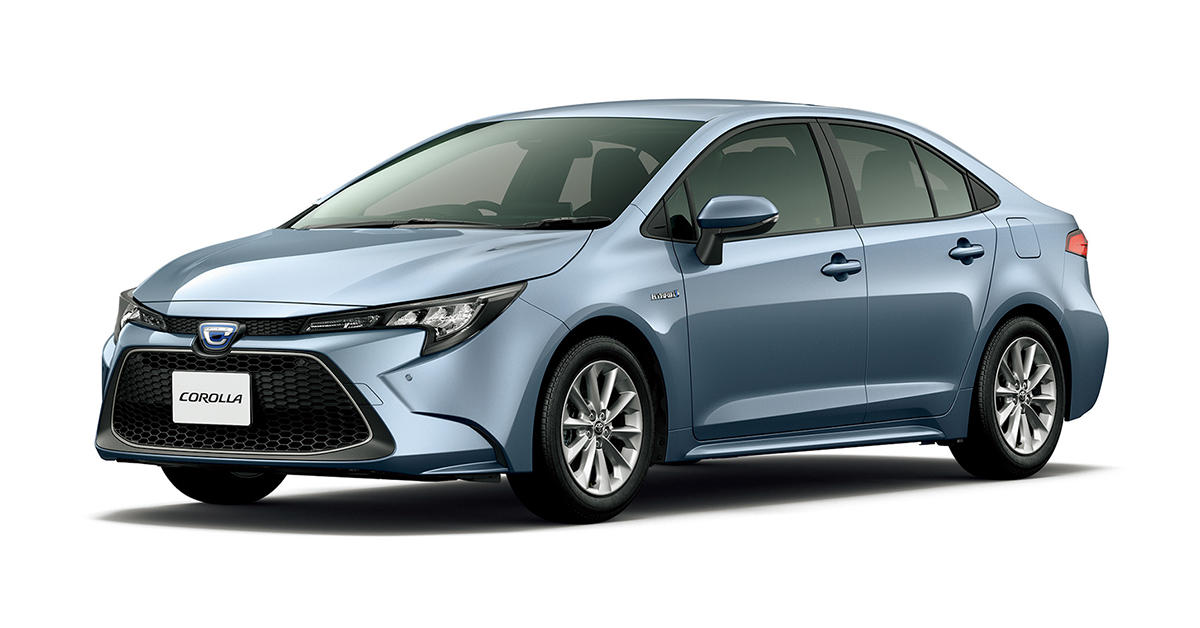
Official press image of the Toyota Corolla. | © Toyota Motor Corporation
No car in history has sold more units than the Toyota Corolla. Since 1966, more than 50 million have found buyers across nearly every country on earth — a figure no other single nameplate has matched, and one that will likely never be matched given how the industry has fragmented into smaller, more specialised models. The Corolla’s success was never built on excitement. It was built on getting the fundamentals right, generation after generation, for six decades without interruption.
The Corolla launched in Japan in 1966 with a simple, almost unremarkable premise: an affordable, reliable, easy-to-own compact car that worked equally well as a first car, a family car or a taxi. What made it exceptional was not any single standout feature, but the complete absence of major weaknesses combined with genuinely global availability. Toyota engineered the Corolla for both left-hand and right-hand drive markets from an early stage, and built manufacturing capacity across multiple continents rather than relying on exports from Japan alone — a strategy that let the Corolla become a genuinely global nameplate decades before “world car” became an industry buzzword.
Reliability was the other pillar. Through the 1970s oil crisis, when fuel efficiency suddenly mattered more than anything else to Western buyers, the Corolla’s low running costs and Toyota’s reputation for engineering discipline made it a natural beneficiary. Once that reputation for dependability took hold, it became largely self-reinforcing — buyers recommended Corollas to other buyers based on years of trouble-free ownership, and that word-of-mouth trust compounded across generations in a way no marketing campaign could replicate.
The current, twelfth-generation Corolla has been on sale since a major 2019 redesign, and the 2026 model year arrives largely as a carryover with meaningful feature updates rather than mechanical changes. Blind spot monitoring and rear cross-traffic alert are now standard across the entire lineup — closing a long-standing gap on lower trims. The LE and SE gain a standard 7.0-inch digital instrument cluster, while the XSE and Hybrid XLE step up to a larger 12.3-inch display. Toyota has simplified trim strategy slightly for 2026, dropping the FX Edition package from the sedan while keeping it available on the hatchback, where its rear wing, white wheels and exclusive paint options reference the Corolla’s rallying heritage.
Mechanically, the gas-only Corolla uses a 2.0-litre four-cylinder engine producing 169 horsepower and 151 lb-ft of torque, paired with a continuously variable transmission — front-wheel drive only. The Corolla Hybrid pairs a 1.8-litre four-cylinder with an electric motor for a combined 138 horsepower, and delivers genuinely exceptional efficiency: the front-wheel-drive LE and XLE are EPA-rated at 53 mpg city, 46 mpg highway and 50 mpg combined — figures that rival dedicated hybrid specialists despite the Corolla’s conventional, unremarkable styling.
The 2026 Corolla is offered in two distinct body styles with different trim strategies. The sedan comes in LE, SE and XSE trims, priced from approximately $23,920 to $29,635. The hatchback adopts a sportier profile with a shorter wheelbase, reduced rear overhang and a sloping roofline that visually separates it from the sedan, offered in SE, XSE and FX Edition trims priced from $25,375 to $27,975. Alloy wheel sizing grows progressively across the trim walk, topping out at 18-inch graphite-finished wheels on the XSE. Inside, the cabin philosophy across both body styles prioritises function over flair — soft-touch materials on frequently touched surfaces, harder plastics lower in the cabin, and a layout Toyota has kept deliberately simple and intuitive rather than chasing screen-heavy trends.
It is worth being explicit about one important distinction: the GR Corolla is not a sportier trim of the regular car — it is a fundamentally different vehicle developed by Toyota’s Gazoo Racing motorsport division, sharing little beyond a basic body silhouette. The GR Corolla uses a turbocharged 1.6-litre three-cylinder engine producing approximately 300 horsepower and 295 lb-ft of torque — genuinely startling output from a three-cylinder unit — paired with a standard six-speed manual transmission (an optional eight-speed automatic is also available) and standard all-wheel drive. Where the regular Corolla is engineered around competence and low cost of ownership, the GR Corolla is engineered around genuine driving engagement, developed with direct input from Toyota’s World Rally Championship programme.