 Brands
Toyota Electric Cars — A $15,000 SUV in China, a Reluctant Bet Everywhere Else
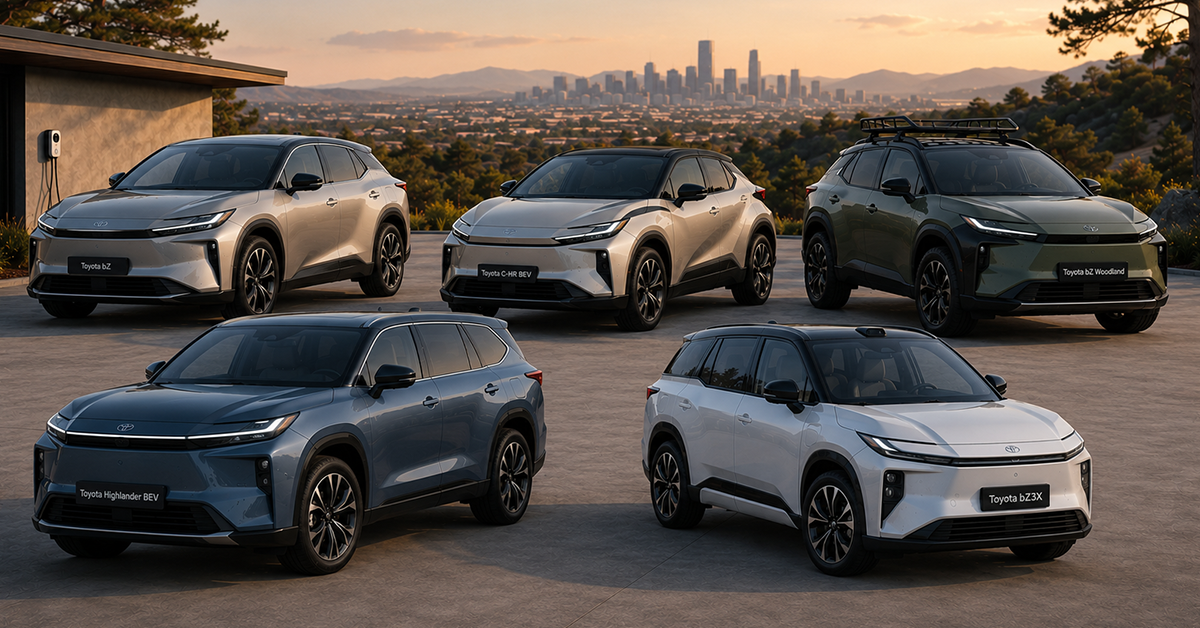
AI-generated concept illustration — Toyota's global electric vehicle lineup. | Rev N Rise
Toyota's electric car strategy makes considerably more sense once you accept that it isn't really one strategy at all. In China, Toyota builds and sells a genuinely cheap, tech-packed electric SUV that starts around $15,000 and has spent the better part of a year outselling every other joint-venture EV in the country. In the United States, Toyota offers a smaller, considerably more conservative lineup, having spent years facing genuine criticism for dragging its feet on full electrification in favour of hybrids. Both of these things are true simultaneously, and understanding Toyota's actual EV lineup means understanding why the company is playing two genuinely different games at once.
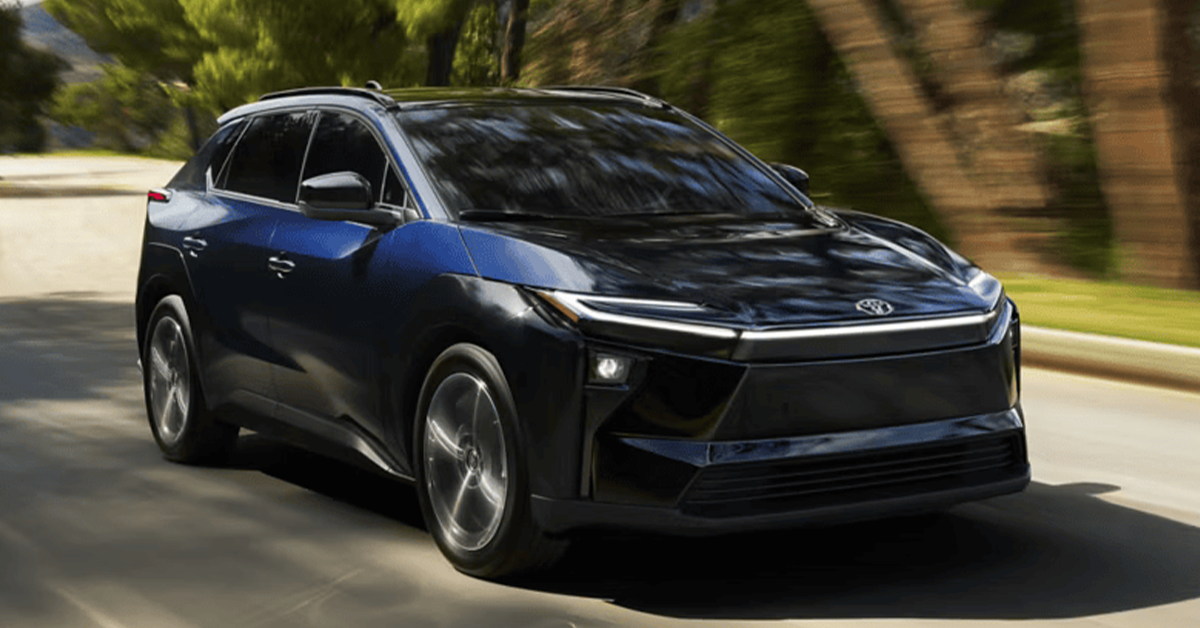
Official press image of the Toyota bZ. | © Toyota Motor Corporation
Of every electric vehicle Toyota currently builds, none carries a more dramatic backstory than the bZ. It launched in 2022 as the bZ4X to a genuinely embarrassing wheel-detachment recall and a Motor Trend “compliance car” label. For 2026, Toyota renamed it simply bZ and reworked it top to bottom: up to 314 miles of range, up to 338 horsepower, a new NACS port for Supercharger access, and a redesigned interior addressing the original's most criticised ergonomics. The 2026 bZ spans three trims — XLE, XLE Plus and Limited — priced from approximately $36,350 to $44,750. The base XLE uses a single 168-horsepower motor paired with a 57.7 kWh battery; XLE Plus and Limited step up to 221 horsepower single-motor, with dual-motor all-wheel drive available for up to 338 horsepower.
The turnaround has been genuine: through the first three months of 2026, the bZ was the third-best-selling EV in the entire United States, trailing only the Tesla Model Y and Model 3, and outpacing established rivals including the Chevrolet Equinox EV and Hyundai Ioniq 5. It shares its underlying platform with the Subaru Solterra and Lexus RZ, a joint arrangement that also meant a September 2025 windshield-defroster recall affected all three siblings simultaneously. Toyota has continued backing the bZ with aggressive incentives, including 0% APR financing for up to 72 months and cash discounts reaching $7,000 on select models — genuine evidence the company is now competing seriously in the American EV market rather than maintaining a token presence.
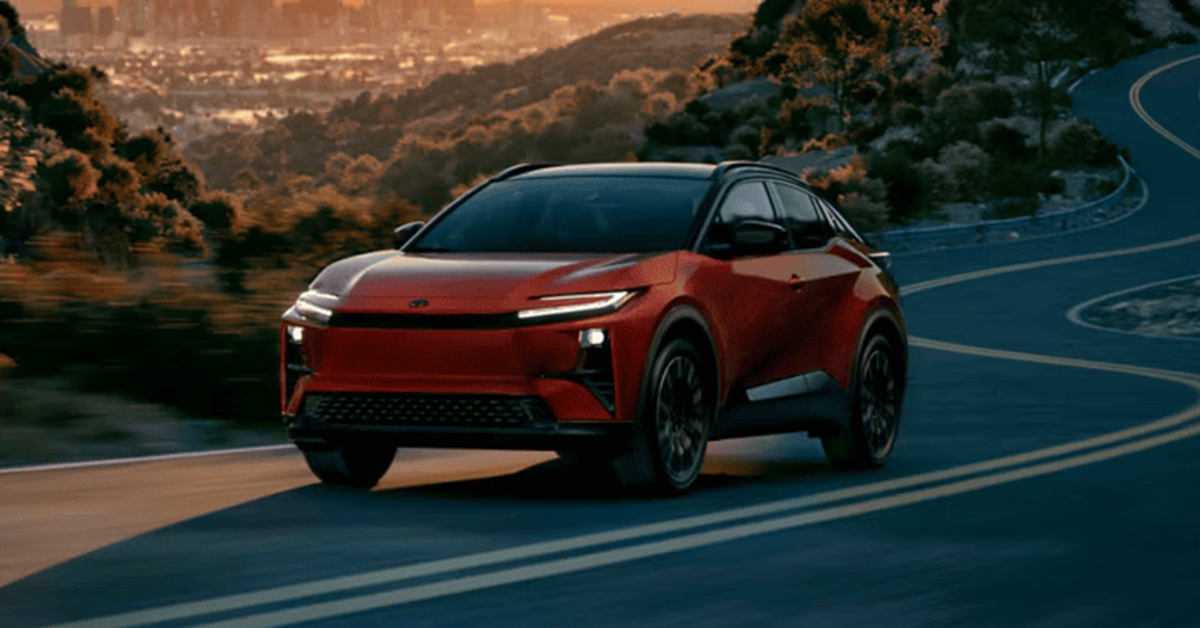
Official press image of the Toyota C-HR BEV. | © Toyota Motor Corporation
The C-HR has had its identity rewritten as completely as any Toyota nameplate. It launched in 2016 as a polarising hybrid coupe-crossover — distinctive, occasionally criticised for cramped visibility, but never boring. For the American market, Toyota went further than adding an electric option: it replaced the C-HR entirely with a dedicated battery electric vehicle built on the same e-TNGA platform as the bZ. Standard dual-motor all-wheel drive delivers 338 horsepower, 0–60mph in a manufacturer-estimated 4.9 seconds — arguably the most dramatic generational performance leap of any current Toyota nameplate, electric or otherwise — and up to 287 miles of range from a 74.7 kWh battery. The two-trim American lineup, SE and XSE, runs from approximately $37,000 to $40,450, with nearly all technology and safety features standard across both.
Europe and other international markets tell a genuinely different story: Toyota continues selling a separate hybrid and plug-in hybrid C-HR there, from approximately £31,290 across Icon, Design, Excel and GR Sport grades. The nameplate has effectively split into two different vehicles depending on which market you're shopping in — a full electric SUV in America, and a continuation of the familiar hybrid coupe everywhere else, reflecting how much more aggressively American buyers have embraced full electrification in this segment compared with European buyers still wary of range and charging infrastructure.
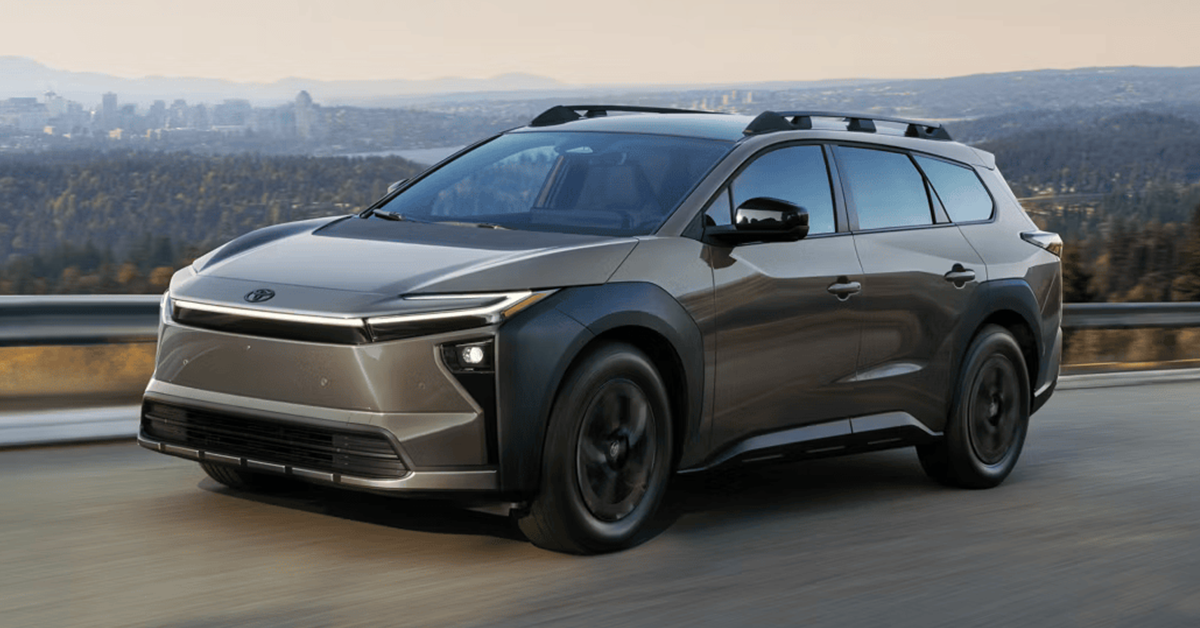
Official press image of the Toyota bZ Woodland. | © Toyota Motor Corporation
The bZ Woodland is, by any honest description, a wagon — Toyota just won't call it one, marketing it instead as an adventure-focused SUV. It's a genuinely distinct model, not a trim package: 5.6 inches longer than the standard bZ with a new wagon-style roofline, 8.3 inches of ground clearance, and sharing its platform with the Subaru Trailseeker, which brings genuine off-road capability through Subaru's proven X-MODE traction system. Both trims come standard with dual-motor all-wheel drive producing 375 horsepower, 0–60mph in 4.4 seconds, and can tow up to 3,500 pounds — a rarity among electric SUVs.
The 74.7 kWh battery delivers up to 281 miles of range. Pricing spans two trims: Woodland from approximately $46,750, and Woodland Premium from approximately $48,850, both including destination. It competes directly with the Ford Mustang Mach-E Rally and Hyundai Ioniq 5 XRT.
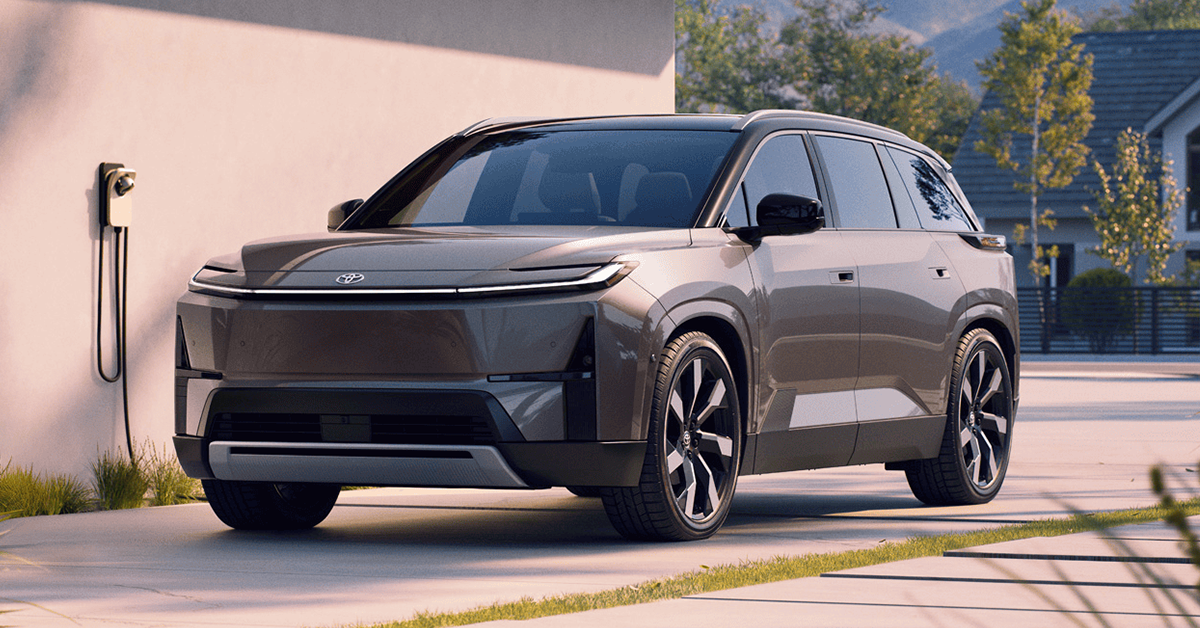
Official press image of the Toyota Highlander BEV. | © Toyota Motor Corporation
Revealed on 10 February 2026, the Highlander BEV is a genuine milestone: Toyota's first three-row battery-electric SUV for the US, and the first Toyota EV actually built on American soil, at Toyota Motor Manufacturing Kentucky. Toyota deliberately kept the familiar Highlander name rather than a bZ-family badge. Two grades, XLE and Limited, offer up to 320 miles of range from a 95.8 kWh battery and up to 338 horsepower, plus genuine off-road aids like Multi-Terrain Select and Crawl Control — unusual for a family SUV. It's positioned to compete directly with the Kia EV9.
The honest complication: as of July 2026, Toyota confirmed production has been delayed for “additional adjustments,” with no firm new date beyond a possible early-to-summer 2027 arrival. Toyota will keep building the current gas and hybrid Highlander through December in the meantime — a deliberate hedge, and arguably a wiser one than rushing to market the way the original bZ4X did in 2022.
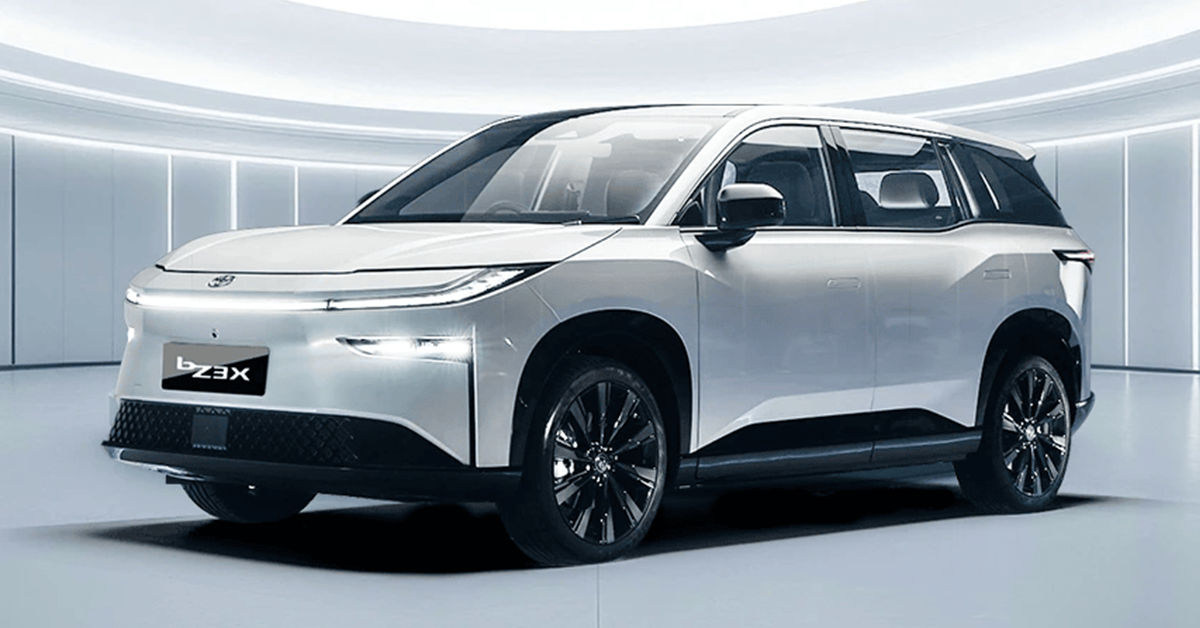
Official press image of the Toyota bZ3X. | © Toyota Motor Corporation
Nothing shows Toyota's split global strategy more starkly than the bZ3X. Developed for Chinese buyers through the GAC-Toyota joint venture, it launched with a genuinely distinctive “Cozy Mobile Home” interior where the seats fold flat into nearly 10 feet of continuous space. Pricing starts at just 109,800 yuan (about $15,000), and it's Toyota's first vehicle with the Momenta 5.0 self-driving system, optional LiDAR, and an Nvidia Orin X chip — more advanced tech than anything in Toyota's Western lineup.
The results have been genuinely extraordinary: over 80,000 units sold in year one, and the best-selling joint-venture EV in China for seven straight months. Nearly 90% of its parts are sourced locally in China — a real departure from Toyota's traditional Japan-first engineering approach, and evidence the company can move fast when genuinely pressed to compete. It isn't planned for US sale.
Step back, and Toyota's global EV lineup reads less like one plan and more like several different bets running in parallel. In the US, Toyota is playing patient, incentive-backed catch-up. In China, it's playing an aggressive, locally-led game against domestic rivals that didn't exist a decade ago. And across its engineering organisation, it's simultaneously betting on solid-state batteries, targeted for production between 2027 and 2028, that could eventually leapfrog the lithium-ion tech every current EV relies on. None of these bets are guaranteed — but a top-three US EV, a runaway Chinese hit, and a credible next-gen battery roadmap suggest Toyota's cautious approach may be working better than critics expected.
That caution hasn't gone uncriticised: Toyota has faced pushback for lobbying against stricter emissions rules in some markets and for leaning on hybrids over a faster full-electric shift, a stance it defends by citing charging infrastructure gaps and scarce battery materials.