 Brands
Toyota Hybrid Cars — Every Model in the Lineup, Explained
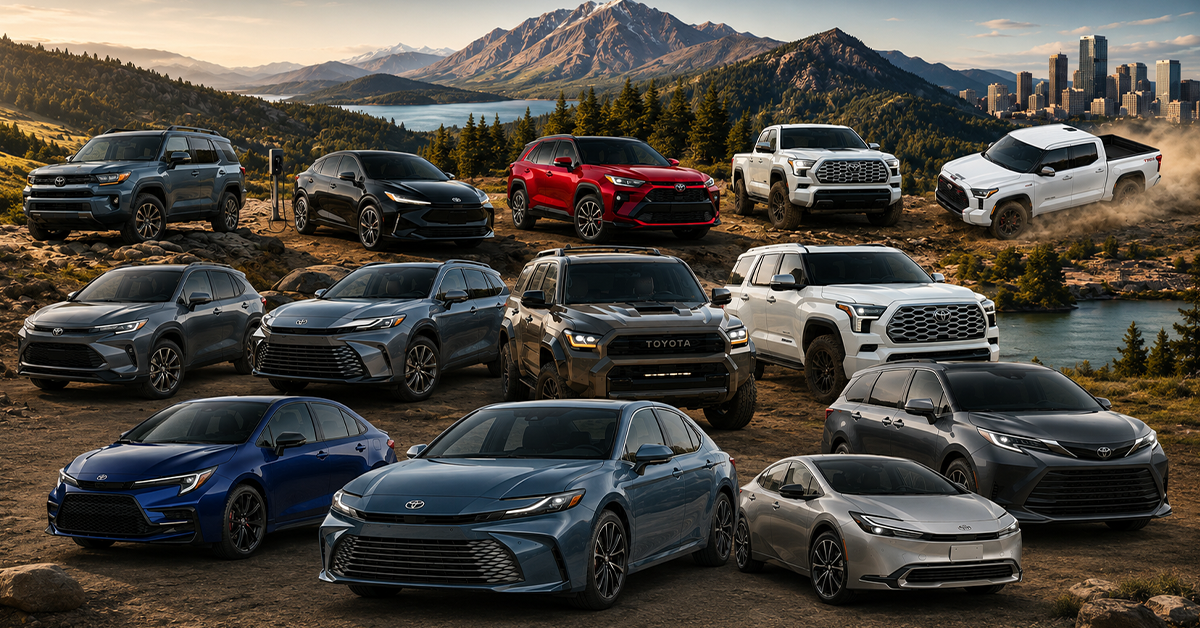
AI-generated concept illustration — Toyota's full hybrid lineup. | Rev N Rise
Toyota builds more hybrids than any other automaker on the planet, and 2026 is the most complete lineup the company has ever offered — 14 models spanning sedans, SUVs, a minivan and pickup trucks. Every one shares the same core idea Toyota pioneered with the original Prius: pair a gasoline engine with electric motors so the car can run on electricity alone, gas alone, or both together, without ever needing to be plugged in. Here's the full lineup, sorted by body style.
Every Toyota hybrid runs on the same underlying idea, refined across five generations since the original 1997 Prius: a gasoline engine and one or more electric motors are managed by an onboard computer that constantly decides which power source to use, moment by moment, without any input from the driver. At low speeds and light throttle, the car runs on electric power alone, with the gasoline engine shut off entirely. Under harder acceleration or at highway speed, the engine and motors work together, blending outputs seamlessly enough that most drivers never consciously notice the handoff happening. The battery never needs plugging in on a standard hybrid — it recharges itself entirely through regenerative braking, which captures energy normally lost as heat when slowing down, and through the engine itself during cruising.
Toyota's newest models use the company's fifth-generation hybrid system, a genuine step forward from the fourth-generation system that powered most Toyota hybrids through the late 2010s and early 2020s. The fifth generation pairs a larger, more efficient engine with dual electric motors, delivering meaningfully more combined horsepower than the system it replaced while simultaneously improving fuel economy. Sitting above the standard system is Hybrid MAX, Toyota's performance-oriented hybrid powertrain, which adds a second, more powerful electric motor and, on several applications, genuine turbocharging to the mix. Hybrid MAX models, including the Crown, Grand Highlander and Tundra, prioritise outright power alongside efficiency, in some cases producing well over 300 horsepower while still returning meaningfully better fuel economy than an equivalent non-hybrid engine of similar output. Across the entire lineup, Toyota's hybrid batteries carry a standard warranty considerably longer than the company's general powertrain coverage, reflecting genuine confidence in long-term durability built up over more than two decades of real-world hybrid ownership data.
Toyota's hybrid strategy also differs meaningfully from several rivals in one specific respect: rather than treating hybrid power as a stepping stone toward eventual full electrification, the company has continued investing heavily in refining the conventional hybrid system itself, betting that a meaningful share of American buyers will prefer the simplicity of a self-charging hybrid over the charging infrastructure demands of a plug-in or fully electric vehicle for years to come. That bet has proven commercially sound so far — Toyota's hybrid sales have grown consistently year over year even as some competitors' hybrid offerings have stagnated, and the breadth of body styles now covered, from compact sedans to full-size trucks, means genuinely no American buyer needs to sacrifice hybrid efficiency regardless of what kind of vehicle they actually need. Toyota's dealer network has also expanded hybrid-specific technician training considerably in recent years, ensuring routine maintenance and any eventual hybrid-component repairs can be handled competently at nearly any Toyota service centre nationwide, a genuine practical advantage over smaller or newer brands with less mature hybrid service infrastructure built up over time. Independent reliability studies covering Toyota's broader hybrid fleet consistently rank the brand near the top of the industry, reinforcing the general perception that Toyota's hybrid technology, whatever the specific application, tends to age considerably better than the industry average.
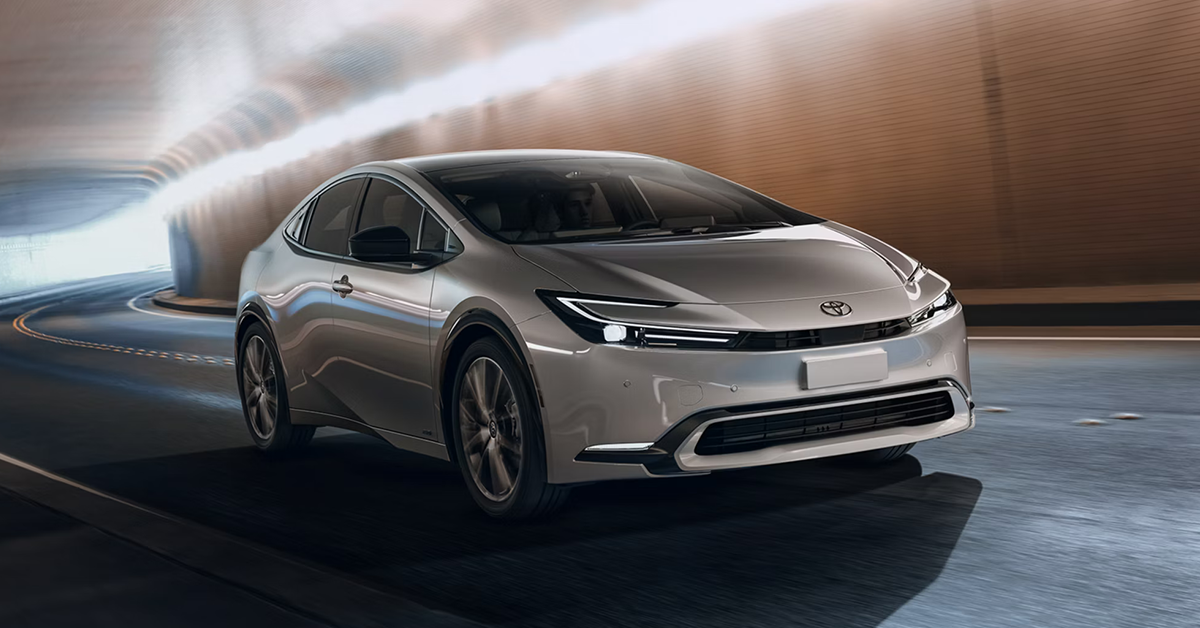
Official press image of the Toyota Prius. | © Toyota Motor Corporation
The efficiency benchmark of the entire lineup: up to 57 mpg combined on front-wheel-drive LE trims — among the highest fuel economy ratings of any new vehicle sold in America, hybrid or otherwise — with 194 to 196 horsepower and pricing from $28,350. The current, fifth-generation Prius uses a 2.0-litre hybrid system, a genuine step up from the previous 1.8-litre unit, and reaches 0–60mph in around 7.0 seconds on AWD trims — genuinely brisk for a car built primarily around economy, and a figure that would have been unthinkable for a Prius even one generation earlier. AWD trims return a still-strong 54 mpg combined, and the current design abandoned the Prius's long-standing reputation for polarising, awkward styling in favour of a considerably sleeker, more conventional-looking body with a genuinely coupe-like roofline.
The Prius nameplate carries genuine historical weight beyond its current specification sheet. It launched in Japan in 1997 as the world's first mass-produced hybrid passenger car, arriving in the US market in 2000, and for over two decades the name effectively became shorthand for hybrid technology itself in American popular culture — genuinely rare for a single model to define an entire vehicle category so completely. Toyota has sold well over 5 million Prius units globally since launch, and the current generation's redesigned styling has been credited with meaningfully broadening the car's appeal beyond its traditionally eco-conscious core buyer base toward genuinely style-conscious shoppers who previously dismissed the Prius purely on looks. Trim levels span LE, XLE, Nightshade and Limited, with the top Limited trim adding a digital rearview mirror, a head-up display and a premium JBL sound system alongside the shared hybrid powertrain every trim uses.
Reviewer reception of the current Prius generation has been consistently strong, with automotive press repeatedly noting that Toyota managed something genuinely difficult: making the Prius desirable on its own merits, rather than purely as a badge of environmental virtue. Where earlier generations were sometimes purchased specifically because their distinctive silhouette signalled hybrid ownership to onlookers, the current car's considerably more conventional styling means buyers increasingly choose it for the same reasons they'd choose any other compact car — genuine driving enjoyment, strong resale value and low running costs — with the fuel economy simply being an additional benefit rather than the entire point. Toyota's own internal data suggests the redesigned Prius has attracted a meaningfully younger buyer demographic than previous generations managed, a genuine shift in a nameplate that had, for years, carried an image skewing considerably older and more overtly eco-conscious than the broader compact car market.
Ownership costs remain a genuine strength across the board. Toyota's hybrid battery warranty on the Prius extends considerably longer than the standard new-vehicle warranty, and real-world reliability data collected across two decades of Prius ownership consistently shows hybrid battery packs lasting well beyond 150,000 miles with minimal degradation under normal use — a genuine reassurance for buyers who remain sceptical about long-term hybrid battery health based on outdated assumptions from the technology's earlier years. Maintenance costs also run meaningfully lower than a comparable gasoline-only compact car over a typical ownership period, since regenerative braking genuinely extends brake pad life, and the smaller gasoline engine experiences less wear thanks to the electric motors handling a meaningful share of daily driving duty.
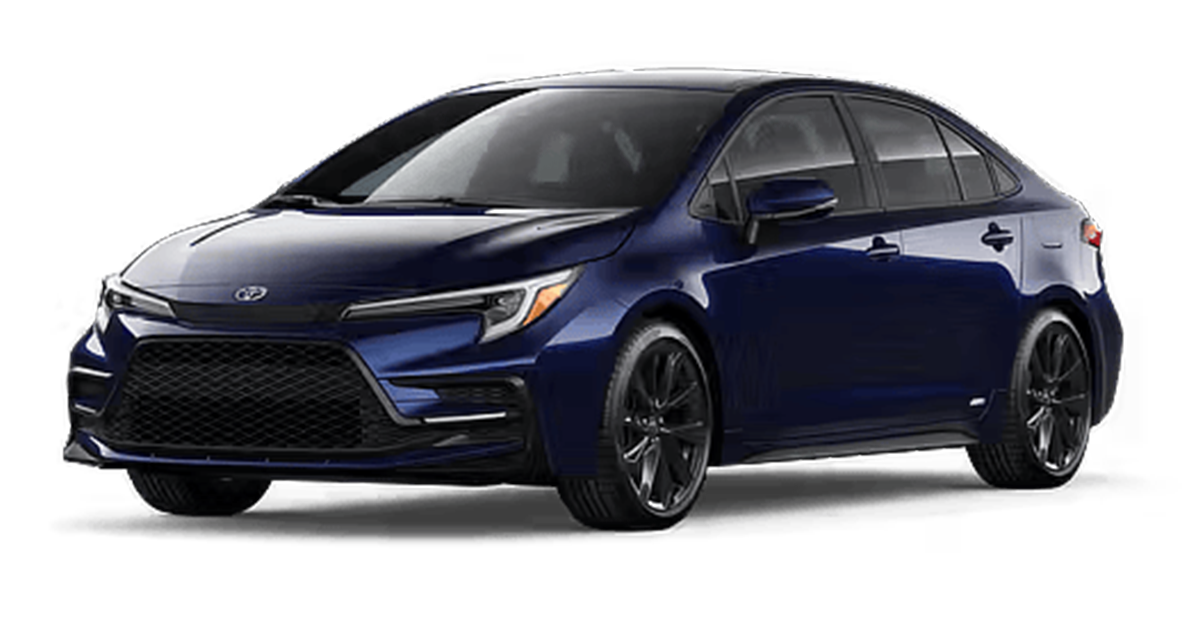
Official press image of the Toyota Corolla Hybrid. | © Toyota Motor Corporation
Toyota's cheapest hybrid, undercutting the Prius by more than $3,500 at just $24,975, using a smaller 1.8-litre hybrid system good for up to 50 mpg on FWD, or 44 mpg on the sportier SE trim — the genuine budget entry point into hybrid ownership. Every trim runs through a CVT, and while not designed for excitement, it's a genuinely reliable, low-running-cost choice built on the same fundamentally proven Corolla platform that has anchored Toyota's compact car lineup for decades. Trim levels run LE, SE and XLE, with all-wheel drive available as an option across the range for buyers in colder climates who want genuine winter traction without stepping up to a considerably pricier SUV.
The Corolla Hybrid's genuine value proposition becomes clearer set against its closest rivals. Where the Honda Civic Hybrid and Hyundai Elantra Hybrid both undercut it slightly on sticker price in some configurations, the Corolla Hybrid consistently wins on long-term reliability reputation and predicted resale value — a genuinely significant factor for budget-conscious buyers planning to keep a car for a decade or more, since a car that holds its value better effectively costs less to own even at a higher purchase price. Toyota Safety Sense 3.0 comes standard across every trim, including full-speed adaptive cruise control and lane-centring assist — genuinely comprehensive safety coverage for a car at this price point, and equipment that several rivals still reserve for pricier trim levels. The Corolla Hybrid also serves as the direct entry point into Toyota's broader Corolla family, sitting alongside the conventional gas Corolla, the crossover-styled Corolla Cross, and the considerably more powerful GR Corolla performance hatchback, giving Toyota genuine coverage across nearly every conceivable compact-car buyer preference under a single nameplate umbrella.
For fleet and rideshare buyers specifically, the Corolla Hybrid has become an increasingly popular choice precisely because of how the mathematics of high-mileage ownership work in its favour. A rideshare driver covering 30,000 to 40,000 miles annually will see the Corolla Hybrid's roughly 50 mpg rating translate into genuinely substantial fuel savings compared with a conventional gas Corolla, often recouping the hybrid's modest price premium within the first year or two of ownership alone. This same math applies to any high-mileage driver, and Toyota has leaned into that positioning deliberately, marketing the Corolla Hybrid specifically toward commuters and delivery drivers alongside its more traditional budget-conscious buyer base. The car's genuinely compact exterior dimensions also make it a practical choice for urban drivers dealing with tight parking and narrow streets, an underrated advantage in dense city environments where a larger hybrid sedan or SUV becomes genuinely cumbersome to manoeuvre and park. Interior refinement has also improved meaningfully across recent Corolla generations, with the current hybrid offering genuinely upscale touches including available heated seats and a heated steering wheel on the XLE trim, features that would have been unheard of on a budget-focused compact car just a decade earlier. Toyota Connected Services, standard across the range, also brings remote start, vehicle status alerts and automatic collision notification to even the base LE trim, genuinely useful conveniences that further reinforce the Corolla Hybrid's reputation as offering considerably more value than its modest sticker price alone would suggest.
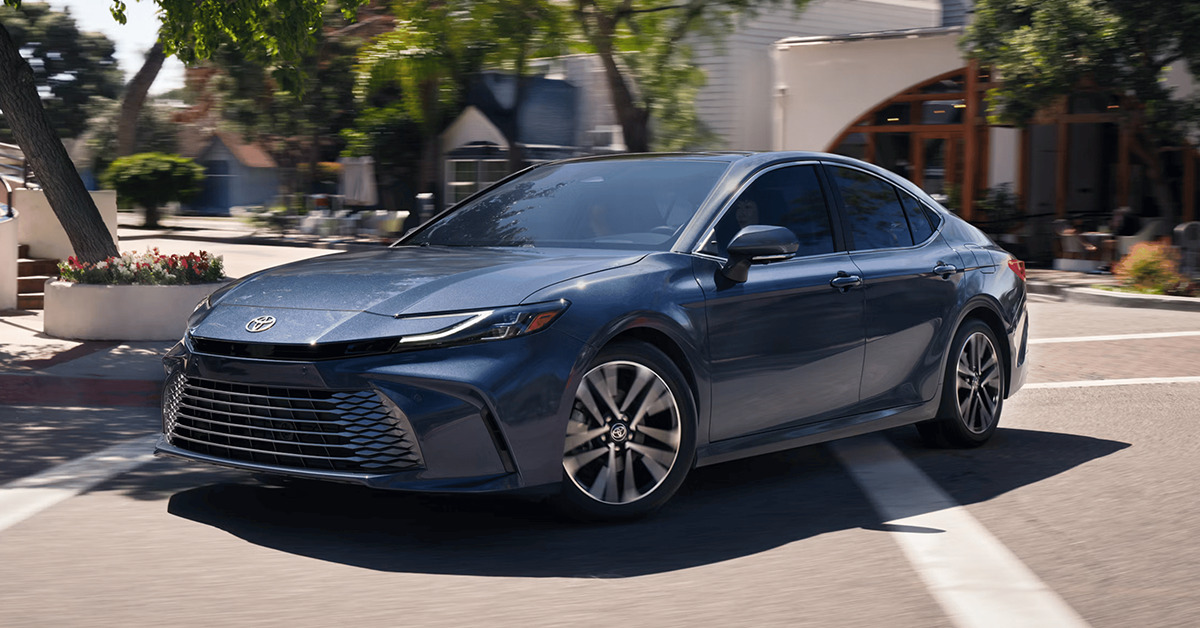
Official press image of the Toyota Camry. | © Toyota Motor Corporation
Hybrid-only since 2025, with every 2026 model producing 225 horsepower on FWD or 232 on AWD and returning up to 51 mpg combined, all while keeping the sedan's familiar size and 15.1 cubic feet of trunk space. Notably, AWD Camry models use a genuinely unusual setup — a third electric motor powers the rear axle directly rather than a mechanical driveshaft, delivering all-wheel traction without meaningfully hurting efficiency, a genuinely elegant engineering solution to a problem most AWD hybrid systems solve with heavier, less efficient mechanical hardware. Five trims span LE, SE, Nightshade, XLE and XSE, starting from $29,300, with Toyota Safety Sense 3.0 standard across the entire range.
Toyota's decision to drop the conventional gas-only Camry entirely for 2025 represented a genuinely significant moment for America's best-selling mainstream mid-size sedan, a segment that has traditionally moved cautiously on powertrain changes given how many buyers use Camrys as fleet, rental and rideshare vehicles where purchase price historically outweighed running costs in buying decisions. The bet has paid off: because every Camry now shares the same hybrid powertrain regardless of trim, Toyota simplified production considerably while ensuring every single Camry sold delivers genuinely best-in-class fuel economy for the segment, a meaningful differentiator against the Honda Accord and Hyundai Sonata, both of which still offer non-hybrid variants alongside their optional hybrid trims. The XSE trim adds sportier styling cues including a unique grille and 19-inch wheels, while still returning a genuinely strong 44 mpg combined even in its most performance-oriented configuration.
The Camry's hybrid-only transition also reflects a genuinely broader pattern across Toyota's American sedan lineup, mirroring the same approach the company has taken with the RAV4 and, increasingly, its entire mainstream product range: rather than offering hybrid power as a premium option layered onto a cheaper gas-only base model, Toyota has repeatedly chosen to make hybrid technology the sole standard offering once it reaches a certain level of maturity and cost-competitiveness. This approach genuinely simplifies the buying decision for Camry shoppers, who no longer need to weigh whether the hybrid premium is worth paying — every Camry delivers the same core fuel efficiency advantage regardless of trim or budget, with genuine differentiation between trims coming down purely to comfort, technology and styling preferences rather than powertrain choice. Independent crash testing has consistently rated the redesigned hybrid-only Camry among the safest vehicles in its class, with the Insurance Institute for Highway Safety awarding it Top Safety Pick+ status across multiple consecutive model years. The Camry's continued dominance in the mid-size sedan segment, even as many rivals shift resources toward crossovers, reflects genuine ongoing demand from buyers who specifically prefer a sedan's lower centre of gravity, generally better handling and typically superior fuel economy compared with a similarly sized SUV, proving the segment retains real commercial relevance despite years of predictions that sedans would eventually disappear from American showrooms entirely. Toyota's continued investment in refining the Camry's hybrid powertrain, rather than treating the nameplate as a legacy product being slowly phased out, signals genuine confidence that a meaningful share of American buyers will keep choosing sedans specifically for years to come.
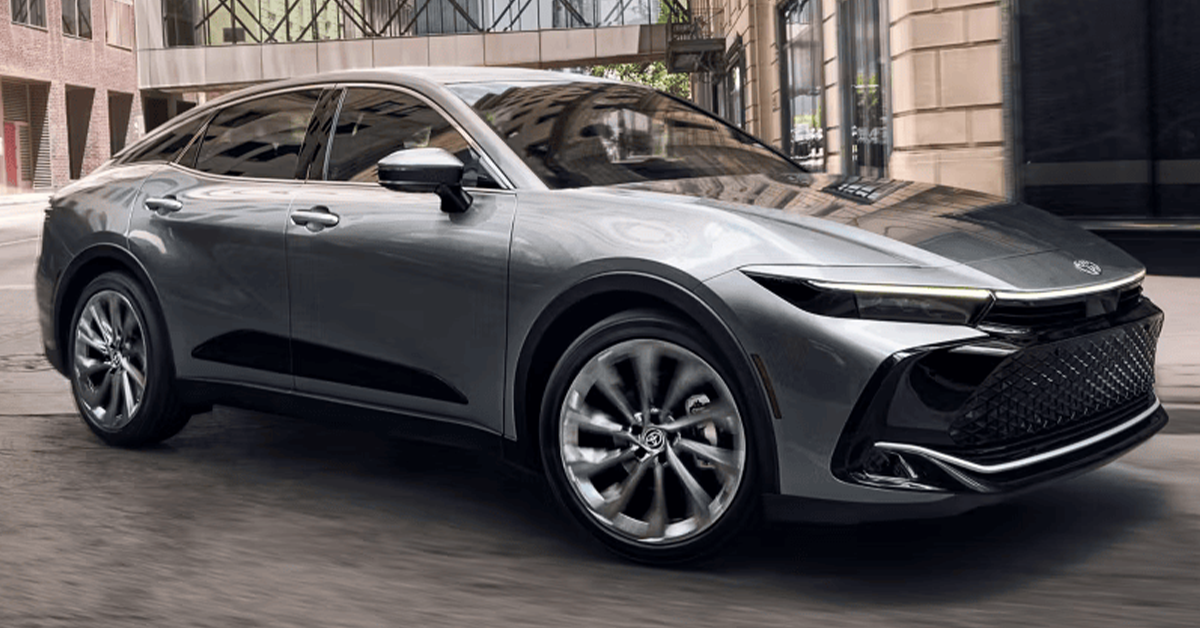
Official press image of the Toyota Crown. | © Toyota Motor Corporation
Toyota's premium hybrid sedan, with standard all-wheel drive and an elevated ride height that positions it somewhere between a conventional sedan and a crossover. The range-topping Hybrid MAX Platinum trim produces a genuinely potent 340 combined horsepower — more than any other sedan Toyota builds — from a turbocharged 2.4-litre engine paired with dual electric motors, while lower trims use a more conventional 2.5-litre hybrid system for stronger fuel economy. The Crown effectively replaced the Avalon in Toyota's US lineup, bringing a considerably more distinctive, genuinely divisive design in the process, one that reviewers and buyers alike describe as either boldly refreshing or simply too unusual depending on personal taste.
The Crown nameplate itself carries genuine international pedigree — it has been Toyota's flagship sedan in Japan since 1955, predating nearly every other Toyota model still on sale today, and its 2023 American revival marked the first time the name had ever been used in the US market. Rather than reviving the Crown as a direct, conservative Avalon replacement, Toyota deliberately positioned it as a genuinely different kind of sedan: the raised ride height and standard AWD give it real capability in poor weather that a traditional low-slung sedan simply can't match, while the available Hybrid MAX powertrain gives performance-minded buyers genuine reason to consider it over a comparably priced crossover. Trim levels span XLE, Limited and Platinum, with the Platinum exclusively carrying the Hybrid MAX powertrain and adding genuinely premium touches including semi-aniline leather upholstery and a panoramic glass roof. Standard equipment even on the base XLE trim includes a 12.3-inch touchscreen, wireless smartphone charging and a full Toyota Safety Sense suite, positioning the Crown as genuinely well-equipped from its lowest entry point rather than reserving meaningful technology purely for top trims. The nameplate's considerably bolder styling compared with the Avalon it replaced has also given Toyota a genuine platform to experiment more freely with future sedan design language, testing buyer appetite for more distinctive aesthetics before potentially carrying similar cues into other models across the broader lineup. Toyota has confirmed the Crown will continue receiving annual updates rather than sitting static, suggesting the nameplate's still-evolving identity remains an active priority within the company's broader sedan strategy going forward.
The Crown also spawned a genuinely distinct sibling model in 2024: the Crown Signia, a crossover-styled variant sharing the Crown's underlying platform and hybrid powertrains but wrapped in a considerably more conventional SUV body, aimed at buyers who wanted the Crown's premium positioning and standard AWD without the sedan's more unconventional proportions. Between the standard Crown sedan and the Crown Signia, Toyota has effectively created a genuinely flexible premium hybrid sub-brand within its broader lineup, occupying territory that sits comfortably below Lexus pricing while still offering meaningfully more distinctive styling and standard equipment than a conventional Camry or Avalon-tier sedan ever provided. Reviewers have generally praised the Crown's ride quality and refinement specifically, noting that the standard AWD system and elevated ride height deliver genuine real-world confidence in poor weather that few direct sedan competitors can match without stepping up to a considerably pricier luxury badge.
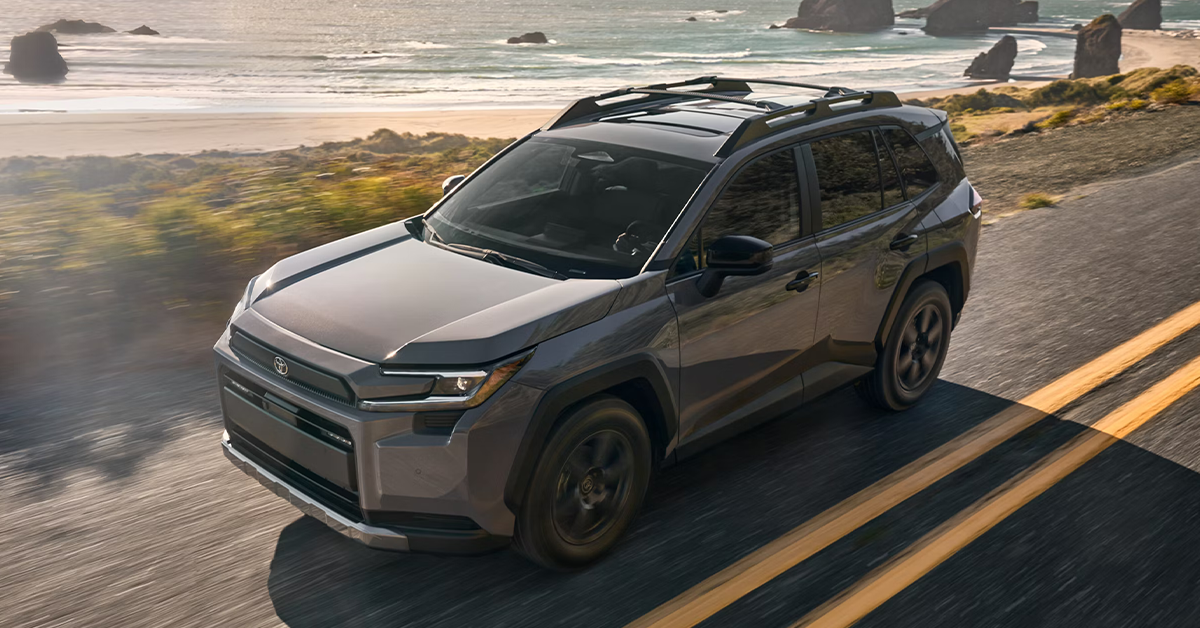
Official press image of the Toyota RAV4 Hybrid. | © Toyota Motor Corporation
Toyota's best-seller and, since February 2025, America's single best-selling vehicle overall, ending nearly four decades of the Ford F-150 holding that position uninterrupted. The redesigned 2026 model produces up to 236 horsepower on AWD, a genuine improvement over the outgoing generation, and introduces Toyota's first performance-oriented RAV4 trim, the GR Sport, carrying genuine GR badging, a larger grille and a rear roof spoiler. Every 2026 RAV4 is sold exclusively as a hybrid or plug-in hybrid — the gas-only version has been dropped entirely, a genuinely significant statement given the RAV4's outsized importance to Toyota's overall American sales volume.
The RAV4's rise to America's overall best-selling vehicle represents a genuine structural shift in American buying habits, moving decisively away from full-size trucks and toward efficient, practical, right-sized crossovers — and the RAV4 Hybrid specifically has been central to that shift, since Toyota's hybrid-first approach for this generation gave American buyers a genuinely compelling reason to choose a RAV4 over a conventional gas-only compact SUV rival without sacrificing meaningful power or towing capability. The redesigned 2026 model brings a boxier, more upright exterior with improved aerodynamics, a 12.3-inch digital instrument cluster across every trim, and Toyota's new Arene software platform with built-in 5G connectivity. Six trims span LE, SE, XLE Premium, Woodland, XSE and Limited, with the off-road-oriented Woodland trim adding standard all-wheel drive and genuine light-off-road capability aimed at outdoor-recreation buyers.
The RAV4 Hybrid's competitive position within its own segment is genuinely dominant rather than merely strong. Against rivals including the Honda CR-V Hybrid, Ford Escape Hybrid and Nissan Rogue, the RAV4 Hybrid consistently wins on combined fuel economy, predicted reliability and resale value — the last factor being particularly significant, since a compact SUV holding its value well can meaningfully offset a higher purchase price over a typical ownership period through reduced depreciation losses at trade-in or resale time. Toyota's own sales data confirms this dominance translates directly into market share: the RAV4 Hybrid alone, excluding the plug-in variant, regularly outsells entire model lines from competing manufacturers on a monthly basis. The introduction of the GR Sport trim for 2026 also signals Toyota's genuine confidence in pushing the RAV4 Hybrid's performance credentials further, borrowing styling cues and badging conventions from the company's dedicated Gazoo Racing performance division to appeal to buyers who want a genuinely engaging compact SUV rather than purely efficient, appliance-like transportation. Cargo versatility remains a genuine strength throughout the lineup, with a 60/40 split-folding rear seat and a genuinely flat load floor across every trim, while the Woodland and GR Sport variants add specific styling and hardware differences aimed at genuinely distinct buyer priorities within what remains, fundamentally, the same core hybrid platform underneath. Toyota Connected Services and a full year of complimentary remote connectivity come standard across the range, alongside Toyota Safety Sense's latest generation suite, giving even the base LE trim genuinely comprehensive active safety coverage that few rivals match at a comparable price point.
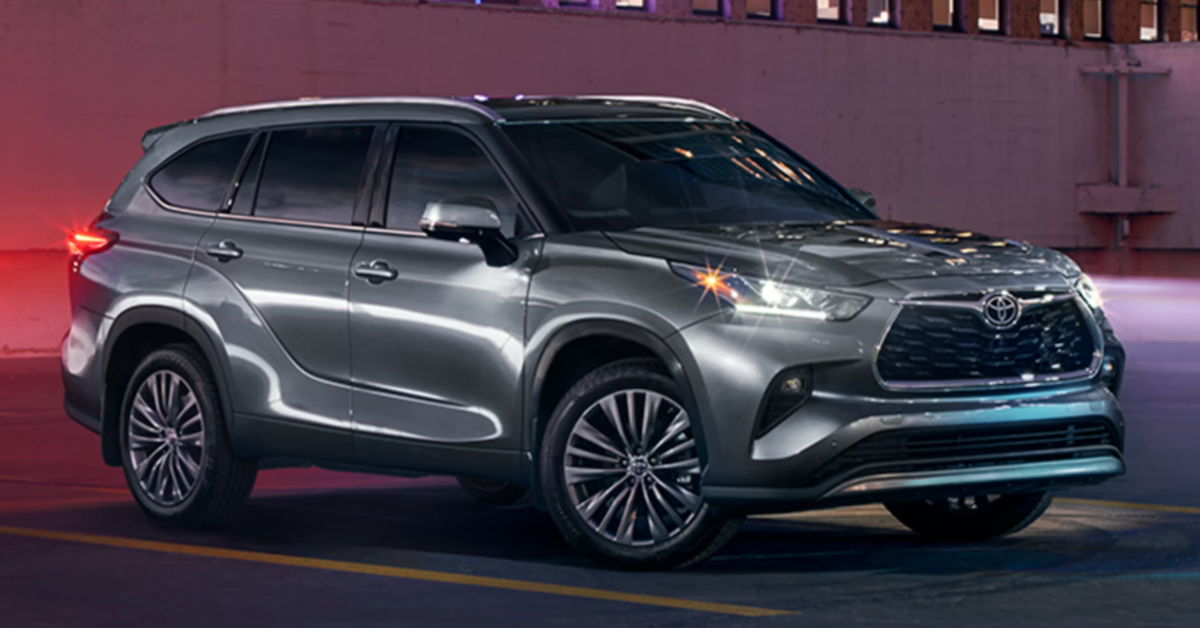
Official press image of the Toyota Highlander Hybrid. | © Toyota Motor Corporation
Toyota's mainstream three-row family SUV, seating up to eight passengers while returning around 35 mpg combined — genuinely strong for a vehicle this size, and a meaningful step up from the outgoing generation's gasoline-only figures. The Highlander has anchored Toyota's family SUV lineup for over two decades, and the current generation's hybrid powertrain has become the volume choice among buyers specifically prioritising fuel economy over the standard gas engine still offered alongside it on select trims.
The Highlander's biggest recent challenge hasn't come from a rival brand — it's come from within Toyota's own lineup. Since the Grand Highlander launched in 2023 to sit between the Highlander and the full-size Sequoia, reported sales data shows the standard Highlander selling at roughly half its previous volume, as buyers increasingly choose the larger sibling instead for a relatively modest price difference given the added third-row and cargo space on offer. Industry reporting suggests Toyota may eventually reengineer the standard Highlander into a dedicated electric model specifically because the Grand Highlander has absorbed so much of its traditional buyer base, a genuinely unusual example of one model's runaway success forcing a sibling's fundamental reinvention rather than simply coexisting alongside it.
Despite that internal pressure, the Highlander retains genuine advantages of its own. Its more compact footprint compared with the Grand Highlander makes it meaningfully easier to park and manoeuvre in tighter urban and suburban environments, and its lower starting price keeps it the more accessible entry point into Toyota's three-row hybrid family SUV range. Standard equipment includes Toyota Safety Sense's full driver-assistance suite, and the Highlander offers a genuinely useful towing capacity of up to 3,500 pounds on hybrid trims, giving family buyers real flexibility for light trailers or recreational equipment without needing to step up to a considerably larger and less efficient body-on-frame SUV. Toyota's ongoing over-the-air software update capability also extends to the Highlander, allowing infotainment and certain driver-assistance features to improve gradually over a vehicle's ownership life without requiring a dealer visit.
Reviewer reception of the current Highlander Hybrid has remained genuinely favourable even as the nameplate's sales volume has shifted toward its larger sibling, with automotive press consistently praising its more manageable size for daily driving, easier parking in tight urban environments, and a ride quality that several reviewers describe as noticeably more composed than the considerably larger Grand Highlander on winding roads. Cargo space, while smaller than the Grand Highlander's figures, remains genuinely competitive within the broader three-row SUV segment, with a 60/40 split-folding third row that expands usable space considerably when the rearmost seats aren't needed for passengers. Trim levels span LE, XLE, Limited and Platinum, with the range-topping Platinum adding a panoramic moonroof, ventilated front seats and a premium JBL audio system over the more value-focused lower trims, giving buyers a genuinely wide spread of equipment and pricing within a single nameplate.
Toyota also backs the Highlander Hybrid with the same extended battery warranty applied across its broader electrified lineup, giving genuinely risk-averse family buyers real confidence in the powertrain's long-term durability heading into a multi-year ownership period.
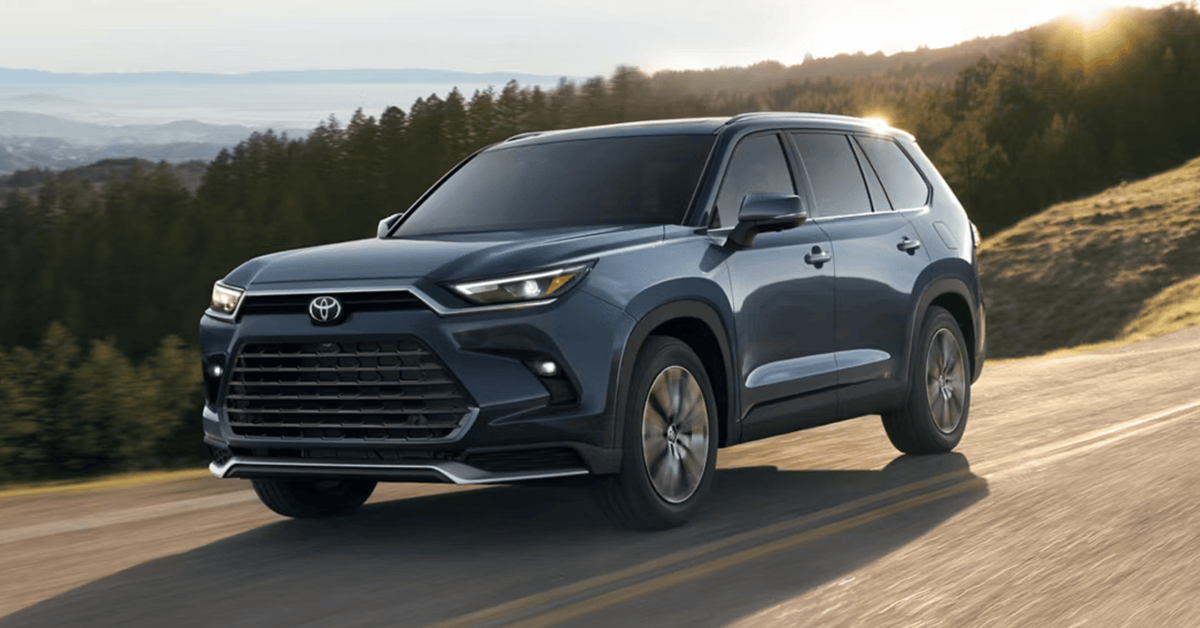
Official press image of the Toyota Grand Highlander Hybrid. | © Toyota Motor Corporation
Introduced in 2023 specifically to sit between the standard Highlander and the full-size Sequoia, the Grand Highlander has proven so popular that it has become a genuine strategic problem for Toyota internally, pulling buyers away from the standard Highlander at a scale the company likely didn't fully anticipate. The range-topping Hybrid MAX variant reaches a genuinely strong 362 horsepower, borrowed from the same powertrain family used in the Crown, and delivers up to 97.5 cubic feet of cargo space with the rear seats folded — a meaningful step up from the standard Highlander's more modest cargo figures.
Toyota's own explanation for why the Grand Highlander exists at all centres on a genuine gap the company identified in the American three-row SUV market: families wanting meaningfully more third-row and cargo space without stepping up to a full-size SUV had no direct Toyota option before 2023. Independent reviews consistently praise the Grand Highlander's genuinely usable adult-sized third row specifically — a rarity in this segment, where most three-row crossovers reserve the rearmost seats purely for children or short trips rather than genuine adult comfort on longer journeys.
Both the Highlander and Grand Highlander share the same fundamental hybrid architecture and largely overlapping technology suite, meaning the meaningful differences between them come down almost entirely to size, price and available powertrain configuration rather than any fundamental capability gap. The Grand Highlander also offers a genuinely useful towing capacity of up to 3,500 pounds on most trims, matching the standard Highlander's figure despite the considerably larger overall vehicle, and Toyota Safety Sense comes standard across the entire Grand Highlander range regardless of trim level chosen.
The Grand Highlander's interior packaging represents a genuine engineering achievement beyond simple exterior size — Toyota specifically lengthened the wheelbase relative to the standard Highlander to create genuinely usable third-row space rather than simply stretching the body overall, a detail that directly explains why the third row feels considerably roomier than the modest exterior dimension increase alone would suggest. Six and seven-passenger seating configurations are both available depending on trim, with second-row captain's chairs offered on higher trims for buyers who prioritise individual passenger comfort over maximum seating capacity. Reviewers have consistently highlighted the Grand Highlander's genuinely competitive value proposition against three-row rivals from Honda, Kia and Hyundai, particularly once the Hybrid MAX powertrain's combination of strong power and solid fuel economy is factored into the comparison, an area where several rivals still force buyers to choose between performance and efficiency rather than genuinely delivering both. Toyota also extends its standard hybrid battery warranty to every Grand Highlander trim, matching coverage found across the rest of the company's electrified SUV lineup. Available towing packages and roof rail accessories further extend the Grand Highlander's genuine practicality for families who need both maximum interior flexibility and occasional light towing capability in a single vehicle.
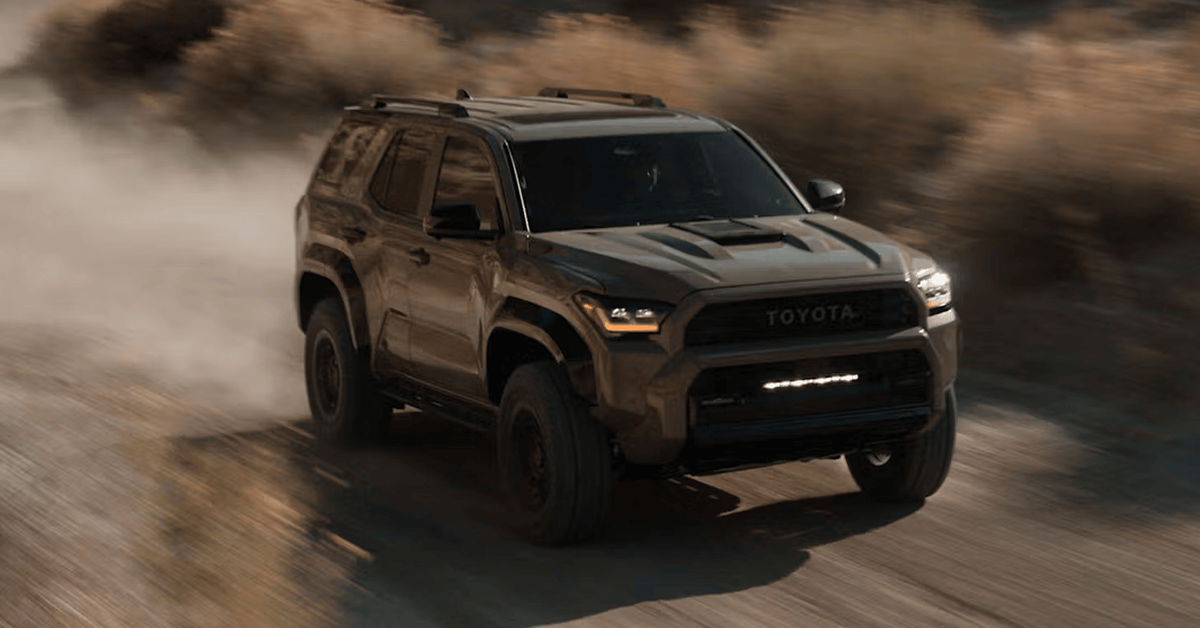
Official press image of the Toyota 4Runner Hybrid. | © Toyota Motor Corporation
Toyota's body-on-frame off-roader has gone hybrid too, using the i-FORCE MAX system for up to 326 horsepower — the most powerful 4Runner Toyota has ever built. The sixth-generation redesign moved the 4Runner onto Toyota's modern TNGA-F platform for the first time, replacing the naturally aspirated V6 that had defined the previous generation for 15 years — an almost unheard-of production cycle for a modern vehicle, and a genuine testament to how strongly loyal buyers valued the outgoing generation's specific combination of mechanical simplicity and off-road credibility.
The move to hybrid power represents the single biggest transformation in the 4Runner's four-decade history, and the change has genuinely divided the vehicle's traditionally conservative buyer base. Longtime 4Runner owners who valued the outgoing generation's straightforward, non-turbocharged V6 have expressed some scepticism toward the added mechanical complexity a hybrid system introduces, even as the new powertrain delivers genuinely superior power, torque and fuel economy across every measurable metric. Toyota has attempted to bridge that gap by introducing the Trailhunter trim specifically, a factory-built overland-focused variant with 10.1 inches of ground clearance and genuine expedition-ready equipment, aimed directly at reassuring off-road purists that the move to hybrid power hasn't compromised the 4Runner's fundamental off-road character. Twelve total trims span the range, evenly split between conventional gas and i-FORCE MAX hybrid configurations, giving buyers genuine choice between the traditional and updated approaches within a single generation.
The 4Runner's hybrid variant delivers genuinely meaningful real-world improvements beyond the headline horsepower figure. Torque arrives considerably earlier in the rev range than the outgoing naturally aspirated V6 ever managed, translating into genuinely stronger low-speed crawling capability off-road and more confident towing performance on-road — both areas where the previous generation's engine, despite its beloved reputation for simplicity, was genuinely starting to show its age against more modern turbocharged and hybrid rivals. Fuel economy improvements are similarly substantial, with the i-FORCE MAX hybrid returning meaningfully better combined mpg than the outgoing V6 despite the considerable increase in both power and torque, a combination that would have seemed contradictory under the previous generation's more conventional engineering approach. Toyota has also confirmed the hybrid 4Runner retains full compatibility with the extensive aftermarket support the nameplate has built up over decades, an important consideration for the model's traditionally modification-happy off-road enthusiast buyer base. Standard safety technology across the range includes a full suite of driver-assistance features, and the sixth generation introduces a genuinely modernised interior with a considerably larger touchscreen than any previous 4Runner offered, addressing another long-standing criticism of the outgoing generation's comparatively dated cabin technology. Toyota also extended the 4Runner's standard warranty coverage on hybrid-specific components to match the rest of its electrified lineup, addressing early scepticism among traditional 4Runner buyers by ensuring the added mechanical complexity of the i-FORCE MAX system comes with genuinely comprehensive manufacturer backing during the critical early ownership years. Toyota dealers report that test-drive conversion rates for the hybrid 4Runner have matched or exceeded the outgoing V6 model, suggesting genuine buyer acceptance despite the vocal early scepticism from longtime enthusiasts online.
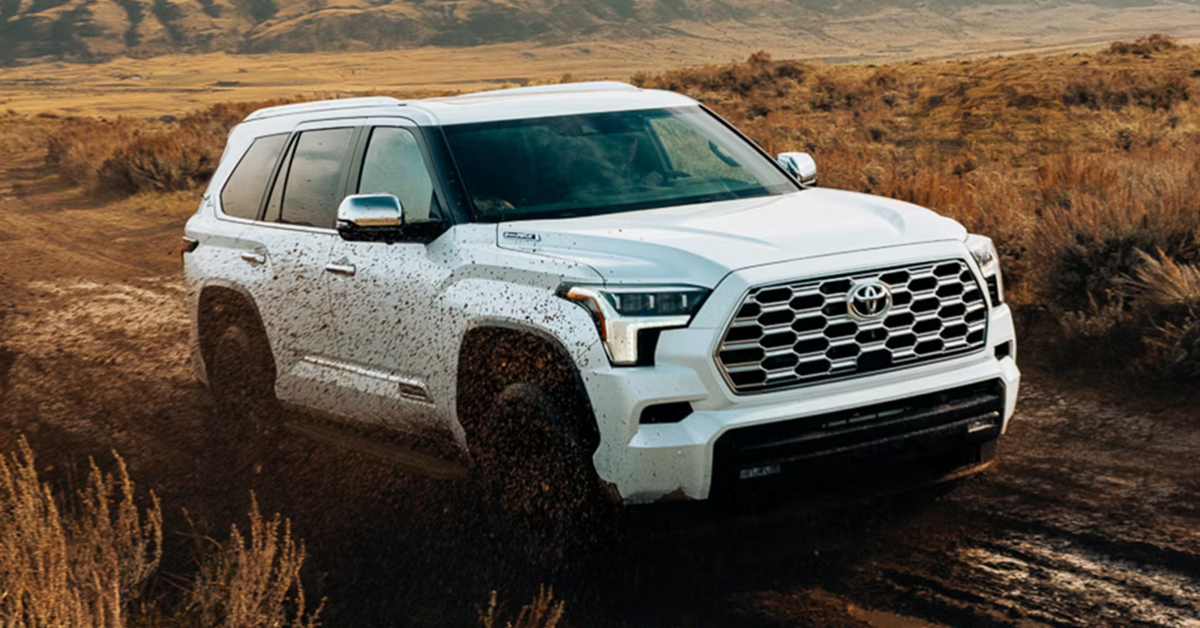
Official press image of the Toyota Sequoia. | © Toyota Motor Corporation
Tops the entire SUV lineup at 437 horsepower, having dropped its previous 5.7-litre V8 entirely in favour of the i-FORCE MAX hybrid setup. Every 2026 Sequoia comes with the same hybrid powertrain standard, delivering genuine towing capacity up to 9,520 pounds alongside meaningfully better fuel economy than the V8 it replaced — approximately 21mpg city and 24mpg highway, a considerable improvement over the outgoing V8's figures.
The Sequoia quietly became Toyota's genuine flagship SUV in America following the discontinuation of the full-size Land Cruiser in the US market after 2021, inheriting that responsibility without much public fanfare from Toyota itself. The transition to hybrid power for the current, third generation was not entirely smooth — early owner reports flagged genuine reliability concerns with the new powertrain's added complexity, and Toyota issued recalls affecting certain 2023 and 2024 model year Sequoias related to the new 3.4-litre V6. Toyota has continued refining the platform since, and by the 2026 model year the powertrain issues from launch appear to have been substantially addressed through ongoing production updates. Six trims span SR5, Limited, Platinum, 1794 Edition, TRD Pro and Capstone, with the 1794 Edition specifically honouring the Texas land grant that became Toyota's San Antonio manufacturing site.
Positioned against its closest full-size SUV rivals, including the Chevrolet Tahoe and Ford Expedition, the Sequoia's hybrid-only approach represents a genuinely distinct strategic bet within a segment where most competitors still offer conventional V8 or V6 gasoline engines as either the sole or primary powertrain choice. That bet gives the Sequoia a genuine fuel economy advantage buyers in this segment have historically not had access to, though it also means Sequoia buyers give up the option of a simpler, potentially cheaper-to-repair conventional engine that some full-size SUV shoppers specifically prefer for long-term ownership simplicity. Toyota's decision to standardise the hybrid powertrain across every single trim, rather than reserving it for premium configurations the way some rivals structure their hybrid full-size SUV offerings, reflects genuine confidence that the technology has matured enough to serve as the sole powertrain for a vehicle this large and capable, rather than a niche efficiency-focused option layered on top of a more conventional base engine. Cargo and passenger space remain genuinely competitive within the segment, with three rows of seating and a maximum cargo capacity that expands considerably with the third row folded flat, positioning the Sequoia as a genuine alternative for large families who specifically want body-on-frame truck-based durability rather than the unibody construction most three-row crossovers use. The TRD Pro trim specifically adds genuine off-road hardware, including Fox internal-bypass shocks and a lifted suspension, extending the Sequoia's capability well beyond typical full-size SUV territory and into genuine overland and towing-plus-off-road use cases that few rivals in this segment can match convincingly. Interior technology across the range includes a standard 8-inch touchscreen, expanding to a considerably larger 14-inch unit on higher trims, keeping the Sequoia genuinely competitive on in-cabin technology against newer full-size SUV rivals. Toyota also extends its standard hybrid battery warranty to the Sequoia, matching coverage found across the rest of its electrified lineup and giving genuinely risk-averse full-size SUV buyers real confidence in the powertrain's long-term durability.
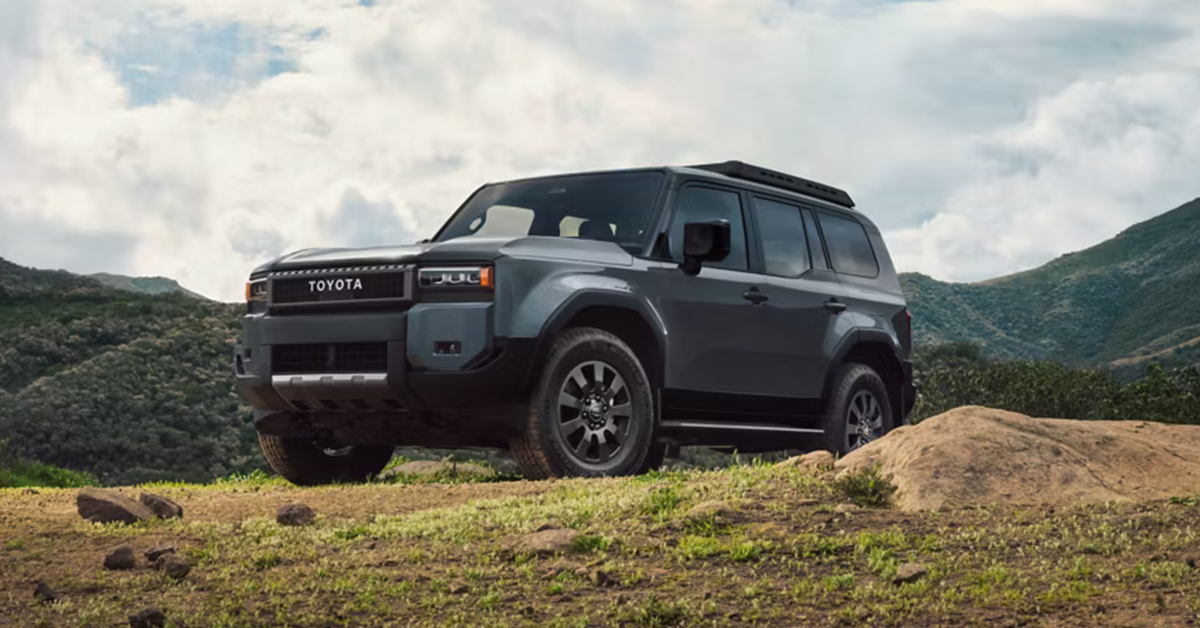
Official press image of the Toyota Land Cruiser. | © Toyota Motor Corporation
Back in America since 2024 after the previous full-size generation left in 2021, and sold exclusively as a 326-horsepower hybrid — no gas-only version exists in the current US lineup. The current model is considerably smaller and more affordable than the outgoing full-size Land Cruiser, starting from approximately $57,200, seating five across two rows rather than the previous generation's three-row, seven-to-eight-passenger layout.
The Land Cruiser's American return specifically reflects Toyota's recognition that the full-size 200 Series had grown too large, too expensive and too commercially redundant against the closely related Lexus LX to justify continued US sales. Rather than genuinely disappear, Toyota brought the nameplate back in a considerably smaller, more affordable form built around a single i-FORCE MAX hybrid powertrain, pairing a turbocharged 2.4-litre four-cylinder with an electric motor for standard full-time four-wheel drive, genuine locking differentials and a two-speed transfer case. Just two trims keep the lineup deliberately simple: the value-focused 1958, named for the year the Land Cruiser first arrived in America, and the better-equipped Land Cruiser trim. Globally, the Land Cruiser remains Toyota's longest continuously running model series, with over 11.3 million units sold worldwide since 1951.
What genuinely distinguishes the current Land Cruiser within Toyota's American hybrid lineup is that it represents the company's only current US model where hybrid power was never optional or gradually phased in — the nameplate simply returned to America already committed entirely to the i-FORCE MAX system, with Toyota never offering, or apparently even considering, a conventional gasoline-only variant for the US market this generation. This positions the Land Cruiser's hybrid powertrain less as an efficiency upgrade layered onto an existing vehicle and more as a fundamental part of the model's reintroduction identity, alongside its standard full-time four-wheel drive and genuine off-road hardware. Reviewers have generally praised the balance Toyota struck between genuine off-road capability — including class-leading approach and departure angles on certain configurations — and everyday on-road comfort, noting that the hybrid powertrain's added low-end torque genuinely benefits low-speed crawling situations in a way a comparable non-hybrid engine of similar displacement typically cannot match. The current Land Cruiser also carries forward the nameplate's legendary reliability reputation, built over more than seven decades of continuous global production, giving American buyers genuine confidence that the smaller, hybrid-powered successor inherits the same fundamental engineering philosophy that made earlier Land Cruiser generations famous for surviving genuinely extreme conditions across deserts, mountains and remote regions worldwide. Toyota has also confirmed strong aftermarket and dealer parts support for the current Land Cruiser from launch, a genuine departure from how some newly reintroduced nameplates initially struggle with parts availability, reflecting the company's recognition that Land Cruiser buyers specifically expect the same long-term ownership confidence the nameplate has built globally over more than seven decades. Both trims come standard with a suite of genuine off-road technology, including a multi-terrain select system and a dedicated crawl control feature, reinforcing that even the value-focused 1958 trim retains real off-road credibility rather than being a stripped-down, on-road-only entry point.
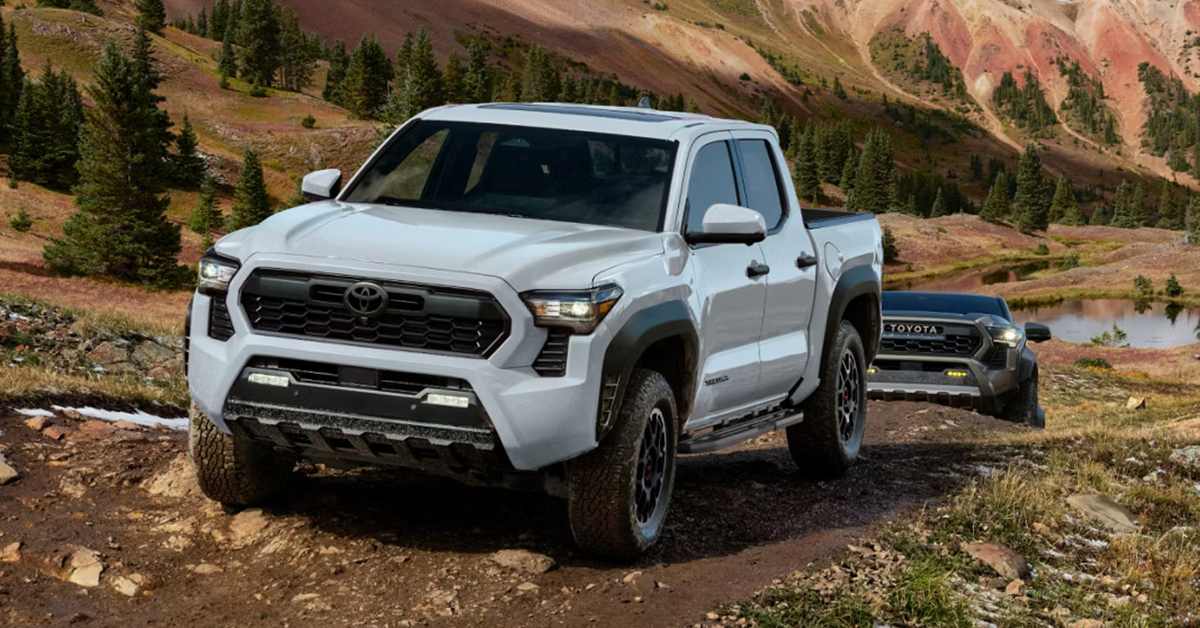
Official press image of the Toyota Tacoma Hybrid. | © Toyota Motor Corporation
Toyota's mid-size truck uses the i-FORCE MAX hybrid system to produce up to 326 horsepower, a genuine step up over the standard turbocharged four-cylinder engine, while retaining full towing capability alongside the added efficiency. The fourth-generation Tacoma abandoned its previous V6 entirely in favour of a turbocharged four-cylinder base engine, with i-FORCE MAX standard on the TRD Pro and Trailhunter trims specifically, and optionally available across several other trim levels for buyers wanting the extra power without committing to the most expensive configurations.
Toyota's decision to bring hybrid power to the Tacoma reflects a genuinely different engineering priority than the passenger-car hybrids elsewhere in this guide — rather than chasing maximum fuel economy above all else, the truck hybrid application prioritises low-end torque and towing capability, with the electric motor providing genuinely useful instant torque assistance during towing and hauling situations where a conventional engine alone would need to work considerably harder. This matters genuinely to truck buyers evaluating whether to pay the hybrid premium: unlike a sedan or crossover buyer primarily chasing lower fuel costs, a truck buyer choosing i-FORCE MAX is more often motivated by genuine capability improvements rather than efficiency alone.
The Tacoma retains standard 4x4 availability across most trims, and Toyota engineered the hybrid battery pack placement specifically to avoid compromising ground clearance, approach angle or departure angle compared with non-hybrid configurations — a genuine engineering priority given how central off-road capability remains to the Tacoma's core buyer identity. The truck also carries Toyota's extended hybrid battery warranty, matching coverage found across the rest of the company's electrified lineup, and offers a genuinely useful onboard power outlet tied directly to the hybrid battery, letting owners run tools or accessories at a jobsite or campsite without needing a separate generator.
The current Tacoma generation represents a genuinely significant departure from its predecessor, moving onto Toyota's modern TNGA-F platform shared with the 4Runner and full-size Land Cruiser, a considerable upgrade in structural rigidity and on-road refinement compared with the outgoing model. Trim levels span a genuinely wide range from the value-focused SR up through TRD Sport, TRD Off-Road, Limited, TRD Pro and Trailhunter, with the latter two representing Toyota's most serious factory-built off-road offerings, carrying upgraded suspension components and genuine expedition-ready equipment as standard. Reviewer reception of the hybrid powertrain specifically has been positive, with several outlets noting the instant torque delivery genuinely transforms low-speed off-road crawling and technical trail driving compared with the outgoing V6, addressing one of the more common criticisms levelled at the previous generation's turbocharged four-cylinder base engine when driven without the electric assistance. Payload and bed configuration options remain genuinely flexible across the range, and Toyota continues offering both short and long bed configurations paired with the hybrid powertrain, ensuring buyers don't need to sacrifice cargo-carrying flexibility purely to access the added torque and efficiency i-FORCE MAX provides. Toyota Safety Sense comes standard across every Tacoma trim regardless of powertrain, giving hybrid buyers the same comprehensive active safety coverage available throughout the rest of the lineup at no additional cost.
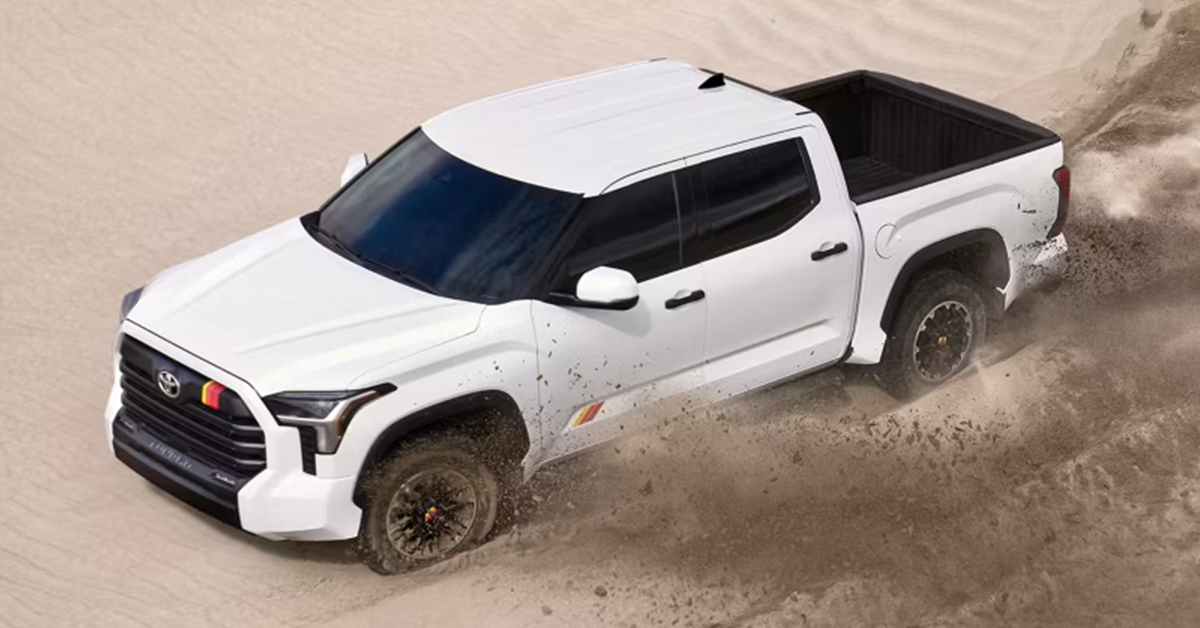
Official press image of the Toyota Tundra Hybrid. | © Toyota Motor Corporation
Toyota's full-size truck reaches up to 437 horsepower with the i-FORCE MAX hybrid system — the same peak output as the Sequoia it shares underpinnings with, and the most powerful engine option in the Tundra's entire lineup. The current-generation Tundra dropped its previous naturally aspirated V8 entirely in favour of a twin-turbo V6, with the i-FORCE MAX hybrid variant sitting as the range-topping powertrain option above the standard turbo V6, delivering genuinely class-competitive torque figures that translate directly into stronger towing capacity and quicker acceleration when hauling heavy loads.
Toyota's i-FORCE MAX application in the Tundra specifically addresses a genuine, well-founded scepticism among full-size truck buyers toward hybrid technology — the concern that electrification might simply add weight and complexity for marginal efficiency gains rather than genuinely improving capability. By positioning the hybrid system primarily as a performance and towing upgrade rather than purely a fuel-economy play, Toyota has made a genuinely persuasive case to a buyer demographic that has historically been among the most resistant to hybrid adoption across the entire industry.
The Tundra retains full towing capability across its hybrid configurations, and Toyota has confirmed the hybrid battery pack placement was engineered specifically to avoid compromising ground clearance or off-road geometry on 4x4 trims. Like the Tacoma, the Tundra carries Toyota's extended hybrid battery warranty and offers genuinely useful onboard power outlets tied directly to the hybrid battery, letting owners run tools or accessories at a jobsite or campsite without needing a separate generator — a practical everyday benefit beyond pure towing and fuel economy gains.
Trim levels for the Tundra span SR, SR5, Limited, Platinum, 1794 Edition, TRD Pro and Capstone, with i-FORCE MAX offered as either standard or optional equipment depending specifically on which trim a buyer selects. The 1794 Edition carries genuine premium touches including unique leather upholstery and badging honouring the same Texas land grant referenced elsewhere in Toyota's truck and SUV lineup, while the TRD Pro adds serious off-road hardware including Fox internal-bypass shocks for buyers who want genuine desert-running capability alongside the hybrid powertrain's added torque. Payload and towing figures remain genuinely class-competitive across the i-FORCE MAX range, and Toyota's decision to offer the hybrid system across a genuinely broad span of trim levels, rather than reserving it purely for the most expensive configurations, has made the technology considerably more accessible to mainstream full-size truck buyers than some competitors' more narrowly targeted hybrid or electrified truck offerings. Reviewers have also praised the Tundra's genuinely composed ride quality even fully loaded, crediting the hybrid battery's placement low in the chassis for a noticeably lower centre of gravity than the outgoing V8-powered generation managed at comparable trim levels. Toyota Safety Sense also comes standard across the entire Tundra range, ensuring every buyer, regardless of trim or powertrain choice, receives the same comprehensive active safety coverage. The i-FORCE MAX Tundra remains the range's clear performance flagship, giving Toyota's full-size truck lineup a genuine answer to rivals' own turbocharged and hybrid offerings.
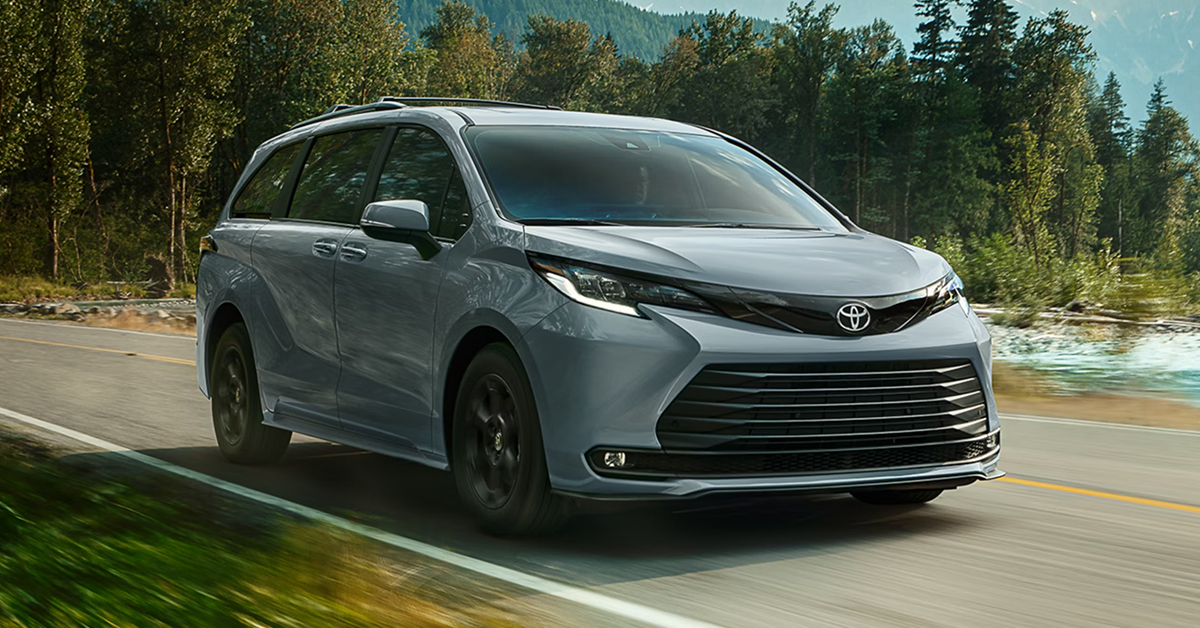
Official press image of the Toyota Sienna. | © Toyota Motor Corporation
America's only conventional hybrid minivan, having dropped its gas-only engine entirely back in 2021, with EPA ratings around 35 mpg that no V6-powered rival minivan comes close to matching. Every rival minivan — the Honda Odyssey, Chrysler Pacifica and Kia Carnival — still relies on a conventional gas V6 as either its sole or primary powertrain, giving the Sienna a genuinely unique position in the segment. Optional all-wheel drive remains available across most trims, a configuration the Sienna pioneered as the only AWD minivan on the American market for a considerable period before rivals eventually followed.
Toyota's hybrid-only bet for the current Sienna generation looked genuinely risky when announced, given that minivan buyers have historically prioritised towing capacity and outright power over fuel economy, and hybrid powertrains had, until recently, carried a reputation among family-vehicle shoppers as a compromise rather than an upgrade. In practice, the bet has paid off precisely because of how minivans are actually used: families driving a Sienna regularly cover meaningfully higher annual mileage than the average sedan or crossover owner, and every one of those miles compounds the Sienna's fuel economy advantage into genuine, measurable savings over a typical ownership period. Six trims span LE, XLE, XSE, Limited, Woodland Edition and Platinum, with a 2025 mid-cycle update adding genuinely novel family-friendly amenities including an integrated vacuum and a refrigerated FridgeBox storage compartment. Seating configurations flex genuinely well between seven and eight passengers depending on trim, and the second-row captain's chairs available on higher trims include a genuine ottoman option, positioning the Sienna's upper trims closer to a genuinely premium family transport experience than a purely utilitarian minivan. Toyota has also confirmed the Sienna carries the same extended hybrid battery warranty as the rest of its electrified lineup, a genuinely important reassurance for family buyers who often keep a minivan considerably longer than the average vehicle, given how central it typically becomes to daily school runs, sports practices and extended family road trips over many years of ownership. Toyota's continued sales strength with the Sienna, even as some rivals have discontinued their own minivan offerings entirely in recent years, suggests the hybrid-only strategy has genuinely paid off commercially rather than merely serving as an interesting engineering exercise.
The Sienna's hybrid-only positioning has also proven genuinely durable against competitive pressure in a segment that has, for years, been widely predicted to shrink as American family buyers increasingly gravitate toward three-row SUVs instead of traditional minivans. Toyota's continued investment in the Sienna — including the 2025 mid-cycle refresh's genuinely novel amenities — suggests the company sees real ongoing demand for the minivan body style specifically among buyers who value its superior interior packaging efficiency, easier rear-seat access through sliding doors, and generally lower step-in height compared with a comparably sized three-row SUV. Independent reliability surveys have consistently rated the Sienna among the most dependable vehicles in its segment, and the hybrid powertrain's now half-decade of real-world ownership data has largely dispelled early scepticism about long-term battery durability in a vehicle type that, unlike a sedan, often carries considerably heavier average passenger and cargo loads throughout its service life.
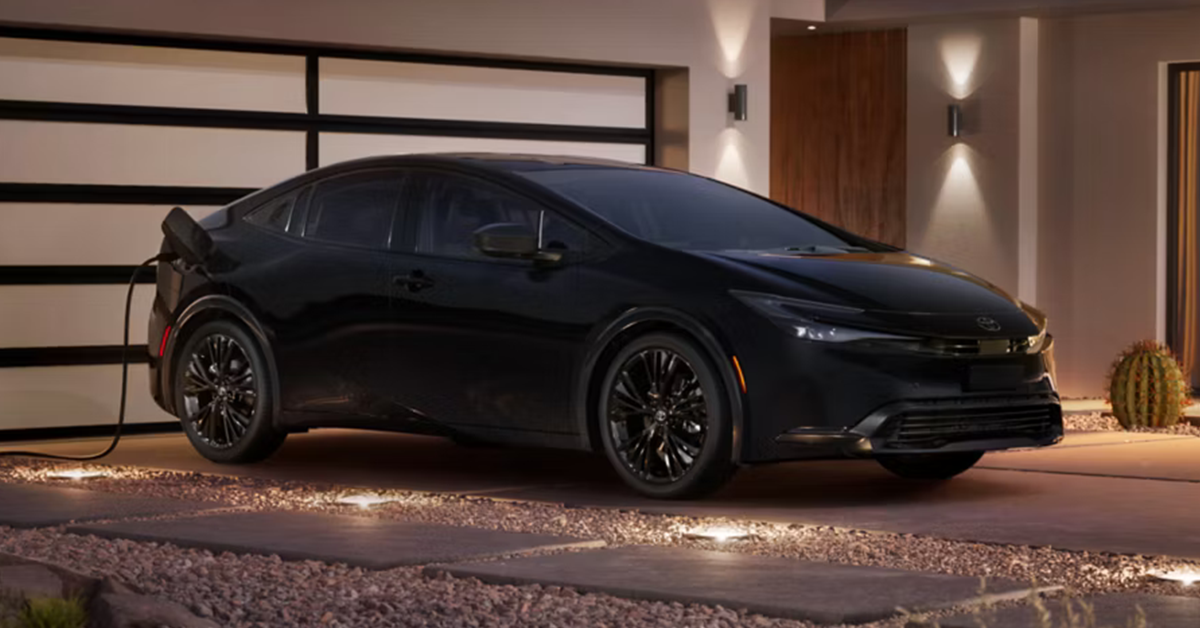
Official press image of the Toyota Prius Plug-in Hybrid. | © Toyota Motor Corporation
Charges from a standard outlet rather than relying purely on regenerative braking, delivering 220 combined horsepower and up to 44 miles of electric-only range before reverting to standard hybrid operation rated at 52 mpg. Front-wheel drive only, and priced from approximately $33,775, with a new Nightshade Edition joining the lineup for 2026.
Formerly badged the Prius Prime, the plug-in Prius carries a genuinely larger battery pack than the standard hybrid, allowing owners with a typical American daily commute — averaging around 41 miles — to complete most of their driving on electric power alone, only calling on the gasoline engine for longer trips or highway driving beyond the battery's range. This makes the plug-in Prius a genuinely compelling middle-ground option for buyers who want meaningful electric driving without the range anxiety or charging-infrastructure dependence of a full battery-electric vehicle like Toyota's own bZ. Trim levels run SE, XSE, Nightshade Edition and XSE Premium, with the top XSE trim rated at a still-strong 127 MPGe once the battery depletes and the car switches to hybrid operation, genuinely competitive against dedicated plug-in rivals from Hyundai and Kia in this specific segment.
For buyers specifically weighing the plug-in Prius against the standard hybrid model, the decision genuinely comes down to charging access and typical driving patterns. Buyers with reliable home or workplace charging access, and a daily commute that falls within the plug-in's roughly 44-mile electric range, can realistically complete the vast majority of their weekly driving without using any gasoline at all, delivering genuine fuel cost savings that can offset the plug-in variant's price premium over the standard hybrid within a few years of typical ownership. Buyers without consistent charging access, however, gain relatively little from the plug-in system's added cost and complexity, since the car would spend most of its time operating purely as a heavier, less efficient standard hybrid without ever taking advantage of its larger battery. Toyota's own guidance to dealers reportedly emphasises this distinction clearly during the sales process, steering buyers toward whichever Prius variant genuinely matches their actual charging situation rather than defaulting to the plug-in simply because it carries the more advanced technology. State and local EV incentive programmes, where available, have historically applied to plug-in Prius purchases as well, meaningfully narrowing the effective price gap between the plug-in and standard hybrid for buyers in qualifying regions, and Toyota has continued lobbying to preserve plug-in hybrid eligibility for these incentive programmes even as some jurisdictions have moved toward restricting incentives purely to full battery-electric vehicles. The plug-in Prius also retains genuinely useful cargo space despite the larger battery pack, with only a modest reduction in trunk capacity compared with the standard hybrid, meaning buyers rarely need to sacrifice meaningful practicality in exchange for the added electric-only range the plug-in system provides. Toyota also equips every plug-in Prius trim with a standard 120-volt household outlet inside the cabin, letting owners power small devices directly from the car's battery, a genuinely thoughtful convenience feature that few rivals in this specific segment currently offer as standard equipment.
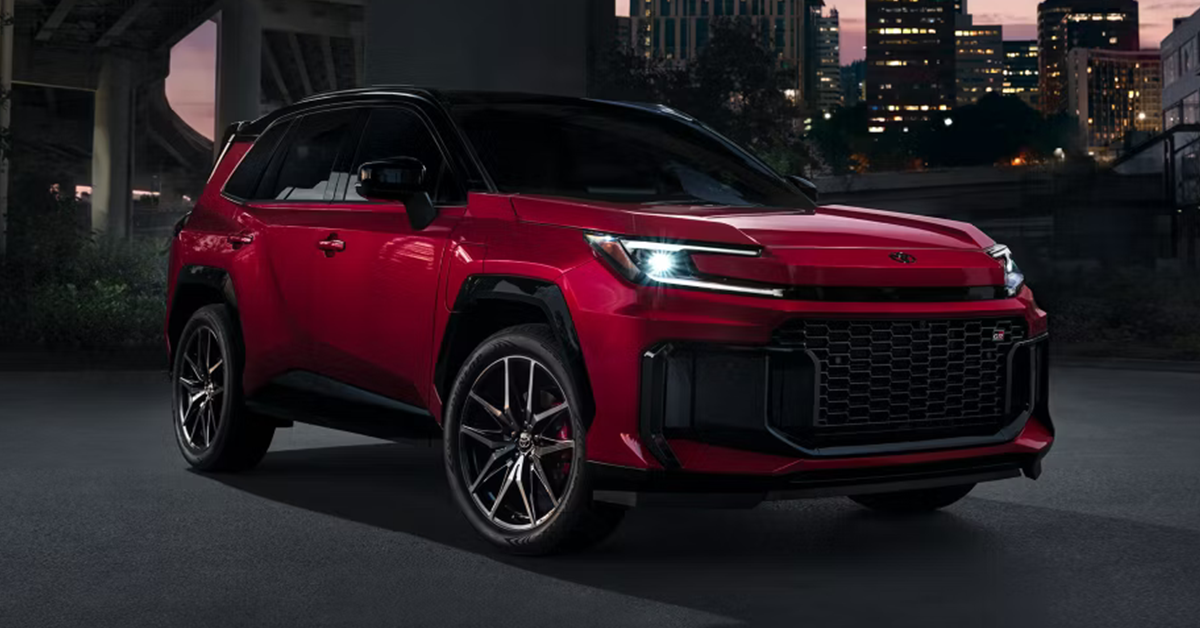
Official press image of the Toyota RAV4 Plug-in Hybrid. | © Toyota Motor Corporation
Goes considerably further on power than the standard RAV4 Hybrid, reaching up to 324 horsepower — genuinely quick for a compact SUV, with sports-car-rivalling acceleration for its class — while still offering an estimated 50 miles of electric-only range for most daily commuting before switching to standard hybrid operation.
The RAV4 Plug-in Hybrid occupies a genuinely unusual position within Toyota's lineup: it is simultaneously the most powerful RAV4 variant available and one of the most efficient, a combination that would have seemed contradictory in most conventional engineering approaches. That combination stems directly from the plug-in system's considerably larger battery pack and more powerful dual-motor setup compared with the standard hybrid, delivering genuine sports-SUV-level acceleration whenever the driver wants it, while still defaulting to efficient electric-only operation for the vast majority of typical daily driving. For buyers who can charge regularly at home, the practical result is a vehicle that may rarely need its gasoline engine at all during normal commuting, while still offering the genuine reassurance of a full gas tank and zero range anxiety for longer road trips — arguably the most complete case for plug-in hybrid technology anywhere in Toyota's current lineup.
The RAV4 Plug-in Hybrid has also served as a genuine proving ground for technology Toyota has since carried into other plug-in applications across its broader lineup, including the current Prius Plug-in Hybrid's own powertrain refinements. Owner satisfaction surveys consistently rank the RAV4 Plug-in Hybrid among Toyota's highest-rated models specifically, with buyers repeatedly citing the genuine sense of having “the best of both worlds” — meaningful electric-only range for daily driving, genuine sports-SUV-level performance when wanted, and complete freedom from range anxiety on longer trips thanks to the conventional gasoline backup. Pricing sits at a genuine premium over the standard RAV4 Hybrid, reflecting the considerably larger battery pack and more sophisticated dual-motor system, but Toyota's federal and state EV incentive eligibility on plug-in models has historically helped offset a meaningful portion of that premium for buyers in qualifying markets, making the total cost of ownership gap between the standard hybrid and plug-in variant considerably narrower than the sticker prices alone would suggest. Toyota has continued expanding the plug-in hybrid approach across its broader SUV lineup specifically because of the RAV4 Plug-in Hybrid's demonstrated commercial success, suggesting this specific powertrain combination — genuine performance, genuine electric range, and complete freedom from charging-infrastructure dependence — may increasingly define how Toyota positions its mid-tier electrified SUV offerings going forward, sitting deliberately between the standard hybrid and the company's dedicated bZ-family battery-electric models. Home charging setup for the RAV4 Plug-in Hybrid remains genuinely straightforward, fully compatible with a standard Level 2 home charger for a full overnight charge, or even a conventional household outlet for buyers without dedicated charging equipment installed, removing a common barrier that keeps some buyers away from plug-in vehicles more generally. Toyota also extends the same battery warranty coverage found across its broader electrified lineup to the RAV4 Plug-in Hybrid, giving buyers genuine long-term confidence in a powertrain combining two distinct battery systems with more moving parts than a standard hybrid alone.