 Brands
Toyota Sienna — The Minivan That Fixed the Previa's Mistake
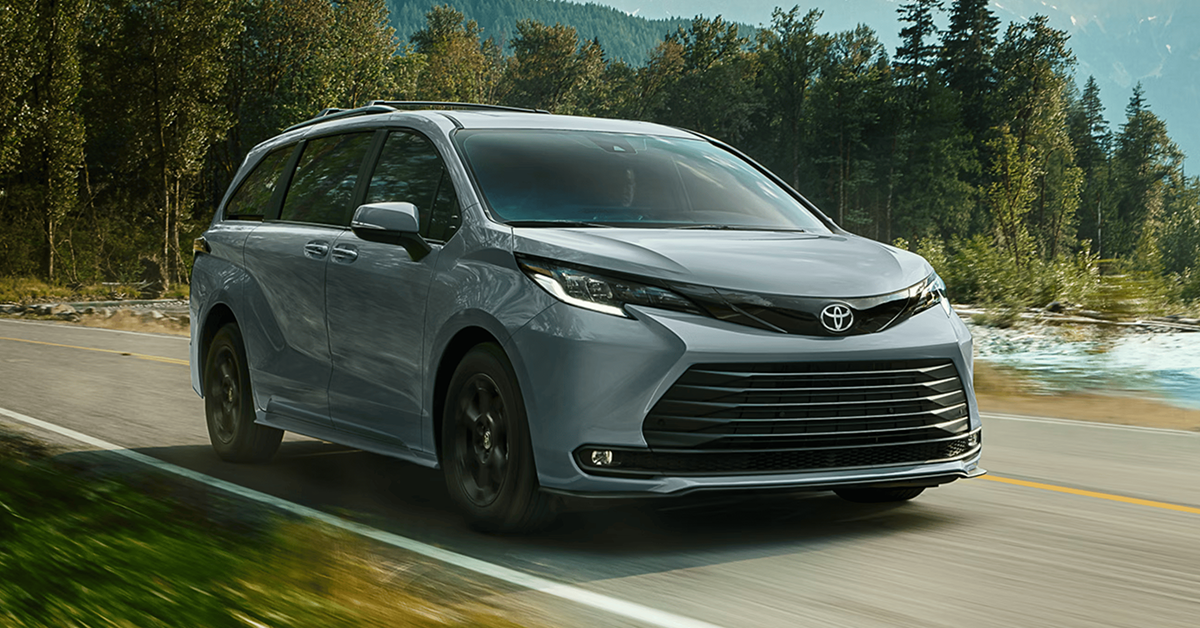
Official press image of the Toyota Sienna. | © Toyota Motor Corporation
Toyota does not often admit it built the wrong car for a market. The Sienna exists specifically because the company did exactly that. Through the 1990s, Toyota tried convincing American minivan buyers that a mid-engine, rear-wheel-drive layout — the same fundamental approach used by the Previa — was the smarter engineering solution. American buyers disagreed, decisively, choosing front-engine, front-wheel-drive minivans from Ford, Chevrolet and Chrysler in overwhelming numbers instead. Toyota’s response was the Sienna: a genuine reset, built specifically to give American families exactly the minivan formula they had already told the industry they wanted.
Toyota unveiled the original Sienna at the 1997 North American International Auto Show, arriving in showrooms as a 1998 model. The context matters as much as the car itself: Toyota had spent the preceding years selling the Previa, a genuinely unusual minivan built around a mid-engine, rear-wheel-drive layout — an engineering approach Toyota believed offered real advantages in weight distribution and interior packaging. American buyers were unconvinced. Ford, Chevrolet and Chrysler had already proven, through sheer sales volume, that a conventional front-engine, front-wheel-drive minivan was what the market actually wanted — easier and cheaper to service, more familiar to mechanics, and genuinely more practical for the towing and cargo demands American families placed on their vans.
Rather than continue defending the Previa’s more exotic approach, Toyota effectively started over. The new Sienna borrowed its underlying platform from the Toyota Camry, stretched and reinforced for minivan duty, and adopted the same front-engine, front-wheel-drive formula every successful American competitor already used. Some styling cues — a sloped nose continuing upward into a genuinely panoramic windshield — deliberately echoed the outgoing Previa, a subtle continuity gesture aimed at retaining loyal Previa owners even as the underlying engineering changed completely. Toyota began building the new Sienna at its plant in Kentucky, and the market responded immediately: early press coverage nicknamed it “The Camry of Minivans” — a genuinely flattering comparison given the Camry’s own reputation for dependable, unglamorous competence, and precisely the reputation Toyota wanted its new minivan to inherit.
The first-generation Sienna launched with a 3.0-litre V6 engine producing 194 horsepower, paired with a four-speed electronically controlled automatic transmission, on a 193.5-inch-long body riding a 114-inch wheelbase — genuinely compact dimensions by minivan standards of the era, making the Sienna easier to manoeuvre and park than some of its considerably larger domestic rivals.
The second generation, launched in 2003, addressed the original’s modest proportions directly — growing the wheelbase and overall length by roughly five inches, while adding four inches of width and 1.6 inches of height. The added interior volume brought a genuinely practical benefit that minivan buyers cared about deeply at the time: the Sienna could now swallow a full 4-by-8-foot sheet of plywood flat, a detail that mattered enormously to the home-improvement-store-run segment of minivan buyers this generation specifically courted. Power increased to a 3.3-litre V6 producing 230 horsepower, paired with a new five-speed automatic transmission.
The genuinely notable addition, though, was an all-wheel-drive option — a configuration no other minivan on the American market offered at the time. For a considerable period afterward, the Sienna remained the only minivan available with AWD, giving it a genuine differentiator in a segment where most rivals competed almost entirely on interior space and price. That AWD advantage would eventually attract competitors, but the Sienna held the position alone for years, cementing its reputation among snowbelt families specifically.
Toyota continued refining the formula through a third generation that carried the Sienna from 2011 through 2020, adding more contemporary safety technology, infotainment and interior refinement without disturbing the fundamental Camry-derived, front-wheel-drive-first architecture that had rescued the nameplate’s commercial fortunes in the first place. By the time Toyota retired this generation, the Sienna had firmly established itself as one of the most trusted, most consistently well-reviewed minivans in the segment — a genuinely remarkable turnaround from the Previa’s commercial struggles just over a decade earlier.
The current, fourth-generation Sienna arrived fully redesigned for the 2021 model year, and brought the single most significant powertrain decision in the nameplate’s history: Toyota dropped the conventional gasoline-only engine entirely, making the Sienna hybrid-only — a genuinely bold move for a mainstream family vehicle, and one that positioned the Sienna as the only conventional hybrid minivan sold in the United States, a distinction it still holds today. The hybrid system pairs a 2.5-litre four-cylinder engine with dual electric motors for a combined 245 horsepower, delivering EPA-rated fuel economy around 35 to 36 mpg combined — figures no V6-powered minivan rival has ever come close to matching, and a genuinely significant real-world advantage for families who put serious mileage on a minivan over a typical ownership period.
The fourth generation carried a distinctly SUV-inspired design language into the minivan segment for the first time — a bold, trapezoidal grille flanked by high-mounted, slim LED headlights, geometric body lines, and a wraparound front bumper considerably more aggressive than any previous Sienna generation attempted. Sportier trims including the XSE and the newer Woodland Edition add gloss-black accents for a more purposeful stance, while a genuinely comprehensive 2025 mid-cycle update introduced new interior amenities including an integrated vacuum and a FridgeBox refrigerated storage compartment, alongside improved infotainment and expanded safety technology.
The 2026 Sienna spans six trims: LE, XLE, XSE, Limited, Woodland Edition and Platinum, priced from approximately $40,420 to $41,615 at the base LE, rising to approximately $57,810 to $59,005 for the range-topping Platinum. Every trim comes standard with Toyota Safety Sense driver-assistance technology, power dual sliding doors, a newly standard power tailgate for 2026, tri-zone climate control and wireless phone connectivity. The XLE adds genuinely convenient hands-free sliding doors and a sunroof over the base LE, while Limited and Platinum trims layer on premium audio, genuine leather upholstery and plush second-row captain’s chairs, some with built-in ottomans. A new Heavy Metal exterior paint colour joins the palette across the entire 2026 lineup. Toyota continues offering optional all-wheel drive across most trims — the same configuration that made the Sienna genuinely unique in its segment two decades earlier, now simply one strong feature among many in a considerably more competitive minivan market.
Independent industry recognition has followed the Sienna consistently through this generation, with the model repeatedly named a top minivan pick across multiple consecutive award cycles, citing its combination of standout fuel economy, comfortable and practical interior packaging, strong safety ratings and genuinely low five-year ownership costs relative to rivals still offering only conventional gasoline power.
Toyota's decision to abandon gasoline-only power entirely for the fourth-generation Sienna looked genuinely risky on paper — minivan buyers have historically prioritised towing capacity and outright power over fuel economy, and hybrid powertrains had, until recently, carried a reputation among family-vehicle shoppers as a compromise rather than an upgrade. In practice, the bet has paid off precisely because of how minivans are actually used. Families driving a Sienna regularly cover meaningfully higher annual mileage than the average sedan or crossover owner — school runs, sports practices, extended family road trips, airport transfers — and every one of those miles compounds the Sienna's fuel economy advantage into genuine, measurable savings over a typical ownership period.
The competitive picture reinforces the logic further. Every direct minivan rival still on sale — the Honda Odyssey, Chrysler Pacifica and Kia Carnival among them — continues to rely on a conventional V6 engine as either its sole or primary powertrain option, none delivering anywhere close to the Sienna's combined fuel economy figures. Toyota effectively used the Sienna to stake out a genuinely differentiated position in a segment that has changed remarkably little at the powertrain level for two decades, betting that families cross-shopping minivans would eventually prioritise running costs the same way SUV and sedan buyers already had. Early sales performance and repeated industry recognition suggest that bet has proven correct.