 Brands
Volkswagen Scirocco — History, Generations, R and Specs
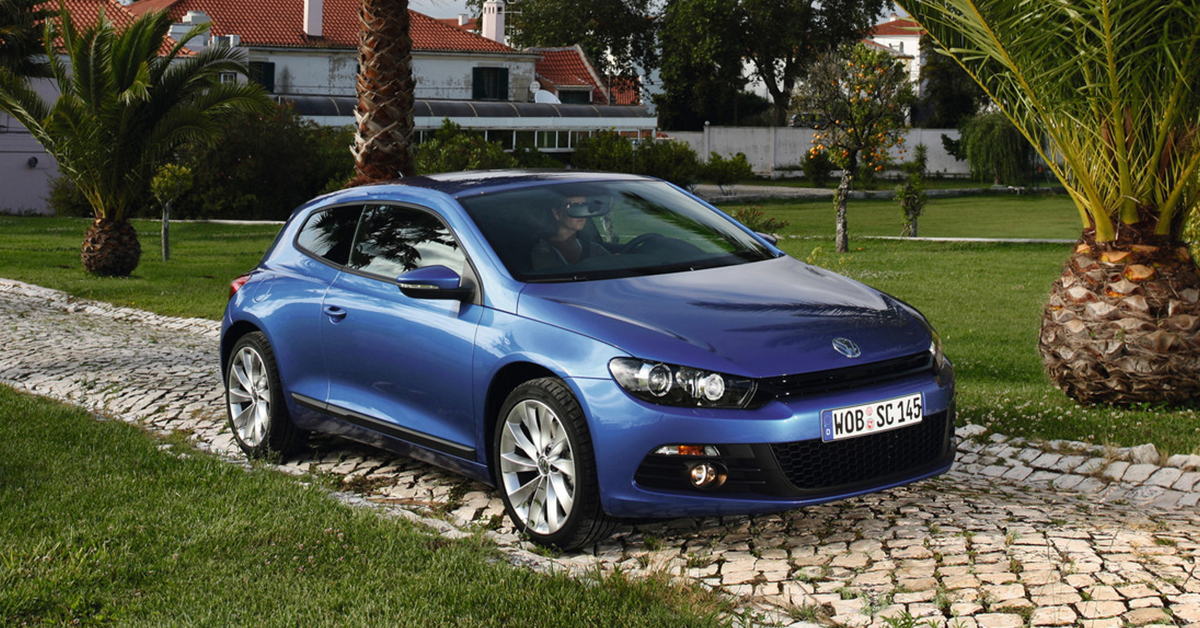
Official press image of the Volkswagen Scirocco. | © Volkswagen AG
The Volkswagen Scirocco is the sporty hatchback coupé that replaced the Karmann Ghia in 1974, gave Volkswagen its first GTI, returned in 2008 and ended in 2017 with about 1.07 million built across three generations. Here is the full Scirocco story, from the Giugiaro original to the Scirocco R, the racing years and the T-Roc that took its place.
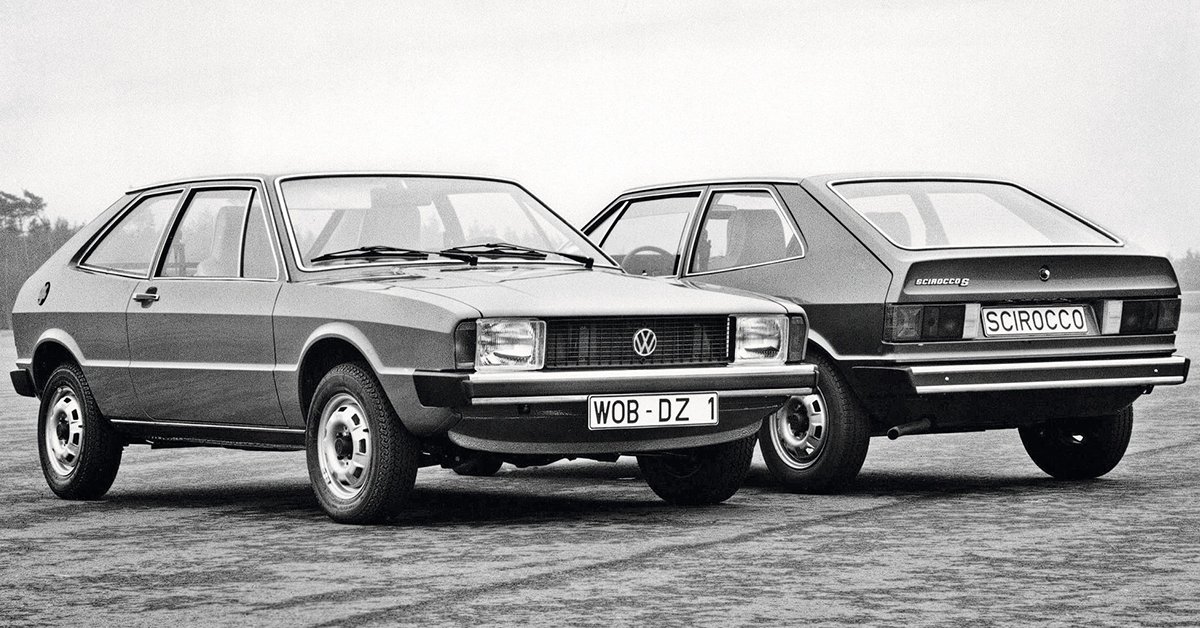
Official press image of the Volkswagen Scirocco, all three generations. | © Volkswagen AG
The Volkswagen Scirocco is a three-door, front-engine, front-wheel-drive sport compact hatchback that Volkswagen sold in two generations from 1974 to 1992 and in a third generation from 2008 to 2017. Production ended without a direct successor. A reference source says the name comes from the Mediterranean wind, and Volkswagen’s own history story says the project started in 1971 in Wolfsburg with a clear brief, to answer the Ford Capri and the Opel Manta. Those rivals were rear-wheel-drive coupés with rigid rear axles, so the Scirocco’s transverse engine and front-wheel drive made it a different kind of sports car from the start.
| Development starts | 1971, Wolfsburg |
| Scirocco I (Typ 53) | 1974 to February 1981, 504,153 built |
| Scirocco II (Typ 53B) | March 1981 (Geneva) to 7 September 1992, 291,497 built |
| First two generations combined | 795,650 (Volkswagen) |
| Scirocco GTI enters production | Summer 1976 |
| Corrado launched | 1988 |
| iroc concept | 2006 Paris Motor Show |
| Scirocco III launched | March 2008, Geneva |
| Scirocco III built | 272,150 (Volkswagen), ended autumn 2017 |
| All generations (sum) | About 1.07 million |
The Scirocco was the successor to the Karmann Ghia Type 14 coupé, which Volkswagen says was produced for 19 years. Its designer was Giorgetto Giugiaro, who also drafted the first Golf, and it was built by Karmann in Osnabrück, the same factory that had made the Karmann Ghia. Volkswagen’s chronology gives the Geneva premiere as 1974, with market introduction in June of that year. One reference source dates the first public showing to the 1973 Geneva show, with European sales from 1974 and North American sales from 1975, so the exact reveal date depends on whether you count a preview or the formal premiere.
Counting the three generations is simple once you separate them. The first generation, known internally as the Typ 53, ran from 1974 to February 1981, and Volkswagen says 504,153 were built. The second generation was shown at Geneva in March 1981, went on sale in May 1981 on the Golf I platform and ended on 7 September 1992 after 291,497 cars. Volkswagen’s chronology gives a combined figure of 795,650 for those first two generations, which is exactly the sum of the two production totals. The third generation went into production in Portugal in 2008 and, according to Volkswagen’s history story, 272,150 were built before it ended in autumn 2017. Adding that figure to the 795,650 gives about 1.07 million Sciroccos in all.
The Scirocco matters in Volkswagen history for one reason above all, the GTI. Volkswagen’s own story points out that the Scirocco GTI entered production in the summer of 1976, while the cult Golf GTI was not unveiled until the autumn of the same year. In other words, the first Volkswagen to wear the GTI badge was a coupé, and the Scirocco was the car on which the hot-hatch formula was first tried. The Golf went on to become the far bigger commercial success, but the Scirocco gave Volkswagen a sportier, lower and better-looking model to carry the idea in its earliest days.
There is also a link to another Volkswagen coupé. According to Volkswagen, development of a “Scirocco III” began in 1981, and that car was renamed Corrado and launched in 1988 as a higher-positioned coupé sold alongside the Scirocco II. When the Scirocco II ended in 1992 the name disappeared for 16 years, until the iroc concept shown at the 2006 Paris Motor Show led to the third-generation car at Geneva in 2008. A reference source adds that the Scirocco was sold in the United States until 1988 and in Canada until 1989, and that the third generation was never sold in the United States.
This guide follows the car through all three generations, with the engines, the Scirocco R, the racing history and the reasons Volkswagen stopped building it. Where sources disagree, the text says so. The table lists the key dates. For the family context, see our guides to the Volkswagen Golf, whose platform the Scirocco shared in every generation, and to the Passat and Arteon, the other Volkswagen cars with a sporty, coupé-style body.
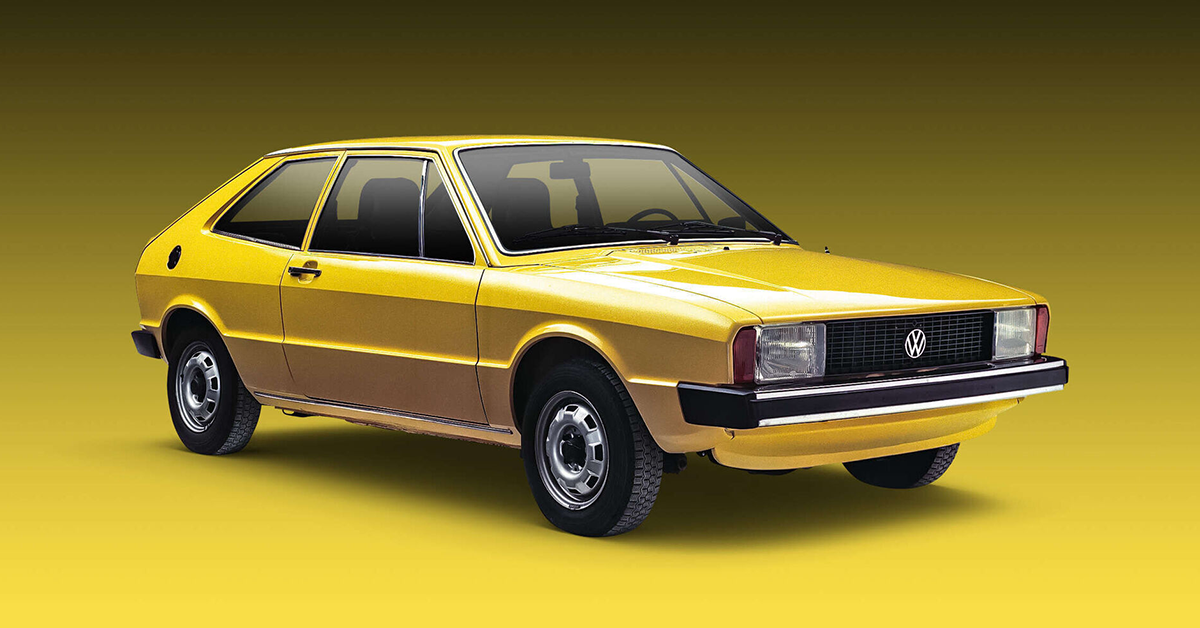
Official press image of the Volkswagen Scirocco Mk1. | © Volkswagen AG
The first Scirocco looked like nothing else Volkswagen sold. Giorgetto Giugiaro’s crisp, wedge-shaped body, built on Golf underpinnings, gave the car a low roofline and a long, flat bonnet. Volkswagen’s own figures put the Mk1 at 3,850 millimetres long and 1,310 millimetres high, with 2+2 seating and a weight of 800 kilograms with engine and transmission. Its chronology adds a wheelbase of 2.40 metres and says the car was developed under the internal code EA398 at Karmann in Osnabrück with styling from Italdesign.
| Length | 3,850 mm |
| Height | 1,310 mm |
| Wheelbase | 2.40 m |
| Weight | 800 kg with engine and transmission |
| Launch engines | 1.1 L 50 PS, 1.5 L 70 PS and 85 PS |
| TS performance | 175 km/h, 0–100 km/h in 11 s |
| GTI (summer 1976) | 1.6 L, 81 kW (110 PS), 185 km/h |
| Peak sales year | 87,902 in 1977 |
| Facelift | 1978 model year |
| Total built | 504,153, ended February 1981 |
The launch engines were modest. Volkswagen says the car came with a 1.1-litre engine of 50 PS and 1.5-litre engines of 70 PS and 85 PS. The TS version reached 175 km/h and took 11 seconds to reach 100 km/h. A reference source lists the Mk1 engines as four-cylinder units from 1.1 to 1.6 litres, with a 1.7-litre also offered in North America. The aim was not outright speed but an affordable coupé with a sporty look, built in a factory that already had experience with low-volume bodies.
The car that earned the Scirocco its reputation was the GTI. In the summer of 1976 Volkswagen offered a 1.6-litre engine with Bosch K-Jetronic mechanical fuel injection, producing 81 kilowatts, or 110 PS, with a top speed of 185 km/h. The GLi was the more luxurious version. Volkswagen’s story is explicit that the Scirocco GTI entered production before the Golf GTI was unveiled, which makes it the first GTI Volkswagen ever sold.
The Scirocco sold well. Volkswagen’s chronology gives 24,555 units in the rest of 1974, 58,942 in 1975 and 87,902 in 1977, and says the car held a 15 percent share of the sporty coupé segment in Germany. The car received a facelift for the 1978 model year. The first generation ended in February 1981 at Karmann in Osnabrück after 504,153 cars, which makes it the most-built Scirocco of the three generations.
North America received the car from 1975 and got different engines. A reference source lists a 1.5-litre of 1,471 cc in 1975, a 1.6-litre with 76 horsepower in 1976 and 1977, a short-stroke 1.5-litre with 71 horsepower in 1978 to meet emissions rules, a 1.6-litre with 78 horsepower in 1979 and a 1.7-litre of 1,715 cc in 1981. The gearbox was a four-speed manual from 1975 to 1978, with a five-speed optional in 1979 and 1980 and standard from 1981. The same source says the Scirocco was sold in Japan through Yanase dealerships from 1976, starting with the TS and adding fuel-injected GTE and LS models in 1977.
For collectors, the Mk1 is the most valued Scirocco. A look back at the model describes the GTI and the late Storm models as especially prized, and says the Mk1 has gained a cult reputation as numbers thin. Anyone buying one should expect the usual problems of a 1970s car, including corrosion, and should check that a GTI is genuine, since the GTI badge and the 110 PS fuel-injected engine are the features that define the car. The table summarises the Mk1’s key figures from Volkswagen’s chronology.
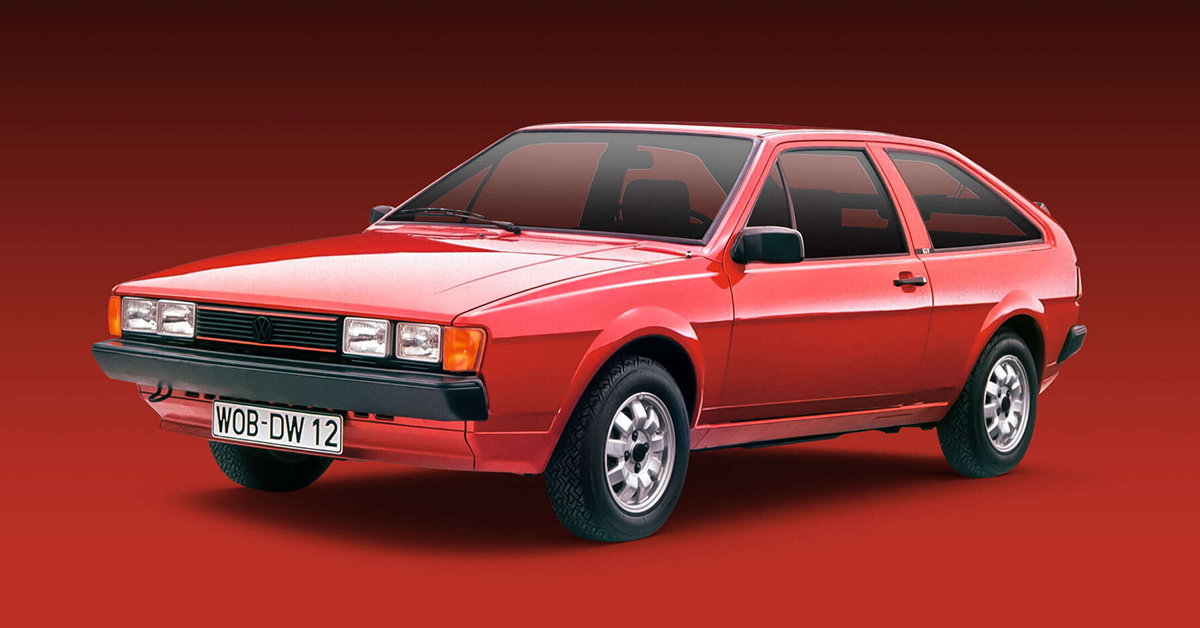
Official press image of the Volkswagen Scirocco Mk2. | © Volkswagen AG
Volkswagen launched the second-generation Scirocco at the Geneva Motor Show in March 1981, and sales began in May 1981. It stayed on the Golf I platform, which Volkswagen’s chronology calls EA 491, and was built again by Karmann in Osnabrück. The chronology puts the length at 4.05 metres, up from 3.85 metres on the first car, with a drag coefficient of 0.38. The look was softer and more rounded than the sharp Giugiaro original.
| Unveiled | March 1981, Geneva |
| Sales began | May 1981 |
| Platform | Golf I (EA 491) |
| Length and drag | 4.05 m, Cd 0.38 |
| Launch engines | 1.3 L 60 PS, 1.5 L 70 PS, 1.6 L 85 PS, 110 PS GTI and GLI |
| 16V (1985) | 1.8 L, 129 PS with catalyst (139 PS without), 208 km/h, 0–100 km/h in 8.1 s |
| Special editions | White Cat 1985, Tropic 1986, Scala 1986 (Volkswagen) |
| US and Canada sales ended | 1988 (US), 1989 (Canada) |
| Production ended | 7 September 1992 |
| Total built | 291,497 |
The launch engines carried over from the earlier car. Volkswagen lists a 1.3-litre of 60 PS, a 1.5-litre of 70 PS, a 1.6-litre of 85 PS and a 110 PS engine in the GTI and GLI. The GTS trim arrived from 1983 and the model received a mid-cycle update in 1984, according to the chronology. The car was gradually refined, but its basic engineering was still that of the original Golf.
The headline change came in 1985, when Volkswagen fitted a 1.8-litre 16-valve engine to the GTX. The cylinder head was developed with Oettinger, according to a reference source, which says it was shown in 1983 and went on sale in July 1985. Volkswagen gives 129 PS with a catalytic converter and 139 PS without, a top speed of 208 km/h and a 0 to 100 km/h time of 8.1 seconds, and its own newer summary describes the GTX 1.8 16V with 102 kilowatts, or 139 PS, as the first Scirocco to pass 200 km/h. It remains the Mk2 that most enthusiasts want.
Special editions were part of the Mk2’s identity. Volkswagen’s chronology names the White Cat in 1985, the Tropic in 1986 and the Scala in 1986, while one source dates the Scala to 1987. The UK received the Storm in 1984. North America had its own Wolfsburg Edition from 1983 to 1985 and a California Edition in 1983, according to the reference source.
The Scirocco II was sold alongside the Corrado for several years. Volkswagen says the Corrado was launched in 1988 as a higher-positioned coupé. In 1989 the Scirocco’s engines were a 1.6-litre of 72 PS and a 1.8-litre of 95 PS. Production ended on 7 September 1992 after 291,497 cars. A reference source says sales continued in Germany, the United Kingdom and parts of Europe until 1992, in the United States until 1988 and in Canada until 1989.
North American cars differed from European ones. The same reference source gives a US engine output of 74 horsepower in 1982 and 1983 and 90 horsepower in 1984, with the US 16-valve version arriving in mid-1986, and reports US sales peaking at about 17,000 cars in 1984, a figure that should be treated as reported rather than official. The Mk2 is often remembered as the more mature Scirocco. It was less sharply styled than the Mk1, but it was faster, easier to live with and, in 16-valve form, close to the performance of the best hot hatchbacks of its time. For used buyers the usual advice applies: check for rust, confirm the engine code and look for a car with a service history. The table lists the main facts.
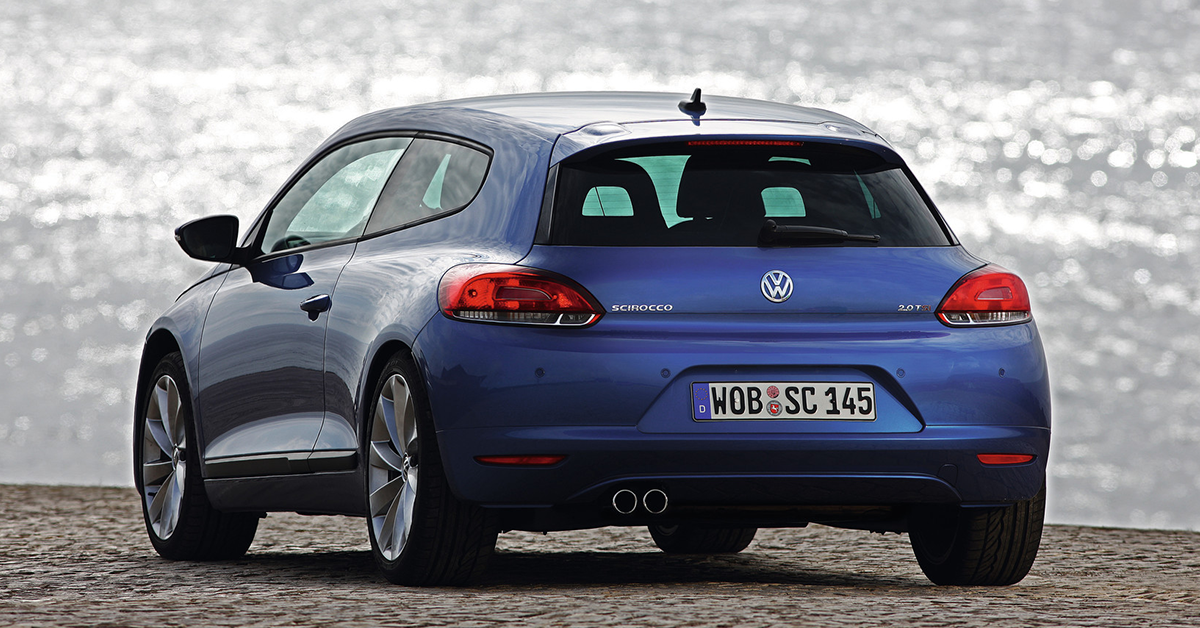
Official press image of the Volkswagen Scirocco (2008). | © Volkswagen AG
The third-generation Scirocco began as a concept. Volkswagen showed the iroc at the 2006 Paris Motor Show, with a 200 horsepower turbocharged petrol engine according to a reference source. In June 2006 the company announced that the production car would be built at the AutoEuropa plant in Palmela, Portugal. The production Scirocco had its world premiere at the Geneva Motor Show in March 2008, 34 years after the first car (Volkswagen documents give both 3 and 4 March). It went on sale in Europe in summer 2008, with a driving presentation in Portugal in June 2008 and other markets following from early 2009.
| iroc concept | 2006 Paris Motor Show |
| Production plant announced | June 2006, AutoEuropa, Palmela, Portugal |
| World premiere | 3 or 4 March 2008, Geneva |
| On sale | Europe summer 2008, other markets early 2009 |
| Length, width, height | 4,256 mm, 1,810 mm, 1,400–1,404 mm |
| Wheelbase | 2,578 mm |
| Boot (launch, UK) | 292 to 755 litres |
| Boot (later data) | 312 to 1,006 litres |
| Design | Walter de Silva (Group), Klaus Bischoff (brand) |
| Euro NCAP | 5 stars (2008) |
Volkswagen’s history story says the Mk3 was based on the Golf VI platform, while the reference source describes it as using the PQ35 platform based on the Golf V. The two descriptions are compatible because both Golfs shared the same basic architecture, but it is a reminder that the Scirocco was always a Golf underneath. The design was led by Walter de Silva for the Volkswagen Group and Klaus Bischoff for the brand, according to the company’s own summary, and Volkswagen presented the car as a clue to the brand’s future design direction.
Dimensions were published at the launch. The car is 4,256 millimetres long, 1,810 millimetres wide and between 1,400 and 1,404 millimetres tall, depending on the document, with a wheelbase of 2,578 millimetres and tracks of 1,569 millimetres at the front and 1,575 millimetres at the rear. A data site gives a kerb weight of 1,273 kilograms, which is a figure to treat as indicative. Compared with the Mk2, the third-generation car is a good deal larger, in line with the growth of the Golf it was based on.
Practicality was better than the shape suggested. Volkswagen’s UK launch material quoted a 292-litre boot that expanded to 755 litres with the split-folding rear seats, while later specification data lists 312 litres and up to 1,006 litres. The difference may reflect different measuring methods or specifications, so both sets of numbers are shown in the table.
Equipment and safety were strong for a coupé. The press material says the Scirocco came with ESP and a sport chassis as standard, with adaptive chassis control offered as an option, and a 7-speed DSG was available with the 160 PS petrol engine. A reference source says the car earned five stars in Euro NCAP testing in 2008, and that it was named Top Gear Car of the Year in the same year. A launch report said UK prices would start at around 20,000 pounds, a figure that should be checked against the price lists of the time.
The Mk3 was also the first Scirocco offered with a diesel engine, which reflected the European market at the time. Volkswagen’s history story presents the car as a return after a 16-year absence, since the Mk2 had ended in 1992, and production at Palmela meant the Scirocco was no longer built by Karmann in Osnabrück, as the first two generations had been. The table lists the launch details. The next section covers the engines, and the one after covers the Scirocco R.
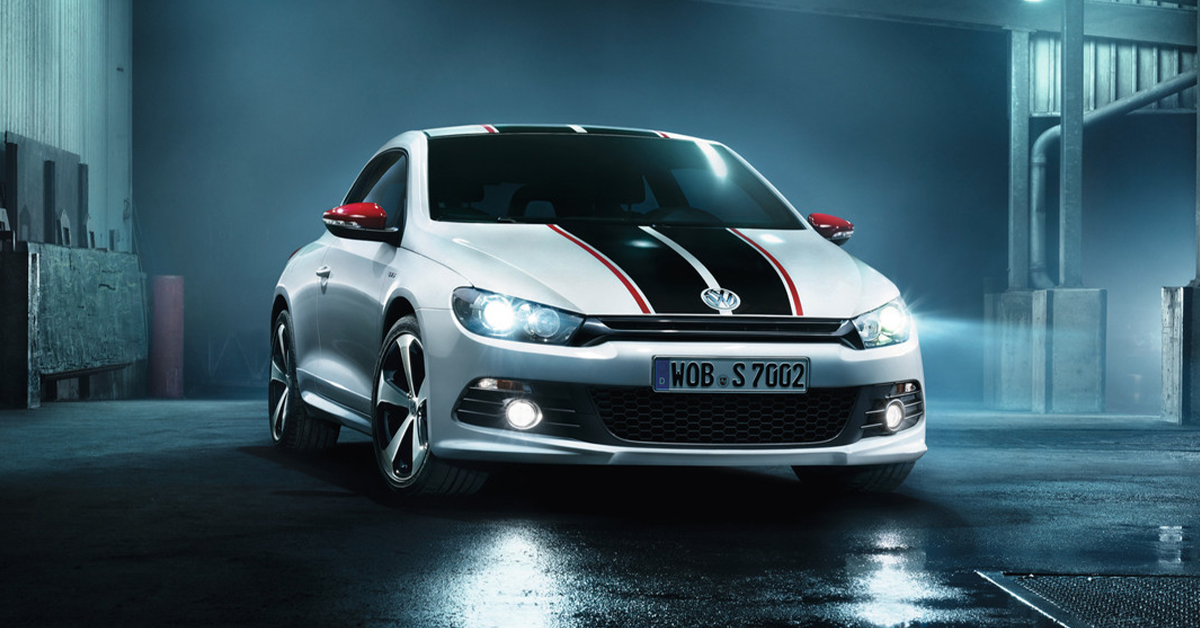
Official press image of the Volkswagen Scirocco 2.0 TSI. | © Volkswagen AG
At the Geneva premiere Volkswagen announced three petrol TSI engines and one diesel. The petrols were a 1.4-litre with 90 kilowatts, or 122 PS, a 1.4-litre with 118 kilowatts, or 160 PS, and a 2.0-litre with 147 kilowatts, or 200 PS. The diesel was a common-rail 2.0 TDI with 103 kilowatts, or 140 PS. All four engines were turbocharged, and the 160 PS engine was the newest, using both a turbocharger and a supercharger.
| 1.4 TSI | 90 kW (122 PS), 200 Nm |
| 1.4 TSI | 118 kW (160 PS), 240 Nm, 7-speed DSG optional |
| 2.0 TSI | 147 kW (200 PS), 280 Nm, 0–100 km/h in 7.2 s, 235 km/h |
| 2.0 TDI | 103 kW (140 PS), 320 Nm, 0–100 km/h in 9.3 s (reported) |
| 2.0 TDI | 170 PS from April 2009 (German list) |
| 2.0 TSI (later) | About 211 PS, 280 Nm (to 2015) |
| 2.0 TSI GTS | 220 PS, 350 Nm (2015 to 2017) |
| R-Line trim | Added for all engines in 2011 |
| Gearboxes | 6-speed manual, 6-speed DSG, 7-speed DSG |
| Source | Volkswagen launch material and a reference source |
The torque figures were strong for the class. The 122 PS engine produced 200 newton metres, the 160 PS engine 240 newton metres, the 200 PS engine 280 newton metres and the TDI 320 newton metres. Volkswagen’s press material quoted fuel consumption of 6.5 litres per 100 kilometres for the 160 PS TSI, which was offered with the 7-speed DSG, and 7.7 litres for the 200 PS. ESP and a sport chassis were standard on the car, with adaptive chassis control as an option.
Performance was brisk but not extreme. Volkswagen described the 200 PS car as the highest-performing Scirocco of the launch range, with a 0 to 100 km/h time of 7.2 seconds and a top speed of 235 km/h, and the 140 PS TDI took 9.3 seconds with a top speed of 207 km/h. These were the numbers that set up the Scirocco R, which would add another 65 PS in 2009.
The range grew over the next few years. Volkswagen’s later material shows a 170 PS 2.0 TDI from 2009, raised to 177 PS in 2012, and a 2.0 TSI of 210 or 211 PS, depending on the source. A 1.4 TSI BlueMotion with 122 PS was also offered. The 2014 facelift brought the GTS with 220 PS and 350 newton metres of torque, although one reference table dates it to 2015 to 2017. A new R-Line trim was added for all engines in 2011.
There are small conflicts in the published numbers. The reference source lists the 2.0 TDI as both 140 PS and 143 PS, and the later diesel and 2.0 TSI figures differ between sources by one or two PS. The safe approach is to use Volkswagen’s launch figures, which are 122, 160, 200 and 140 PS, for the original range and to check a specific car’s registration document for the later versions. This is especially important for buyers of used cars, because the Scirocco was sold with several engine and gearbox combinations over nine years.
For buyers the engine choice shapes the car. The 1.4 TSI cars are light and economical but need to be revved, the 2.0 TSI and the GTS are the best all-rounders and the TDIs suit high-mileage drivers who like torque. The DSG is a popular option but needs regular servicing. The R sits above all of them and is covered in the next section. The engine line-up also shows how Volkswagen used the Scirocco as a showcase: every petrol engine at launch used TSI technology, and the diesel was the first ever fitted to the nameplate. The table shows the main Mk3 engines.
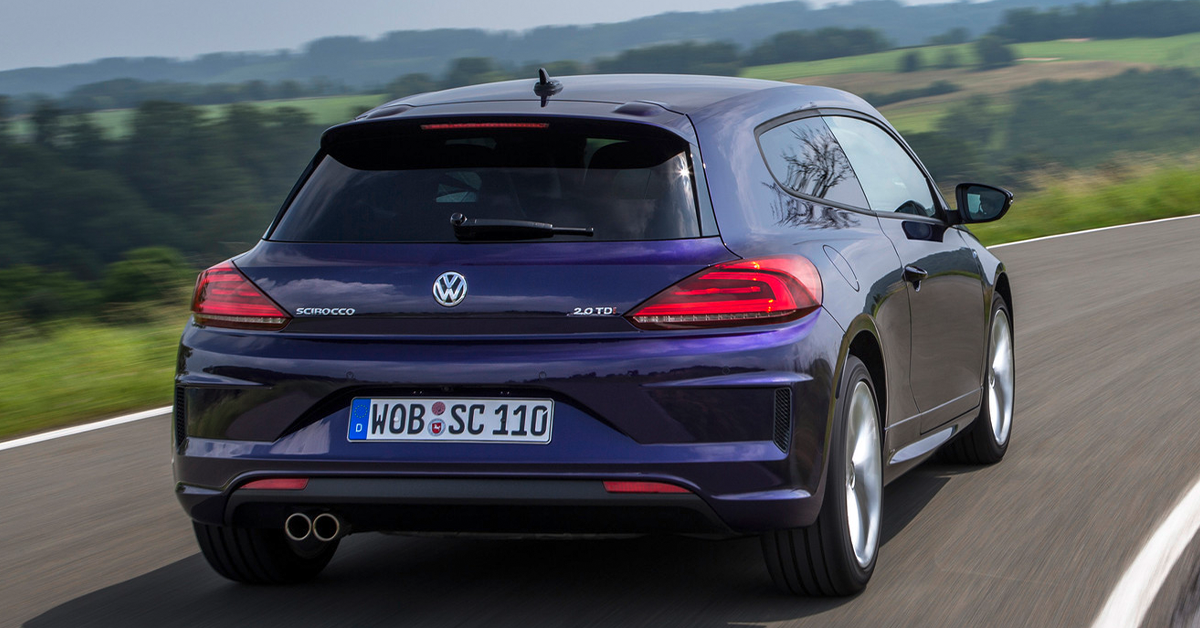
Official press image of the Volkswagen Scirocco R. | © Volkswagen AG
The Scirocco R was the fastest Scirocco Volkswagen built for the road. It made its debut on 20 May 2009 at the Nürburgring, just before the 24 Hours race, with a 2.0-litre TSI producing 195 kilowatts, or 265 PS, at 6,000 rpm and 350 newton metres of torque between 2,500 and 5,000 rpm. A press release is dated December 2009, and Volkswagen UK’s press material says the car went on sale in the UK at the end of October 2009. Like every Scirocco, the R was front-wheel drive.
| Scirocco R (2009) | 2.0 TSI, 195 kW (265 PS) at 6,000 rpm, 350 Nm |
| Scirocco R 0–100 km/h (2009) | 6.0 s manual, 5.8 s DSG (German data) |
| Scirocco R top speed | 250 km/h |
| Scirocco R price (2009, Germany) | 35,850 euros manual, 37,800 euros DSG |
| Facelift reveal | Geneva Motor Show, March 2014 |
| Scirocco R (facelift) | 206 kW (280 PS), 350 Nm |
| Facelift 0–100 km/h | 5.7 s manual, 5.5 s DSG |
| Boot (R) | 312 to 1,006 litres |
| GTS | 220 PS, 350 Nm, from the facelift |
| Production ended | 2017 |
The numbers were strong for a front-wheel-drive coupé. German data shows a 0 to 100 km/h time of 6.0 seconds for the manual and 5.8 seconds for the DSG, with a top speed of 250 km/h and boot space of 312 to 1,006 litres. Prices on the German list at the start were 35,850 euros for the manual and 37,800 euros for the DSG. Those figures put the R well above the 200 PS car in both performance and cost, and made it the flagship of the range for the rest of the car’s life.
The R’s appeal lay in its torque. The 350 newton metres available from 2,500 rpm, compared with 280 newton metres in the 200 PS car and 240 newton metres in the 160 PS car, gave it strong mid-range pull, and the DSG option made it quicker to 100 km/h than the manual. The same engine, in a more powerful tune, would carry the car through its 2014 facelift.
Volkswagen revealed a facelifted Scirocco at the Geneva Motor Show in March 2014, exactly 40 years after the original, with market launch in Europe from August 2014. The most important change for enthusiasts was the Scirocco R, which gained 15 PS to reach 280 PS, or 206 kilowatts, with the 0 to 100 km/h time dropping to 5.7 seconds for the manual and 5.5 seconds for the DSG. A German list price of 37,800 euros was reported for the DSG car. One reference source dates the R’s power increase to September 2014, which is probably the on-sale date rather than the reveal.
The GTS arrived with or soon after the facelift, with 220 PS and 350 newton metres, so there was now a clear ladder of 1.4 TSI, 2.0 TSI, GTS and R. A used-car review notes that the model was deleted from Volkswagen’s UK range in 2017, which means buyers of a late R are buying one of the last cars Volkswagen built.
As a used buy, the R is the one most enthusiasts look for. It is fast, practical and well equipped, but it was also the most expensive Scirocco, and the engine and DSG gearbox need to have been serviced on time. Because sources disagree on some dates and outputs, check the registration document to confirm whether a car is a 265 PS or a 280 PS model. For perspective, the Mk1 TS of 1974 needed 11 seconds to reach 100 km/h and the 1976 GTI made 110 PS, while the 2014 Scirocco R made 280 PS and took about 5.5 seconds. The table lists the R’s numbers side by side for the original and facelifted cars.
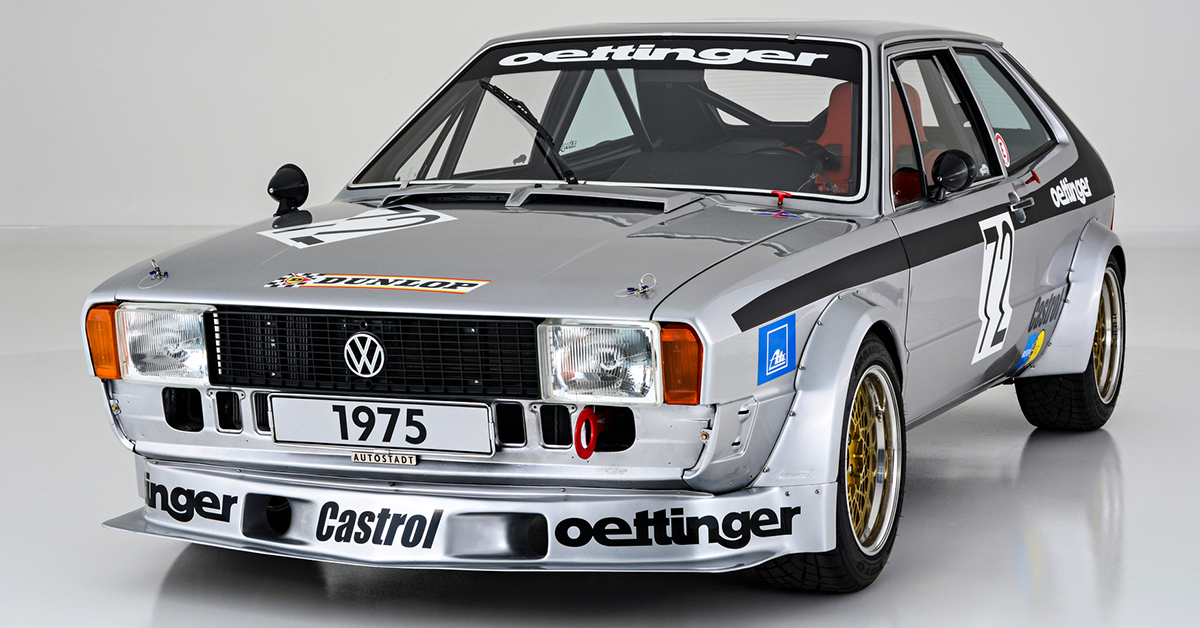
Official press image of the Volkswagen Scirocco race car. | © Volkswagen AG
Volkswagen sold the Scirocco as a sporty car, and it backed that up with racing from the very first year of the GTI. In 1976 the company launched the Volkswagen Junior Cup, a one-make series that ran at Hockenheim in April 1976 with a modified 77 kilowatt, or 105 horsepower, Scirocco. Volkswagen’s history story says around 80,000 spectators attended, and that Manfred Winkelhock competed. Volkswagen’s chronology adds that Volkswagen Motorsport built 50 identical black 110 PS cars for the cup.
| Volkswagen Junior Cup | 1976, Hockenheim, April |
| Junior Cup spectators | About 80,000 (Volkswagen) |
| Junior Cup cars (chronology) | 50 identical black 110 PS cars |
| Junior Cup driver | Manfred Winkelhock |
| Scirocco/Bilstein Cup (US) | Introduced for 1976 |
| Scirocco GT24 | 325 PS, 340 Nm, unveiled at Wörthersee 2008 |
| Studie R concept | 270 PS |
| Scirocco R Cup | 2010 to 2014, DTM support series |
| GT24-CNG | Compressed-natural-gas race car, 2009 Nürburgring 24 Hours (reported) |
| 24 Hours Nürburgring 2008 | Three Sciroccos entered (reported) |
The idea was to show that the front-wheel-drive Scirocco could be a real racing car and to give young drivers a first step into the sport. The series ran in the same year that the Scirocco GTI went on sale and shortly before the Golf GTI was unveiled. The Scirocco’s low weight of 800 kilograms and its 110 PS engine made it a sensible basis for a one-make formula, and the black cars gave the series a strong identity.
The United States had its own series. A classic-car magazine says the Scirocco/Bilstein Cup was introduced for 1976, which fits with the car’s North American launch in 1975. The series matters because it shows the Scirocco being positioned as the sporty Volkswagen in America as well as in Germany, at a time when the company was still best known there for the Beetle and the front-wheel-drive Rabbit.
The third-generation car returned to motorsport quickly. One summary says three Sciroccos took part in the 2008 24 Hours Nürburgring, and Volkswagen unveiled the Scirocco GT24 at Wörthersee in 2008. A reference source describes it as a 24-hour race car with a 2.0 TSI producing 325 PS and 340 newton metres of torque. A concept called the Studie R, with 270 PS, helped lead to the road-going Scirocco R.
The Scirocco R Cup was the most visible racing programme of the third generation. Volkswagen’s chronology says it made its debut in 2010 as a one-make cup within the DTM support programme, and a racing history lists five seasons from 2010 to 2014, after which the Audi Sport TT Cup replaced it. A compressed-natural-gas version of the race car, the GT24-CNG, also appeared at the 2009 Nürburgring 24 Hours according to a racing database. The R Cup was a one-make series like the Junior Cup more than 30 years earlier, which gives the Scirocco a pleasing symmetry in its racing history.
Taken together, the racing record explains why the Scirocco has an image that is sportier than its sales would suggest. It was never the volume seller that the Golf was, but it appeared in one-make series in three decades and gave Volkswagen a way to show its engineering in a different body. The road-going GTI carried the racing image of the Junior Cup into showrooms in the 1970s, and the Scirocco R did the same for the third generation after the GT24 and the R Cup. The table collects the motorsport milestones. Sources differ on small details such as the number of cars in the original Junior Cup and the engine output of the first cars, so the figures here are given as reported by Volkswagen and the reference source.
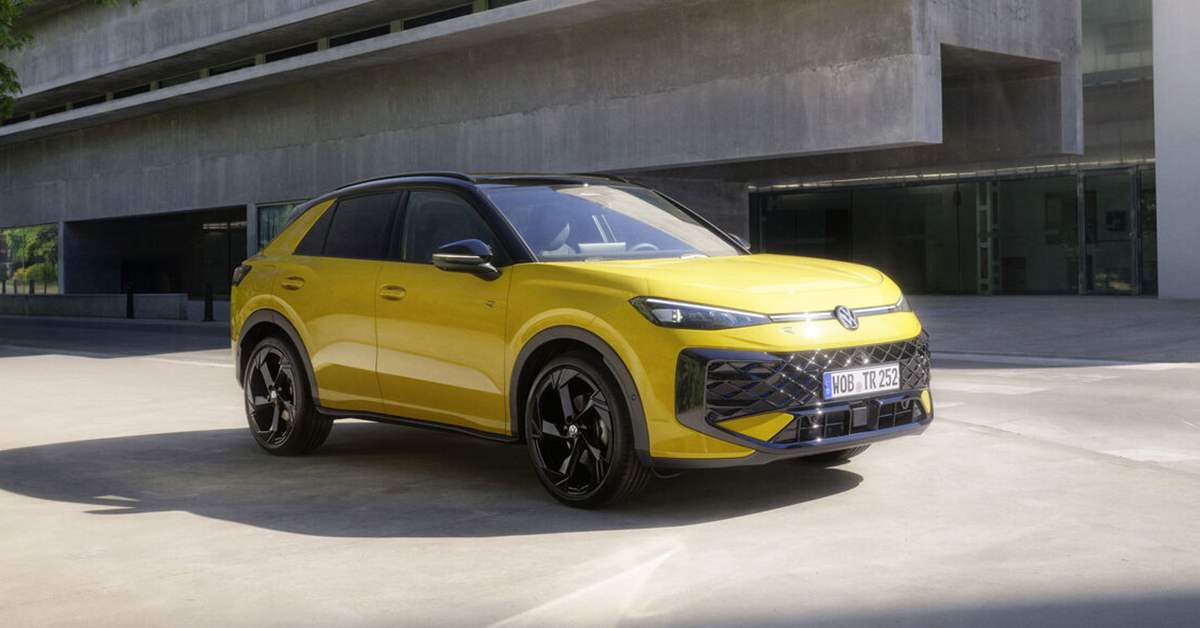
Official press image of the Volkswagen T-Roc. | © Volkswagen AG
Volkswagen quietly ended Scirocco production in 2017. Its history story gives the end as autumn 2017, and Volkswagen’s statement, as quoted in the UK press, was that no replacement was planned because the plant was building the T-Roc. The T-Roc is a small SUV, and it took over production at the Palmela plant in Portugal, which according to one report had also built the Sharan and the Eos. In other words, the Scirocco was replaced on the production line by a different kind of car altogether.
| Scirocco III ended | Autumn 2017 (Volkswagen) |
| Plant | AutoEuropa, Palmela, Portugal |
| Replaced on the line by | T-Roc |
| Volkswagen UK statement | No replacement planned, plant building the T-Roc |
| South Africa sales (reported) | 2 in September 2017 |
| New Scirocco (2017 statement) | Under consideration |
| New Scirocco (2020 statement) | None planned |
| Scirocco III built | 272,150 (Volkswagen) |
| First two generations | 795,650 |
| All generations (sum) | About 1.07 million |
The reasons were commercial, and the T-Roc was part of the answer. A South African report gives a measure of how small sales had become, with two Sciroccos sold in the country in September 2017. Volkswagen’s official line was that the T-Roc would absorb some of the Scirocco’s sales, and a motoring report added that a hot T-Roc R variant would indirectly replace the Scirocco R. The Scirocco, in other words, was a victim of the same shift towards compact SUVs that affected many coupés.
A reference source adds that Volkswagen said in 2017 that a new Scirocco was under consideration, and that by 2020 it had said none was planned. The end date also differs between sources. Volkswagen’s history story says autumn 2017, one reference text says the car ran until 2018 while its own engine table ends in 2017, and a classic-car site says production stopped in 2017. The most reliable reading is that building ended in 2017, with the last cars sold from stock.
The numbers also differ. Volkswagen’s story gives 272,150 third-generation cars, while a US classic-car source says the Mk3 added about 280,000 more units. Adding the Volkswagen figure to the 795,650 first- and second-generation total gives about 1.07 million Sciroccos, which is my own sum rather than a Volkswagen figure and is the number this guide uses. The third generation was never sold in the United States, where sales of the earlier cars ended in 1988.
For buyers today the Scirocco is a good-value used coupé. The third-generation cars are easy to find in Europe, and the R and GTS are the most sought-after. The Mk1 GTI and the Mk2 16V are classic cars, and a motoring history says the GTI and the late Storm models are especially prized. Whatever the generation, buyers should check service history, the condition of the engine and gearbox and any signs of rust or accident repair, and should confirm the engine code against the registration document.
The Scirocco story is one of a name that was retired twice and returned once. It began as the Karmann Ghia’s replacement, gave Volkswagen the first GTI, was joined by the Corrado in 1988, ended in 1992, came back in 2008 as a stylish coupé and ended again in 2017 as SUVs took over the market. As of 2020 Volkswagen said no new Scirocco was planned. This guide has marked every reported figure so readers can see which numbers are firm and which depend on secondary sources. The table summarises the end of production.