 Brands
Ford GT40 — Four Le Mans Wins From Mk I to Mk IV
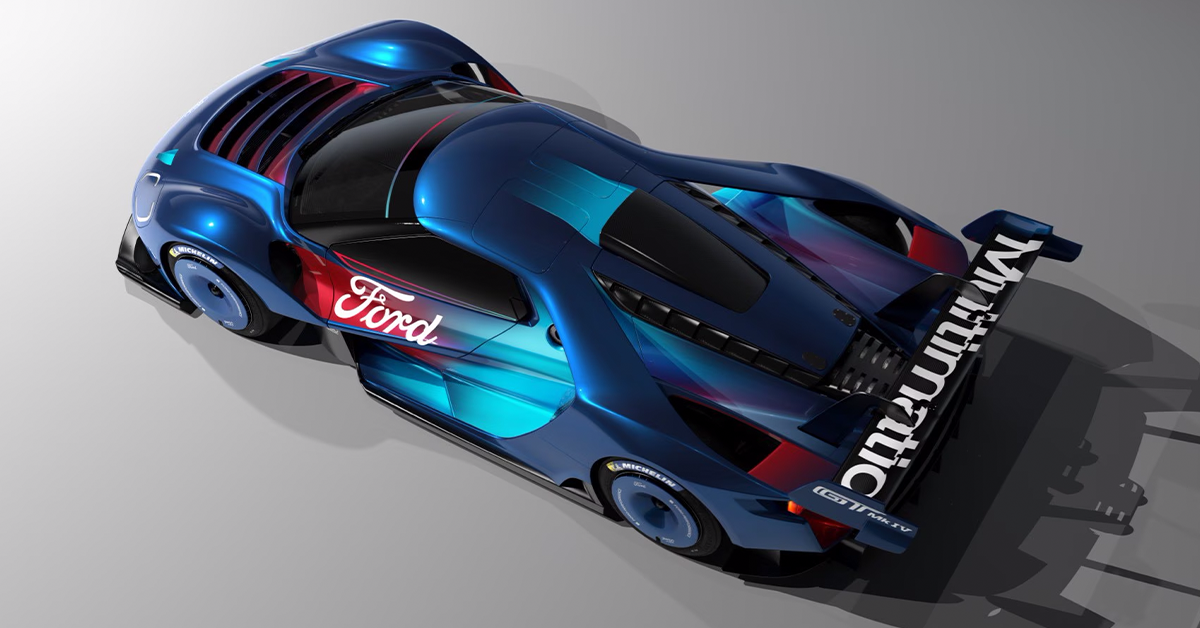
Official press image of the Ford GT40. | © Ford Motor Company
The Ford GT40 from the Ferrari talks of 1963 to four straight Le Mans wins: Mk I to Mk IV, the 1966 finish, the Gulf cars, road cars and production numbers.
The Ford GT40 is the race car Ford built in the 1960s to win the 24 Hours of Le Mans, and it won four years in a row, from 1966 to 1969 (reported). Four different cars took those wins: the Mk II in 1966, the Mk IV in 1967, and the Mk I chassis 1075 in both 1968 and 1969 (Ford, reported). This article covers the origins, the Mk I to Mk IV, the 1966 finish, the 1967 all-American win, the Gulf cars, the road cars and the production numbers. We have not seen these cars in person, and every fact is tagged (Ford) or (reported).
| Le Mans wins | 1966, 1967, 1968, 1969 (reported) |
| 1966 winner | Mk II, McLaren and Amon (Ford) |
| 1967 winner | Mk IV, Gurney and Foyt (reported) |
| 1968 winner | Mk I chassis 1075, Rodriguez and Bianchi (Ford) |
| 1969 winner | Mk I chassis 1075, Ickx and Oliver (Ford) |
| Height | “A mere 40 inches” (Ford) |
| Production numbers | GT40P/1000 to P/1145 (reported) |
| Estimated built | About 105 (reported) |
| Mk IV cars | J1 to J12 (reported) |
| Mk II engine, Ford figure | 485 hp at 6,400 rpm (Ford) |
The name is often explained as a height. Ford’s history page says the car was lowered to “a mere 40 inches” in height, but it does not say that the name comes from that measurement (Ford). It also notes that the first seven cars had VINs beginning “Ford GT”, and later cars “Ford GT40” (Ford). A reported history adds that the production cars were numbered GT40P/1000 through GT40P/1145, and the Mk IV cars J1 to J12 (reported). We therefore do not claim a name origin.
The engines changed with the cars. A report says the Mk I was powered by a 289 cubic inch engine as used in the Ford Mustang, and later cars got the 427 from the Galaxie (reported). Ford says its engineers developed a 427 that produced 485 horsepower at 6,400 rpm and lasted 48 hours, and that twelve were built for Shelby American, Holman & Moody and Alan Mann Racing (Ford). Another report gives 463 horsepower for the 7.0-litre V8 in 1966 (reported), and we show both values.
Production numbers are an estimate. A reported history says about 105 GT40s were built across the Mk I to Mk IV, with other counts including extra cars and roadsters (reported). The same history gives seven Mk III road cars and twelve Mk IV cars (reported). The chassis numbering, from P/1000 to P/1145, would allow a larger count, which may be one reason sources differ. We show about 105 as the commonly reported estimate and say so in the production section.
Two sources disagree on the start of the story. Our Ford history article says Henry Ford II tried to buy Ferrari and that Enzo Ferrari walked away (reported). Ford’s own history page describes talks about a possible collaboration that a May 1963 newswire said had been suspended by mutual agreement, and says Ford formed a performance unit about a month later (Ford). We give both. Whatever the exact terms of the talks, a programme to win Le Mans followed.
The modern Ford GT is a homage to the GT40, and our Ford GT article covers it in detail, including its 2016 class win at Le Mans. The GT40’s wins were outright victories in the overall race, which is the difference between the two records. This article stays with the 1960s cars. Where sources disagree we show both values, and where Ford gives a figure we use it as the reference, with reported figures tagged beside it for comparison.
Ford’s own history page starts in May 1963. It says talks with Ferrari about a possible collaboration were reported by a newswire on 22 May 1963 as suspended by mutual agreement, and that Ford formed a performance unit about a month later (Ford). Other histories describe the same events as a failed attempt to buy Ferrari, with Henry Ford II determined to beat Ferrari at Le Mans afterwards (reported). The two descriptions differ on what Ford wanted from Ferrari, so we cannot settle the point and give both.
| Ferrari talks, per Ford | Suspended by mutual agreement, May 1963 (Ford) |
| Performance unit formed | About a month after (Ford) |
| Project engineer | Eric Broadley, Lola (Ford) |
| Race manager | John Wyer (Ford) |
| First work | Broadley’s garage, Bromley (Ford) |
| Operations moved to | Slough, England (Ford) |
| Height reduction | Two inches, by Roy Lunn (Ford) |
| 1964 Le Mans | All three cars retired, gearbox failure (Ford) |
| 1964 lap record | Phil Hill (Ford) |
| Management change | Le Mans Committee formed (Ford) |
Ford chose its partners quickly. The page says Ford picked Eric Broadley, whose Lola GT it called groundbreaking, as a project engineer, and John Wyer, who had won Le Mans with Carroll Shelby driving for Aston Martin, as race manager (Ford). Work began in Broadley’s garage in Bromley, England (Ford). A report says the car was based on the Lola Mk6, and that because Lola ran its own Le Mans team, Broadley agreed only to a short collaboration, so only two Mk6 chassis went to Ford (reported).
The programme then moved to Slough. Ford’s page says Ford Advanced Vehicles moved its operations there from Broadley’s garage (Ford). Roy Lunn later lowered the height by two inches from the Lola design, to the “mere 40 inches” the page mentions (Ford). A reported history says the first three generations of the car were designed and built in England, and that Ford Advanced Vehicles could not win races at first (reported). Another report gives the assembly sites as Slough in the UK, Los Angeles in the US for Mk I and Mk II modifications, and Wixom, Michigan for the Mk IV (reported).
The first race results were poor. Ford says the Ford cars led for part of the 1964 Le Mans race and Phil Hill set a lap record, but all three cars retired about 12 hours in, when their Colotti gearboxes failed (Ford). The page adds that in the April test days the car’s speed was tremendous, but the aerodynamics needed work as it was difficult to control at high speeds (Ford). Bruce McLaren was the initial test and development driver, and Carroll Shelby served as Ford’s front man in Europe, though the page does not say that he raced (Ford).
The second year did not go better. A reported history says the Mk I’s early struggles at Le Mans in 1964 and 1965 gave Ford data that was important in developing the Mk II (reported). We did not find a Ford page with the 1965 race results, so we give none. The Ford page says Ken Miles first drove the car in February 1965 (Ford).
Ford also changed how it ran the programme. Its page says Ford formed the Le Mans Committee, made up of the heads of several Ford divisions, to cut through the bureaucracy that had slowed the effort (Ford). John Cowley ran the GT programme day to day, and Homer Perry was the liaison to Shelby American and Holman & Moody (Ford). That structure is the background to the 1966 win. For the wider history of Ford, from the Model T to its racing record, read our Ford history article.
The Mk I was the original GT40. A reported history says it was powered by the 289 cubic inch engine used in the Ford Mustang (reported). It was based on the Lola Mk6 and built at Slough (reported). A reported specification lists its classes as Group 4 and Group 5 sports car and Group 6 sports prototype (reported). Its early record was weak, with the Ford cars retiring at Le Mans in 1964 and struggling in 1965, as covered in the origins section above.
| Mk I engine | 289 cubic inch, as in the Mustang (reported) |
| Mk II engine | 427 cubic inch, 7.0 litres (reported) |
| Mk II output, Ford figure | 485 hp at 6,400 rpm (Ford) |
| Mk II output, other source | 463 hp (reported) |
| Engines built | Twelve for Shelby, Holman & Moody, Alan Mann (Ford) |
| Engine durability | 48 hours of simulated running (Ford) |
| Weight saving on engine | About 50 lb (reported) |
| Mk II developers | Shelby American, Holman & Moody, Ford (Ford) |
| Daytona, February 1966 | Miles and Ruby won; Ford swept top three (Ford) |
| Height | “A mere 40 inches” (Ford); 40.5 in (reported) |
The Mk II brought the big engine. A report says Ford and Shelby changed the chassis to accept the 427 cubic inch Galaxie engine, a NASCAR-proven V8, and that Shelby asked Ford’s Engine and Foundry Division to cut weight, with aluminium heads and other changes saving about 50 pounds (reported). Ford’s page says the reworked engine produced 485 horsepower at 6,400 rpm and lasted 48 hours of simulated race running, and that Ken Miles helped build a dynamometer test based on Le Mans (Ford). Twelve engines were built (Ford).
The horsepower figure is disputed. Ford gives 485 horsepower at 6,400 rpm (Ford). A reported history says the 7.0-litre V8 was producing 463 horsepower in 1966, enough to see almost 200 mph on the Daytona banking (reported). The two figures may refer to different engine states or years, but we have no source that says so. A report says the engine was 7.0 litres, or 427 cubic inches (reported). We treat 485 horsepower as Ford’s figure and 463 as the reported alternative.
The partners shaped the cars. Ford says Shelby American and Holman & Moody, with Ford Engineering, developed the Mk II, and that Shelby’s Phil Remington designed a quick-change caliper system while John Holman built a quick-change rotor setup (Ford). A reported history says the Mk IIs built by Shelby were unofficially Mk II-A and those built by Holman & Moody Mk II-B (reported). Shelby’s name also connects the GT40 to the Mustang, and our Ford Mustang article covers the GT350 that Shelby raced.
The Mk II won before Le Mans. Ford says Ken Miles and Lloyd Ruby won the Daytona 24 Hours in February 1966, and Ford swept the first three places (Ford). At Sebring, Dan Gurney’s car lost its engine about 100 yards from the finish, and he was disqualified for pushing it, so Miles was awarded the win, and Ford again swept the podium (Ford). Those results made Ford favourites for Le Mans, and the next section covers the race that followed.
A few limits. We did not find a Ford source for Mk I or Mk II weights, power-to-weight figures, top speeds or lap times, and the Mk I’s 289 engine figure comes from a report. One report gives the height as 40.5 inches (reported), while Ford says “a mere 40 inches” (Ford). A report gives a weight range of 1,800 to 2,300 pounds for the 1966 Mk IIA (reported), which is a wide range, so we do not treat it as a specification.
Ford fielded eight GT40 Mk II cars at Le Mans in 1966, and The Henry Ford says it swept the podium with a 1-2-3 finish (reported). Bruce McLaren and Chris Amon took the flag in the number 2 car. Ken Miles and Denny Hulme finished second in the number 1 car, and Ronnie Bucknum and Dick Hutcherson finished third in the number 5 car (reported). The Henry Ford says Shelby American campaigned four of the eight cars (reported). Ford says it held the 1-2-3-5-8 positions at one point in the race (Ford).
| Cars fielded, 1966 | Eight GT40 Mk II (reported) |
| Cars run by Shelby American | Four (reported) |
| Winners | McLaren and Amon, No. 2 (reported) |
| Second place | Miles and Hulme, No. 1 (reported) |
| Third place | Bucknum and Hutcherson, No. 5 (reported) |
| Laps, first and second | 360 each (reported) |
| Start-line gap, Ford figure | 8 metres (Ford) |
| Start-line gap, other source | 60 feet (reported) |
| Manufacturer Championship | Won by Ford, 1966 (Ford) |
| Pre-race engine test | 48 hours on a dynamometer (reported) |
The race had drama. Ford says Gurney retired with engine trouble around 10 in the morning, and that the leaders were Miles, McLaren, Amon and Hutcherson (Ford). A report says a development engine had been run on a dynamometer for 48 hours of simulated laps before the race, while a further 12 engines were prepared (reported). Ford says it won the Manufacturer Championship that year (Ford). Another report says Ford was the first American manufacturer to win a major European race since 1921 (reported).
The finish is the famous part. Ford’s page says Miles and McLaren were told to tie, but the ACO, the race organiser, later ruled that a tie was not permitted, and McLaren was declared the winner because he started further back (Ford). The distance is a conflict: Ford says McLaren started 8 metres further back (Ford), while a report says 60 feet (reported). Eight metres is about 26 feet and 60 feet is about 18 metres, so the two figures differ by a large margin.
The page adds more detail. Photos appear to show McLaren ahead at the line, but Ford says the chequered flag was waved before the finish line, and that IBM timing devices recorded the photo finish (Ford). It says Henry Ford II’s team chose not to tell the drivers about the ACO ruling, and that Leo Beebe said Miles’s attempt to push Gurney’s car at Sebring weighed against him (Ford). The page also notes that the ACO ruling is debated, because the sporting regulations did not address ties (Ford).
The numbers around the finish vary by source. A reported results table shows the winning car and the second car both finishing 360 laps, with the number 5 car third, twelve laps behind (reported). A reported 1966 Ford press release describes the Bucknum and Hutcherson car as hanging back as insurance (reported). We did not find a Ford page that gives the exact margin between McLaren and Miles, so we give none.
What the win meant. Ford’s own page frames it as the result of reorganising its effort, and reports call it Ford’s first Le Mans win (reported). A reported history says Ford immediately started work on a new model, the J-car, after the 1966 race (reported). The 1967 win with that car is covered next. For the story of the race as a film, our Ford history article notes the 2019 movie Ford v Ferrari, and we do not rate how closely it follows events.
After the 1966 race, Ford moved on to a new car. A reported history says the first J-car was completed in March 1966, set the fastest time at the Le Mans trials that year, and weighed about 2,660 pounds, roughly 300 pounds less than the Mk II (reported). The same history says its tub weighed only 86 pounds (reported). Another report says Ford started work on the J-car immediately after the 1966 win, and that Shelby American’s test driver Ken Miles died testing it at Riverside (reported).
| J-car first completed | March 1966 (reported) |
| J-car weight | About 2,660 lb (reported) |
| J-car versus Mk II | About 300 lb lighter (reported) |
| Mk IV numbering | J1 to J12 (reported) |
| Mk IV top-speed gain | 15 mph over Mk II on Mulsanne (reported) |
| 1967 winners | Gurney and Foyt, Mk IV (reported) |
| 1967 rivals beaten | Ferrari 330 P4, Chaparral 2F (reported) |
| 1967 crash | 3:35 am, three GT40s out (reported) |
| Mk IV test site | Kingman, Arizona (reported) |
| Ford withdrew from Le Mans | After 1967 (reported) |
The Mk IV was the J-car developed. A reported history says the Mk IV was based on the J-car but changed to incorporate the lessons of its failure (reported). The new body was reported as 15 mph faster than the Mk II on the Mulsanne Straight (reported). The Mk IV cars were numbered J1 to J12 (reported), and a report says the Mk IV was built at Wixom, Michigan (reported). A report calls it the only car developed and assembled entirely in the United States, chassis and engine, to win Le Mans outright (reported).
The 1967 winners were Dan Gurney and A. J. Foyt. A reported history says they won in a Mk IV, comfortably defeating the Ferrari 330 P4 and the Chaparral 2F (reported). Another says the all-American crew of Gurney and Foyt won in the Mk IV, a silhouette that was more aerodynamic than the earlier cars (reported). A report says the car was proven much faster in testing at Ford’s Kingman, Arizona, facility (reported). Gurney is credited with being the first driver to spray champagne on the podium (reported).
The race had an accident. A report says there were ten GT40s at Le Mans in 1967, four of them Mk IVs entered by Shelby and Holman & Moody, and that a 3:35 am accident took out three GT40s, including a Mk IV driven by Mario Andretti (reported). We did not find a source we trust for the exact winning margin, so we give none.
The 1967 win was Ford’s last as a works team. The Henry Ford says the team dominated the next two seasons with Mark I cars after Ford withdrew from Le Mans following 1967 (reported). That is why the 1968 and 1969 wins belong to the JW Automotive Mk I rather than a Ford factory car. A reported history says the Mk IV was the last race car of the family, though the Mk II continued to race, and that Mk II-B chassis P/1047 was in the 1967 crash (reported).
Ford’s page on the Le Mans Committee does not cover 1967 or the Mk IV, so the Mk IV facts here come from reports and not from Ford. We did not find a Ford source for the J-car’s engine output or the Mk IV’s top speed. We also found different accounts of the number of J-cars and Mk IVs built, though the J1 to J12 numbering is widely reported. Treat the details above as reported until a Ford heritage page confirms them.
The last two Le Mans wins belong to one car. The Henry Ford says chassis 1075, a 1968 Ford Mark I, won the 24 Hours of Le Mans twice, in 1968 and 1969 (reported). Its other wins were the BOAC 500 in 1968, the Spa 1000 km in 1968, the Watkins Glen 6 Hours in 1968 and the Sebring 12 Hours in 1969 (reported). The museum says the car has six race victories (reported). It was run by JW Automotive Engineering, the Gulf-sponsored team, after Ford withdrew from Le Mans (reported).
| Chassis | GT40P/1075, 1968 Mark I (reported) |
| Le Mans wins | 1968 and 1969 (reported) |
| 1968 drivers | Rodriguez and Bianchi (reported) |
| 1969 drivers | Ickx and Oliver (reported) |
| 1968 race date | Late September, because of unrest (reported) |
| 1968 laps led | 17 of 24 hours (reported) |
| 1969 margin | About 100 yards (reported) |
| Other wins, 1968 | BOAC 500, Spa 1000 km, Watkins Glen (reported) |
| Other win, 1969 | Sebring 12 Hours (reported) |
| Engine, museum listing | 302 cu in, 425 hp (reported) |
The 1968 race was held late. The Henry Ford says it was run in late September instead of June because of political unrest, and that it was cold and wet (reported). Pedro Rodriguez of Mexico and Lucien Bianchi of Belgium drove 1075 to its first win, leading for 17 of the 24 hours (reported). A report says they finished five laps clear of the second-place Porsche 907 (reported). The museum says it was Ford’s third straight Le Mans win and the first for the original Mark I design (reported). Both drivers died in racing accidents within three years (reported).
The 1969 race was closer. Jacky Ickx of Belgium and Jackie Oliver of Britain drove 1075 to its second win (reported). The museum says Ickx protested the Le Mans start by taking his time to buckle his harness, that John Woolfe died in a crash on the first lap, and that the car traded the lead with a Porsche 908 in the final hours (reported). It won by about 100 yards on the last lap (reported). A report adds that Ickx dedicated the victory to Lucien Bianchi, who had died testing for Alfa Romeo in March (reported).
The engine in 1075 has several descriptions. The Henry Ford lists a Ford V8 with Gurney-Weslake cylinder heads, overhead valves, 302 cubic inches, rated at 425 horsepower at 6,000 rpm with a five-speed manual transmission (reported). It says the Mark I originally used a 289 cubic inch engine (reported). A race database lists the car at 4,700 and 4,736 cc, and a supercar site lists 4,942 cc, or 301.6 cubic inches (reported). These are different ways of describing a similar engine, but we cannot reconcile them.
Rules changed to stop the big engines. The Henry Ford says the 427 engines regularly pushed cars past 200 mph at Le Mans, and that French officials, fearing a serious accident, limited engines to 305 cubic inches for 1968 (reported). That gave the smaller 289 engine a competitive break (reported). A different report says the rules limited prototypes to 3.0-litre engines from 1968, with a loophole that allowed the private JW Gulf team to win with a Mk I (reported). The two descriptions differ, and we show both.
What happened to 1075? The Henry Ford says it was on exhibit at the Henry Ford Museum in Dearborn, Michigan (reported), and a report says Gulf Oil retained it for promotional duty after the race and sold it in 1984 to an Arizona dealer, who kept it until the 1990s (reported). Those two accounts are from different dates, and we did not confirm its present location. A report says the GT40 effort ended after 1969, and that JW Automotive moved on to Porsche 917s in 1970 (reported).
The GT40 also had a road car. A reported history says the Mk III was meant for the road rather than the track (reported), and that a Mk I, chassis P/1030, was modified by Ford Advanced Vehicles in August 1967 to be street legal (reported). A different report gives the Mk III run as seven cars built between 1967 and 1969, all road-going (reported). We did not find a Ford source for the Mk III, so we give the figures as reported and do not give its engine or power output.
| Total built, estimate | About 105 (reported) |
| Chassis number range | GT40P/1000 to P/1145 (reported) |
| Mk III road cars | Seven, 1967 to 1969 (reported) |
| Mk IV cars | Twelve, J1 to J12 (reported) |
| Road-converted Mk I | Chassis P/1030, August 1967 (reported) |
| JW Automotive 1968 Mk I | Three or four built (reported) |
| Auction result, 2012 | $11 million (reported) |
| Versions claimed | Mk I to Mk IV, Mk V in one source (reported) |
| X-1 roadster | Completed 1965 (reported) |
| J-car | Completed 1966 (reported) |
Production counts vary. A reported history says about 105 GT40s were built across the Mk I to Mk IV, an estimate from Hagerty (reported). Another history gives 105 produced from 1964 to 1969 (reported), and says other counts include additional cars and roadsters (reported). The chassis numbers run from GT40P/1000 to GT40P/1145 (reported), so some sources go higher. A third report says the JW Automotive Mk I of 1968 and 1969 had four built, and another says three lightweight cars (reported).
The versions are also counted differently. One report says Ford produced six versions of the GT40, named Mk I to Mk V, with two exceptions, the X-1 roadster completed in 1965 and the J-car completed in 1966 (reported). Other histories name only Mk I to Mk IV and treat the J-car as a prototype (reported). We therefore avoid a Mk V claim, which we could not confirm, and we list the Mk I to Mk IV with the J-car as the bridge between the Mk II and Mk IV.
Values are high. A reported history says one GT40 sold for $11 million in 2012 (reported). We did not find a more recent auction result or a valuation guide from a source we trust, so we give no current value. A used GT40’s price depends on its history, its originality and which version it is, and we did not research those. Replicas and continuation cars also exist, so a listing that says GT40 may not be an original car, which is a point for buyers to check.
Continuation cars are a separate matter. A report says Superformance, Safir GT40 and Gulf Oil partnered on a limited-edition 1969 tribute GT40 with P1000 continuation prototype chassis numbers (reported). We did not find a Ford statement on continuation cars, and we do not know how Ford regards them. The modern Ford GT, built by Multimatic, is a separate car, and our Ford GT article covers it. This article does not cover replicas, kit cars or continuation builds beyond this mention.
What we do not know. We did not find an official Ford production total, a Ford price or value for any GT40, or a Ford source for the Mk III. We found different counts of the J-car and Mk IV chassis, different accounts of the 1075 engine and different dates for its sale. We treat the estimate of about 105 cars as reported and not as confirmed, and we will update the article if Ford publishes a heritage record with exact numbers.
The GT40’s legacy is mainly the modern Ford GT. A reported history says the contemporary Ford GT is a modern homage to the GT40 (reported). Ford’s page for the 2022 Ford GT says the car pays homage to the 1964 Ford GT prototypes that led to what it calls America’s only Le Mans-winning supercar, with wins from 1966 to 1969 and again in 2016 (Ford). The 2016 win was a class win, and our Ford GT article explains the difference and the two generations of the road car.
| Modern homage | Ford GT, 2005 and 2017 (reported) |
| Ford GT 2016 result | LM GTE Pro class win (Ford) |
| GT40 results | Overall Le Mans wins, 1966 to 1969 (reported) |
| GT LM Edition | Honours 2016 class win (Ford) |
| Mk IV track car | Honours 1967 GT Mk IV (reported) |
| Le Mans Committee | Formed to cut bureaucracy (Ford) |
| Reworked 427 | 485 hp, 48-hour durability (Ford) |
| 1964 result | All three Ford cars retired (Ford) |
| 1966 winner decision | ACO ruled ties not allowed (Ford) |
| 1968 engine limit | 305 cubic inches, per museum (reported) |
Ford has also used the GT40 in its special editions. The 2022 Ford GT LM Edition honours the 2016 win (Ford), and the track-only Mk IV honours the 1967 GT Mk IV, according to reports (reported). A reported film, Ford v Ferrari, dramatised the story in 2019 (reported), and a Ford media page for the GT LM Edition is titled with the phrase “Ford v. Ferrari 50 years later” (Ford). We did not research the film in detail, and we do not rate how accurate it is.
The GT40’s record is clear, but its details are contested. The four straight Le Mans wins are widely reported. The year-by-year details, such as the margin at the 1966 finish, the 1968 engine and the number of cars built, differ by source. Where Ford gives a figure we use it as the reference, and where Ford is silent we show the reported value. That is why this article has so many conflicts listed beside its tables, and why we recommend checking Ford’s own heritage pages for any figure you plan to quote.
A short summary of the main Ford facts. Ford says it formed the Le Mans Committee to speed up the programme (Ford). It says the reworked 427 produced 485 horsepower and lasted 48 hours (Ford). It says all three Ford cars retired in 1964 with gearbox failures (Ford). It says McLaren was declared the winner of the 1966 race after the ACO ruled a tie was not allowed (Ford). A museum article says French officials limited engine size for 1968 (reported). The Ford statements are the strongest sources here.
What we could not confirm. We did not find a Ford source for the Mk IV’s race details, the 1967 margin, the Mk III, the total built, or any current value. We did not confirm the present location of chassis 1075. We also did not find a Ford statement on whether the programme counted as a buy-out attempt or a collaboration, beyond the Ford page we quote. We have not driven or tested any GT40, and this article reports the published record and does not rate the cars.
We will update this article if Ford publishes a fuller heritage record. For the modern car, read our Ford GT article, for the company’s past, our Ford history article, and for Shelby’s Mustang connection, our Ford Mustang article. Where our sources disagreed we have shown both values, and where we could not confirm a fact we have said so. That is the method we use for every brand article on this site.