 Brands
Volkswagen Fox — History, Europe, CrossFox and Specs
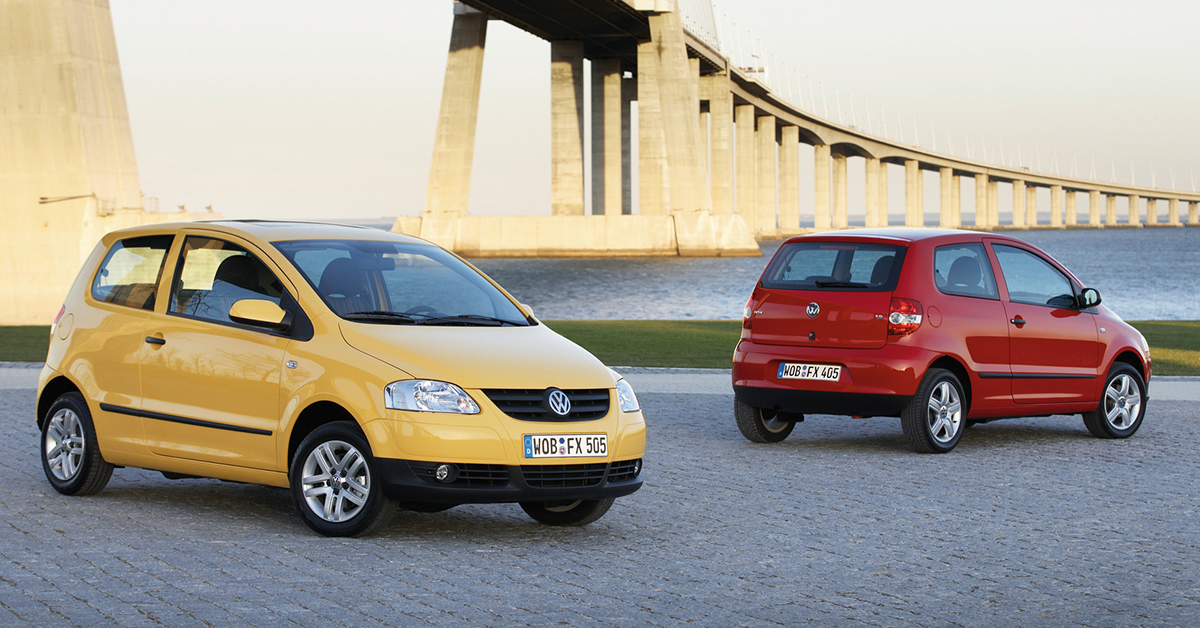
Official press image of the Volkswagen Fox. | © Volkswagen AG
The Volkswagen Fox is the small hatchback that Volkswagen do Brasil designed and built. Here is the full Fox story, from the 2003 Brazil launch to the 2005 to 2011 European years, the CrossFox and SpaceFox, and the end of production in 2021.
The Volkswagen Fox is a small hatchback that Volkswagen do Brasil designed and built, and that Volkswagen sold in Latin America from 2003 and in Europe from 2005 to 2011. A reference source says it was a subcompact car produced and designed by Volkswagen of Brazil, sold in Latin America from 2003 until 2021 and in Europe from 2005 until 2011, where it was sold as the city car offering (reported). Volkswagen’s own classic archive page calls it the Brazilian Fox, the smallest Volkswagen of its time and the successor to the Lupo in the A-segment (Volkswagen).
| Brazil launch | 2003 (reported) |
| Europe launch | 2005 (Volkswagen) |
| Europe end | 2011 (reported) |
| Brazil end | 2021 (reported) |
| Developed by | Volkswagen do Brasil (Volkswagen) |
| European predecessor | Lupo (Volkswagen) |
| European successor | up! (reported) |
| Platform | PQ24, shared with Polo (reported) |
| Units built | Over 1.8 million, one source says 1.5 million (reported) |
| Exports | About 500,000 (reported) |
The Fox had two lives. In Brazil it was a mainstream compact. A Brazilian car site says it was conceived initially to replace the Gol, and that it created a new segment in the Volkswagen range with its proposal of a compact car with excellent use of interior space (reported). In Europe it was the entry-level model. Volkswagen’s archive page says the Fox was launched in Germany in 2005 in one variant and in Brazil two years earlier (Volkswagen), and that it was developed in-house by Volkswagen do Brasil (Volkswagen).
The numbers show how important it was in Brazil. A Brazilian car site says that after 18 years and more than 1.8 million units produced, the Fox stopped being built in São José dos Pinhais, Paraná, to make room on the production line for the T-Cross SUV (reported). A Latin American trade site says about 500,000 of those units went to export markets such as Colombia (reported). Another Brazilian site gives a caption figure of more than 1.5 million units produced since 2003 (reported), so we show the 1.8 million figure with this conflict noted.
The Fox also came in several body styles. A reference source lists three-door and five-door hatchbacks, a five-door estate sold as the Suran, and says that the mini SUV version was called CrossFox and later Fox Xtreme, while the estate was called Suran, SpaceFox, SportVan or Fox Plus depending on the market (reported). It places the Fox on the PQ24 platform shared with the fourth-generation Polo (reported). A Brazilian car magazine says it was meant to replace the Gol (reported).
This guide follows the Fox from its 2003 launch in Brazil, through its European years from 2005 to 2011 and its variants, to the final production run in 2021. We use Volkswagen’s own archive page for the European car and Brazilian trade reports for the home market. Where sources disagree, such as on unit totals and dates, we show both values. We do not give a current price because the Fox is no longer on sale as a new car.
The Fox ties into several other Volkswagen small cars. For the Polo that shared its platform, read our Polo guide, for the up! that replaced it in Europe, read our up! guide, for the T-Cross that took its place in the Brazilian factory, read our T-Cross guide, and for the pickup that Brazil builds on a related theme, read our Saveiro guide. For every Volkswagen vehicle, see our Volkswagen models list.
The Fox launched in Brazil in the last quarter of 2003, according to a Brazilian car site, which says it stayed basically the same since then (reported). A Brazilian car magazine says the car was designed by Luiz Alberto Veiga, who also led the first major Gol renewal in 1994, and that the launch slogan was a compact for onlookers and a giant for drivers (reported). It debuted in City, Plus and Sportline trims with a 1.0 petrol engine of 72 hp, and about 6,000 units were sold in Brazil that year (reported).
| Brazil launch | Last quarter of 2003 (reported) |
| Designer of the car | Luiz Alberto Veiga (reported) |
| 2003 sales | About 6,000 (reported) |
| 2004 sales | 54,383 (reported) |
| 2005 sales | 94,962, fifth in ranking (reported) |
| 2006 sales | 107,600 (reported) |
| 2004 additions | Four-door body, 1.6 engine, 103 hp (reported) |
| CrossFox | 2005 (reported) |
| SpaceFox | 2006, 440-litre trunk (reported) |
| First phase ended | 2009 (reported) |
The first year was short, and the second year grew. A reference source gives Brazilian Fox sales of 6,000 in 2003 and 54,383 in 2004 (reported). A Brazilian car site says that in 2005 sales jumped to 94 thousand units, and the Fox moved to fifth place in the overall ranking, behind only the Uno, Celta, Palio and Gol (reported). The reference source gives 94,962 for 2005 and 107,600 for 2006 (reported). The Fox therefore became a mass-market car within two years of its launch.
Engines were added quickly. The car magazine says that in 2004 the Fox added a four-door body and a 1.6 engine of 103 hp, which was later made flex and offered until the end of the model’s life (reported). A trade site says the Fox was the first Volkswagen to use the 1.0 12V Total Flex three-cylinder engine and the six-speed manual gearbox (reported).
The CrossFox arrived in 2005. The car magazine says it had a raised suspension, plastic cladding, long-range headlights, roof racks and an external spare tire, and came only with the 1.6 8V engine (reported). The CrossFox is covered in more detail in the variants section.
The SpaceFox followed in 2006. The car magazine says the SpaceFox and SpaceCross wagon had a trunk 170 litres larger, at 440 litres in total, and was built in Argentina until 2018 (reported). An Argentine site says that in 2006 the Suran, produced in Argentina, arrived, which in Brazil was called SpaceFox (reported). In 2008 the Fox gained an unpainted upper-grille bumper taken from the European model, and a Route special edition aimed at young buyers was launched (reported). Sunrise and Black Fox special editions closed the first phase in 2009 (reported).
In Brazil the Fox sat on a cost-saving idea. A Brazilian car site says the project aimed to give the German group a car that justified its São José dos Pinhais factory and spread the costs of the Polo architecture (reported). A Brazilian car magazine says the 2003 slogan promised a compact for onlookers and a giant for drivers, and that the car was meant to replace the Gol while creating a new compact segment (reported). We do not repeat unverified claims about project codes, because the sources we found only show them in image captions. For the Polo that shared the architecture, read our Polo guide, and for the Brazilian pickup, read our Saveiro guide. A Brazilian car site also says the 2005 sales jump made the Fox the fifth best-selling car in Brazil that year (reported), which is the figure we use for its place in the ranking. Sales data for later years is covered in our sales section below.
The Fox replaced the Lupo in Europe. A UK trade site said at the UK launch that the Fox would retail at 6,590 pounds on the road, undercutting the entry-level price of the outgoing Lupo by 1,290 pounds, and that the Fox was priced at 7,195 pounds for the 1.4 (reported). A reference source says the Fox was introduced to Europe at the AMI Leipzig Motor Show in April 2005 as a three-door hatchback (reported).
| European debut | AMI Leipzig, April 2005 (reported) |
| German base price | 8,950 euros (Volkswagen) |
| UK launch price | 6,590 pounds, 1.2 (reported) |
| UK 1.4 price | 7,195 pounds (reported) |
| Engines | 1.2 (55 PS), 1.4 (75 PS), 1.4 TDI (70 PS) (reported) |
| 1.4 TDI consumption | 4.9 l/100 km, range over 1,000 km (Volkswagen) |
| ESP standard | 2011 (Volkswagen) |
| Updates | Fresh 2007, Refresh 2008, Style 2009 (Volkswagen) |
| Europe sales, 2006 | 77,192 (reported) |
| Europe sales, 2011 | 13,136 (reported) |
Volkswagen’s archive page gives the German details. It says the base price was 8,950 euros, which made the Fox one of the cheapest cars in Germany (Volkswagen), that standard safety equipment was front airbags and ABS, with side airbags optional for the front passengers, and that ESP with brake assist, ASR and an electronic differential lock became standard only in 2011 (Volkswagen). A German magazine says the base Fox had 54 PS (60 PS from 2010) for 8,950 euros but no power steering, height-adjustable steering wheel, side airbags, central locking or electric windows as standard (reported).
The engine range was small. A UK trade site says that the Fox was offered with three doors, two petrol engines, a three-cylinder 1.2-litre of 55 PS and a four-cylinder 1.4-litre of 75 PS, in two trim levels (reported), and a German motoring site lists a 1.4-litre three-cylinder TDI of 70 PS and 155 Nm for Germany (reported). Volkswagen’s archive page gives the 1.4 TDI as 51 kW (70 PS) with a standard consumption of 4.9 litres, which allows a range of over 1,000 km nonstop (Volkswagen). A German magazine says the 75 PS Fox took 13 seconds to reach 100 km/h (reported).
Volkswagen did the model updates with names. The archive page lists the 2007 Fresh with body-coloured bumpers, 185/60 R14 tyres, an RCD 200 radio with MP3, a split-folding rear bench, the Easy Entry system, power steering and an adjustable steering column (Volkswagen). The 2008 Refresh added body-coloured mirrors and sill trim and an RCD 210 radio, and the 2009 Style added five-spoke Salvador alloy wheels (195/55 R15), a rear spoiler, new seat covers, aluminium pedals, fog lights and an RCD 200 radio with four speakers (Volkswagen).
Sales in Europe peaked early. A sales-data site gives 51,069 units in 2005, 77,192 in 2006, 61,475 in 2007, 34,950 in 2008, 34,724 in 2009, 31,252 in 2010 and 13,136 in 2011 (reported). It also gives 559 in 2012, 12 in 2013 and 1 in 2014, which are the last stock sales (reported). A Brazilian car magazine says the Fox was the first Brazilian-built Volkswagen sold in Germany, where it replaced the Lupo (reported).
Where was the European car built? Volkswagen’s archive page says export models for Europe are built only at the São Bernardo do Campo plant (Volkswagen), while a UK trade site said at the launch that the Fox is built at Curitiba (reported). The sources conflict, so we show both plants. A reference source says the European Fox was stopped in 2011 and replaced by the up! (reported), which our up! guide covers.
The Fox was the base of a small family. Volkswagen’s archive page lists the body variants of the Brazilian family as the three-door, which was the version known in Europe, the five-door Fox, the CrossFox crossover and the SpaceFox estate (Volkswagen). A reference source says the estate is named Suran in Argentina, Chile, Egypt and Uruguay, SpaceFox in Brazil, Ecuador, Bolivia and Peru, SportVan in Mexico and Fox Plus in Algeria, and that it is built in General Pacheco, Argentina (reported).
| Body styles | Three-door, five-door, CrossFox, SpaceFox (Volkswagen) |
| CrossFox launch | 2005 (reported) |
| CrossFox engine | 1.6 8V only (reported) |
| CrossFox later name | Fox Xtreme (reported) |
| SpaceFox trunk | 440 litres (reported) |
| Suran plant | General Pacheco, Argentina (reported) |
| SpaceFox end | 2018 (reported) |
| Suran end | 2019 (reported) |
| Estate names | Suran, SpaceFox, SportVan, Fox Plus (reported) |
| Last two versions | Connect and Xtreme (reported) |
The CrossFox had a long life. A Brazilian car magazine says it launched in 2005 with a raised suspension, plastic cladding, roof racks and an external spare tire (reported), and a reference source says it was later renamed Fox Xtreme (reported). A Brazilian industry site says the CrossFox, the SpaceFox and the SpaceCross wagon had left the production line some years before the Fox itself (reported). The Fox Xtreme was one of the two versions still on sale in 2021, with the Connect, and it was the last car built (reported).
The SpaceFox and Suran were different cars. A reference source gives the production years of the SpaceFox, SpaceCross and SportVan as 2006 to 2018, and of the Suran in Argentina as 2006 to 2019 (reported), The car magazine says the SpaceFox had a 440-litre trunk and was built in Argentina until 2018 (reported). A Brazilian car site says the Suran line ran in Argentina until about 2019 (reported). We use these years as reported.
The Suran also had a successor. A reference source lists the Polo as the South American successor of the Fox and the up! as the European one (reported). A Brazilian car site says the range was cut in 2018 to make room for the Polo (reported). We found no Volkswagen source that names a direct successor to the Suran. For the Taos, read our Taos guide, and for the T-Cross that took the Fox’s factory space, read our T-Cross guide.
Special editions helped sales. The car magazine lists the Route in 2008, the Sunrise and Black Fox in 2009, the Bluemotion in 2010, the Rock in Rio and Seleção (World Cup) editions in the second phase, and the Pepper and Track editions in the third phase, without years for the last four (reported). The Track used a 1.0 three-cylinder engine with adventure styling, and the Pepper used the 1.6 16V engine with Highline equipment (reported). The Fox Connect and Xtreme were the last two versions (reported).
A European buyer saw only part of this family. Volkswagen’s archive page says the three-door was the version known in Europe (Volkswagen), and a Brazilian car magazine says the European versions had standard airbags, a trunk-lid storage compartment and a sunroof option, with 1.2 and 1.4 petrol engines and a 1.4 diesel, none of which were sold in Brazil (reported). A South American buyer could choose from a wider body range. For every Volkswagen vehicle, see our Volkswagen models list, and for the Brazilian pickup, read our Saveiro guide.
The first restyling came for the 2010 model year. A Brazilian car magazine says the first phase closed in 2009 with the Sunrise and Black Fox editions and that the restyling was launched as the 2010 model year, with a Polo-inspired front, a new instrument panel, a Bluetooth radio, a multifunction steering wheel and an optional sunroof (reported). It says the 1.0 and 1.6 flex engines were kept and the 1.6 could get the five-speed I-Motion automated gearbox (reported). A reference source says the new 2010 Fox was revealed in Brazil in October or November 2009, depending on the version of the article (reported).
| First restyling | 2010 model year (reported) |
| Restyling look | Polo-inspired front (reported) |
| EA211 1.0 MPI debut | 2010, Bluemotion edition (reported) |
| Sales record | Over 167,000 in 2012 (reported) |
| Final update | 2014 or 2015, by source (reported) |
| Final update engine | 1.6 16V, 120 hp, six-speed (reported) |
| Range cut | 2018, Connect and Xtreme (reported) |
| Last-range engine | 1.6 8V, 104 hp, manual (reported) |
| Registrations, Jan to Aug 2021 | 13,613 (reported) |
| Registrations, Aug 2021 | 926 (reported) |
The Bluemotion edition in 2010 used a new engine. The car magazine says it debuted the EA211 1.0 MPI three-cylinder engine in Brazil, which later went into the up!, the Gol and the Voyage (reported). A trade site says the Fox was the first Volkswagen to use the 1.0 12V Total Flex engine (reported). The two statements are about different engines and different years, and we do not reconcile them further. For the up!, which used a 1.0-litre three-cylinder petrol engine in Europe, read our up! guide.
Sales reached a record. The car magazine says Brazilian sales set a record in 2012 with over 167,000 registrations (reported). A reference source gives global production figures for 2007 of 206,125, and the table lists Brazilian sales by year (reported). A Brazilian car site says the car had become the fifth best-selling car in the country as early as 2005 (reported). The Fox was therefore a volume car for much of the 2000s and early 2010s, before the SUV boom that later took its buyers.
The final update came in 2015. The car magazine says it adopted a look inspired by the seventh-generation Golf and added stability and traction control, a multimedia center and a 1.6 16-valve engine of 120 hp with a six-speed manual (reported). It says electric steering replaced hydraulic steering, and that electric windows and locks, a height- and reach-adjustable steering wheel, front airbags and ABS became standard (reported). Other sources date this facelift to 2014, and a car database says it was facelifted in 2014 with the three-door deleted and a revised interior similar to that of the 2014 Polo (reported).
The sources therefore disagree on 2014 and 2015 for the last facelift, and we show both. The car database adds that the three-door was dropped at that facelift (reported). A Brazilian site says that in 2018 the range was cut to the Connect and Xtreme, both with the 1.6 8V of 104 hp and a manual gearbox, to make room for the Polo (reported). By 2021 the Connect and the Xtreme were the only versions on sale, and both had a five-speed manual, according to a Brazilian industry site (reported).
The last years were hard. A Brazilian car site says that in the first eight months of 2021 the Fox registered only 13,613 units (reported). Another site says the Fox registered 926 units in August 2021 (reported). Registrations in 2021 were below 16,000, according to the car magazine (reported). A news site also reports that in August 2021 some Foxes were sold without any infotainment because of the chip shortage (reported). For the SUV that took over, read our T-Cross guide.
Size figures are given by a reference source. It lists the length as 3,805 mm for 2005 to 2008 and 3,823 mm from 2009 to 2021, the width as 1,640 mm and the height as 1,545 mm (reported), and an older version gives a wheelbase of 2,465 mm (reported). Volkswagen’s archive page gives the length of the three-door as 3.83 m (Volkswagen). A motoring reference site notes that the body is a size up from the Lupo (reported).
| Length | 3,805 mm, 2005 to 2008, 3,823 mm from 2009 (reported) |
| Width | 1,640 mm (reported) |
| Height | 1,545 mm (reported) |
| Wheelbase | 2,465 mm (reported) |
| 1.2 petrol | 55 or 56 PS, 108 N·m (reported) |
| 1.4 petrol | 75 or 76 PS, 124 N·m (reported) |
| 1.4 TDI | 70 or 71 PS, 155 N·m (reported) |
| Fuel tank | 50 litres (Volkswagen) |
| 1.4 TDI consumption | 4.9 l/100 km (Volkswagen) |
| Safety in 2011 | ESP standard in Germany (Volkswagen) |
The petrol engines are given by a reference source. The 1.2-litre three-cylinder produces 56 PS (41 kW) at 4,750 rpm and 108 N·m at 3,000 rpm, and the 1.4-litre four-cylinder produces 76 PS (56 kW) at 5,000 rpm and 124 N·m at 2,750 rpm (reported). The 1.4 TDI is a three-cylinder of 1,422 cc with 71 PS (52 kW) and 155 N·m (reported). A UK motoring site notes that the 1.2 has two valves per cylinder and produces only 54 horsepower (reported). The 54, 55 and 56 PS figures differ by source and market.
Fuel economy and range come from Volkswagen’s archive page. It gives a fuel tank of 50 litres, an average petrol consumption of about six litres per 100 km and a claimed range of over 1,000 km nonstop for the 1.4 TDI, with a standard consumption of 4.9 litres (Volkswagen). An Austrian motoring site says the 1.2 petrol rose to 60 PS in 2010 and that the 75 PS car took about 13 seconds to reach 100 km/h (reported).
German prices differ by source. A German motoring magazine gives a list price of 9,650 euros for the base car (reported), while an Austrian motoring site and Volkswagen’s archive page give a base price of 8,950 euros (reported and Volkswagen). We show both figures. In the UK, a trade site said the 1.2 would retail at 6,590 pounds and the 1.4 at 7,195 pounds at launch (reported).
Safety equipment changed over time. Volkswagen’s archive page says front airbags and ABS were standard in Germany, with side airbags optional and ESP added as standard only in 2011 (Volkswagen). A Brazilian car magazine says that in the 2015 update electric windows and locks, front airbags and ABS became standard in Brazil, and stability and traction control were added (reported).
For a used buyer, the main point is the market. A European Fox from 2005 to 2011 is a three-door car with small engines and little standard equipment, while a Brazilian Fox could be a five-door with a 1.6 flex engine. Volkswagen’s archive page says that side airbags and ESP were not standard on the 2008 German car (Volkswagen). For the European successor, read our up! guide, and for the Polo, read our Polo guide.
Dimensions and weights are only partly documented. The reference source gives the length, width and height listed above, and Volkswagen’s archive page gives only the three-door length of 3.83 m (reported and Volkswagen). We did not find a Volkswagen source for the boot volume, the kerb weight or the top speed of the European car, so this guide leaves them out rather than guess. Readers who need those figures for a used car should check the registration document of the specific car, because the engine output and the equipment varied by market and by model year.
The Brazilian engines are listed separately. A Brazilian car magazine gives the first 1.0 petrol engine as 72 hp and 9.2 kgf.m in 2003, the 1.6 as 103 hp and 14.5 kgf.m from 2004, and the 1.6 16-valve of 120 hp with a six-speed manual from the 2015 update (reported). The final Connect and Xtreme used the 1.6 8-valve of 104 hp with a five-speed manual, according to a Brazilian news site (reported). A trade site gives the final engine as 103 hp, so the output differs by one horsepower between sources (reported).
Volkswagen confirmed the end of the Fox in October 2021. A Brazilian news site says Volkswagen confirmed the end of production of the Fox compact on Wednesday, 6 October 2021 (reported), while an industry news site says Volkswagen announced the end on 8 October (reported). The sources therefore give the announcement as 6 or 8 October.
| End announced | 6 or 8 October 2021 (reported) |
| Plant named | São José dos Pinhais, one source says São Bernardo do Campo (reported) |
| Reason | Room for the T-Cross (reported) |
| Units built | Over 1.8 million, one source 1.5 million (reported) |
| Domestic sales | About 1.3 million (reported) |
| Exports | About 500,000 (reported) |
| Last car | Xtreme, Vermelho Tornado (reported) |
| Final Connect price | 61,690 reais (reported) |
| Final Xtreme price | 67,340 or 67,430 reais (reported) |
| 2008 recall | About 511,000 or 477,000 vehicles (reported) |
The reason given is the T-Cross. A Brazilian car site says the Fox stopped being built in São José dos Pinhais to make room on the production line for the T-Cross SUV (reported). Leandro Lemos de Oliveira, plant manager at Volkswagen in São José dos Pinhais, said in the Volkswagen statement that since its launch in 2003 the Fox was produced exclusively at the Paraná plant (reported). One site adds a second reason, the new emissions legislation that comes into effect in 2022 (reported), but Volkswagen’s own statement as reported gives the T-Cross as the reason.
The Fox was the longest-running car without a generation change. A Brazilian industry site says it was the longest-lived car model in production in Brazil without a change of generation or platform, and that it left after eighteen uninterrupted years on the Volkswagen lines in São José dos Pinhais (reported). The same site says the CrossFox, SpaceFox and SpaceCross had already left the line some years before (reported). A Brazilian car site says the unit count was over 1.8 million, of which about 1.3 million were sold in Brazil and about 500,000 exported (reported).
The last car went to a museum. A Brazilian car site says the last Fox built was an Xtreme in Vermelho Tornado red, that it would not be sold, and that it would join the Volkswagen do Brasil collection at the Garagem VW at the Anchieta factory in São Bernardo do Campo (reported). The final prices in Brazil were 61,690 reais for the Connect and 67,340 or 67,430 reais for the Xtreme, with the 1.6 engine of 104 hp and a five-speed manual (reported).
There was a recall record. A Brazilian news site says that a rear-seat folding injury problem led to a 2008 recall of about 511,000 Fox, CrossFox and SpaceFox vehicles, that Volkswagen initially said there was no defect and blamed misuse, and that a conduct agreement with a 3 million real fine followed (reported). Another Brazilian site says 477,000 vehicles were recalled for a rubber ring on a strap loop (reported). The two numbers differ, so we show both, and we do not say which is right.
What replaced the Fox? In Brazil it was the Polo and the T-Cross, according to a reference source and to Brazilian reports (reported). In Europe it was the up!, which has since also ended, as our up! guide explains. For the SUV that took the factory space, read our T-Cross guide, for the Polo, read our Polo guide, and for every Volkswagen vehicle, see our Volkswagen models list.
The end of the Fox closed a long chapter for Volkswagen do Brasil. The model launched in 2003 and ended in 2021, which a Brazilian news site counts as about 18 years of production (reported). A Brazilian industry site says it was the longest-running car in Brazil without a generation or platform change (reported). The company kept the last car, so the Fox is now part of the Volkswagen do Brasil collection, a fitting end for the first Brazilian-built Volkswagen sold in Germany.
The Fox sold in large numbers in Brazil and then in Europe. A reference source gives Brazilian sales of 6,000 in 2003, 54,383 in 2004, 94,962 in 2005 and 107,600 in 2006 (reported). A Brazilian car magazine says the record year was 2012, with over 167,000 registrations (reported). The same source says registrations in 2021 were below 16,000, and a Brazilian car site says 13,613 units were registered from January to August 2021 (reported). The Fox therefore went from a record to a low in less than a decade, and the sources give no single explanation for the fall.
| Brazil sales, 2004 | 54,383 (reported) |
| Brazil sales, 2005 | 94,962 (reported) |
| Brazil sales, 2006 | 107,600 (reported) |
| Brazil record | Over 167,000 in 2012 (reported) |
| Europe sales, 2005 | 51,069 (reported) |
| Europe sales, 2007 | 61,475 (reported) |
| Europe sales, 2010 | 31,252 (reported) |
| Global production, 2007 | 206,125 (reported) |
| Brazil, Jan to Aug 2021 | 13,613 (reported) |
| Total built | Over 1.8 million, one source 1.5 million (reported) |
Production totals differ by source. A Brazilian car site says more than 1.8 million Foxes were built at São José dos Pinhais in Paraná, about 1.3 million sold in Brazil and about 500,000 exported (reported). Another Brazilian site gives a photo-caption figure of more than 1.5 million units since 2003 (reported), and a Latin American trade site also reports about 500,000 exports (reported). We treat 1.8 million as the main figure and show 1.5 million as the conflicting one, because we cannot tell from the sources which count is correct.
Several plants built the Fox family. A Brazilian car magazine says most Foxes were built in São José dos Pinhais, with production also in São Bernardo do Campo and General Pacheco in Argentina (reported). Volkswagen’s archive page says export models for Europe are built only at São Bernardo do Campo (Volkswagen). The plant manager at São José dos Pinhais said that since its launch in 2003 the Fox was produced exclusively at the Paraná plant, according to a Brazilian news site (reported). These statements conflict, so we do not pick one, and we suggest readers treat the plant for each market separately.
European sales are listed by a sales-data site. It gives 51,069 in 2005, 77,192 in 2006, 61,475 in 2007, 34,950 in 2008, 34,724 in 2009, 31,252 in 2010 and 13,136 in 2011 (reported). The last years are 559 in 2012, 12 in 2013 and 1 in 2014, which are stock registrations after the car was stopped (reported). Volkswagen’s archive page gives no production or sales volumes for the European car (Volkswagen). We do not add the yearly figures into a total, because we cannot confirm that the data site covers every European market.
The same reference source gives global production of 206,125 in 2007 (reported). We do not combine this with the other totals, because the sources do not say how each figure was counted. A Brazilian car magazine says the Fox was the first Brazilian-built Volkswagen sold in Germany (reported). Volkswagen’s archive page says the car launched in Germany in 2005 and in Brazil two years earlier (Volkswagen), which matches the 2003 start given by the Brazilian sources.
The lesson of these numbers is the spread between markets. The Fox was a volume car in Brazil, a small entry-level car in Europe and the base for estates in Argentina. For the car that replaced it in Europe, read our up! guide, for the Polo, read our Polo guide, for the T-Cross that took over the Brazilian line, read our T-Cross guide, and for every Volkswagen vehicle, see our Volkswagen models list. These guides give the same sourcing labels as this one, so the figures can be compared across models.