 Brands
Volkswagen T-Cross — History, Update and Specs

Official press image of the Volkswagen T-Cross. | © Volkswagen AG
The Volkswagen T-Cross is the smallest SUV in the Volkswagen range, a Polo-class crossover that grew from a 2016 Geneva concept into a global model. Here is the full T-Cross story, from the 2018 premiere and the 2023 update to the plants, engines, prices and the new electric ID. Cross, with the figures Volkswagen has published.
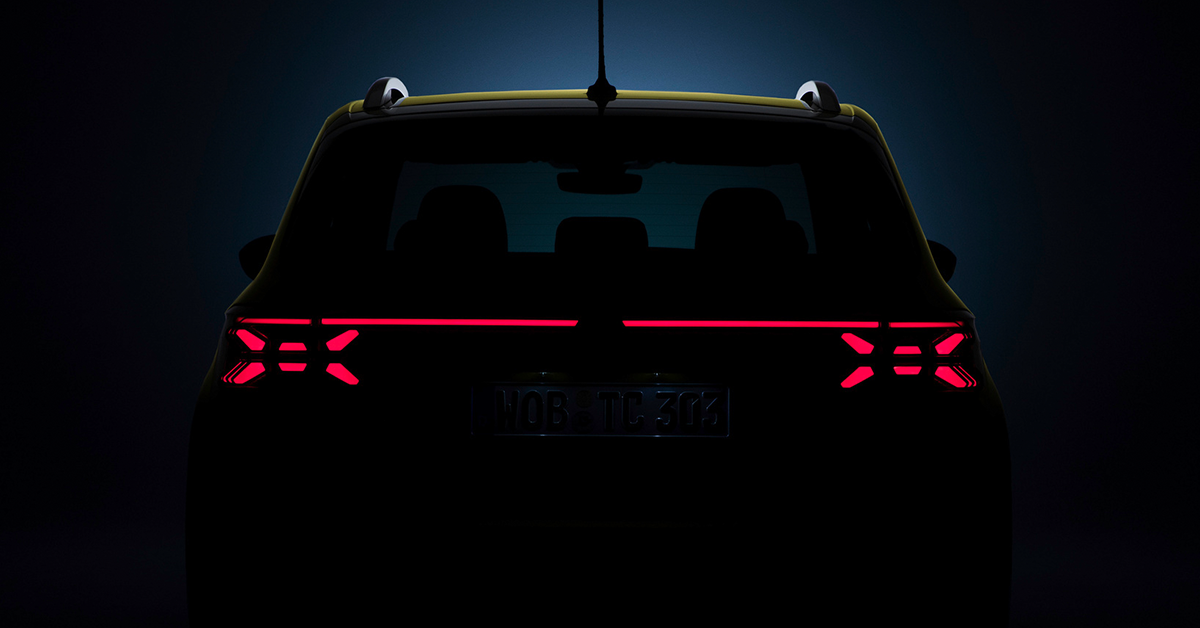
Official press image of the Volkswagen T-Cross Breeze concept. | © Volkswagen AG
The Volkswagen T-Cross is the smallest SUV in the Volkswagen range and the brand’s first SUV in the small-car class. Volkswagen called the 2018 premiere the debut of its first small-car SUV and said it continued the SUV offensive the company began in 2015. The story starts earlier, with a Geneva show car that few people expected to lead to a production model, and it runs on to the all-electric ID. Cross of 2026. This guide follows that line from the first sketch to the latest news, and shows how a concept, an update and a new powertrain can all feed one nameplate.
| T-Cross Breeze concept | Geneva Motor Show, March 2016 (reported) |
| Breeze body | Four-seat convertible, fabric roof (reported) |
| World premiere | 25 October 2018, Amsterdam (reported) |
| Premiere cities | Amsterdam, Shanghai, São Paulo (reported) |
| Start of production | December 2018, Navarra (reported) |
| Entry price, Germany, 2018 | 17,975 euros, 1.0 TSI 70 kW (Volkswagen) |
| Segment | A0, the Polo class (Volkswagen) |
| Update revealed | 5 July 2023 (Volkswagen) |
| Update orders opened | 26 October 2023 (Volkswagen) |
| Electric counterpart | ID. Cross, 15 July 2026 (Volkswagen) |
The T-Cross Breeze concept was shown at the Geneva Motor Show in March 2016 (reported). It was a four-seat convertible with a fabric roof, and its reported dimensions were 4.13 metres long, 1.80 metres wide and 1.56 metres high (reported). Volkswagen’s design chief was quoted as calling it a teaser for a compact sport utility vehicle (reported), and brand chief Herbert Diess was quoted as saying the car gave “a first look ahead to Volkswagen models to come” (reported).
The Breeze also previewed an operating idea. Reports from the show describe touch-sensitive surfaces that replaced conventional switches and buttons (reported), a theme Volkswagen later developed in its own production cars. The open roof did not make it to the production T-Cross, which kept the concept’s exterior design cues in a five-door hatchback layout (reported). A reference report adds that Volkswagen cancelled a separate small-SUV plan in 2016 after an internal study found the car too small, and moved to a Polo-based model instead (reported).
The production T-Cross had its world premiere on 25 October 2018. Volkswagen staged it in three cities on the same day, Amsterdam, Shanghai and São Paulo (reported), to show that the car was a global model. At the Amsterdam event the Volkswagen brand’s chief operating officer, Ralf Brandstätter, was quoted as saying the company was presenting the T-Cross “three times over” (reported). Series production started at the Navarra plant in Spain in December 2018, and the first cars reached European customers in spring 2019 (reported).
The T-Cross became a volume seller quickly. In July 2023 Volkswagen said around 1.2 million T-Crosses had been sold, and that the model averaged 300,000 units produced a year, which it called one of the most successful Volkswagen models worldwide. The same release revealed a major update for the car. Pre-sales of the updated model opened in October 2023, and deliveries were planned to start in the first quarter of 2024, as the sections below explain.
The latest chapter is electric. Volkswagen presented the ID. CROSS Concept at the IAA in September 2025 and said it was intended to enhance the T-Cross class, and the production ID. Cross had its world premiere on 15 July 2026. The combustion T-Cross has not been retired. Reports say the Navarra plant builds the T-Cross, the Taigo, the ID. Cross and the Škoda Epiq side by side (reported), so the two T-Cross generations of thinking now share one factory.
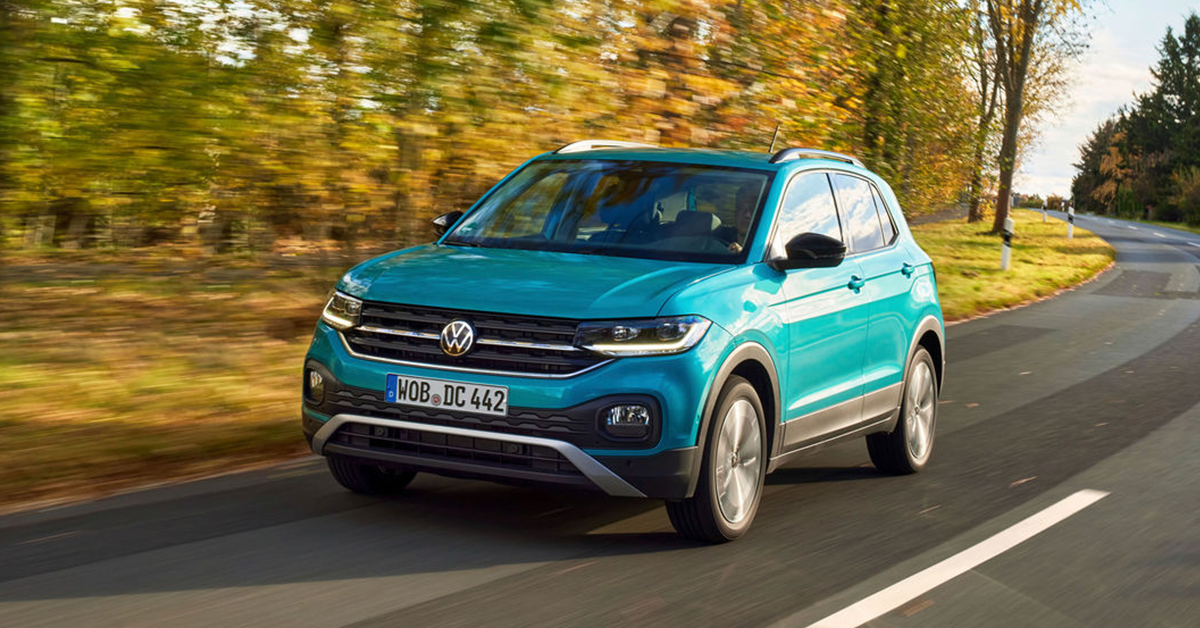
Official press image of the Volkswagen T-Cross. | © Volkswagen AG
At the premiere Volkswagen described the T-Cross as a cool companion for all occasions and as a practical, cool and versatile addition to its fast-growing SUV range. It placed the car in the A0 segment, the same segment as the Polo, and said the T-Cross is manufactured together with the Polo in the Spanish Volkswagen factory in Navarra. For a company whose SUV range had started at the Tiguan, the new car opened a much cheaper door into the family.
| Segment | A0 (Volkswagen) |
| Length | 4.11 m; 4,107 mm in pre-premiere material (reported) |
| Height | 1.58 m; 1,558 mm in pre-premiere material (reported) |
| Wheelbase | 2.56 m (Volkswagen) |
| Boot | 385 to 455 litres (Volkswagen) |
| Maximum load volume | 1,281 litres (Volkswagen) |
| Equipment lines | T-Cross, Life, Style (Volkswagen) |
| Platform | MQB (Volkswagen) |
| Entry price, Germany | 17,975 euros (Volkswagen) |
| European plant | Navarra, Spain (Volkswagen) |
Volkswagen’s figures put the T-Cross at 4.11 metres long, 54 mm longer than the Polo and 138 mm taller at 1.58 metres, according to its March 2019 driving-event release. Pre-premiere material gave 4,107 mm for the length and 1,558 mm for the height (reported), so the two sets of height figures differ slightly in rounding. In practice that makes the T-Cross a car with the footprint of a supermini and the seating position of an SUV, which is the idea behind the whole class. The wheelbase is 2.56 metres, which Volkswagen said forms the basis for room for up to five people.
The design followed the family look. Volkswagen describes two horizontal character lines on the side that form a muscular shoulder, and a new design element at the rear, a reflective band that spans the width of the car and is framed by a black trim panel to emphasise the width. Four large doors give easy access, which Volkswagen called a major advantage of the MQB modular toolkit, and the sliding rear bench let owners trade legroom for luggage space.
The range was built around three equipment lines, T-Cross, Life and Style, with design packages and R-Line packages for the upper two. Volkswagen priced the entry version, the 1.0 TSI with 70 kW (95 PS), at 17,975 euros in Germany and said that even this version left almost nothing to be desired in usability, safety or connectivity. A number of driver assist systems that had been reserved for higher vehicle classes were offered, and the design packages included seat fabrics with names such as Diag Neutral, Diag Orange and Diag Turquoise.
The launch ran in stages. Volkswagen invited the press to an international driving event in March 2019 under the title “Drives like one of the greats”, and a trade report says the car was shown to the European public at the Geneva Motor Show that month (reported). A Spanish report said sales would begin in May 2019 and that production would start in December at the Landaben plant in Navarra (reported), while other reports described a spring 2019 market launch, so exact local dates varied by country.
The T-Cross was always meant to be global. Early reports said Volkswagen would build it in Spain for Europe, in South America and in China (reported), with India added later, and Volkswagen itself noted that the car is also offered outside Europe under the names Tacqua and Taigun. It was not planned for North America (reported). This global footprint is one reason the T-Cross reached an average of 300,000 units a year within a few years of its launch.
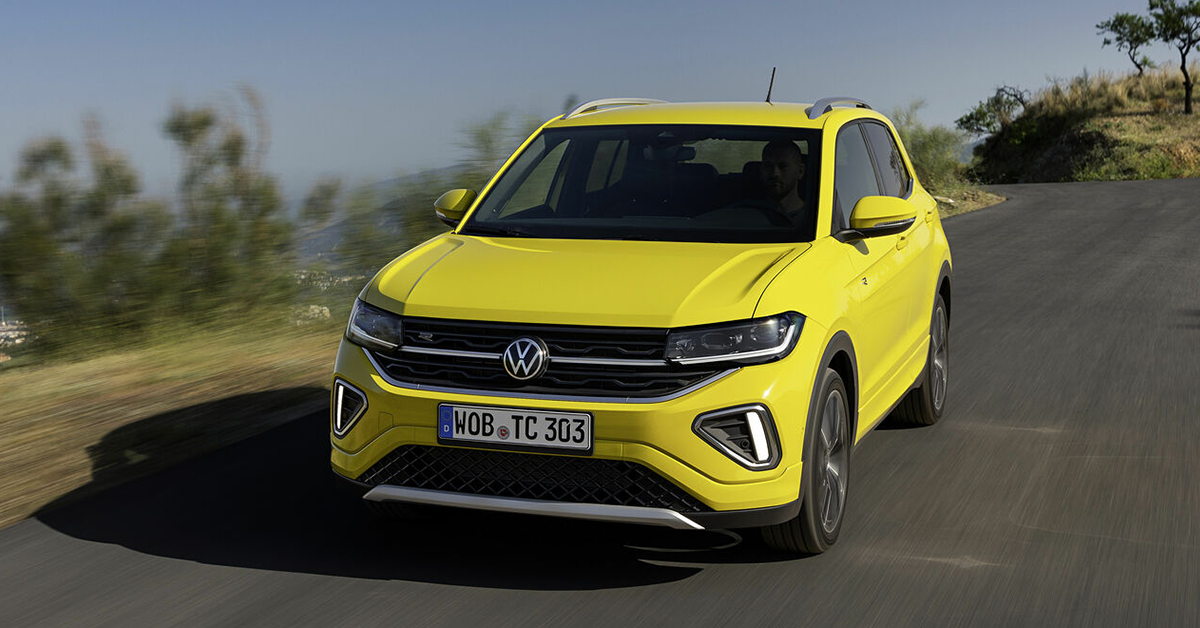
Official press image of the Volkswagen T-Cross. | © Volkswagen AG
Space is the T-Cross’s main argument. Volkswagen says the long 2.56-metre wheelbase forms the basis for a spacious interior with plenty of room for up to five people, and that the luggage compartment holds between 385 and 455 litres depending on the position of the rear bench. With the 60:40 split bench folded, the load volume grows to as much as 1,281 litres. These figures have stayed the same from the 2018 premiere to the 2023 update, so the car’s packaging has not changed. Volkswagen quotes the 385 to 455 litres loaded to the rear bench height and the 1,281 litres loaded to the front seatback height, so compare boot figures with the same measuring rule.
| Wheelbase | 2.56 m (Volkswagen) |
| Boot, all seats in use | 385 to 455 litres (Volkswagen) |
| Boot, bench folded | Up to 1,281 litres (Volkswagen) |
| Rear bench travel | 140 mm (Volkswagen) |
| Rear bench split | 60:40 (Volkswagen) |
| Front passenger backrest | Folds flat, Life and above (Volkswagen) |
| Load length, backrest folded | 2,398 mm (Volkswagen) |
| Drawbar load | 75 kg, up from 55 kg (Volkswagen) |
| ID. Cross boot | 475 litres (Volkswagen) |
| ID. Cross wheelbase | 2,601 mm (Volkswagen) |
The sliding rear bench is the key feature. At the premiere Volkswagen offered it as standard, so the rear seat could be moved forward or back for more legroom or more luggage space. A trade report gave the travel as 14 centimetres (reported), and the 2023 update release states the same value as 140 mm. Few cars in the class offered such a bench as standard in 2018, and it is a large part of the reason Volkswagen calls the T-Cross a versatile model.
The 2023 update added more load-carrying flexibility. From the Life equipment line upward, the front passenger seat backrest folds down flat as standard, which Volkswagen says creates a continuous load length of 2,398 mm. The newsroom notes that this applies to left-hand-drive cars, so owners in markets with right-hand drive should check the local specification before counting on it for long items such as skis or a surfboard.
Towing gear was also improved. Volkswagen raised the drawbar load from 55 kg to 75 kg for the optional removable towbar and said the maximum weight of bicycles on a towbar carrier was increased too. The company aimed the change at owners who carry e-bikes, which are heavy. The T-Cross is a small car, so the change matters mainly for bike carriers rather than for trailers, and buyers should still check the local towing limit in the owner’s manual.
The T-Cross can be compared with its electric counterpart. The ID. Cross is 4,153 mm long and 1,794 mm wide, with a height of 1,581 mm and a wheelbase of 2,601 mm, and Volkswagen says its 475-litre boot is 20 litres larger than the T-Cross boot. That statement agrees with the 455-litre upper figure of the T-Cross. The electric car is therefore about 40 mm longer between the axles than the petrol car and still holds only a little more luggage.
A South African trade report on the 2018 premiere gave the T-Cross a height of 1,568 mm, a wheelbase of 2,651 mm and a length of 4,199 mm (reported). Those figures differ from Volkswagen’s European numbers of 4.11 metres and 2.56 metres, so they most likely describe a different market version, which is why we use Volkswagen’s own figures in the table. We cannot confirm the origin of the larger numbers from Volkswagen’s European newsroom pages.
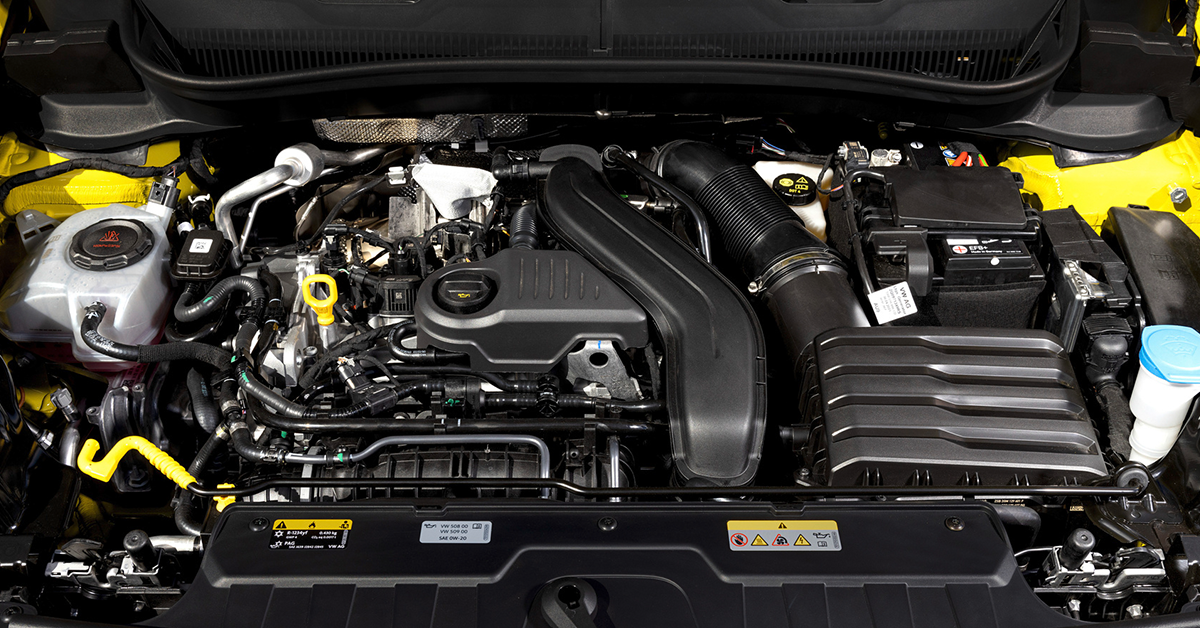
Official press image of the Volkswagen T-Cross. | © Volkswagen AG
At the 2018 premiere Volkswagen announced four turbocharged engines, three petrol and one diesel. The two 1.0 TSI three-cylinder petrol engines carry a petrol particulate filter and produce 70 kW (95 PS) or 85 kW (115 PS). The 1.5 TSI four-cylinder gave 110 kW (150 PS), and a 1.6 TDI four-cylinder with 70 kW (95 PS) completed the range. This is the engine line-up Volkswagen listed in its world premiere release.
| 1.0 TSI, 70 kW | 95 PS, five-speed manual (Volkswagen) |
| 1.0 TSI, 85 kW | 115 PS, manual or seven-speed DSG (reported) |
| 1.5 TSI, 110 kW | 150 PS, seven-speed DSG (Volkswagen) |
| 1.6 TDI, 70 kW | 95 PS, 2018 launch range (Volkswagen) |
| WLTP, 1.0 TSI 70 kW | 5.8 l/100 km, 130 g/km CO₂ (Volkswagen) |
| WLTP, 1.0 TSI 85 kW DSG | 6.1 l/100 km, 139 g/km CO₂ (Volkswagen) |
| 2023 range | 70, 85 and 110 kW TSI (Volkswagen) |
| 110 kW engine, 2023 | TSI Evo2 with DSG standard (Volkswagen) |
| Petrol particulate filter | Fitted to the 1.0 TSI engines (Volkswagen) |
| Mild hybrid | Reported for Navarra in 2027 (reported) |
Gearboxes were matched to the output. A Belgian press release for the premiere lists the 1.0 TSI 70 kW with a five-speed manual, the 1.0 TSI 85 kW with a six-speed manual or the seven-speed DSG, the 1.5 TSI with the seven-speed DSG, and the 1.6 TDI with a five-speed manual or the DSG (reported). The same document says the engines have automatic start-stop and recuperation of braking energy (reported). A South African report gave 160 Nm for the 70 kW engine, 200 Nm for the 85 kW engine and 250 Nm for the 1.5 TSI (reported).
There is a conflict over when the 1.5 TSI arrived. Volkswagen’s premiere text lists it among the four engines, but a Danish launch release says the 1.5 TSI with 150 PS follows at the end of 2019 (reported), and the South African report also describes it as joining later (reported). The simplest reading is that the engine was announced at the premiere and reached some markets after the first cars, which is common for Volkswagen’s launches. Check your local price list before relying on the date.
Volkswagen published fuel figures in its March 2019 driving-event release. For the 1.0 TSI with 70 kW and five-speed gearbox the WLTP combined consumption is 5.8 l/100 km with 130 g/km of CO₂, and for the 1.0 TSI with 85 kW and the seven-speed DSG it is 6.1 l/100 km and 139 g/km. These numbers apply to the cars in the German range at the time and will differ for other markets and later model years, so treat them as a snapshot of the first-generation car.
The 2023 update kept the petrol focus. Volkswagen’s October 2023 order release lists three TSI engines with 70 kW (95 PS), 85 kW (115 PS) and 110 kW (150 PS). The 70 kW engine is standard on the base T-Cross and the Life, the 85 kW engine is standard on the Style and R-Line together with the seven-speed DSG, and the 110 kW engine is optional on the upper three lines with the DSG as standard. The 110 kW unit is described as a TSI Evo2.
The T-Cross has not been electrified so far. A reported preview of the update said there would be no electrified models (reported), and Volkswagen’s own release carried over the TSI engines without a new powertrain. A report from France says the Navarra plant will assemble 48-volt mild hybrid versions of the T-Cross and the Taigo in 2027 (reported), which Volkswagen has not confirmed in the pages we reviewed. The fully electric answer is the ID. Cross, which is a different car.

Official press image of the updated Volkswagen T-Cross. | © Volkswagen AG
Volkswagen revealed the updated T-Cross on 5 July 2023 in Media Information No. 109/2023, describing it as a major update for the successful compact SUV and showing first pictures of a near-production prototype. The release also said the base price would stay very attractive, although it gave no figure at that stage. The company said it would launch at the beginning of 2024, and it noted that the production of the existing version was already sold out in many European markets for 2023 and would be available in Germany only for a short time.
| Reveal | 5 July 2023, Media Information No. 109/2023 (Volkswagen) |
| Orders opened | 26 October 2023, No. 157/2023 (Volkswagen) |
| Deliveries | First quarter of 2024 (Volkswagen) |
| Headlights | LED standard, IQ.LIGHT matrix on upper lines (Volkswagen) |
| New colours | Grape Yellow, Clear Blue, Kings Red (Volkswagen) |
| Infotainment | 8.0 or 9.2 inch, free-standing (Volkswagen) |
| Digital instruments | Standard on all versions (Volkswagen) |
| Travel Assist | Optional, stop-and-go with DSG (Volkswagen) |
| Navarra start, update | 11 December 2023 (reported) |
| Navarra output to Dec 2023 | 693,611 T-Crosses (reported) |
The exterior was redesigned at both ends. Volkswagen lists a new front and rear with integrated LED headlights and LED daytime running lights as standard, and LED tail-light clusters. The IQ.LIGHT LED matrix headlights were offered on the T-Cross for the first time, with the Style and the R-Line, although in Germany the R-Line only. Three new colours were introduced, the solid Grape Yellow and the metallic Clear Blue and Kings Red.
The interior received a new dash panel with soft-upholstered, higher-quality materials, and Style and R-Line also get upgraded front door trims. The infotainment display now sits free-standing on top of the dash, with 8 inches (20.3 cm) as standard and 9.2 inches (23.4 cm) in the top version. Digital instruments became standard on all versions. Manual air conditioning is standard, and the Air Care Climatronic automatic is optional with backlit touch sliders for the controls.
Technology was the other focus. Volkswagen made USB-C ports standard and offered Travel Assist as an option, which controls speed through acceleration and braking, using traffic and speed-limit data, and can handle speed limits, bends and roundabouts within the limits of the system. The company said the T-Cross is one of the few vehicles in its class worldwide to offer such an assist as an option. With the DSG gearbox the system supports automatic stop-and-go. The base car also has a multifunction camera, and Lane Assist helps keep the car in its lane.
Orders opened on 26 October 2023 in Media Information No. 157/2023, with a price in Germany from 23,250 euros and delivery planned for the first quarter of 2024. Volkswagen said that customers who ordered the final cars based on the previous model would receive the updated T-Cross when delivered in 2024. Volkswagen Australia said its launch would follow in the third quarter of 2024, and a UK trade report quoted prices from around £24,000 for spring 2024 (reported), so local timing and prices differed by market.
Production of the updated car began in Navarra on 11 December 2023, according to Spanish press reports, and the plant was reported to have built 693,611 T-Crosses from December 2018 to that point (reported). The same reports say the updated model is made at Navarra exclusively for Europe (reported), while the Tacqua, the Taigun and other market versions come from other plants. Together with the sales milestone, this shows the update as an evolution of a proven car, not a new model.
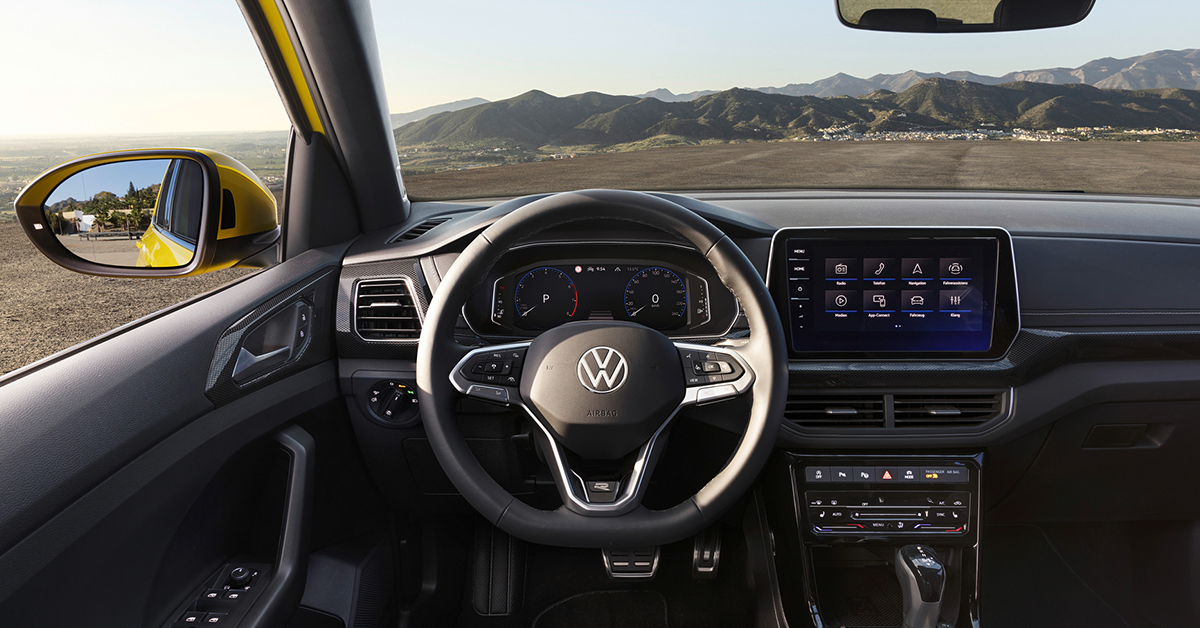
Official press image of the updated Volkswagen T-Cross. | © Volkswagen AG
The October 2023 order release lists four equipment lines in Germany: T-Cross, Life, Style and R-Line. Prices include 19 percent VAT and start at 23,250 euros for the base T-Cross, with the Life at 25,150 euros, the Style from 29,465 euros and the R-Line from 30,740 euros. The gap between the Life and the Style is large because the Style comes with the 85 kW engine and the seven-speed DSG as standard, as the engine section explains.
| Equipment lines | T-Cross, Life, Style, R-Line (Volkswagen) |
| T-Cross, Germany | From 23,250 euros (Volkswagen) |
| Life, Germany | From 25,150 euros (Volkswagen) |
| Style, Germany | From 29,465 euros (Volkswagen) |
| R-Line, Germany | From 30,740 euros (Volkswagen) |
| Wheels, Life | 16-inch Nottingham (Volkswagen) |
| Wheels, Style | 17-inch Manila (Volkswagen) |
| Wheels, R-Line | 17-inch Valencia (Volkswagen) |
| Screens, Style and R-Line | 9.2-inch display, 10-inch Digital Cockpit Pro (Volkswagen) |
| Smartphone | Wireless and wired App-Connect (Volkswagen) |
The base car is better equipped than the old entry model. Volkswagen lists LED headlights replacing the earlier halogen units, LED tail lights, USB-C ports and the free-standing infotainment display as standard, together with an 8.0-inch (20.3 cm) Digital Cockpit and an 8.0-inch infotainment display. Park Assist at the front and rear and the Dynamic Road Sign Display are standard on the base car, which is unusual for the entry level in the class. The base car also has a multifunction camera, and Lane Assist is part of the assist package in the Volkswagen releases.
The Life adds items that make daily use easier. Volkswagen names 16-inch “Nottingham” alloy wheels, a leather multifunction steering wheel, logo projectors in the mirror housings and Mirror Link smartphone integration. The front passenger backrest folds flat from this line upward. The release also says the 70 kW TSI is the standard drive of the Life, so the Life is the line for buyers who want the equipment but not the extra power, and the sum of its parts is easy to see.
The Style and R-Line are the top versions. They bring the 9.2-inch (23.4 cm) touch display with a 10-inch (25.4 cm) Digital Cockpit Pro, IQ.LIGHT LED matrix headlights with cornering and all-weather functions, dynamic LED tail lights, exterior background lighting, and wireless and wired App-Connect for Apple CarPlay and Android Auto. Wheels are 17-inch “Manila” on the Style and 17-inch “Valencia” on the R-Line.
The two top lines differ mainly in character. Volkswagen says the Style is the more elegant version, with elegant styling elements, and that the R-Line has sporty accents, including R-design bumpers. In Germany the matrix headlights are standard on the Style and, according to the release, on the R-Line only in Germany, which suggests other countries may configure them differently. The 110 kW engine is optional on the Life, Style and R-Line.
These prices are launch prices for one market and will not match every country. Volkswagen’s own releases state that equipment details, prices and power specifications apply to the model range offered in Germany, and the company repeats that disclaimer in every release. The ID. Cross premiere release also says some optional features, such as massage seats and the Harman Kardon sound system, are not offered on the T-Cross, which shows how far the electric car moves above its petrol sibling. Buyers outside Germany should treat the German list as a guide to the step between lines, not as a price for their own country, and ask a local Volkswagen dealer for current figures.

Official press image of the Volkswagen T-Cross. | © Volkswagen AG
The T-Cross for Europe is built at Volkswagen Navarra in Pamplona, Spain, in the district known as Landaben. Volkswagen’s plant data page says the site covers about 1,615,000 square metres, of which around 391,000 are built on, and that 4,865 people worked there on 31 December 2025. Volkswagen lists the T-Cross and the Taigo as the models produced at the plant, with the T-Cross alongside the Polo-based Taigo since the 2018 launch.
| European plant | Volkswagen Navarra, Pamplona, Spain (Volkswagen) |
| Plant area | About 1,615,000 square metres (Volkswagen) |
| Employees, 31 Dec 2025 | 4,865 (Volkswagen) |
| Navarra output, 2025 | 225,225 vehicles (Volkswagen) |
| T-Cross built, 2025 | 133,838 (Volkswagen) |
| Taigo built, 2025 | 91,186 (Volkswagen) |
| Sold by mid-2023 | Around 1.2 million (Volkswagen) |
| Average yearly output | 300,000 units (Volkswagen) |
| Other plants | Brazil, China, India (reported) |
| Other names | Tacqua, Taigun (Volkswagen) |
Volkswagen’s plant page gives the output for 2025: 225,225 vehicles, made up of 133,838 T-Cross and 91,186 Taigo. The Spanish trade press adds that these totals include 126 pre-series Škoda Epiq and 75 pre-series ID. Cross cars (reported), and the sum of the four figures matches the plant total. The T-Cross is therefore the larger of the two combustion models in Navarra, with roughly 59 percent of the 2025 output.
Outside Europe the car is built in several places. A reference list names São José dos Pinhais in Brazil, Anting in Shanghai for SAIC-Volkswagen and Changchun for FAW-Volkswagen, where the model is called Tacqua, and Chakan in India, where it became the Taigun (reported). Volkswagen’s own 2023 release says the T-Cross is offered outside Europe as the Tacqua and the Taigun. Early reports named Navarra, Curitiba and Pune as production sites (reported), and Curitiba is the city beside São José dos Pinhais. We could not confirm these overseas plant details from Volkswagen’s own newsroom pages, so they are marked as reported and should be checked against current Volkswagen information.
Sales figures need care. In July 2023 Volkswagen said around 1.2 million T-Crosses had been chosen in four years, but the October 2023 release for the order opening says 1.2 million in three years. Both come from Volkswagen’s newsroom, so the page carries both. The average of 300,000 units produced a year in the July release is consistent with a four-year period, since 4 times 300,000 is 1.2 million, but the October figure may simply be a rounded phrase. We therefore avoid giving one time period for the milestone and quote both releases as published.
Volkswagen did not publish a total for the model beyond that milestone in the pages we reviewed. What it did say is that the T-Cross is among the bestsellers of the Volkswagen brand, together with the Polo, T-Roc, Golf, Tiguan and Passat, in a year in which the brand delivered about 4.7 million cars worldwide in 2025. In Europe Volkswagen named the T-Roc as its best-selling SUV, with 201,995 units in 2025, so the T-Cross sits behind its bigger sibling in Europe.
Navarra has a busy future. The plant is reported to have built its ten millionth car in 2025, a yellow T-Cross (reported), and a French trade report expects 262,247 units for 2026 and a capacity of at least 360,000 vehicles in 2027 (reported). That plan depends on the electric cars, the ID. Cross and the Škoda Epiq, but it also keeps the combustion T-Cross and Taigo in production, with mild hybrid versions reported for 2027 (reported).

Official press image of the Volkswagen ID. Cross. | © Volkswagen AG
The ID. Cross is the electric answer to the T-Cross. Volkswagen showed the ID. CROSS Concept at the IAA on 7 September 2025, said it followed a new design language and was intended to enhance the T-Cross class, and announced a production version for summer 2026. In March 2026 it gave a covered preview in Amsterdam, and on 15 July 2026 it presented the production car with advance sales in Germany opening on the same day.
| ID. CROSS Concept | IAA, 7 September 2025 (Volkswagen) |
| Production premiere | 15 July 2026 (Volkswagen) |
| Length, width, height | 4,153 / 1,794 / 1,581 mm (Volkswagen) |
| Wheelbase | 2,601 mm (Volkswagen) |
| Boot | 475 litres (Volkswagen) |
| Platform | MEB+, front-wheel drive (Volkswagen) |
| Power levels | 85, 99 and 155 kW (Volkswagen) |
| Batteries | 37 kWh and 52 kWh net (Volkswagen) |
| Range, WLTP | Up to 427 km; 436 km pre-premiere (reported) |
| Price, Germany | From 27,995 euros, Trend (Volkswagen) |
The numbers show how close the two cars are. The ID. Cross is 4,153 mm long, 1,794 mm wide and 1,581 mm tall with a wheelbase of 2,601 mm, and Volkswagen says its boot holds 475 litres, 20 litres more than the T-Cross. It is built on the MEB+ platform, not on the MQB used by the combustion car, and it has front-wheel drive with the APP290 electric motor. Volkswagen also says it has more room for five passengers and their luggage.
Three power levels are planned: 85 kW (116 PS), 99 kW (135 PS) and 155 kW (211 PS), with a 37 kWh or a 52 kWh net battery. Volkswagen quotes a WLTP range of up to 427 km, AC charging up to 11 kW, and DC charging from 10 to 80 percent in about 23 minutes at up to 90 kW for the 37 kWh battery or about 24 minutes at up to 105 kW for the 52 kWh battery. A pre-premiere report gave 436 km, so the figure moved between the two sources (reported).
Prices start at 27,995 euros for the Trend with 85 kW and the 37 kWh battery, which Volkswagen rounds to around 28,000 euros, while the Life and Style with 155 kW and 52 kWh began at 36,525 euros. On 19 October 2026 Volkswagen said the ID. Cross could be ordered with the 37 kWh battery, with a range of up to 324 km, and the Trend with that battery is available from 27,995 euros in Germany. A pre-launch report quoted 27,990 euros (reported).
Production of the ID. Cross has started in Navarra, which Spanish reports date to late August 2026 (reported), and those reports say the plant now builds four models at once, the T-Cross, the Taigo, the ID. Cross and the Škoda Epiq (reported). Volkswagen’s premiere release does not state the plant, so we cite the Spanish reports for this point. Thomas Schäfer, the head of the Volkswagen brand, was quoted as saying the car creates ideal conditions for a new success story.
Where does that leave the T-Cross? It remains on sale as the combustion entry point to the SUV range, with the 2023 update, three TSI engines and a launch price of 23,250 euros in Germany. It shares its factory with its electric successor, and mild hybrid versions are reported for 2027 (reported). For buyers who want a small Volkswagen SUV without a plug, the T-Cross is the car to watch. For anyone who wants the electric version, the ID. Cross is the model to compare it with.
