 Brands
Volkswagen Hybrid Cars — Models, Range and Prices
AI-generated concept illustration — Volkswagen hybrid cars. | Rev N Rise
Volkswagen sells three kinds of hybrid: the eTSI mild hybrid, the new Hybrid and the plug-in eHybrid and GTE. Here is the full Volkswagen hybrid story, from the first Touareg hybrid and the Golf GTE to the 2026 Golf Hybrid and T-Roc Hybrid, with ranges, prices and which one to buy.
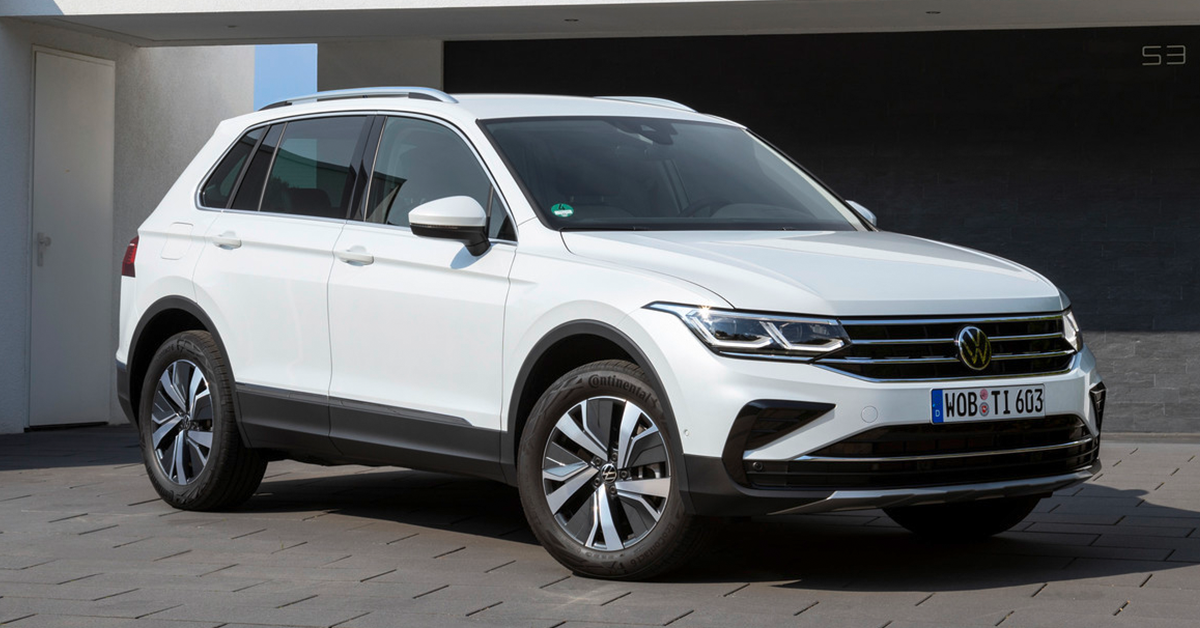
Official press image of the Volkswagen Tiguan eHybrid. | © Volkswagen AG
Volkswagen sells three different kinds of hybrid, and the names matter because they behave very differently. The mild hybrid is called eTSI, the new full hybrid is badged simply Hybrid, and the plug-in hybrids are called eHybrid, with GTE for the sporty Golf. Volkswagen’s own release puts the new full hybrid between the eTSI mild hybrid and the plug-in hybrids (Volkswagen). This guide explains all three, lists the models that carry them and links to the full guide for each car.
| Mild hybrid name | eTSI, 48-volt (Volkswagen) |
| Full hybrid name | Hybrid, new in 2026 (Volkswagen) |
| Plug-in hybrid names | eHybrid and GTE (Volkswagen) |
| Full hybrid first shown | 23 April 2026, Vienna (Volkswagen) |
| Full hybrid pre-sales | 21 July 2026, 125 kW (Volkswagen) |
| Full hybrid models | Golf and T-Roc (Volkswagen) |
| Full hybrid power levels | 100 kW and 125 kW system power (Volkswagen) |
| Plug-in models, Germany | Golf, Tiguan, Tayron, Passat (Volkswagen) |
| Tayron plug-in | In every trim line (Volkswagen) |
| Mild hybrid can drive electrically alone | No (Volkswagen) |
The difference is simple once you see it. Volkswagen says that, in contrast to a mild hybrid (eTSI), the new full hybrid can be driven with all-electric power (Volkswagen). The full hybrid needs no plug or wallbox, and its energy comes from braking recuperation and from the drive motor acting as a generator (Volkswagen). A plug-in hybrid has a much larger battery that you charge from a socket or a charger, so it can cover real distances on electricity alone. Our guide on Volkswagen electric cars covers the cars that have no petrol engine at all.
The newest step came in 2026. Volkswagen’s release of 23 April 2026, presented at the Vienna Motor Symposium, introduced the new full hybrid for the Golf and the T-Roc (Volkswagen). Pre-sales opened with a release of 21 July 2026 for a 125 kW (170 PS) version (Volkswagen), and a Volkswagen media information from October 2026 says sales of the Golf Hybrid and T-Roc Hybrid had already started in many European countries, with 100 kW (136 PS) and 125 kW (170 PS) system power (Volkswagen). A German motoring magazine reports the start as the fourth quarter of 2026 (reported).
The plug-in hybrids are the more established group. Volkswagen’s German hybrid page lists the Golf GTE, Golf eHybrid, Tiguan eHybrid, Tayron eHybrid and Passat eHybrid, and says the Tayron is offered as a plug-in hybrid in every trim line (Volkswagen). The Tiguan and Passat each come with two plug-in outputs depending on the trim (Volkswagen). Volkswagen’s commercial vehicles division also offers eHybrid versions of the Multivan and the Caddy, which we cover in a later section.
Why choose a hybrid at all? Volkswagen says the new full hybrid saves around 11 percent fuel against a comparable eTSI in one comparison, and that the advantage in town is larger (Volkswagen). The plug-in cars suit buyers who can charge at home, because the electric range is large enough for a normal commute. The mild hybrid is the simplest and usually the cheapest. A buyer who cannot charge but wants lower fuel use is the person the new full hybrid is aimed at, according to Volkswagen’s own positioning (Volkswagen).
We use Volkswagen’s newsroom and our own model guides as the main sources and tag other figures as reported. Where sources differ, we show both values. Prices are German list prices from the date given, because Volkswagen has changed them, and they are not like-for-like. For every Volkswagen car, see our Volkswagen models list, and for the cars that carry the hybrids, read our Golf guide, Tiguan guide and T-Roc guide.
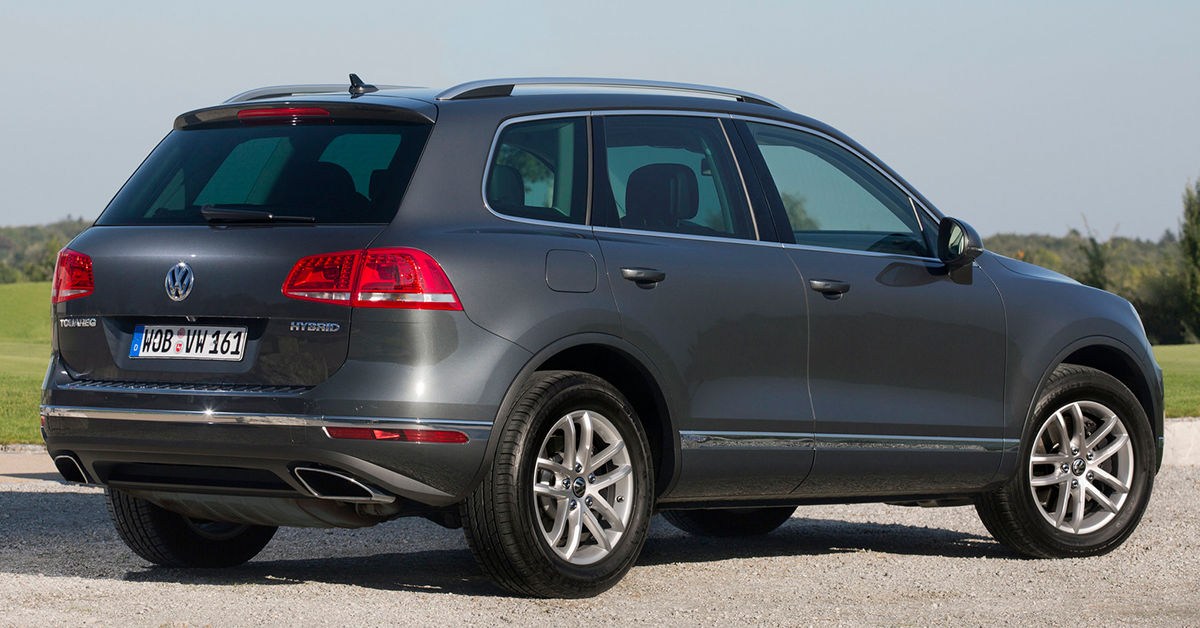
Official press image of the Volkswagen Touareg Hybrid. | © Volkswagen AG
Volkswagen’s hybrid history is longer than many buyers think. Our Touareg guide says the second-generation Touareg brought Volkswagen’s first hybrid (Volkswagen), and the third generation later added plug-in power with the R eHybrid, which has a system output of 340 kW (Volkswagen). The Touareg also tows up to 3.5 tonnes in its third generation (Volkswagen). The big, expensive SUV was therefore the first test bed for hybrid drive at Volkswagen, long before small cars received it.
| First Volkswagen hybrid | Second-generation Touareg (Volkswagen) |
| Touareg R eHybrid output | 340 kW system output (Volkswagen) |
| Golf GTE, 2014 | About 50 km electric range (Volkswagen) |
| Golf VIII plug-ins, 2019 | 150 and 180 kW, 13 kWh, about 60 km (Volkswagen) |
| Passat B8 GTE, 2019 | 160 kW (218 PS), about 55 km WLTP (Volkswagen) |
| Golf VIII eTSI mild hybrids | 81, 96 and 110 kW, up to 10 percent less fuel (Volkswagen) |
| Tiguan plug-in hybrid | Added in the 2020 update (Volkswagen) |
| Arteon eHybrid | From 2020 (Volkswagen) |
| Atlas Cross Sport concept | 265 kW (360 PS), up to 26 miles EPA (Volkswagen) |
| Battery, 2024 plug-ins | 19.7 kWh net, up from 10.6 kWh (Volkswagen) |
The first mainstream plug-in was the Golf GTE. Our Golf guide lists the Golf GTE of 2014 as a plug-in hybrid with an electric range of about 50 km (Volkswagen). The Golf VIII plug-ins of 2019 offered 150 kW (204 PS) and 180 kW (245 PS) with a 13 kWh battery and about 60 km of electric range (Volkswagen). The GTE name later moved to other models, and our Passat guide lists the B8 Passat GTE of 2019 with 160 kW (218 PS) and about 55 km WLTP range (Volkswagen).
The mild hybrid arrived with the Golf VIII. The Golf VIII launched with 48-volt eTSI mild hybrids of 81 kW (110 PS), 96 kW (130 PS) and 110 kW (150 PS), which Volkswagen said cut consumption by up to 10 percent under WLTP (Volkswagen). These units cannot move the car on electricity alone, which Volkswagen contrasts with its new full hybrid. Our Golf guide covers the Golf VIII in detail, from its 2019 launch to the 2024 update.
The plug-in hybrid idea spread to the Tiguan and the Arteon. Our Tiguan guide says a mid-cycle update in 2020 added a sportier R model and a plug-in hybrid (Volkswagen), and our Arteon guide lists an Arteon eHybrid from 2020 (Volkswagen). The Tiguan eHybrid then became one of the most important plug-in Volkswagens, because the Tiguan is the best-selling Volkswagen model worldwide, a status our Tiguan guide explains.
Volkswagen also tried the idea in the United States. Our Atlas guide says Volkswagen’s newsroom described the Atlas Cross Sport Concept as a near-production SUV study with a coupe-style rear end and a plug-in hybrid drivetrain (Volkswagen). The plug-in hybrid had a system output of 265 kW or 360 PS and up to 26 miles of electric range on the EPA cycle, according to Volkswagen (Volkswagen). The release of 22 August 2018 said the production Cross Sport would be built at Chattanooga (Volkswagen).
The second generation of the plug-in drive arrived in 2024. Volkswagen’s release of 16 May 2024 says the new battery is 19.7 kWh net, compared with 10.6 kWh in the predecessor (Volkswagen). That nearly doubled the battery size, and the Golf, Tiguan, Passat and Tayron all list a 19.7 kWh net battery today. For the earlier cars, read our Touareg guide, our Passat guide and our Arteon guide, and for the family of every Volkswagen, see our Volkswagen models list. Our Passat guide says the Passat has been built since 1973 with more than 34 million sold (Volkswagen), and that its newest car, the ninth generation, is an estate with plug-in hybrid power (Volkswagen).
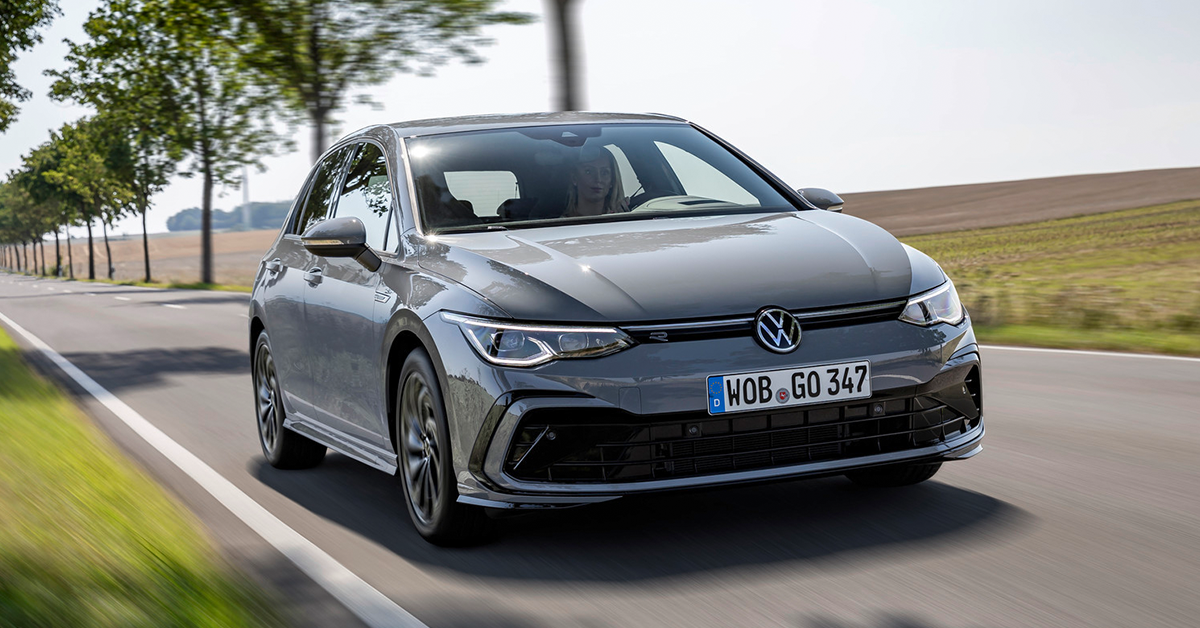
Official press image of the Volkswagen Golf eTSI. | © Volkswagen AG
The eTSI is the mild hybrid that most Volkswagen buyers meet first. It is a petrol engine with a small 48-volt electric system, and Volkswagen says the Golf VIII version cut consumption by up to 10 percent under WLTP (Volkswagen). Volkswagen is clear that, unlike the new full hybrid, the mild hybrid cannot be driven on electric power alone (Volkswagen). It needs no charger and no special driving habits.
| What eTSI means | 48-volt mild hybrid (Volkswagen) |
| Golf VIII eTSI outputs | 81, 96 and 110 kW (Volkswagen) |
| Fuel saving claimed | Up to 10 percent under WLTP (Volkswagen) |
| Golf Life eTSI 85 kW | 5.8 to 5.1 l/100 km (Volkswagen) |
| Golf Life eTSI 85 kW CO2 | 131 to 117 g/km, class D (Volkswagen) |
| T-Roc eTSI outputs | 85 kW and 110 kW (Volkswagen) |
| T-Roc eTSI 110 kW | 6.0 to 5.6 l/100 km (Volkswagen) |
| T-Roc eTSI start price | 30,845 euros, 85 kW, Germany (Volkswagen) |
| Tiguan eTSI 96 kW | From 36,600 euros, February 2024 (Volkswagen) |
| Tayron Life eTSI 110 kW | From 45,475 euros (Volkswagen) |
The Golf eTSI comes in several outputs. Our Golf guide lists 81 kW (110 PS), 96 kW (130 PS) and 110 kW (150 PS) eTSI units for the Golf VIII (Volkswagen). Volkswagen’s October 2026 media information gives the Golf Life eTSI with 85 kW a combined consumption of 5.8 to 5.1 litres per 100 km and CO2 emissions of 131 to 117 g/km, in CO2 class D (Volkswagen). The 85 kW rating of the Golf Life eTSI is not the same as the 81 kW unit listed in our Golf guide, and we show both without explaining the difference.
The T-Roc also uses eTSI. Our T-Roc guide says the second-generation T-Roc offers 1.5 eTSI units with 85 kW and 110 kW (Volkswagen), with the 110 kW version using 6.0 to 5.6 litres per 100 km (Volkswagen). The same guide says the second-generation T-Roc started at 30,845 euros for the 1.5 eTSI with 85 kW in Germany (Volkswagen). The eTSI is therefore the lowest-priced hybrid route into the T-Roc, and the new full hybrid sits above it in price.
Larger cars use the eTSI too. Volkswagen’s February 2024 release gives a Tiguan eTSI with 96 kW as the entry model from 36,600 euros in Germany (Volkswagen). Our Tayron guide gives a Tayron Life eTSI with 110 kW from 45,475 euros at the start of pre-sales (Volkswagen). These prices come from different dates and trims, so they do not show a like-for-like comparison. We do not give a running-cost total, because fuel prices and mileage vary too much between buyers.
What does the eTSI do well? It is simple and it has no charging step. What does it not do? It does not drive on electricity alone, so it cannot cut fuel use as much as a full hybrid or a plug-in. Volkswagen’s own comparison shows the new full hybrid using around 11 percent less fuel than the eTSI in one Golf Life test (Volkswagen). That gap is the reason the new Hybrid exists. The October 2026 media information also lists the Golf Style Hybrid with 125 kW at 5.1 to 4.6 litres per 100 km and 115 to 104 g/km, CO2 class C (Volkswagen), so the eTSI is the baseline against which Volkswagen measures the new car.
Which cars have it? In our guides the eTSI appears in the Golf, T-Roc, Tiguan and Tayron, and Volkswagen describes it as already available when it introduces the full hybrid (Volkswagen). We did not find a single Volkswagen list of every eTSI model, so we only name the cars above. For more detail on each car, read our Golf guide, our T-Roc guide, our Tiguan guide and our Tayron guide, and for every model, see our Volkswagen models list.
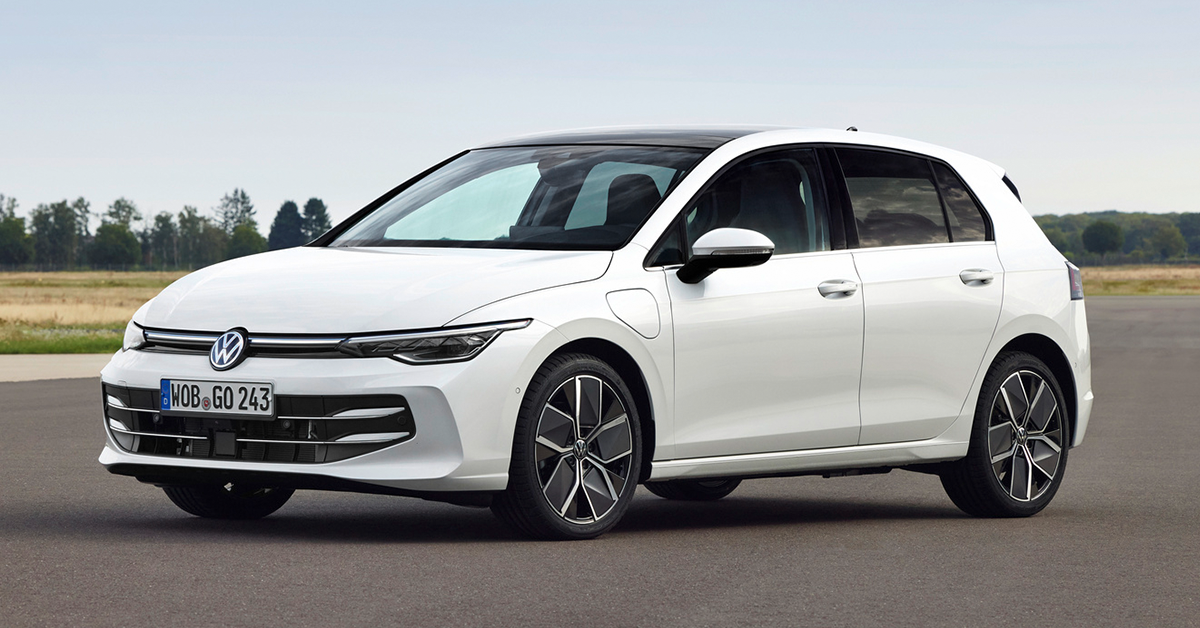
Official press image of the Volkswagen Golf Hybrid. | © Volkswagen AG
The Golf Hybrid and T-Roc Hybrid are Volkswagen’s first full hybrids. A Volkswagen media information from October 2026 says they use a 1.5-litre turbocharged four-cylinder petrol engine, the 1.5 TSI evo2, in two outputs of 96 kW (131 PS) and 110 kW (150 PS), with a maximum torque of 250 Nm (Volkswagen). Two electric motors, a generator and a drive motor, sit in a hybrid module with a one-speed gearbox (Volkswagen). The battery is 1.6 kWh gross with 84 prismatic NMC cells under the rear bench seat (Volkswagen).
| Engine | 1.5 TSI evo2, 96 or 110 kW, 250 Nm (Volkswagen) |
| Electric motors | Two, generator and drive (Volkswagen) |
| Battery | 1.6 kWh gross, NMC, under rear seat (Volkswagen) |
| 100 kW version | 288 Nm, Golf 8.8 s, T-Roc 9.7 s (Volkswagen) |
| 125 kW version | 310 or 309 Nm, Golf 7.5 s, T-Roc 8.5 s (Volkswagen) |
| Top speed | 180 km/h, limited (Volkswagen) |
| Electric driving | Up to about 60 km/h, no plug (Volkswagen) |
| Golf Hybrid 100 kW fuel | 5.0 to 4.5 l/100 km (Volkswagen) |
| Golf Life Hybrid price | From 37,505 euros (Volkswagen) |
| T-Roc Life Hybrid price | From 37,545 euros (Volkswagen) |
System power comes in two levels. The 100 kW (136 PS) version has 288 Nm of system torque and does 0 to 100 km/h in 8.8 seconds in the Golf and 9.7 seconds in the T-Roc (Volkswagen). The 125 kW (170 PS) version has 310 Nm and does 7.5 seconds in the Golf and 8.5 seconds in the T-Roc (Volkswagen). Top speed is electronically limited to 180 km/h on all versions (Volkswagen). Volkswagen’s July release gives the torque of the 125 kW version as 309 Nm (Volkswagen), so we show both figures.
The car drives electrically without a plug. Volkswagen says all-electric driving is possible up to about 60 km/h without external charging, and that above roughly 60 km/h the petrol engine drives alone or together with the electric motor (Volkswagen). The petrol engine can also run the generator, acting as a range extender (Volkswagen). There are three automatic modes, electric-only, series and parallel, and three driving profiles, Eco, Comfort and Sport, where Eco limits system output to 70 percent and switches off boost (Volkswagen).
Fuel figures are listed model by model. The Golf Hybrid 100 kW uses 5.0 to 4.5 litres per 100 km with CO2 of 114 to 103 g/km, and the 125 kW version uses 5.1 to 4.6 litres with 117 to 104 g/km (Volkswagen). The T-Roc Hybrid uses 5.5 to 4.9 litres with the 100 kW and 5.6 to 5.0 litres with the 125 kW (Volkswagen). The same release also mentions a combined range of more than 800 kilometres and consumption as low as 5.6 litres, which conflicts with the lower table values, so we do not use that range figure (Volkswagen).
Prices start in the high 30,000s. The October release gives the Golf Life Hybrid 100 kW from 37,505 euros and the T-Roc Life Hybrid 100 kW from 37,545 euros in Germany (Volkswagen). Our T-Roc guide gives the T-Roc Style Hybrid with the 125 kW from 44,470 euros in July 2026 (Volkswagen), and a reporting site gives the Golf Hybrid R-Line from 41,400 euros (reported). Volkswagen says the Golf Hybrid is offered from the Life trim up, with Style and R-Line getting the 125 kW version (Volkswagen).
How big is the saving? Volkswagen says a Golf Life Hybrid with 100 kW uses about 11 percent less than a Golf Life eTSI with 85 kW, in combined WLTP values in each case in the most fuel-efficient version (Volkswagen). The July release says the efficiency advantage is up to 35 percent in urban traffic while system power rises to 125 kW (170 PS) and system torque to 309 Nm (Volkswagen). A motoring site reports a 10 to 15 percent fuel saving against the 110 kW Golf eTSI (reported). For the full details of each car, read our Golf guide and T-Roc guide.
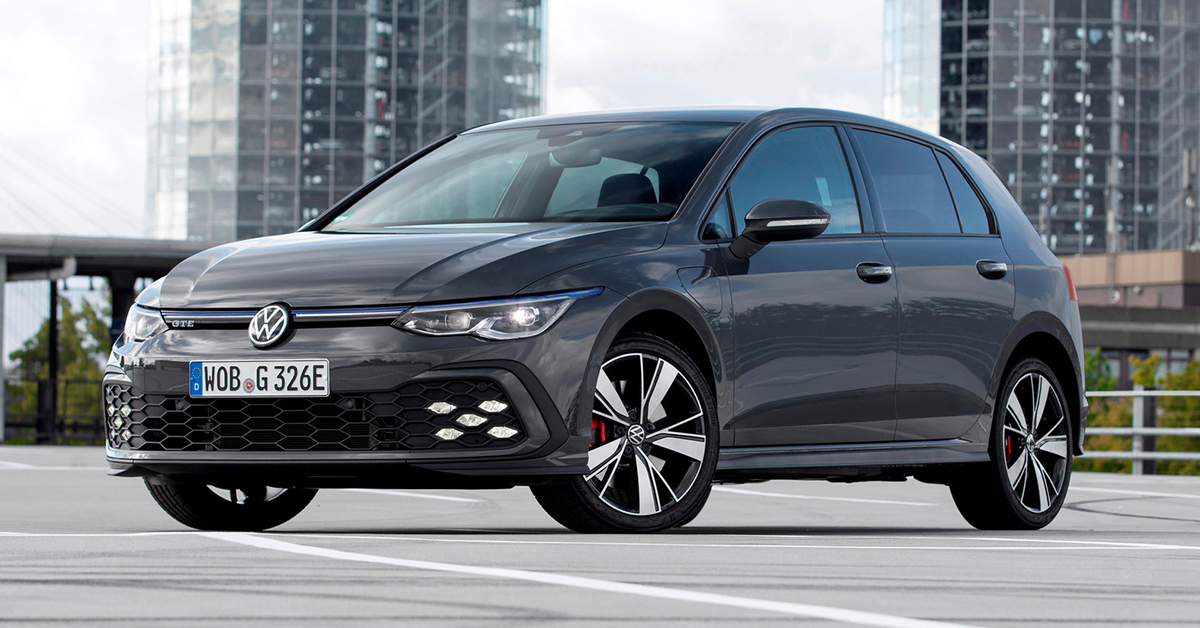
Official press image of the Volkswagen Golf GTE. | © Volkswagen AG
The plug-in Golf has two versions. Volkswagen’s release of 16 May 2024 says the Golf GTE has 200 kW (272 PS) of system power and the Golf eHybrid has 150 kW (204 PS) (Volkswagen). Both use a 19.7 kWh net battery, compared with 10.6 kWh in the predecessor (Volkswagen). The release says the GTE’s performance drive sits above the power level of the Golf GTI of that time, thanks to the extra electric power (Volkswagen). The eHybrid is the comfort-oriented version.
| Release date | 16 May 2024 (Volkswagen) |
| Golf eHybrid | 150 kW (204 PS) (Volkswagen) |
| Golf GTE | 200 kW (272 PS) (Volkswagen) |
| Battery | 19.7 kWh net, previously 10.6 kWh (Volkswagen) |
| Electric range, eHybrid | Up to 143 km WLTP (Volkswagen) |
| Electric range, GTE | Up to 131 km WLTP (Volkswagen) |
| Combined range | Up to 1,000 km (Volkswagen) |
| DC charging | Up to 50 kW, 40 kW customer value (Volkswagen) |
| AC charging | Up to 11 kW, previously 3.6 kW (Volkswagen) |
| Launch prices, Germany | 44,240 and 46,745 euros (Volkswagen) |
Electric range is the main selling point. Volkswagen gives the Golf eHybrid up to 143 km and the Golf GTE up to 131 km on the combined WLTP cycle, and says the hybrid-mode range is up to 1,000 km for both (Volkswagen). Our Golf guide gives the 2024 plug-in update an electric range of up to 143 km with DC fast charging (Volkswagen). The release adds that the actual WLTP-based electric range can vary with the equipment (Volkswagen), so a car with large wheels will see a lower figure than the best one.
Charging was also upgraded. The 2024 release says DC quick charging is possible with up to 50 kW capacity, with a customer-relevant value of 40 kW according to DIN 70080 (Volkswagen). AC charging at a wall box or AC point is up to 11 kW, up from 3.6 kW before (Volkswagen). The release does not state a charging time, so we do not give one. A UK site gives a 5 to 80 percent DC charge in about 26 minutes at 40 kW for the Passat, Tiguan and Tayron eHybrids (reported).
Prices in Germany started at 44,240 euros for the Golf eHybrid and 46,745 euros for the Golf GTE, including 19 percent VAT, in May 2024 (Volkswagen). These are launch prices and Volkswagen has changed its price lists since then, so check the current configurator. The release does not give 0 to 100 km/h, top speed or torque (Volkswagen), so we do not state them either. Our Golf guide covers the Golf GTI, the Golf R and the older GTE cars, and gives the full Golf history.
Where does the plug-in Golf fit now? The Golf now has three hybrid levels, the eTSI mild hybrid, the new Golf Hybrid and the plug-in eHybrid and GTE (Volkswagen). Volkswagen says the plug-in versions are ordered under the eHybrid label or as the sporty Golf GTE (Volkswagen). The Golf Hybrid is the car for a driver who cannot charge, and the plug-in is the car for a driver who can, because the 19.7 kWh battery covers a normal commute on electricity. That reading of the range is ours, not Volkswagen’s.
The Golf also has an electric sibling. The e-Golf ended on 23 December 2020 (Volkswagen), and Volkswagen’s electric compact car today is the ID.3 family. Our Golf guide expects the next-generation Golf around 2028 (reported). For the full Golf history, read our Golf guide, and for the electric cars that sit alongside these hybrids, read our guide to Volkswagen electric cars. For other cars that use the same 19.7 kWh battery, see the next sections.
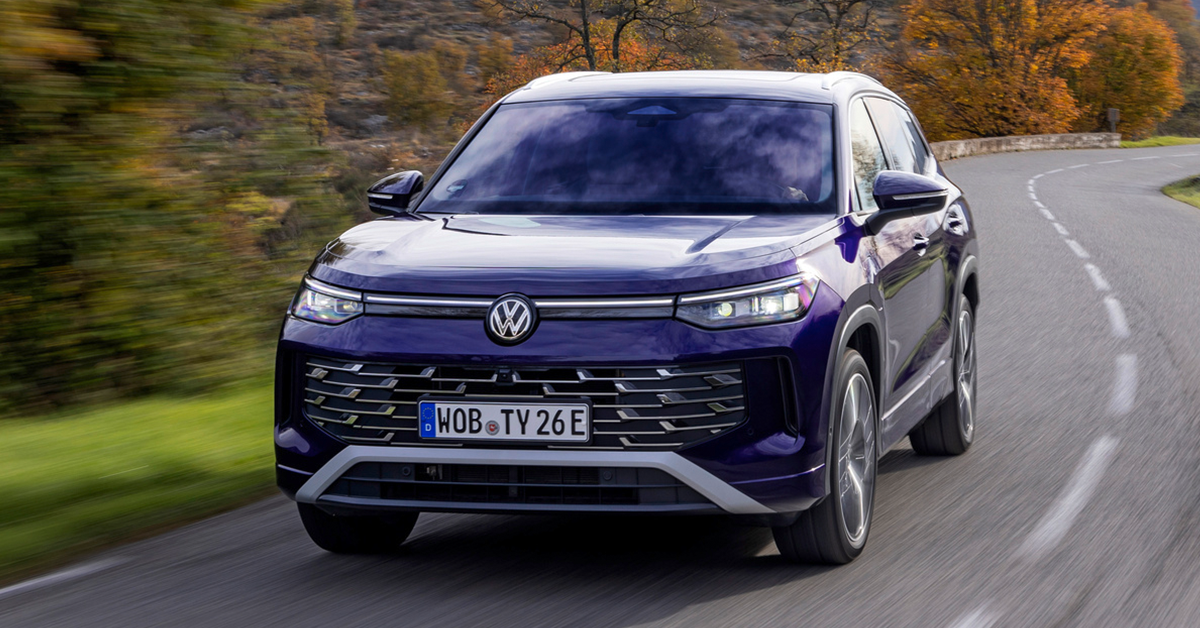
Official press image of the Volkswagen Tayron eHybrid. | © Volkswagen AG
The Tiguan eHybrid is the best-known plug-in Volkswagen SUV. Volkswagen’s release of 22 February 2024 says it has a system power of 150 kW (204 PS) or 200 kW (272 PS), a 19.7 kWh net battery and an electric range of up to approximately 120 km on a single charge, with a combined range of more than 900 km (Volkswagen). It could be ordered from the Life trim from 48,655 euros in Germany (Volkswagen). AC charging is up to 11 kW and DC charging up to 50 kW (Volkswagen).
| Tiguan eHybrid outputs | 150 and 200 kW (Volkswagen) |
| Tiguan eHybrid range | Up to about 120 km (Volkswagen), around 100 km (Volkswagen) |
| Tiguan eHybrid launch price | From 48,655 euros, Life (Volkswagen) |
| Tayron eHybrid range | Over 100 km to up to 126 km (Volkswagen) |
| Tayron boot, five seats | 885 litres maximum (Volkswagen) |
| Tayron trailer weight | 2,500 kg maximum (Volkswagen) |
| Passat eHybrid 150 kW | From 50,320 euros, March 2024 (Volkswagen) |
| Passat eHybrid 200 kW | From 62,470 euros, March 2024 (Volkswagen) |
| Charging, all three | 11 kW AC, up to 50 kW DC (Volkswagen) |
| UK price cut, February 2026 | 750 to 950 pounds (reported) |
The range figure differs between our sources. Our Tiguan guide says the third-generation plug-ins can drive around 100 km on electric power (Volkswagen), while the 2024 release says up to approximately 120 km (Volkswagen). A UK site gives up to 75 miles for UK cars (reported), and an Australian site gives 113 to 117 km WLTP for the Tiguan and Tayron eHybrid there (reported). The numbers differ by date, version and market, so we do not choose one. Always check the version you want.
The Tayron eHybrid is the larger sibling. Our Tayron guide says it has a 19.7 kWh net battery, an electric range of over 100 km in the 2024 release and up to 126 km at the 2025 Media Drive, and charging of 11 kW AC and 50 kW DC (Volkswagen). It also has a maximum trailer weight of 2,500 kg and a maximum boot space of 885 litres with five seats (Volkswagen). Volkswagen’s German hybrid page says the Tayron is offered as a plug-in hybrid in every trim line (Volkswagen).
The Passat eHybrid is the estate. Our Passat guide gives two ninth-generation versions: 150 kW (204 PS) with 350 Nm from 50,320 euros and 200 kW (272 PS) with 400 Nm from 62,470 euros, in March 2024 in Germany (Volkswagen). The battery is 19.7 kWh net with about 100 km WLTP range, 11 kW AC and 50 kW DC charging (Volkswagen). The ninth-generation Passat is an estate, and our Passat guide lists the eHybrid for it.
Prices have moved. A UK site says Volkswagen UK cut the recommended prices of the Passat, Tiguan and Tayron eHybrid by 750 to 950 pounds, for orders from 4 February 2026 (reported), and lists a Passat Black Edition 1.5 TSI eHybrid at 48,130 pounds for the 204 PS and 50,650 pounds for the 272 PS (reported). An Australian site gives the Tiguan 150TSI eHybrid Elegance at 64,590 Australian dollars and the Tayron 150TSI eHybrid Elegance at 62,390 dollars before on-road costs (reported).
There is also an Austrian incentive. Volkswagen Austria’s hybrid page offers a 4Future bonus of 3,000 euros until 30 November 2026 for the plug-in versions of the Golf, Passat, Tiguan and Tayron, for new orders and stock cars (Volkswagen). We do not give a German or UK incentive, because rules and bonuses change. For the cars themselves, read our Tiguan guide, our Tayron guide and our Passat guide, and for the large SUV with a hybrid, read our Touareg guide.
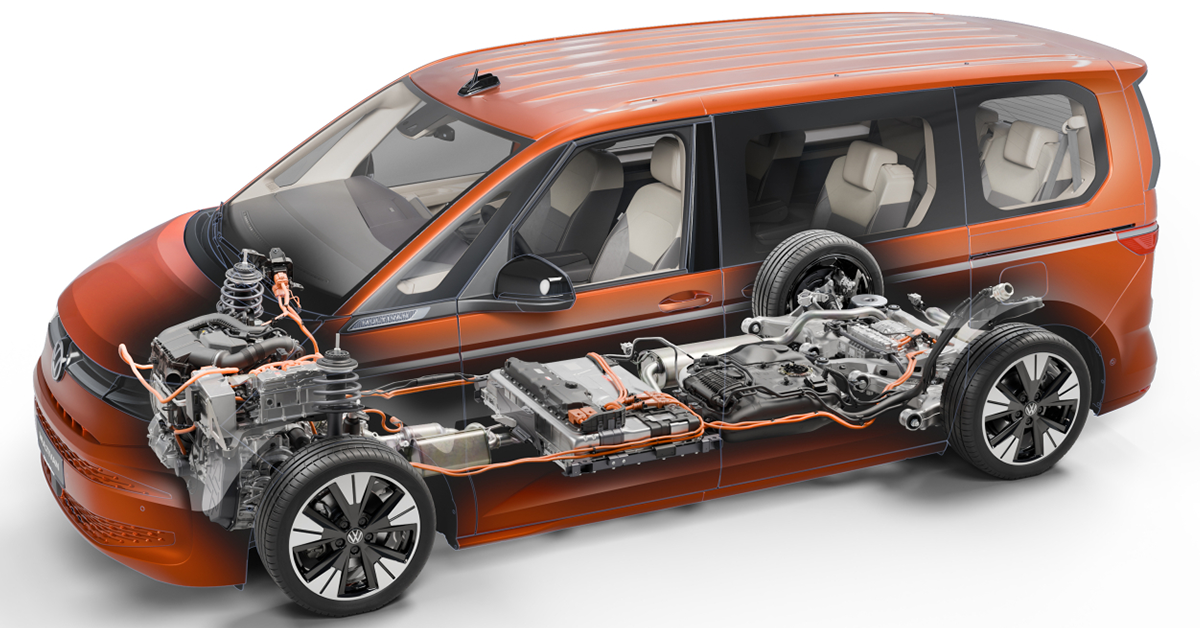
Official press image of the Volkswagen Multivan eHybrid. | © Volkswagen AG
Volkswagen’s people carriers and vans use the same plug-in idea. A Volkswagen newsroom page says the Multivan introduced in 2021, internally called the T7 and optionally available as a plug-in hybrid, is built in Hannover (Volkswagen). Our Multivan guide says the 2026 update brings a new front end, a 12.9-inch screen and an eHybrid 4MOTION with a 19.7 kWh battery, according to trade reports (reported). The same guide says the 2026 range has a 150 PS diesel, a 204 PS petrol and a 245 PS eHybrid 4MOTION (reported). The guide calls the Multivan the passenger and family version of the Bulli, built by Volkswagen Commercial Vehicles in Hannover (Volkswagen), and it calls the Caddy the compact van and people-carrier of the same Hannover-based division, which also builds the Transporter, the Crafter and the Amarok (Volkswagen).
| Multivan T7 built | Hannover, plug-in hybrid optional (Volkswagen) |
| Multivan eHybrid 4MOTION | 19.7 kWh battery, 245 PS (reported) |
| Multivan deliveries, 2025 | 38,700 globally (reported) |
| Caddy generation | Fifth, from 2020, MQB (Volkswagen) |
| Caddy eHybrid battery | 19.7 kWh net (Volkswagen) |
| Caddy eHybrid total range | Over 620 km, 2026 update (Volkswagen) |
| Caddy eHybrid plant | Poznań, since 2024 (reported) |
| Caddy built at Poznań | 2.9 million since 2003 (Volkswagen) |
| Touareg R eHybrid | 340 kW system output (Volkswagen) |
| Touareg towing | 3.5 t, third generation (Volkswagen) |
The Multivan story includes a name change. Our Multivan guide says the Caravelle name returns in the UK (reported), and that the Multivan had 38,700 global deliveries in 2025 (reported). The guide also gives a cargo volume of 3,672 litres with the rear seats removed (reported). We treat the eHybrid 4MOTION details as reported, because we did not find a Volkswagen release with the full data. For the generations from the T3 to the T7, read our Multivan guide.
The Caddy eHybrid is the small family van. Our Caddy guide says the fifth generation arrived in 2020 on the MQB platform and that a plug-in hybrid called the eHybrid has been built at Poznań since 2024, according to a Polish report (reported). The 2026 update brings a new front end, new colours, a 12.9-inch display and an eHybrid rated at over 620 km total range (Volkswagen). The Caddy eHybrid has a 19.7 kWh net battery (Volkswagen), the same size as the Golf and Tiguan.
The Caddy also shows the van side of the business. Our Caddy guide says Volkswagen has built 2.9 million Caddys at Poznań since 2003 (Volkswagen) and that the Maxi has a load volume of up to 3,100 litres (Volkswagen). We do not give the Caddy eHybrid price here, because we did not find a current Volkswagen price in the sources we read.
The Touareg is the large plug-in SUV. Our Touareg guide says the Touareg R eHybrid has a system output of 340 kW (Volkswagen), the third generation tows up to 3.5 tonnes (Volkswagen) and more than 1.2 million Touaregs were sold in 39 countries (Volkswagen). The guide also covers the FINAL EDITION that closes the Touareg story. Because the Touareg ended in 2026, a Touareg R eHybrid is now a used or remaining-stock purchase.
A plug-in van or SUV needs a charging plan. A 19.7 kWh battery on an 11 kW AC wall box is a different proposition from a car that only has a household socket. The Golf, Tiguan, Tayron and Passat plug-ins all list 11 kW AC charging (Volkswagen), but the actual charging time depends on the charger and the car, and we do not state one. For the vehicles in this section, read our Multivan guide, our Caddy guide and our Touareg guide, and for every model, see our Volkswagen models list.
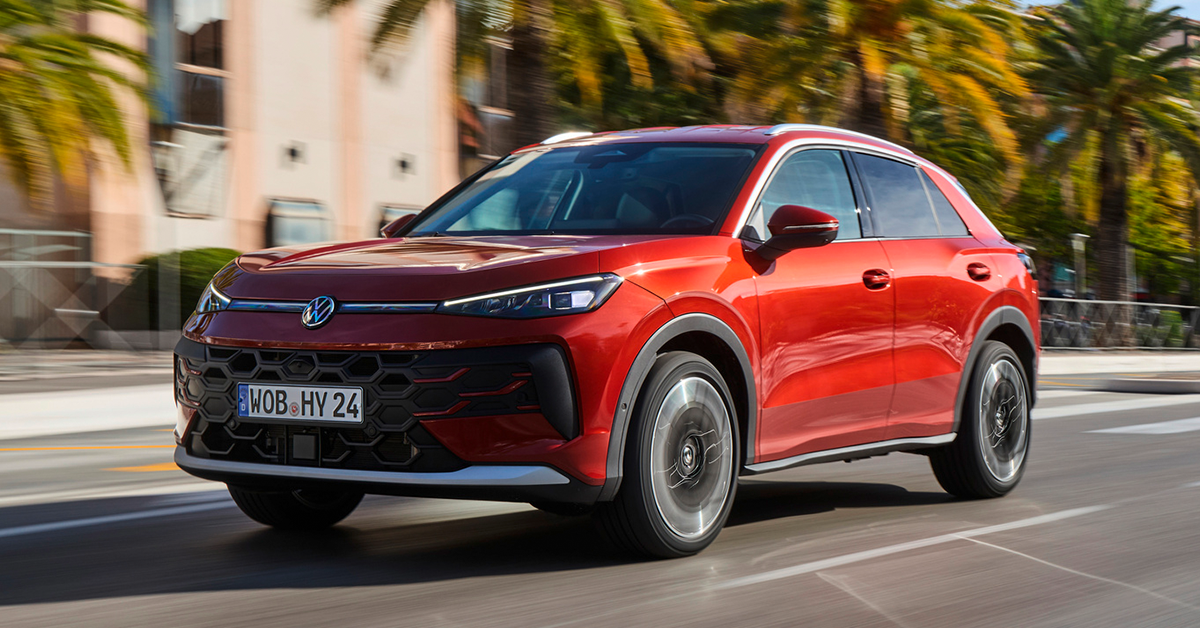
Official press image of the Volkswagen T-Roc Hybrid. | © Volkswagen AG
The choice comes down to charging. If you can charge at home or at work, a plug-in eHybrid gives the most electric driving. The Golf eHybrid offers up to 143 km of electric range (Volkswagen), the Tiguan eHybrid up to about 120 km (Volkswagen), and the Tayron up to 126 km at the 2025 Media Drive (Volkswagen). If you cannot charge, the new Golf Hybrid or T-Roc Hybrid saves fuel without a plug (Volkswagen), and if you want the lowest price the eTSI is the simple route.
| Lowest price route | eTSI mild hybrid (Volkswagen) |
| No-plug fuel saving | Golf Hybrid, T-Roc Hybrid (Volkswagen) |
| Most electric range, Golf | eHybrid, up to 143 km (Volkswagen) |
| T-Roc 1.5 eTSI start | 30,845 euros (Volkswagen) |
| Golf Life Hybrid start | 37,505 euros (Volkswagen) |
| Golf eHybrid launch price | 44,240 euros, May 2024 (Volkswagen) |
| Tiguan eHybrid launch price | 48,655 euros, February 2024 (Volkswagen) |
| Quickest full hybrid | Golf Hybrid 125 kW, 7.5 s (Volkswagen) |
| Most powerful plug-in in guide | Touareg R eHybrid, 340 kW (Volkswagen) |
| Austrian plug-in bonus | 3,000 euros until 30 November 2026 (Volkswagen) |
Prices show the ladder. The eTSI starts lowest, with the T-Roc 1.5 eTSI at 30,845 euros (Volkswagen) and the Tiguan eTSI at 36,600 euros (Volkswagen). The full hybrid follows, with the Golf Life Hybrid from 37,505 euros and the T-Roc Life Hybrid from 37,545 euros (Volkswagen). The plug-ins sit higher, with the Golf eHybrid from 44,240 euros and the Tiguan eHybrid from 48,655 euros at launch (Volkswagen). These are German launch or release prices on different dates, so they are a guide to the order, not a price list.
Performance is a separate question. The Golf GTE has 200 kW (272 PS) (Volkswagen), the Passat eHybrid 200 kW (272 PS) with 400 Nm (Volkswagen), and the Tiguan eHybrid also reaches 200 kW (Volkswagen). The Touareg R eHybrid has 340 kW (Volkswagen). The Golf Hybrid at 125 kW does 0 to 100 km/h in 7.5 seconds (Volkswagen). For buyers who want speed and electric range, the GTE and the 200 kW plug-ins are the picks in our reading of the figures.
Space and use matter more than numbers for many families. The Tayron gives 885 litres of maximum boot space with five seats (Volkswagen), the Multivan suits larger groups, and the Caddy eHybrid is the van-based family choice (Volkswagen). The Passat Variant is the estate option. The T-Roc Hybrid is the compact crossover. We have not tested these cars, so these are readings of the published data, not driving impressions, and we do not rank them.
What is next? Volkswagen’s July 2026 release said a further performance level of the full hybrid would be added to the portfolio soon (Volkswagen), and the October release shows the 100 kW version in the Golf and T-Roc (Volkswagen). A German motoring magazine says further Group models are planned to get the system later (reported). We do not give model names for those, because Volkswagen has not confirmed them in the sources we read. Our Golf guide expects the next-generation Golf around 2028 (reported).
Hybrids are part of a wider range. Volkswagen also sells a growing family of electric cars, which we cover in a separate guide, and the combustion cars that carry the eTSI. For the cars in this guide, read our Golf guide, Tiguan guide, T-Roc guide, Tayron guide and Passat guide, and for every Volkswagen, see our Volkswagen models list. We will update this guide as Volkswagen publishes prices for the next full-hybrid versions.