 Brands
Volkswagen Tiguan — History, Generations and Specs
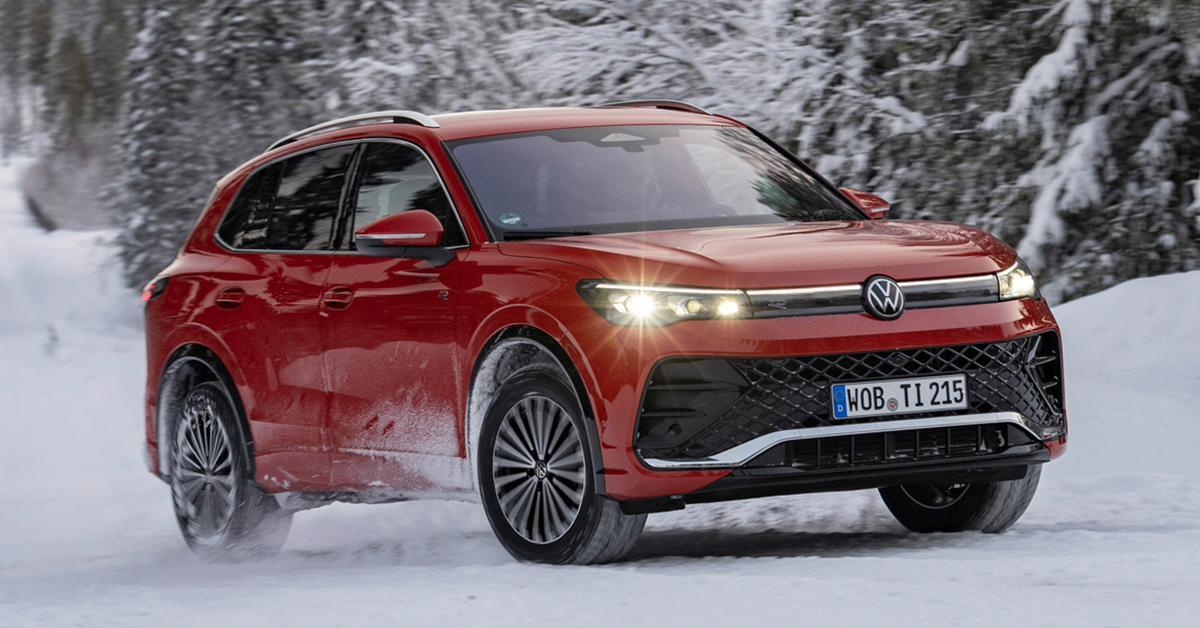
Official press image of the Volkswagen Tiguan. | © Volkswagen AG
The Volkswagen Tiguan is the compact SUV that became the best-selling model of the Volkswagen brand. Here is the full Tiguan story, from the 2006 Concept Tiguan and the 2007 launch to the second-generation Allspace, the Tiguan R, the third generation of 2023, the Edition 20 and the new electric ID. Tiguan, with the engines, plants and sales milestones that Volkswagen has published.

Official press image of the Volkswagen Concept Tiguan. | © Volkswagen AG
The Volkswagen Tiguan is the compact SUV that grew into the best-selling model of the Volkswagen brand. Its story starts with the Concept Tiguan, which Volkswagen showed at the Los Angeles Auto Show in November 2006. A year later the first production car was presented at the Frankfurt Motor Show, and the market launch followed in the same year. Volkswagen’s own 20-year milestone release says the Tiguan has been a key factor in the success of the brand for two decades, and it counts more than nine million sales worldwide up to the end of May 2026.
| Concept Tiguan | November 2006, Los Angeles Auto Show (Volkswagen) |
| Name | Merges “Tiger” and “Leguan” (iguana), chosen in an Auto Bild readers’ poll (Volkswagen) |
| First generation | Frankfurt Motor Show, 2007 (Volkswagen) |
| First facelift | Geneva, spring 2011 (Volkswagen) |
| Second generation | Frankfurt, September 2015 (Volkswagen) |
| Tiguan Allspace | Long version, introduced in 2017 (reported) |
| Tiguan R | Debut in 2020, 235 kW (320 PS) (Volkswagen) |
| Third generation | 19 September 2023, Wolfsburg (Volkswagen) |
| Tiguan Edition 20 | July 2026, from 48,180 euros (Volkswagen) |
| ID. Tiguan | 9 October 2026, Wolfsburg (Volkswagen) |
The name is a made-up word. Volkswagen explains that it merges “Tiger” and “Leguan”, the German word for iguana, and that it won an Auto Bild readers’ poll against other suggestions. So the name was picked with the help of the public rather than by the company alone. In this guide we follow the car through four stages: the first generation, the second generation with the long Allspace, the third generation and the new electric ID. Tiguan.
Each generation moved the Tiguan up in size and in importance. The first car was sold mainly as a compact family SUV. The second generation of 2015 was the first Volkswagen Group SUV on the MQB modular platform, which is the same architecture that carries the Golf. The third generation of 2023 uses the updated MQB evo platform, with plug-in hybrids that can drive around 100 km on electric power. Between those cars sit the Tiguan R of 2020 and the special Edition 20 of 2026.
Volkswagen says the Tiguan became the best-selling model of the Volkswagen Group in 2017 and has kept that position since. The numbers behind that claim are large. Annual production rose from 120,000 units in 2007 to almost 911,000 in 2019, and the car is sold in more than 60 countries. It is built in Wolfsburg in Germany, in Puebla in Mexico and in Anting in China, which is why the Tiguan is a truly global product rather than a European one.
The Tiguan also changed what Volkswagen sells in Europe. The Golf long held the position of the most important model, but an industry analyst estimated that the Tiguan was the most produced car in Germany in 2025, with more than 250,000 units, ahead of the Golf (reported). That is an estimate and not a Volkswagen figure, but it shows how far the SUV has come since the Concept Tiguan in Los Angeles.
A new chapter began on 9 October 2026, when Volkswagen unveiled the ID. Tiguan in Wolfsburg. It is the electric successor to the ID.4 and ID.5 and it carries the Tiguan name into the electric range, while the petrol, diesel and plug-in hybrid Tiguan continues alongside it. If you want the story of the electric model that the ID. Tiguan replaces, our ID.4 guide covers it in detail, and the Volkswagen models list shows where the Tiguan sits among every car the brand has built. Read together, those pages give the wider background to the story told here, from the compact cars to the electric range.

Official press image of the first-generation Volkswagen Tiguan. | © Volkswagen AG
The first-generation Volkswagen Tiguan was presented at the Frankfurt Motor Show in 2007, and Volkswagen put it on sale in the same year. Reports say that the production version was revealed online in June 2007, a few months before the show, and that Wolfsburg started production at the end of 2007 (reported). It followed the Concept Tiguan of 2006, which had been shown in Los Angeles a year earlier.
| Concept | Concept Tiguan, Los Angeles, November 2006 (Volkswagen) |
| Production debut | Frankfurt Motor Show, 2007 (Volkswagen) |
| Production start | Wolfsburg, end of 2007 (reported) |
| Platform | PQ46 (reported) |
| Output in 2007 | 120,000 units (Volkswagen) |
| Facelift | Geneva, spring 2011 (Volkswagen) |
| Units built by facelift | 700,000 (Volkswagen) |
| Output in 2019 | Almost 911,000 units, all generations (Volkswagen) |
| China | Continued as the Tiguan Silk Road until 2020 (reported) |
| United States | Rebranded Tiguan Limited in April 2017 (reported) |
The first car was based on the PQ46 platform (reported). Volkswagen’s later milestone releases give a clear picture of how the car was received. Annual production was 120,000 units in 2007, and by 2019, across all generations, it had reached almost 911,000. A newsroom release dated 17 April 2020 puts the six-million mark in the spring of 2020, and Volkswagen has also said that the five-millionth Tiguan was built after eleven years (reported).
The first generation received a facelift that was unveiled at the Geneva Motor Show in the spring of 2011. By then, Volkswagen said, 700,000 Tiguans had already been produced. That is roughly 700,000 cars in about three and a half years, if we count from the production start at the end of 2007 (our own arithmetic). The newsroom image of the car with the “Sport & Style” equipment, used in this section, is dated February 2011. The facelift kept the car on sale for four more years, until the second generation took over.
The first car lived on in other markets long after Europe had moved to the second generation. In China the first-generation car continued as the Tiguan Silk Road until 2020 (reported), which is one reason the cumulative numbers kept rising. In the United States, Volkswagen of America rebranded the outgoing car as the Tiguan Limited in April 2017 (reported), so that it could be sold next to the new long-wheelbase model.
It is worth remembering what the first Tiguan did for the brand. The Tiguan gave the brand a compact SUV to sit below the larger Touareg, and the sales curve shows that buyers wanted it. 4MOTION is the name Volkswagen uses for its all-wheel-drive system, and it has been available on the Tiguan from the start, which suited buyers who wanted a higher seating position and extra grip.
The first generation also set the template for the later cars: a five-seat cabin, a range of petrol and diesel engines, and a ladder of equipment levels. When Volkswagen built the second generation, it kept the idea and changed almost everything underneath. That story, and the arrival of the long Allspace, is the subject of the next section of this guide. Every later generation builds on what the first car proved. The first Tiguan is also a reminder of how long a successful model can run: the original car was sold in Europe for about eight years, and in China for far longer under the Silk Road name, which shows how Volkswagen stretches a good platform across markets. For buyers today, it explains why used first-generation cars are still common on the road.

Official press image of the Volkswagen Tiguan Allspace. | © Volkswagen AG
The second-generation Tiguan made its world premiere at the Frankfurt Motor Show in September 2015, and the market launch followed in April 2016 (reported). Volkswagen described it as the first Volkswagen Group SUV on the MQB modular platform. MQB lets Volkswagen change the wheelbase and track of a car while keeping the position of the engine and pedals fixed, which is why the same architecture could carry the Golf, the Passat, the Arteon and a compact SUV.
| World premiere | Frankfurt Motor Show, September 2015 (Volkswagen) |
| Market launch | April 2016 (reported) |
| Platform | MQB, the first Volkswagen Group SUV on it (Volkswagen) |
| Length | 4,486 mm (reported) |
| Wheelbase | 2,681 mm (reported) |
| Tiguan Allspace | Wheelbase 110 mm longer, up to seven seats (Volkswagen) |
| Allspace launch | 2017 (reported); in parallel with the generation (Volkswagen) |
| United States and China | Only the long version sold (Volkswagen) |
| China | Tiguan L, SAIC Volkswagen, Anting (reported) |
| Sales | Over 700,000 in 2017 and almost 800,000 in 2018 (reported) |
The new car was bigger than the one it replaced. Reports give a length of 4,486 mm and a wheelbase of 2,681 mm for the standard car (reported). Volkswagen said the second generation brought a new design, more space and a larger set of driver assistance systems. That list of assistance systems was one of the main selling points of the new car.
The big addition was the Tiguan Allspace, a long version with a wheelbase that is 110 mm longer and with up to seven seats. It followed the standard car and was reported as a 2017 model. Volkswagen’s own 20-year release says only that the Allspace came in parallel with the second generation, so the exact start date differs by source, and we show both versions in the table. Whichever date is right, the long car gave buyers who needed a third row a seven-seat option inside the Tiguan family.
In two large markets, only the long version was sold. In the United States and in China the buyer could not choose the short car. In China the long version is called the Tiguan L and is built by SAIC Volkswagen in Anting (reported). The long car was therefore the volume car in those markets, which shows how much the brand adapted the Tiguan for each region.
The sales numbers were strong. Reports say that the Tiguan passed 700,000 units in 2017 and reached almost 800,000 in 2018 (reported), and Volkswagen’s own figure for 2019 is almost 911,000 across all versions. In 2017 the Tiguan became the best-selling model of the Volkswagen Group, a title that Volkswagen says it has kept since. The second generation was the car that made that happen.
The second generation also shows how Volkswagen thinks about platforms. By putting the Tiguan on MQB, the company could build it in several plants with the same parts and tools, which is part of the reason one car could be made in Germany, Mexico and China at the same time. The Allspace was a simple extension of that idea: the same front end and cabin architecture, stretched in the middle. A mid-cycle update in 2020 added a sportier R model and a plug-in hybrid, which we cover in the next section. That update kept the car competitive in its final years. The Allspace itself was replaced by a different car. Volkswagen did not build a long third-generation Tiguan for Europe. Instead it launched a separate seven-seat SUV called the Tayron, which we explain near the end of this guide.
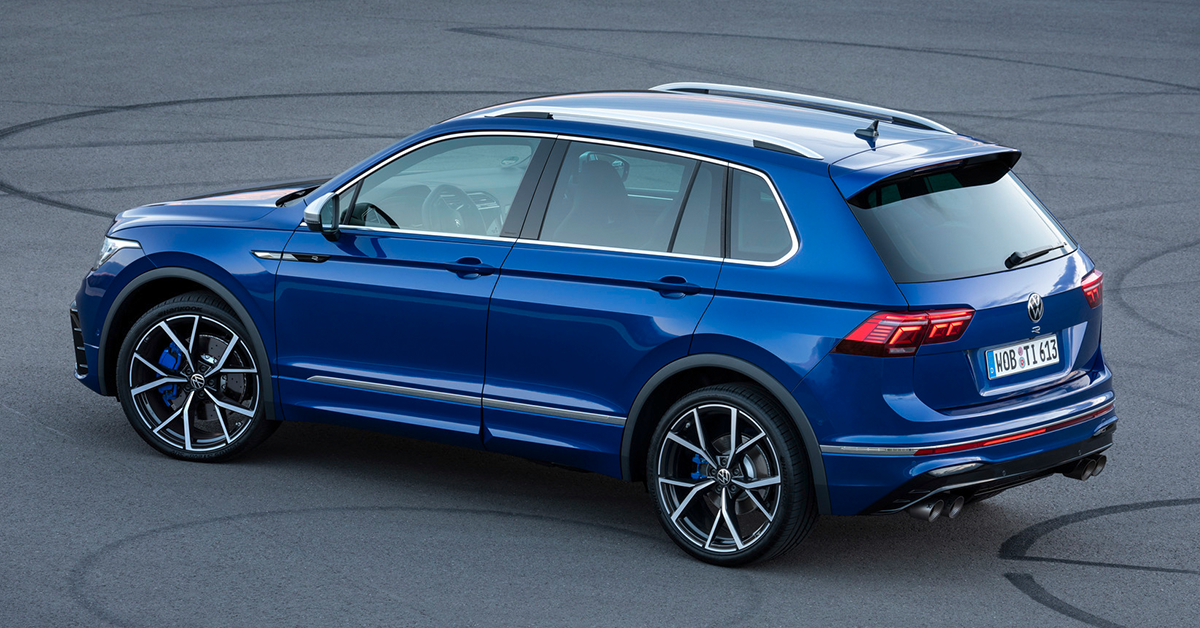
Official press image of the Volkswagen Tiguan R. | © Volkswagen AG
The second-generation Tiguan received an update that was released on 30 June 2020 (reported). It brought a sharper look, new assistance systems and two important additions: the Tiguan R and the Tiguan eHybrid. Volkswagen’s milestone release lists 2020 as the year of the Tiguan R debut, so the car belongs in any account of how the SUV grew from a family car into a range with a performance model.
| Update released | 30 June 2020 (reported) |
| Tiguan R debut | 2020 (Volkswagen) |
| Tiguan R output | 235 kW (320 PS) (Volkswagen) |
| Tiguan R engine | 2.0 TSI (Volkswagen) |
| Tiguan R drive | 4MOTION all-wheel drive, DSG (Volkswagen) |
| Tiguan eHybrid | Plug-in hybrid added in 2020 (reported) |
| Allspace top petrol | 2.0 TSI, 180 kW, 7-speed DSG (Volkswagen) |
| Third-generation R | In development as of July 2026 (Volkswagen) |
| Third-generation top petrol | 2.0 TSI, 195 kW (265 PS) (Volkswagen) |
| United States SEL R-Line | 268 hp, all-wheel drive (reported) |
The Tiguan R is the fast one. Volkswagen’s image caption describes it as the Tiguan R 2.0 TSI 4MOTION DSG with 235 kW (320 PS), and the milestone release confirms the figure and the all-wheel drive. The R badge is the one Volkswagen uses for its most powerful versions of the Golf and the T-Roc, and the Tiguan R brought the same idea to the SUV. DSG is Volkswagen’s name for its dual-clutch automatic gearbox, and 4MOTION is its all-wheel-drive system, so the R combines a turbocharged four-cylinder engine with a quick-shifting gearbox and drive to all four wheels.
The R-Line is a different thing. It is an equipment line, not a power level, and it adds sporty styling to an ordinary Tiguan. A newsroom image of the Tiguan R-Line is dated September 2020. The R-Line gives the sporty look without the power of the full R, and the name has stayed on the third-generation car, where Volkswagen lists R-Line with sports styling, sports seats and 19-inch Coventry wheels.
The Tiguan eHybrid arrived with the same update (reported). It was a plug-in hybrid, which means the battery can be charged from a socket and the car can drive on electric power for short trips, with a petrol engine to take over on longer journeys. That makes it a bridge between the combustion Tiguan and the later electric cars. Volkswagen has not given the electric range of the 2020 car in the sources we checked, so we do not quote one. The third generation raised the bar: Volkswagen says its new plug-in hybrids reach around 100 km on electric power and, for the first time, can charge on a DC fast charger.
The Allspace also received the update. A newsroom image dated June 2021 shows the Tiguan Allspace Elegance with the 2.0 TSI of 180 kW and the seven-speed DSG. It reminds us that the long car kept the same engines as the standard car and that the top petrol engine in the Allspace was a 180 kW unit rather than the 235 kW of the R. The Allspace stayed in the range until the Tayron took over its role.
The third generation has not yet had a full R. Volkswagen’s Edition 20 release says that a more powerful R variant is in development, and spy photos of a testing car were published in March 2026 (reported). Until it arrives, the top petrol engine in the third-generation Tiguan is the 2.0 TSI with 195 kW (265 PS) of the R-Line, which in Australia is quoted with 400 Nm of torque (reported). In the United States the SEL R-Line Turbo has 268 hp (reported).
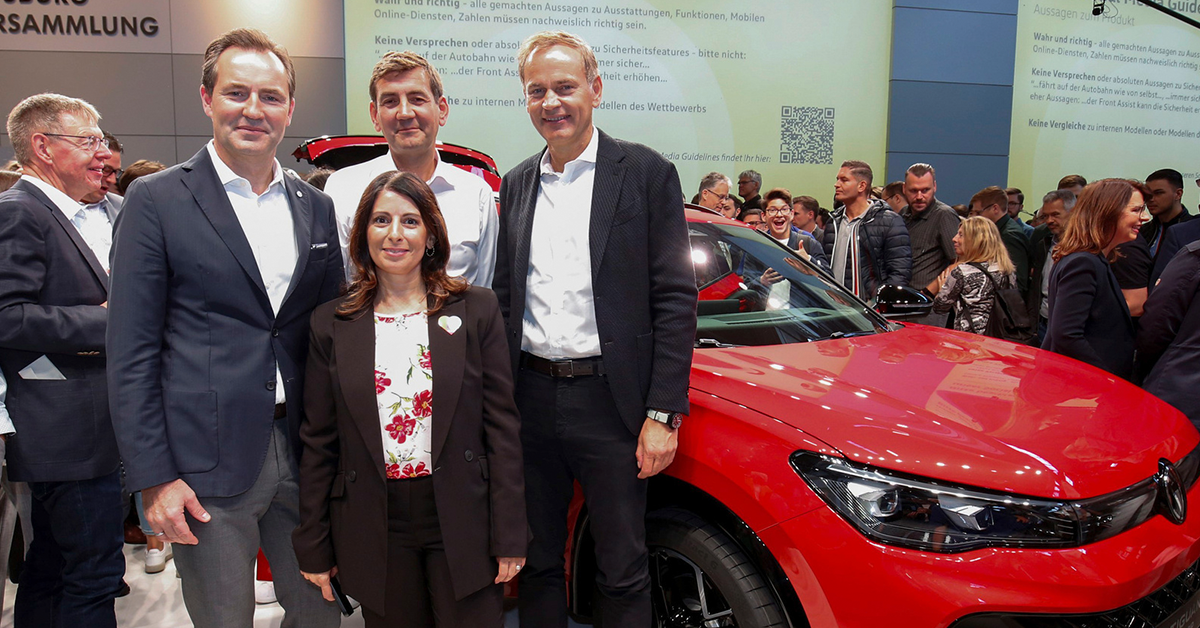
Official press image of the third-generation Volkswagen Tiguan at its 2023 premiere. | © Volkswagen AG
The third-generation Tiguan had its world premiere on 19 September 2023 in Wolfsburg. Volkswagen chose an unusual audience: it showed the car first to about 10,000 employees at the works meeting of the Wolfsburg plant before it showed it to the press. The company published the details in Media Information No. 142/2023, and the newsroom picture from that evening shows a near-production vehicle that was not yet available for sale.
| World premiere | 19 September 2023, Wolfsburg (Volkswagen) |
| Premiere audience | About 10,000 employees at the Wolfsburg works meeting (Volkswagen) |
| Production start | Wolfsburg, autumn 2023 (Volkswagen) |
| Market launch | First quarter of 2024 (reported) |
| Platform | MQB evo (reported) |
| European pre-sales | 6 November 2023 (Volkswagen) |
| Base price, Germany | 36,600 euros, 96 kW eTSI (Volkswagen) |
| Drive options planned | Eight, across eTSI, eHybrid, TSI and TDI (Volkswagen) |
| Drag coefficient | 0.28, down from 0.33 (Volkswagen) |
| India R-Line launch | April 2025, 2.0 TSI EVO, 204 PS (Volkswagen India) |
Production in Wolfsburg started in the autumn of 2023, and the market launch followed in the first quarter of 2024 (reported). The car uses the MQB evo platform (reported), the newer version of the modular architecture, and Volkswagen describes it as a completely redesigned world bestseller. The company brought the car out with new drives and a redesigned cockpit.
Pre-sales opened in Europe on 6 November 2023 in Media Information No. 162/2023. In Germany the base Tiguan with the 96 kW (130 PS) 48-volt mild hybrid started at 36,600 euros, and that price and the standard equipment apply to the German range only. Volkswagen said at the time that the car was offered with eight different drive options across eTSI, eHybrid, TSI and TDI engines, with the rest of the range following in 2024.
The design work brought a clear gain in efficiency. The drag coefficient improved from 0.33 to 0.28, according to Volkswagen, and the wheels can be as large as 20 inches. The optional IQ.LIGHT HD matrix headlights have 38,400 LEDs, which allows the car to light the road ahead without dazzling other drivers. Inside, the cockpit was redesigned around a 12.9-inch infotainment screen as standard, with a 15-inch option. Volkswagen also lists a new set of equipment lines, Tiguan, Life, Elegance and R-Line, which we explain in the next section. Compared with the second generation of 2016, the third car changes the cockpit, the headlights and the engine range, while the basic idea of a five-seat compact SUV stays the same.
Quotes at the launch came from Thomas Schäfer, the head of the Volkswagen brand, and from Kai Grünitz. A preview release, No. 98/2023, had been published on 15 June 2023, so buyers knew a new car was coming a few months before the premiere. This gave the dealers and the press plenty of time to prepare. The works-meeting premiere was also a message to the workforce: the Tiguan is built in Wolfsburg, and Volkswagen wanted the people who build it to see it first. By the time of the European pre-sales release, Volkswagen could say that more than 7.6 million Tiguans had been sold.
The third Tiguan also reached other regions with local changes. In the United States it is sold with two rows and five seats only, in S, SE, SE R-Line Black and SEL R-Line trims, with front-wheel drive or 4Motion all-wheel drive (reported). In India Volkswagen launched the Tiguan R-Line in April 2025 with a 2.0-litre TSI EVO of 204 PS and 320 Nm and a 7-speed DSG, on the MQB EVO platform. In Australia the five-seat car arrived in May 2025 (reported).

Official press image of the third-generation Volkswagen Tiguan. | © Volkswagen AG
The European range of the third-generation Tiguan is built around three engine families. The eTSI engines are 48-volt mild hybrids with 96 kW (130 PS) and 110 kW (150 PS), and the 110 kW version uses Active Cylinder Management to switch off cylinders when the load is light. The TDI diesel engines make 110 kW (150 PS) and 142 kW (193 PS). The 2.0 TSI petrol engines make 150 kW and 195 kW (265 PS). The Tiguan 2.0 TSI with 150 kW and 195 kW and the 142 kW diesel have 4MOTION all-wheel drive as standard, and every launch model has an automatic DSG gearbox.
| eTSI, base | 96 kW (130 PS), 48-volt mild hybrid (Volkswagen) |
| eTSI, 110 kW | 150 PS, 48-volt, Active Cylinder Management (Volkswagen) |
| TDI | 110 kW (150 PS) and 142 kW (193 PS) (Volkswagen) |
| 2.0 TSI | 150 kW and 195 kW (265 PS) (Volkswagen) |
| 4MOTION standard on | 2.0 TSI 150 and 195 kW, 2.0 TDI 142 kW (Volkswagen) |
| eHybrid electric range | Around 100 km (Volkswagen) |
| eHybrid DC charging | Up to 50 kW (Volkswagen) |
| Towing, top engines | Up to 2,300 kg (Volkswagen) |
| Infotainment | 12.9-inch standard, 15-inch optional (Volkswagen) |
| Equipment lines | Tiguan, Life, Elegance, R-Line (Volkswagen) |
The mild hybrid in the eTSI uses a small 48-volt system that recovers energy when the car slows down and helps the engine when it accelerates. It is not a plug-in system, and the driver does not need to charge it. The plug-in hybrids are the important new drives. Volkswagen says the new Tiguan eHybrid has an electric range of around 100 km, and that the combined range is more than 800 km. For the first time, the Tiguan plug-in hybrid can charge on a DC fast charger, at up to 50 kW. That makes it far more practical for owners who cannot charge at home every night, because a short stop at a public fast charger can restore much of the electric range.
Towing is another strength. Volkswagen says the top engines tow up to 2,300 kg, and the 4MOTION versions are the ones to look at for a caravan or a trailer. The standard braked towing limit depends on the engine and the gearbox, so it is worth checking the data sheet of the exact car in your market before you buy. Volkswagen’s figures describe the German and European range, and the rules in other regions differ.
Volkswagen sells the Tiguan in equipment lines. In Germany these are Tiguan, Life, Elegance and R-Line. The base Tiguan includes the 12.9-inch infotainment screen, the Digital Cockpit, LED headlights, 17-inch wheels and standard assist systems. Life adds three-zone climate control, Park Assist Plus, adaptive cruise control and 17-inch Venezia wheels. Elegance adds LED Plus headlights, ergoActive seats with massage, an electric tailgate and 18-inch Napoli wheels, and R-Line adds sports styling, sports seats and 19-inch Coventry wheels.
Inside, the biggest change is the screen. The standard infotainment display is 12.9 inches across, and a 15-inch screen is optional. DCC Pro, the adaptive running gear, is an optional extra that Volkswagen says balances comfort and dynamics, though the release gives no technical detail. Boot space for the five-seat car is quoted as growing to 652 litres (reported), which suits a family car.
Remember that the engine list changes by market. In the United States the Tiguan has two rows and five seats, and the SEL R-Line Turbo is quoted with 268 hp (reported). In India the R-Line has 204 PS. In Europe the 2.0 TSI of 265 PS with 4MOTION has been reported as available (reported). When you read a specification, always check which market and which model year it describes before you compare it with another car.

Official press image of the Volkswagen Tiguan Edition 20. | © Volkswagen AG
Volkswagen’s milestone release names three plants for the Tiguan: Wolfsburg in Germany, Puebla in Mexico and Anting in China. Wolfsburg is the home plant and has built the car since the end of 2007 (reported). Anting is where SAIC Volkswagen builds the long Tiguan L for China (reported). The three-plant set-up lets Volkswagen supply each region from a local factory. It is also a good example of how a single nameplate can be adapted to local demand: the car for China is the long Tiguan L, while the car sold in the United States has five seats and its own trim names.
| Plants | Wolfsburg (Germany), Puebla (Mexico), Anting (China) (Volkswagen) |
| Output in 2007 | 120,000 units (Volkswagen) |
| Output in 2019 | Almost 911,000 units (Volkswagen) |
| Six million | Passed in spring 2020 (Volkswagen) |
| Over 7.6 million | Sold by November 2023 (Volkswagen) |
| Over nine million | Sold up to end of May 2026 (Volkswagen) |
| Countries | More than 60 (Volkswagen) |
| Group best-seller | Since 2017 (Volkswagen) |
| Most produced in Germany | Over 250,000 in 2025, an estimate (reported) |
| Edition 20 | From 48,180 euros, 1.5 TSI 110 kW, Maple Red metallic (Volkswagen) |
The sales story is told in milestones. Annual production grew from 120,000 in 2007 to almost 911,000 in 2019, and the six-million mark was passed in the spring of 2020. By the European pre-sales release of 6 November 2023 more than 7.6 million had been sold, and Volkswagen’s Edition 20 release says that more than nine million Tiguans were sold worldwide up to the end of May 2026. The car is sold in more than 60 countries.
Those figures put the Tiguan at the centre of the brand. Volkswagen says that it became the best-selling model of the Volkswagen Group in 2017 and has stayed there. In 2025 the Volkswagen brand delivered around 4.73 million vehicles worldwide, according to the Media Information of 13 January 2026, and the Tiguan is one of the models behind that figure. An industry analyst estimated that the Tiguan was the most produced model in Germany in 2025 with more than 250,000 units (reported).
To mark twenty years, Volkswagen launched the Tiguan Edition 20 in July 2026. It can be ordered from 48,180 euros with the 1.5 TSI of 110 kW (150 PS), and it is based on the Life equipment line. Volkswagen says that all engines available for the Tiguan Life from 110 kW can be ordered. Its fuel consumption is quoted at 6.2 litres per 100 km combined, with CO2 emissions of 141 g/km.
The Edition 20 is mainly a styling package. It has a special colour, Maple Red metallic, created for the model, together with the R-Line exterior package. The front bumper trim strips are in the car colour, the window trim strips and mirror caps are high-gloss black and the rear side windows are darkened. The B-pillar trim has EDITION 20 lettering, there is a logo projector in the doors, and the 19-inch Coventry alloy wheels are in coloured paint, with 20-inch wheels as an option.
Inside, the Edition 20 has red decorative stitching on the dashboard, the door trim, the seat covers and the mats. The sill panels are illuminated and carry EDITION 20 lettering, and the steering wheel has special-colour trim. Martin Sander, the Volkswagen board member for Sales, Marketing and After Sales, said that the Tiguan has been a key factor in the success of the brand for the past 20 years. It is a fitting tribute to a model that has changed the brand, and a useful marker of how far it has come since the concept of 2006, as the history section of this guide explains.

Official press image of the Volkswagen ID. Tiguan. | © Volkswagen AG
The newest member of the family is the all-electric ID. Tiguan. Volkswagen first announced the name in Media Information No. 81/2026 on 28 September 2026, and the world premiere followed on 9 October 2026 in Wolfsburg (Media Information No. 87/2026). The car replaces the ID.4 and the ID.5, and Volkswagen is continuing its naming strategy, following the ID. Polo and ID. Cross, and the name links the electric SUV to the best-selling model. The combustion and hybrid Tiguan stays on sale next to it.
| Name announced | 28 September 2026 (Volkswagen) |
| World premiere | 9 October 2026, Wolfsburg (Volkswagen) |
| Pre-sales | 13 October 2026, from 42,695 euros (Volkswagen) |
| Sales start | Beginning of 2027 (Volkswagen) |
| Entry version | 140 kW (190 PS), 58 kWh, rear-wheel drive (Volkswagen) |
| Middle version | 210 kW (286 PS), 77 kWh, rear-wheel drive (Volkswagen) |
| Top version | 220 kW (299 PS), 77 kWh, 4MOTION (Volkswagen) |
| Range | Up to 600 km WLTP (Volkswagen) |
| Boot | Up to 534 litres, plus 32-litre front boot (Volkswagen) |
| Platform and plant | MEB+, Emden (Volkswagen) |
Volkswagen offers three versions. They are a rear-wheel-drive car with 140 kW (190 PS) and a 58 kWh battery, a rear-wheel-drive car with 210 kW (286 PS) and a 77 kWh battery, and a 4MOTION all-wheel-drive car with 220 kW (299 PS) and the same 77 kWh battery. The range is up to 600 km WLTP, depending on power and battery size. Towing is up to 1,800 kg with the 58 kWh battery and up to 2,000 kg with the 77 kWh battery. The platform is called MEB+ by Volkswagen.
Pre-sales started on 13 October 2026 in Germany and many other European countries, with prices from 42,695 euros. Volkswagen says sales start at the beginning of 2027, and series production started in Emden (reported to have begun on 12 November 2026). The luggage compartment holds up to 534 litres, and there is a 32-litre front boot. The equipment lines are Trend, Life, Style and R-Line. Thomas Schäfer said the ID. Tiguan brings the two success stories together. He also called it a new benchmark for the brand’s electric SUVs made in Germany.
The design returns to classic pull-style door handles. Inside there is a 10-inch Digital Cockpit, a 15-inch central display and a 12-inch co-driver display, a first for a European Volkswagen, which is hidden from the driver in privacy mode. Volkswagen also kept physical buttons for climate and other key functions, and it offers a retro display option with a Golf IV-style instrument view. One-pedal driving is standard, and there is a Harman Kardon sound system of 480 W as an option.
The other change is the long car. Volkswagen did not offer a long third-generation Tiguan in Europe, and the Allspace was replaced by the Tayron, which had its world premiere in October 2024. Reports give its length as 4,770 mm in one source and 4,792 mm in another, so the figure depends on the market and the source. It is available with five or seven seats, and the engines are shared with the Tiguan (reported), including a 2.0 TSI of 204 PS and 265 PS with 4MOTION.
Where does the Tiguan stand today? In short, it is a global model with three plants, more than nine million buyers and a family of drives that now covers mild hybrids, plug-in hybrids, diesel, petrol and a full electric car. Next to it sit the Tayron for buyers who need seven seats and the ID. Buzz for buyers who want an electric van, which we cover in a separate guide. The Tiguan story is therefore still being written, and the next big step will be the arrival of the ID. Tiguan in showrooms in 2027.