 Brands
Volkswagen Electric Cars — ID. Range, Prices and 2027 Plans
AI-generated concept illustration — Volkswagen electric cars. | Rev N Rise
Volkswagen sells more electric cars than ever, and the line-up is changing fast. Here is the full Volkswagen electric story, from the e-up! and e-Golf to the ID. family, the new ID. Polo and ID. Cross, prices, charging, plants and what comes in 2027.
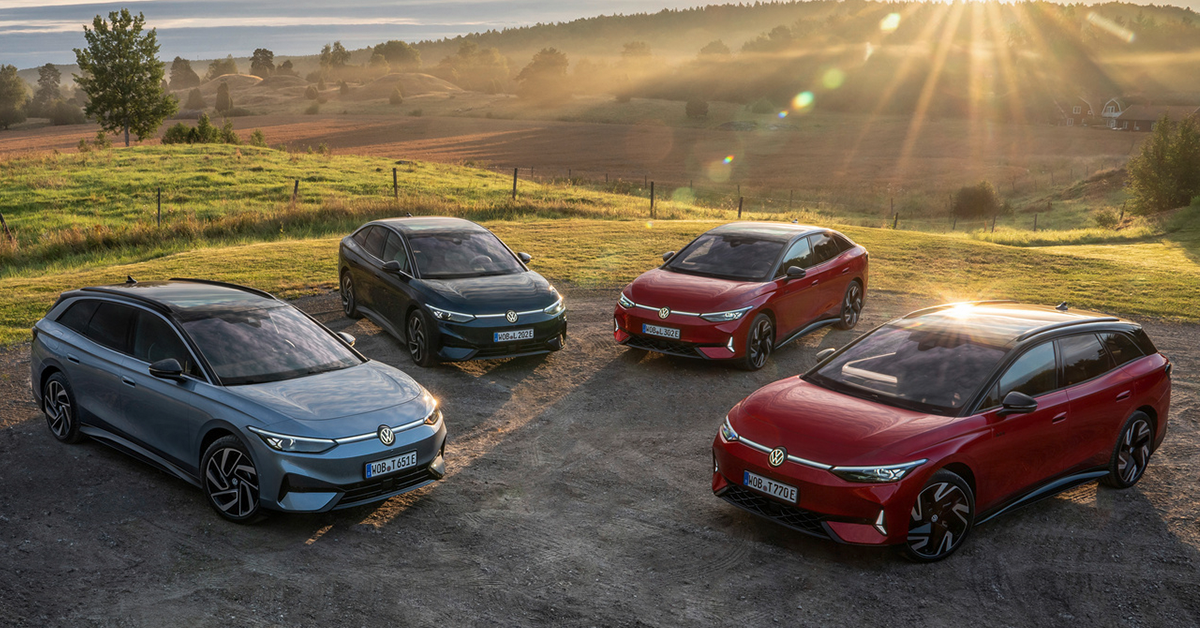
Official press image of the Volkswagen ID. family. | © Volkswagen AG
Volkswagen sells a growing family of electric cars, and in November 2026 the range is changing faster than at any time since the first ID. model. Volkswagen’s newsroom model menu lists the ID. Cross, the ID. Polo and ID. Polo GTI, the ID.3 Neo and ID.3, the ID.4, ID.5, ID.7 and ID.7 Tourer, and the ID. Buzz as the electric models (Volkswagen). The brand also sells the ID.6 in China only, according to our ID.6 guide (Volkswagen). This guide is the hub for all of them and links to the full guide for each model.
| Current electric models | ID.3 Neo, ID. Polo, ID. Cross, ID.7, ID. Buzz and more (Volkswagen) |
| Two millionth electric car | 27 February 2026, an ID.3 from Zwickau (Volkswagen) |
| Included in the two million | e-up!, e-Golf and ID. models (Volkswagen) |
| ID.3 deliveries | Approx. 628,000 (Volkswagen) |
| ID.4 and ID.5 deliveries | Approx. 901,000 (Volkswagen), 950,000+ (Volkswagen) |
| ID.7 deliveries | Approx. 132,000 (Volkswagen) |
| Zwickau output, 2025 | About 212,000 electric cars (Volkswagen) |
| First MEB model | ID.3, 2020 (Volkswagen) |
| Newer platform | MEB+ (Volkswagen) |
| ID.3 successor name | ID.3 Neo, announced 12 March 2026 (Volkswagen) |
The scale is now clear. Volkswagen’s release of 27 February 2026 says the brand delivered its two millionth all-electric vehicle to a customer, an ID.3 built in Zwickau and handed over at the Transparent Factory in Dresden (Volkswagen). The release says the two million include the electric precursors e-up! and e-Golf as well as the ID. models (Volkswagen). Martin Sander, the board member for sales, marketing and after sales, said Volkswagen “laid the foundations for electromobility early on” (Volkswagen).
The same release gives model totals. It lists approximately 628,000 ID.3 deliveries, approximately 901,000 ID.4 deliveries including the ID.5, and approximately 132,000 ID.7 deliveries (Volkswagen). It also says about 212,000 electric cars came off the Zwickau line in 2025 (Volkswagen). Our ID.4 guide cites a Volkswagen statement of more than 950,000 ID.4 and ID.5 deliveries since 2021 (Volkswagen), so the ID.4 total differs between two Volkswagen statements, probably because they were made at different dates.
The platform story has two parts. The ID.3 was the first model based on the MEB platform, and the first ID. family model, launched in 2020 (Volkswagen). The newest small cars use the MEB+ platform, which Volkswagen credits with better space use than the combustion Polo and with enabling new assistance systems and software (Volkswagen). The ID. Cross is also front-wheel drive on MEB+, with the new unified cell module in a cell-to-pack design (Volkswagen). Rear-wheel drive on the original MEB cars gave way to front-wheel drive on MEB+.
The names are changing too. Volkswagen said at the IAA Mobility 2025 show that it would launch a new naming strategy, with the ID. Polo as the first vehicle to reflect it (Volkswagen). The successor to the ID.3 is called the ID.3 Neo, announced on 12 March 2026 (Volkswagen), and the ID.4 and ID.5 are succeeded by the ID. Tiguan, which premiered on 9 October 2026 (Volkswagen). A reporting site calls the ID. Polo the first model in the ID. family to carry an established Volkswagen name (reported).
This guide covers the early electric cars, the compact, SUV and large models, the new small cars, prices and charging, and the sales and plant picture. We use Volkswagen’s newsroom and our own model guides as the main sources and tag other figures as reported. Where sources differ, we show both values. Prices are German list prices from the date given, because Volkswagen has changed them over time. For every Volkswagen vehicle, see our Volkswagen models list, and for the combustion car that gave its name to the ID. Polo, read our Polo guide.
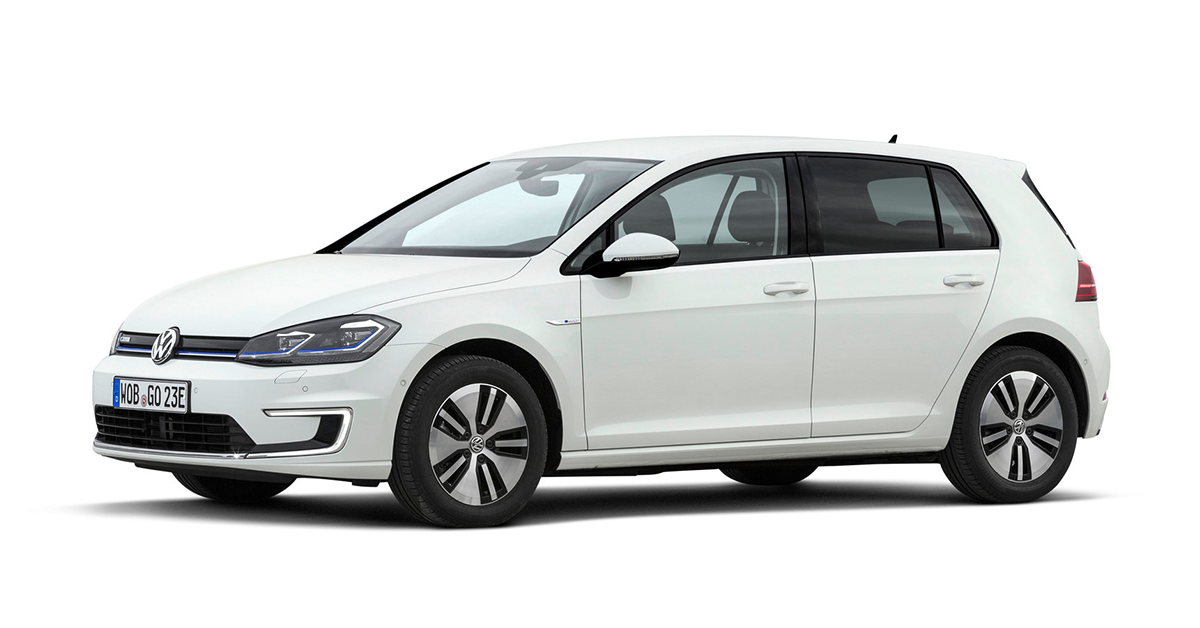
Official press image of the Volkswagen e-Golf. | © Volkswagen AG
Volkswagen’s electric history did not start with the ID.3. The two million electric cars in the February 2026 release include the e-up! and the e-Golf (Volkswagen). The release says the e-up! launched in 2013 (Volkswagen), while a UK magazine gives 2014 (reported), so we show both. The e-up! was the electric version of the small city car covered in our up! guide, and it was built in Bratislava until the up! ended in the fourth quarter of 2023 (Volkswagen).
| e-up! launch | 2013 (Volkswagen), 2014 (reported) |
| First e-up! battery | 18.7 kWh, 160 km NEDC (reported) |
| 2019 e-up! battery | 32.3 kWh usable, 36.8 kWh gross (Volkswagen) |
| 2019 e-up! range | Up to 260 km practical (Volkswagen) |
| 2019 e-up! price | 21,975 euros before subsidies (Volkswagen) |
| e-up! sales to January 2020 | About 21,000 (reported) |
| e-up! production end | Fourth quarter of 2023 (Volkswagen) |
| e-Golf presented | Berlin, March 2014 (Volkswagen) |
| e-Golf first battery | 24.2 kWh, up to 190 km NEDC (Volkswagen) |
| e-Golf last built | 23 December 2020 (Volkswagen) |
The first e-up! used a small battery. A reference source says it launched with an 18.7 kWh battery and a range of 160 km on the NEDC cycle (reported). The big step came in 2019. Volkswagen’s release says the revamped e-up! has a new lithium-ion battery of 32.3 kWh usable and 36.8 kWh gross, giving a practical range of up to 260 km in real driving situations (Volkswagen). The release says the base price in Germany was 21,975 euros before subsidies (Volkswagen), and DC charging was up to 50 kW, up to 80 percent in about one hour (Volkswagen).
The e-up! stayed a niche car. A reference source says about 21,000 e-up! cars had been sold worldwide as of January 2020 (reported). A trade site says the e-up! left the online configurator at the start of 2023 (reported), before the up! itself ended. Our up! guide covers the e-up!, the up! GTI and the end of the up! in more detail. The e-up! shows how long Volkswagen had sold a small electric city car before the ID. Polo and the ID. EVERY1 returned to the idea.
The e-Golf was the first series-production electric Golf. Our Golf guide says it was presented in Berlin in March 2014, with a European market launch that summer, and that it was a Golf VII with an 85 kW (115 PS) motor and 270 Nm of torque (Volkswagen). It had a 24.2 kWh battery, a range of up to 190 km on the NEDC cycle and 0 to 100 km/h in 10.4 seconds, with a top speed limited to 140 km/h (Volkswagen). A later battery of up to 31.5 kWh net followed (Volkswagen).
The e-Golf was built in Wolfsburg and Dresden, and the last one was completed on 23 December 2020 (Volkswagen). Our ID.3 guide says the Dresden plant had built 84,235 Phaetons and 50,401 e-Golf cars before it moved to the ID.3 (Volkswagen). The e-Golf therefore ended a few weeks after the ID.3 reached customers, which Volkswagen’s own pages show clearly. The e-Golf has no direct successor in the Golf range, and our Golf guide explains the current Golf line-up.
What does the history teach us? Volkswagen built electric versions of its best-known small cars first, then replaced them with purpose-built electric models. The ID.3 became the Golf-sized electric car, and the ID. Polo is now the Polo-sized one. For a used buyer, an e-up! from 2019 or later has the 32.3 kWh battery and the 260 km practical range Volkswagen claims (Volkswagen). For the original combustion cars, read our Golf guide and our up! guide.
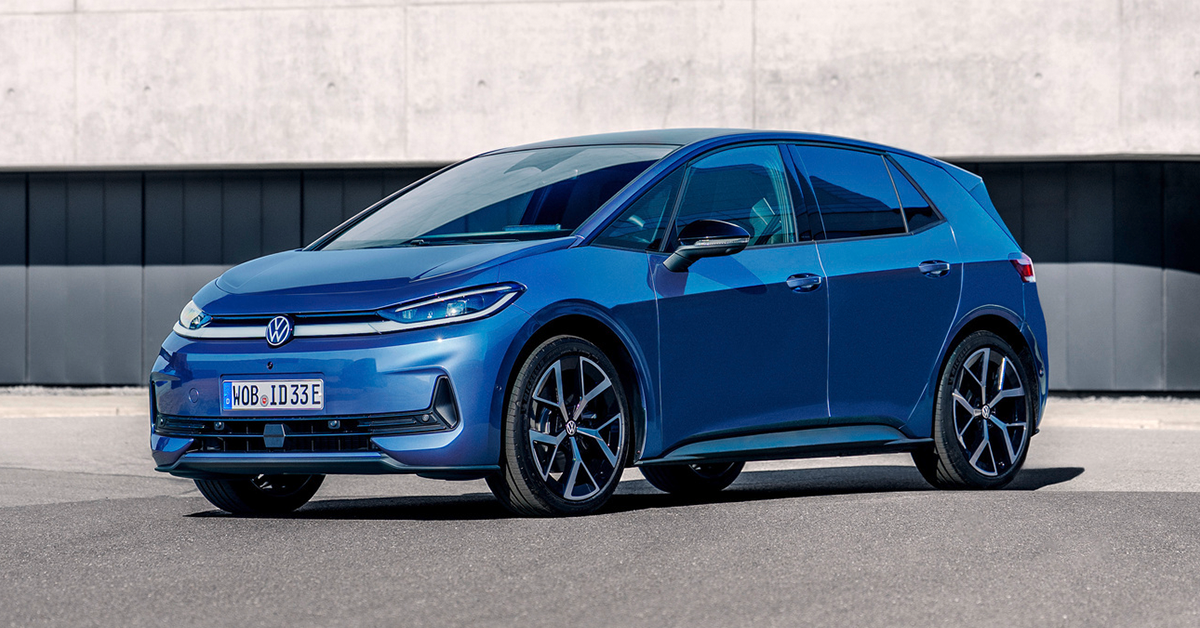
Official press image of the Volkswagen ID.3 Neo. | © Volkswagen AG
The ID.3 is the car that started the ID. family. Our ID.3 guide says the production car was shown on 9 September 2019 in Frankfurt, production started on 4 November 2019 in Zwickau and the first customer delivery was on 11 September 2020 in Dresden (Volkswagen and reported). The 2019 car offered 45, 58 and 77 kWh batteries with WLTP ranges of up to 330, 420 and 550 km, and a 150 kW rear motor with 310 Nm (Volkswagen). It is a rear-motor, rear-wheel-drive car with five seats (Volkswagen).
| Production car shown | 9 September 2019, Frankfurt (Volkswagen) |
| Production start | 4 November 2019, Zwickau (Volkswagen) |
| Second generation | 1 March 2023 (Volkswagen) |
| Length and wheelbase | 4,261 mm and 2,770 mm (Volkswagen) |
| Boot | 385 litres (Volkswagen) |
| GTX | 210 kW, 79 kWh net, up to 604 km (Volkswagen) |
| Neo premiere | 15 April 2026 (Volkswagen) |
| Neo outputs | 125, 140 and 170 kW (Volkswagen) |
| Neo batteries and range | 50, 58, 79 kWh, up to 630 km (Volkswagen) |
| Neo UK price | From 33,080 pounds (reported) |
The ID.3 grew up in 2023. The second generation premiered on 1 March 2023 with the Pro at 58 kWh and up to 426 km and the Pro S at 77 kWh and up to 546 km (Volkswagen). The GTX followed in 2024 with 79 kWh net, up to 604 km and a 210 kW motor (Volkswagen), and a Pure version with 52 kWh and up to 388 km was added (Volkswagen). The ID.3 is 4,261 mm long with a 2,770 mm wheelbase and a boot of 385 litres (Volkswagen).
The ID.3 Neo is the new name for the successor. Volkswagen announced the name on 12 March 2026 and held the world premiere on 15 April 2026, with pre-sales from 16 April in Germany and Europe (Volkswagen). It comes in Trend, Life and Style trims with 125, 140 and 170 kW outputs and 50, 58 and 79 kWh net batteries (Volkswagen). Volkswagen gives a range of up to 630 km WLTP, a 10.25-inch cockpit display and a 12.9-inch central screen (Volkswagen), and vehicle-to-load of up to 3.6 kW (Volkswagen).
Prices vary by market. A reporting site says Volkswagen announced UK prices for the ID.3 Neo from 33,080 pounds, with a longer range and a new interior and exterior look (reported). We found no Volkswagen German price list for the Neo in the sources we read, so we do not give one. The Neo’s production sites also moved around. Our ID.3 guide says the Dresden plant ended ID.3 production on 16 December 2025 (Volkswagen), and a reporting site says Zwickau keeps the car and Wolfsburg takes overflow from 2027 (reported).
The ID.3 GTI is the next step. Volkswagen’s newsroom lists the ID.3 GTI among the near-production models shown with the ID. Polo, ID. Cross and ID.3 Neo (Volkswagen). A reporting site says the ID.3 GTI is planned for 2027 and expected to be built only at Wolfsburg (reported). We treat the 2027 date and the plant as reported only. The GTX remains the sporty ID.3 until then, with 210 kW, 5.9 seconds from 0 to 100 km/h and a limited top speed of 180 km/h (Volkswagen).
How many ID.3 cars exist? Volkswagen’s two millionth release gives approximately 628,000 ID.3 deliveries (Volkswagen). Our ID.3 guide says more than 350,000 ID.3 cars had been built in Saxony by September 2025 (Volkswagen), a different measure because it counts only Saxony production. For the full story, read our ID.3 guide, and for the Golf it was meant to succeed in spirit, read our Golf guide.
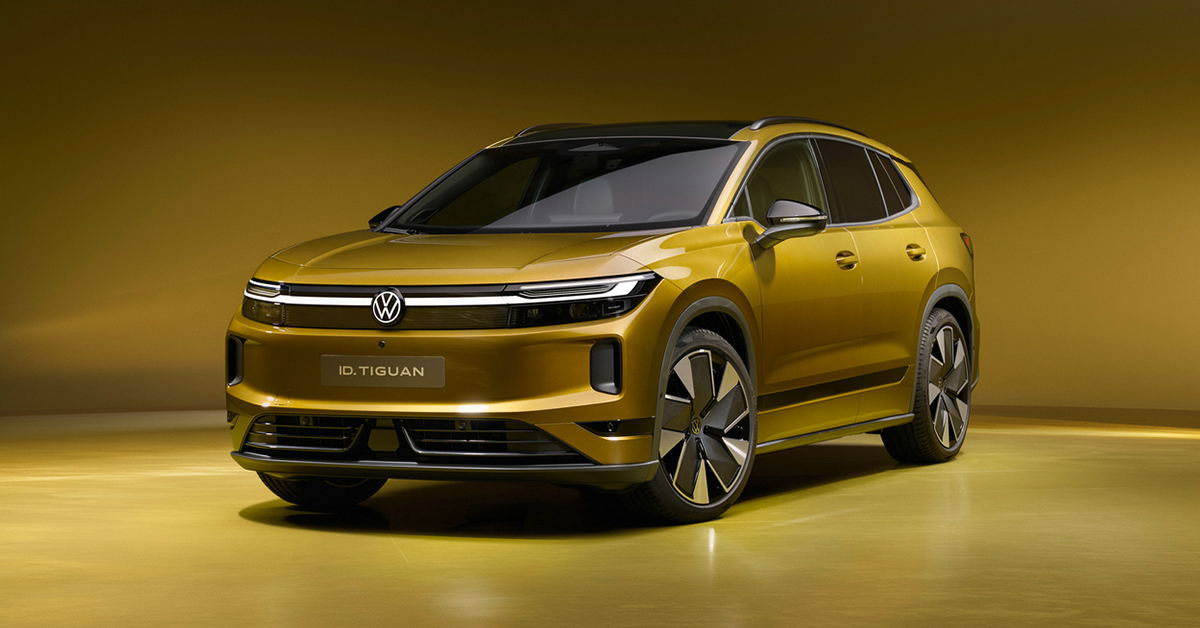
Official press image of the Volkswagen ID. Tiguan. | © Volkswagen AG
The ID.4 is Volkswagen’s best-known electric SUV. Our ID.4 guide says series production started on 20 August 2020 in Zwickau, the world premiere was on 23 September 2020 and the launch car had a 77 kWh battery, a 150 kW rear motor and up to 520 km WLTP (Volkswagen). Emden began building it on 20 May 2022 and Chattanooga on 26 July 2022 (Volkswagen). A 2023 upgrade brought a 210 kW Pro with up to 550 km and a 250 kW GTX with 0 to 100 km/h in 5.4 seconds (Volkswagen).
| ID.4 production start | 20 August 2020, Zwickau (Volkswagen) |
| ID.4 launch range | Up to 520 km WLTP (Volkswagen) |
| ID.4 2023 Pro | 210 kW, up to 550 km (Volkswagen) |
| ID.4 GTX 2023 | 250 kW, 5.4 s to 100 km/h (Volkswagen) |
| ID.4 base price after 2023 | From 40,335 euros (Volkswagen) |
| ID.5 premiere | 3 November 2021 (Volkswagen) |
| ID.5 Pro launch price | 46,515 euros (Volkswagen) |
| ID.6 | China only, 2021 (Volkswagen) |
| ID. Tiguan premiere | 9 October 2026 (Volkswagen) |
| ID. Tiguan range | Up to 600 km WLTP (Volkswagen) |
The ID.5 is the coupe-styled version. Our ID.5 guide says the world premiere was on 3 November 2021, pre-sales started on 22 November 2021 at 46,515 euros for the ID.5 Pro, and production started on 27 January 2022 in Zwickau (Volkswagen). It shares the platform with the ID.4 and was not sold in the United States (Volkswagen and reported). Volkswagen’s figures count the ID.4 and ID.5 together, at approximately 901,000 deliveries in the two millionth release and more than 950,000 in a later statement (Volkswagen).
The ID.6 is a China-only model. Our ID.6 guide says it was unveiled on 17 April 2021 at Auto Shanghai as the third fully electric ID. model, in ID.6 CROZZ and ID.6 X versions, and that it was not sold in Germany (Volkswagen). It is mentioned here because it is part of the ID. family, but readers outside China cannot buy it. The newsroom model menu for Europe does not list it (Volkswagen). For its history and specifications, read our ID.6 guide.
The ID. Tiguan replaces both European SUVs. Our ID.4 guide says Volkswagen announced the ID. Tiguan on 28 September 2026 and held the premiere on 9 October 2026 (Volkswagen). It is built on MEB+, with 58 kWh LFP and 77 kWh net batteries, outputs of 140, 210 and 220 kW, a range of up to 600 km WLTP and towing of up to 2.0 tonnes, with market arrival at the beginning of 2027 (Volkswagen). A reporting site gives a German price from 42,695 euros (reported).
Production is moving. A reporting site says the trade union IG Metall confirmed that ID. Tiguan production at Emden will continue until the end of 2031, and that ID.4 production at Zwickau is being phased out while the ID.5 ends (reported). Our ID.4 guide says ID.4 production at Chattanooga ended in mid-April 2026 (Volkswagen and reported), and a reporting site says the plant was freed for the all-new Atlas in 2027 (reported). For the Atlas, read our Atlas guide when it is updated, and for the name the new SUV carries, read our Tiguan guide.
Prices have changed over time. Our ID.4 guide gives a German base price from 40,335 euros after the 2023 upgrade (Volkswagen), and the ID.5 Pro launched at 46,515 euros in 2021 (Volkswagen). A reporting site says the ID.4 was among the group’s best-selling electric models in the first half of 2026, with 53,700 units counted together with the ID.5 (reported). For the full stories, read our ID.4 guide, our ID.5 guide and our ID.6 guide.
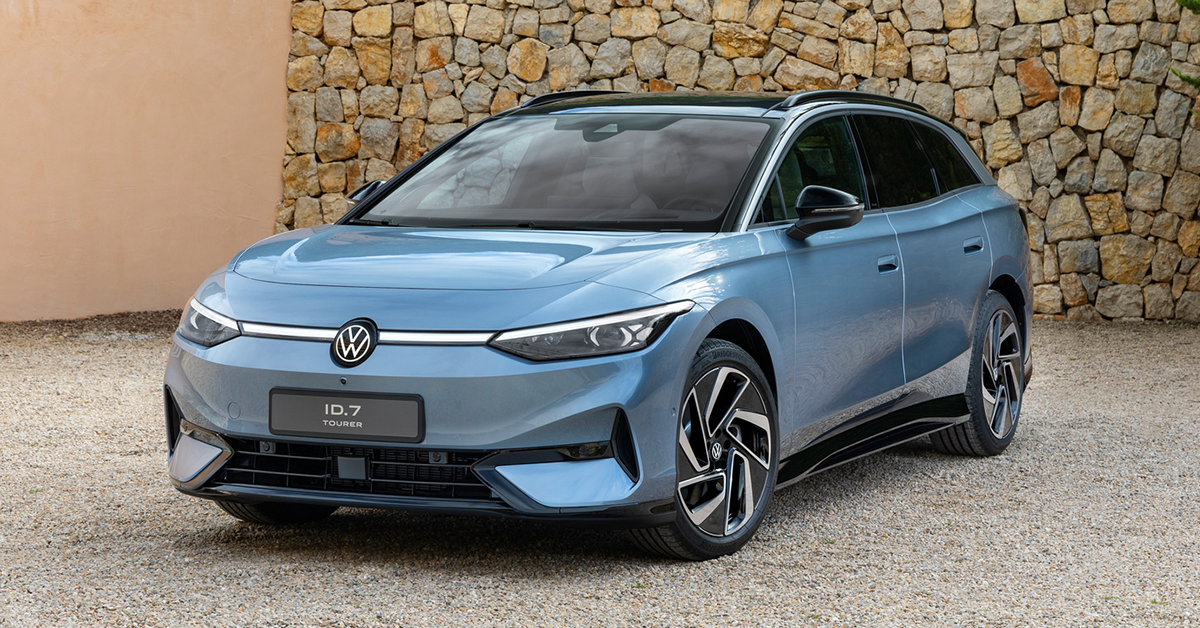
Official press image of the Volkswagen ID.7 Tourer. | © Volkswagen AG
The ID.7 is the large electric Volkswagen. Our ID.7 guide says the world premiere was on 17 April 2023, symbolic production started in Emden on 21 August 2023 and the German launch price was 56,995 euros for the ID.7 Pro, with a launch range of up to 621 km WLTP (Volkswagen). It is 4,961 mm long with a 2,971 mm wheelbase and a boot of 532 litres, or 605 litres in the Tourer (Volkswagen). It is a fastback saloon with a drag coefficient of 0.23 (Volkswagen).
| ID.7 premiere | 17 April 2023 (Volkswagen) |
| ID.7 launch price | 56,995 euros, Pro (Volkswagen) |
| ID.7 launch range | Up to 621 km WLTP (Volkswagen) |
| ID.7 Pro S range | Up to 709 km saloon, 690 km Tourer (Volkswagen) |
| ID.7 GTX | 250 kW, up to 595 km (Volkswagen) |
| ID.7 Tourer premiere | 19 February 2024 (Volkswagen) |
| ID. Buzz premiere | 9 March 2022 (Volkswagen) |
| ID. Buzz launch range | 402 to 423 km WLTP (Volkswagen) |
| ID. Buzz long wheelbase | +250 mm, up to seven seats (Volkswagen) |
| ID. Buzz GTX premiere | 21 March 2024 (Volkswagen) |
The ID.7 range grew. The Pro S has an 86 kWh net battery and up to 709 km WLTP as a saloon and 690 km as the Tourer (Volkswagen), and the GTX has 250 kW, 4MOTION and up to 595 km (Volkswagen). The Tourer premiered on 19 February 2024 as Volkswagen’s first all-electric estate (Volkswagen). Volkswagen lists 2024 German prices of 58,985 euros for the Pro S and 63,155 euros for the GTX (Volkswagen). The ID.7 was German Car of the Year in 2024 (Volkswagen).
The ID.7 sells in Europe but not in North America. Our ID.7 guide says about 35,000 were delivered in Germany in 2025, up 132.0 percent (Volkswagen), and a reporting site says the North American launch was cancelled in January 2025 (reported). The group lists 29,500 ID.7 units, including the Tourer, in the first half of 2026 and 47,500 from January to September (reported). A reporting site says discounts of up to 28.2 percent were seen in September 2026 (reported).
The ID. Buzz is the retro-styled electric van. Our ID. Buzz guide says the production premiere was on 9 March 2022 and series production started in Hannover on 2 June 2022 (Volkswagen and reported). The launch car has a 150 kW rear motor, a 77 kWh net battery and up to 402 to 423 km WLTP, with a luggage space of 1,121 litres (Volkswagen). The long-wheelbase version, shown on 2 June 2023, adds 250 mm, up to seven seats, an 85 kWh net battery and a 210 kW motor (Volkswagen).
The ID. Buzz also has sporty and practical versions. The GTX premiered on 21 March 2024 in Hannover with 250 kW and 4MOTION (Volkswagen). A reporting site says an ID. Buzz Pro 4MOTION was announced in April 2026 at 60,820.90 euros in Germany for the standard wheelbase (reported). Volkswagen Commercial Vehicles builds the ID. Buzz in Hannover, as our ID. Buzz guide explains (Volkswagen). The group lists 27,200 ID. Buzz units in the first half of 2026 and 42,000 from January to September, including the Cargo (reported).
The US story differs. Our ID. Buzz guide says Volkswagen skipped the 2026 model year in North America and that the 2025 US models had an EPA range of 234 miles for the rear-drive version (reported). A US price of 59,995 dollars before destination is given for the Pro S (reported). For the electric van’s history, read our ID. Buzz guide, and for the ID.7, read our ID.7 guide. For the combustion vans Volkswagen still sells, see our Volkswagen models list.
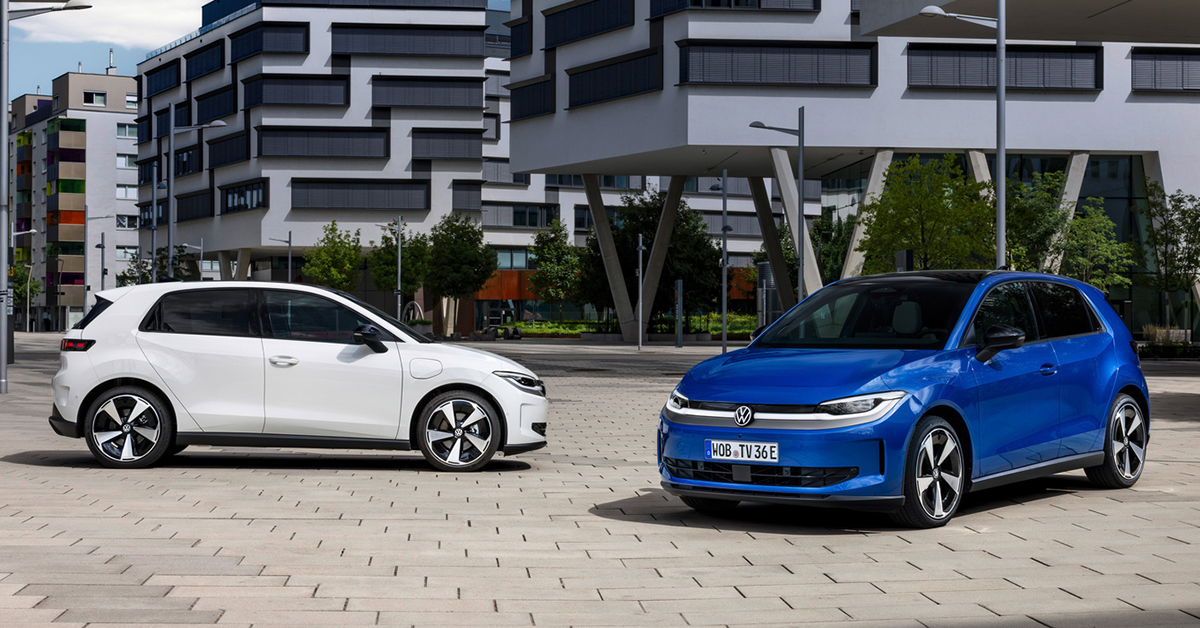
Official press image of the Volkswagen ID. Polo. | © Volkswagen AG
The ID. Polo is the first of Volkswagen’s new small electric cars. Volkswagen’s release of 29 April 2026 says pre-sales started that day in Germany, with a base price from 24,995 euros and three outputs of 85 kW, 99 kW and 155 kW (Volkswagen). The 85 and 99 kW versions use a 37 kWh net LFP battery with up to 329 km, and the 155 kW version uses a 52 kWh net NMC battery with up to 455 km, although the release also says 454 km in one place (Volkswagen). Volkswagen later gave up to 334 km for the 37 kWh car (Volkswagen).
| ID. Polo premiere and pre-sale | 29 April 2026 (Volkswagen) |
| ID. Polo entry price | From 24,995 euros, Germany (Volkswagen) |
| ID. Polo outputs | 85, 99 and 155 kW (Volkswagen) |
| ID. Polo range | 329 or 334 km (37 kWh), 454 or 455 km (52 kWh) (Volkswagen) |
| ID. Polo size | 4,053 mm long, 2,600 mm wheelbase (Volkswagen) |
| ID. Polo GTI | 166 kW, 6.8 s to 100 km/h (Volkswagen) |
| ID. Polo GTI price | Under 39,000 or from 39,995 euros (Volkswagen) |
| ID. Cross premiere | 15 July 2026 (Volkswagen) |
| ID. Cross entry price | Around 28,000 euros (Volkswagen) |
| ID. EVERY1 | About 20,000 euros, 2027, Palmela (Volkswagen) |
The ID. Polo is bigger than the old Polo. The release gives a length of 4,053 mm, a width of 1,816 mm, a height of 1,530 mm and a wheelbase of 2,600 mm (Volkswagen). The luggage compartment grew by 25 percent from 351 to 441 litres, and with the rear seat folded it is 1,240 litres (Volkswagen), while a reporting site gives 1,243 litres (reported). DC fast charging is standard, 10 to 80 percent in about 23 minutes for the 37 kWh battery and 24 minutes for the 52 kWh one (Volkswagen).
Prices and trims are set out in Volkswagen’s releases. The Trend is the entry level, the Life adds adaptive cruise control and a rear-view camera, and the Style adds IQ.LIGHT LED matrix headlights and sport comfort seats (Volkswagen). At launch only the 155 kW car was offered, as the Life from 33,795 euros (Volkswagen). In July 2026 Volkswagen opened pre-sales for the 37 kWh version, with the Trend from 24,995 euros and the Life and Style from 29,195 euros (Volkswagen).
The ID. Polo GTI is the first electric GTI. Volkswagen’s newsroom says it has 166 kW (226 PS), 290 Nm and 6.8 seconds from 0 to 100 km/h, with front-wheel drive and an electronically controlled front differential lock (Volkswagen). The world premiere was on 15 May 2026 at the 24h Nürburgring, marking 50 years since the first Golf GTI in 1976 (Volkswagen). A May release said pre-sales would start at just under 39,000 euros, while a release dated 10/07/26, which we read as 7 October 2026, lists the price as from 39,995 euros (Volkswagen).
The ID. Cross is the compact SUV in the same family. Volkswagen held its world premiere on 15 July 2026, with advance sales in Germany that day and an entry price of around 28,000 euros (Volkswagen). It offers 85, 99 and 155 kW outputs, with 37 kWh and 52 kWh net batteries and a WLTP range of up to 427 km (Volkswagen), while a motoring site gives 436 km (reported). Volkswagen’s page does not give a separate range for the 37 kWh version (Volkswagen). A reporting site calls it an electric T-Cross, so see our T-Cross guide (reported).
The ID. EVERY1 is still ahead. Volkswagen says the production version will launch in 2027 at around 20,000 euros (Volkswagen), and Volkswagen Autoeuropa says it will build the car at Palmela in Portugal (Volkswagen). A reporting site gives the concept’s motor as 70 kW (95 PS), its length as 3,880 mm and its boot as 305 litres (reported). Start-of-production reports differ between mid-2027, the second half of 2027 and September 2027 (reported). A reporting site says Volkswagen has trademarked ID. UP as a possible name (reported). Our up! guide covers the car it echoes.

Official press image of the Volkswagen ID. Cross. | © Volkswagen AG
Prices run from about 25,000 to more than 60,000 euros. The cheapest is the ID. Polo Trend from 24,995 euros in Germany, followed by the ID. Cross at around 28,000 euros and the ID. Polo GTI from 39,995 euros (Volkswagen). The ID.4 started from 40,335 euros after the 2023 upgrade, and a reporting site gives the ID. Tiguan from 42,695 euros (Volkswagen and reported). The ID.7 launched at 56,995 euros and the ID.7 GTX at 63,155 euros (Volkswagen), and the ID. Buzz Pro 4MOTION is listed at 60,820.90 euros (reported).
| Cheapest | ID. Polo Trend, 24,995 euros (Volkswagen) |
| ID. Cross | Around 28,000 euros (Volkswagen) |
| ID. Polo GTI | From 39,995 euros (Volkswagen) |
| ID.4, 2023 | From 40,335 euros (Volkswagen) |
| ID. Tiguan | From 42,695 euros (reported) |
| ID.5 Pro, 2021 | 46,515 euros (Volkswagen) |
| ID.7 Pro, 2023 | 56,995 euros (Volkswagen) |
| ID.7 GTX, 2024 | 63,155 euros (Volkswagen) |
| Longest range | ID.7 Pro S, up to 709 km saloon (Volkswagen) |
| Fast charge, ID. Polo and ID. Cross | 10 to 80 percent in 23 to 24 minutes (Volkswagen) |
These prices come from different dates and are German list prices before subsidies, so they are not a like-for-like price list. We do not give a total cost, because incentives and options vary by country. The ID.5 Pro launched at 46,515 euros in 2021 (Volkswagen). A buyer should check the current configurator in their own market, since Volkswagen has changed prices and trims often since 2020.
Range figures also depend on the date and the version. The ID. Polo gives up to 329 to 334 km with 37 kWh and 454 to 455 km with 52 kWh, and the ID. Cross gives up to 427 km (Volkswagen). The ID.3 Neo gives up to 630 km, the ID. Tiguan up to 600 km and the ID.7 Pro S up to 709 km as a saloon (Volkswagen). The ID.7 Pro S is therefore the longest-range Volkswagen in our sources. These are WLTP figures, and real-world range is lower, particularly in winter and at motorway speeds.
Charging speeds are listed by Volkswagen. The ID. Polo charges at up to 90 kW with the 37 kWh battery and up to 105 kW with the 52 kWh one, 10 to 80 percent in 23 to 24 minutes (Volkswagen). The ID.3 GTX charges at up to 185 kW, the ID.7 at up to 200 kW on the 86 kWh battery and 175 kW on the 77 kWh one, and the ID. Buzz at up to 170 to 200 kW (Volkswagen and reported). The ID.7 GTX takes 26 minutes at best from 10 to 80 percent (Volkswagen).
Vehicle-to-load is spreading through the range. The ID. Polo and ID.3 Neo offer up to 3.6 kW of vehicle-to-load (Volkswagen), which can power e-bikes and other devices. A reporting site says the UK ID.4 and ID.5 gained larger batteries and vehicle-to-load in April 2026 (reported). We did not find a full Volkswagen list of which models offer it, so we only list the ones above.
Size and space also differ across the range. The ID. Polo is 4,053 mm long with a 441-litre boot (Volkswagen), the ID.3 is 4,261 mm long with a 385-litre boot (Volkswagen), and the ID.7 is 4,961 mm long with a 532-litre boot, or 605 litres in the Tourer (Volkswagen). The ID. Polo therefore has a larger boot than the ID.3 on these figures, although it is shorter. These are manufacturer figures measured by different rules for different cars, so compare them as a guide only.
Which model suits which buyer? The ID. Polo and ID. Cross are the city and entry-level choices, the ID.3 Neo and ID. Tiguan the family compact and SUV, and the ID.7 and ID. Buzz the long-distance and large-family choices, based on the figures above. These are our reading of the data, not Volkswagen recommendations. For model details, read our ID.3 guide, ID.4 guide, ID.7 guide and ID. Buzz guide, and for every model, see our Volkswagen models list.
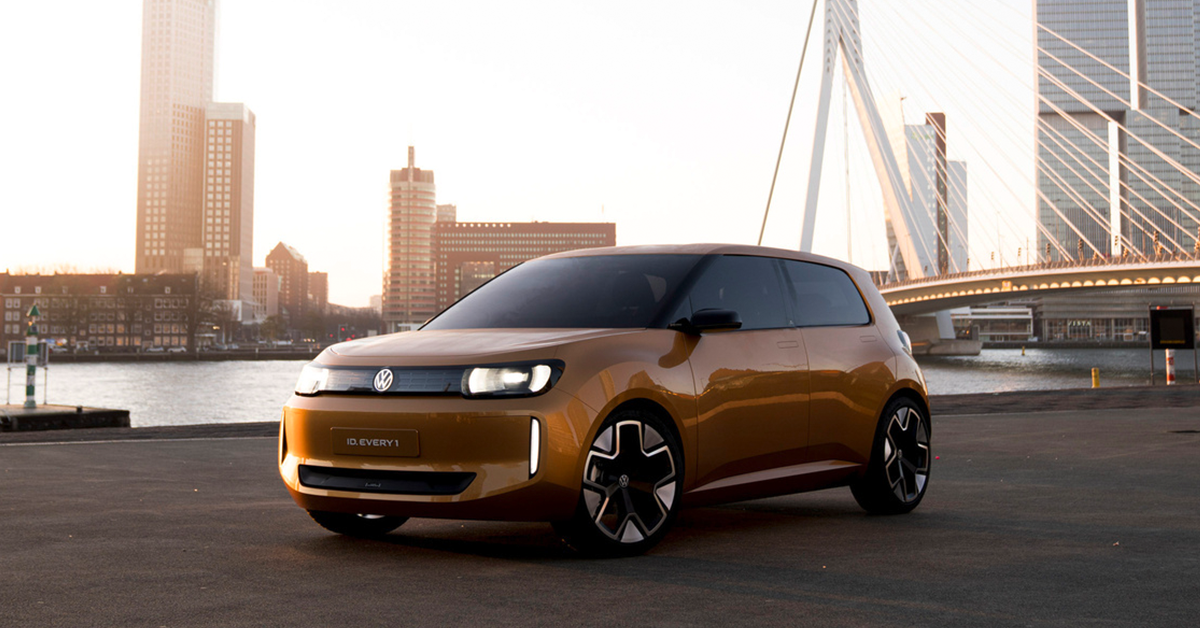
Official press image of the Volkswagen ID. EVERY1 concept. | © Volkswagen AG
Sales are strong in Europe and weak elsewhere. Volkswagen Group’s first-quarter 2026 release gives all-electric deliveries of 176,400 in Europe, up 11.5 percent, 4,000 in the United States, down 80.1 percent, and 9,400 in China, down 63.8 percent (Volkswagen). A reporting site says the group delivered 438,500 electric vehicles in the first half, down 5.8 percent, with 377,000 in Europe, up 8.4 percent (reported). For the first nine months, a reporting site gives 678,700, down 5.4 percent (reported).
| Group BEV Europe, Q1 2026 | 176,400, up 11.5 percent (Volkswagen) |
| Group BEV USA, Q1 2026 | 4,000, down 80.1 percent (Volkswagen) |
| Group BEV China, Q1 2026 | 9,400, down 63.8 percent (Volkswagen) |
| Group BEV, first half 2026 | 438,500, down 5.8 percent (reported) |
| Group BEV, nine months 2026 | 678,700, down 5.4 percent (reported) |
| Volkswagen Passenger Cars BEV, nine months | 212,200, down 26.3 percent (reported) |
| European order book | Around 40 percent all-electric (Volkswagen) |
| Entry-level model orders | Almost 150,000, four models (Volkswagen) |
| ID. Polo plant | Martorell, Spain (reported) |
| ID. EVERY1 plant | Palmela, Portugal (Volkswagen) |
The brand split matters for Volkswagen. A reporting site says that in the first nine months Volkswagen Passenger Cars fell 26.3 percent to 212,200 electric deliveries while Skoda rose 41.3 percent to 167,400 (reported). The same site says five thousand one hundred electric vehicles were delivered in the United States in the third quarter, down 86.4 percent (reported). The group says around 40 percent of its European order book is now all-electric and that European electric order intake rose by more than 60 percent in the third quarter (Volkswagen and reported).
The plants are spread across Europe. Zwickau builds the ID.3 and, until it is phased out, the ID.4 (Volkswagen and reported), Emden builds the ID.7 and will build the ID. Tiguan, and Hannover builds the ID. Buzz (Volkswagen). A reporting site says the ID. Polo is built at the SEAT and CUPRA plant in Martorell, Spain (reported). Volkswagen’s ID. Polo and ID. Cross releases do not name a plant (Volkswagen), so we state no plant for the ID. Cross.
The small-car push has orders behind it. Volkswagen’s newsroom says four entry-level electric models from three brands, the CUPRA Raval, the ID. Polo, the Skoda Epiq and the ID. Cross, have drawn almost 150,000 orders (Volkswagen). The release is dated 10/11/26, which we read as 11 October 2026 given the Paris Motor Show timing (Volkswagen). The Epiq is a near-production concept and not yet on sale (Volkswagen).
More is coming. The ID. Tiguan arrives at the beginning of 2027, the ID. EVERY1 follows in 2027 and the ID.3 GTI and ID. Polo GTI sit in the pipeline (Volkswagen and reported). We do not give delivery dates for the models not yet on sale, because Volkswagen has not confirmed them in the sources we read.
Two plant changes show how the line-up is shifting. Our ID.3 guide says the Dresden plant ended ID.3 production on 16 December 2025 (Volkswagen), and our ID.4 guide says ID.4 production at Chattanooga ended in mid-April 2026 (Volkswagen and reported). On the new side, Volkswagen Autoeuropa said on 11 March 2025 that it would build the ID. EVERY1 at Palmela, with a launch planned for 2027 and an estimated price of 20,000 euros (Volkswagen). A reporting site says the concept was shown in Wolfsburg on 5 March 2025 (reported). Volkswagen’s February 2026 release also says about 212,000 electric cars came off the Zwickau line in 2025 (Volkswagen).
Where does that leave a buyer in November 2026? The range now has a Polo-sized, a T-Cross-sized, a Golf-sized and a Tiguan-sized electric car, plus two large models. For the cars they replace, read our Polo guide, our T-Cross guide and our Tiguan guide, and for every model, see our Volkswagen models list. We will update this guide as Volkswagen releases prices for the new cars.