 Brands
Best Toyota SUVs to Buy for Every Budget and Need
AI-generated concept illustration — best Toyota SUVs. | Rev N Rise
Toyota sells an SUV for almost every budget, from a 25,000 dollar compact to a 9,120 pound tow-rated flagship, plus hybrids, a plug-in and two electric models. Here are the best Toyota SUVs to buy right now, with current specs, prices and who each one suits.
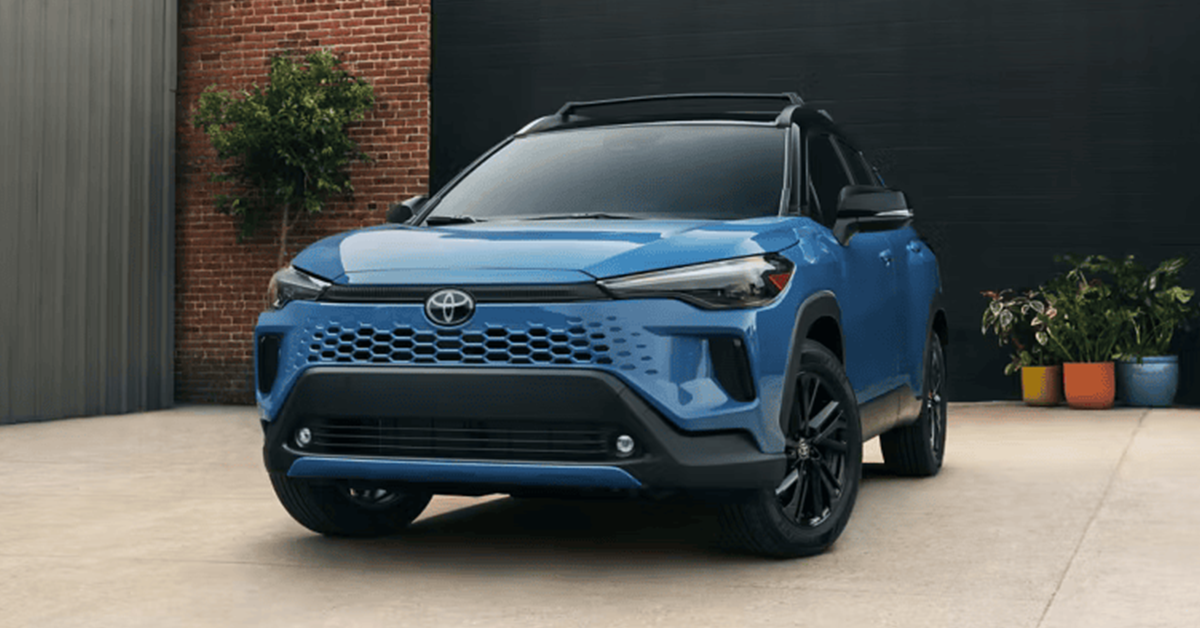
Official press image of the Toyota Corolla Cross. | © Toyota Motor Corporation
If you want a Toyota SUV without paying much for it, start with the Corolla Cross. It is one of the smallest and the cheapest SUVs in the American lineup, built in Huntsville, Alabama, and it takes the practical formula of the Corolla and raises it into a taller, roomier body. It suits first-time buyers, small families and city drivers who want a higher seating position and easy parking, and it comes with the Toyota reputation for durability that makes a low price feel like a smart decision and not a compromise.
| Petrol engine | 2.0-litre 4-cylinder, 169 hp |
| Hybrid | Fifth-generation hybrid, 196 total system hp |
| Fuel economy | Petrol 30 to 31 mpg combined, hybrid 42 mpg combined |
| All-wheel drive | Optional on petrol, standard on hybrid |
| Towing | 1,500 lb |
| Grades | Petrol L, LE, XLE; hybrid SE, XSE |
| Starting price | $25,535 petrol L FWD, $31,415 Hybrid SE, before fees |
| Built in | Huntsville, Alabama |
| Arrival | Fall 2026 |
For 2027 there are two powertrains. The petrol model uses a 2.0-litre four-cylinder engine making 169 horsepower, while the hybrid uses Toyota's fifth-generation hybrid system and makes 196 total system horsepower. The petrol car is rated at 31 mpg combined with front-wheel drive and 30 mpg with all-wheel drive. The hybrid is rated at 46 mpg in the city, 39 on the highway and 42 combined, which is a strong figure for a small SUV with standard all-wheel drive, and it is the version most buyers should consider.
The grade structure is simple. The petrol Corolla Cross comes in L, LE and XLE grades, and the hybrid comes in SE and XSE, since Toyota has dropped the S grade for 2027. Pricing starts at 25,535 US dollars for the petrol L with front-wheel drive and at 31,415 US dollars for the Hybrid SE, both before the dealer processing and handling fee. The hybrid costs more, but the extra power and the standard all-wheel drive, together with much lower fuel use, make it good value for people who drive a lot.
All-wheel drive works differently depending on the engine. On the petrol model it is optional and uses Dynamic Torque Control, which can send up to half of the power to the rear wheels and disconnects itself when it is not needed to save fuel. On the hybrid, an electronic on-demand system with a rear electric motor is standard. Neither version is built for serious off-roading, and towing is limited to 1,500 pounds, but both give useful extra grip on wet roads and in snow, which is what most buyers actually need from an all-wheel-drive crossover.
Safety equipment is generous for the price. Toyota Safety Sense 3.0 is standard on every 2027 Corolla Cross, and it includes pre-collision braking with pedestrian detection, full-speed radar cruise control and lane departure alert with steering assist. Blind spot monitoring with rear cross-traffic alert and Safe Exit Alert are standard on the LE, XLE, SE and XSE, although they are not listed for the base L. The rear seats fold in a 60/40 split, which gives the cargo area some flexibility for shopping trips and weekend luggage.
There are limits to consider. The Corolla Cross is not a quick vehicle, the petrol engine is modest, and the cabin is smaller than a RAV4's. But as an affordable and efficient family runabout it is hard to criticise. Toyota includes the ToyotaCare plan, which covers scheduled maintenance for one year or 10,000 miles, and basic warranty cover runs for three years or 36,000 miles. For anyone shopping on a budget, this is the best Toyota SUV to start with, and Toyota expects the 2027 models to arrive in the fall of 2026.
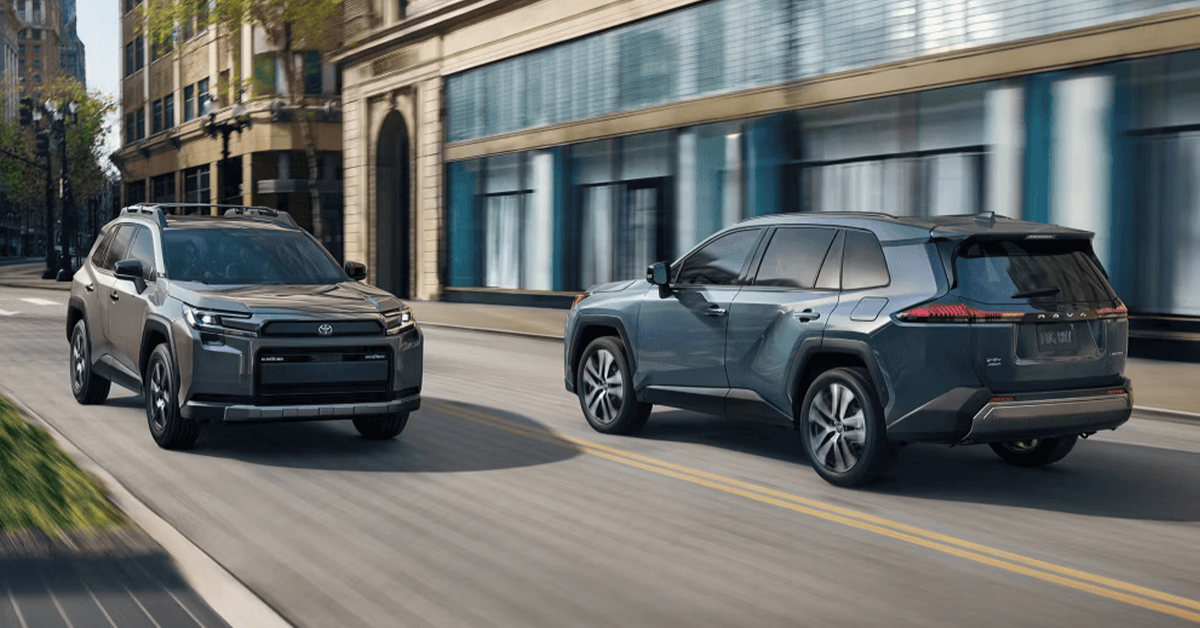
Official press image of the Toyota RAV4. | © Toyota Motor Corporation
The RAV4 is the Toyota SUV that most people should look at first. It is one of the company's best-selling SUVs, and the latest generation has become a fully electrified range, with a hybrid for most buyers and a plug-in hybrid for people who want to run on electricity for daily trips. It strikes the best balance in the lineup between size, cost, fuel economy and capability, and for the 2027 model year it adds extra off-road ability through the Woodland grade and extra charging convenience for plug-in owners.
| Hybrid | 2.5-litre with fifth-generation hybrid system, 222 hp (FWD) / 229 hp (AWD) |
| Plug-in hybrid | 321 total system hp, standard AWD |
| Hybrid fuel economy | 43 mpg combined (FWD), 38 to 42 mpg combined (AWD) |
| Plug-in electric range | Up to 52 miles (SE) |
| Woodland ground clearance | 9.1 inches |
| Starting price | $32,300 hybrid, $42,100 plug-in, before fees |
| Arrival | Hybrid late 2026, plug-in early 2027 |
The hybrid uses a 2.5-litre engine with Toyota's fifth-generation hybrid system and makes 222 net combined horsepower with front-wheel drive or 229 horsepower with all-wheel drive. Front-wheel-drive cars are rated at 46 mpg in the city, 40 on the highway and 43 combined, and all-wheel-drive versions range from 38 to 42 mpg combined depending on the grade. The hybrid range includes the LE, SE, XLE Premium, XSE, Limited and Woodland, and prices start at 32,300 US dollars for the LE with front-wheel drive, before fees.
The plug-in hybrid is built for buyers who can charge at home. It adds electric motors to the same 2.5-litre engine for 321 total system horsepower and standard all-wheel drive, with up to 52 miles of electric range on the SE, 50 miles on the XSE and 46 miles on the Woodland. A NACS port, which allows DC fast charging at most American charging networks, is now fitted to every plug-in, along with an 11-kilowatt onboard charger. The plug-in starts at 42,100 US dollars and is expected to reach dealers in early 2027.
The Woodland grade turns the RAV4 into a more adventurous vehicle. New springs, shocks and jounce bumpers lift the ground clearance to 9.1 inches, up from 8.1 inches on other non-GR Sport grades, which helps on gravel roads, snowy lanes and rutted campsite tracks. Plug-in buyers can also choose a GR Sport grade for a sportier look, although its ground clearance is a lower 7.5 inches. Every grade has Toyota Safety Sense and the latest Toyota Audio Multimedia system, and a hands-free power liftgate is available.
Everyday usability is where the RAV4 stands out. The rear seatbacks fold flat on every grade, the cargo area is generous, and an available 1,500-watt outlet in the cargo area can power tools, a laptop or camping equipment. The Woodland comes with redesigned all-weather floor and cargo mats for muddy outings. These details seem small, but they show that the RAV4 was designed for real families with real routines, and they help to explain why it keeps winning against rivals with flashier styling.
The main drawback is that there is no longer a petrol-only RAV4, so buyers who want the lowest possible price may prefer the Corolla Cross. The plug-in also costs a lot more than the hybrid and only makes sense if you can charge easily. For most people, however, a RAV4 hybrid is the best compact SUV in the Toyota range. It is efficient, spacious, safe and likely to hold its value, and it is a car that rarely disappoints its owner.
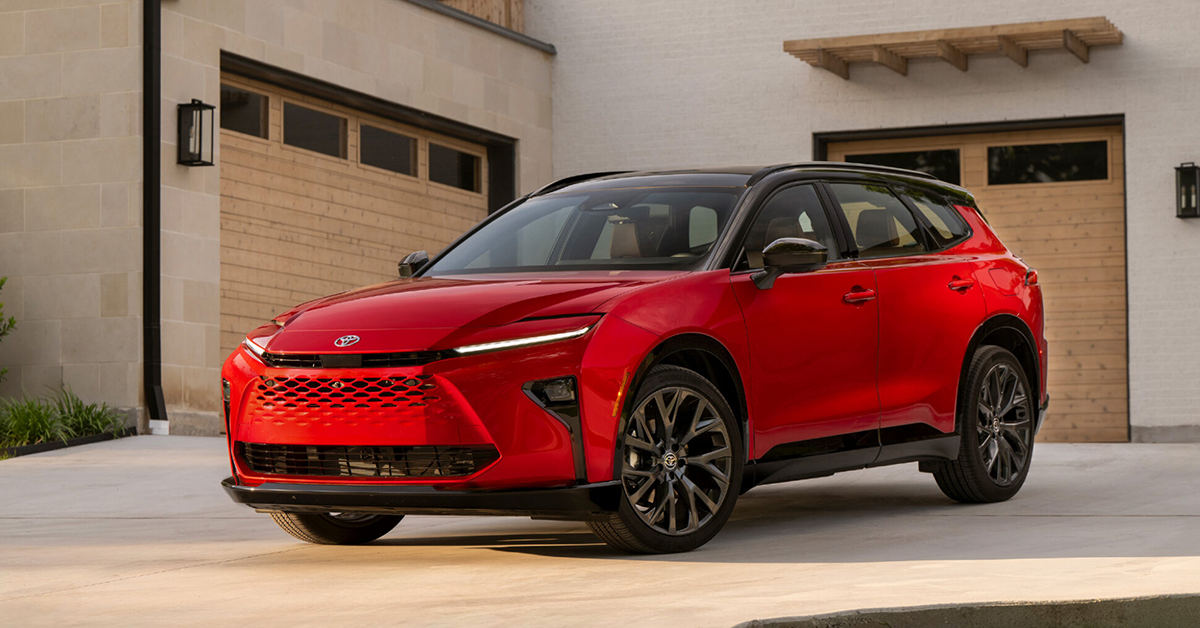
Official press image of the Toyota Crown Signia. | © Toyota Motor Corporation
The Crown Signia is the Toyota SUV that most people overlook, and it deserves more attention. It blends the lines of a wagon with the ride height of a crossover, and it is positioned above the RAV4 as a more refined and more comfortable choice. It is sold as a hybrid with all-wheel drive as standard, and it is aimed at buyers who want a premium feel and low running costs but do not need three rows of seats or the bulk of a large SUV.
| Powertrain | 2.5-litre 4-cylinder hybrid, 238 total system hp |
| Fuel economy | 38 mpg combined |
| Drivetrain | Electronic on-demand all-wheel drive, standard |
| Grades | XLE and Limited |
| Starting price | $44,890 (XLE), $51,155 (Limited), before fees |
| Seating | 5 |
| Cargo space | Over 68 cubic feet, rear seats folded |
| Standard tech | 12.3-inch touchscreen, Toyota Safety Sense 3.0 |
| Arrival | Later in 2026 |
Every Crown Signia uses a 2.5-litre four-cylinder engine with a hybrid transaxle and a bipolar nickel-metal hydride battery, producing 238 total system horsepower. Toyota rates fuel economy at 38 mpg combined, which is excellent for a vehicle with this much equipment and standard all-wheel drive. The electronic on-demand system uses a rear electric motor, and it can split the drive force between the front and rear axles anywhere from 100:0 to 20:80, which gives it good traction in wet weather and snow without a mechanical driveshaft.
There are two grades for 2027. The XLE starts at 44,890 US dollars and the Limited starts at 51,155 US dollars, both before destination and handling fees. The XLE already includes a 12.3-inch touchscreen, wireless Apple CarPlay and Android Auto, Toyota Safety Sense 3.0 and a five-year trial of Toyota's connected services. Leather-trimmed front seats are heated and ventilated, and the whole cabin is designed to feel more upscale than the RAV4's.
The Limited adds a good deal. The Advanced Technology Package is now standard on it, which brings a Panoramic View Monitor, Lane Change Assist, Front Cross-Traffic Alert, Traffic Jam Assist, which requires a subscription, and front and rear parking assist with automatic braking. It also comes with 21-inch wheels, a panoramic glass roof and an 11-speaker JBL audio system. Toyota has added a new exterior colour called Inked, which replaces black on the colour chart, and it expects the 2027 cars to arrive at dealers later in 2026.
Practicality is better than the wagon-like shape suggests. The Crown Signia seats five, the 60/40 second row folds flat, and the cargo area is 6.5 feet long and offers more than 68 cubic feet of space when the rear seats are folded. That is enough for a weekend away with a family of four, a trip to a home-improvement store or a set of golf clubs. It does not have the sheer volume of a Grand Highlander, but it is far easier to park, and it feels more car-like to drive.
The Crown Signia will not suit everyone. Its styling is polarising, the ground clearance is not designed for rough trails, and the starting price is higher than a similarly equipped RAV4's. But for buyers who value comfort, quietness and low fuel bills, it is a genuinely appealing alternative to premium-badged crossovers. It is a quiet success in the Toyota range, and anyone who wants a more refined SUV experience should test drive one before deciding on the more obvious choices.
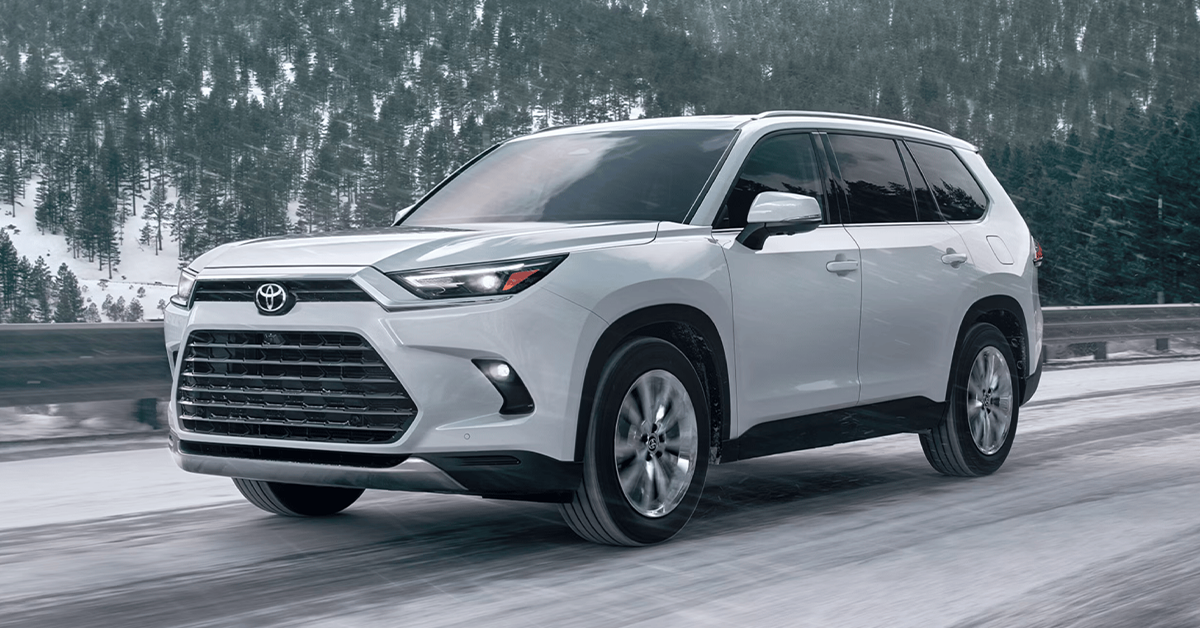
Official press image of the Toyota Grand Highlander. | © Toyota Motor Corporation
Families that need real space should go straight to the Grand Highlander. It is longer than the regular Highlander, and it was designed so that adults can sit in the third row without complaint, which is rare in this class. It comes with a choice of three powertrains, so buyers can pick economy, performance or a simple petrol engine, and for the 2027 model year Toyota has added a Woodland Edition for families who like to camp, ski and tow.
| Powertrains | 2.4-litre turbo petrol 265 hp, 2.5-litre Hybrid 245 hp, Hybrid MAX 362 hp |
| Fuel economy (combined) | Hybrid 34 to 36 mpg, Hybrid MAX 27 mpg, petrol 23 to 24 mpg |
| Seating | Up to 8 (bench) or 7 (captain's chairs) |
| Cargo space | 97.5 cubic feet, rear seats folded |
| Towing | 5,000 lb (petrol, Hybrid MAX), 3,500 lb (Hybrid) |
| Starting price | $42,560 petrol LE FWD, $45,910 Hybrid LE, before fees |
| New for 2027 | Woodland Edition |
The engine choices are broad. The 2.4-litre turbocharged petrol engine makes 265 horsepower, the 2.5-litre Hybrid makes 245 total system horsepower, and the Hybrid MAX makes 362 total system horsepower. Toyota estimates 36 mpg combined for the Hybrid XLE with front-wheel drive and 34 mpg for the other all-wheel-drive Hybrid grades. The Hybrid MAX is rated at 27 mpg combined, and the petrol models at 23 to 24 mpg, which makes the standard Hybrid the best choice for most buyers.
Space is the main selling point. Seating is for up to eight passengers with a second-row bench, or for seven with captain's chairs, which are available on the XLE and standard on the Woodland. Behind the third row there is some luggage room, and with the rear seats folded flat the cargo space grows to 97.5 cubic feet. That is enough for a family holiday or a trip to a furniture store, and it makes the Grand Highlander a credible alternative to a minivan for people who prefer an SUV.
Pricing starts at 42,560 US dollars for the petrol LE with front-wheel drive and 45,910 US dollars for the Hybrid LE, both excluding the dealer processing and handling fee. The petrol models and the Hybrid MAX can tow 5,000 pounds, and the standard Hybrid models can tow 3,500 pounds. Grades run through LE, XLE, Limited and Platinum, and the Hybrid MAX is sold only as the Platinum. For 2027, Toyota has dropped the Hybrid Nightshade Edition and the Hybrid MAX Limited.
The new Woodland Edition is based on the 2.5-litre Hybrid with all-wheel drive. It brings 18-inch matte black alloy wheels with all-terrain tyres, about half an inch of extra ground clearance from taller springs and the new tyres, a tow hitch, mud guards and LED fog lamps. Inside, there is a removable second-row cooler console that holds six cans, all-weather floor mats, a heated steering wheel, a 120-volt outlet rated at 1,500 watts and black leather-trimmed seats. It is a well-thought-out package for outdoor families.
There are a few caveats. The Grand Highlander is large, so it can be awkward in tight car parks, and the Hybrid MAX is expensive for what it offers. A buyer who does not need the third row would be better served by a RAV4 or a Crown Signia. But for large families, it is the best three-row SUV Toyota makes, and the combination of space, safety equipment and efficient hybrid power is difficult for any rival to beat.
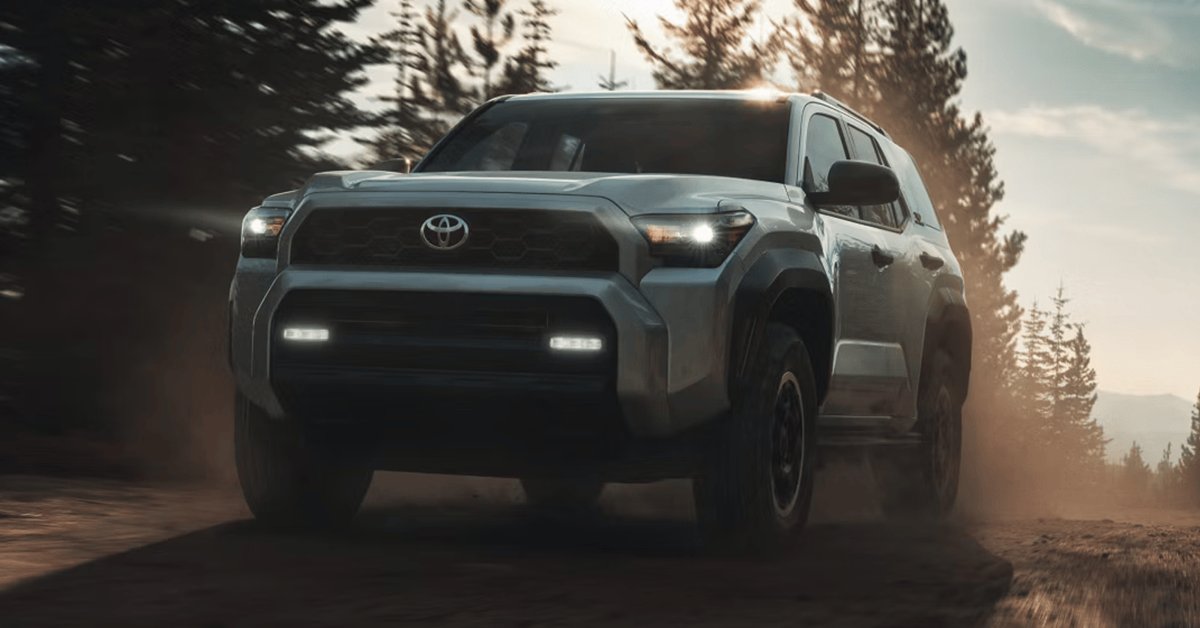
Official press image of the Toyota 4Runner. | © Toyota Motor Corporation
The 4Runner is the SUV that Toyota fans have been waiting for, and the latest generation is a big step forward. It is a rugged, body-on-frame mid-size vehicle with a long off-road heritage, and it is now available with a turbocharged engine and a hybrid. Where the Land Cruiser is a premium adventure vehicle, the 4Runner is the more accessible one, with a lower starting price and a wide range of grades that cover everything from daily commuting to serious overlanding.
| Engines | 2.4-litre turbo i-FORCE, up to 278 hp and 317 lb-ft; i-FORCE MAX hybrid, up to 326 hp and 465 lb-ft |
| Highway fuel economy | 26 mpg (i-FORCE), 24 mpg (i-FORCE MAX) |
| Towing | Up to 6,000 lb |
| Grades | SR5, TRD Sport, TRD Sport Premium, TRD Off-Road, TRD Off-Road Premium, Limited, Platinum, TRD Pro, Trailhunter |
| Starting price | $41,570 plus $1,450 fees (2026 model year) |
| Off-road tyres | 33-inch on TRD Off-Road, TRD Pro and Trailhunter |
There are two powertrains. The 2.4-litre turbocharged i-FORCE engine makes up to 278 horsepower and 317 lb-ft of torque, and the i-FORCE MAX hybrid makes up to 326 horsepower and 465 lb-ft. Toyota quotes highway fuel economy of 26 mpg for the i-FORCE and 24 mpg for the i-FORCE MAX, and maximum towing of 6,000 pounds. The hybrid is standard on the TRD Pro, Trailhunter and Platinum, and optional on several other grades, so buyers who want the most power have a number of ways to get it.
The line-up is wide, with nine grades: SR5, TRD Sport, TRD Sport Premium, TRD Off-Road, TRD Off-Road Premium, Limited, Platinum, TRD Pro and Trailhunter. The specifications in this section are for the 2026 model year, and the 4Runner starts at 41,570 US dollars plus a 1,450 dollar delivery, processing and handling fee. That makes it considerably cheaper than the Land Cruiser while sharing a lot of the same off-road character.
Off-road equipment is the reason to choose it. The TRD Off-Road has Bilstein remote reservoir shocks, 33-inch all-terrain tyres and strong underbody protection. The TRD Pro adds TRD-tuned FOX shocks with rear remote reservoirs, a performance air intake and 33-inch Toyo tyres on 18-inch black wheels. The Trailhunter, which is built for overlanding, brings Old Man Emu shocks, an onboard air compressor, a low-profile high-mounted air intake and an ARB roof rack, and a stabiliser disconnect mechanism is standard on both the Trailhunter and the TRD Pro.
Drivetrain hardware supports all of this. An electronically locking rear differential is fitted to the TRD Off-Road, TRD Pro and Trailhunter, and Multi-Terrain Select, CRAWL Control and Downhill Assist Control are available. Towing aids include a trailer brake controller, a digital rear-view mirror and a Trailer Back-Up Guide with straight path assist. The vehicle has a tough, boxy look that echoes its history, and the interior is more modern than earlier 4Runners, with comfortable seats and good technology.
Reliability looks good so far. Consumer Reports said the redesigned 4Runner had a solid first showing in its latest reliability survey, which is encouraging for a vehicle with an all-new platform and engines. The 4Runner is not the most economical or spacious SUV in the Toyota range, and the ride is firmer than a crossover's. But if you want a proper, capable and good-looking mid-size off-roader at a fair price, it is the one to buy, and it is the best mid-size off-road SUV Toyota sells.
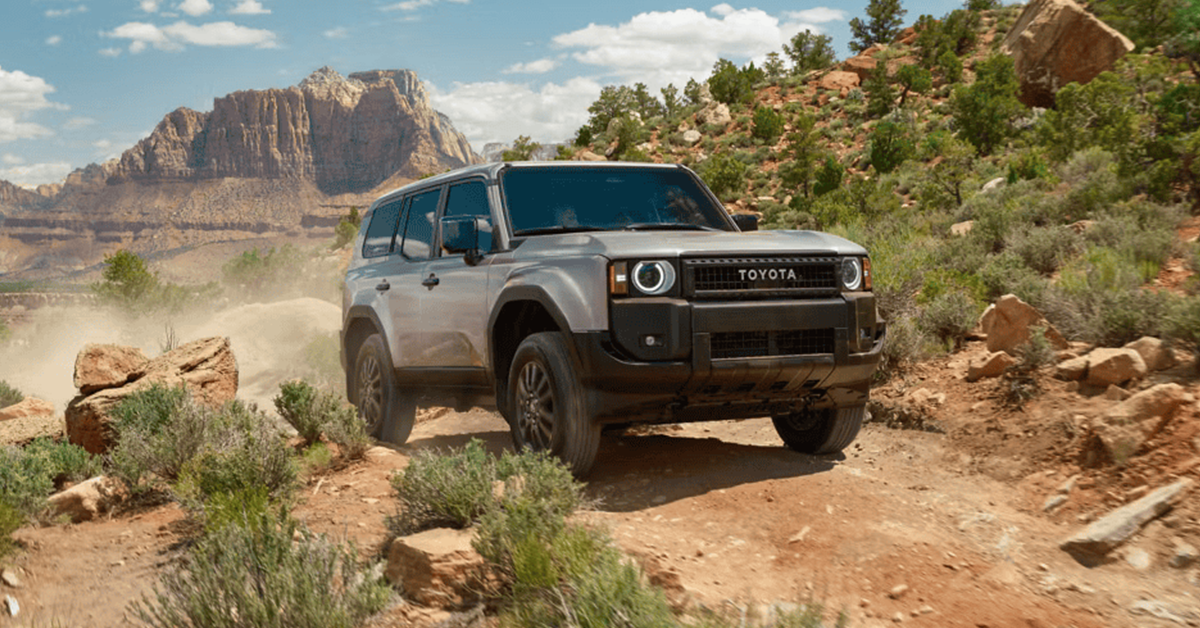
Official press image of the Toyota Land Cruiser. | © Toyota Motor Corporation
The Land Cruiser is the most respected name in Toyota's range, and the current American model carries that reputation into a more refined, more modern package. It is a mid-size, body-on-frame SUV with a hybrid powertrain, full-time four-wheel drive and a cabin that feels expensive without being fragile. It is the one to choose if you want a vehicle that can do serious off-road work and still be a comfortable daily driver, and for 2027 it receives useful updates rather than a full redesign.
| Powertrain | Turbocharged i-FORCE MAX hybrid, 326 hp and 465 lb-ft |
| Transmission | 8-speed automatic |
| Drivetrain | Full-time 4WD, locking centre and rear differentials |
| Towing | Up to 6,000 lb |
| Fuel economy | 23 mpg combined |
| Grades | Land Cruiser 1958 and Land Cruiser |
| Starting price | $57,880 before $1,450 fees |
| New for 2027 | High Mounted Air Intake, heated and ventilated second row, Inked colour |
Power comes from a turbocharged i-FORCE MAX hybrid system, with an electric motor between the engine and an eight-speed automatic transmission. Total output is 326 net combined horsepower and 465 lb-ft of torque. The four-wheel-drive system is full-time, with standard locking centre and rear differentials, and maximum towing is 6,000 pounds. Toyota rates fuel economy at 23 mpg combined, which is respectable for a vehicle with this much capability and equipment.
The price starts at 57,880 US dollars before a 1,450 dollar dealer processing and handling fee, and there are two grades: the Land Cruiser 1958, which honours the original, and the Land Cruiser, which can be ordered with the Premium Package. That puts it well above the 4Runner, and the extra money buys a more luxurious cabin, power front seats, reclining rear seats and a more polished driving experience. Buyers who want a simpler vehicle may still prefer the 1958, which has a more utilitarian feel. Both grades share the same hybrid powertrain, so the choice is about equipment and finish and not about performance, which makes the decision easier for most shoppers.
Off-road equipment is comprehensive. CRAWL Control, with five low-speed settings, and Downhill Assist Control are standard, and Multi-Terrain Select offers modes for mud, dirt and sand in both high and low range. A front Stabilizer Disconnect Mechanism is available for more wheel articulation, and an available Multi-Terrain Monitor shows the terrain around the vehicle on difficult tracks. These systems allow an ordinary driver to cover ground that would defeat most crossovers, which is the point of a Land Cruiser.
For 2027 Toyota has added a High Mounted Air Intake, which is available for buyers who plan to drive through deep water or dusty trails, and heated and ventilated second-row outboard seats for passengers. There is also a new exterior colour called Inked. Toyota describes the Land Cruiser as balancing rugged capability with refined luxury, and these updates continue that theme. The changes are modest, but they show that the company is happy with the formula and is improving it carefully.
The Land Cruiser is not for everybody. It is considerably more expensive than a RAV4 or a 4Runner, and it has less passenger space than a Grand Highlander or a Sequoia. But for drivers who value a legendary name, high build quality and the confidence of a vehicle that can go almost anywhere, there is nothing quite like it in the range. It is Toyota's best premium off-road SUV, and a very special vehicle to own. It also benefits from the strength of the Toyota brand, which Consumer Reports ranked first for reliability in its latest survey, a useful reassurance when you are spending close to 60,000 dollars on a new vehicle.
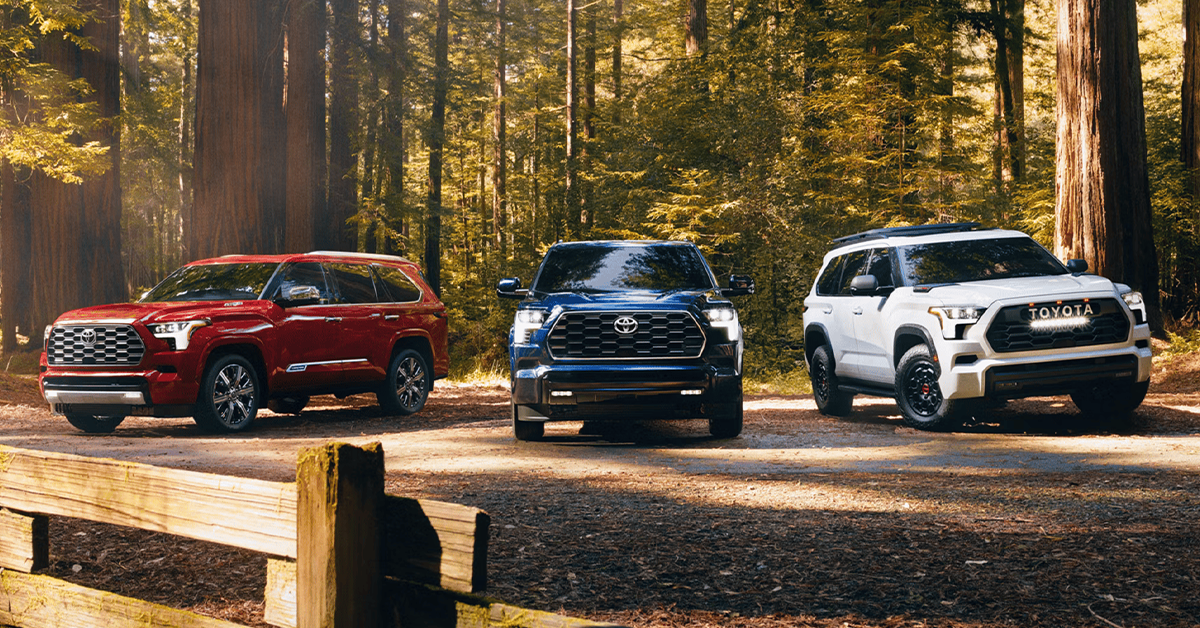
Official press image of the Toyota Sequoia. | © Toyota Motor Corporation
At the top of Toyota's American SUV range sits the Sequoia, a big, powerful, three-row SUV built in Texas for families that need serious space and serious towing ability. It competes with large SUVs from American and Japanese rivals, and Toyota has made it hybrid-only. For 2027 the Sequoia gains a first-ever Trailhunter version, an upgraded TRD Pro and a new set of trailer driver aids, which together make it one of the most capable full-size SUVs on the market.
| Powertrain | i-FORCE MAX hybrid, 3.4-litre twin-turbo V6 |
| Power | 437 hp and 583 lb-ft |
| Towing | Up to 9,120 lb |
| Grades | SR5, Trailhunter, Limited, Platinum, 1794, TRD Pro, Capstone |
| Third row | Sliding third row, adjustable cargo shelf |
| Starting price | $69,900 before fees |
| Fuel economy | Not listed in Toyota's release |
| Arrival | Fall 2026 |
Every 2027 Sequoia uses the i-FORCE MAX hybrid system, which pairs a 3.4-litre twin-turbocharged V6 with a motor generator. Output is 437 net combined horsepower and 583 lb-ft of torque, and the maximum towing capacity is 9,120 pounds. Toyota has not published fuel economy figures with the 2027 announcement, so check the official figures before you buy. The hybrid system gives the Sequoia strong acceleration for a vehicle of its size, and it makes the V6 feel relaxed and responsive in everyday driving.
Pricing starts at 69,900 US dollars, and Toyota expects the 2027 models to arrive at dealers in the fall of 2026. The line-up includes the SR5, Limited, Platinum, 1794, TRD Pro, Capstone and the new Trailhunter. The SR5 is the starting grade, with a 14-inch screen and the full hybrid system. The Limited adds SofTex seating, the Platinum adds a panoramic moonroof and a JBL audio system, and the 1794 brings Western-inspired interior and exterior details, so there is a version to suit almost any taste.
The Trailhunter is the headline addition. It is based on the SR5 and adds Old Man Emu suspension, an underbody skid plate, front recovery hooks, Michelin LTX Trail tyres and bronze wheels, along with CRAWL Control, Multi-Terrain Select and a locking rear differential. The TRD Pro has FOX QS3 adjustable shocks, red tow hooks, a heritage grille and the new Honeycomb colour. The Capstone sits at the luxury end, with semi-aniline leather seats, 22-inch wheels, acoustic glass and power running boards.
Inside, the Sequoia is a three-row SUV with an exclusive sliding third row and an adjustable cargo shelf system that lets owners balance passenger legroom against luggage space. The Platinum comes with second-row captain's chairs. Towing is helped by an available Trailer ADAS suite that includes Automated Trailer Detection, Trailer Blind Spot Monitor, Trailer Lane Trace Assist and an improved Trailer Backup Guide. Anyone who regularly tows a boat or a caravan will find these systems valuable, since they take much of the stress out of reversing and lane changes.
The Sequoia is expensive, and it is bigger than most families need. Anyone who does not tow regularly or carry many people would do better with a Grand Highlander, which offers most of the same space for much less money. But for buyers who want the maximum Toyota SUV, with the most power, the most towing ability and the most luxury, the Sequoia is the answer. It is a comfortable, powerful and capable full-size SUV, and the best of its kind in the Toyota range.
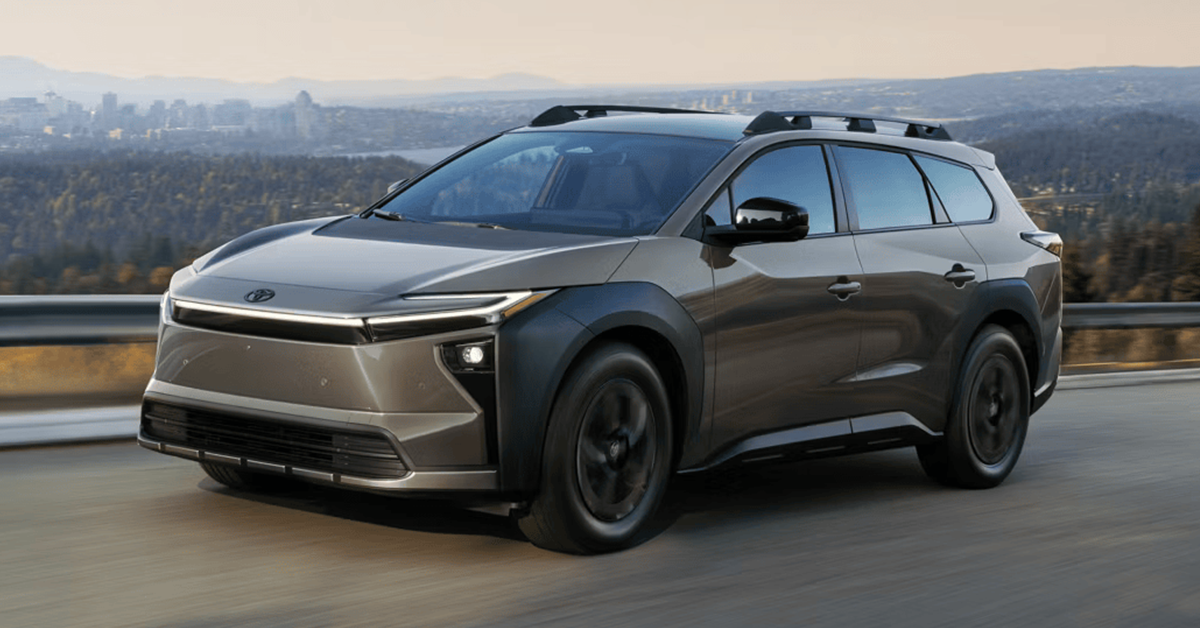
Official press image of the Toyota bZ Woodland. | © Toyota Motor Corporation
Toyota has been cautious about electric vehicles, but its current electric SUVs are good ones. The bZ is a compact electric SUV that was reworked after a troubled launch as the bZ4X, and the bZ Woodland is a more rugged and more powerful sibling aimed at adventurous buyers. Together they are Toyota's answer for people who want a battery-electric SUV today, and both come with a NACS port that works with most DC fast chargers in the United States.
| bZ power | 165 hp (XLE FWD), 221 hp (FWD), up to 338 hp (AWD) |
| bZ range | Up to 314 miles (XLE FWD Plus), 236 miles (XLE FWD) |
| bZ starting price | $34,980 before fees |
| bZ Woodland power | 375 total system hp, about 4.5 seconds 0 to 60 mph |
| bZ Woodland battery and range | 74.7 kWh, 281 miles (260 with all-terrain tyres) |
| bZ Woodland towing | Up to 3,500 lb |
| bZ Woodland starting price | $45,380 before fees |
| Charging | NACS port, about 30 minutes 10 to 80 percent |
The bZ comes in XLE and Limited grades, each with front-wheel drive or all-wheel drive. Power ranges from 165 total system horsepower on the XLE with front-wheel drive, to 221 horsepower on the XLE Plus and Limited front-wheel-drive versions, and up to 338 horsepower on all-wheel-drive models. Toyota's estimated range is up to 314 miles for the XLE front-wheel-drive Plus, 288 miles for the XLE with all-wheel drive and 236 miles for the base XLE with front-wheel drive. Prices start at 34,980 US dollars before the dealer fee.
Charging is quick and convenient. Toyota says a DC fast charge from 10 to 80 percent takes about 30 minutes under ideal conditions, and Plug and Charge works at supported networks, though it needs a Remote Connect trial or subscription. The bZ also has battery preconditioning, which prepares the battery for fast charging in cold weather, and a dual-voltage cable for home charging, with an adapter kit for older connectors. Toyota says the 2027 model is unchanged from 2026, so the improvements made last year carry over, and dealer arrivals were expected from September 2026.
The bZ Woodland adds a lot more power and capability. It has dual-motor all-wheel drive with 375 total system horsepower and an estimated 0 to 60 mph time of about 4.5 seconds, powered by a 74.7 kWh battery. Toyota estimates a range of 281 miles with all-season tyres, or 260 miles with the optional all-terrain tyres. It can tow up to 3,500 pounds, which is unusual for a compact electric SUV, and the ground clearance of 8.4 inches helps on gravel roads and snowy tracks.
The Woodland comes in two grades. The base all-wheel-drive car has heated seats and steering wheel, dual-zone climate control and a 14-inch touchscreen, and starts at 45,380 US dollars before fees. The Woodland Premium adds a nine-speaker JBL audio system, ventilated front seats, a panoramic sunroof and a digital rear-view mirror. Charging uses a standard NACS port and an 11-kilowatt onboard charger, and the fast-charging time is about 30 minutes from 10 to 80 percent. Toyota expects it to reach dealers nationwide later in 2026.
Electric vehicles are not right for everyone. Range falls in cold weather and with towing, and buyers without home charging should think carefully. Toyota is also preparing a three-row Highlander BEV, but that vehicle has been delayed and is not on sale yet. For now, the bZ is the better choice for value and range, while the bZ Woodland is the one for buyers who want strong performance and some off-road ability. Both are credible electric SUVs, and they show that Toyota has learned from its early mistakes.