 Brands
Ford Fiesta — From the 1976 Original to the Last One
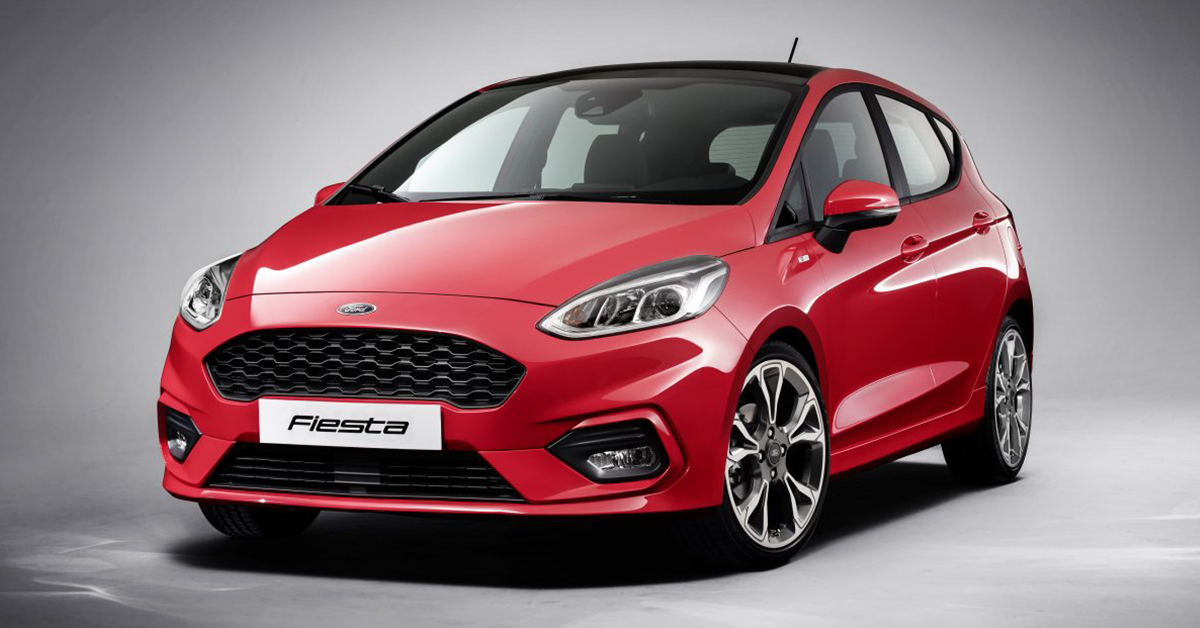
Official press image of the Ford Fiesta. | © Ford Motor Company
The Ford Fiesta from the 1976 Valencia original to the 2017 relaunch, the 200 PS Fiesta ST and the Fiesta Active, to the end of US production in 2019 and the last European car in 2023: engines, trims, sales and what is known.
The Ford Fiesta was a small hatchback that Ford built from 1976 to 2023. Ford’s 2026 Valencia article says the Valencia plant opened in 1976 and built the original Fiesta, which it calls Ford’s first global front-wheel-drive car and a major success (Ford). A reference history lists production from June 1976 to July 2023 (reported). Several motoring sites give the total built as more than 22 million units, though we found no Ford page stating that figure (reported).
| Production | June 1976 to July 2023 (reported) |
| Original plant | Valencia, Spain, opened 1976 (Ford) |
| Cologne plant | Founded 1930, over 18 million cars (Ford) |
| 2017 production start | May 17, 2017, Cologne (Ford) |
| Total built | More than 22 million (reported) |
| US production ended | 2019 (Ford) |
| European end announced | October 2022 (reported) |
| Last car | July 7, 2023 (reported) |
| Generations, per sources | Seven, eight or nine (Ford, reported) |
| Cologne after Fiesta | Electric vehicle plant (Ford) |
Counting the generations is not simple. A Ford German release from 2018 calls the 2017 car the eighth Fiesta generation (Ford). A reference history says the Fiesta was marketed over seven generations, and a British newspaper guide calls the 2017 car the ninth iteration (reported). A trade site says 47 years and eight generations (reported). We therefore use years instead of generation numbers wherever possible and show the numbering as a source conflict.
The Fiesta was built in several places. Ford says its Cologne plant, founded in 1930 and with over 90 years of history, has built the Model A, Taunus, Capri, Granada and Fiesta, and has produced over 18 million cars (Ford). A Ford release says production of the 2017 Fiesta began in Cologne on May 17, 2017 (Ford). Reports add Valencia, Saarlouis and Dagenham for the early cars, and Ford’s own pages we read do not settle which plant built the first one (reported).
The Fiesta ended in two steps. Ford’s US page says that as of 2019 the Fiesta is no longer in production in the United States (Ford). Ford’s UK site calls the Fiesta retired and points owners to the current range and to support (Ford). Reports say Ford told the press in October 2022 that production would end by the end of June 2023, and that the last car left the Cologne line on July 7, 2023, so we carry both dates (reported).
This article covers the Fiesta only and does not merge its history with other small Fords, because they were different cars with different dates. The Fiesta’s Cologne plant also appears in the Capri story, and Ford lists the Capri among the iconic cars built at the site (Ford).
Some limits apply. Ford’s own pages that we could read are strongest for the 2017 launch, the 2017 and 2018 ST releases, the Fiesta Active announcement, the 2021 specification sheets and the Cologne EV Center news. They are thin for the 1976 launch and the 1983 to 2012 generations, so those sections rely on reference histories and magazines and are tagged (reported). We give no sales totals for the whole run except figures that Ford itself published or that are clearly tagged. Ford’s US farewell page calls the Fiesta a spirited, up-for-anything compact vehicle (Ford), which shows how the company framed the car at the end. Prices, trim names and outputs differ by country, so each section says which market a figure covers. We found no single Ford page that lists every generation, so this article joins Ford releases with reference histories and marks each source type.
The first Fiesta was Ford’s small-car answer to a changing market. A reference history says the project was approved for production in late 1973, with Ford’s engineering centres in Cologne and Dunton in Essex collaborating, and that it followed rivals such as the Fiat 127 and Renault 5 (reported). A used-car guide dates the project to 1975 under the name Bobcat (reported). Ford’s own 2026 article calls the original Fiesta its first global front-wheel-drive car (Ford).
| Project approved | Late 1973 (reported) |
| Project name | Bobcat, per one guide (reported) |
| Name origin | Valencia, Spain (reported) |
| First production, one source | Saarlouis, May 11, 1976 (reported) |
| First production, another | Valencia, May 1976 (reported) |
| First engines | 957 cc and 1,117 cc (reported) |
| Layout | Transverse engine, front-wheel drive (reported) |
| Length | 3,565 mm (reported) |
| Body styles | Three-door hatch, panel van (reported) |
| First generation run | 1976 to 1983 (reported) |
The name has a Spanish link. A motoring site says some in Ford’s top brass wanted the car to be called Bravo, but Henry Ford II chose Fiesta in honour of its first manufacturing location in Valencia, Spain (reported). The AA says the name was selected because of the model’s links to Spain, with first examples produced in Valencia (reported). Ford’s 2026 article agrees that the Valencia plant built the original Fiesta from 1976 (Ford). The date of the very first car is a conflict, which we cover below.
Sources disagree on the first production car. A car magazine says the first production Fiestas rolled off the line in Saarlouis, Germany on May 11, 1976 (reported). A used-car guide says production of the new Fiesta began in Valencia in May (reported). A trade archive piece says production was extended beyond Cologne, Saarlouis and a purpose-built factory in Valencia to Dagenham, which suggests several plants early on (reported). Ford’s own pages that we read do not name a single first plant, so we show both.
The mechanical layout was new for Ford. A reference history says the Fiesta was Ford’s first transverse-engined car, which needed a new transaxle, and that a factory near Bordeaux, France was built for it (reported). A motoring site says the first engines were 957 cc and 1,117 cc, derived from the Kent engine that first appeared in the Anglia in 1959 (reported). Another guide lists the dimensions as 3,565 mm long, 1,567 mm wide and 1,360 mm tall on a 2,286 mm wheelbase (reported).
The first generation was a hit. A trade archive piece says some two million people bought it and that, including the subsequent six generations, more than 22 million have been sold (reported). It also says work in San Francisco suggested Americans liked the car enough to warrant US sales (reported). A reference history says Ford had sold over 15 million Fiestas by July 2011 (reported). Ford’s pages we read give no first-generation sales figure, and we give no precise one.
The first generation ran until 1983, according to a trade guide (reported). A motoring guide says the first generation was available as a three-door hatch and a three-door panel van (reported). Readers who want exact 1976 specifications should consult a period road test or an owner’s manual, because we found no Ford primary source that we could cite. Ford’s pages we read say little about the first Fiesta’s price or equipment, so we give none, and any 1976 figure should be checked against a period brochure. The next section covers the years between 1983 and 2008.
The Fiesta changed through four generations in the middle years. A used-car guide lists the second generation from 1983 and a reference history gives the third as the BE13 from 1989 (reported). A car magazine says the Mk2 gave way to the Mk3 in 1989 and that Ford marked the launch with a golden bird art installation on top of a Cologne museum tower (reported). We found no Ford page for these launches, so we do not give detailed specifications for them. We also avoid horsepower figures for these cars, because the sources we found give outputs that vary by market and engine, and none of them is from Ford.
| Second generation | From 1983 (reported) |
| Third generation | BE13, from 1989 (reported) |
| CVH engine | First used in Fiesta during second generation (reported) |
| Zetec engine | 1992, first 16-valve (reported) |
| Sedan body style | Some countries only (reported) |
| Van body style | Europe only (reported) |
| Dagenham | Last Ford model built there, 2002 (reported) |
| Fifth generation | 2002 (reported) |
| Asia Pacific 1.5L | 82 kW, 140 Nm (Ford) |
| Asia Pacific 1.0L EcoBoost | 92 kW, 170 Nm (Ford) |
Engines changed too. A motoring site says early second-generation cars continued to use the Valencia engines but also saw the first use of the CVH unit for this nameplate, which had debuted in the third-generation Escort (reported). It says the Valencia and CVH engines were carried over and that in 1992 Ford introduced the Zetec, originally named Zeta, the first 16-valve unit in the model’s history (reported). A car magazine lists larger petrol engines of 1.0, 1.1 and 1.3 litres and a 1.6 diesel in one generation (reported).
Body styles broadened. A reference history says a four-door sedan or saloon was sold in some countries only during the fourth to sixth generations, and that a three-door van was sold in Europe only (reported). It lists the Fiesta as a supermini with three- and five-door hatchbacks (reported). We do not date each body style, because the sources disagree on generation numbering, and Ford’s own pages that we read do not give a body-style history for the middle years.
Dagenham became part of the story. A dealer-group newsroom and a newspaper both say the Fiesta was the last Ford model built at the Dagenham plant near London before vehicle assembly ceased in 2002 (reported). A newspaper says Ford announced in mid-2000 that UK Fiesta production would end at Dagenham by 2002, with almost 2,000 redundancies, and production moved to Cologne (reported). The same sources say the fifth-generation Fiesta launched in 2002 (reported). Ford’s own pages we read do not describe the Dagenham closure.
The Fiesta also grew beyond Europe. A newspaper says Ford branched out to new markets such as China (reported). Ford Asia Pacific’s product page for a later Fiesta lists a 1.5-litre Duratec four-cylinder with 82 kW at 6,300 rpm and 140 Nm, and a 1.0-litre EcoBoost three-cylinder with 92 kW and 170 Nm (Ford). The page does not name the year, so we do not date it. We mention it only as evidence of the range sold in Asia Pacific.
The middle years are not well documented by Ford itself. We found no Ford total for the Fiesta between 1983 and 2008. A used-car guide says total UK sales of the Fiesta top 4.5 million, but that is a market-specific figure from a used-car guide and not Ford’s (reported). The next section covers the years from 2008 to 2017, when the Fiesta sold in huge numbers in Britain.
The Fiesta became Britain’s favourite car in this period. A used-car guide says one generation alone sold more than a million in the UK between 2009 and 2017 and held the top spot as Britain’s bestselling car for all but one of those years (reported). Ford’s July 2017 release agrees in outline, saying that after eight years as Britain’s favourite car, the Fiesta was passing its sales crown to an all-new model (Ford). Ford does not give unit totals in that release, and its pages we read do not explain why the Fiesta sold so strongly in Britain, so we avoid inventing reasons such as price, size or marketing.
| UK sales crown | Eight years as favourite, to 2017 (Ford) |
| Bestseller years, one generation | 2009 to 2017 (reported) |
| Design language | Kinetic Design (reported) |
| ECOnetic | Most fuel-efficient UK five-seater, per guide (reported) |
| 1.0L EcoBoost, Asia Pacific | 92 kW, 170 Nm (Ford) |
| Torque gain over 1.6L Duratec | 19 Nm (Ford) |
| ST200 | 197 bhp limited run, Storm Grey (reported) |
| March 2017 Europe sales | 47,000 Fiestas (Ford) |
| Fiesta share of Ford sales, March 2017 | 12 per cent (Ford) |
| Platform | Global B (reported) |
The design was called Kinetic Design. A Spanish motoring site says the car interpreted Ford’s Kinetic Design language, with a high beltline and a rather sporty look, and that the driving feel backed it up (reported). A British newspaper guide describes the 2008 to 2012 car as much more modern in design (reported). An ECOnetic version became the UK’s most fuel-efficient five-seat family car, according to that guide (reported). We could not check that last claim against Ford.
The engines moved towards downsizing. A motoring site says the Fiesta moved into its next generation in 2017 but was still based on the Global B platform (reported). Ford Asia Pacific’s page for the mid-period car lists the 1.0-litre EcoBoost three-cylinder at 92 kW and 170 Nm, with an advantage of 19 Nm of torque over the previous generation 1.6-litre Duratec (Ford). The page says it combines direct injection, turbocharging and variable valve timing for diesel-like fuel economy (Ford).
Performance versions arrived. A British guide says the 2012 to 2017 generation introduced a hot hatch ST, and the Fiesta ST200 was a limited run painted Storm Grey with 197 bhp (reported). A trade site calls the Mk7 ST200 and the later Mk8 ST two of the best hot hatches of recent times (reported). That is opinion and not a Ford claim. The numbering in these sources conflicts with other sources, so we do not rely on it for dating the ST200.
Ford’s own sales claims from the period are limited. Ford said in May 2017 that the Fiesta was the best-selling car in Europe in March 2017, with 47,000 sold, based on Ford analysis of industry data (Ford). It said Ford sold 199,900 vehicles that month, and that the Fiesta made up 12 per cent of Ford total vehicle sales (Ford). Those are Ford’s own figures for one month, and we did not verify them against another source.
The period ended with the replacement in 2017. Ford says the all-new Fiesta went on sale across Europe in the summer of 2017 (Ford). The earlier car had been a much-loved car, according to a Ford executive quoted in December 2017 (Ford). A trade site says the Fiesta surged back into credit with the Mk7 and Mk8 for 15 years of the Feel the Difference slogan (reported). The next section covers the 2017 car in detail.
The 2017 Fiesta was a major relaunch. Ford’s May 17, 2017 release says production of the all-new Fiesta, Europe’s top-selling car, began in Cologne, Germany (Ford). Jim Farley, then executive vice president and president of Europe, Middle East and Africa, is quoted as saying Ford took the car’s fun and sporty-to-drive character to the next level (Ford). The release says Ford was investing around 293 million euros, in the excerpt we read, and that the line-up had more models than ever (Ford). The release calls it a derivative strategy, with ST-Line, Vignale and Titanium variants available throughout Europe within months (Ford).
| Production start, Cologne | May 17, 2017 (Ford) |
| Investment | Around 293 million euros (Ford) |
| Trims, 2017 | Trend, Titanium, ST-Line, Vignale (Ford) |
| Later additions | Active and ST, 2018 (Ford) |
| Equipment versions | Seven (Ford) |
| 1.1L petrol | 85 PS Ti-VCT (Ford) |
| 1.0L EcoBoost | Up to 140 PS (Ford) |
| 1.5L diesel | 120 PS (Ford) |
| Euro NCAP, 2017 | Five stars (Ford) |
| UK registrations, November 2017 | 6,434 (Ford) |
The range was built around trims. Ford said the Fiesta would be sold in Trend, Titanium, the Ford Performance-inspired ST-Line and the upscale Vignale, with the Fiesta Active crossover and Fiesta ST coming in 2018 (Ford). A Ford German release says the eighth Fiesta generation was offered in seven equipment versions, with Active coming in early summer 2018 and the ST in summer (Ford). The Fiesta was produced in Cologne, according to the same release (Ford).
Engines were mainly petrol and diesel. Ford’s 2017 specification sheet lists a 1.0-litre EcoBoost, a 1.1-litre Ti-VCT petrol of 85 PS and a 1.5-litre TDCi diesel of 120 PS with a six-speed manual (Ford). The German release says the 1.0-litre EcoBoost three-cylinder offered up to 103 kW (140 PS) and the 1.5-litre diesel 88 kW (120 PS) (Ford). In the UK, Ford said the ST-Line and Vignale offered the 1.0 EcoBoost at 140 PS (Ford).
Technology and safety were highlighted. Ford’s UK release says the first new Fiesta delivered to a UK customer was a five-door Titanium with B&O PLAY audio, a 1.0-litre EcoBoost of 100 PS and an eight-inch touchscreen, unloaded at Dover (Ford). The German release lists an exclusive B&O sound system with ten premium speakers (Ford). Ford says the Fiesta achieved a five-star Euro NCAP safety rating in 2017 and had a unique pedestrian detection system (Ford).
Demand was strong at first. Ford said in December 2017 that the Fiesta was the UK’s top-selling car in November with 6,434 registrations and the best-selling small car in Germany with 4,660 (Ford). To keep up with demand, Ford extended shifts and added Saturday shifts in November and December to increase daily production to 1,500 cars (Ford). A full-year 2017 release says more than 86,300 new Fiestas had been sold across Europe by then (Ford). The Women’s World Car of the Year judges named it the Budget Car winner for 2017 (Ford).
The Fiesta Active was Ford’s first Active crossover. Ford’s May 7, 2018 release says the Fiesta Active is the first in a new family of Active crossover models inspired by SUVs, combining rugged styling and enhanced versatility with Fiesta driving dynamics (Ford). Our Focus article covers the Focus Active that followed it. A 2021 Ford UK brochure lists Active and Active X editions, with 17-inch alloys and an elevated driving position (Ford). Ford’s 2021 specification sheet lists unique steering knuckle geometry and hydraulic rebound stoppers for the Active (Ford).
The Fiesta ST was the performance flagship. Ford Performance revealed the next-generation ST on February 24, 2017, powered by an all-new 200 PS three-cylinder 1.5-litre EcoBoost engine and Drive Modes (Ford). Ford called it the first three-cylinder Ford Performance model (Ford). The Drive Modes adjust engine, steering, stability controls and even exhaust sound (Ford). The engine had Electronic Sound Enhancement, an active exhaust valve and cylinder deactivation for reduced CO2 (Ford). The car was revealed ahead of its appearance at the Geneva Motor Show (Ford).
| ST revealed | February 24, 2017 (Ford) |
| ST engine | 1.5L EcoBoost three-cylinder, 1,497 cc (Ford) |
| ST power | 200 PS (147 kW) at 6,000 rpm (Ford) |
| ST torque | 290 Nm; 320 Nm per a 2021 release (Ford) |
| ST 0 to 100 km/h | 6.5 seconds (Ford) |
| ST differential | Mechanical limited-slip, first for Fiesta ST (Ford) |
| ST fuel efficiency gain | 11 per cent from cylinder deactivation (Ford) |
| ST-Line suspension | 10 mm lowered (Ford) |
| Mild hybrid outputs | 125 PS and 155 PS, 1.0L EcoBoost Hybrid (Ford) |
| Active launch | May 7, 2018 (Ford) |
Ford gave more detail in March and May 2018. It said a mechanical limited-slip differential would enhance cornering traction for the first time on a Fiesta ST, and that patented force vectoring springs sharpened turn-in (Ford). Launch Control delivered consistent standing starts, and the cylinder deactivation technology contributed to an 11 per cent fuel-efficiency improvement (Ford). The May 7, 2018 release gives 0 to 100 km/h in 6.5 seconds for the 200 PS car (Ford).
Ford’s technical sheet gives the engine data. The 1.5-litre EcoBoost is an inline three-cylinder turbo petrol of 1,497 cc, with 200 PS (147 kW) at 6,000 rpm and 290 Nm from 1,600 to 4,000 rpm (Ford). It has DOHC with four valves per cylinder and twin independent variable cam timing (Ford). A November 2021 German Ford release gives 320 Nm and says torque rose by ten per cent, which conflicts with the 290 Nm figure, so we show both (Ford).
The ST stayed in the range through 2021. Ford’s June 2021 German release says the Fiesta ST remained unchanged in the programme, with 147 kW (200 PS) at 6,000 rpm and torque of 290 Nm (Ford). It also describes a special-edition ST with adjustable coilovers, developed on the Nürburgring, three driving programmes and an optional Quaife limited-slip differential, always as a three-door (Ford). The ST-3 trim carried a performance pack with Quaife LSD, according to a 2021 UK brochure (Ford).
ST-Line was the sporty trim for ordinary engines. Ford calls it Ford Performance-inspired (Ford). Ford’s 2021 specification sheet lists a 10 mm lowered suspension with unique spring and damper tuning for the ST-Line, and a unique steering tune for Active and ST-Line (Ford). The 2021 UK brochure lists 1.0-litre EcoBoost Hybrid engines of 125 PS and 155 PS with CO2 emissions of 112 to 123 g/km, and the ST with 145 to 150 g/km (Ford). Those are Ford-quoted ranges that depend on wheels and test basis.
The Fiesta Active and Vignale completed the range. Ford’s 2021 brochure describes the Vignale with unrivalled refinement and unique design features, using Sensico and leather seats (Ford). The Active is described as an evolution of an icon with SUV-inspired detailing, exclusive body colour and an elevated driving position (Ford). A trade site says the Fiesta’s loss follows a trend of other companies ending supermini models because of shrinking market share and low profit margins (reported). That is commentary and not a Ford statement. Ford’s 2021 brochure also lists the ST with a unique grille, a rear bumper with diffuser, Recaro sports seats and a leather-trimmed sports steering wheel (Ford).
The Fiesta ended in North America first. Ford’s US support page says that as of 2019 the Ford Fiesta is no longer in production (Ford). Ford’s US Fiesta page now carries the heading Goodbye, Fiesta, Hello New Adventures, and says the company is no longer producing the car but is still there to help with maintenance and questions (Ford). We found no Ford page giving the reasons or the US sales history, so we give neither. The page cannot tell us which model years were sold.
| US production ended | 2019 (Ford) |
| European end announced | October 2022 (reported) |
| Planned end | By end of June 2023 (reported) |
| Last Fiesta built | July 7, 2023 (reported) |
| Cologne EV Center opened | June 12, 2023 (Ford) |
| Cologne investment | 2 billion dollars (Ford) |
| Final S-Max and Galaxy | April 2023 (reported) |
| Ford Europe EV goal | All-electric by 2030 (Ford) |
| New affordable cars | Expected 2028 (Ford) |
| Worldwide total | More than 22 million (reported) |
The European end came in 2023. A motoring association says Ford announced in October 2022 that Fiesta production would end at Cologne by the end of June 2023 (reported). A newspaper guide says Ford announced production would finish before the end of June 2023 after 47 continuous years (reported). A trade site says the final car rolled off the line on Friday, July 7, 2023, so the actual last build was a week or so later than the announced date (reported). We carry both dates.
Ford’s Cologne news gives some context. Ford says it opened the Cologne Electric Vehicle Center on June 12, 2023 after a 2 billion dollar investment, as Ford’s first carbon-neutral vehicle assembly plant globally (Ford). It says the plant would build a new generation of electric passenger vehicles for European markets (Ford). A trade site says the Cologne plant was being re-tooled for EVs and that the Fiesta ended as Ford geared up for electrification, along with the S-Max and Galaxy in April 2023 (reported).
Ford has also linked electrification to its range. Its 2021 release said that by mid-2026, 100 per cent of its passenger vehicle range in Europe would be zero-emissions capable, all-electric or plug-in hybrid, moving to all-electric by 2030 (Ford). A later Ford statement said it remained committed to Europe and was restructuring because of significant losses in its passenger vehicle business there (Ford). The Fiesta is not named in those pages, so we do not link its end to a specific decision beyond what Ford says about Cologne.
A successor is not confirmed. A reference history lists the electric Puma as an indirect successor, and a motoring site says the Fiesta was dropped to make way for an electric crossover (reported). Our Puma article covers the Puma Gen-E, and our Capri article covers the electric Capri built at the same Cologne site. Ford’s 2025 European strategy article says new multi-energy, affordable cars and commercial vehicles are expected in showrooms in 2028 (Ford). Ford does not say that any of them will be named Fiesta.
The Fiesta’s final tally is reported only. Several motoring sites say more than 22 million were produced or sold worldwide between 1976 and 2023, and a trade piece says the Fiesta was Britain’s best-selling car ever (reported). Ford’s own pages that we read do not repeat those claims. A UK used-car guide gives total UK sales above 4.5 million (reported). We use those numbers as context and tag them, because they come from motoring sites and not from a Ford release, and we found no independent audit of them.
The best-documented Fiesta is the 2017 to 2023 car. Ford’s 2021 UK brochure lists petrol outputs of 75, 100, 125 and 155 PS for the 1.0-litre EcoBoost and 200 PS for the ST, with mild hybrid versions of 125 and 155 PS (Ford). Earlier 2017 specifications list a 1.1-litre Ti-VCT petrol and a 1.5-litre TDCi diesel (Ford). A buyer should therefore check which engine a particular car has, because the range changed between 2017 and 2021 and the engine names differ by market.
| 2021 petrol outputs | 75, 100, 125, 155 PS (Ford) |
| 2021 mild hybrid | 1.0L EcoBoost Hybrid, 125 and 155 PS (Ford) |
| 2017 petrol | 1.1L Ti-VCT, 85 PS (Ford) |
| 2017 diesel | 1.5L TDCi, 120 PS (Ford) |
| ST power | 200 PS (Ford) |
| ST 0 to 100 km/h | 6.5 seconds (Ford) |
| 2021 trims | Trend, Titanium, Vignale, Active, ST-Line (Ford) |
| Active alloys | 17-inch (Ford) |
| Drag coefficient, 1.0L Trend | 0.300 (Ford) |
| ST-3 extras | Quaife LSD, B&O audio (Ford) |
Trims are easier to follow in the later cars. Ford’s 2021 brochure lists Trend, Titanium, Titanium X, Vignale and Active and Active X editions, plus the ST-Line and ST ranges (Ford). The 2017 launch had Trend, Titanium, ST-Line and Vignale (Ford). Equipment lists shown by Ford include 16-inch alloy wheels on Trend and Titanium and 17-inch alloys on Active (Ford). Earlier Fiestas used trim names such as Zetec, which Ford’s July 2017 UK release lists alongside Titanium (Ford).
Performance buyers should check the ST carefully. Ford quotes 200 PS and 0 to 100 km/h in 6.5 seconds for the 2018 car (Ford). The ST-3 had a Quaife limited-slip differential, B&O audio and automatic climate control in the 2021 brochure (Ford). Because the sources conflict on the torque figure, with 290 Nm and 320 Nm both in Ford releases, buyers should confirm the car’s own data plate and documents. We found no Ford reliability data for the ST.
Practicality figures are limited. Ford’s 2017 specification sheet lists a drag coefficient of 0.300 for the 1.0-litre EcoBoost in Trend and Titanium trim, against 0.320 for the ST-Line (Ford). It does not give boot volume in the excerpt we read, and we found no Ford boot figure that we could verify. We therefore give none. Buyers should check cargo space in person, since the Fiesta is a small car, and a three-door and five-door car differ in access. Ford’s 2021 specification sheet lists rack-and-pinion steering with electronic power assistance and a 14.6:1 ratio, with unique tunes for the Active and ST-Line (Ford).
Used buyers have a wide choice. Ford’s UK site says the Fiesta is now retired and points owners to support and to the current range (Ford). Ford US says it is still there to help keep maintenance up to date (Ford). We found no Ford used-price data, so we give no prices. A pre-purchase inspection and a vehicle history check are sensible for any used Fiesta.
The Fiesta remains part of Ford’s story. Our Ford models page covers what Ford sells today, and Ford’s own heritage articles name the Fiesta among the iconic cars built at Valencia and Cologne (Ford). The Fiesta was a long-running small car that Ford sold for 47 years, according to motoring sites (reported). A used buyer can use Ford’s brochure model-year labels, such as 2021.75, to match equipment to a car’s build date (Ford). We make no claim about a future Fiesta. Readers who want confirmed news should watch Ford’s European newsroom, since the company has said only that new affordable cars are planned.
