 Brands
Ford Transit Connect — U.S. Sales, Engines and the New PHEV
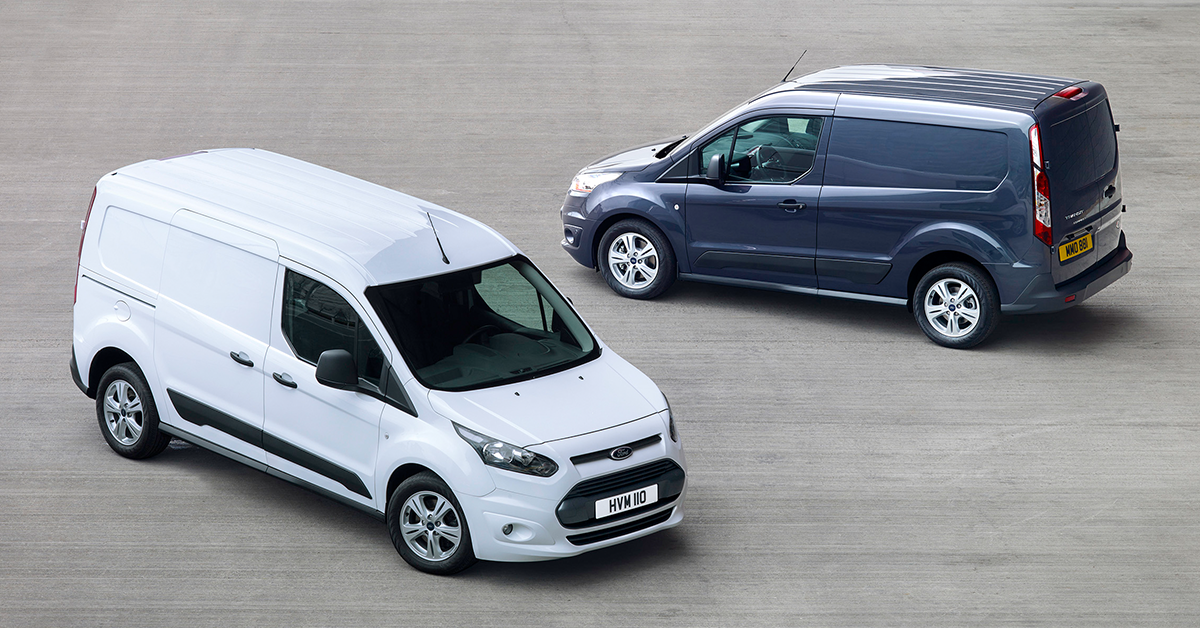
Official press image of the Ford Transit Connect. | © Ford Motor Company
The Ford Transit Connect from its European launch and 2010 U.S. debut to the 2023 U.S. exit and the new third-generation diesel and plug-in hybrid van, covering engines, payload, sales and sources, showing what Ford says and what is only reported.
Transit Connect is Ford’s compact van. It has been sold in Europe since the early 2000s (Ford), it was sold in the United States for the 2010 to 2023 model years (reported), and Ford revealed an all-new third-generation van for Europe on January 30, 2024 (Ford). It sits below the Transit Custom and the full-size Transit. Our Transit article covers the full-size van sold in the U.S., and this article follows the compact van through its three eras and explains where each one stands today.
| Vehicle | Compact van, Transit family (Ford) |
| Original European launch | Late 2002 per Ford; 2003 per other Ford text (Ford) |
| U.S. model years | 2010 to 2023 (reported) |
| U.S. exit confirmed | March 2023, after 2023 model year (reported) |
| Third generation revealed | January 30, 2024 (Ford) |
| Body styles, 2024 van | Van (2 seats), Kombi (5 seats) (Ford) |
| Diesel, 2024 van | 2.0L EcoBlue, 102 or 122 PS (Ford) |
| Plug-in hybrid, 2024 van | 1.5L EcoBoost, 150 PS combined (Ford) |
| Van payload and towing | 820 kg, 1,500 kg (Ford) |
| U.S. sales peak | 52,221 in 2015 (reported) |
The first era is the original van. Ford’s 2009 release says the Kocaeli plant in Turkey had been producing the European Transit Connect and Tourneo Connect family since its launch in late 2002, and that the U.S. version would be built there too (Ford). The second era began with Ford’s 2012 reveal of a new generation on a new platform, and the third is the 2024 van, which reports say is a Volkswagen Caddy twin built in Poland (reported).
The U.S. story ended earlier than the European one. Reports say Ford confirmed in March 2023 that it would end Transit Connect sales in North America after the 2023 model year, giving a statement about reducing global manufacturing cost and complexity and a decline in demand for compact vans (reported). Reports give 52,221 U.S. sales in 2015 and 25,140 in 2022 (reported). Ford’s own pages we read do not give those sales totals.
The current European van is sold as a two-seat Van or a five-seat Kombi in short and long wheelbases, according to Ford’s 2024 reveal (Ford). Ford lists a 2.0-litre EcoBlue diesel at 102 or 122 PS and a plug-in hybrid with a 1.5-litre EcoBoost petrol engine, giving a combined 150 PS (Ford). Ford says an intelligent all-wheel-drive system is available on the diesel, aimed at Nordic and Alpine customers (Ford).
Ford gives payload and towing for the new van. The Van has a maximum payload of 820 kg and a towing capacity of 1,500 kg, while the plug-in hybrid has a maximum payload of 770 kg and a maximum trailer weight of 1,400 kg (Ford). Ford’s page does not explain why the two payload numbers differ, and it says payload varies by accessories and configuration, with the door-jamb label showing the figure for a specific vehicle (Ford).
We kept the scope tight. We found no Ford-owned page with the original U.S. 2010 or 2014 specifications, so those come from reports and are labelled. We found no Ford price for the 2024 van, no Ford statement of where it is built, and no Ford sales total for any year. Where Ford’s own pages disagree with each other or with reports, we show both values. We give no claim about reliability, resale value or the cost of owning a compact van. We also give no claim about how many Transit Connects Ford has built worldwide, because the pages we read give totals only for the whole Transit family, and we do not split those totals by model.
Ford’s 2009 release, which we read on an archive mirror, says the Transit Connect arrived in the U.S. with a global reputation for durability and toughness dating back to its 2003 launch, when European commercial vehicle journalists named it International Van of the Year (Ford). Another Ford release says the Kocaeli plant had produced the European Transit and Tourneo Connect family since late 2002 (Ford). Ford’s own text therefore dates the launch to 2002 in one place and 2003 in another, and we show both. We found no Ford statement that explains the difference between those two dates.
| European market share, Ford | Doubled to 34% after launch (Ford) |
| Transit Connect sales, Europe 2007 | 109,900 (Ford) |
| Transit sales, Europe 2007 | 224,915 (Ford) |
| Award after launch | International Van of the Year, 2003 (Ford) |
| Kocaeli production start | Late 2002 (Ford) |
| U.S. announcement | March 3, 2009, Chicago (Ford) |
| U.S. starting price, 2010 | $21,475 including destination (Ford) |
| EPA rating, 2010 | 22 city, 25 highway mpg (Ford) |
| U.S. 2010 build plant | Kocaeli, Turkey (Ford) |
| Ford U.S. CV share, 2011 claim | 40% (Ford) |
Ford’s 2009 material gives European numbers. It says that since the introduction of the Transit Connect, Ford’s share of the European light and medium commercial vehicle market had doubled to 34 per cent (Ford). It says that in record-setting 2007, Ford sold 109,900 Transit Connects and 224,915 Transits in Europe (Ford). We found no later Ford total for first-generation sales, and we give none. Our Ford history article covers the company around these vans.
The U.S. launch was announced in 2009. Ford’s release dated March 3, 2009 says the 2010 Transit Connect would go on sale in the U.S. that summer, starting at $21,475 including destination, rated at 22 city and 25 highway EPA miles per gallon (Ford). It says Ford unveiled it at the 2009 Chicago Auto Show as an industry-exclusive vehicle for small business owners (Ford). The release says the U.S. version would be produced at Ford Otosan’s Kocaeli plant in Turkey (Ford).
Ford also promised an electric version. The 2009 release says a battery-electric Transit Connect would be offered in 2010 at selected U.S. Ford dealerships (Ford). A report says an electric version followed in 2011, converted by Azure Dynamics at a U.S. facility, so the date differs between the plan and the report (reported). We found no Ford statement of how many electric Transit Connects were sold, and we give no claim about their range or price.
Ford’s 2011 material shows how it positioned the van. It says Ford was the reigning commercial vehicle leader in the U.S. with a 40 per cent share of the total commercial vehicle market, and that Ford had been the full-size van leader with the E-Series for 29 years running (Ford). It describes the Transit Connect as a combination of car, van and truck, with class-leading cargo area functionality (Ford). Those 2011 claims are Ford’s own, and we did not check them against another source.
Start dates differ between sources. Ford’s release says the van went on sale in the summer of 2009 as a 2010 model (Ford). A report says Ford started selling the cargo model in 2009 and added the wagon in 2011 (reported). A fleet report calls the 2010 version the first generation in the U.S. (reported). For the first generation, reports say the van used a 2.0-litre four-cylinder with a four-speed automatic and front-wheel drive, and we found no Ford torque figure for it (reported).
Ford revealed the second generation in 2012. A report of Ford’s September 6, 2012 release in Amsterdam says Ford unveiled a new generation of Transit commercial vehicles on all-new global platforms for sale in Europe, North America and other markets (reported). The same report says European deliveries of the 2014 Transit Connect were scheduled to start at the end of 2013, with U.S. cars arriving shortly afterwards (reported). We read Ford’s own wording only through that report.
| Second generation reveal | September 6, 2012, Amsterdam (reported) |
| European deliveries planned | End of 2013 (reported) |
| Development centre | Dunton, Essex (reported) |
| Production plant | Valencia, Spain (Ford) |
| Previous plant | Kocaeli, Turkey (reported) |
| Passenger version, Europe | Tourneo Connect, 5 seats (Ford) |
| Seven-seat version | Grand Tourneo Connect (Ford) |
| UK launch price, Tourneo Connect | £14,245 (Ford) |
| UK launch price, Grand Tourneo | £16,985 (Ford) |
| North American passenger version | Transit Connect Wagon (Ford) |
Production moved. A trade report from July 2013 says the second-generation Transit Connect was developed at Ford’s commercial vehicle centre in Dunton, Essex, and built at the Valencia plant in Spain for Europe, North America and other markets (reported). Another report says the new Transit Connect and Tourneo Connect would be made in Spain rather than Turkey, as the old model had been (reported). Ford’s August 2013 release says the Tourneo Connect models were designed at Dunton with Ford Otosan and built in Valencia (Ford).
The passenger version was the Tourneo Connect. Ford’s August 27, 2013 release, which we read on a third-party host, says the five-seat Tourneo Connect started from £14,245 and the seven-seat Grand Tourneo Connect from £16,985 in the UK (Ford). Ford’s 2012 material, read on an archive mirror, says the Tourneo Connect would be sold as the Transit Connect Wagon in North America and goes on sale in Europe in the second half of 2013 (Ford).
Ford said the new van shared hardware with its cars. The 2012 release says the all-new Tourneo Connect is based on Ford’s global C-segment platform, shared with models such as the Focus and the all-new Kuga and Escape (Ford). Ford’s June 2015 release says the Tourneo Connect models had quickly grown in popularity since being introduced in late 2013, and it announced new fuel-efficient engines and driver-assistance technology for them (Ford). We found no Ford sales figure for the van in that period.
Model-year naming is another conflict. Ford’s 2012 and 2013 material refers to the “2014 Transit Connect” (Ford). A fleet report says the second-generation van arrived in 2014 as a 2015 model (reported). A used-car listing calls it the second generation for 2014 to 2023 in the U.S. (reported). We use “second generation” for the van revealed in 2012, and we give the model year only where a source states it.
We keep the limits plain. We found no Ford-owned page with the second generation’s engines, dimensions or payload, so we give no specification for the 2014 van. We also found no Ford statement of why production moved from Turkey to Spain, and we do not guess. Reports say the Transit Connect and Tourneo Connect were built in Valencia alongside other models, and we found no Ford figure for how many were built there (reported). We also give no claim about the mid-cycle changes Ford made to the van, because the pages we read do not list them, and we do not infer them from photographs or listings.
Ford’s 2019 media page calls the van America’s best-selling compact van and says it was significantly updated for 2019 to provide more technology, versatility and comfort and to help lower costs for personal and small business customers (Ford). Reports say Ford showed the passenger wagon at the Chicago auto show in February 2018 and the cargo van at the Work Truck Show in Indianapolis, with the cargo van going on sale that fall (reported).
| 2019 Ford media claim | America's best-selling compact van (Ford) |
| Standard engine, Ford guide | 2.0L GDI I-4, 150 hp, 144 lb-ft (Ford) |
| Standard engine, reports | 2.0L, 162 hp, 144 lb-ft (reported) |
| Transmission | 8-speed automatic (reported) |
| Fuel capacity | 15.8 gal (Ford) |
| Seating, cargo van | 2 (Ford) |
| Turning diameter | 38.3 ft and 40.0 ft (Ford) |
| 2023 towing | 2,000 lb (reported) |
| 2023 price, XL short wheelbase | $34,100 (reported) |
| Previous engine | 2.5L, 169 hp (reported) |
The 2019 update changed the engines. Ford’s 2018 to 2019 vehicle guide lists a standard 2.0-litre GDI four-cylinder with auto start-stop at 150 horsepower at 6,200 rpm and 144 lb-ft at 4,500 rpm (Ford). Reports of the same engine give 162 horsepower, and later reports of the 2023 van also give 162 horsepower and 144 lb-ft, so the 150 and 162 figures conflict (reported). Reports say it was paired with a new eight-speed automatic and that a 1.5-litre turbodiesel was offered, rated at 30 mpg on the highway (reported).
Ford’s vehicle guide lists a 15.8-gallon fuel capacity and two seats for the cargo van, and turning diameters of 38.3 feet and 40.0 feet curb to curb (Ford). The guide also lists payload, curb weight and gross vehicle weight rating rows, but the PDF text we received is garbled, so we cannot tell which numbers belong to which model and we do not state them (Ford). Reports say the previous van used a 2.5-litre engine of 169 horsepower, with compressed natural gas and propane preparation on that engine (reported).
Reports for the final 2023 model year give more detail. They say the van used a 2.0-litre four-cylinder with 162 horsepower and 144 lb-ft, an eight-speed automatic and front-wheel drive, with fuel economy of 24 city and 26 highway miles per gallon in one listing and 25 combined in others (reported). A report says the 2023 van’s towing capacity was 2,000 pounds (reported). Another report says flexible-fuel versions were dropped from the XL, XLT and Titanium trims for 2023 (reported).
Listings give cargo and price figures for 2023. A listing gives 104.8 cubic feet of cargo volume for the cargo van, another gives 146 cubic feet for a long-wheelbase version, and a third gives 123 cubic feet for a short-wheelbase XLT, so the volumes depend on the version (reported). The same listing gives 2023 prices of $34,100 for the XL short wheelbase and $35,100 for the XL long wheelbase, while another report gives a starting price of $33,105 (reported).
Generation numbering conflicts again. A 2019 trade report calls the updated van the third generation of the Transit Connect, counting the original U.S. van, the 2014 van and the 2019 refresh (reported). Ford’s 2024 reveal calls the new European van the third generation (Ford). Both cannot refer to the same count, so we do not give a generation number for the 2019 van, and we found no Ford statement that defines the count. Anyone citing a generation number for this van should name the source that gave it.
Reports give the U.S. sales history. They say sales peaked at 52,221 units in 2015, with another 2,800 in Canada, and that annual volume then moved between 30,000 and 40,000 (reported). They give 34,596 for 2020, 26,112 for 2021, down about 25 per cent, and 25,140 for 2022, down about 4 per cent (reported). They give 1,170 Canadian sales for 2022 (reported). We found no Ford-owned page with these totals, so every sales figure here is reported.
| U.S. sales peak | 52,221 in 2015 (reported) |
| U.S. sales, 2020 | 34,596 (reported) |
| U.S. sales, 2021 | 26,112, down about 25% (reported) |
| U.S. sales, 2022 | 25,140, down about 4% (reported) |
| Canada sales, 2022 | 1,170 (reported) |
| Segment share, 2022 | 61% full year (reported) |
| Segment share, Q2 2022 | Over 30% (reported) |
| Exit confirmed | March 2023 (reported) |
| Last U.S. model year | 2023 (reported) |
| Planned successor | Scrapped, C2 architecture (reported) |
Market share figures differ. A 2022 report gives the van a 61 per cent share of the U.S. compact van segment for the full year, against the Ram ProMaster City at 39 per cent and the Nissan NV200 at almost none (reported). A different report says the van had over 30 per cent of the small commercial van segment as of the second quarter of 2022 (reported). The two figures use different periods and a different list of competitors, so we show both and do not reconcile them.
The end of U.S. sales came in two steps. A trade report in August 2022 said Ford had canceled the next-generation van and would stop selling the current one after 2023 (reported). Reports in March 2023 say Ford confirmed it would end importing Transit Connect cargo and passenger vans to the U.S. and Canada at the end of the 2023 model year (reported). One report had said the exit would come by the end of 2024, so the date shifted between reports (reported).
Reports quote Ford’s stated reason. They say Ford attributed the decision to efforts to reduce global manufacturing cost and complexity, alongside decreased demand for the compact van segment (reported). A report quotes an industry analyst saying the U.S. small van market has low profit margins and sales mostly to fleets, and that the U.S. market prefers full-size vans or pickups for commercial needs (reported). That analysis is not Ford’s statement, and we do not adopt it as fact.
A successor was planned and then dropped. Reports say Ford had planned a next-generation Transit Connect built on its C2 architecture, shared with the Maverick pickup and Bronco Sport SUV, with production moving to Hermosillo, Mexico, and that the plan was scrapped (reported). Other makers left the segment around the same time. Reports say Ram ended the ProMaster City, Nissan ended the NV200 and Mercedes-Benz ended the Metris in the U.S. (reported).
We keep the limits plain. We found no Ford statement of why the 2015 peak was not repeated, and no Ford figure for the Transit Connect’s share of Ford’s commercial van sales. We give no claim about how many Transit Connects remain on U.S. roads, and we give no claim about used prices, because the listings we saw mix trims and mileage. Anyone shopping for a used van should check the trim, wheelbase and engine of the specific vehicle. We also give no claim about fleet discounts that may have applied to Transit Connect orders, because we found no Ford-owned source for them.
Ford’s January 30, 2024 article says Ford Pro revealed the all-new third-generation Transit Connect compact van in Europe, completing its electrified Transit line-up following the E-Transit, E-Transit Custom and E-Transit Courier (Ford). Production was to start in spring 2024, diesel deliveries in summer 2024, the plug-in hybrid before year-end, and Kombi models in early 2025 (Ford). Our Transit Custom article covers the larger one-tonne van in the same family.
| Third generation reveal | January 30, 2024 (Ford) |
| Production start | Spring 2024 (Ford) |
| Diesel deliveries | Summer 2024 (Ford) |
| PHEV deliveries | Before end of 2024 (Ford) |
| Kombi models | Early 2025 (Ford) |
| PHEV engine | 1.5L EcoBoost petrol (Ford) |
| PHEV output | 150 PS, 350 Nm (Ford) |
| PHEV transmission | 6-speed dual-clutch (Ford) |
| PHEV electric range target | Up to 68 miles (Ford) |
| PHEV charging | 50 kW DC, 11 kW AC (Ford) |
The plug-in hybrid is the headline. Ford lists a 1.5-litre EcoBoost petrol engine with a high-voltage battery and electric motor, a combined output of 150 PS and 350 Nm, with up to 330 Nm in EV mode, and a six-speed dual-clutch automatic (Ford). Ford gives a targeted electric range of up to 68 miles, 50 kW DC fast charging and an 11 kW onboard AC charger (Ford). Drive modes are EV Now, EV Auto and EV Later (Ford).
Range figures differ slightly. Ford’s 68 miles converts to about 109 km by standard arithmetic (our calculation). A French trade report of the reveal says the plug-in hybrid offers more than 110 km of electric range (reported). Ford’s page does not state the battery capacity, so we give none, and Ford says the range figure is a target on the WLTP cycle (Ford). Ford’s footnotes say charging times are based on engineering simulations and may vary (Ford).
Ford’s page names no production plant. Reports say the van is a Volkswagen Caddy twin and is built at Volkswagen’s plant in Poznan, Poland, as part of the Ford and Volkswagen alliance (reported). Euro NCAP’s 2024 commercial van safety results list the Transit Connect under a Platinum medal, and say the tested model was the Volkswagen Caddy Cargo, to which the Ford van is a twin, with the result applying to the third generation from week 25 of 2024 (reported).
Ford lists technology and safety items. A 10-inch digital instrument cluster is standard with a 10-inch central touchscreen, with wireless Apple CarPlay and Android Auto, and wireless device charging on the Limited and Active series (Ford). USB-C ports offer up to 45 watts, and optional heated front seats are certified by Aktion Gesunder Rücken e.V. (Ford). Standard safety includes Pre-Collision Assist, Evasive Steer Assist and Intersection Assist, and Exit Warning and Pro Trailer Backup Assist are listed (Ford).
We keep the limits plain. We found no Ford price for the 2024 van and no Ford crash-test statement of its own. Reports say Ford Australia has no plans to bring the Transit Connect to Australia, and a review says no electric version is planned (reported). Ford’s page says official fuel figures would be published closer to the on-sale date, and we found no later Ford page with them, so we give the targets only (Ford). We also found no Ford statement of the battery warranty or of the van’s ground clearance, and we give no claim about either. Ford’s page also does not say whether the Van and the Kombi share the same engines in every market.
Ford lists a 2.0-litre EcoBlue turbodiesel in two outputs for the 2024 van. The 122 PS version comes with a six-speed manual or a seven-speed dual-clutch automatic, and the 102 PS version comes with a six-speed manual only (Ford). Ford gives a targeted fuel efficiency of up to 58.8 mpg, with official figures to be published closer to the on-sale date (Ford). We found no Ford torque figure for the diesel on the page we read, so we give none.
| Diesel engine | 2.0L EcoBlue turbodiesel (Ford) |
| Diesel, 122 PS | 6-speed manual or 7-speed dual-clutch (Ford) |
| Diesel, 102 PS | 6-speed manual only (Ford) |
| Diesel fuel target | Up to 58.8 mpg (Ford) |
| Body styles | Van (2 seats), Kombi (5 seats) (Ford) |
| Van load volume | 3.1 or 3.7 cubic metres (Ford) |
| Kombi load volume, seats folded | 2.5 (L1) or 3.1 (L2) cubic metres (Ford) |
| Van payload and towing | 820 kg, 1,500 kg (Ford) |
| PHEV payload and trailer | 770 kg, 1,400 kg (Ford) |
| Trim series | Trend, Limited, Active (Ford) |
Ford says an intelligent all-wheel-drive system is available, aimed at Nordic and Alpine customers (Ford). The page does not say which diesel output gets it, and it does not say whether the plug-in hybrid can have it, so we state nothing further. Ford’s footnotes say fuel, CO2 and electric range figures follow WLTP and the EU regulations 715/2007 and 2017/1151, and that horsepower and torque are independent and may not be achieved simultaneously (Ford).
Body styles and load space are listed together. The Van has two seats and the Kombi has five, each in short or long wheelbase (Ford). Ford gives the Van a load volume of 3.1 or 3.7 cubic metres depending on wheelbase (Ford). With the rear seats folded, the Kombi has 2.5 cubic metres on the L1 and 3.1 on the L2, and Ford says the L2 fits two Euro pallets (Ford). A Russian-language report gives wheelbases of 2,755 and 2,970 mm, a maximum load volume of 3.7 cubic metres and a load length of 2,150 mm (reported).
Payload and towing are given for two versions. The Van has a maximum payload of 820 kg and a towing capacity of 1,500 kg, and the plug-in hybrid has a maximum payload of 770 kg and a maximum trailer weight of 1,400 kg (Ford). Ford’s page lists the two payloads without explaining the gap, and it says payload varies by accessories and configuration, with the door-jamb label showing the figure for a specific vehicle (Ford). A review calls the payload limited (reported).
The trim series are Trend, Limited and Active. Ford describes the Trend as the van and Kombi aimed at fleet and cost-conscious buyers, the Limited as an upmarket van with 17-inch alloy wheels and a work surface in the passenger seat back, and the Active as a rugged Kombi with SUV-inspired styling, LED lights and roof rails (Ford). We found no Ford price for any of the three, so we cannot say what the Limited or Active adds over the Trend in money.
Ford Pro support is part of the offer. Ford lists a dedicated telematics solution with a plug-in device, and mobile servicing that can perform 70 per cent of maintenance and repair tasks on site (Ford). It says one UK fleet cut downtime from three days to as little as two hours for equivalent work (Ford). Ford lists more than 200 Ford Pro Convertor partners across Europe for conversions such as refrigeration and racking (Ford). We give no claim about how those figures compare with rivals.
The passenger twin of the van is the Tourneo Connect. Reports say the third-generation Tourneo Connect for Europe was released in October 2021 as a rebadged Volkswagen Caddy, while another report says European sales began in the second quarter of 2022, so the launch date differs between reports (reported). A trade report says the Transit Connect van followed almost two years after the Tourneo Connect, with Ford showing it in January 2024 (reported).
| Tourneo Connect third generation | Oct 2021 or Q2 2022 sales (reported) |
| Tourneo Connect basis | Volkswagen Caddy twin (reported) |
| Transit Connect van shown | January 2024 (Ford) |
| Ford Pro electrified family | All Transit vans incl. Connect PHEV (Ford) |
| E-Transit Courier plant | Craiova, Romania (Ford) |
| Ford Pro Europe, 2025 | 11th year as leader, over 17% share (Ford) |
| Leading markets, 2025 | 10 European markets (Ford) |
| Maverick sales, 2025 | 155,051, record (Ford) |
| Euro NCAP result | Platinum medal, Caddy Cargo twin (reported) |
| Kombi L2 load | Fits two Euro pallets, seats folded (Ford) |
Ford puts the van inside a wider electrified range. Ford’s March 2025 release says Ford Pro now offers electrified variants of every van in the Transit family, including the E-Transit Courier and the Transit Connect PHEV, and that all of them connect to Ford Pro software, charging and service solutions (Ford). Ford’s 2026 article says the electrification of the whole Transit family was completed with the production start of the E-Transit Courier in Craiova, Romania (Ford).
Ford gives European leadership figures for the whole brand. Ford’s January 2026 article says Ford Pro was Europe’s leading commercial vehicle brand for an 11th consecutive year in 2025, with record sales and a record share of over 17 per cent (Ford). It says Ford Pro was the leading brand in 10 European markets (Ford). Those figures are for Ford Pro as a whole, and we found no Ford figure for the Transit Connect on its own.
In the U.S., the compact van left a gap. Ford’s January 2026 sales release says the Ford Maverick, America’s most affordable pickup, had a record sales year with 155,051 pickups sold in 2025 (Ford). We do not claim the Maverick replaced the Transit Connect, because Ford did not say so in the pages we read, and the two are different vehicle types. Our Ford Maverick article covers the pickup.
Safety and size are the next questions for buyers. Euro NCAP’s commercial van result covers the Volkswagen Caddy Cargo twin, not a Ford-built test, and it applies to the third generation from week 25 of 2024 (reported). Ford’s page says the Kombi can fit two Euro pallets on the L2 with the rear seats folded, and that the Van’s load volume is 3.1 or 3.7 cubic metres (Ford). We found no Ford figure for rear-door opening sizes or the load floor height.
Readers comparing the Transit Connect with Ford’s other vehicles can use our Ford models page. This article keeps U.S. history, European history and the 2024 van in separate sections because the three eras use different platforms, plants and sources. We give no claim about whether Ford will bring a compact van back to the U.S., because we found no Ford statement on it, and we give no claim about used values, repair costs or insurance. We also found no Ford statement of the Transit Connect’s production volume in Europe, and no Ford comparison with rival compact vans, so we leave both out. Where a figure appears here without a Ford tag, it comes from a report and could change if Ford publishes its own number.