 Brands
Upcoming Toyota Cars 2027 With Launch Dates and Specs
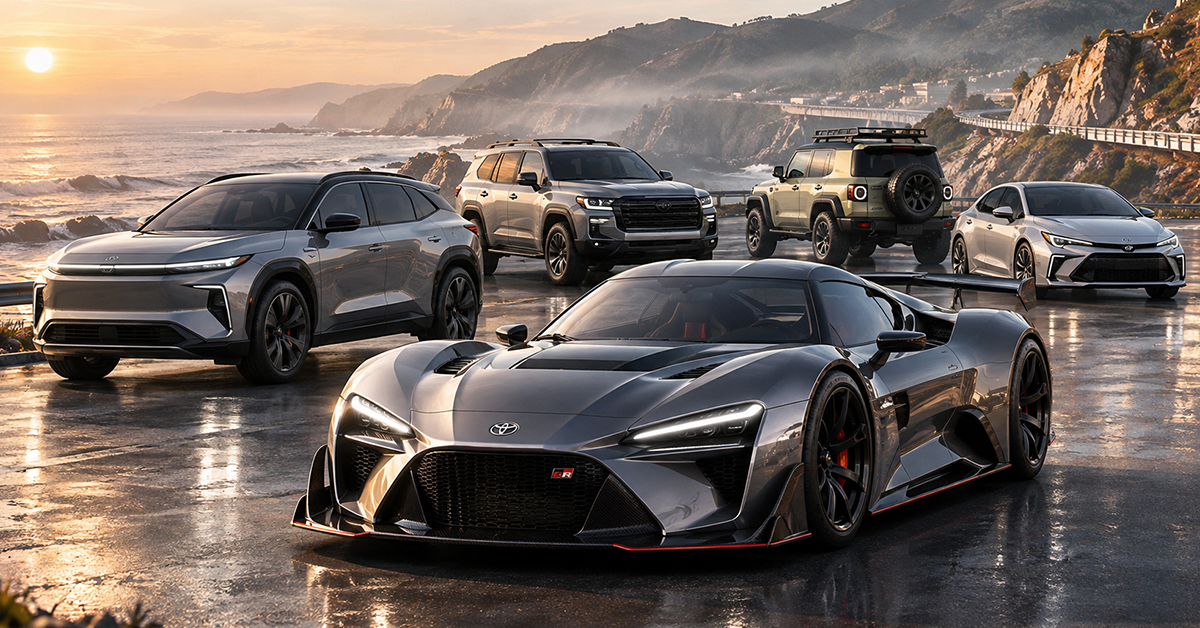
AI-generated concept illustration — upcoming Toyota cars. | Rev N Rise
Toyota's next wave of cars is its biggest in years: a V8 hybrid supercar, a long-awaited electric Highlander, a new Fortuner, a compact Land Cruiser and a new Corolla in the making. Here is what is confirmed, what is only reported and when each one is expected to arrive.
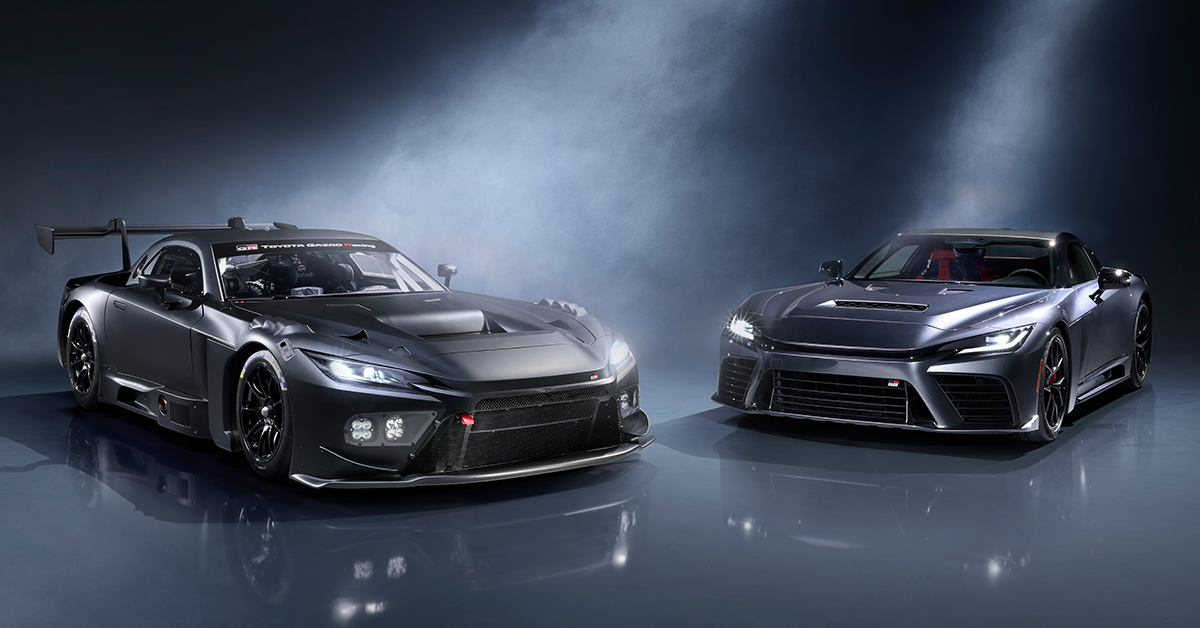
Official press image of the Toyota GR GT. | © Toyota Motor Corporation
The most exciting Toyota due in 2027 is the GR GT, a front-engined supercar that Toyota unveiled in December 2025 alongside a racing sibling, the GR GT3. It wears only a GR badge, with no Toyota or Lexus badge, which reflects the way Toyota Gazoo Racing has been growing into a brand of its own. Toyota says the car enters production in 2027, and further details are expected to be released as that date approaches. It is the clearest sign yet of how far Toyota's performance ambitions have grown.
| Engine | 4.0-litre twin-turbo V8 with hybrid system |
| Power | At least 641 hp (some reports say 650) |
| Torque | 627 lb ft |
| Transmission | 8-speed automatic transaxle with electric motor |
| Drive | Rear-wheel drive |
| Weight | Up to about 1,750 kg (3,858 lb) |
| Weight distribution | 45:55 front to rear |
| Seats | 2 |
| Length | About 15.8 ft |
| Production | Due in 2027 |
| Price | Not announced (press estimate of about $225,000 is unconfirmed) |
The heart of the car is a new 4.0-litre twin-turbocharged V8 with dry-sump lubrication and a hot-V layout, in which the turbochargers sit inside the V of the engine to keep the mass low and central. Toyota quotes at least 641 horsepower and 627 lb ft of torque, and some reports round the power figure up to 650. An electric motor sits between the engine and an eight-speed automatic transaxle, where it replaces the torque converter, and a small battery above the transaxle feeds it, so the car is a hybrid even though it is not a plug-in. Drive goes to the rear wheels only, through a mechanical limited-slip differential and a carbon-fibre driveshaft.
The structure is just as important as the powertrain. The GR GT is built on an all-new aluminium chassis, the first aluminium chassis Toyota has made, developed together with the GR GT3 race car, and the body uses a mix of aluminium and carbon fibre. Toyota quotes a maximum weight of around 1,750 kg, or 3,858 lb, with a 45:55 front-to-rear weight distribution. Suspension is by forged aluminium double wishbones at both ends, the standard tyres are Michelin Pilot Sport Cup 2 and the brakes are carbon-ceramic units from Brembo, all of which point to a car designed first for the track.
At about 15.8 feet long the GR GT is a big car, roughly ten inches longer than a Porsche 911 and close to the length of a Mercedes-AMG GT Coupe, and it has two seats only, not a 2+2 layout. Reports put the top speed at around 199 mph or more, although Toyota has not published a 0 to 60 mph time. Unlike the Lexus LFA, which had its famous exhaust note tuned with Yamaha, the GR GT uses an exhaust that Toyota says was built simply to suit the car's character. The overall package is closer to a modern GT racer for the road than to a comfortable touring coupe.
Toyota has not announced a price. Press reports have suggested a figure of around 225,000 US dollars, but that is an estimate and not an official number, and Toyota has indicated the car should be less expensive and less rare than the original LFA, which was limited to 500 examples. The GR GT3 version will be sold to customer race teams under FIA GT3 rules, and its power figures and launch timing have not been published. Anyone planning to buy should watch for allocation details, since cars of this type tend to be sold through a limited number of dealers.
A second car is coming from the same architecture. Lexus has shown an electric LFA that shares its structure and chassis with the GR GT, and it is based on the Sport Concept shown at Pebble Beach. Lexus has not released specifications, and the sale date is expected to follow the GR GT and GR GT3 launch in 2027. Together, the three cars make up a new top tier for Toyota's performance range, and they show how seriously the company is taking the supercar market after years in which its fastest road cars were the GR Supra and the GR Corolla.
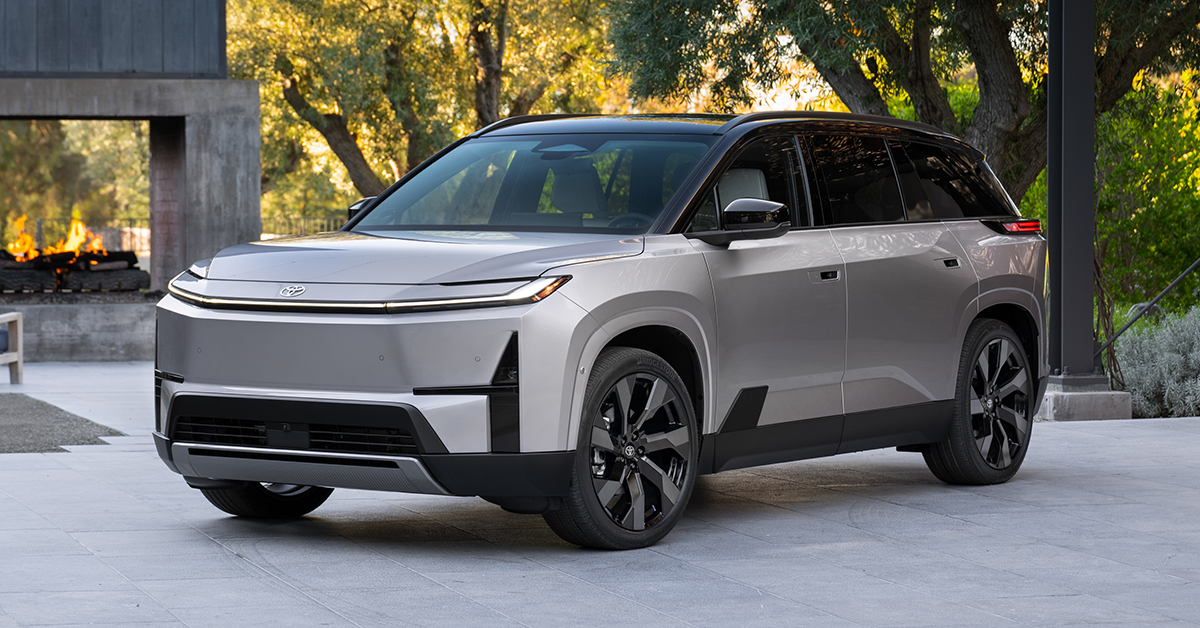
Official press image of the Toyota Highlander BEV. | © Toyota Motor Corporation
The Highlander BEV is the Toyota most American families are waiting for in 2027. It is the first three-row, battery-electric Highlander, and the first Toyota battery-electric vehicle built in the United States, at the company's plant in Georgetown, Kentucky. Toyota revealed it in February 2026, and its US press release now describes it as the 2028 model-year Highlander and the start of a fifth generation, although some Toyota pages still say 2027. It replaces the gas-only and hybrid Highlander in the long term, taking on rivals such as the Kia EV9. Seating is for up to seven, and the interior gets a 14-inch touchscreen, a 12.3-inch digital driver display and charging ports for all three rows.
| Powertrain | Battery electric, FWD or dual-motor AWD |
| Battery | 77.0 kWh or 95.8 kWh |
| Range (Toyota estimates) | 287 mi (XLE FWD), 270 mi (XLE AWD 77.0 kWh), 315 mi (AWD 95.8 kWh) |
| Power | 221 hp (FWD), 338 hp (AWD) |
| Grades | XLE and Limited |
| Seating | Up to 7 |
| Built in | Georgetown, Kentucky |
| Model year | 2028 per Toyota's US release |
| On sale | AWD early 2027, XLE FWD mid-2027 per Toyota; reports suggest it could slip |
| Price | Not announced |
There are two battery sizes. The smaller pack is 77.0 kWh and is rated for up to about 287 miles, while the larger 95.8 kWh pack is rated for up to about 315 miles in all-wheel-drive form, slightly below the 320-mile target Toyota first quoted. Front-wheel-drive versions make 221 horsepower, and dual-motor all-wheel-drive versions make 338 horsepower, with the front and rear motors sharing the load. Toyota offers two grades, the XLE and the Limited, and the SUV includes vehicle-to-load capability, which lets owners power camping gear or household appliances from the battery during an outage. Off-road aids such as Multi-Terrain Select and Crawl Control are also fitted, which is unusual for a family SUV.
The design is a clear break from the gas-powered Highlander. The exterior features full-length LED daytime running lights, flush door handles to reduce drag and an available fixed glass roof, and the overall shape is lower and sleeker than the boxy SUV it replaces. Toyota's chief engineer described the aim as a fun-to-drive electric SUV with sharp acceleration and a quiet ride, language that is more enthusiast-focused than Toyota usually uses. The Highlander name itself was kept deliberately, rather than a bZ badge, because Toyota wants to signal that this is the next chapter of one of its best-selling family SUVs.
The timing is the complicated part. The Highlander BEV was first expected to reach showrooms by the end of 2026. In July, Toyota said the launch would be delayed for what a spokesperson called additional adjustments, for at least eight weeks. A later report from the Japanese business press said suppliers had been told that production at Kentucky could start in January 2027 at the earliest, with market arrival possibly slipping to mid-2027 or later. Toyota's own US position, given in September, is that the launch is still planned for 2027, and it says the delay is for final validation and quality checks, not for weak EV demand. Its latest US release lists the all-wheel-drive XLE and Limited with the 95.8 kWh battery for early 2027, and the front-wheel-drive XLE with the 77.0 kWh battery for mid-2027.
Pricing has not been announced and is due closer to the on-sale date. In the meantime, the current gas and hybrid Highlander stays in production at Kentucky through at least December 2026, and reports suggest it will remain on dealer lots well into 2027, so buyers who do not want to wait still have that option. The same production line is shared with two related models, the Subaru Getaway and the Lexus TZ, and reports suggest they could be delayed as well, although Toyota has not announced changes. For shoppers, the sensible approach is to treat any early 2027 date as unconfirmed until Toyota publishes an on-sale schedule.
The Highlander BEV matters beyond its own sales. It is the first test of Toyota's plan to build electric vehicles in the United States, and it is also the car that will show whether the company's cautious approach to electrification can win family buyers away from established three-row electric rivals. Toyota has said a second, larger three-row electric SUV will follow from the same plant, but it has not given a date. If the Highlander BEV launches smoothly, that second model becomes far more credible, and the delay is likely to be remembered as a sensible pause rather than a setback.
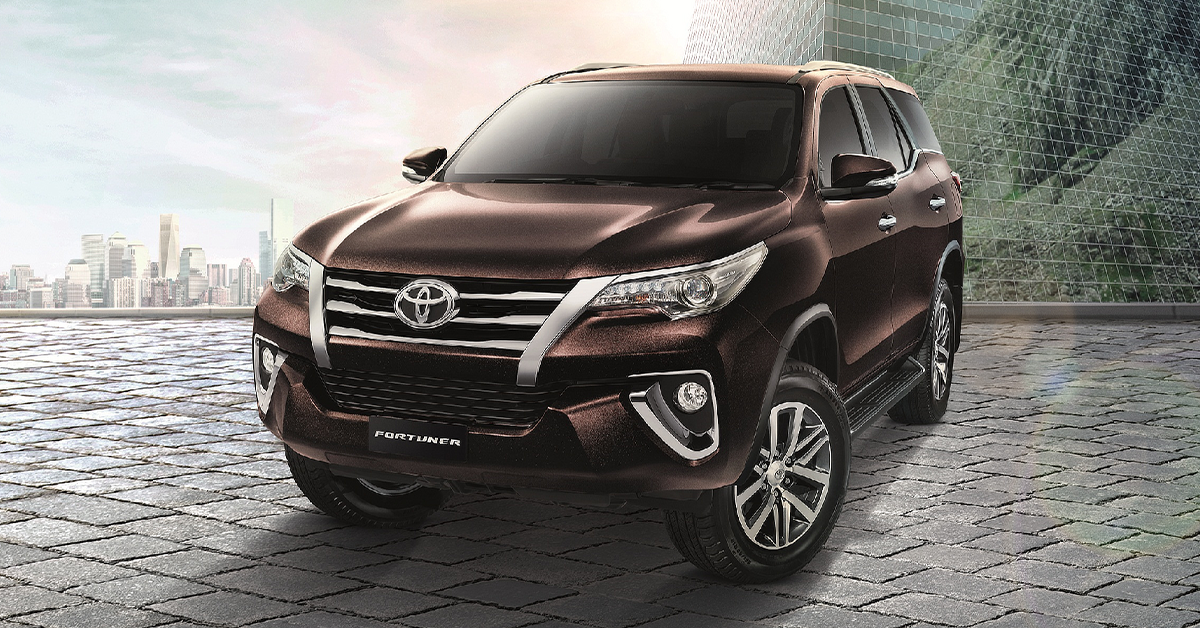
Official press image of the current Toyota Fortuner. | © Toyota Motor Corporation
The Fortuner is one of Toyota's most important vehicles outside the United States, a rugged seven-seat SUV built on the same ladder-frame platform as the Hilux, and a new generation is on its way. Toyota South Africa has confirmed that the next Fortuner will be unveiled globally on 1 December 2026. That makes it the first big Toyota reveal of the new cycle, and the one that will decide how the company's most popular body-on-frame SUV competes in markets across Asia, Africa, the Middle East and Latin America in the years ahead.
| Global reveal | 1 December 2026 (confirmed) |
| Generation | Third generation (reported) |
| Platform | Ladder frame (reported) |
| Drivetrain | Four-wheel drive (reported) |
| Engines | Largely carried over, hybrid possible (reported) |
| India launch | Expected in 2027 (reported) |
| Specifications and price | Not announced |
Because the reveal has not happened yet, most of what is known is reported rather than confirmed, and it is worth keeping the two apart. Toyota has not released official specifications or images. Reports describe the model as the third-generation Fortuner, with a more modern design that may borrow cues from the latest Hilux. It is expected to keep its body-on-frame construction and four-wheel-drive capability, which are central to its appeal for buyers who want a tough family SUV that can handle bad roads and heavy loads.
Inside, the reported plan is a more premium cabin with newer technology, including larger screens and more driver-assistance features, possibly including advanced driver-assistance systems in markets where they are offered. One report from India suggests a 12.3-inch driver display and touchscreen, electric power steering and a panoramic sunroof, but these should be treated as expectations until Toyota confirms them. The Hilux that the Fortuner is based on has also been updated for its ninth generation, so it makes sense that the SUV will follow with a similar level of tech.
Mechanically, current reports suggest the engines, transmissions and four-wheel-drive system will be largely carried over, with the possibility of a hybrid option being considered. That would fit Toyota's usual approach to its global workhorse vehicles, where durability and parts availability matter more than headline power figures. The Fortuner's current diesel engines are a major part of its popularity in markets such as India, so any change to the engine lineup will be closely watched, and Toyota has not confirmed what will be offered in each region.
Launch timing will differ by market. In India, Toyota Kirloskar Motor is expected to launch the new Fortuner in 2027, probably early in the year and reportedly after a facelifted Innova Hycross, but Toyota has not announced an exact date, variants or pricing. Reported rivals include the MG Majestor, the Kia Sorento, the Jeep Meridian, the Skoda Kodiaq and the Volkswagen Tayron. Markets such as Thailand, where the Fortuner is built, and South Africa are likely to see it earlier or at a similar time, but buyers should wait for official regional schedules.
The Fortuner is not sold in the United States, which is why many American readers have never driven one, but its importance to Toyota is huge. It sits next to the Hilux as a pillar of the company's emerging-market business, and the new model will set the tone for the next decade of Toyota's tough, practical SUVs. Check back after 1 December, when official details are due, because several of the reports quoted here may be confirmed, changed or contradicted by the real car, and this part of the guide is likely to be the one that changes most.
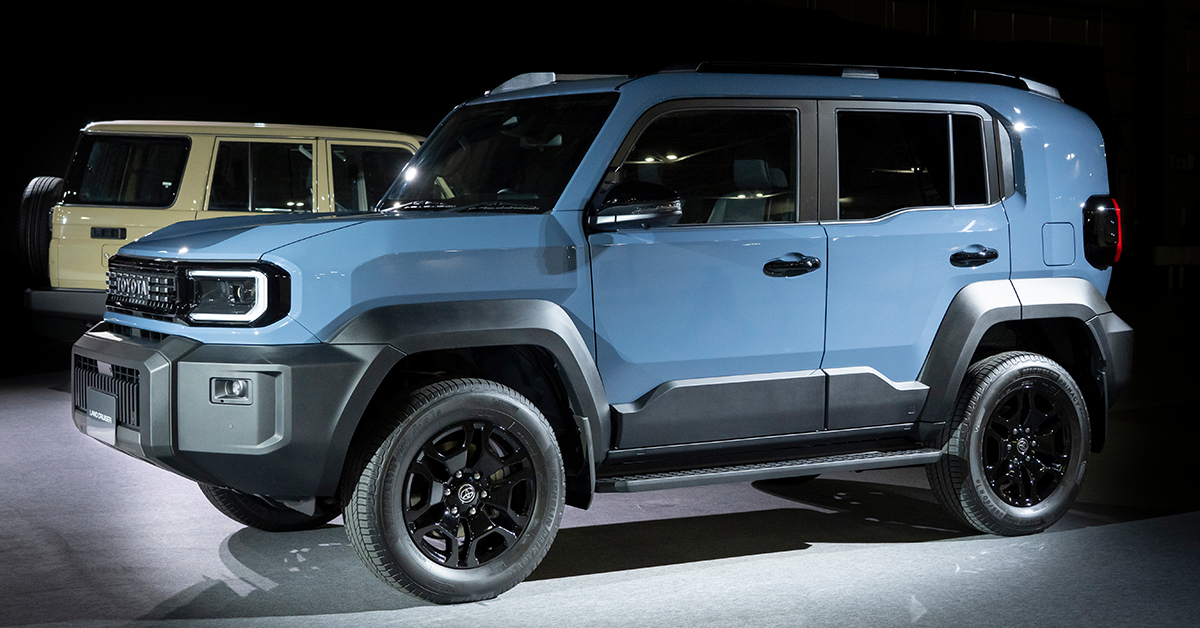
Official press image of the Toyota Land Cruiser FJ. | © Toyota Motor Corporation
The Land Cruiser FJ is the smallest and most affordable Land Cruiser in decades, and it is still rolling out to markets around the world. Toyota unveiled it in Japan on 20 October 2025 as a fourth member of the Land Cruiser family, alongside the full-size Land Cruiser, the mid-size Land Cruiser Prado and the Land Cruiser 250 series, and Japanese sales began on 14 May 2026. Its styling is a deliberate nod to classic Land Cruisers and the FJ Cruiser, with a boxy body, a tailgate-mounted spare wheel and C-shaped LED daytime running lights.
| Engine | 2.7-litre 4-cylinder petrol (2TR-FE) |
| Power | 163 PS (120 kW) |
| Torque | 246 Nm |
| Transmission | 6-speed automatic |
| Drive | Part-time four-wheel drive |
| Length / width | 4,575 mm / 1,855 mm |
| Wheelbase | 2,580 mm |
| Turning radius | 5.5 m |
| Seats | 5 |
| Built in | Thailand (Ban Pho plant) |
| Japan launch | On sale from 14 May 2026 |
| Japan price | VX grade 4,500,100 yen including tax |
Underneath, the FJ is a proper off-roader. It uses the same IMV ladder-frame platform as the Hilux and Fortuner and measures about 4,575 mm long on a 2,580 mm wheelbase, with a 5.5-metre turning circle and around 215 mm of ground clearance. Those figures make it far easier to manoeuvre on tight trails than a full-size Land Cruiser, while keeping the body-on-frame toughness that Land Cruiser buyers expect. Toyota describes the car's spirit with the phrase Freedom and Joy, and it is aimed at buyers who want adventure without the size and cost of the larger models.
The engine is a 2.7-litre four-cylinder petrol, the 2TR-FE, producing about 163 PS and 246 Nm of torque, paired with a six-speed automatic transmission and part-time four-wheel drive. These are not headline figures, but they are well suited to a vehicle that values simplicity and reliability, and the same engine is already used in other Toyota trucks. Reports suggest more electrified versions may follow, including hybrid options, but Toyota has not confirmed them, so buyers should treat the petrol-only lineup as the official specification for now.
Inside, the FJ brings the cabin up to date with a 12.3-inch display audio system, a Panoramic View Monitor and Toyota Safety Sense as standard in Japan, although the overall design remains simple and tough, with large controls and hard-wearing materials. It is built in Thailand and targeted at markets in Southeast Asia, Africa, Latin America and the Middle East, where small, capable off-roaders are in demand. Rollout timing varies by country, so it is worth checking the local Toyota importer for dates and pricing.
One important point for readers in the United States and Europe is that the FJ is not planned for those markets. Toyota's chief engineer is reportedly on record saying there are no current plans to sell it there. In Japan the VX grade is priced at 4,500,100 yen including tax, and Toyota is targeting about 1,300 sales a month there. Prices in other markets will depend on local taxes and equipment. Enthusiasts in excluded markets are likely to import it privately once it has been on sale long enough, as has happened with other Toyota models.
The FJ also shows how the Land Cruiser name has become a family of vehicles, each aimed at a different buyer. The full-size Land Cruiser remains the flagship, the Prado fills the mid-size slot and the FJ now covers the compact end, with styling that echoes the original 40 Series. Whether the FJ eventually gains a hybrid powertrain or reaches new regions remains to be seen, but its arrival has already revived interest in the type of small, honest off-roader that many people thought Toyota had abandoned when the FJ Cruiser ended production.
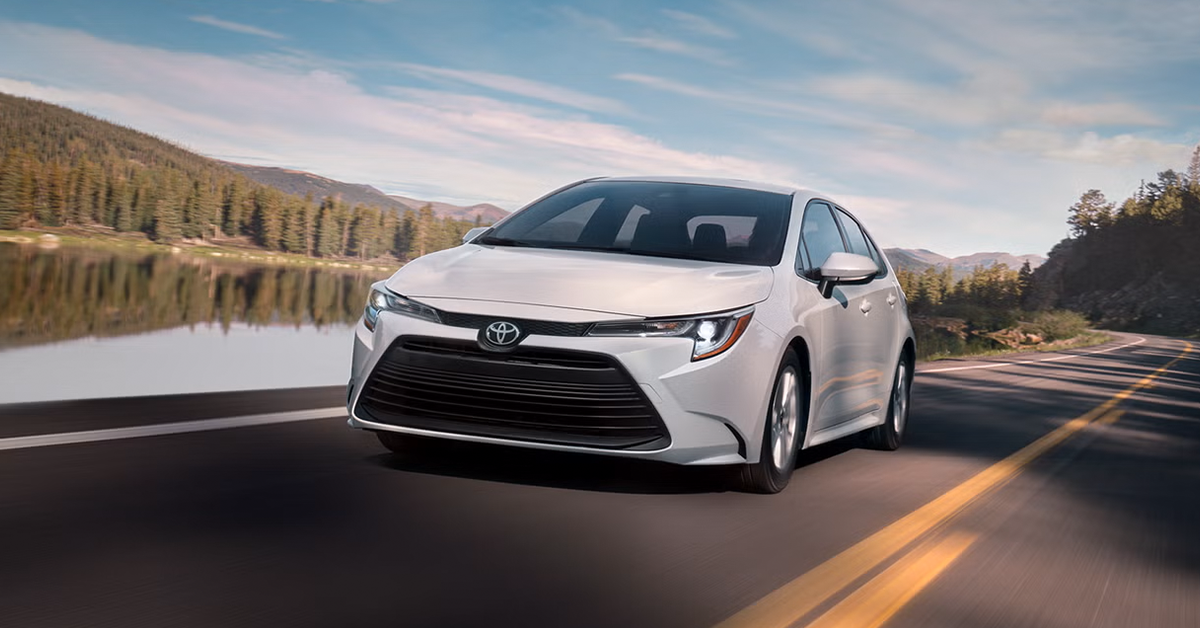
Official press image of the next-generation Toyota Corolla. | © Toyota Motor Corporation
The Corolla is the best-selling nameplate in automotive history, so a new generation is always a major event. Toyota previewed the next one with a concept sedan at the Japan Mobility Show in October 2025, and the car is expected to be the 13th-generation Corolla. Toyota has not confirmed a production date. Commentators have suggested late 2026 or sometime in 2027, mainly because the current generation launched in 2018 and is now several years old, but that is an estimate and not an announcement.
| Status | Concept shown at Japan Mobility Show, October 2025 |
| Generation | 13th-generation Corolla preview |
| Concept body | Sedan |
| Planned powertrains | Battery electric, hybrid, plug-in hybrid and petrol |
| Engines in development | New 1.5-litre and 2.0-litre family |
| Concept wheels | 21-inch |
| Production date | Not announced |
| Specifications and price | Not announced |
The concept itself is dramatic. It is a sleek sedan with a sharply sculpted body, an integrated boot-lid spoiler, light bars at both ends, frameless door windows and 21-inch wheels. Inside, it features a digital instrument cluster with touch-sensitive keys, controls grouped behind the steering wheel and a floating high centre console with a car-shaped gear selector. Most observers expect the production Corolla to be less extreme, but the concept shows that Toyota intends to push the design language of its most familiar car further than it has in many years.
The most interesting part of the announcement is the powertrain plan. Toyota says it is preparing a wide range of options for the next Corolla, from a fully electric version to full hybrid and plug-in hybrid models, and it is also working on a pure combustion version. The company has not ruled out a combustion Corolla that runs on carbon-neutral fuel, and it is developing a new family of 1.5-litre and 2.0-litre engines described as smaller, lighter and more efficient than the current units. The concept has three fuel caps, which has led to speculation about a plug-in hybrid with a small combustion engine.
That multi-path approach matches Toyota's long-standing view that different markets need different solutions. A Corolla sold in a country with strong charging infrastructure might be electric, while one sold where fuel is cheap and chargers are scarce might remain a hybrid or a petrol car. The strategy gives Toyota flexibility, and it also protects it from being tied to a single technology if regulations or demand change. For buyers, it means the next Corolla range could be unusually broad, and it is unlikely that every version will be available in every country.
There are also practical questions that Toyota has not answered. The concept is a sedan, but the Corolla has historically included hatchbacks, wagons and the raised Corolla Cross variants, and the company has not said which body styles the 13th generation will keep. Dimensions, weight, pricing and battery sizes have not been released, and nothing has been confirmed about the sports models such as the GR Corolla. Until production details appear, the concept should be read as a statement of direction, not as a specification sheet, and any exact figures quoted online should be treated cautiously.
The Corolla matters because it is the car that most people think of when they think of Toyota. It has sold tens of millions of units over more than half a century, and its quality and low running costs are a large part of the brand's reputation. A new generation that mixes electric, hybrid and efficient petrol power would show how Toyota plans to carry that reputation into the next decade. It is the upcoming model with the greatest potential to affect ordinary buyers, even though it may arrive later than some of the more exotic cars in this guide.
The big names above are only part of the picture. Toyota's 2027 plans also include a long list of updates, regional launches and technology milestones, some confirmed and some only reported. In the United States, Toyota's newsroom already lists a 2027 model-year lineup that includes the Camry, Corolla, Corolla Hatchback, Crown, Prius, bZ, bZ Woodland, C-HR, Corolla Cross, Crown Signia, Grand Highlander, Land Cruiser, RAV4, Sequoia, GR86 and Tundra, although the list does not say what has changed on each model. Most of these will be incremental updates, with new colours, equipment and packages.
| Innova Hycross facelift | Early 2027 in India (reported), petrol and hybrid |
| Electric three-row MPV | Second half of 2027 in India (reported), est. 142 hp / 48.8 kWh and 172 hp / 61.1 kWh |
| Solid-state battery car | 2027 or 2028 (Toyota), claimed range up to 745 mi |
| GR GT3 race car | Due alongside the GR GT in 2027 |
| Electric Lexus LFA | After the GR GT, specifications not announced |
| Land Hopper mobility vehicle | Scheduled for spring 2027 (Toyota) |
One notable absence is the GR Supra. One report says the 2026 GR Supra Final Edition is the last model year of the current car and that the Supra will not reach the 2027 model year, although Toyota has pledged to keep the nameplate alive. Toyota has not announced what will replace it, so the rumour should be read with care, but it suggests that the company's performance range is being reorganised around the new GR GT and GR brand. Enthusiasts hoping for a new sports car should keep an eye on announcements about the GR86 and GR Yaris families too.
In India, two launches are reported for 2027. The first is a facelifted Innova Hycross, expected in early 2027, with a new front end, new headlamps, grille, bumpers, alloy wheels and tail lamps, plus a 12.3-inch instrument cluster and touchscreen and USB Type-C ports. Mechanicals are reported to stay the same, with petrol and hybrid options. The second is an electric three-row MPV, reported for the second half of 2027 as a sibling of an upcoming electric MPV from Maruti Suzuki, with estimated front-wheel-drive versions of about 142 and 172 horsepower and battery sizes of about 48.8 and 61.1 kWh.
All of the India details come from reports and not from Toyota, so they should be treated as expectations. The estimated range of about 525 km for the larger electric MPV is a projection, not an official figure, and Toyota Kirloskar Motor has not announced prices or dates. Even so, the pattern is clear: Toyota is bringing hybrids and electric vehicles to India in a way that suits local buyers, using partnerships and shared platforms to keep costs low. The Fortuner covered earlier in this guide is expected to arrive in the same window.
Technology is the other big story. Toyota has said its first car with a solid-state battery should launch in 2027 or 2028 and that it is sticking to that schedule. It has not said whether the model will be a Toyota or a Lexus, and a Lexus performance car is widely expected but unconfirmed. The company has linked its prototype battery pack to a range of up to 745 miles, and it has claimed that the technology could greatly increase range and reduce charging times. These are company claims for a technology that has not yet reached production, so real-world figures may differ.
Putting all of this together, 2027 looks like a year of transition for Toyota. Performance cars such as the GR GT arrive at the top of the range, electric SUVs such as the Highlander BEV expand the family lineup, the Corolla and Fortuner prepare for new generations, and solid-state batteries edge towards reality. Not every date will hold, as the Highlander BEV delay shows, so the best approach is to separate what is confirmed from what is only reported. Rev N Rise will keep this guide updated as Toyota publishes official schedules, prices and specifications.